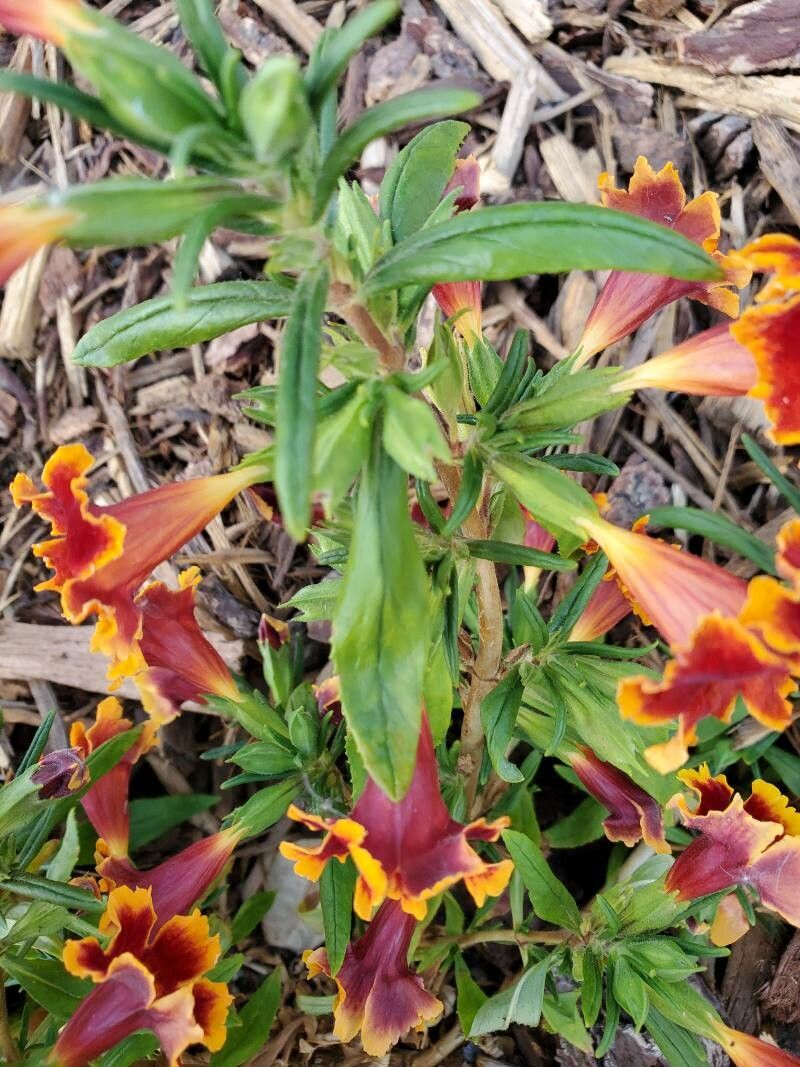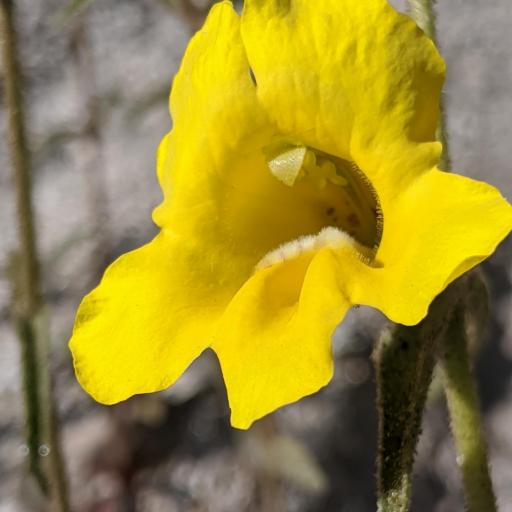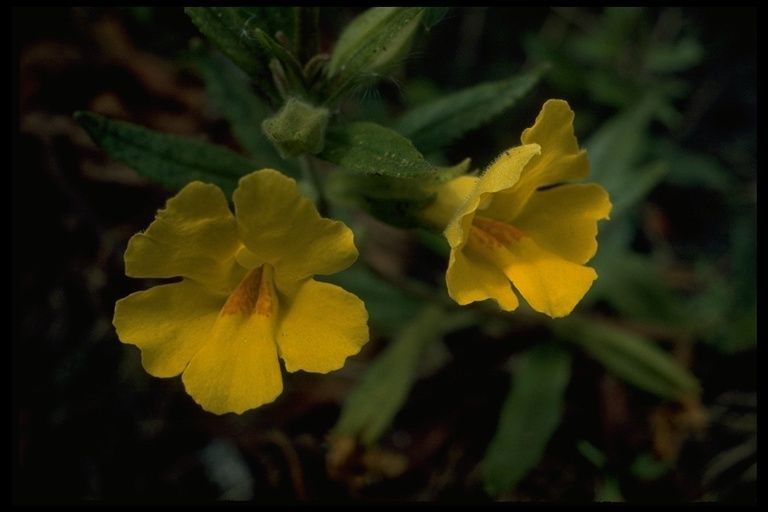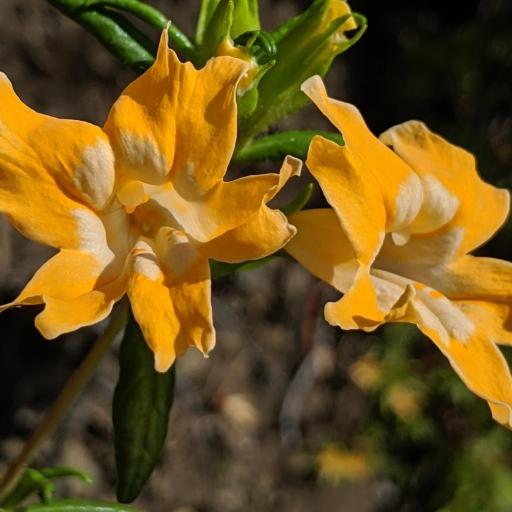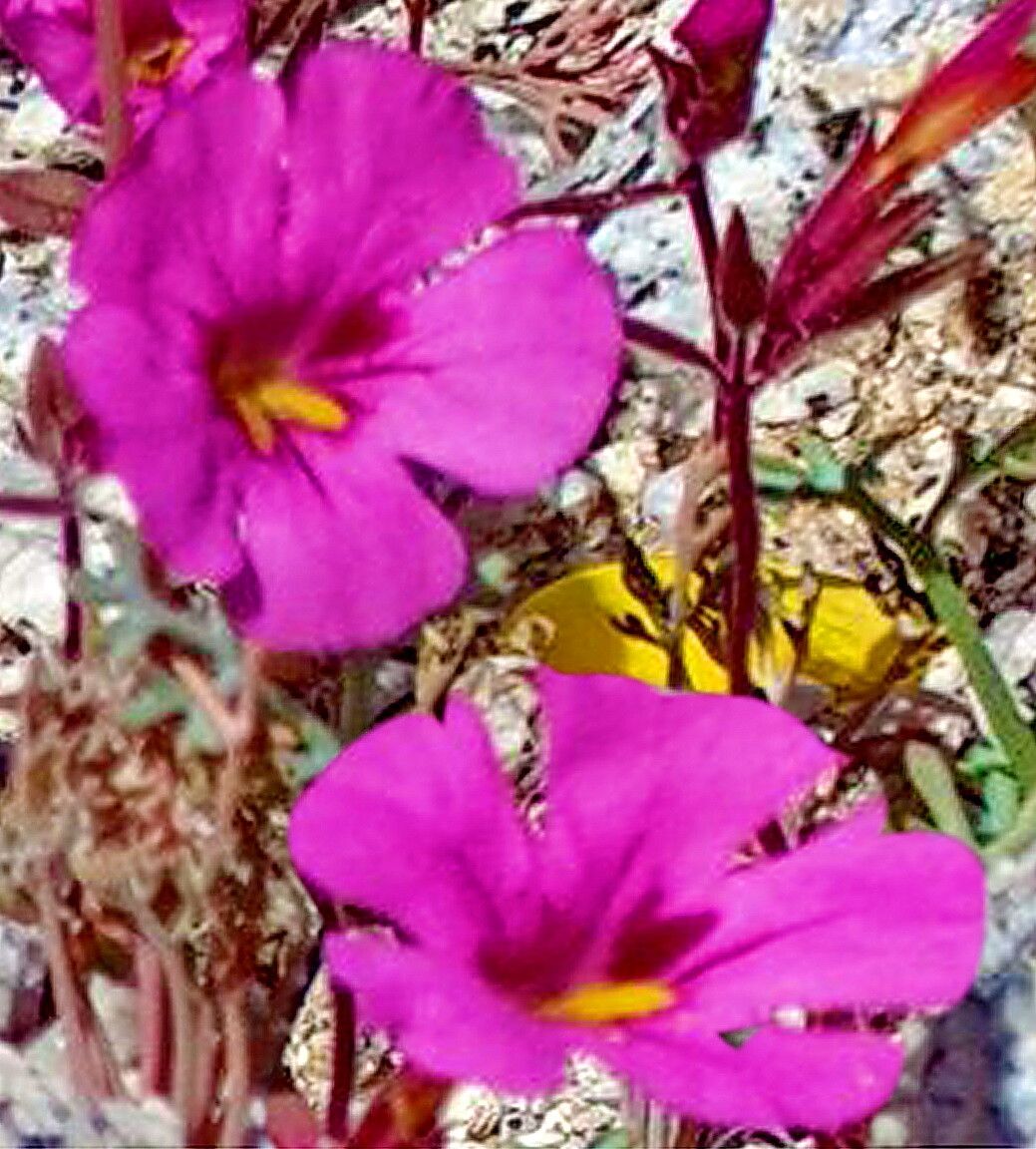
Diplacus bigelovii is a species of monkeyflower known by the common name Bigelow's monkeyflower. It is native to the southwestern United States, where it grows in desert and slope habitats. It was formerly known as Mimulus bigelovii.
Desert monkeyflower is fairly resistant to disease and usually does not suffer from many ailments. However, it can be vulnerable to pests and diseases present in its environment. These infections tend to be mild. For care, the plant requires moderate maintenance. It should be pruned regularly to preserve appearance and support healthy growth. Fertilizing can also encourage flowering. The desert monkeyflower is suitable for anyone with outdoor space, such as a garden or patio, and does not demand extensive gardening experience. It may need more attention if grown indoors.
How to keep Diplacus Bigelovii.
Light
The desert monkeyflower flourishes under the direct sunlight, needing plenty of exposure for its best growth. Although its typical environment is bathed in sunlight, it can adequately withstand areas that receive patchy sunlight. Too much shade can cause sub-par growth, while too much sunlight may lead to sunburned leaves.
Temperature
The desert monkeyflower is indigenous to habitats which usually have temperatures ranging from 68 to 95 °F (20 to 35 ℃). It flourishes in hotter weather conditions and needs adaptation during the chillier seasons for optimal growth.
Fertilizer
When the Desert monkeyflower has predominantly displayed its blossoms to their largest extent, it's appropriate to reinitiate fertilization. Commence this process once more when the blossoms are rendering their maximum display, doing so every three to four weeks, contingent on the weather. However, once the Desert monkeyflower begins to show a decrease in the emergence of new blooms, cease the fertilization as it is unnecessary when the plant is no longer capable of generating more blossoms.
Botanical profile.
- Plant Type
- Herb
- Life Cycle
- Annual
- Genus
- Diplacus
- Family
- Phrymaceae
- Hardiness Zone
- 8-10
- Mature Height
- 3 cm to 23 cm
- Mature Spread
- 15 cm to 30 cm
- Leaf Color
- Green, Dark Green
- Leaf Type
- Semi-evergreen
- Flower Color
- Yellow, Orange
- Flower Size
- 2.03 cm to 3.05 cm
- Bloom Time
- Spring
- Planting Time
- Spring
- Harvest Time
- Late spring, Early summer, Mid summer
- Native Area
- Mexico