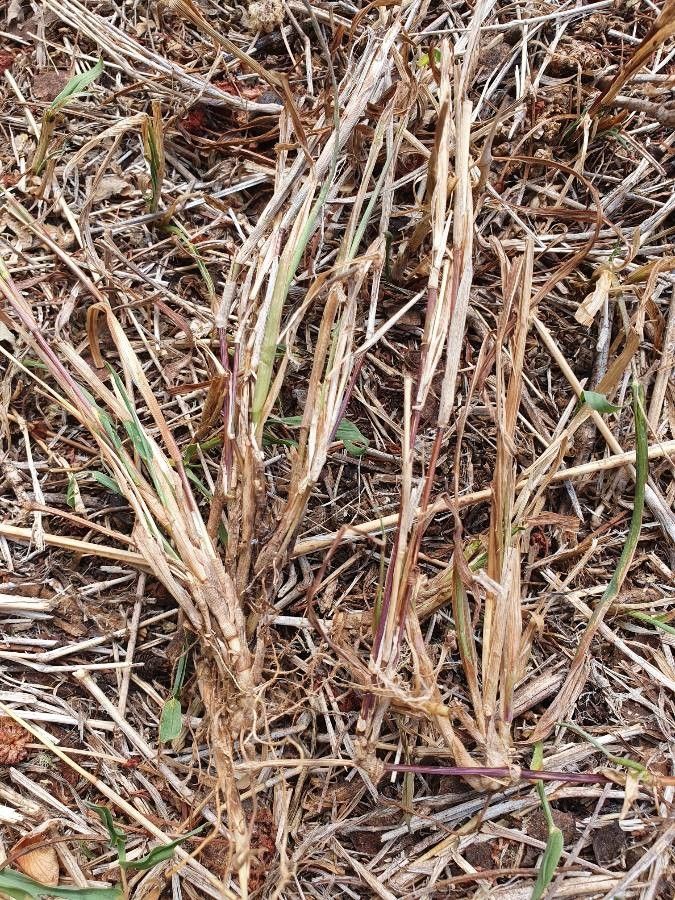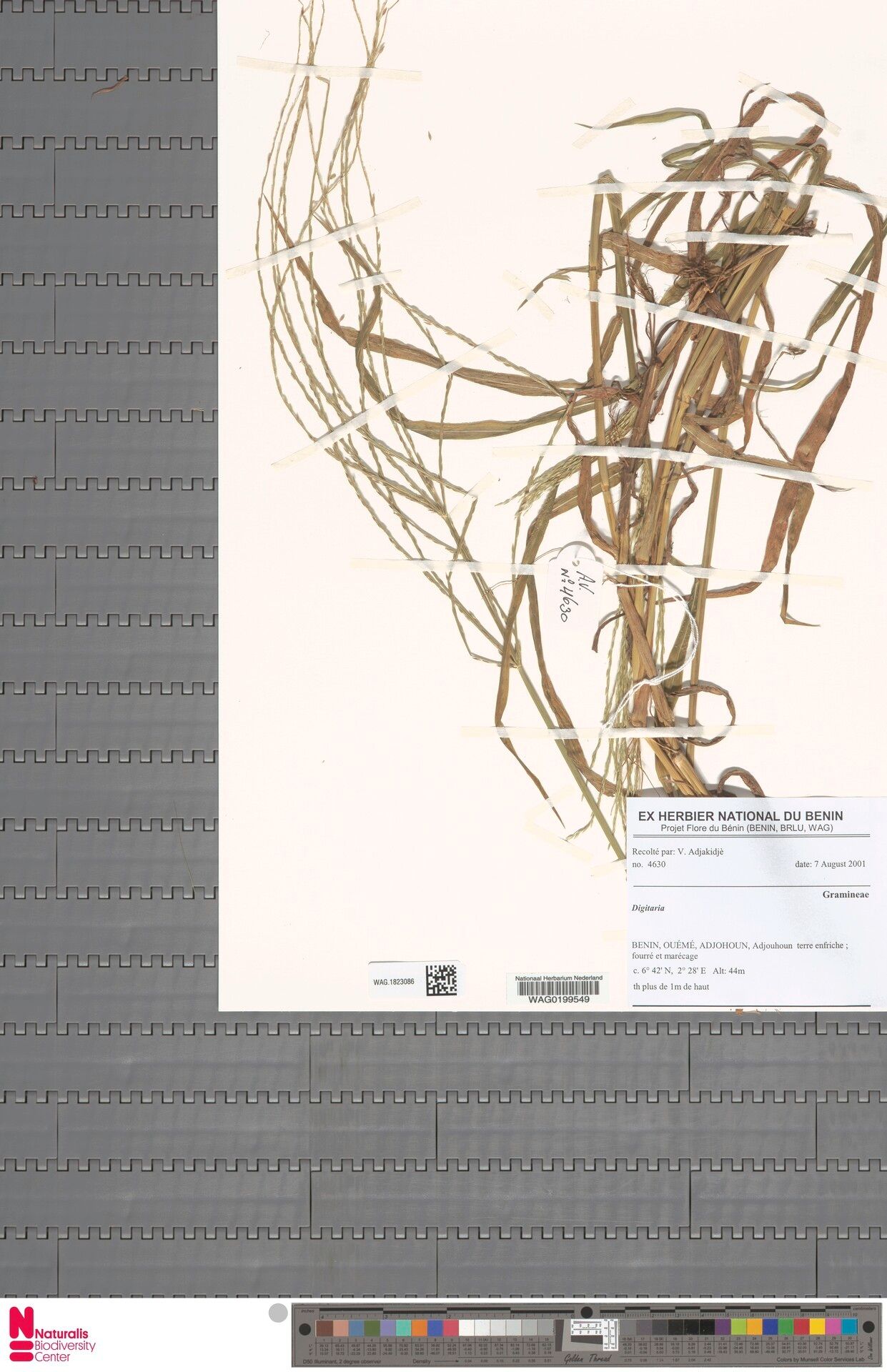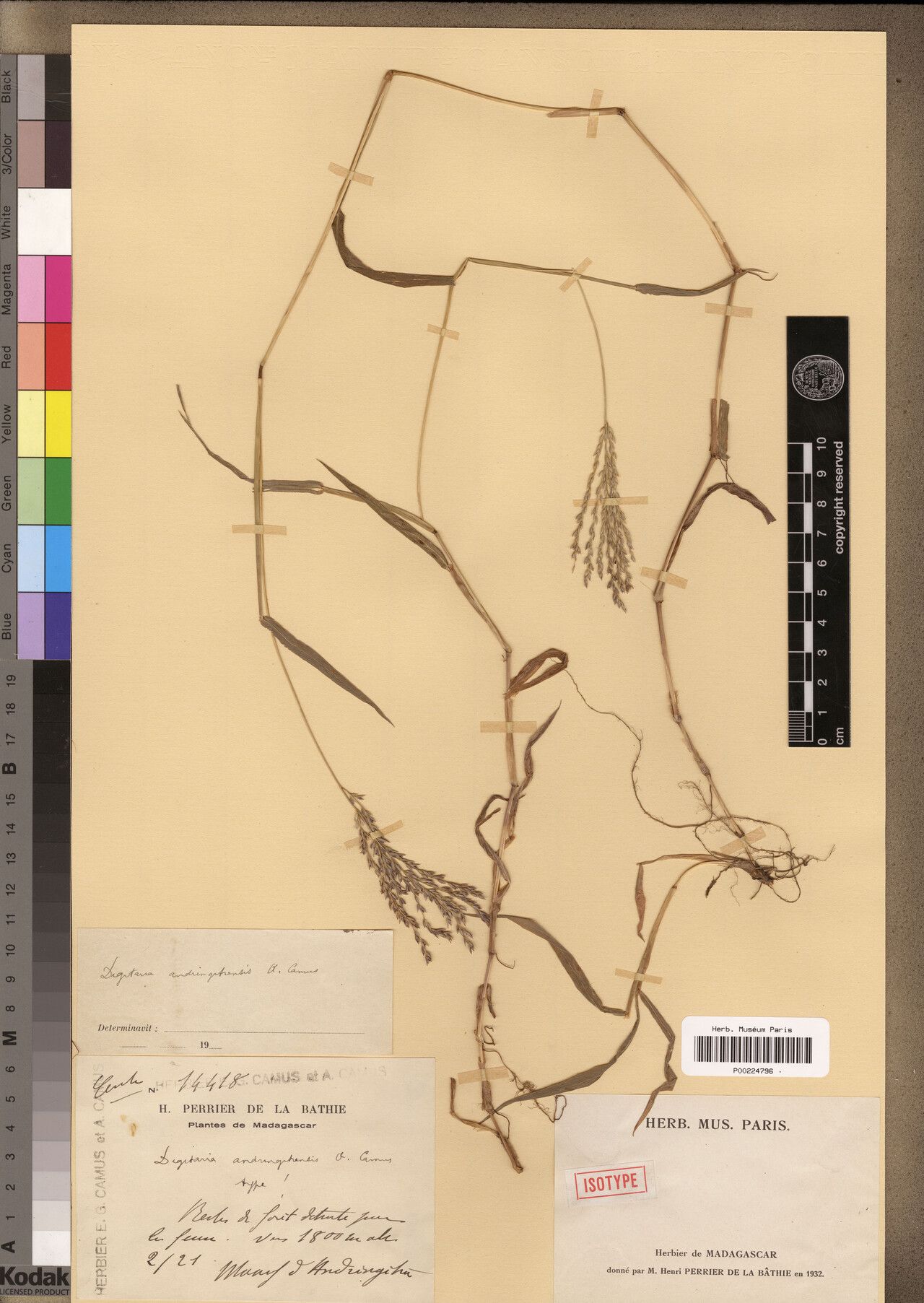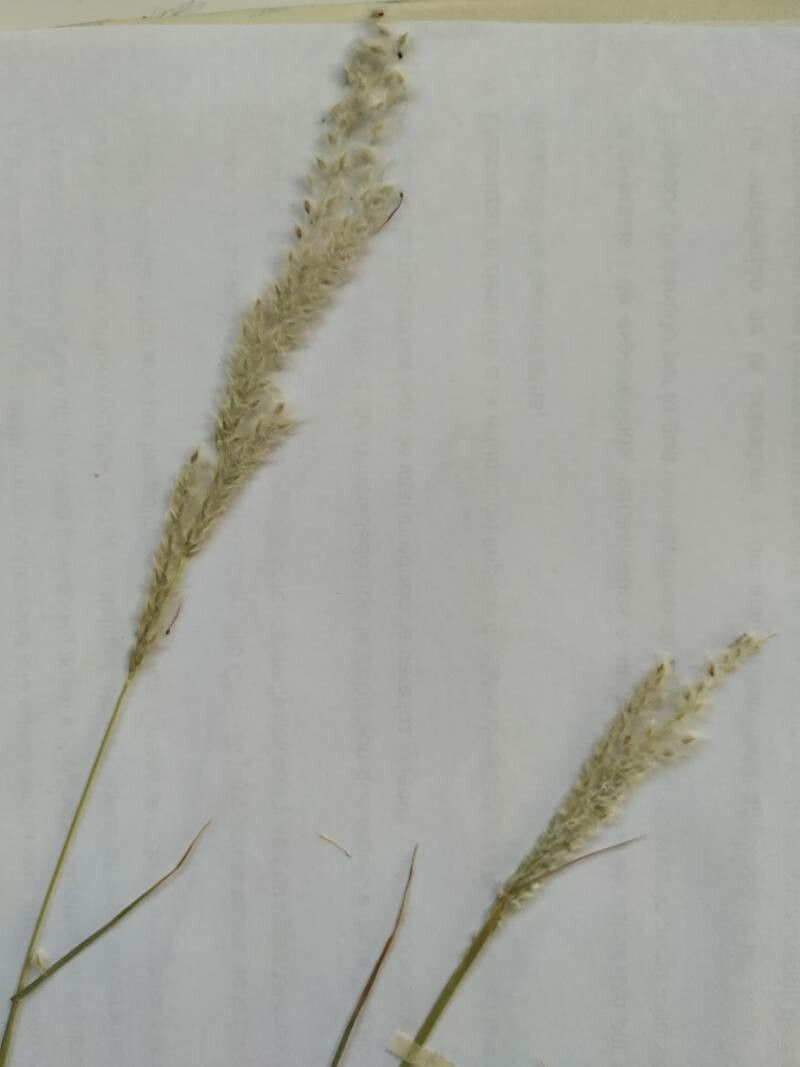
Digitaria californica is a species of grass known by the common name Arizona cottontop. It is native to the Americas, where it can be found in the southwestern United States, Mexico, Central America, and South America.This perennial grass forms a clump of stems reaching up to a meter in height. The branching root system can reach one meter deep. There are no rhizomes or stolons. The leaf sheaths around the stems can be very hairy to woolly. The leaves are usually short and narrow. The inflorescence is a dense, narrow panicle containing pairs of woolly-haired spikelets.This plant grows in a number of habitat types, including desert scrub and shrublands, shrubsteppe, and savanna. In the desert it sometimes grows beneath mesquites where it thrives in the local nutrients. It tolerates varying precipitation amounts and survives easily in drought conditions, becoming dormant at times, then growing quickly when rain returns. Much of its growth occurs in the summer, after the spring and summer rain cycles.This species is a preferred grass for livestock such as cattle. It tolerates high grazing activity, but not overgrazing.
Arizona cottontop is well resistant to disease and is typically not prone to illnesses. As for care, this plant is fairly low-maintenance. When grown outdoors it needs little watering, and larger plants usually do not require pruning. Smaller plants, however, should be pruned after they finish blooming. Arizona cottontopt is appropriate for anyone with an outdoor area, such as a garden or deck, and does not need much care experience.
How to keep Digitaria Californica.
Light
Arizona cottontop is a sun-loving, perennial herbaceous plant native to open habitats, commonly found in meadows and grasslands. It prefers full sun but can also tolerate partial sun.
Water
The Arizona cottontop flourishes in arid environments with minimal water needs. It requires weekly watering to prevent soil saturation. This grass thrives outdoors in open fields and deserts, adapting well to seasonal rain patterns. Despite infrequent precipitation, it exhibits remarkable drought tolerance.
Temperature
Arizona cottontop can adjust to a wide range of temperatures, but its range may still be restricted by particular combinations of moisture and heat. It does best in warm summer conditions with sufficient rainfall or watering. Extended periods of cloudy and rainy weather, as well as prolonged high temperatures, increase the risk of Arizona cottontop dying. In winter, proper protection from cold can improve the plant's chances of survival.
Fertilizer
Arizona cottontop needs extra nutrients to encourage healthy new growth. In spring, adding some compost around the plant’s base will effectively supply the necessary nourishment. Fertilizing helps support vigorous growth and improves the plant’s resistance to diseases and pests.
Pruning
Arizona cottontop thrives when properly pruned, which promotes healthy growth. To encourage optimal development, prune in early spring before new growth appears. During this time, remove any dead stems and thin out the clumps to improve air circulation. Regular pruning helps maintain the plant's shape and vigor, prevents overcrowding, and reduces the risk of disease. By following these horticultural guidelines, you can ensure the health and vitality of your Arizona cottontop.
Botanical profile.
- Plant Type
- Grass
- Life Cycle
- Perennial
- Genus
- Digitaria
- Family
- Poaceae
- Hardiness Zone
- 8-11
- Mature Height
- 30 cm to 91 cm
- Mature Spread
- 20 cm to 40 cm
- Leaf Color
- Green
- Leaf Type
- Semi-evergreen
- Flower Size
- 0.20 cm to 0.25 cm
- Bloom Time
- Summer
- Planting Time
- Spring, Autumn
- Harvest Time
- Late summer, Early fall, Mid fall