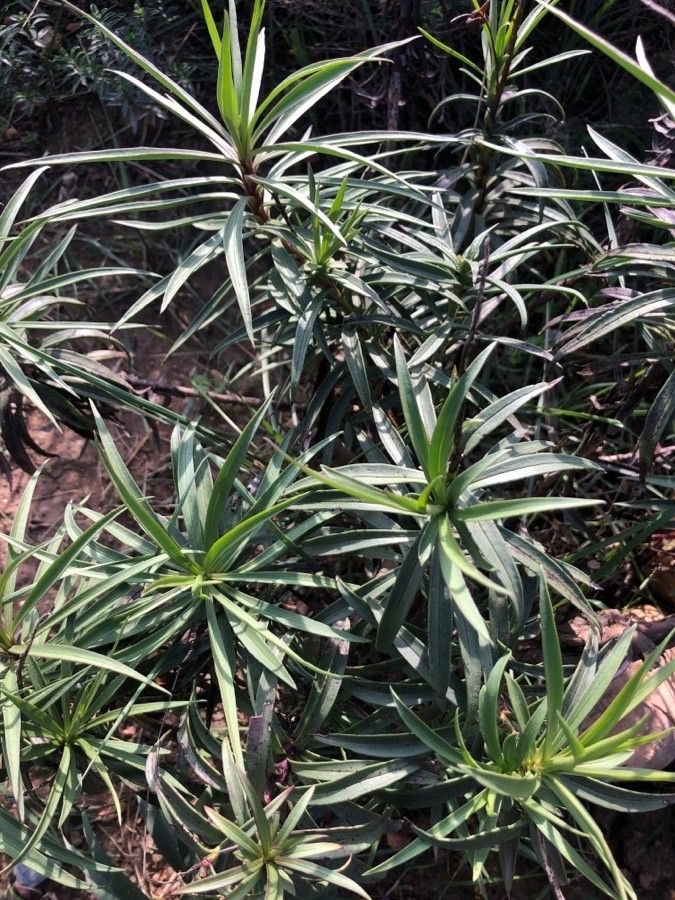
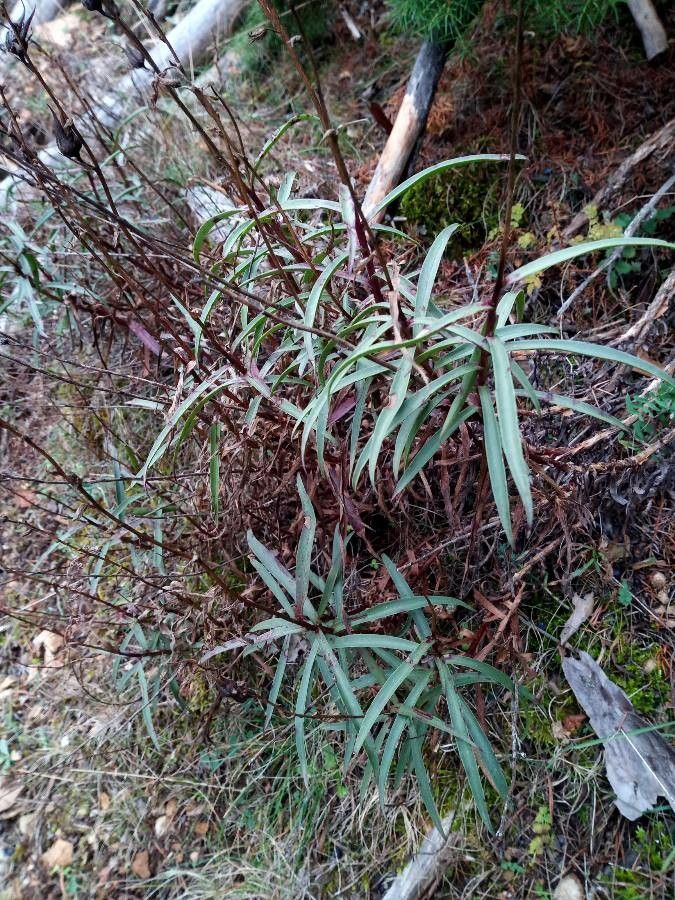
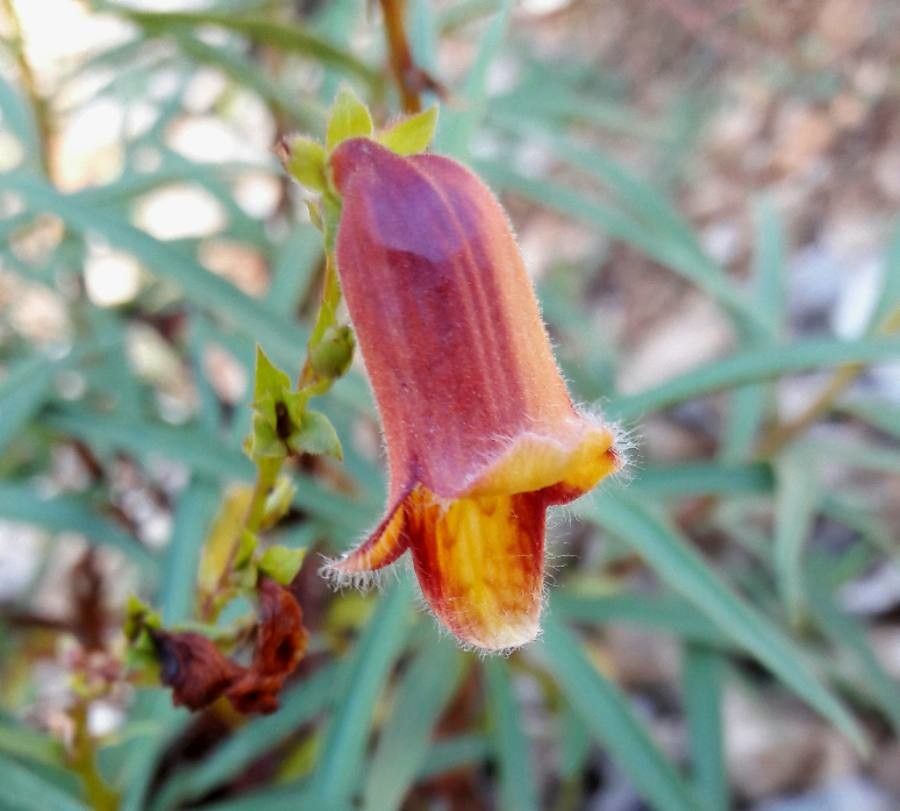
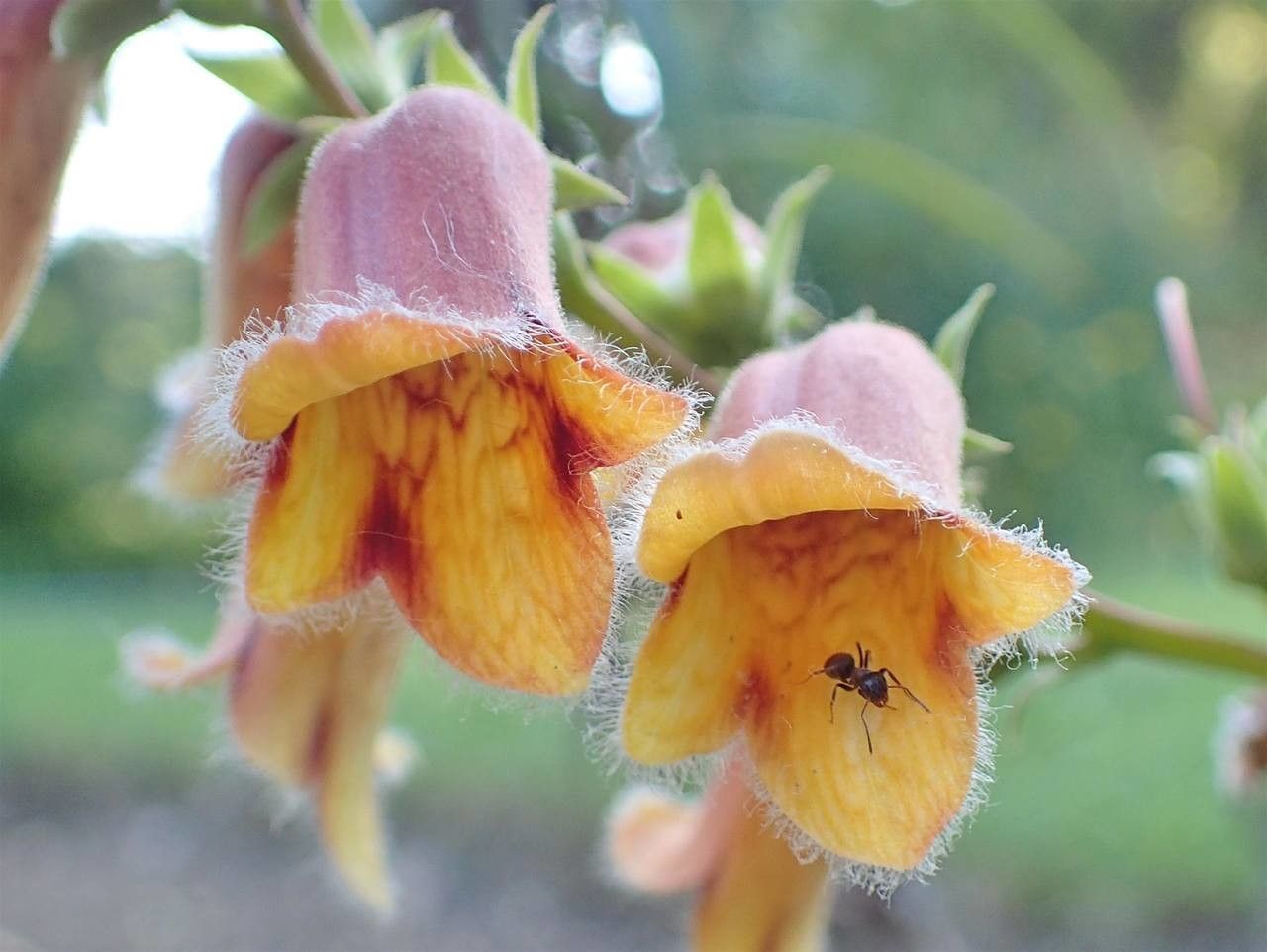
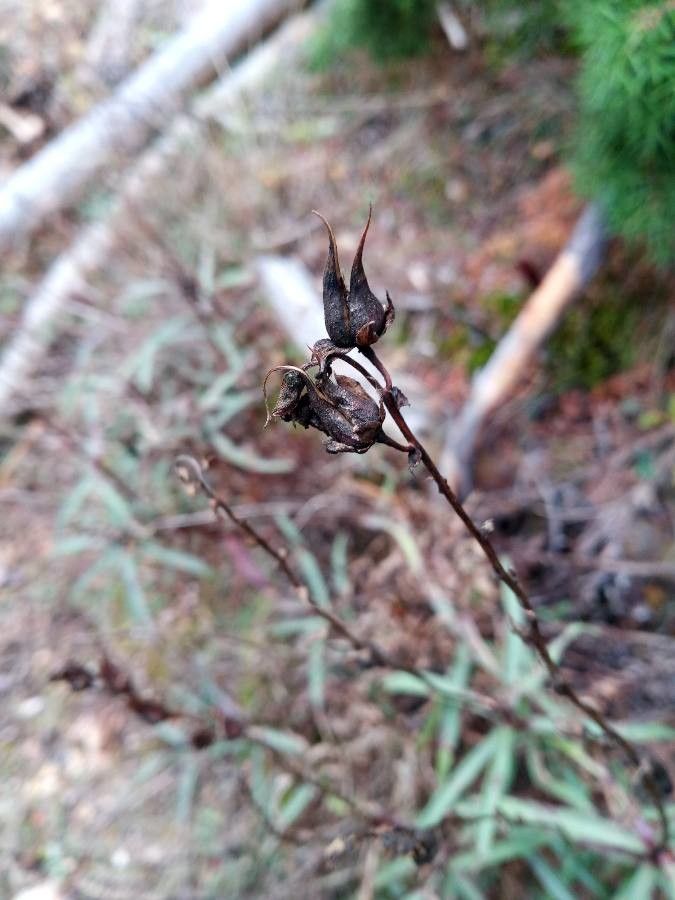
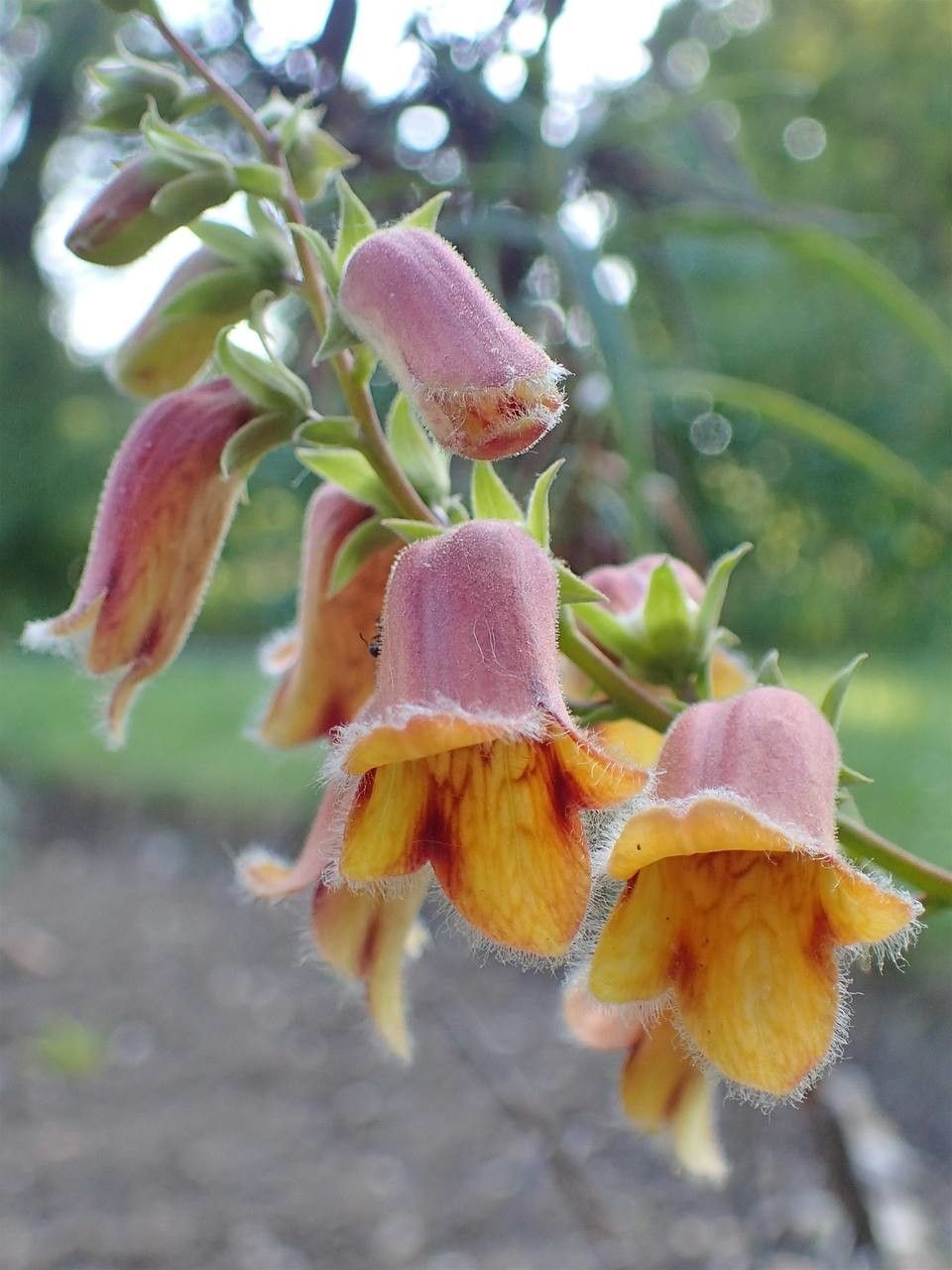
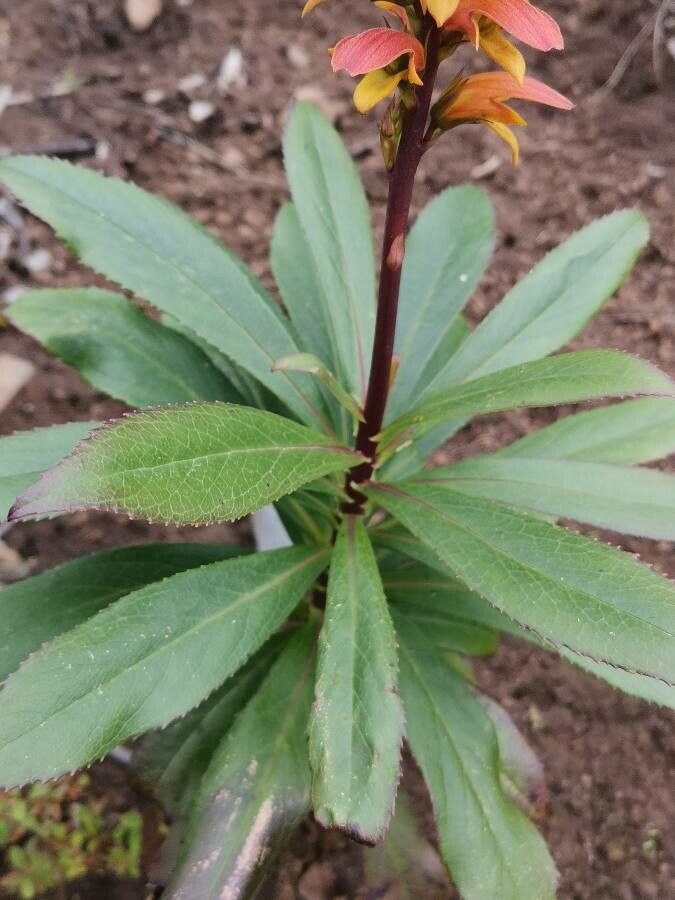
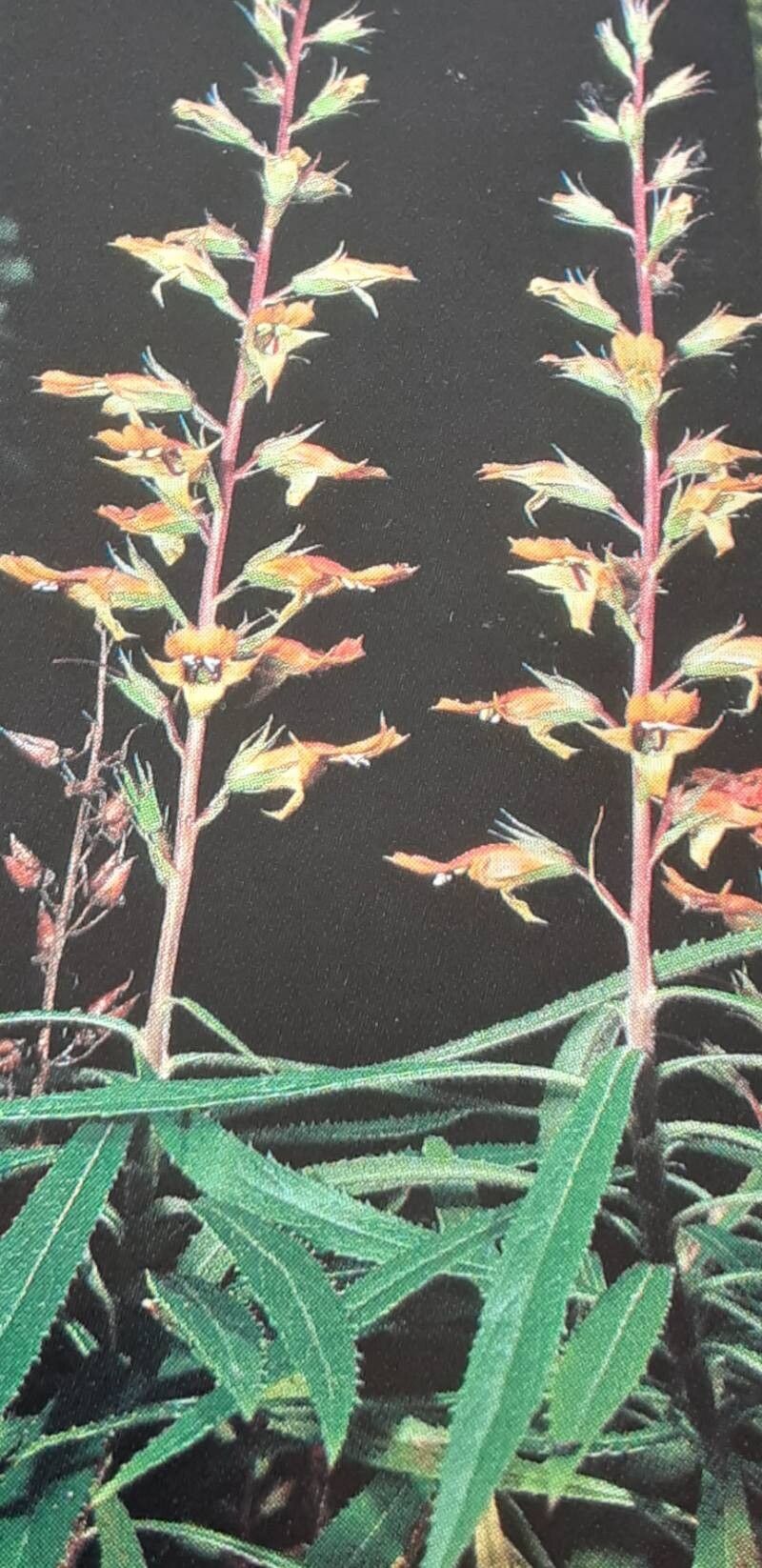
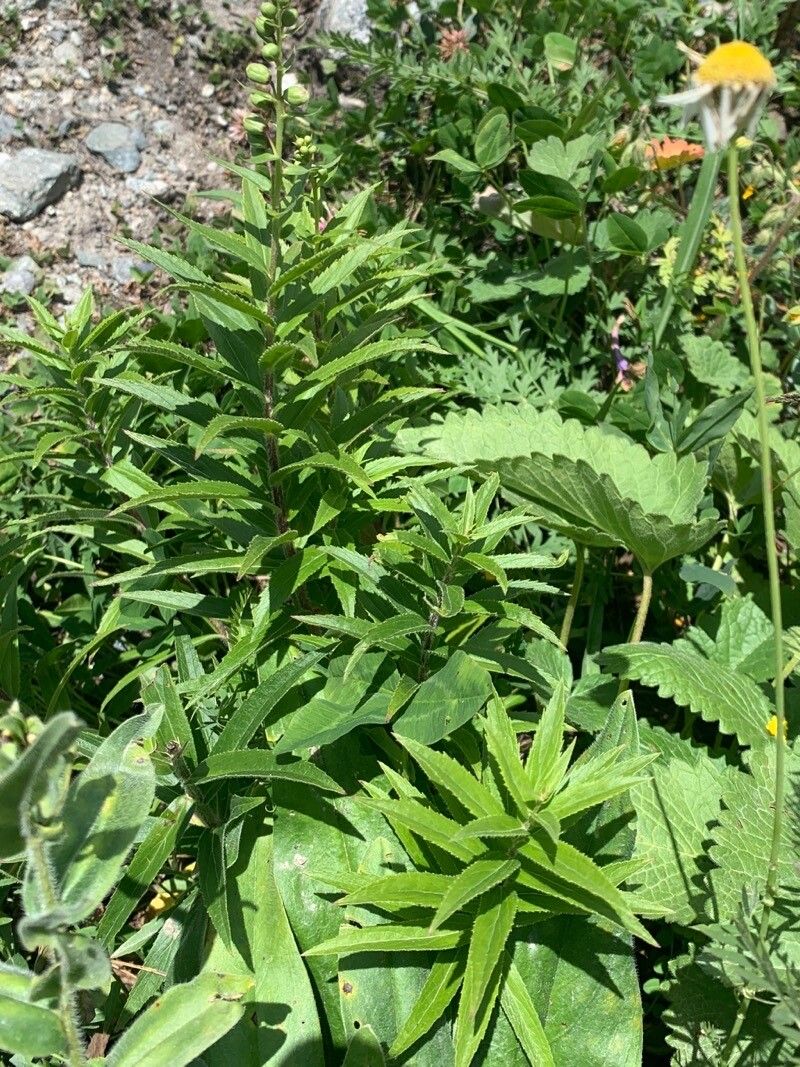
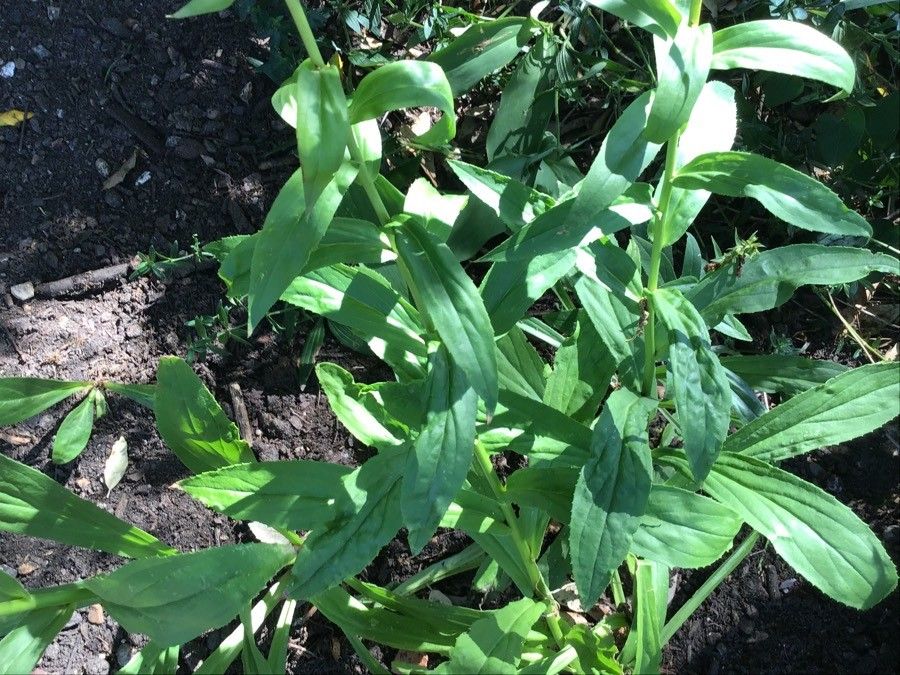
Digitalis obscura, commonly called willow-leaved foxglove or dusty foxglove or spanish rusty foxglove, is a flowering plant native to regions in Spain and Morocco. It is also grown as an ornamental flower. This foxglove is a woody perennial plant belonging to the family Plantaginaceae. Along with the other foxgloves it used to be placed in the figwort family, Scrophulariaceae; however, recent genetic research has moved the genus Digitalis to a larger family. It is similar to many of the foxglove species in its high toxicity and medicinal use as a source for the heart-regulating drug digoxin. Its strikingly distinctive amber- to copper-coloured flowers give the species its name and help distinguish it from other members of the genus.
Spanish rusty foxglove is fairly resistant to disease and is generally not prone to illnesses. Nevertheless, it can be vulnerable to pests and diseases present in its environment. These infections are typically not serious. For care, this plant requires moderate maintenance. It should be pruned regularly to preserve a neat appearance and promote healthy growth. Fertilizing can also help encourage flowering. Spanish rusty foxglove is suitable for someone with an outdoor area, like a garden or patio, and does not demand much experience in plant care. It may need more attention when grown indoors.
How to keep Digitalis Obscura.
Light
Spanish rusty foxglove naturally occurs in habitats such as forest understories and rocky areas, where it grows in natural shade. It prefers partial sun but can adapt to full sun or full shade, showing its versatile and hardy nature.
Water
The Spanish rusty foxglove is well-adapted to arid regions due to its excellent drought tolerance. It requires watering only once a week to stay healthy. As an evergreen plant, it retains its foliage year-round with minimal water, making it an ideal choice for outdoor gardens in temperate climates.
Temperature
Spanish rusty foxglove can tolerate a wide range of temperatures, but its distribution may still be restricted by different combinations of moisture and heat. It performs best in warm summer conditions with sufficient rainfall or watering. Extended periods of cloudy, rainy weather, as well as prolonged high temperatures, can increase the risk of Spanish rusty foxglove dying. In winter, adequate protection from cold can improve the plant's survival rate.
Fertilizer
The best time to fertilize a Spanish rusty foxglove is in early spring, as it breaks dormancy and starts active growth. Fertilizing supplies essential nutrients for healthy development. Although Spanish rusty foxglove has fairly low fertilizer requirements, giving it fertilizer once a year can improve its survival and encourage better, longer-lasting blooms.
Pruning
The Spanish rusty foxglove is known for its tall spikes of tubular flowers and dense foliage. To maintain its health and appearance, prune in early to late spring. This involves removing dead stems and spent flower spikes, which helps improve air circulation and encourages healthy growth. Regular pruning enhances the plant's vigor and flowering while maintaining its shape and controlling its size, ensuring a tidy presence in your garden.
Botanical profile.
- Plant Type
- Herb
- Life Cycle
- Perennial
- Genus
- Digitalis
- Family
- Plantaginaceae
- Hardiness Zone
- 5-9
- Mature Height
- 61 cm to 91 cm
- Mature Spread
- 23 cm to 46 cm
- Leaf Color
- Green
- Leaf Type
- Semi-evergreen
- Flower Color
- Orange, Brown
- Flower Size
- 2.54 cm to 7.62 cm
- Bloom Time
- Late spring, Early summer, Mid summer
- Planting Time
- Spring, Summer, Autumn
- Harvest Time
- Late summer, Early fall
Other names.