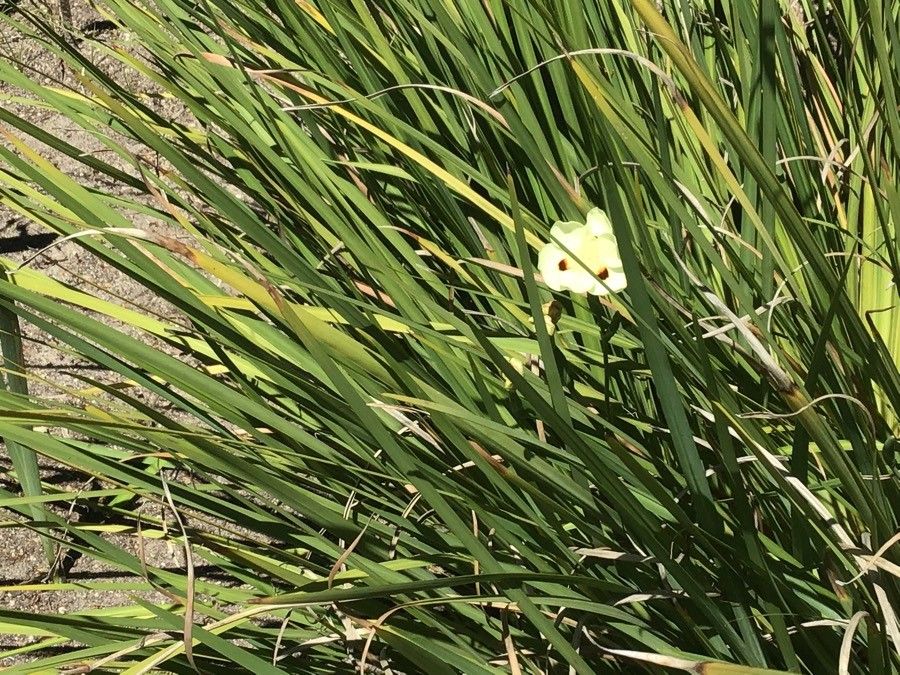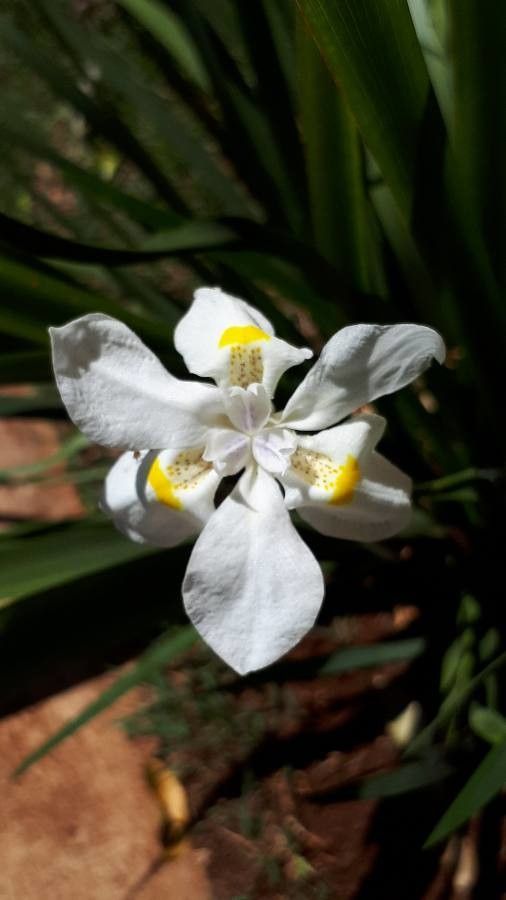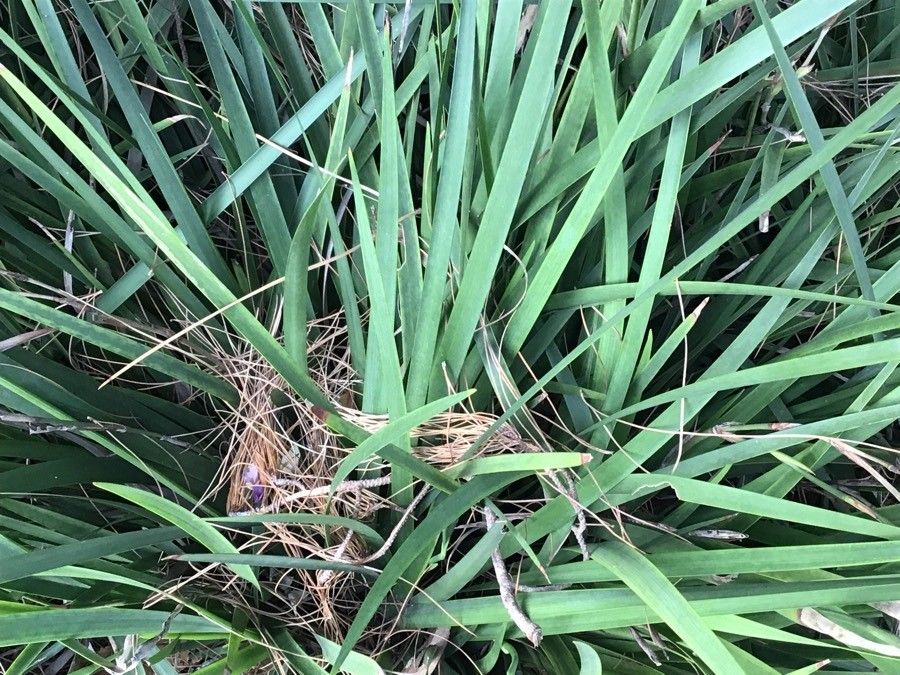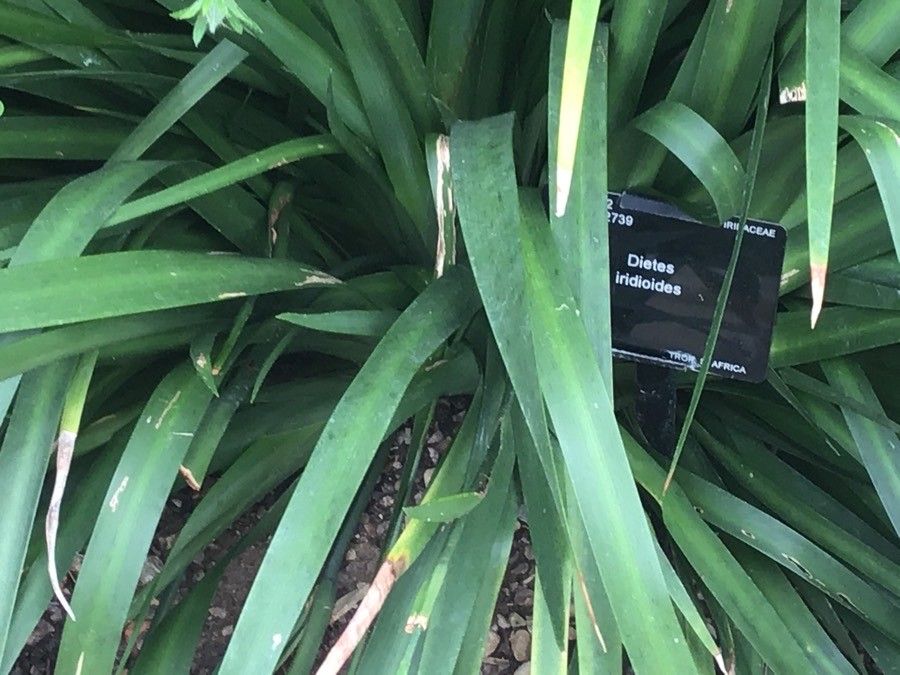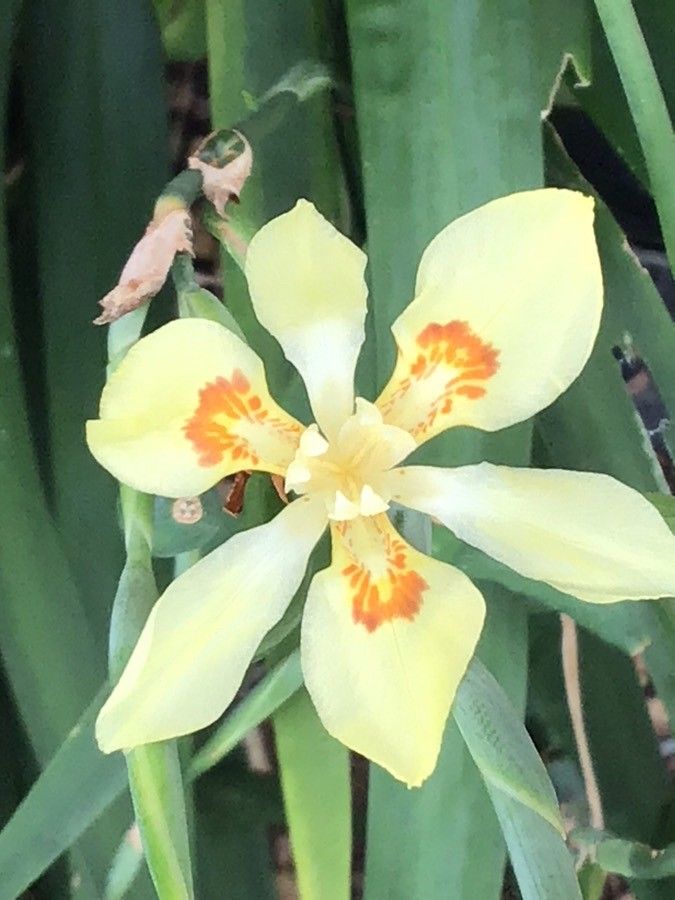
Dietes flavida is a small shrub and geophyte that flowers from October to January. The species is native to Eswatini, KwaZulu-Natal and Mozambique.
Yellow Wood Iris has strong disease resistance and is generally not susceptible to illnesses. Nevertheless, it can be affected by pests and diseases present in its surroundings. Such infections are typically not severe. Regarding care, this plant requires moderate maintenance. It needs regular pruning to preserve a tidy appearance and support healthy growth. Applying fertilizer can also encourage flowering. Yellow Wood Iris is suitable for anyone with an outdoor area, such as a garden or patio, and does not demand extensive gardening experience. It may need more attention when grown indoors.
How to keep Dietes Flavida.
Light
The Yellow Wood Iris thrives naturally in shaded locations like forest underlayers or rocky terrains. It typically favors conditions with partial sunlight, but displays resilience by being capable of adjusting to either complete sun or total shade, reflecting its adaptable and robust character.
Water
Dietes flavida flourishes in environments that are rich in moisture, and it needs consistent watering to prevent any extremes. To mimic its natural water cycle, it is best to water it weekly, especially if it is planted outdoors. As an evergreen plant, it retains its lush appearance throughout the year, emphasizing the need for regular care.
Temperature
Yellow Wood Iris is highly adaptable to temperature, capable of withstanding higher temperatures and larger shifts in temperature. In hot conditions, it's crucial to ensure proper watering and suitable shading to avoid damage from the sun. Yet, Yellow Wood Iris shows a weaker tolerance for colder degrees. Although it can deal with a certain level of cold, intense frigid conditions might result in frost damage.
Fertilizer
The optimal period to apply fertilizer to a Yellow Wood Iris is during early spring as it transitions from a dormant state to active growth. Nutrients supplied by fertilization are crucial for its robust growth. Even though Yellow Wood Iris doesn't require much fertilization, consistent yearly fertilization can boost its lifespan and encourage superior and more enduring blooms.
Pruning
Dietes flavida is a plant known for its sword-like leaves and delicate yellow flowers. To keep it healthy and promote growth, prune the plant in early spring. This involves removing spent flowers and any damaged leaves. Make sure to use clean tools to prevent the spread of diseases. Regular pruning not only encourages vigorous blooming but also prevents overcrowding, enhancing the overall vitality of your Dietes flavida.
Botanical profile.
- Plant Type
- Herb
- Life Cycle
- Perennial
- Genus
- Dietes
- Family
- Iridaceae
- Hardiness Zone
- 8-11
- Mature Height
- 61 cm to 91 cm
- Mature Spread
- 30 cm to 61 cm
- Leaf Color
- Dark Green
- Leaf Type
- Semi-evergreen
- Flower Color
- Yellow, White
- Flower Size
- 7.62 cm to 10.16 cm
- Bloom Time
- Mid spring, Late spring, Summer, Early fall
- Planting Time
- Spring, Summer, Autumn
- Harvest Time
- Summer, Fall
- Native Area
- South Africa, Eswatini