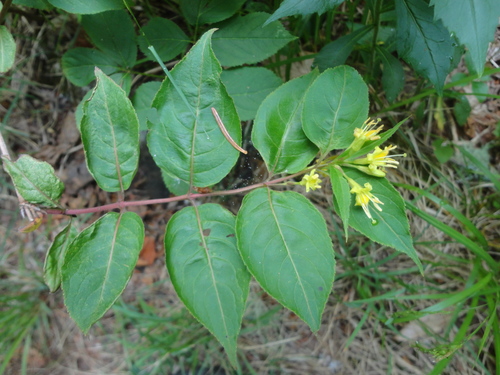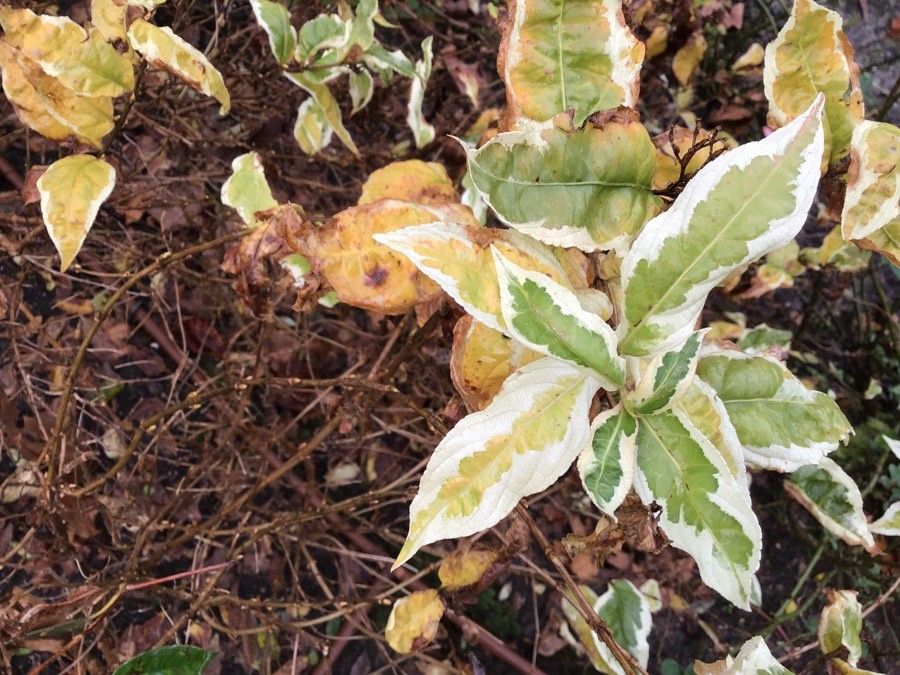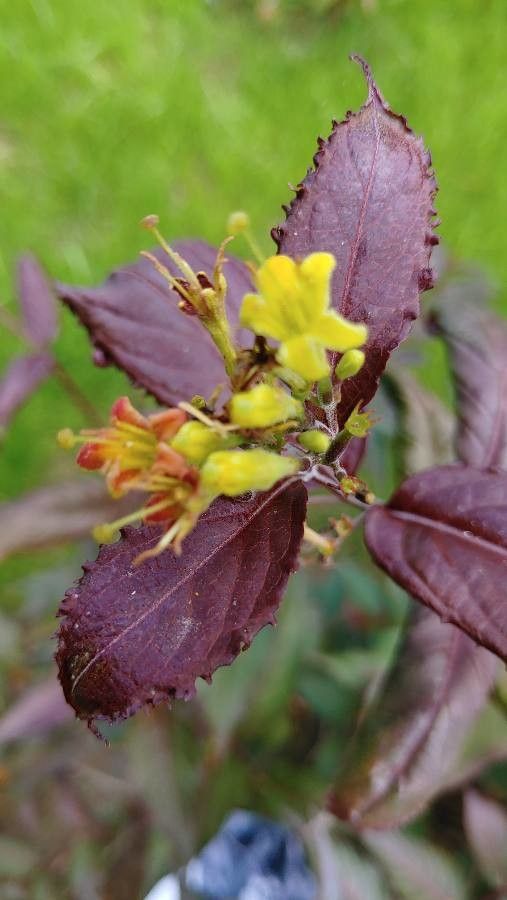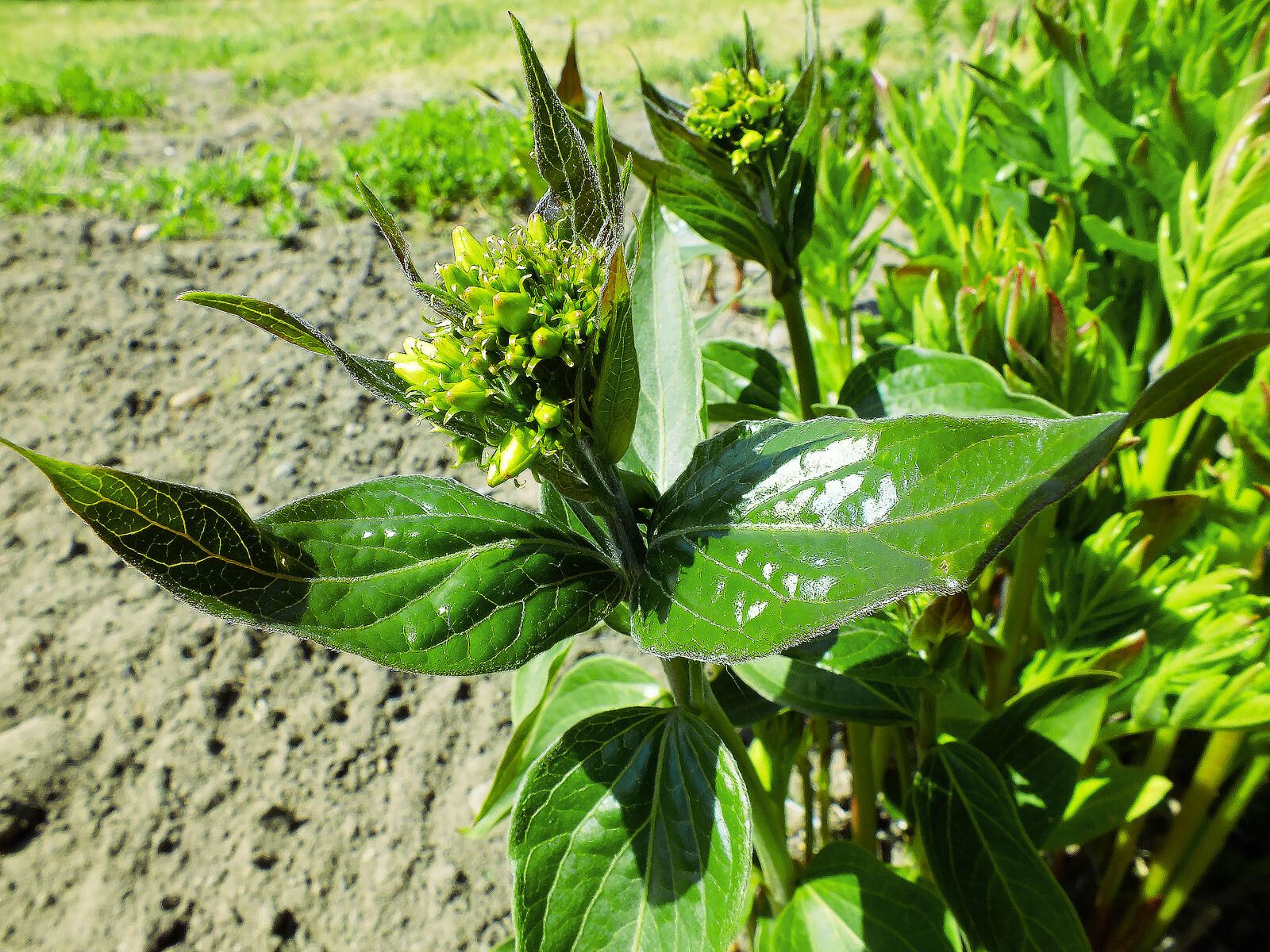
This hardy and low-maintenance native shrub boasts striking burgundy-green foliage that deepens to a more intense burgundy-black in the spring and fall. Throughout the summer, clusters of bright yellow, trumpet-shaped flowers contrast beautifully with the rich foliage. With its tough, compact, and upright form, this shrub is an excellent choice for woodland settings. Plant it in masses for a breathtaking display. Note that this shrub is deciduous.
Mountain bush honeysuckle has strong resistance to disease and is usually not prone to illnesses. This plant is fairly low-maintenance. Planted outdoors it needs only occasional watering, and larger specimens typically do not require pruning; smaller plants, however, should be pruned after they finish blooming. Mountain bush honeysuckle is suitable for anyone with outdoor space, such as a garden or deck, and does not demand much prior care experience.
How to keep Diervilla Rivularis.
Light
Mountain bush honeysuckle does best in spots with moderate light for most of the day, though it also tolerates stronger sun. Seasonal changes may mean you need to move it, especially when it is in containers. Too little light can inhibit its growth and flowering.
Water
Mountain bush honeysuckle thrives in moist environments but can also adapt to drier conditions. To keep it healthy, water the plant every 1-2 weeks, allowing the soil to dry out slightly between waterings. Although it is typically grown outdoors, applying mulch around the plant can help retain moisture and better mimic its natural habitat.
Temperature
Mountain bush honeysuckle is highly adaptable to a range of climates, from very hot summers to cold winters. Still, it does have an ideal temperature range for healthy growth. If temperatures rise too much, the plant can suffer from heat and humidity stress, which may kill it. In areas where temperatures near the lower edge of its cold tolerance, providing insulation to protect the plant is essential.
Fertilizer
Timing is essential when fertilizing Mountain bush honeysuckle. Apply fertilizer in early spring and continue once a month until early summer. Fertilizer encourages attractive blooms and supplies energy during both dormant and active growth periods.
Pruning
To ensure a healthy and vibrant mountain bush honeysuckle, it's essential to prune during early spring. Start by removing any dead branches and trimming the older stems. This practice encourages new growth, leads to denser blooming, and helps maintain an open canopy that facilitates airflow, ultimately reducing the risk of disease. Pruning at the right time aligns with the plant’s natural growth cycle, ensuring it remains robust and attractive.
Botanical profile.
- Plant Type
- Shrub
- Life Cycle
- Perennial
- Genus
- Diervilla
- Family
- Caprifoliaceae
- Hardiness Zone
- 4-8
- Mature Height
- 0.91 m to 1.83 m
- Mature Spread
- 0.91 m to 1.52 m
- Leaf Color
- Green, Yellow, Red, Orange
- Leaf Type
- Deciduous
- Flower Color
- Yellow
- Flower Size
- 1.02 cm to 2.03 cm
- Bloom Time
- Summer
- Planting Time
- Spring, Summer
- Harvest Time
- Early fall, Mid fall