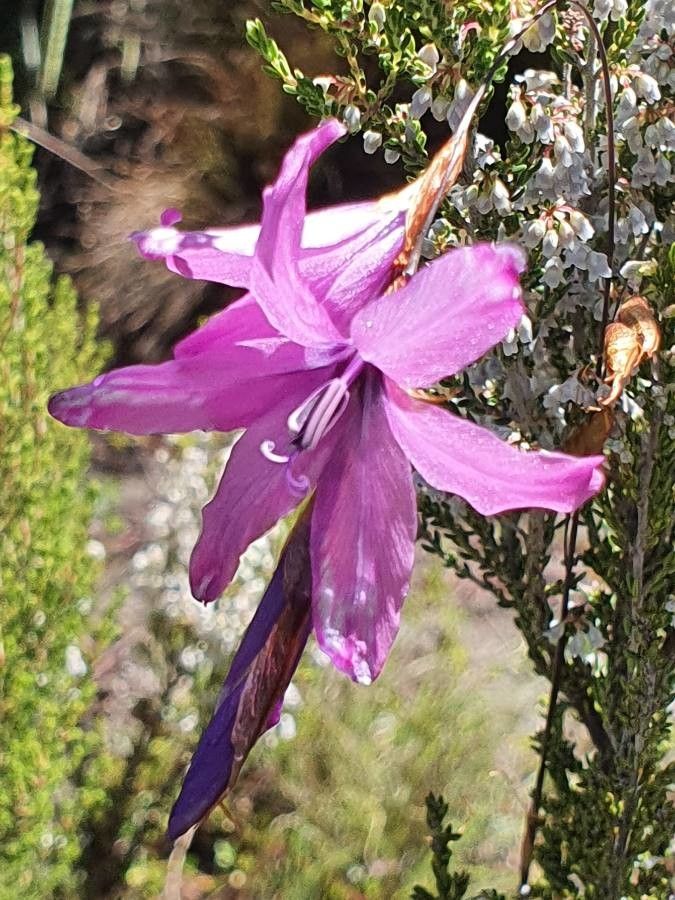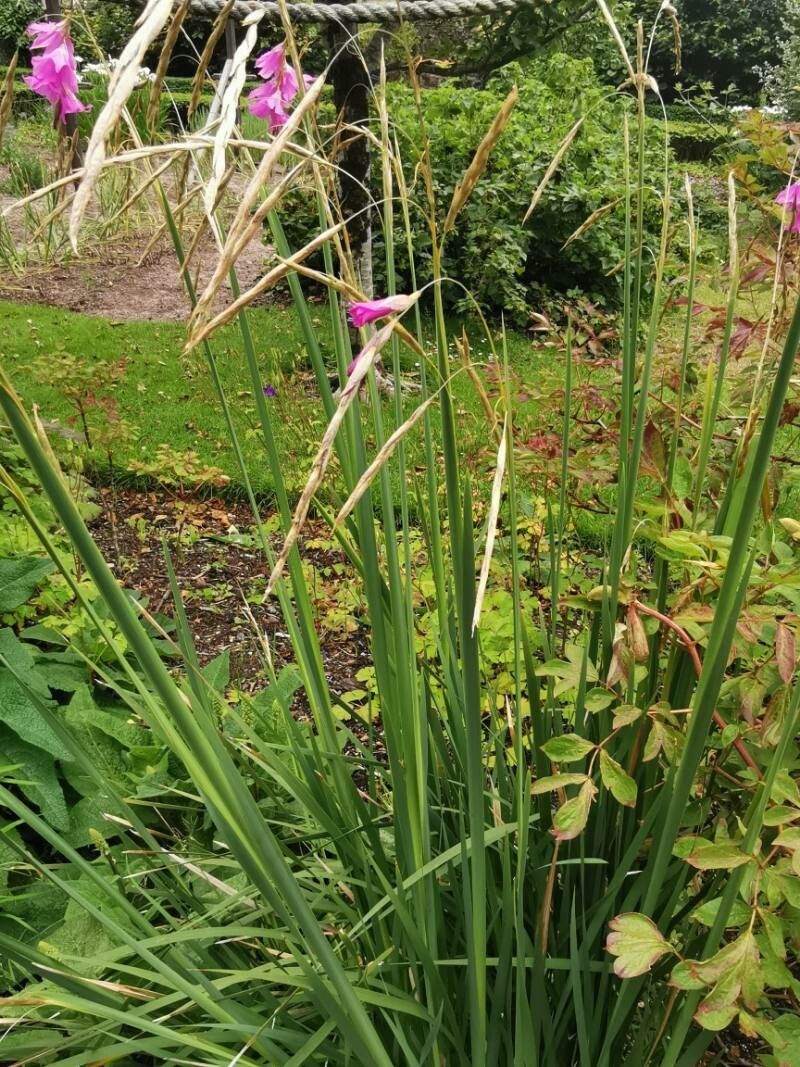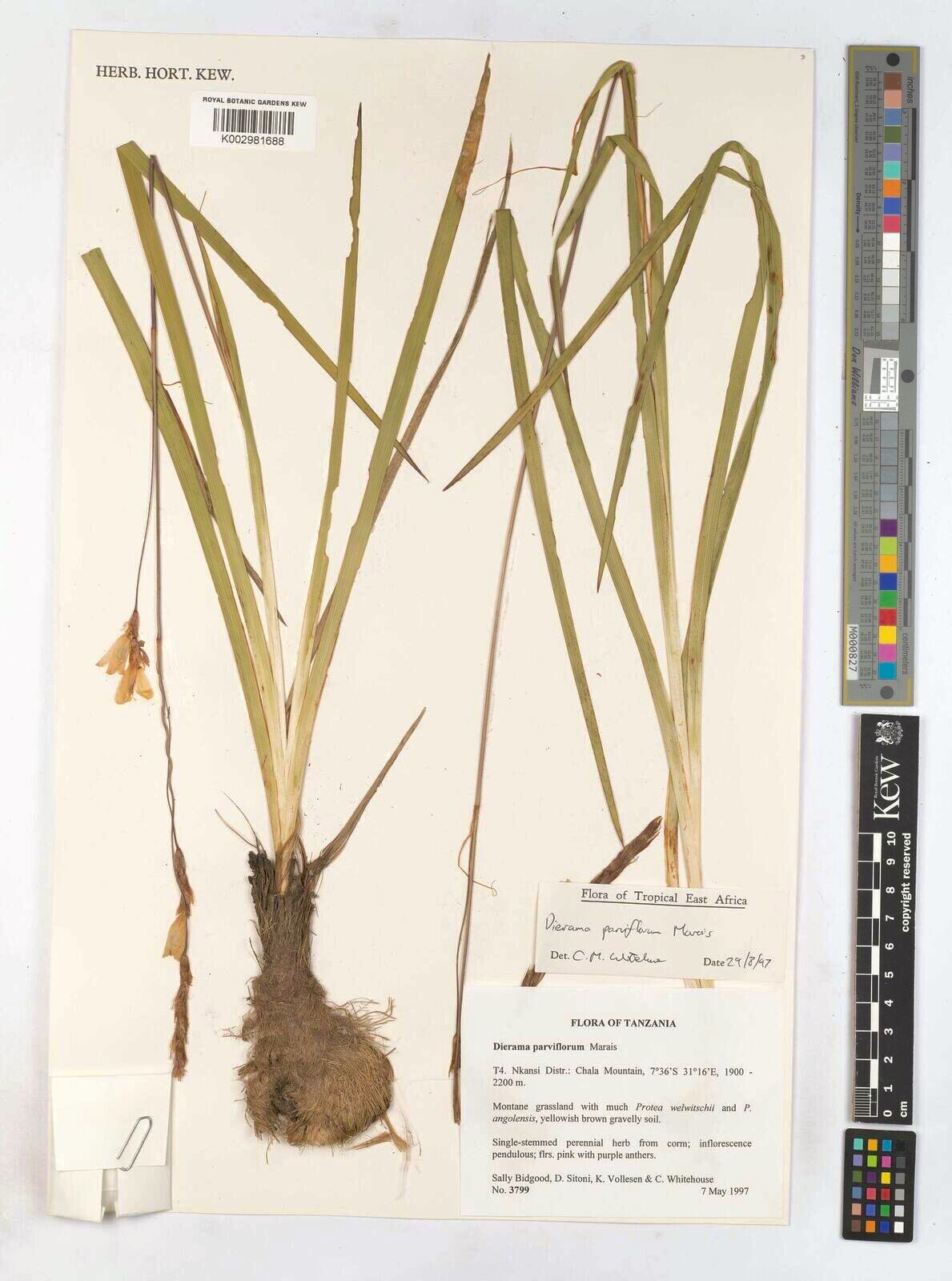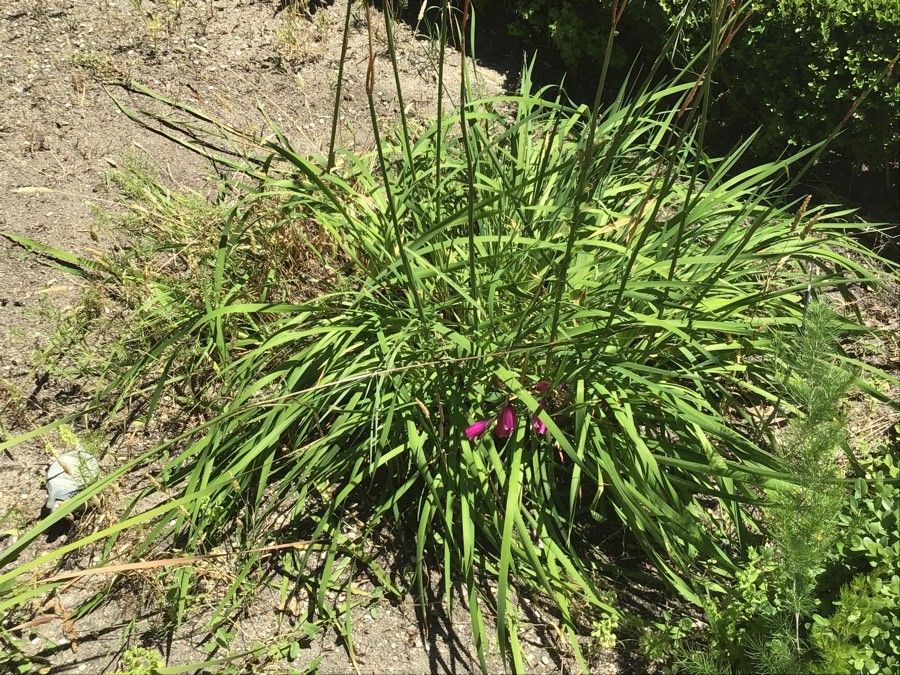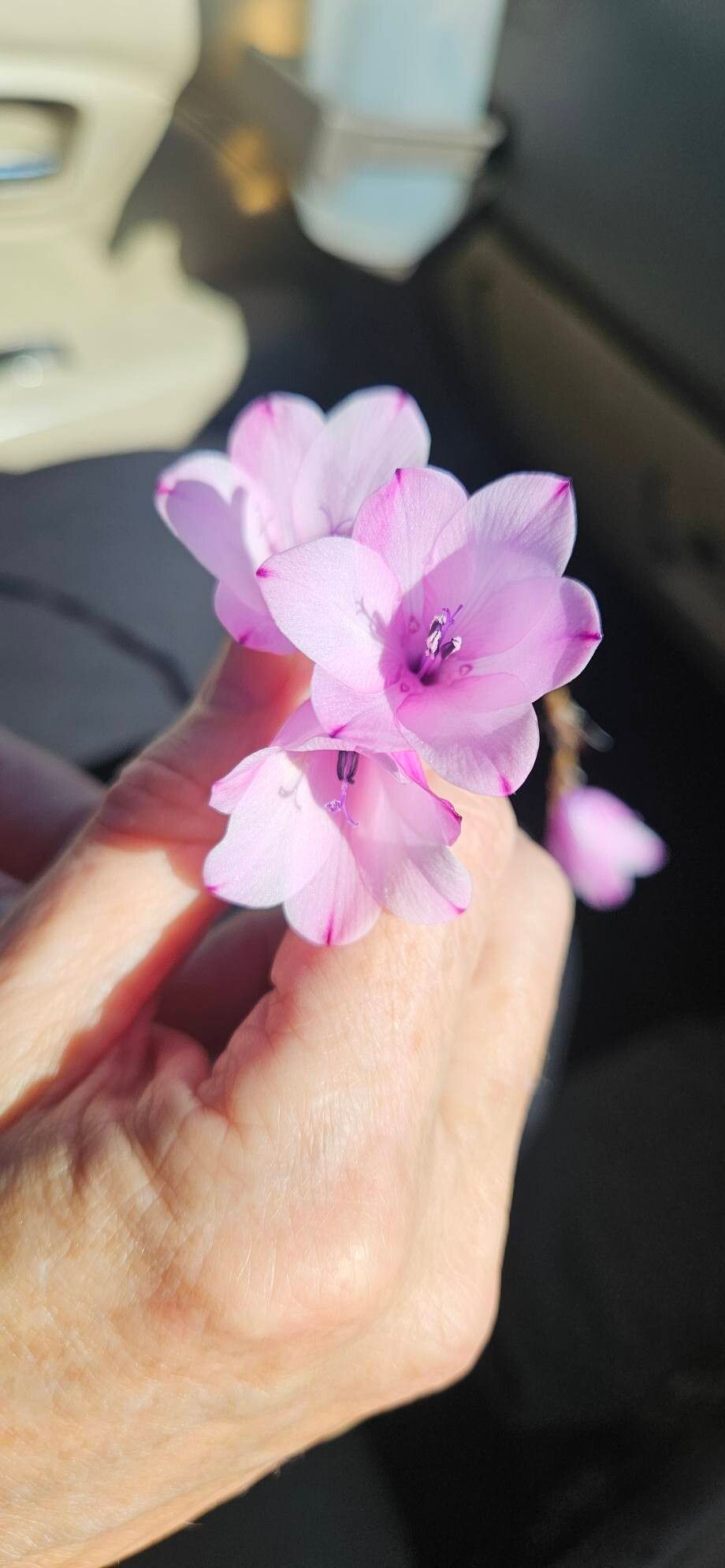
Dierama pendulum, commonly known as fairy bell, hair bell and wedding bell, is a species of Iridaceae endemic to the Eastern Cape in South Africa and first collected in 1772 by the Swedish naturalist Carl Peter Thunberg near Essenbos on the Kromme River or Kromrivier which flows down the Langkloof. In 1845 the genus Dierama was established by Karl Koch (1809-1879) based on this specimen. Before that the plant had been placed in various genera including Ixia, Sparaxis and Watsonia. The species name has been misapplied to D. inyangense, D. densiflorum and to D. plowesii.
Nodding elfin wands has good resistance to disease and is generally not prone to illnesses. It can, however, be vulnerable to pests and diseases present in its environment. These infections tend to be mild. Regarding care, this plant needs moderate maintenance. It should be pruned regularly to keep a tidy appearance and support healthy growth. Fertilizing can also assist in encouraging flowering. Nodding elfin wands is appropriate for anyone with outdoor space, such as a garden or patio, and does not demand extensive plant-care experience. It may need more attention when grown indoors.
How to keep Dierama Pendulum.
Light
The Nodding elfin wands is a perennial herbaceous plant that thrives in sunny conditions and originates from open spaces, frequently flourishing in meadows and grassy areas. While it prefers to be in full sunlight, it is also able to withstand situations with only partial sun.
Temperature
Nodding elfin wands can acclimate to a broad spectrum of temperature settings, however its prevalence may be constrained by varying interplays of water and heat states. The plant flourishes most in hot weather during summer when there's sufficient rain or watering. Extended instances of overcast and wet weather, coupled with enduring high temperatures, can augment the chances of Nodding elfin wands perishing. During the winter, taking adequate measures to shield it from the cold can enhance the plant's odds of survival.
Fertilizer
The optimal period to apply fertilizer to a Nodding elfin wands plant is at the beginning of spring. This is when the plant is awakening from dormancy and initiating growth. Supplying fertilizer delivers essential nutrients for its vigorous development. Despite the fairly minimal fertilization requirements of the Nodding elfin wands, performing this task on a yearly basis can improve its longevity and stimulate the growth of more resilient, enduring flowers.
Botanical profile.
- Plant Type
- Herb
- Life Cycle
- Perennial
- Hardiness Zone
- 7-10
- Mature Height
- 61 cm to 91 cm
- Mature Spread
- 61 cm
- Leaf Color
- Green
- Leaf Type
- Deciduous
- Flower Color
- Pink, Lavender
- Flower Size
- 3.05 cm to 5.08 cm
- Bloom Time
- Early summer, Mid summer
- Planting Time
- Spring, Summer, Autumn
- Harvest Time
- Late summer, Early fall
- Native Area
- South Africa