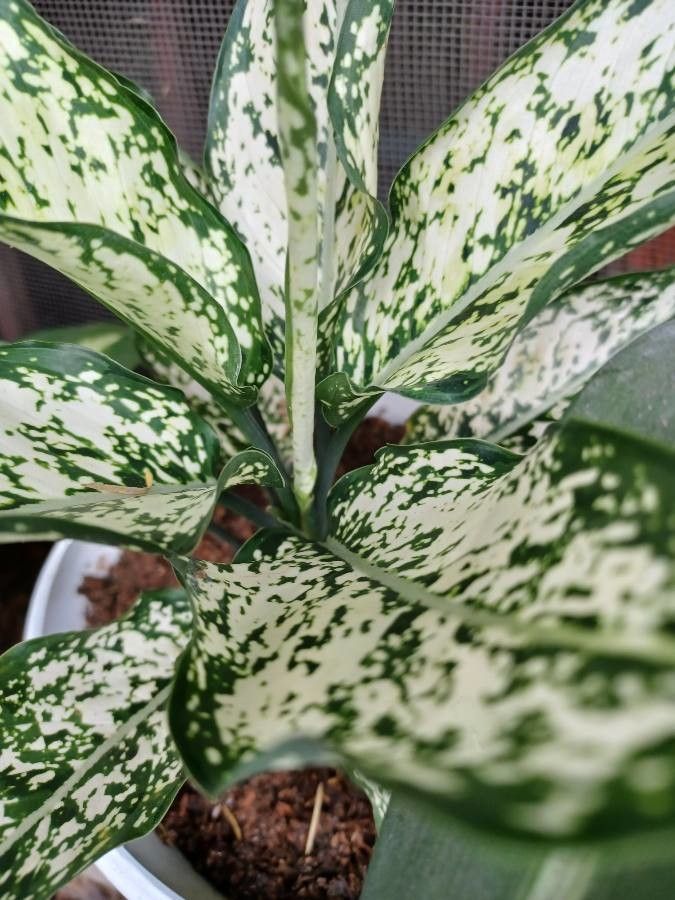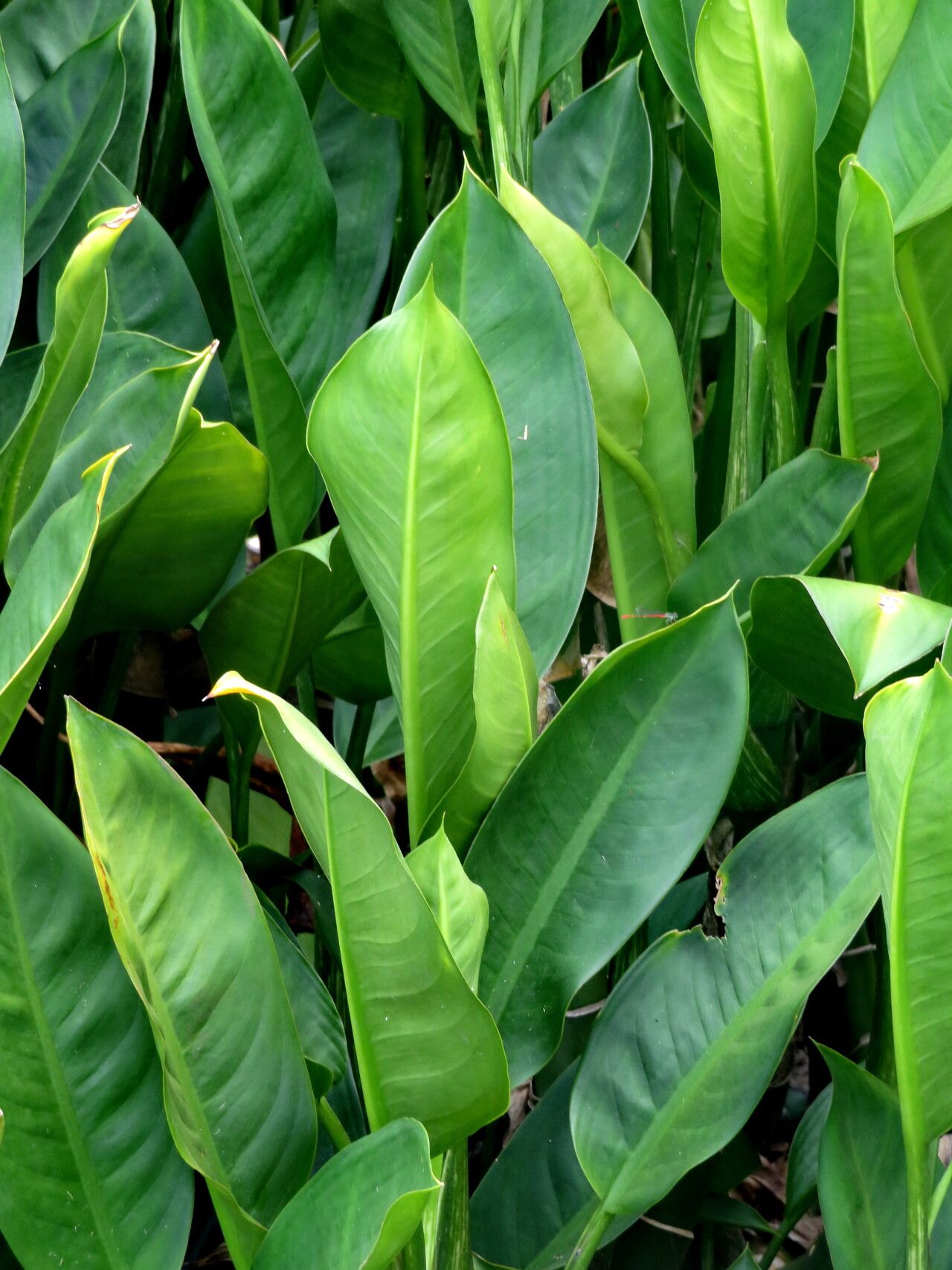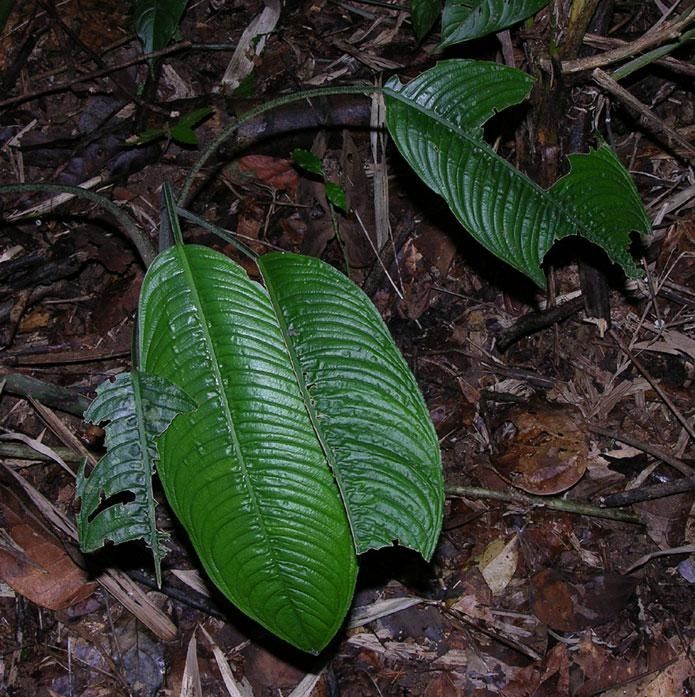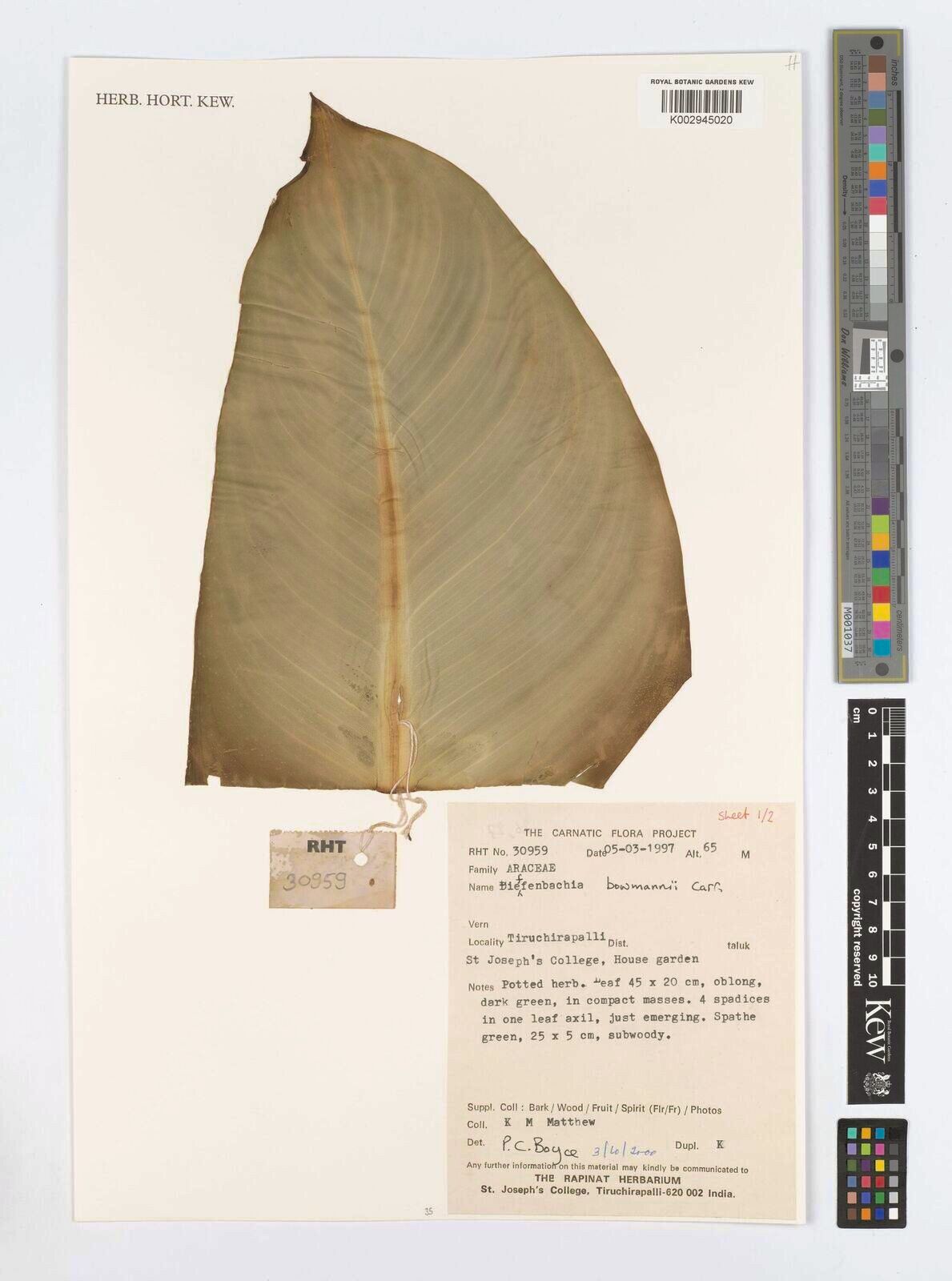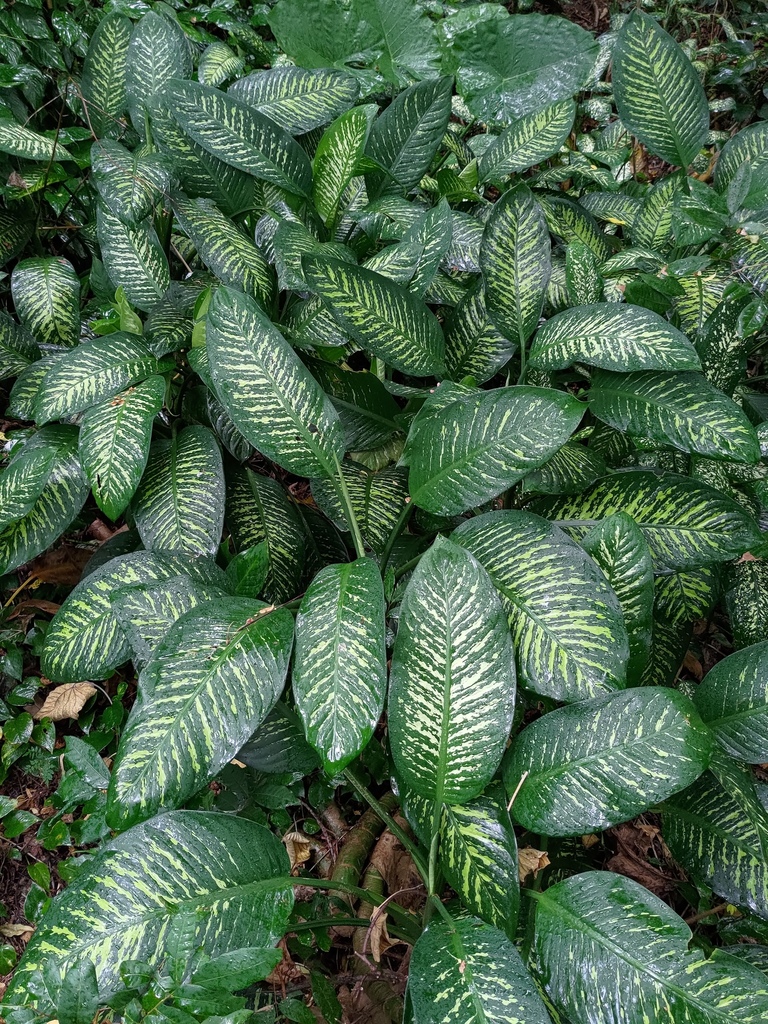
Dieffenbachia seguine, commonly known as dumb cane, is a tropical plant native to Central and South America. It is a popular houseplant due to its attractive foliage and ease of care. The plant features large, glossy leaves that are typically green with white or yellow variegation, and these leaves can grow up to 30 inches long and 12 inches wide.
Dumb cane thrives in bright but indirect light and prefers well-draining soil that stays consistently moist but not waterlogged. While it can tolerate low light conditions, it may not grow as vigorously or produce as much variegation under such circumstances.
Be aware that the plant contains calcium oxalate crystals, which are toxic if ingested. Ingesting these crystals can cause swelling of the mouth and throat, leading to difficulty in breathing if consumed in large quantities. Therefore, it's important to keep this plant out of reach of children and pets.
In various viral messages, emails, and online articles, dieffenbachia has been wrongly depicted as a deadly plant capable of killing both children and adults. These claims have been debunked as false. While Dieffenbachia seguine can be an irritant, it is not considered lethal, and experts are not aware of any fatal poisoning incidents associated with it. FUN FACT · FROM THE LIBRARY
Propagation is straightforward and can be done through stem cuttings. The cuttings should be rooted in water before being transferred to soil once roots have developed.
Overall, Dieffenbachia seguine is an excellent indoor ornamental plant. Its lush foliage adds aesthetic appeal, and its ease of care makes it ideal for beginners looking for a low-maintenance houseplant that looks great, too!
Dumb cane is generally resistant to disease and typically not prone to illnesses. However, it can develop leaf spots if light and ventilation are inadequate and watering is excessive. Its care requirements are considered easy: it mainly needs regular watering and little else. Dumb cane is well suited to people who lack the time and energy to commit to frequent care.
How to keep Dieffenbachia Seguine.
Light
For healthy development, dumb cane requires only limited sunlight, similar to its native conditions beneath dense forest canopies. It can tolerate some sun, though only for shorter, less intense periods. Insufficient light can slow its growth, while excessive light may scorch the leaves.
Water
Dieffenbachia comes from tropical rainforests, where it thrives in high humidity and consistent moisture. Although it can handle short periods of dryness, weekly watering is important for its lush growth. Often grown indoors, keeping it well-watered is crucial for maintaining the health and vibrancy of this evergreen plant all year round.
Humidity
This plant needs special care because it loves high humidity levels of 60-80% or more. The best way to achieve this is by placing a humidifier near the plant. Daily misting is also essential! Make sure the room has good ventilation.
Temperature
Dumb cane is native to tropical and subtropical areas and prefers temperatures of 68 to 100 ℉ (20 to 38 ℃). In winter, it is recommended to keep the plant in a room with a temperature of at least 60 ℉ (15.5 ℃).
Fertilizer
Dumb cane needs the most fertilizer during its active growth period, which is mainly in spring, summer, and early fall. Feeding supplies essential nutrients the soil might be missing, encouraging healthy root and stem growth and the attractive foliage that defines this plant.
Pruning
Dieffenbachia, known for its broad, variegated leaves and bushy appearance, benefits from pruning in early to late spring. Use clean tools to trim the plant, as this not only helps maintain its shape but also encourages growth, reduces its size, and promotes overall health. It's important to wear gloves while handling dieffenbachia, as its sap can be irritating to the skin.
Pot & Repot
Repot the dumb cane in spring or summer once it's warm enough, choosing a slightly larger pot with good drainage. Water thoroughly after repotting, and place it in a spot with bright, indirect light. Consider installing a moss pole to support the plant as it grows.
Botanical profile.
- Plant Type
- Herb
- Life Cycle
- Perennial
- Genus
- Dieffenbachia
- Family
- Araceae
- Hardiness Zone
- 10-12
- Mature Height
- 0.91 m to 3.05 m
- Mature Spread
- 61 cm to 91 cm
- Leaf Color
- Green, Yellow, White, Variegated, Gold
- Leaf Type
- Evergreen
- Flower Color
- Green, White, Yellow
- Flower Size
- 7.62 cm
- Bloom Time
- Summer
- Planting Time
- Spring, Summer, Autumn, Winter
- Harvest Time
- Late summer, Fall, Early winter
- Native Area
- Colombia, Honduras, Mexico, Guatemala, Bolivia, Venezuela, Guyana, El Salvador, Nicaragua, Brazil, Trinidad and Tobago, Ecuador, Suriname, Costa Rica, Jamaica
Other names.
Reader questions.
When Should I Water My Dieffenbachia?
Determining the right time to water your Dieffenbachia involves observing signs like soil moisture level, leaf condition, and environmental factors. The soil's moisture can be checked by inserting a finger up to the second knuckle; if it feels dry, it's time to water. Wilting leaves indicate the plant is under-watered, while changes in leaf color and stunted growth also signal a need for water. Dieffenbachia requires more water during hot and dry conditions to prevent early or late watering risks such as root rot or plant dehydration. Recognizing these signs will help in establishing an appropriate watering schedule, promoting the plant's health and growth.
Why is it necessary to fertilize my Dieffenbachia plant?
All plants, including the Dieffenbachia, need soil nutrients to grow. However, the soil they grow in may not always have all the necessary nutrients. To ensure that your garden plants have the nutrients they need, it is important to fertilize and amend the soil. Dieffenbachia specifically requires fertilizer to promote healthy root and stem development during the growing season. Fertilization also enhances the appearance of its leaves, which are the main attraction of this ornamental plant.
What are the sunlight requirements for Dieffenbachia?
Dieffenbachia thrives best under conditions that mimic its native habitat, which means minimal exposure to direct sunlight, resembling the environment under dense forest canopies. It requires less intense durations of sunlight to promote healthy growth, with full shade described as less than 3 hours of sunlight per day, and partial sun being about 3-6 hours of sunlight. It's important to watch how sunlight moves through your garden to choose the best spots that provide a balance of light and shade, ensuring the plant's happiness. Moreover, in conditions where natural light is insufficient, especially during winter or in less sunny spaces, artificial lighting can be utilized to support the plant's growth. Adequate lighting, mimicking natural sunlight, can be achieved with artificial lights, such as LED lights, which are advised for their efficiency and ability to provide specific wavelengths needed by plants.
What are the essential care tips for Dieffenbachia?
Dieffenbachia, originating from tropical and subtropical regions, thrives in temperatures between 68 to 100°F (20 to 38°C). To ensure its health, it's crucial to maintain a room temperature of at least 60°F (15.5°C) during winter months. This heat-loving plant can be harmed by cold temperatures. When autumn arrives, it's advisable to move outdoor Dieffenbachia indoors, positioning it near a bright window but away from heaters to avoid damage. Balancing the temperature to remain above 60°F (15.5°C) in winter supports its growth, while exposing it to temperatures below 60°F can be detrimental.
How Should I Water My Dieffenbachia?
Watering Dieffenbachia requires a careful approach to ensure optimal hydration without over-watering. A bottom-watering technique, where the plant pot is placed in water, allows the roots to absorb moisture from below, reducing the risk of over-watering and fungal diseases. If using a watering can, opt for one with a narrow spout to precisely target the base of the plant and avoid wetting the foliage excessively, which could lead to disease.
When should I fertilize my Dieffenbachia plant?
During the active growth phase of a Dieffenbachia, which occurs in spring, summer, and early fall, it will require the most fertilizer. Starting from the end of winter, you should feed your Dieffenbachia every two to four weeks. This feeding rate can be maintained until fall when you can gradually reduce the amount of fertilizer given. Eventually, you should completely stop feeding your Dieffenbachia in preparation for winter, as its growth will slow down significantly during this time.
What symptoms indicate insufficient light for Dieffenbachia and how can it be remedied?
When Dieffenbachia receives insufficient light, it may exhibit symptoms such as lighter-colored new leaves, indicating a lack of chlorophyll and nutrients, leggy or sparse growth, loss of variegation, smaller new leaves, faster leaf drop, and conditions like chlorosis, sunscald, leaf curling, wilting, and leaf scorching. To remedy insufficient light exposure, indoors, move plants to spots where they can receive ample filtered light with brief periods of direct morning sunlight, ideally 1-2 meters away from a window. If the plant is large or not easily movable, consider using artificial light such as desk or ceiling lamps for at least 8 hours daily, or invest in professional plant grow lights. For outdoor plants, gradually adapt them to more sunlight by moving them to sunnier locations weekly, avoiding sudden changes that could result in sunburn. Reduce obstructions like overhanging branches to let more sunlight through, and for smaller plants, consider transplanting during their dormant period to a location with better sunlight and drainage.
How should I care for my Dieffenbachia in low temperatures?
Dieffenbachia prefers warm conditions and does not tolerate cold well. It's important to keep the temperature above 60°F (15.5°C) to ensure its growth. During the winter, maintaining the temperature above 60°F (15.5°C) is necessary. Should the temperature drop significantly, you may observe a lightening of leaf color, followed by browning or blackening after frost damage, along with wilting and drooping. To mitigate frost damage, trim the affected areas and move the plant to a warmer, indoor setting, preferably near a south-facing window for enough sunlight. Also, avoid placing the Dieffenbachia near heaters or air conditioning vents to prevent excessive drying.
How Much Water Does Dieffenbachia Really Need?
Dieffenbachia's water needs depend on various factors including pot size and the plant's growth stage. Generally, it's crucial to water the plant until excess water flows out of the drainage holes, ensuring the root ball is thoroughly soaked. On average, a mature Dieffenbachia in a 10-inch pot may require between 1 to 1.5 liters of water per session. Proper hydration is indicated by firm, turgid leaves and the soil being evenly moist but not waterlogged. Over- or under-watering can lead to issues like yellowing leaves, root rot, or stunted growth.
When is it not a good idea to fertilize my Dieffenbachia plant?
For most of the year, including spring, summer, and most of the fall, you should regularly feed your Dieffenbachia. The only exception is if you notice that your Dieffenbachia has received too much fertilizer or if you have fertilized it incorrectly, causing fertilizer burn or other issues. In winter, however, you should not fertilize a Dieffenbachia. If you have this plant indoors in a cold winter area, it will go into a dormant phase during that time. Feeding the plant during its dormant phase is unnecessary and harmful to its growth, likely causing fertilizer burn.
What should I do if my Dieffenbachia is exposed to high temperatures?
During summer, Dieffenbachia should be kept in conditions below 100°F (38°C) to prevent overheating. Exposure to temperatures above this can lead to a discoloration of leaves and increase the risk of sunburn. If you notice sunburned or dried-up parts on your plant, trim these areas away and relocate the Dieffenbachia to a shaded spot that's protected from harsh midday and afternoon sunlight. It's also beneficial to water the plant during the cooler morning and evening hours to maintain soil moisture and help cool the plant.
What Kind of Water is Best for Dieffenbachia?
Dieffenbachia prefers rainwater because it is soft and contains beneficial nutrients. If rainwater is not available, filtered or dechlorinated tap water are good alternatives. The plant is sensitive to chlorine and fluoride found in tap water; letting tap water sit out for 24 hours allows chlorine to evaporate. Hard water, which has high levels of calcium and magnesium, could lead to mineral buildup and harm the plant. Additionally, using room temperature water is best to avoid shocking the plant.