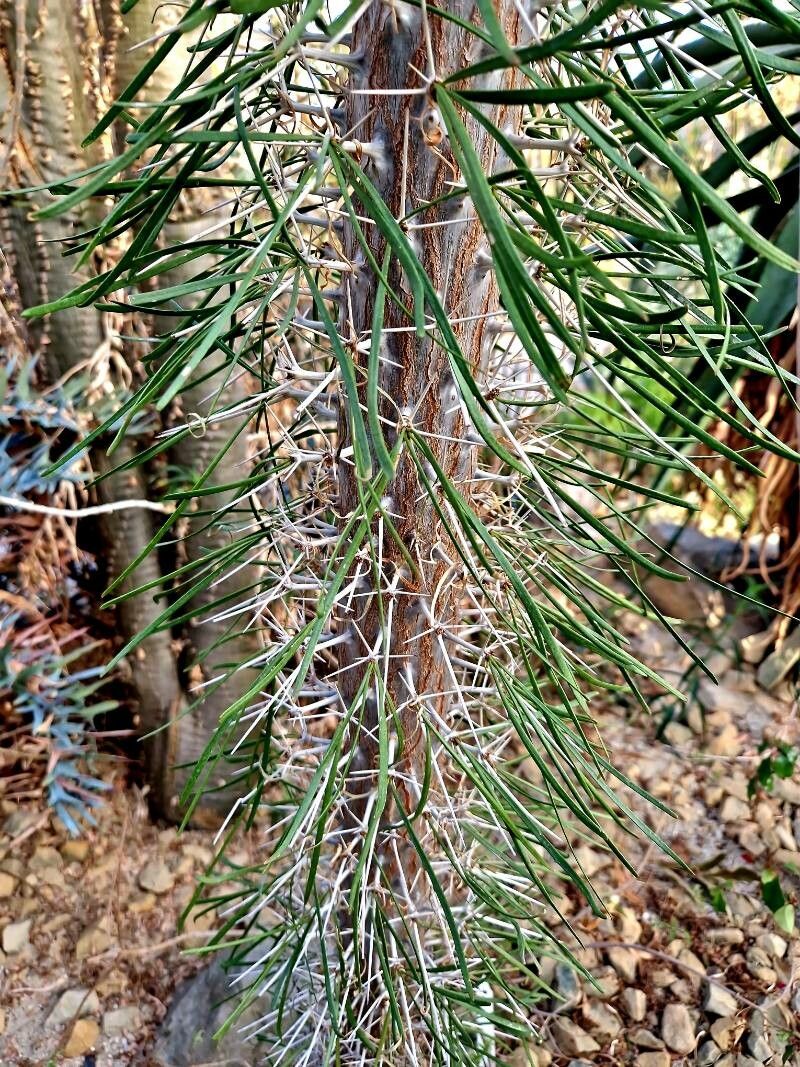
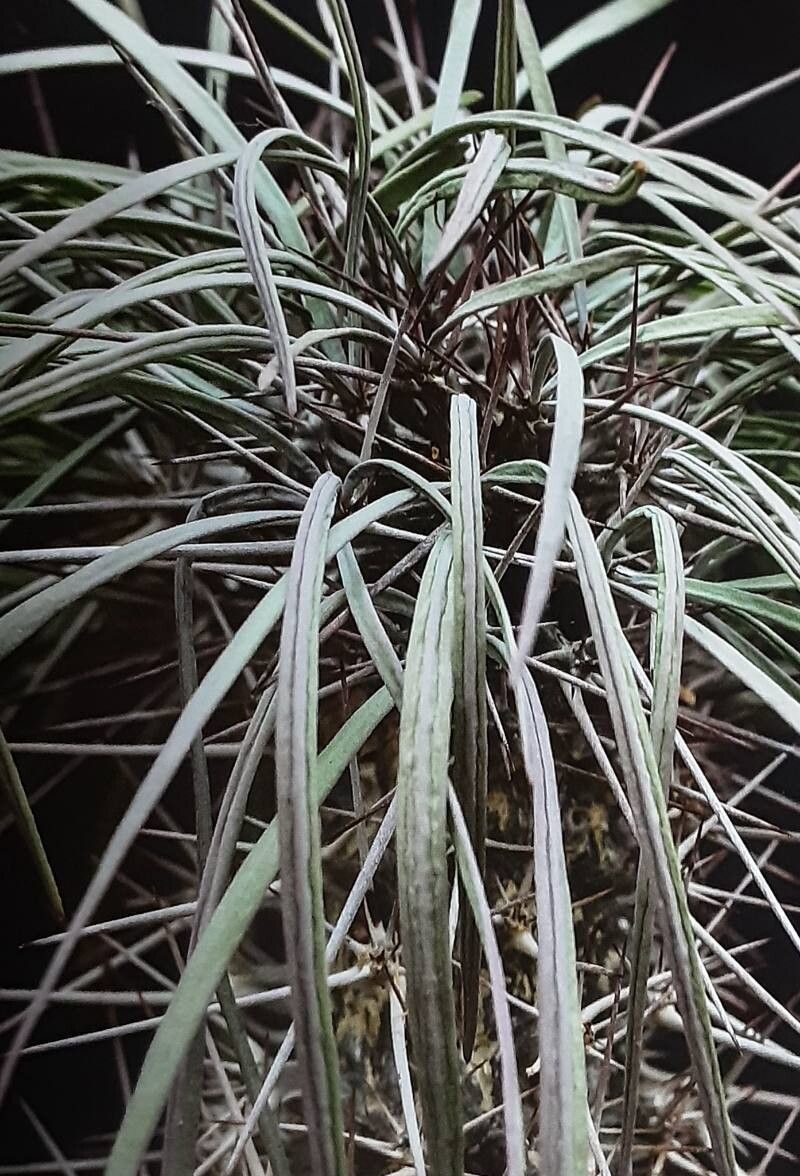
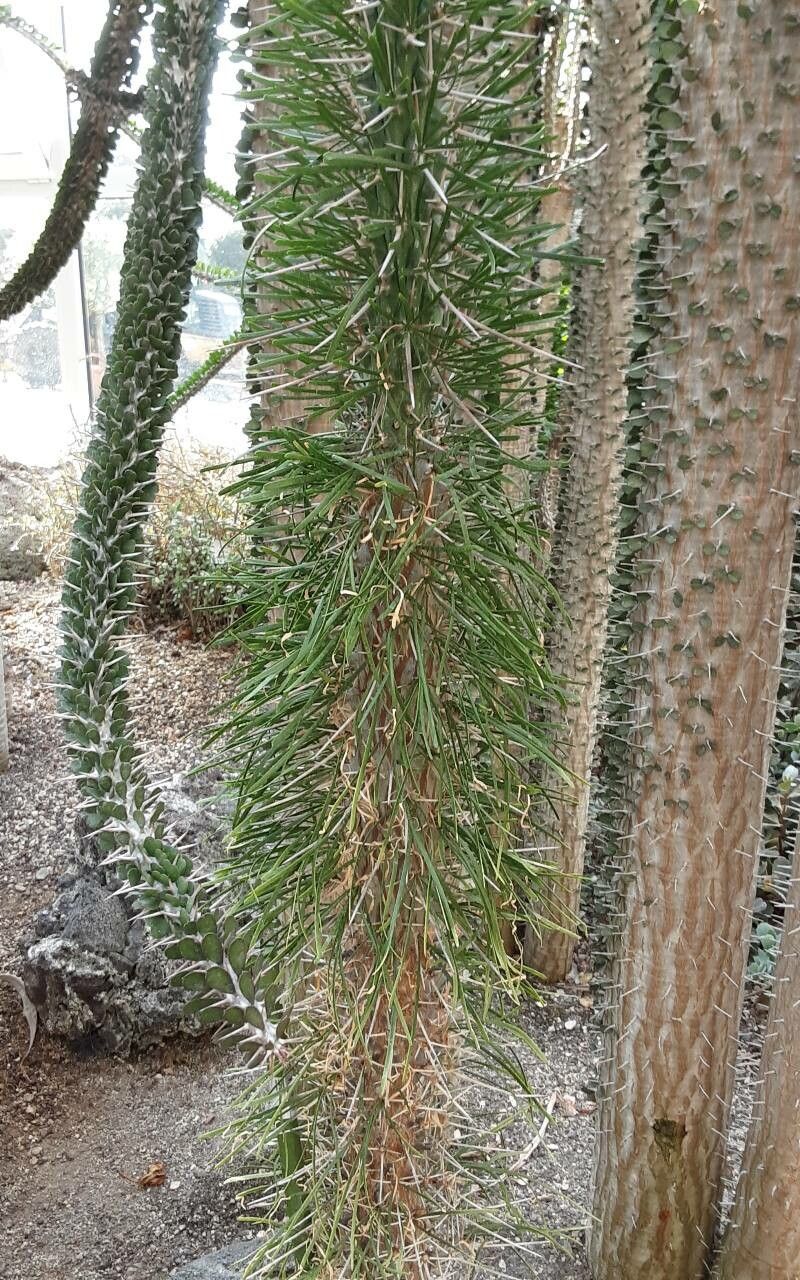
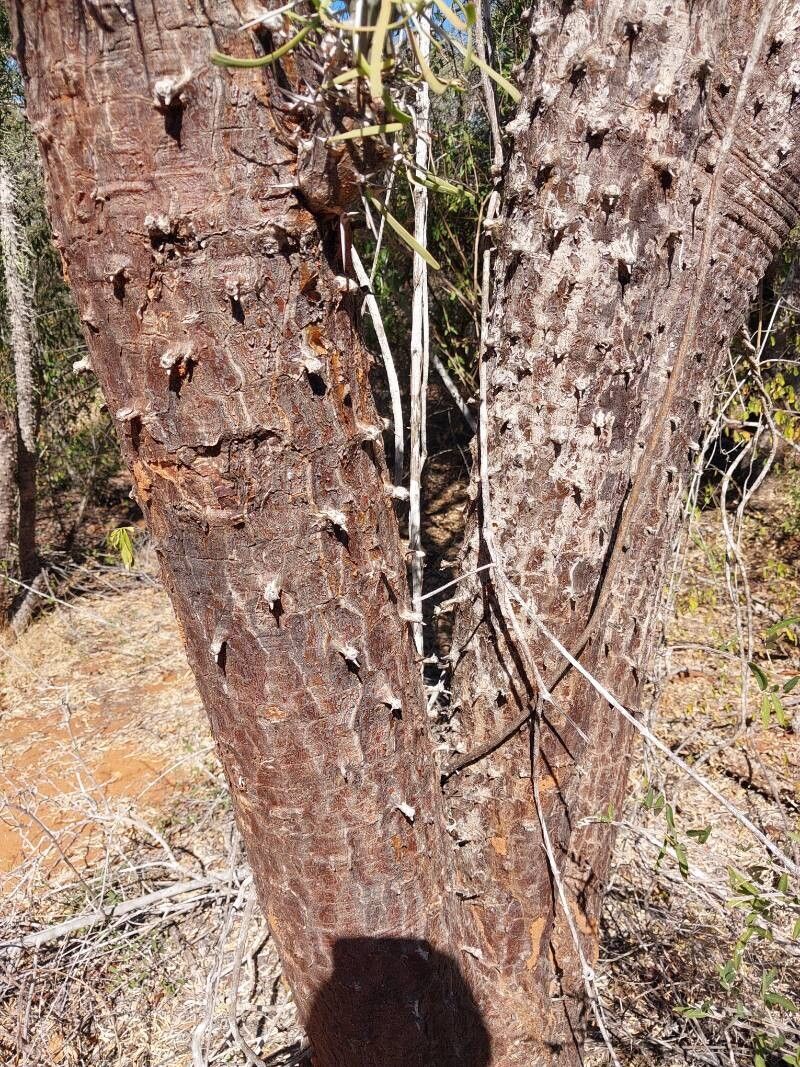
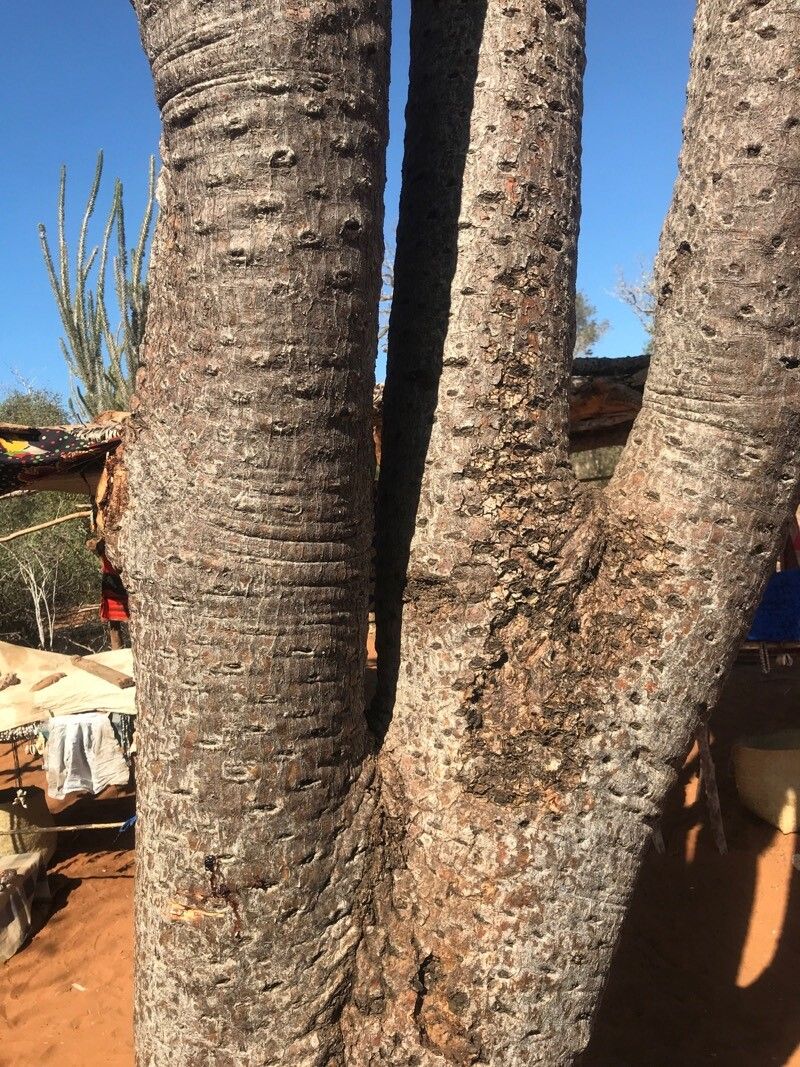
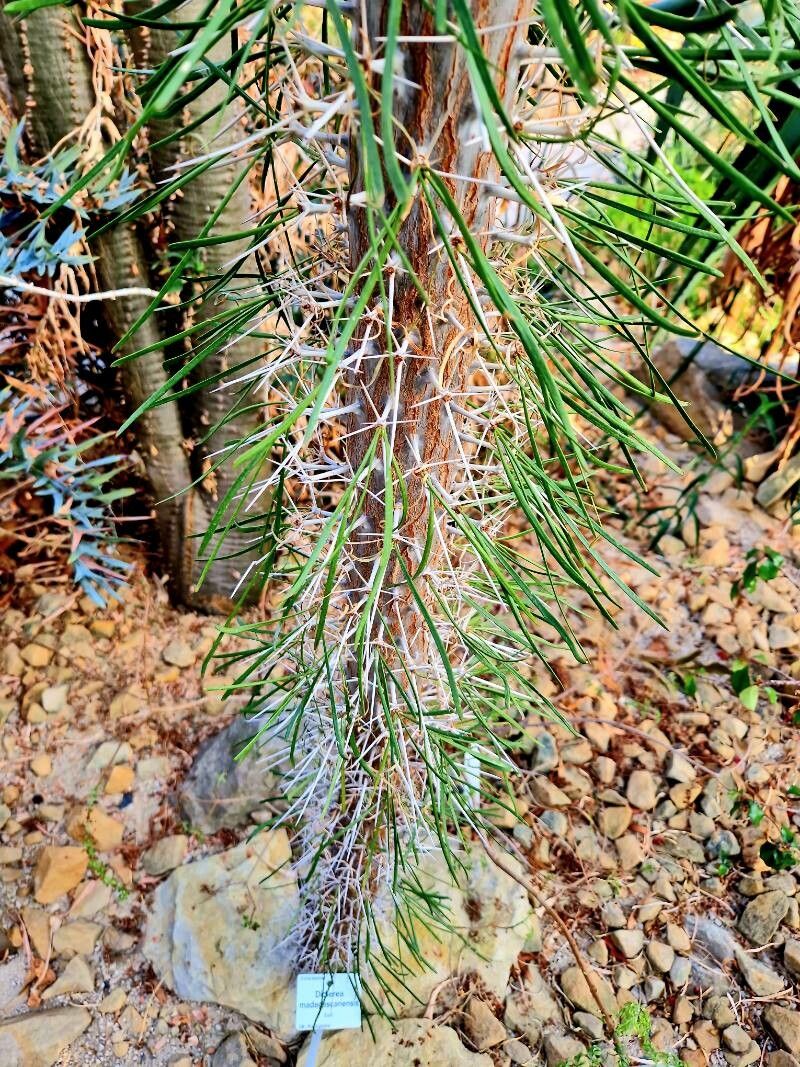
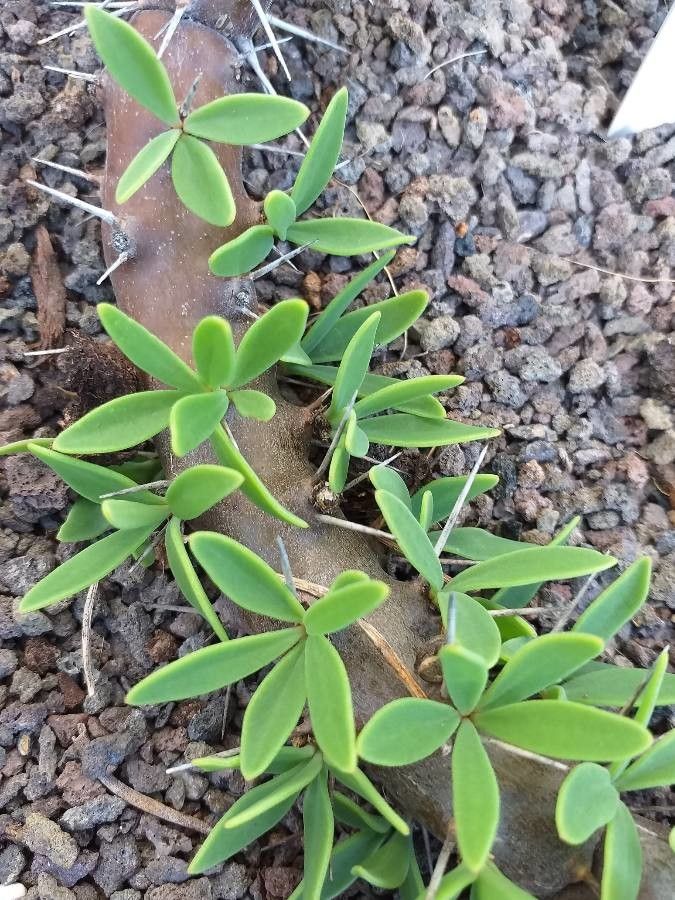
Didierea madagascariensis, commonly known as the octopus tree, is a species of Didiereaceae endemic to the spiny thickets of southwestern Madagascar. It was first described scientifically by the French botanist Henri Ernest Baillon in 1880 and is the type species of the genus Didierea. It is known in Malagasy as sohongy, sony and soribarika. Sohongy and sony come from the Tanosy dialect word songo meaning "lock of hair" or a rooster's crest or comb possibly referring to its branches that sprawl upwards.
The Octopus tree has moderate disease resistance but is more sensitive to humidity and overwatering. It becomes more vulnerable to disease when it lacks light and is overwatered. Regarding care, the Octopus tree is drought-tolerant and can endure long stretches without watering. It requires little fertilizer and only occasional pruning. This makes it suitable for people of all experience levels, especially those who prefer to spend less time on plant care and who may occasionally be away from home for extended periods. It is a good option for people who do not want to devote much time to caring for their plants but still want an easy-to-maintain plant.
How to keep Didierea Madagascariensis.
Light
Native to dry regions, the Octopus tree does best in full sun, as its natural habitat has intense sunlight and very little shade. It can also tolerate partial sun, giving it some flexibility in its growth.
Water
The octopus tree thrives in arid environments due to its excellent drought tolerance. It only needs to be watered once every three weeks. Although it is typically grown outdoors, the plant stores excess water in its thick trunk during the growing season, enabling it to withstand periods of drought.
Temperature
The octopus tree prefers warm conditions and requires higher temperatures during its growing season to support growth and metabolic processes. It likes plenty of sunlight, suitable moisture levels, and good airflow. However, it is vulnerable to harm from very low temperatures and from overwatering. It’s important to maintain a balance and to avoid both excessively high temperatures and overly dry conditions.
Fertilizer
For the Octopus tree, light applications of fertilizer one to two times a year during the growing season are enough. Do not fertilize in winter or in summer when it is dormant. Reduce the amount of fertilizer for plants that have been repotted and wait a couple of months after repotting before applying fertilizer. Fertilizing supports healthy growth and encourages blooms.
Pot & Repot
Repot your octopus tree every 2-3 years during early spring. Use a deep pot to support its upright growth. After repotting, place the tree in a location with bright, indirect sunlight. Slightly increase watering to help it recover, and provide consistent care to ensure it thrives.
Botanical profile.
- Plant Type
- Tree, Shrub
- Life Cycle
- Perennial
- Genus
- Didierea
- Family
- Didiereaceae
- Hardiness Zone
- 10-12
- Mature Height
- 3.96 m to 6.1 m
- Mature Spread
- 0.91 m to 2.13 m
- Leaf Color
- Green, Dark Green
- Leaf Type
- Deciduous
- Flower Color
- White
- Flower Size
- 0.51 cm to 1.02 cm
- Bloom Time
- Mid spring, Late spring
- Planting Time
- Spring, Summer, Autumn
- Harvest Time
- Early summer, Mid summer
- Native Area
- Madagascar
Other names.
Reader questions.
How often do I need to give water to my Octopus tree?
Watering frequency for succulents can vary depending on the season. In the summer and spring, you typically only need to water them once every two to three weeks. However, during the winter and fall, it's best to reduce or avoid watering altogether since these plants become dormant. It's important to let the soil dry completely before watering again. It's better to slightly underwater than to overwater. When potted, deep watering at intervals promotes healthier soil growth. When planted outdoors, avoid watering lightly as this encourages shallow root growth. Instead, wait a few weeks and only water when the surrounding soil is too dry.
What kind of sunlight does the Octopus tree require?
To thrive, octopus trees require abundant sunlight. They are full-sun plants, meaning they do well when exposed to direct light or bright, indirect sun. While certain types of octopus trees can tolerate partial sun, they typically benefit from as much sunlight as possible.
What temperature should your Octopus tree be kept at?
The Octopus tree thrives best in a specific range of conditions. Ideally, it should be kept in temperatures between 75-90℉ (25-32℃). During the early winter season, it is important to ensure that the temperature does not drop below 75℉ (25℃) for the Octopus tree. To give it better protection from extreme temperatures, you can even bring it indoors. While the Octopus tree can withstand certain extreme temperatures, such as lows of 50℉ (15℃), it is not ideal. If winter conditions are expected outside, it is recommended to bring the tree inside.
How much water does my Octopus tree require?
To efficiently water this succulent, ensure that you cover the entire pot. Place a saucer at the bottom to provide sufficient moisture to the roots. Remove the saucer as soon as you notice the soil becoming saturated. The frequency and quantity of water needed will depend on the pot's holes and amount of soil. When potted, a can of water is usually sufficient for Octopus trees. However, if planted in the garden, you should also consider the rainwater they receive. Around an inch of rainwater will sustain them for a few weeks, so hold off on watering. For outdoor plants, water them in the morning with approximately a gallon of water after the soil becomes completely dry. This allows the excess moisture to evaporate with the help of sunlight.
How much sunlight does the Octopus tree need to grow?
The Octopus tree requires a minimum of 6 hours of sun per day, but more is preferred. The exact number of hours can vary depending on sunlight intensity and other factors, but it is unlikely for the Octopus tree to receive excessive sunlight. In fact, they can tolerate up to 14 hours of sun per day without any issues.
How do I change the temperature for my Octopus tree as it grows?
The octopus tree goes through various growing phases. First, the dormant seed develops into a seedling. For the seeds to germinate, they require specific conditions, such as a temperature between 75-90℉ (25-32℃). The summer is the best time for vigorous growth, with an ideal temperature of around 85℉(30℃). To ensure sufficient sunlight, you can relocate your octopus tree from indoors to an area with direct sunlight during the hot summer months.
How should I water my Octopus tree?
To water this species effectively, it's recommended to water from the bottom. This allows the roots to absorb water properly and distribute nutrients throughout the plant. Avoid spilling water on the top as it can lead to diseases and fungi. If you have Octopus trees in your garden, use small revolving sprinklers that allow you to adjust the water delivery patterns. Avoid using sprinklers on windy days. Whether the Octopus tree is in a pot or in your garden, use the soak and dry method to evenly distribute moisture to the roots and promote healthier growth. Some owners may choose to have a built-in drainage system for their succulents, using porous materials like recycled glass or hydro stones beneath the soil. However, be careful not to overwater these built-in systems, as they are meant to act as reservoirs for excess water.
Do I need to keep the Octopus tree out of the sun?
The octopus tree thrives in hot and sunny environments and is naturally equipped to handle such conditions, therefore it doesn't require sun protection. However, if you are relocating your octopus tree to a brighter and sunnier location, it is important to proceed with caution. Plants need time to adjust to different conditions, so it is recommended to gradually expose the plant to sunlight. Begin by moving the plant into direct sunlight for a couple of hours each day, and gradually increase the duration of sun exposure. Once the octopus tree has adapted, it will be able to handle full sun without needing any protection.
How do I keep my Octopus tree warm during cold seasons?
To protect your Octopus tree from winter conditions, it is recommended to bring it indoors. Some people choose to purchase grow lights to provide adequate sunlight for the plant, but if your home is not particularly dark, this is not necessary. Instead, place your plants in a location where they can receive the most sunlight possible. This should be enough to keep the Octopus tree thriving during winter. If you have multiple Octopus trees, make sure to rotate their positions so that they all receive enough sunlight. It's important to note that if you live in northern areas with cold weather, avoid placing your Octopus tree too close to the window as extreme cold can damage the plant.
What do I need to do if I give my Octopus tree too much or too little water?
When the Octopus tree starts turning yellow, it could be due to underwatering or overwatering. Excessive moisture in the soil might cause fungal infections, so it's important to let everything dry out and avoid overwatering. If your plant is browning and dropping leaves, it's likely getting too much water. On the other hand, yellow tips on stems and branches indicate that it lacks sufficient water. Before purchasing an Octopus tree, make sure to inquire about the soil's drainage and if it is sandy. Poor drainage may result in insufficient water supply for the plant in the future. Overwatering or excessive rain can cause the Octopus tree to die. To prevent this, try using rainwater or distilled water, as too many minerals in the water can be harmful to the plant. Signs of excess moisture include squishy stems, drooping growth, and discolored parts. It is important to allow the plant time to recover and let the pot dry out. If planted outside, transferring it to a pot, especially during winter, can help with its recovery and prevent root rot and excessive dripping.
What will happen if the Octopus tree doesn't receive enough sunlight?
Octopus tree needs sufficient sunlight in order to thrive and grow. When it doesn't get enough sunlight, it shows signs such as pale coloring, wilting leaves, and leaf drop. The plant may also appear sparse and have weak stems due to a condition called etiolation, where it stretches towards the light source.
What happens to my Octopus tree when it gets too hot or too cold?
Your Octopus tree thrives in the summer and prefers warm temperatures around 90℉(32℃), but be wary of extreme heat. In the winter, it's best to keep the plant dry. Octopus trees do well in temperate climates with temperatures between 75-90℉ (25-32℃). However, exposing them to extreme temperatures can stress the plants. While temperatures between 90℉ and 95℉(32-35℃) can enhance the tree's colors, be cautious when experimenting with this. In the hot summer, extremely high temperatures can burn the tree and harm its stems and roots. To protect your tree during the hottest part of the day, consider moving it to a shaded area or using a shade cloth.