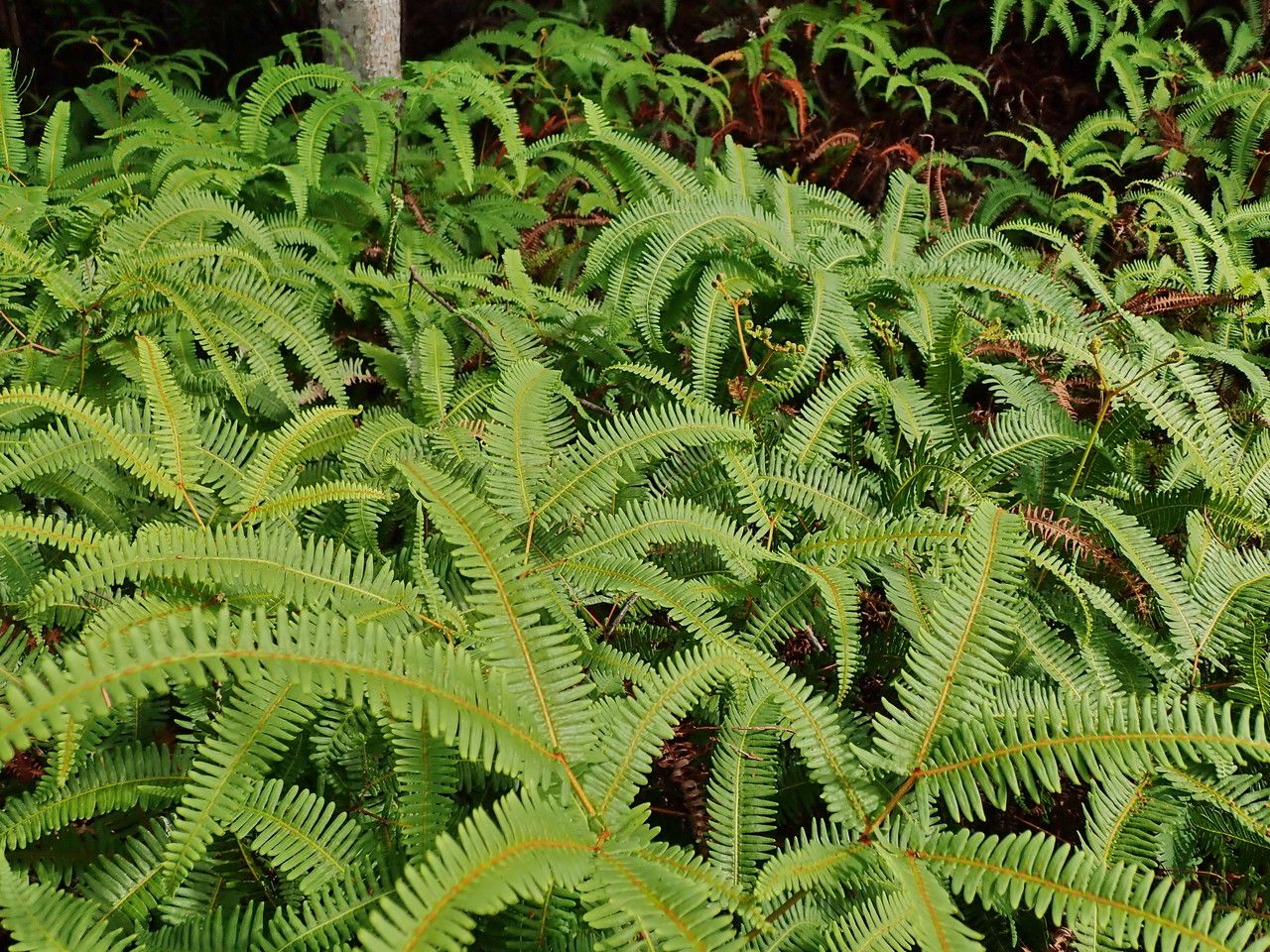
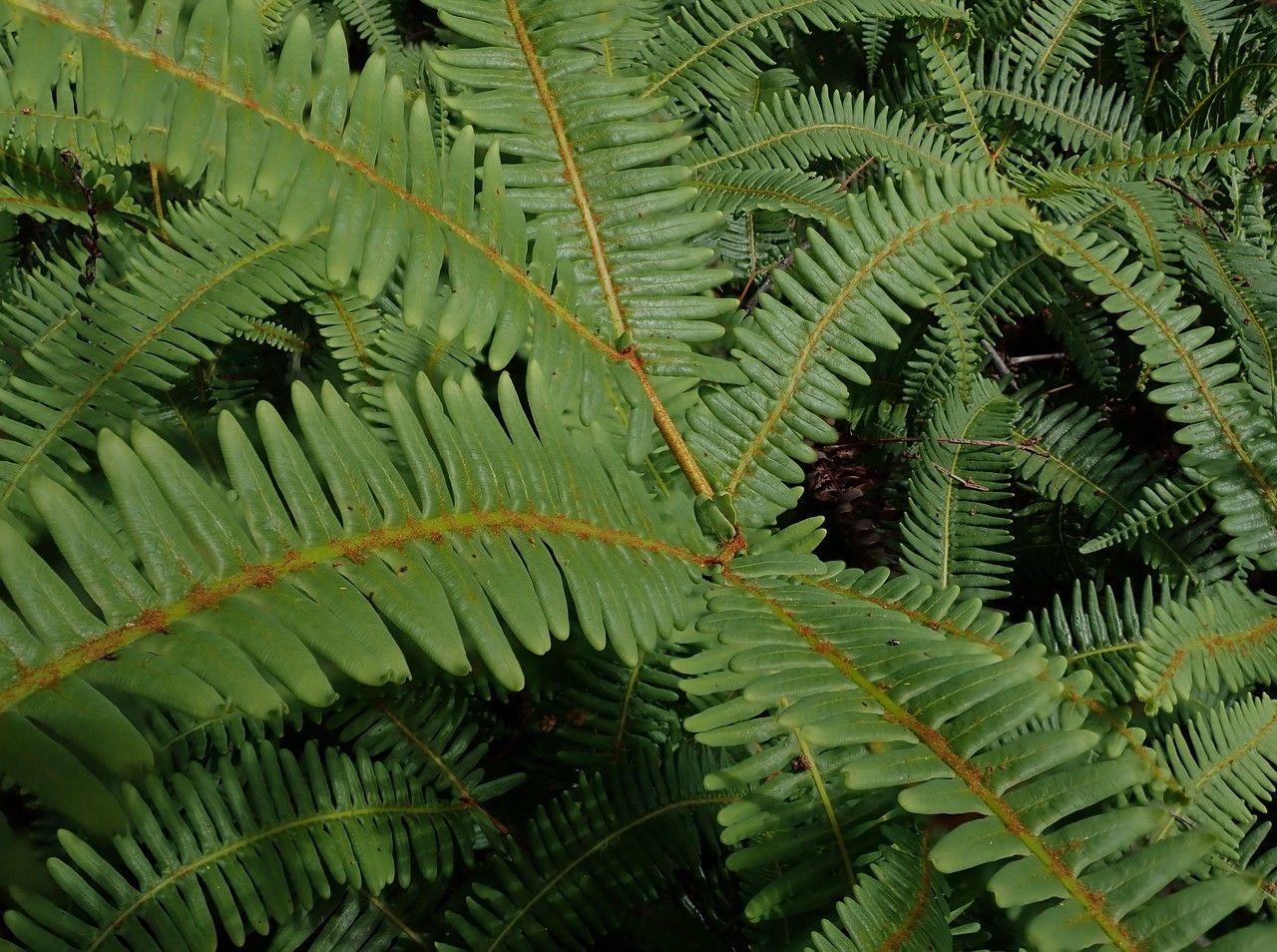
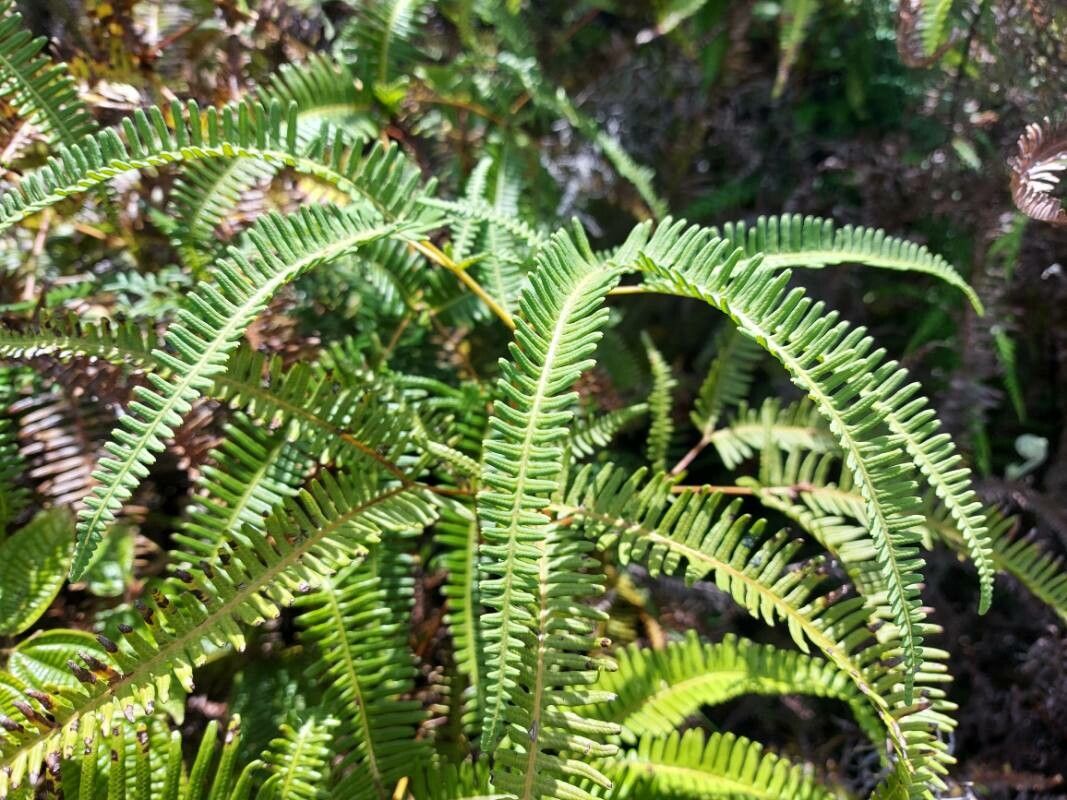
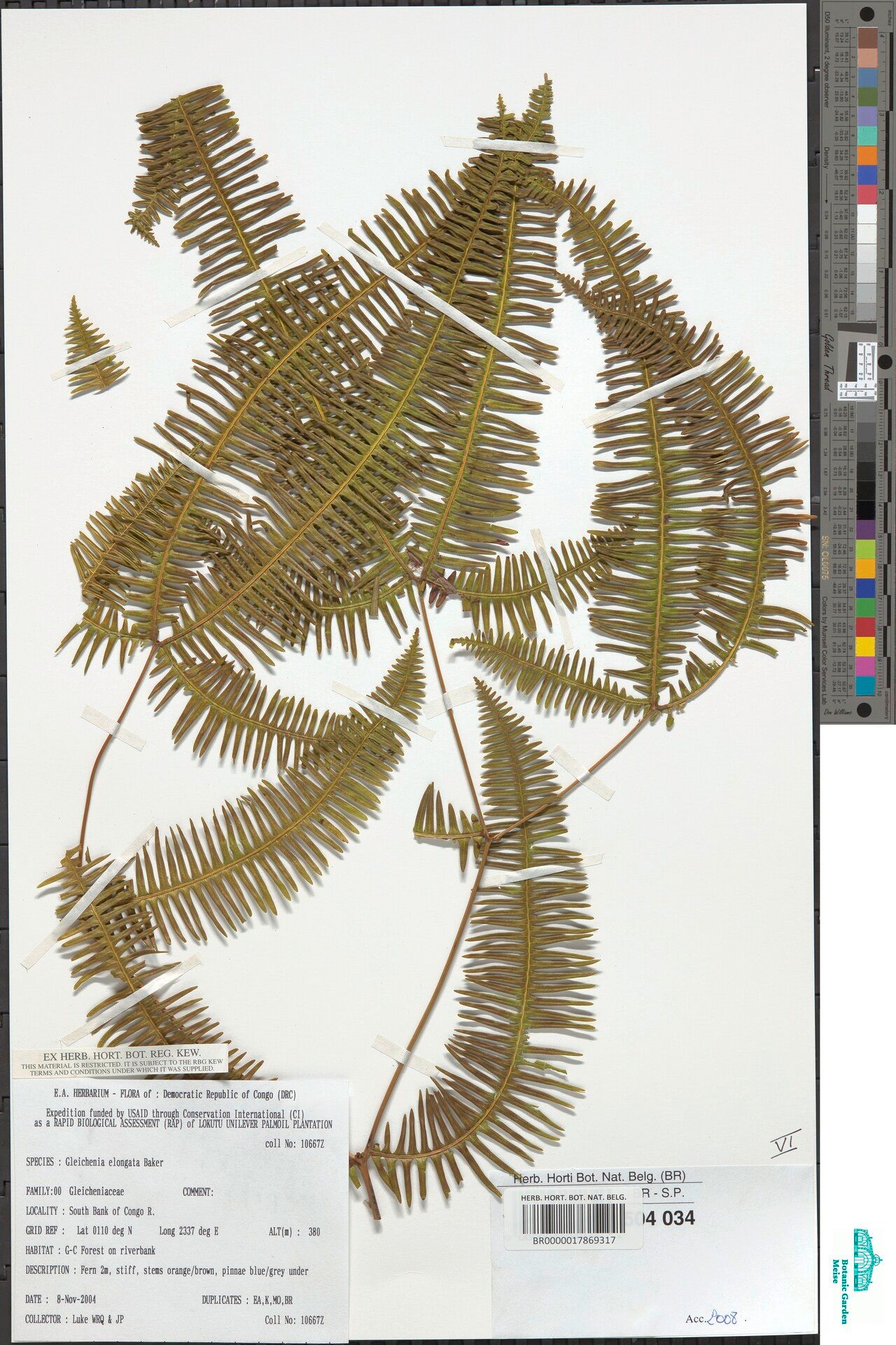
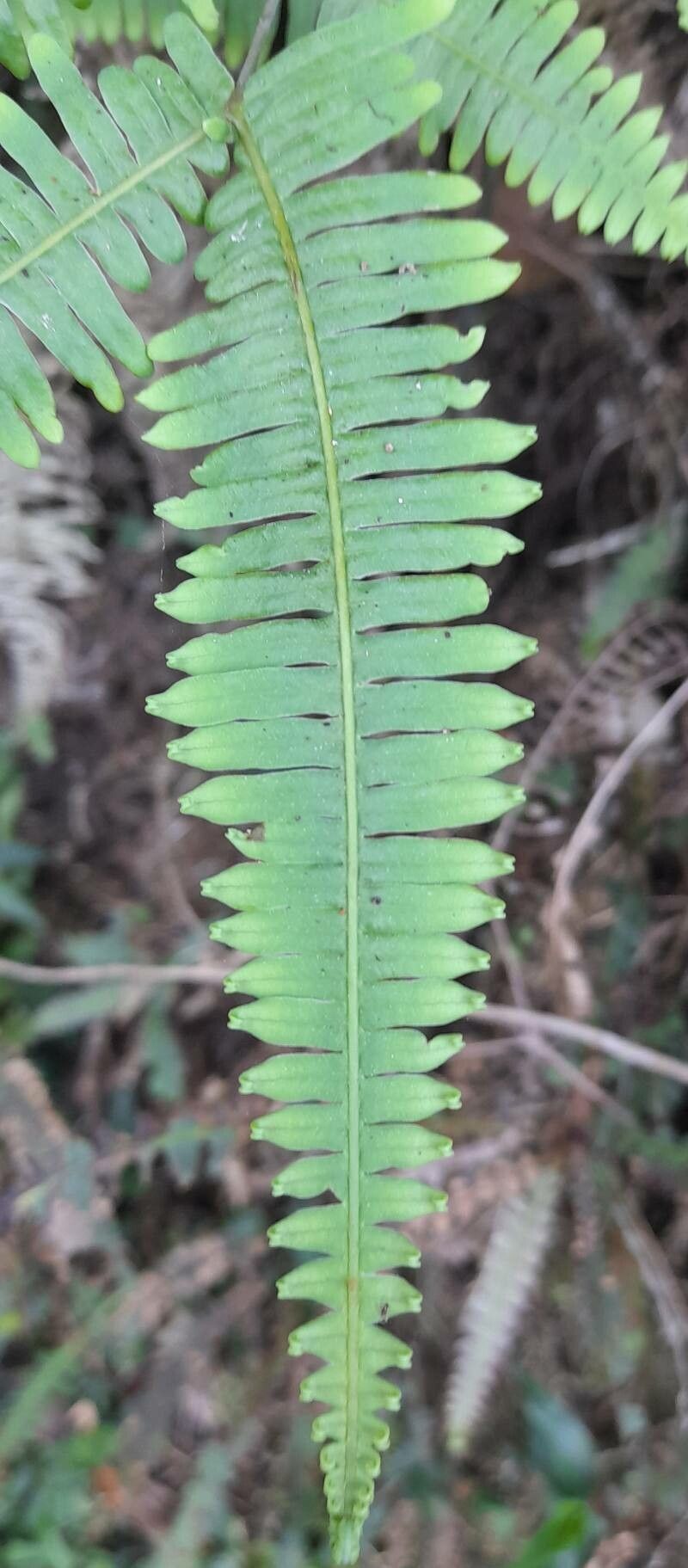
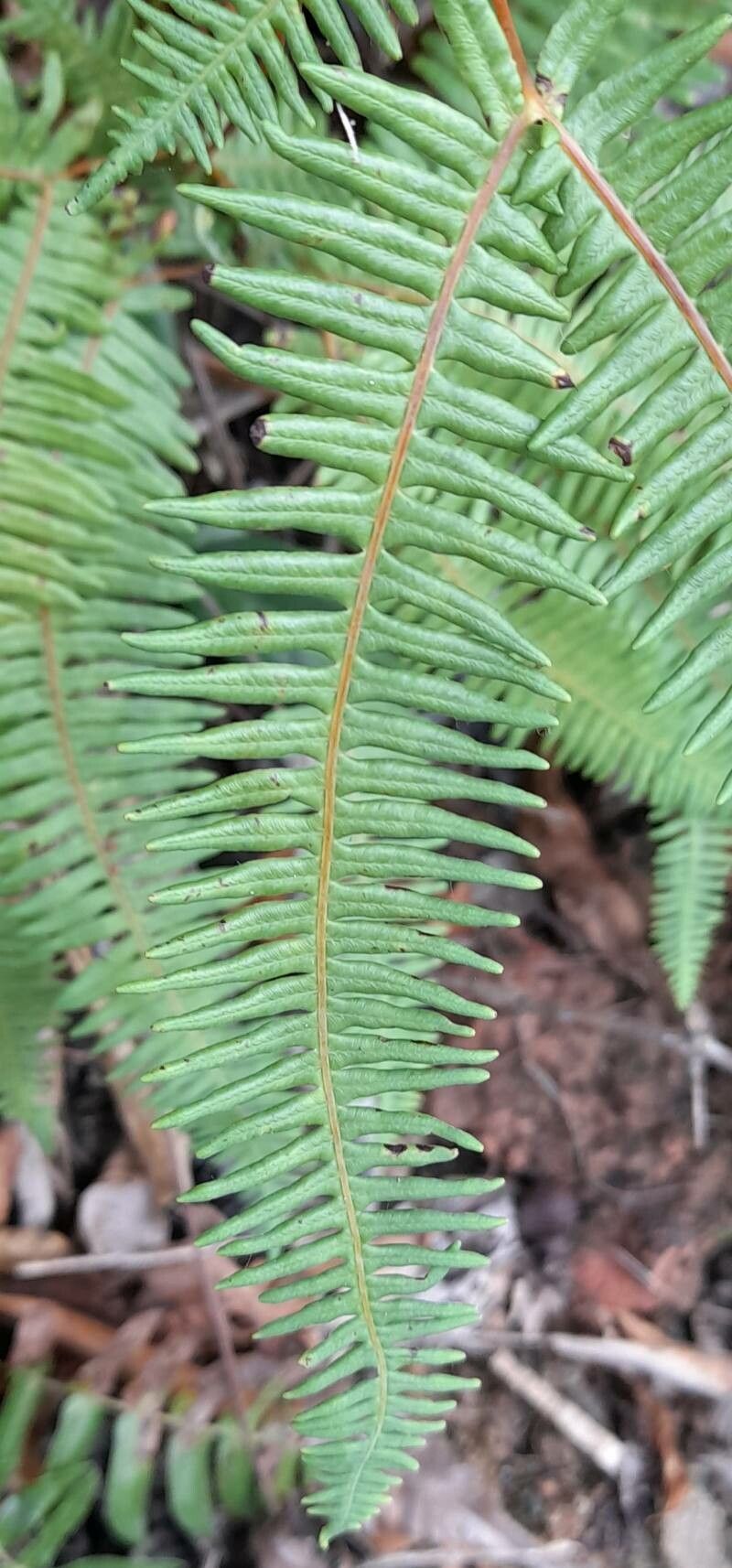
Dicranopteris linearis is a common species of fern known by many common names, including Old World forked fern, uluhe (Hawaiian), and dilim (Filipino). It is one of the most widely distributed ferns of the wet Old World tropics and adjacent regions, including Polynesia and the Pacific. In parts of the New World tropics its niche is filled by its relative, Dicranopteris pectinatus.
This rhizomatous fern spreads via cloning, spreading along the ground and climbing on other vegetation, often forming thickets 3 metres deep or more. The stem grows from the rhizome, branches at a 45° angle, and forms fronds that continue to bud and branch. In this way the growth can continue for a long distance as the plant forms a mat, grows over itself in layers, and spreads. When climbing, the leafy branches can reach over 6 metres long and can climb 10 high when supported by a tree. The ultimate segments of the leaves are linear in shape, up to 7 centimeters long by a few millimeters wide. The undersides are hairy and sometimes waxy. It can also reproduce via spores.The fern grows easily on poorly drained, nutrient-poor soils and in disturbed habitats and steep slopes. It does not tolerate shade, so once established it will eventually be shaded out by taller vegetation unless it climbs above it. It may suppress the growth of new stands of trees, especially when it becomes a dense thicket.The fern is a keystone species in Hawaiian ecosystems, and dominates many areas in Hawaiian rainforests. It occurs on all the main Hawaiian islands. As a pioneer species in ecological succession, it can colonize bare sites such as lava flows, talus, and abandoned roads. When the fern grows onto a new site it produces layers of stems and leaves repeatedly until there is a network of vegetation. The leaves die and the stems are very slow to decompose, so the network persists. The network then fills with organic forest detritus, forming a litter layer which can be a meter thick. The network is penetrated by the fern's rhizomes and roots, such that the fern serves as its own substrate. Where the fern is eliminated, invasive species of plants can move in, so "one important function" of the fern is to prevent these plants from encroaching on the rainforest. The fern may have allelopathic effects, preventing the growth of other plants. Also, the fern is a very productive member of the forest ecosystem; despite being a relatively small amount of the biomass in the forest it accounts for over half of the primary productivity in some areas.This plant is used medicinally to treat intestinal worms in Indochina, skin ulcers and wounds in New Guinea, and fever in Malaysia. In vitro samples of the fern kill bacteria.The Diliman district in Quezon City in the Philippines' National Capital Region derived its name from Dicranopteris linearis, locally known as "Dilim" (the suffix "-an" indicates a place where something, in this case the fern, is common). As such, it is also the origin of the name of the University of the Philippines Diliman campus.The fiddleheads of the fern are used in floral arrangements.
Old world forked fern has strong resistance to disease and is generally not prone to illnesses. However, it can be affected by pests and diseases present in its environment. These problems are usually not severe. In terms of care, this plant requires a moderate level of maintenance. It should be pruned regularly to maintain a good appearance and encourage healthy growth. Fertilizing can also help promote flowering. Old world forked fern is suitable for anyone with outdoor space, such as a garden or patio, and does not require extensive care experience. It may need more attention when grown indoors.
How to keep Dicranopteris Linearis.
Light
The Old World forked fern thrives in the full glare of the sun and is native to habitats where such light is abundant. Its growth can be impeded by too little light. Across all stages of development it consistently requires a high level of light.
Water
Native to humid tropical regions, the old world forked fern thrives in consistently moist soil and high humidity. For optimal growth, it requires weekly watering, although it does exhibit moderate drought tolerance. Ideally grown outdoors, this evergreen plant maintains lush foliage year-round when the soil is kept consistently moist.
Temperature
Old world forked fern originates from habitats with temperatures between 68 and 95 °F (20 to 35 ℃). It does well in milder climates and can tolerate temperature fluctuations, but frost should be avoided. During colder seasons, adjustments may be necessary to recreate its native temperate habitat.
Fertilizer
Old world forked fern needs the most fertilizer during its active growth period, which takes place mainly in spring, summer, and early fall. Fertilization is needed to supply essential nutrients the soil might be missing, encouraging healthy root and stem development and the attractive foliage that is a key feature of this plant.
Pruning
The Old World forked fern is noted for its unique, forked fronds. To help it thrive, it is important to prune the fern from early to late spring. This involves removing dead fronds and thinning the plant to improve air circulation, which in turn encourages growth and helps maintain its shape. Using clean, sharp tools is essential to prevent damage and ensure the plant's health.
Botanical profile.
- Plant Type
- Herb, Vine
- Life Cycle
- Perennial
- Genus
- Dicranopteris
- Family
- Gleicheniaceae
- Hardiness Zone
- 10
- Mature Height
- 3.05 m
- Mature Spread
- 0.91 m to 3.05 m
- Leaf Color
- Green, Light Green
- Leaf Type
- Evergreen
- Planting Time
- Spring, Autumn
- Native Area
- Sri Lanka, India, Malaysia, Angola, Madagascar, Rwanda, Nigeria, Kenya, Uganda, Tanzania, Zimbabwe, Fiji, Benin, Sierra Leone, Indonesia, Cambodia, Equatorial Guinea, Liberia, Mozambique, Cameroon, Burundi, Ghana, Ethiopia, Congo, Nepal, Malawi, Central African Republic, South Africa, Zambia, Philippines, Bangladesh, Laos, Guinea, New Zealand, China, Vietnam, Myanmar, Japan, Togo, Bhutan, Senegal, Eswatini, Singapore, Côte d'Ivoire, Congo (DRC), Thailand, Gabon
Other names.
Reader questions.
What are the sunlight requirements for an Old World Forked Fern?
The Old World Forked Fern requires above 6 hours of sunlight daily to flourish. It is essential to observe the movement of sunlight through your garden to pick the best spots that offer a balance of light and shade, ensuring the plant's well-being. Originating from habitats with abundant sunlight, this fern's growth can be significantly hindered if it does not receive sufficient light. At all growth stages, it maintains a consistent high need for light.
What is the native climate of the Old world forked fern?
The Old world forked fern, scientifically named Dicranopteris linearis, thrives in environments with temperatures ranging from 68 to 95 °F (20 to 35 °C). It is best suited for milder climates but can adjust to temperature fluctuations. However, it is not frost-tolerant. As an extremely heat-loving plant, exposure to cold temperatures can harm it. To protect it during colder seasons, especially in autumn, it is advisable to bring outdoor-grown ferns indoors, positioning them near a bright window but away from direct heat sources to maintain optimal growth temperatures above 20°C. Temperatures nearing 5°C can be detrimental to the plant's health.
How can artificial lighting aid in the growth of indoor Old World Forked Ferns?
For Old World Forked Ferns grown indoors, especially during less sunny seasons or in locations with insufficient natural light, artificial lighting becomes a crucial solution for optimal growth. It's advised to select the right type of artificial light, such as LED lights, which can be tailored to provide specific wavelengths needed by plants. Full sun plants should have 30-50W/sq ft of artificial light, partial sun plants 20-30W/sq ft, and full shade plants 10-20W/sq ft. Place the light source 12-36 inches above the plant to simulate natural sunlight, and ensure the plants receive 8-12 hours of light daily to mimic natural daylight hours.
How should you care for an Old world forked fern during low temperatures?
When caring for an Old world forked fern in low temperatures, it's crucial to maintain the environment above 20°C, as the plant thrives in warmth and can suffer when temperatures drop below this. During winter, ensure the temperature stays above 5°C because exposure to temperatures below 1°C can cause the fern's leaves to lighten and eventually turn brown or black if exposed to frost, accompanied by wilting and drooping. If frost damage occurs, trim off the damaged parts and move the plant to a warmer indoor location. Placing the plant near a south-facing window for ample sunlight is beneficial, but avoid direct exposure to heaters or air conditioning vents to prevent air dryness.
What are the symptoms of insufficient light in Old World Forked Ferns?
Symptoms of insufficient light in Old World Forked Ferns include smaller new leaves, leggy or sparse growth, early leaf drop, halted growth, paler new leaves, chlorosis, sunscald, leaf curling, wilting, and leaf scorching. These symptoms indicate the plant's struggle with low light conditions, where it enters survival mode, conserves resources, and displays signs like stretched growth and reduced chlorophyll levels, which are essential for photosynthesis.
What steps should be taken if an Old world forked fern experiences high temperatures?
In case of high temperatures, especially during summer when the thermometer can rise above 35°C, it's important to protect the Old world forked fern from exceeding 41°C to prevent the leaves from lightening in color and the plant from becoming susceptible to sunburn. If sunburn occurs, trim away the damaged parts and relocate the plant to a shaded area, especially shielding it from the harsh midday and afternoon sun. Ensuring the soil remains moist by watering the plant in the morning and evening will help mitigate the stress caused by high temperatures.
How can one address and rectify light deficiencies in both indoor and outdoor settings for Old World Forked Ferns?
To rectify light deficiencies for Old World Forked Ferns, it's crucial to ensure they receive at least 6 hours of direct sunlight daily. Indoors, this can be achieved by placing plants near a south-facing window or using artificial light for a minimum of 8 hours daily. Outdoor plants should be gradually moved to sunnier locations each week to prevent sunburn. If large or immobile plants are affected indoors, consider using professional grow lights. For both indoor and outdoor plants, reduce obstructions like trees that block sunlight, or consider transplanting smaller plants to sunnier spots with good drainage. Note that damaged parts of the plant may not recover, but new growth should be healthy post-adjustment.