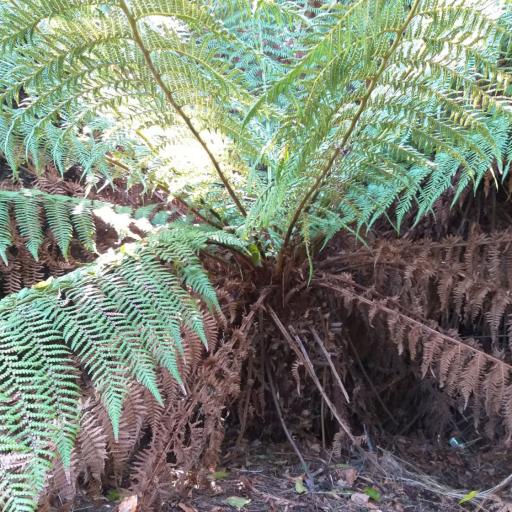
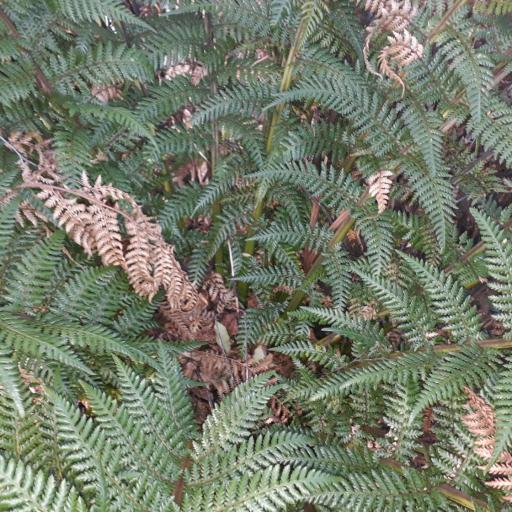
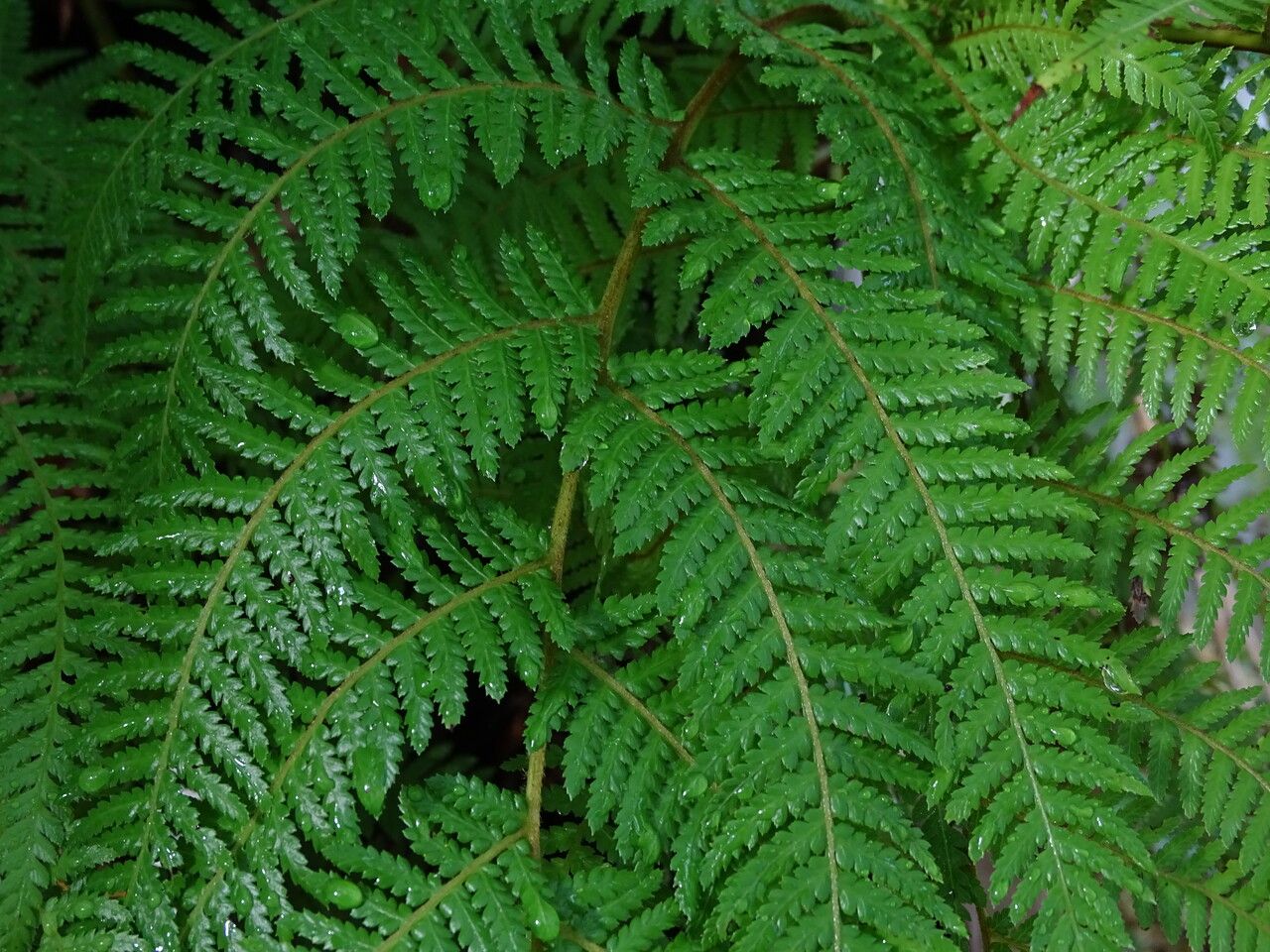
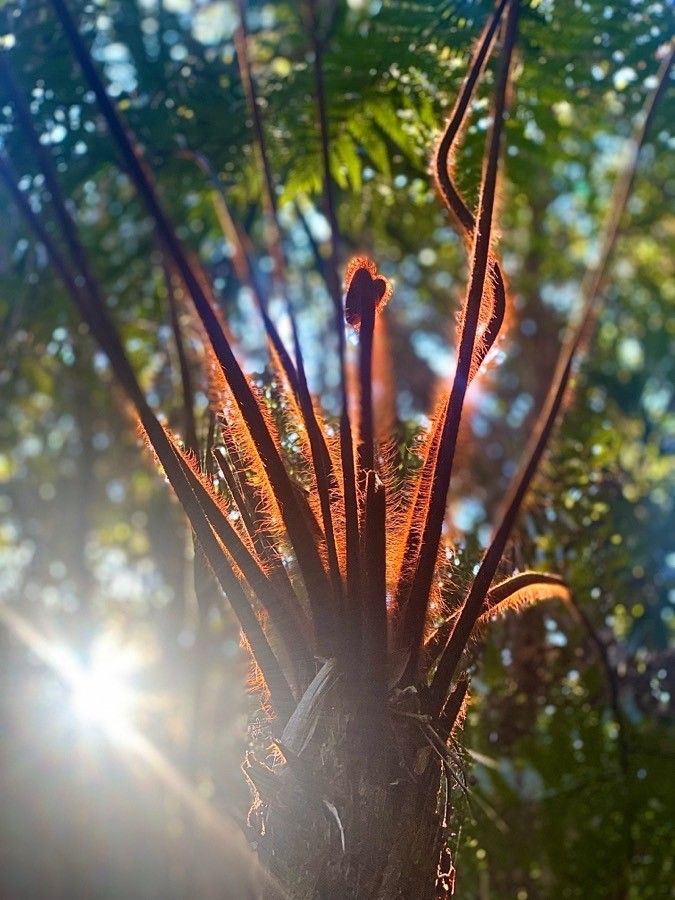
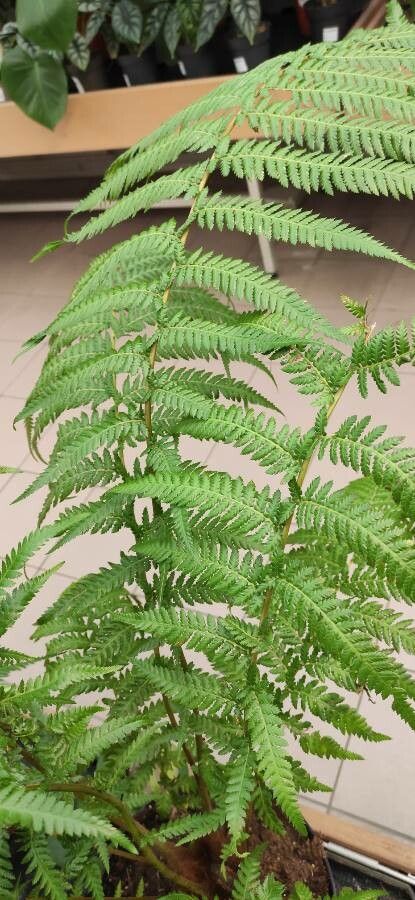
Dicksonia fibrosa, the golden tree fern, whekī-ponga or kuripaka (in Māori) is a species of medium-sized tree fern native to New Zealand. D. fibrosa has a thick, soft and fibrous rusty brown trunk. It holds on to its dead leaves producing a distinctive pale brown skirt, distinguishing it from the related Dicksonia squarrosa. A slow-growing plant, similar to Dicksonia antarctica, D. fibrosa can reach a height of 6 metres (20 ft). It requires winter protection in any area that is subject to winter frosts. It has gained the Royal Horticultural Society's Award of Garden Merit.
Golden tree fern is highly resistant to disease and typically not susceptible to illnesses. In terms of care, this plant is fairly low-maintenance. When grown outdoors it needs little watering, and larger plants normally do not require pruning. Smaller plants, however, should be pruned after they have bloomed. The golden tree fern is suitable for anyone with outdoor space, such as a garden or a deck, and does not demand much experience in plant care.
How to keep Dicksonia Fibrosa.
Light
The golden tree fern prefers areas with moderate sunlight but can also persist in lower-light conditions. Its native habitats often contain abundant shade, emphasizing the plant's adaptability. Although it thrives with sun exposure, it does not depend on it, reflecting its resilience. Relatively less light may slow its growth, but it will not necessarily halt it.
Water
Originating from the humid forests of New Zealand, the golden tree fern thrives with consistent moisture. However, it can tolerate drier periods, needing water only every 1-2 weeks. To retain moisture and mimic its natural habitat, mulching is helpful. In temperate gardens, mulching also helps prevent waterlogging.
Temperature
The golden tree fern displays strong adaptability to a variety of climate conditions, whether facing blistering summers or frosty winters. However, it does have an ideal temperature range for growth. When temperatures become too high, the plant is susceptible to heat and humidity stress, which can cause it to die. In areas where temperatures near the lower limit of its cold tolerance, it's important to provide insulation to protect the plant.
Fertilizer
Fertilize your Golden tree fern in early spring to encourage healthy growth. Regular feeding improves overall health, producing vigorous growth, greater resilience to harsh conditions, and enhanced resistance to pests and disease. Follow a set fertilization schedule for your Golden tree fern to keep foliage vibrant, richly colored, and lush in appearance.
Pruning
The Golden Tree Fern is known for its feathery, golden fronds and sturdy trunk. It requires minimal pruning. To encourage growth and reduce stress, trim any dead fronds during the winter. Regular pruning enhances the plant's appearance and helps prevent disease. Be sure to always use sterilized tools to avoid spreading infections.
Pot & Repot
To ensure optimal growth for your golden tree fern, repot it every 2 to 3 years during spring. Use a deep pot to accommodate its vertical root system. After repotting, provide moderate humidity and indirect light. Be careful not to overwater; instead, let the soil surface dry out between waterings to promote better health.
Botanical profile.
- Plant Type
- Tree
- Life Cycle
- Perennial
- Genus
- Dicksonia
- Family
- Cyatheaceae
- Hardiness Zone
- 8-11
- Mature Height
- 2.13 m
- Mature Spread
- 2.13 m
- Leaf Color
- Green
- Leaf Type
- Evergreen
- Planting Time
- Spring, Summer, Autumn
- Native Area
- New Zealand
Other names.