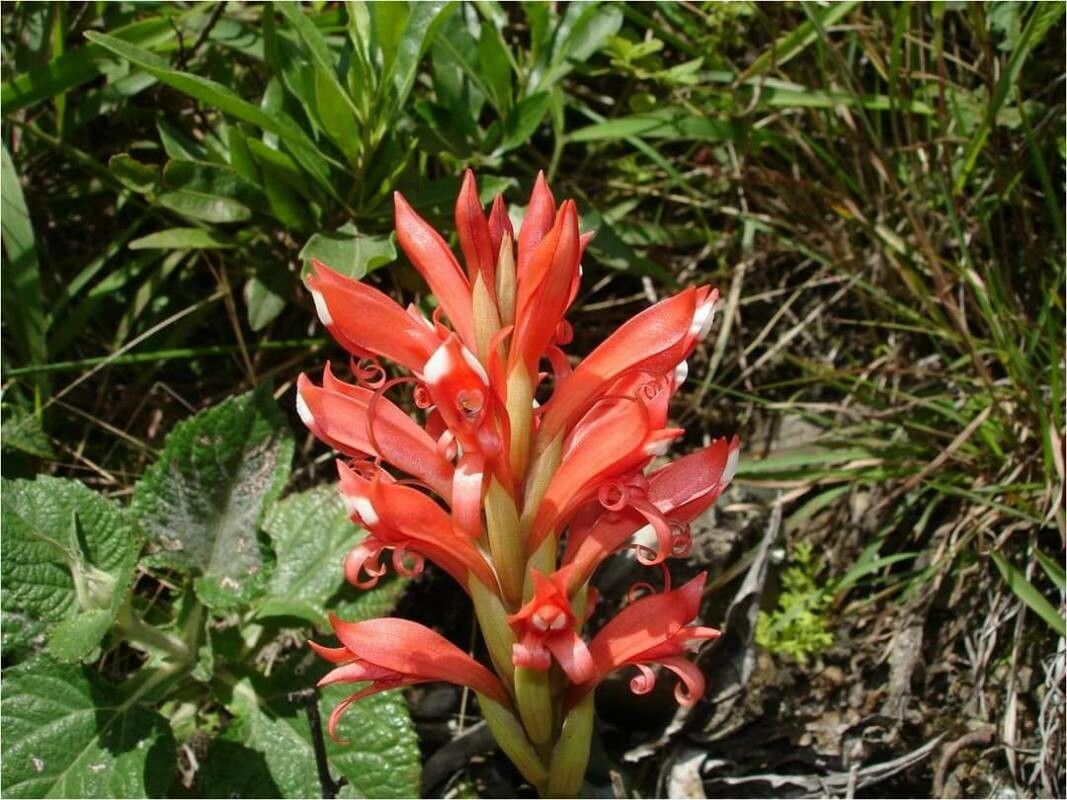
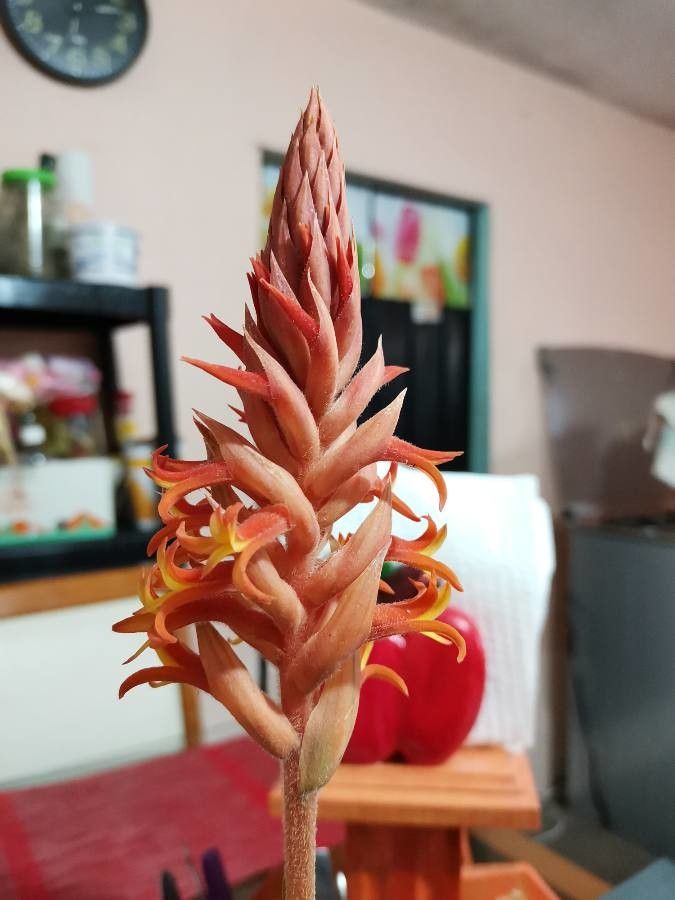
Dichromanthus cinnabarinus, commonly known as scarlet ladies' tresses, is a terrestrial species of orchid. It is common across much of Mexico, south to Guatemala, and north into Texas.
Scarlet lady's tresses generally shows strong resistance to disease and is affected by relatively few insect pests. Its care level is considered difficult because it needs high humidity along with good ventilation and low levels of harmful pathogens. Overwatering can cause root rot. Although anyone can grow Scarlet lady's tresses, keeping it healthy and getting it to flower again requires more growing experience.
How to keep Dichromanthus Cinnabarinus.
Light
Scarlet lady's tresses grows naturally in places like forest understories and rocky areas, where it receives natural shade. It prefers partial sun but can tolerate both full sun and full shade, showing its adaptable, hardy nature.
Water
The Scarlet lady's tresses flourish in high-altitude habitats where there is moderate moisture. Although it can withstand short dry periods, it needs weekly watering and higher humidity levels to thrive. This makes it particularly well-suited for environments like bathrooms or kitchens, which closely mimic its natural conditions.
Temperature
Scarlet lady's tresses is a plant that does well in regions where temperatures range from 59 to 95 °F (15 to 35 ℃). It comes from climates that experience those temperature ranges. If you grow scarlet lady's tresses in a climate different from its origin, the recommended seasonal adjustments involve imitating these temperatures to ensure optimal growth.
Fertilizer
The best time to fertilize a Scarlet lady's tresses is in early spring, when it is coming out of dormancy and beginning active growth. Fertilizing supplies essential nutrients needed for healthy development. Although Scarlet lady's tresses requires relatively little fertilizer, applying it once a year can improve its survival and encourage better, longer-lasting blooms.
Pruning
The Scarlet Lady's tresses thrive when properly pruned between early and late spring. This encourages growth and helps prevent disease. To boost flowering, remove any dead stems and manage the plant's size. Regularly inspect for pests and clean your tools to maintain the plant's overall health.
Botanical profile.
- Plant Type
- Herb
- Life Cycle
- Perennial
- Genus
- Dichromanthus
- Family
- Orchidaceae
- Hardiness Zone
- 7-9
- Mature Height
- 49 cm to 91 cm
- Mature Spread
- 20 cm to 30 cm
- Leaf Color
- Green, Dark Green
- Leaf Type
- Evergreen
- Flower Color
- Orange
- Flower Size
- 2.03 cm to 3.05 cm
- Bloom Time
- Late summer, Early fall
- Planting Time
- Spring, Summer, Autumn
- Harvest Time
- Mid fall, Late fall
Other names.
Reader questions.
What is the best way to water my Scarlet lady's hair?
How you water the Scarlet lady's tresses depends on whether it's actively growing or not. During the growth phase, water the soil and occasionally water the leaves if it's warm. In contrast, during winter or cool, wet weather, only water the soil. You'll know if it needs more water if the roots and leaves become dry or discolored. If it receives too much water, it will look mushy. Grow the plant in a pot with good drainage. During the growing season, water it multiple times per week, ensuring proper drainage. The pot size determines the amount of water needed. Larger pots require less frequent watering, while smaller pots need more frequent watering. Use rainwater or distilled water that matches the air temperature.
What are the sunlight requirements for plants?
Plants have varying sunlight requirements to thrive. Partial sun plants need about 3-6 hours of sunlight daily, whereas full sun plants require over 6 hours of sunlight. It's important to observe the movement of sunlight through your garden, selecting spots that offer a balance of light and shade suitable for your plants. This ensures that the plants receive the right amount of sunlight for optimal growth and health.
What is the optimal temperature range for growing Scarlet lady's tresses?
Scarlet lady's tresses, botanically known as Dichromanthus cinnabarinus, thrives in areas where the temperature ranges from 59 to 95°F (15 to 35°C). This plant is adaptive to climates within these temperature ranges. To achieve optimal growth, especially in climates different from its native range, it is suggested to mimic these temperature conditions through seasonal adjustments.
What should I do if I give too much or too little water to my Scarlet lady's hair?
To keep your Scarlet lady's tresses thriving, make sure to avoid keeping its roots in overly moist soil. Although these plants require frequent watering when actively growing, they also need a well-draining growing medium. When overwatered, the plant becomes mushy and develops root rot. In this case, you can remove any rotting roots with sterile pruning shears and repot the plant in a container with good drainage using a fast-draining potting mix. However, be mindful that excessive repotting can harm the plant. To prevent underwatering, watch for wilting or dryness in the plant, which may indicate that the soil is drying out too quickly. In such cases, increase your watering frequency to keep the plant healthy.
Can Scarlet lady's tresses thrive in both sun and shade?
Yes, Scarlet lady's tresses, botanically known as Dichromanthus cinnabarinus, is quite adaptable to different light conditions. It is native to environments like forest understories or rocky areas, experiencing natural shade. While it prefers partial sun, it can also tolerate full shade, making it a versatile perennial herbaceous plant. Whether in your garden or as an indoor plant, it can adapt to your available lighting conditions.
Do I need to take special frost protection measures for Scarlet lady's tresses during winter?
Scarlet lady's tresses possess strong cold resistance, eliminating the need for special frost protection measures in most cases. However, when winter temperatures are forecasted to drop below -15°C, it is crucial to provide cold protection. This can be done by covering the plant with insulating materials like soil or straw. Additionally, watering the plant abundantly before the first freeze in autumn helps keep the soil moist and prevents drought and water scarcity through the winter and into early spring.
How frequently should I water my Scarlet lady's hair?
To properly care for your Scarlet lady's tresses, consider the following watering guidelines. During the active growth stage in spring and summer, water once or twice per week. If it's hot and dry, increase watering to three times per week or more. In winter, water less frequently, around two to three times per month to keep them alive. However, if you bring them indoors, keep in mind that indoor growing may cause the soil to dry faster, so adjust watering accordingly. Finally, in the fall, gradually decrease watering from the summer rate to your reduced winter schedule.
How can artificial lighting support plant growth indoors?
Artificial lighting is crucial for indoor plants, especially when natural sunlight is insufficient. It can promote faster and healthier growth by providing essential light, mimicking natural sunlight conditions. LED lights are recommended due to their ability to offer customizable light wavelengths suitable for plant needs. For full sun plants, 30-50W/sq ft of light is recommended; for partial sun plants, 20-30W/sq ft; and for full shade plants, 10-20W/sq ft. The light should be placed 12-36 inches above the plant for 8-12 hours per day to simulate natural daylight hours.
How does low temperature affect Scarlet lady's tresses, and what should I do?
Scarlet lady's tresses are cold-tolerant, thriving best when temperatures remain above 15°C and should be kept above -10°C during winter. If temperatures fall below -15°C, there may not be noticeable changes during winter; however, sprouting may decrease or not occur in the spring. In spring, any parts of the plant that have failed to sprout should be removed as part of care and maintenance.
What do I need to think about when watering my Scarlet lady's hair during different seasons and times when it is growing?
When planning the watering schedule for your Scarlet lady's tresses, there are two important growth phases to consider. The first phase is the active growth period, which occurs in spring and summer. During this time, you should water the plant multiple times per week. The second phase is the rest period, which the Scarlet lady's tresses go through for about two to three months each winter. This period requires much less water and fertilization compared to normal. It is recommended to water the plant only once or twice per month during this time. To transition to the rest period, gradually reduce the watering frequency from multiple times per week in the fall. Eventually, you should reach the appropriate rate of watering once or twice per month for the winter season.
What are the symptoms of light deficiency in Scarlet lady's tresses?
Scarlet lady's tresses may exhibit several symptoms when growing under insufficient light conditions. These include smaller new leaves, leggy or sparse growth, faster leaf drop, slower or no new growth, lighter-colored new leaves, and various forms of sunlight damage like chlorosis, sunscald, leaf curling, wilting, and leaf scorching. Each of these symptoms indicates that the plant is not receiving optimal light for its growth and health.
What impact does high temperature have on Scarlet lady's tresses, and how do I address it?
During the summer, it is important to keep Scarlet lady's tresses below 35°C. Temperatures exceeding 38°C may cause the leaves to lighten in color, curl, become prone to sunburn, and in severe cases, lead to the wilting and drying of the plant. To mitigate these issues, trim away the sunburned and dried-up parts of the plant. Additionally, moving the plant to a shadier location or using a shade cloth can protect it from the midday and afternoon sun. Proper watering, especially in the morning and evening, helps maintain soil moisture, which is crucial for the plant's survival in high temperatures.