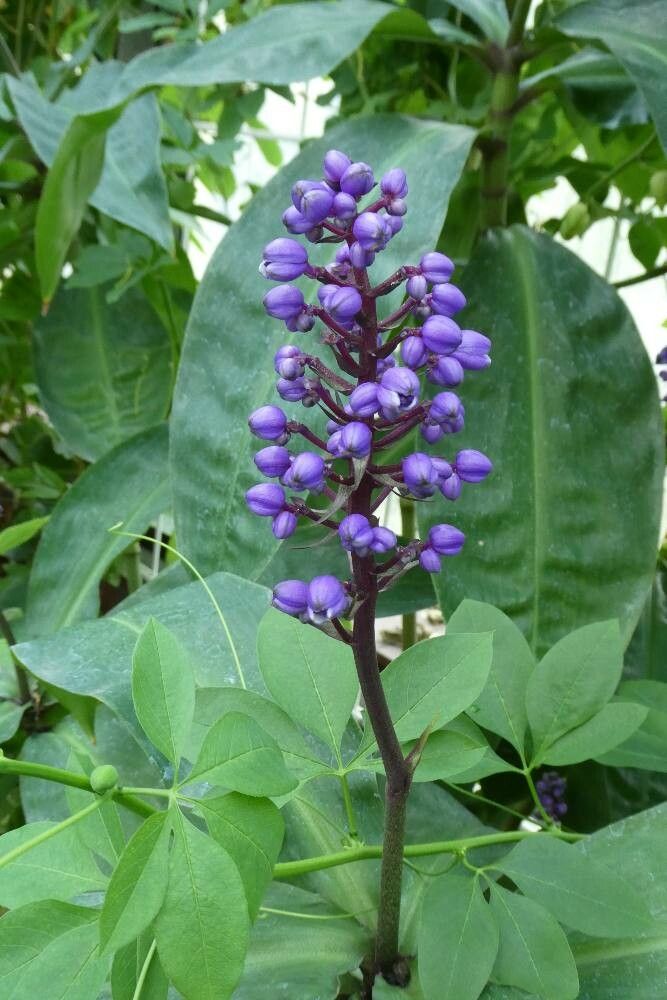
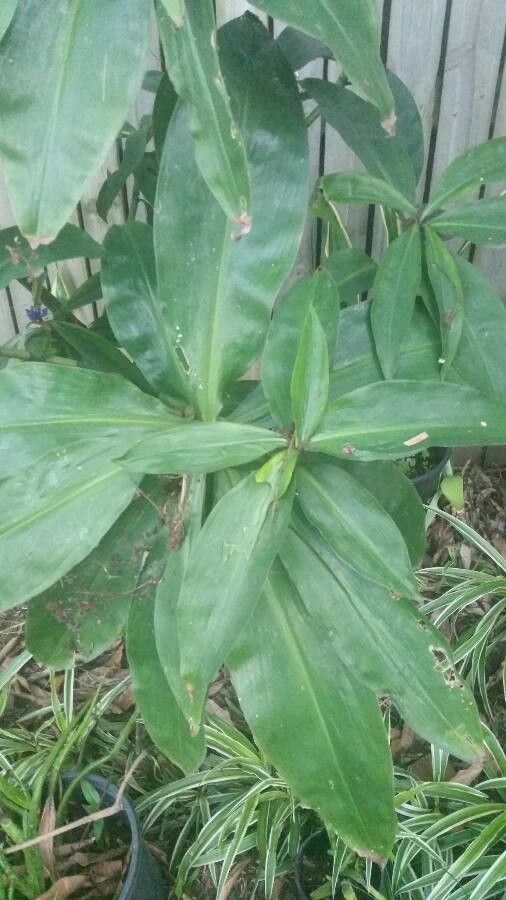
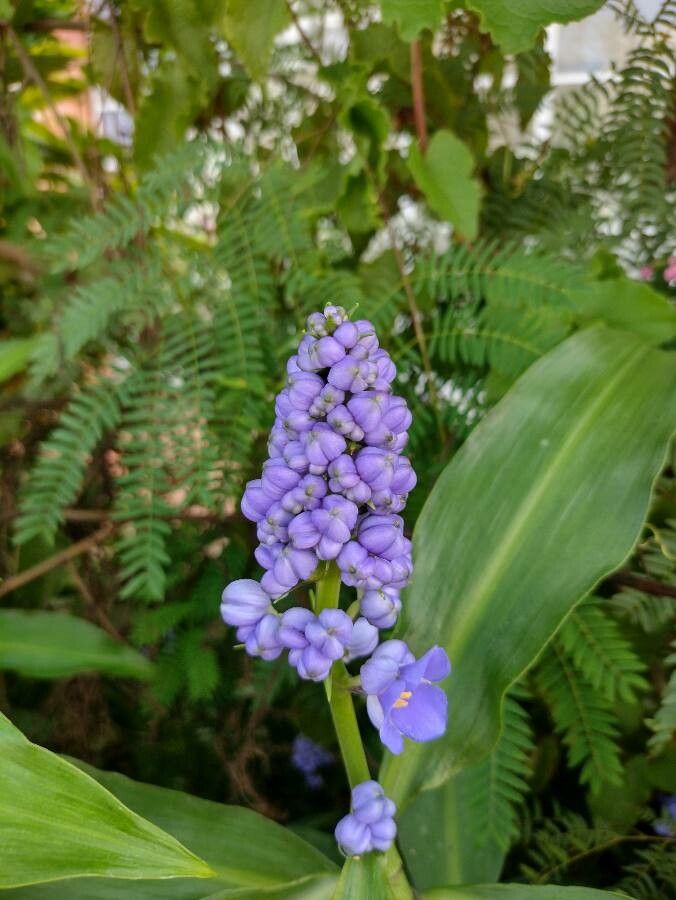
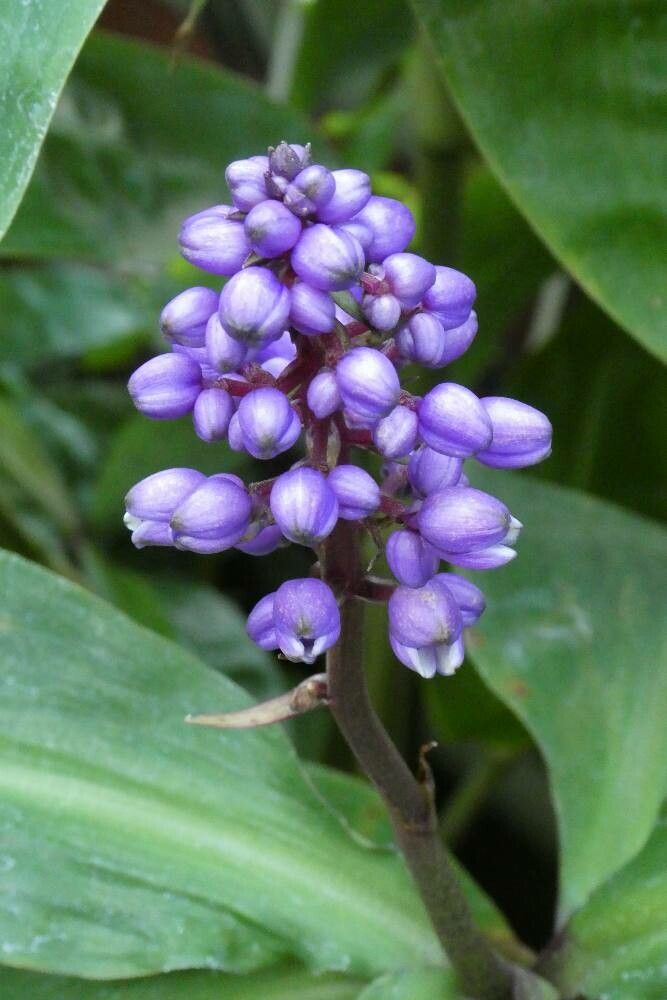
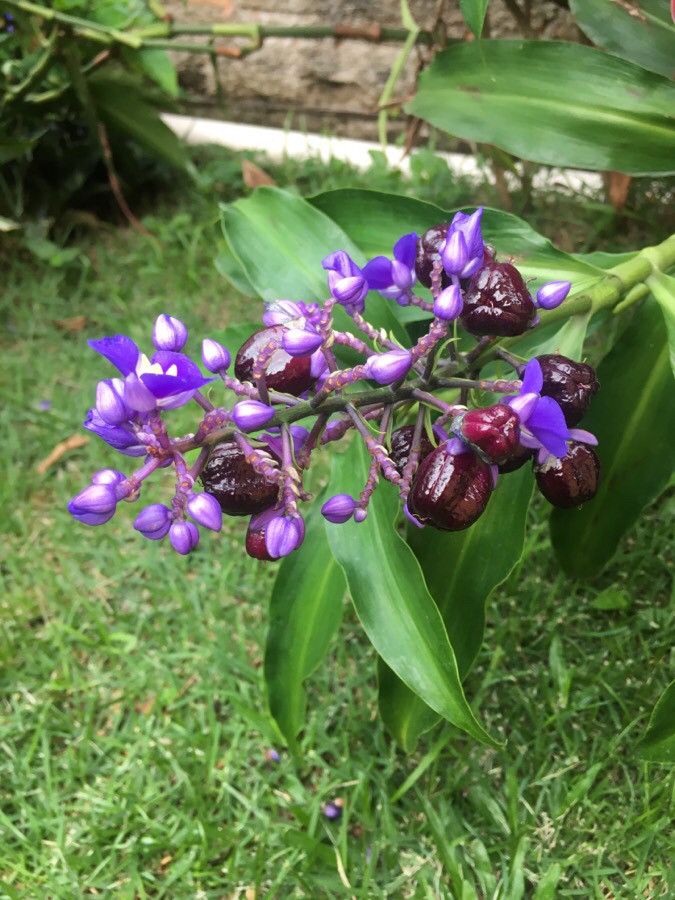
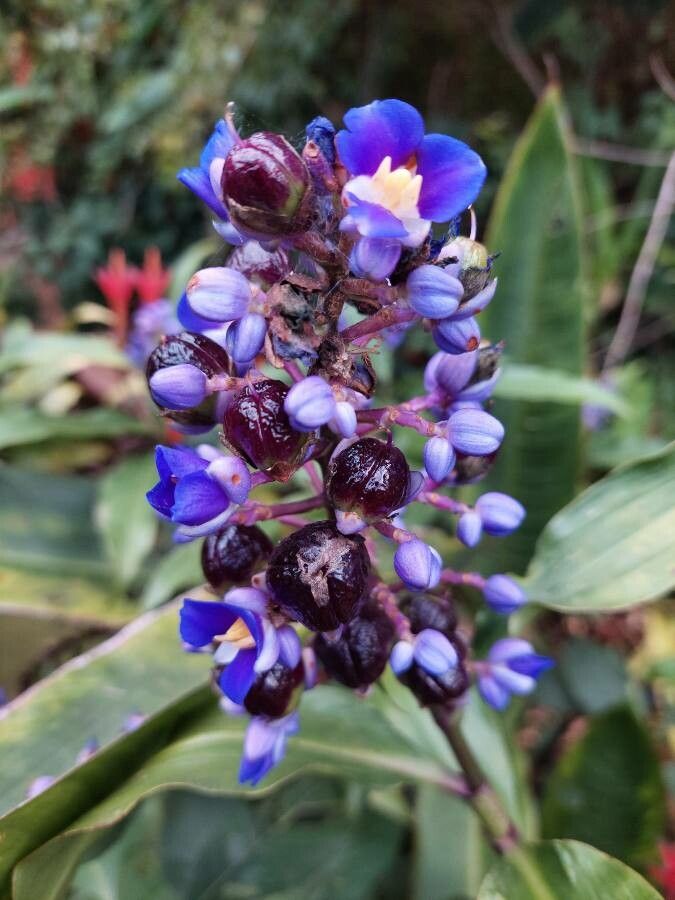
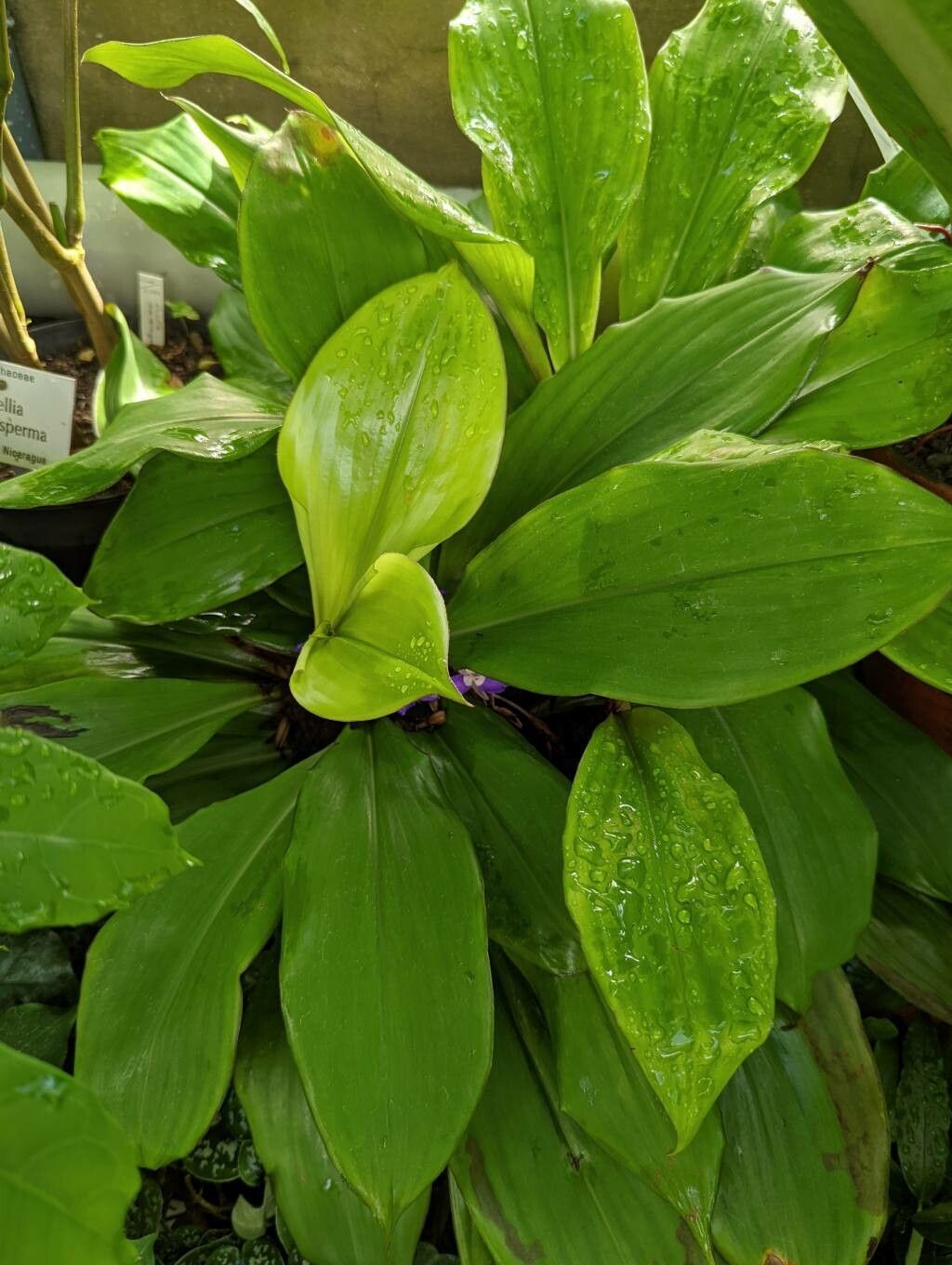
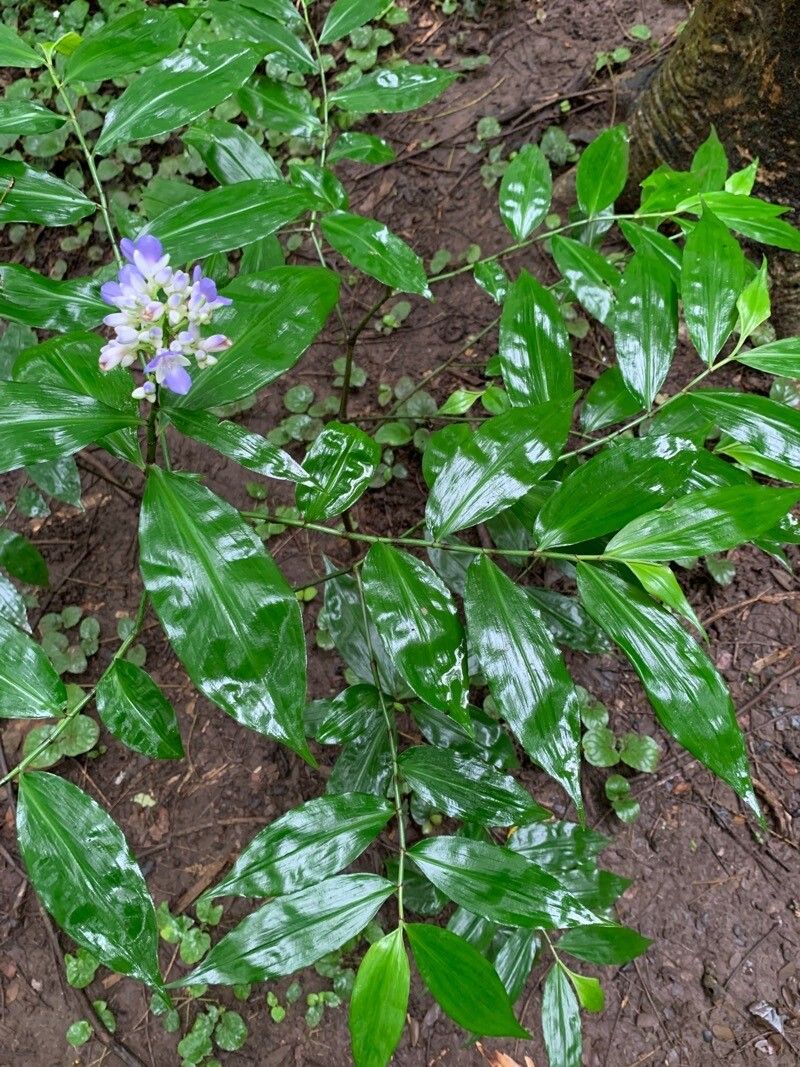
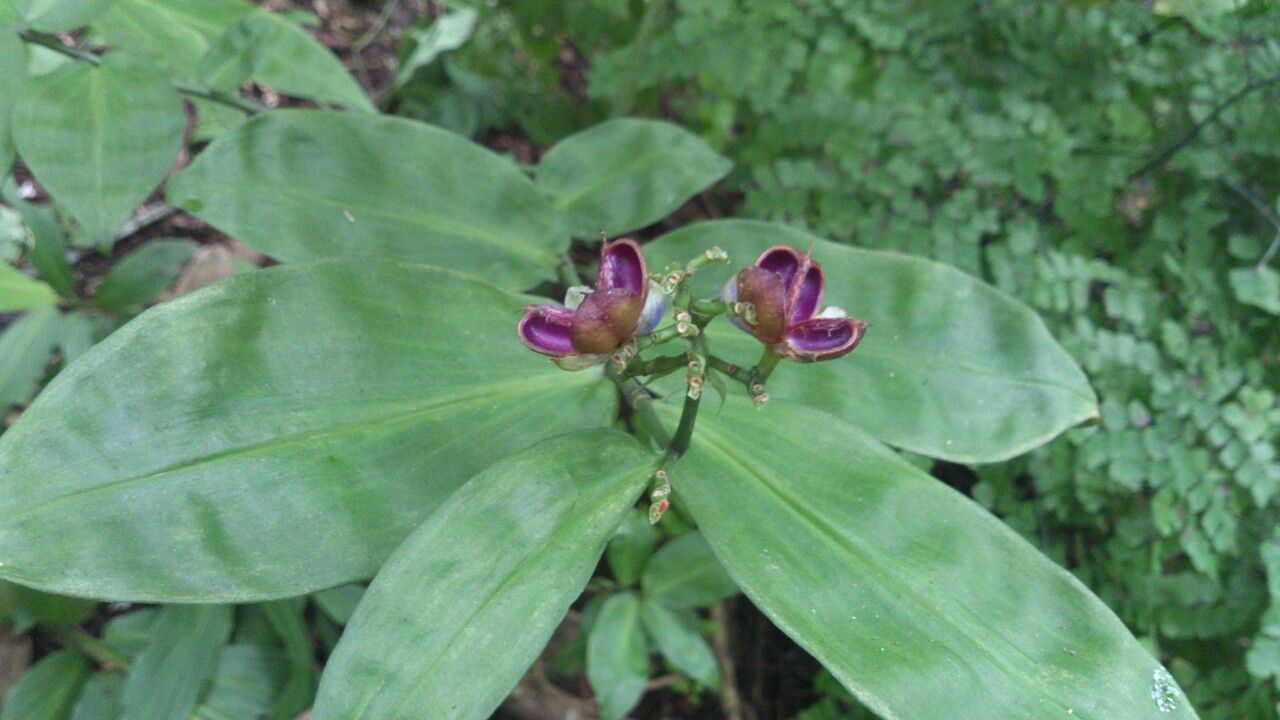
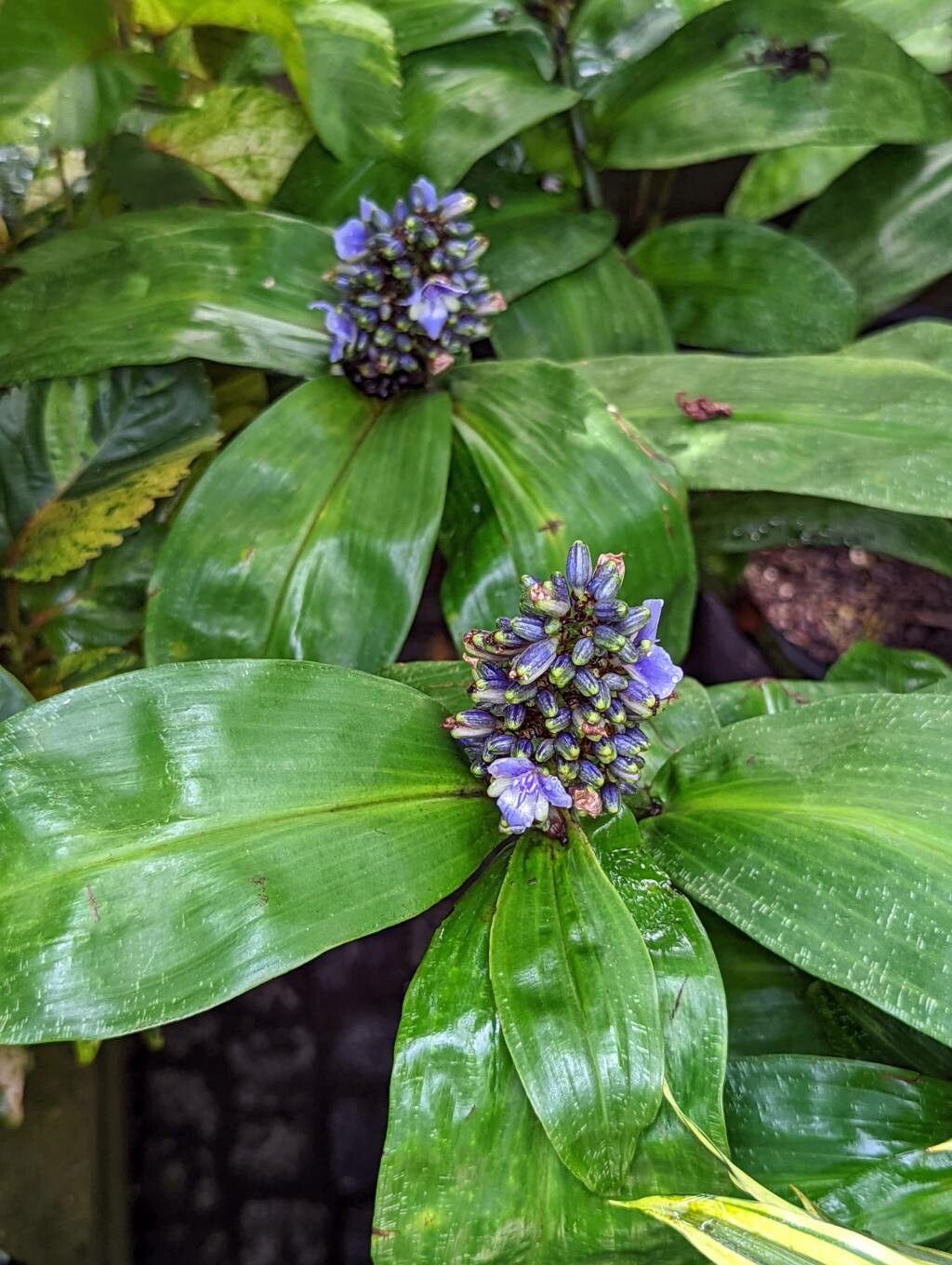
Dichorisandra thyrsiflora, commonly known as blue ginger or blue bamboo, is a tropical plant native to Brazil. It belongs to the Commelinaceae family and is a popular ornamental plant due to its striking blue flowers and lush foliage. The plant grows up to 3-4 feet tall and features long, slender leaves that are green on top and purple underneath. The flowers are arranged in clusters on tall spikes that rise above the foliage in summer or fall. They are deep blue with yellow stamens in the center, making them highly attractive to pollinators such as bees and butterflies.
Blue ginger thrives in well-drained soil rich with organic matter and prefers partial shade or filtered sunlight for optimal growth. It can be propagated by dividing rhizomes or taking stem cuttings from mature plants.
In addition to its ornamental value, Dichorisandra thyrsiflora has some medicinal properties. Its leaves contain compounds shown to have anti-inflammatory effects when applied topically.
Overall, Dichorisandra thyrsiflora is a beautiful tropical plant that adds color and interest both indoors as a houseplant and outdoors in warm climates, where it can be grown year-round as an accent piece in gardens or landscapes.
Blue ginger is fairly resistant to disease and is usually not prone to illnesses. However, it can be affected by pests and diseases present in its environment. These infections are typically not severe. Regarding care, the plant requires a moderate level of maintenance. It should be pruned regularly to keep a neat appearance and support healthy growth. Fertilizing can also aid in encouraging flowering. Blue ginger is suitable for people with outdoor spaces, such as a garden or patio, and does not demand extensive care experience. It may need more attention when grown indoors.
How to keep Dichorisandra Thyrsiflora.
Light
The blue ginger tends to thrive in places that receive plenty but not excessive sunlight. Its association with dappled shade suggests it can survive without sunlight, although its prosperity may be reduced. Excessive sunlight can harm it, just as a complete lack of light can cause underdevelopment.
Water
Blue ginger is native to tropical rainforests, where it thrives in high humidity and consistent moisture. To keep it healthy, plant it in soil that stays evenly moist and water it weekly. Additionally, mist the plant regularly to mimic the conditions of its natural habitat. As an evergreen, blue ginger is valued for its attractive foliage, making it a popular choice for indoor cultivation.
Temperature
Blue ginger comes from tropical areas, where the climate is usually warm and humid. Consequently, it is well suited to high temperatures and moisture. It does not tolerate sudden temperature shifts and prefers a steady temperature, so avoiding indoor temperature fluctuations is important. It generally cannot endure cold and needs higher temperatures to grow. If the surrounding temperature falls too low, the plant may stop growing or even die.
Fertilizer
Correct fertilization is essential for Blue ginger's health and appearance. Apply fertilizer to Blue ginger in summer, repeating the application monthly throughout the season. Nutrients supply the fuel for growth and help maintain the plant's components. Fertilizing improves Blue ginger's floral display, ensuring the best blooms.
Pruning
To help blue ginger flourish, prune it from early to late spring, concentrating on removing dead or damaged stems to boost growth and improve airflow. Trim any overgrown sections to manage the plant's size and encourage better blooming. Always use clean, sharp tools to minimize damage and prevent infection.
Pot & Repot
Repot blue ginger every 2 to 3 years in early spring, using a container that is 2 inches wider in diameter. Place the plant in bright, indirect light and keep the soil consistently moist after repotting. Make sure to provide good drainage to prevent waterlogging, which is essential for the health of blue ginger.
Botanical profile.
- Plant Type
- Herb
- Life Cycle
- Perennial
- Genus
- Dichorisandra
- Family
- Commelinaceae
- Hardiness Zone
- 10-12
- Mature Height
- 1.83 m to 2.44 m
- Mature Spread
- 0.91 m to 1.22 m
- Leaf Color
- Green
- Leaf Type
- Semi-evergreen, Deciduous
- Flower Color
- Blue, Purple
- Flower Size
- 1.02 cm to 2.03 cm
- Bloom Time
- Mid summer, Late summer, Early fall, Mid fall
- Planting Time
- Summer, Autumn
- Harvest Time
- Fall, Early winter
- Native Area
- Brazil, Peru
Other names.
Reader questions.
How should I water my Blue ginger plant?
When watering the Blue ginger plant, it is best to use filtered water at room temperature. Tap water may contain harmful particles, so filtering it is preferable. The water should be at room temperature or slightly warmer because Blue ginger originates from a warm environment and cold water can be a shock to its system. It is important to avoid overhead watering, as this can lead to issues with the foliage. Instead, apply filtered room temperature water directly to the soil until it is fully saturated. This helps moisturize the roots and enables them to spread and collect nutrients effectively.
Why should I put fertilizer on my Blue ginger plant?
Fertilization is essential for the Blue ginger and other plants because it provides vital nutrients for both their above-ground and below-ground growth. Although the fertilization requirements for Blue ginger are generally low, it can greatly benefit from annual fertilization to enhance its longevity and promote the production of longer-lasting, beautiful flowers. Therefore, those who want to keep their Blue ginger healthy and looking its best should prioritize regular fertilization.
What are the sunlight requirements for Blue Ginger?
Blue Ginger (Dichorisandra thyrsiflora) thrives best with about 3-6 hours of sunlight, fitting into the category of partial sun. It's crucial to observe how sunlight moves through your garden to find spots that offer a balance of light and shade, which is optimal for the plant's health. Although Blue Ginger can adapt to varying light conditions, too much direct sunlight can be harmful, and complete absence of light might hinder its growth. The plant does well in dappled shade, indicative of its ability to cope without direct sunlight.
What is the botanical name of Blue Ginger?
The botanical name of Blue Ginger is Dichorisandra thyrsiflora.
What should I do if I give my Blue ginger plant too much or too little water?
Overwatering can cause significant damage to your Blue ginger plant, while underwatering is less common but still possible. When the Blue ginger receives too much water, the stems and leaves may wilt and turn yellow. Prolonged overwatering can also lead to root rot, mold, and mildew, which can be fatal to the plant. On the other hand, underwatering is less likely due to the plant's drought tolerance. However, if it does occur, you will notice brittle and brown leaves on your Blue ginger. It is crucial to identify signs of overwatering early when caring for your Blue ginger. Some diseases caused by overwatering, like root rot, may not be reversible if left unattended for too long. If you notice early signs of overwatering, reduce your watering schedule immediately. Additionally, check the quality of the soil where your Blue ginger is planted. If the soil drains poorly, replace it promptly with a loose, well-draining potting mix. If you observe signs of underwatering, simply water your Blue ginger more regularly until the signs subside.
When should I fertilize my Blue ginger plant?
The best time to fertilize a Blue ginger is in late winter to early spring when it transitions from dormancy to active growth. Fertilizing at this time promotes healthy growth and sets the plant up for a great season. While early spring is the optimal time, fertilization in the fall is also acceptable. However, it's not recommended to fertilize a Blue ginger in summer or winter.
How can artificial lighting support Blue Ginger's growth indoors?
When natural sunlight is insufficient, especially in less sunny spaces or during winter, artificial lighting becomes essential for Blue Ginger's growth. Indoor plants require adequate lighting, and artificial lights can be a crucial solution. LEDs are recommended because they can be tailored to provide the specific wavelengths needed by plants. Full sun plants need 30-50W/sq ft, partial sun plants 20-30W/sq ft, and full shade plants 10-20W/sq ft of artificial light. The light source should be placed 12-36 inches above the plant. Additionally, mimicking natural daylight hours, most plants will need 8-12 hours of light per day.
How frequently should I water my Blue ginger plant?
To determine if your Blue ginger plant needs water, you can use a simple method. If it's in a pot, stick your finger into the soil and check if the top two to three inches are dry. If they are, it's time to water the plant. The same goes for outdoor plants in the ground - when the top few inches of soil become dry, it's time to water. Usually, you'll need to water the plant about once a week in spring and early fall. During extremely hot weather, you may need to water it twice or more per week. However, mature and well-established Blue ginger plants have a good ability to withstand drought.
When is the best time to not fertilize my Blue ginger?
To avoid overfertilization and complications, it is advised to only fertilize your Blue ginger plant in late winter or early spring. One annual feeding during this time is sufficient. However, if you didn't fertilize in spring, it is acceptable to feed the plant in the fall. Fertilizing throughout the rest of the growing season (spring, summer, and fall) can lead to overfertilization. It is also unnecessary to fertilize the plant during the winter, as it is in a dormant phase and not actively growing.
What are some symptoms of insufficient light for Blue Ginger?
Symptoms of insufficient light in Blue Ginger include smaller new leaves, leggy or sparse growth, faster leaf drop, slowed or halted growth, and lighter-colored new leaves. These signs indicate the plant is not receiving enough light, leading to a decrease in chlorophyll and essential nutrients. Conversely, excessive sunlight can cause chlorosis, sunscald, leaf curling, wilting, and leaf scorching, demonstrating the delicate balance required for optimal sunlight exposure.
How much water does my Blue ginger plant need?
When watering your Blue ginger, don't hold back on the amount of water you give. Wait until the top two to three inches of soil are dry, then give the plant a thorough watering that completely soaks the soil. Make sure you add enough water for excess water to flow out of the drainage holes at the bottom of the pot. If you don't see excess water draining out, you have likely not given enough water. However, be careful not to let water accumulate in the soil, as this can be harmful to the plant. If water is not draining properly, it could be due to poorly draining soils, which should be avoided for the health of the plant. If the plant is outside, 1 inch of rain per week should be enough.
What kind of fertilizer should I use for my Blue ginger plant?
To effectively fertilize Blue ginger, you can use any general-purpose fertilizer that contains a balanced amount of the three main plant nutrients. However, some nutrient blends are even more beneficial. For example, higher levels of phosphorus are believed to strengthen roots and improve flower quality. Since Blue ginger is a flowering plant, it may be best to use a phosphorus-rich fertilizer. Granular or liquid fertilizers are both suitable as long as they contain ample nutrients. In addition to manufactured fertilizers, you can also improve the soil for your Blue ginger using organic methods. Compost, manure, and similar materials are effective in creating a healthy growing medium.