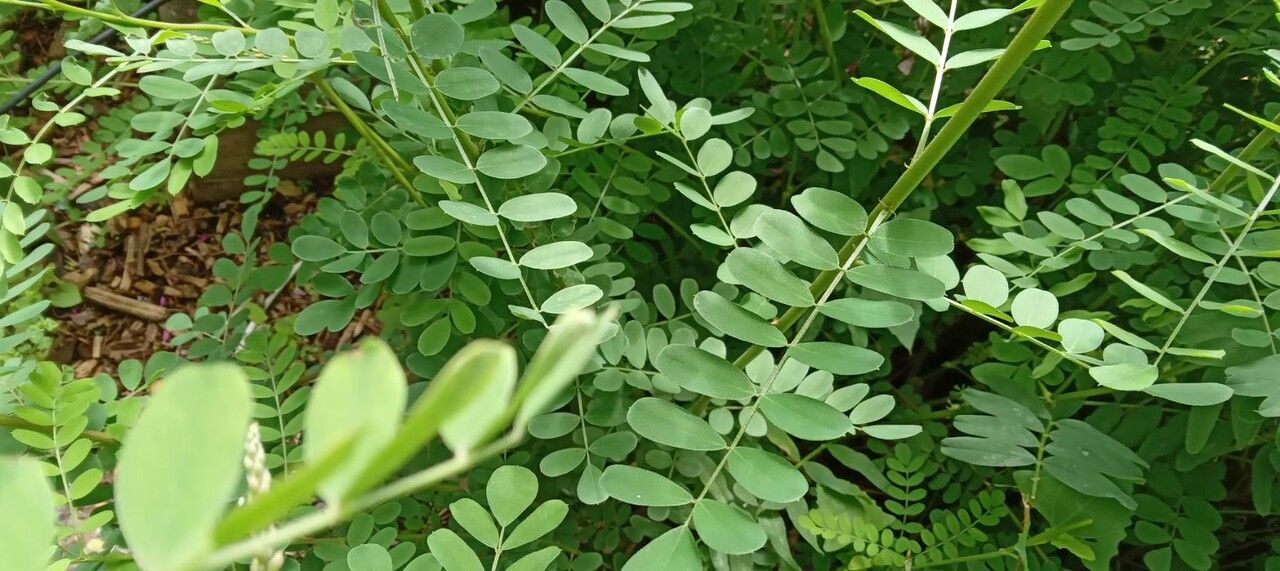
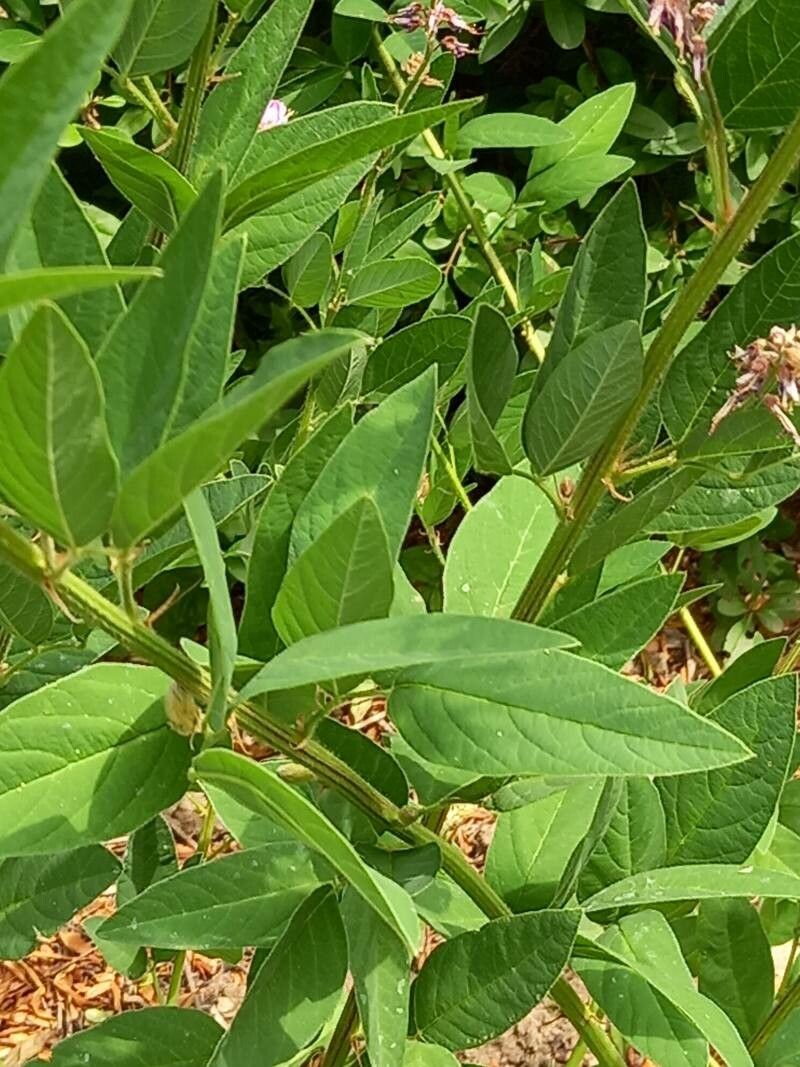
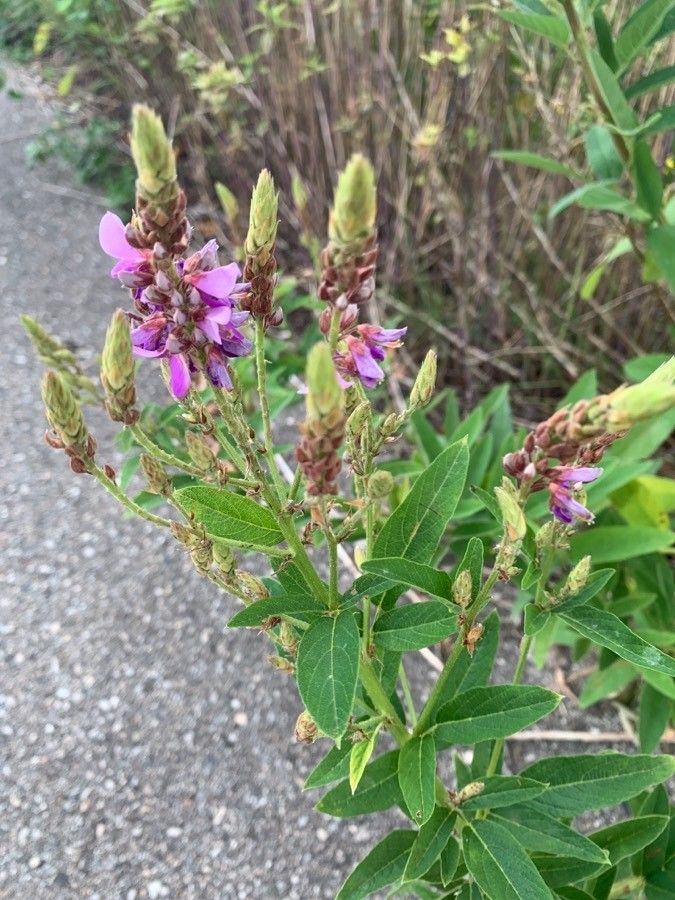
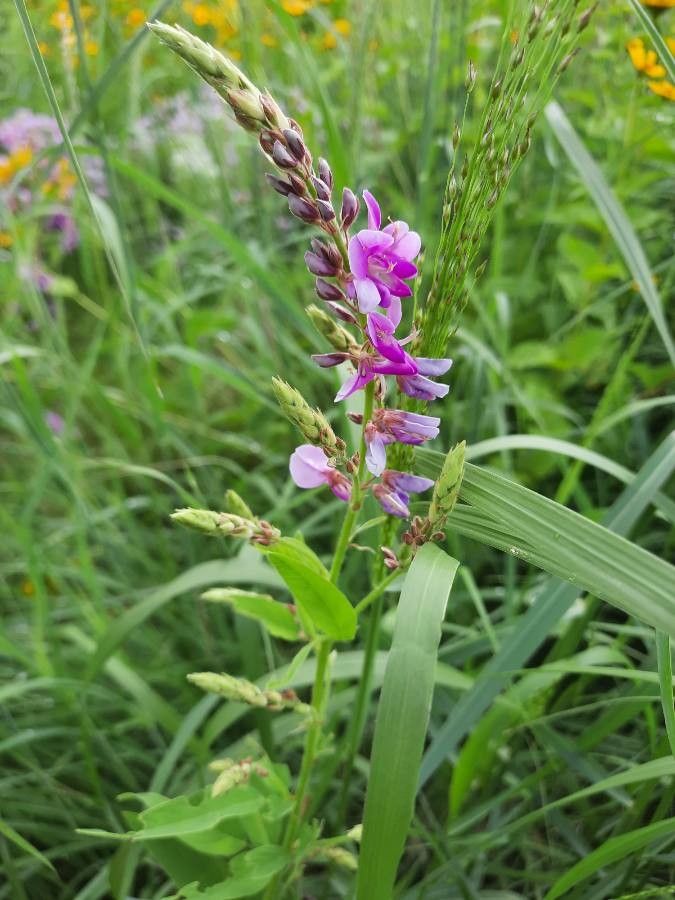
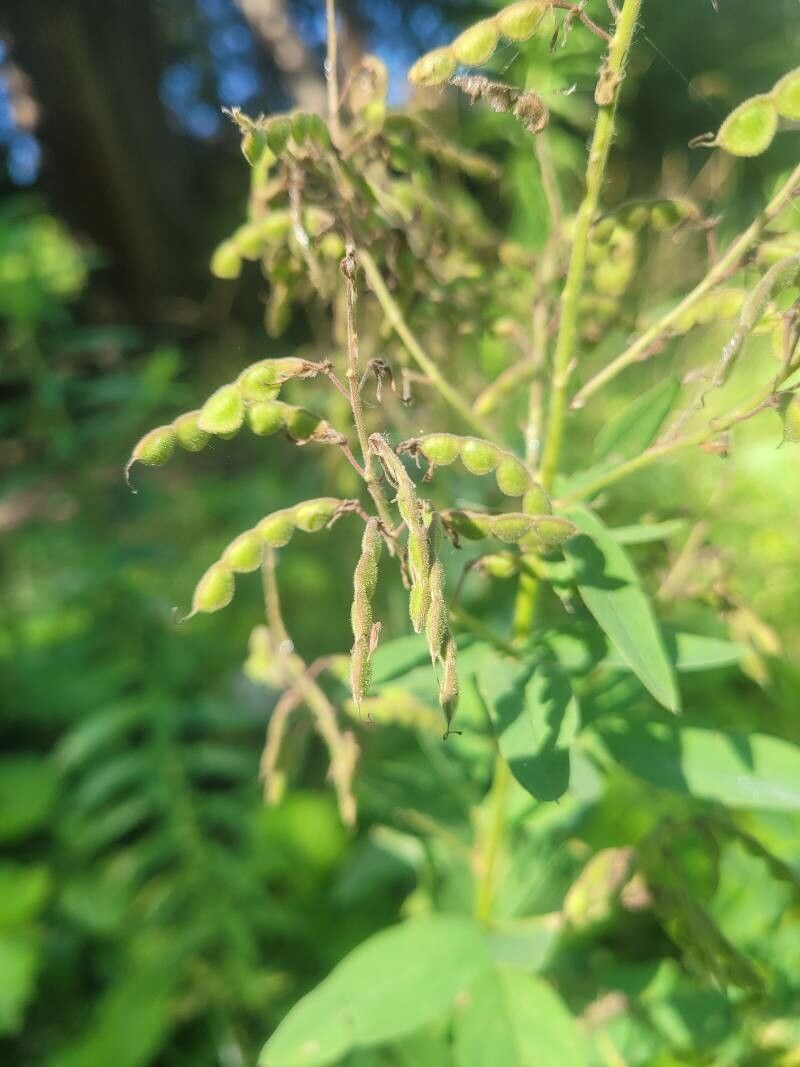
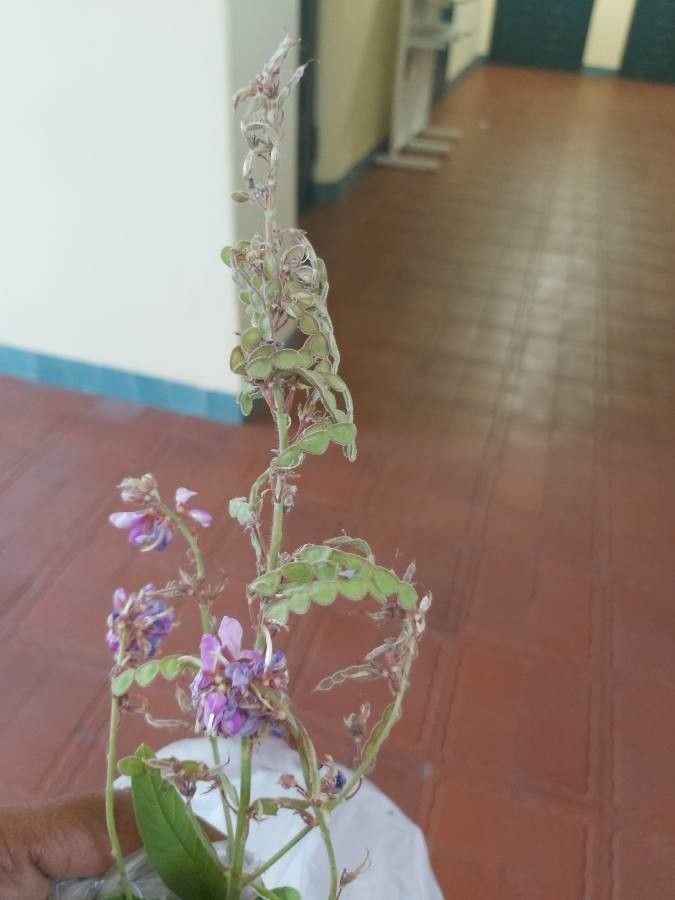
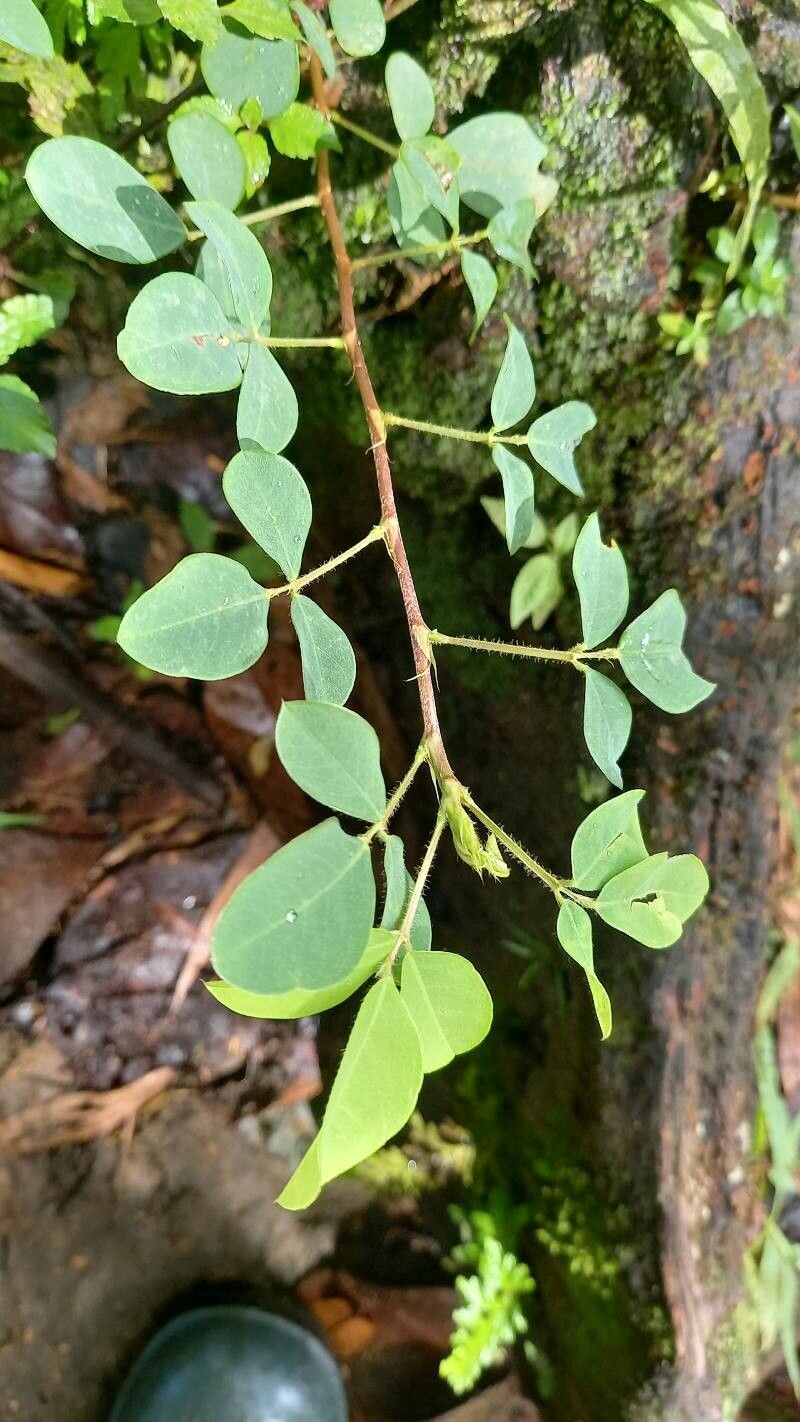
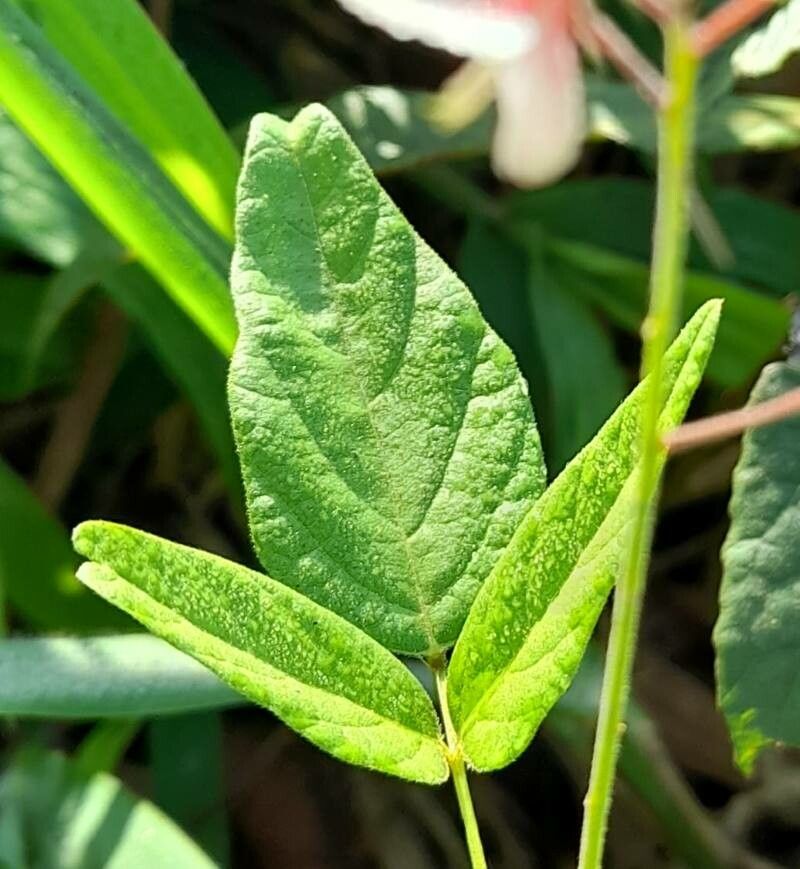
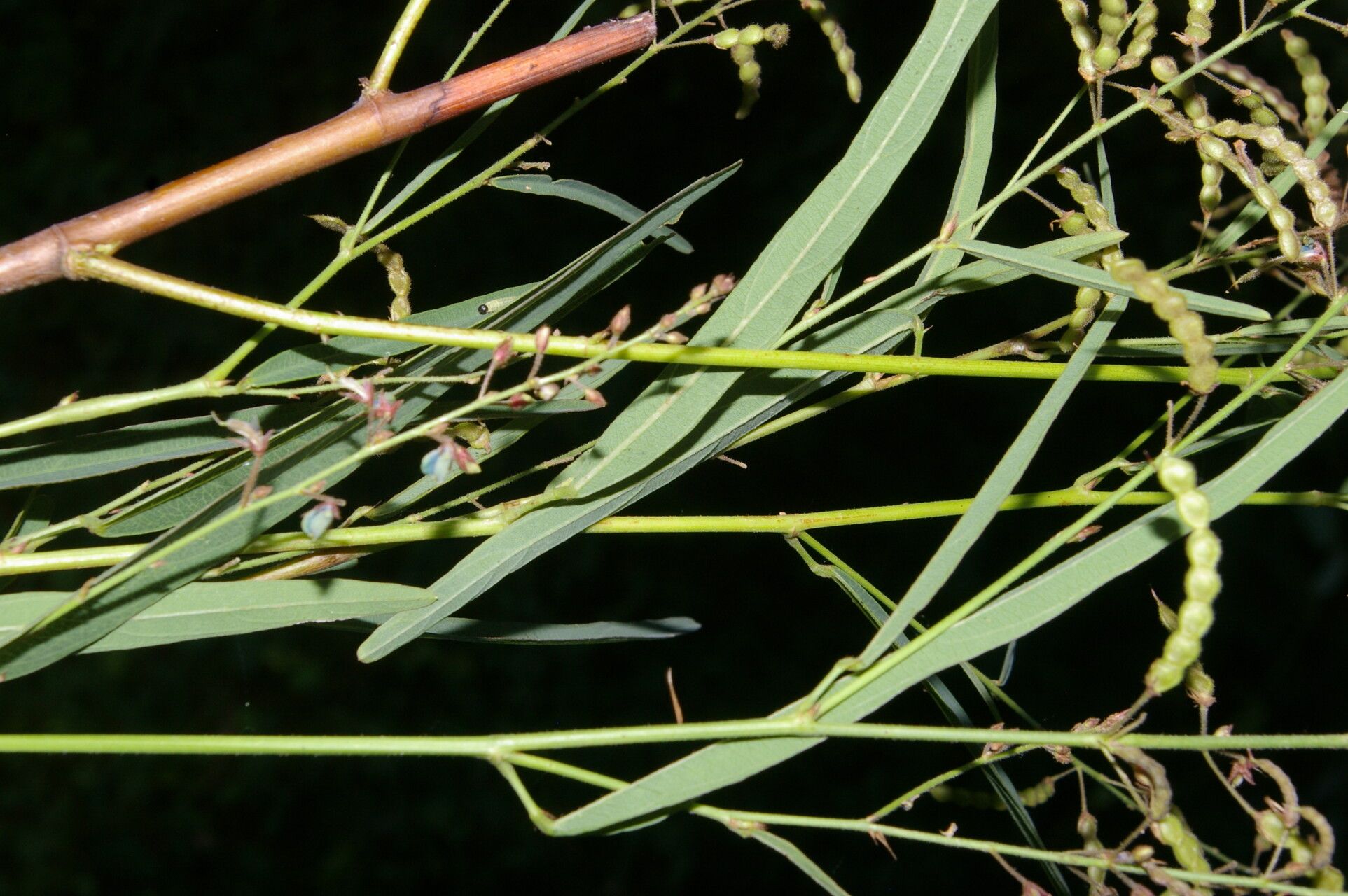
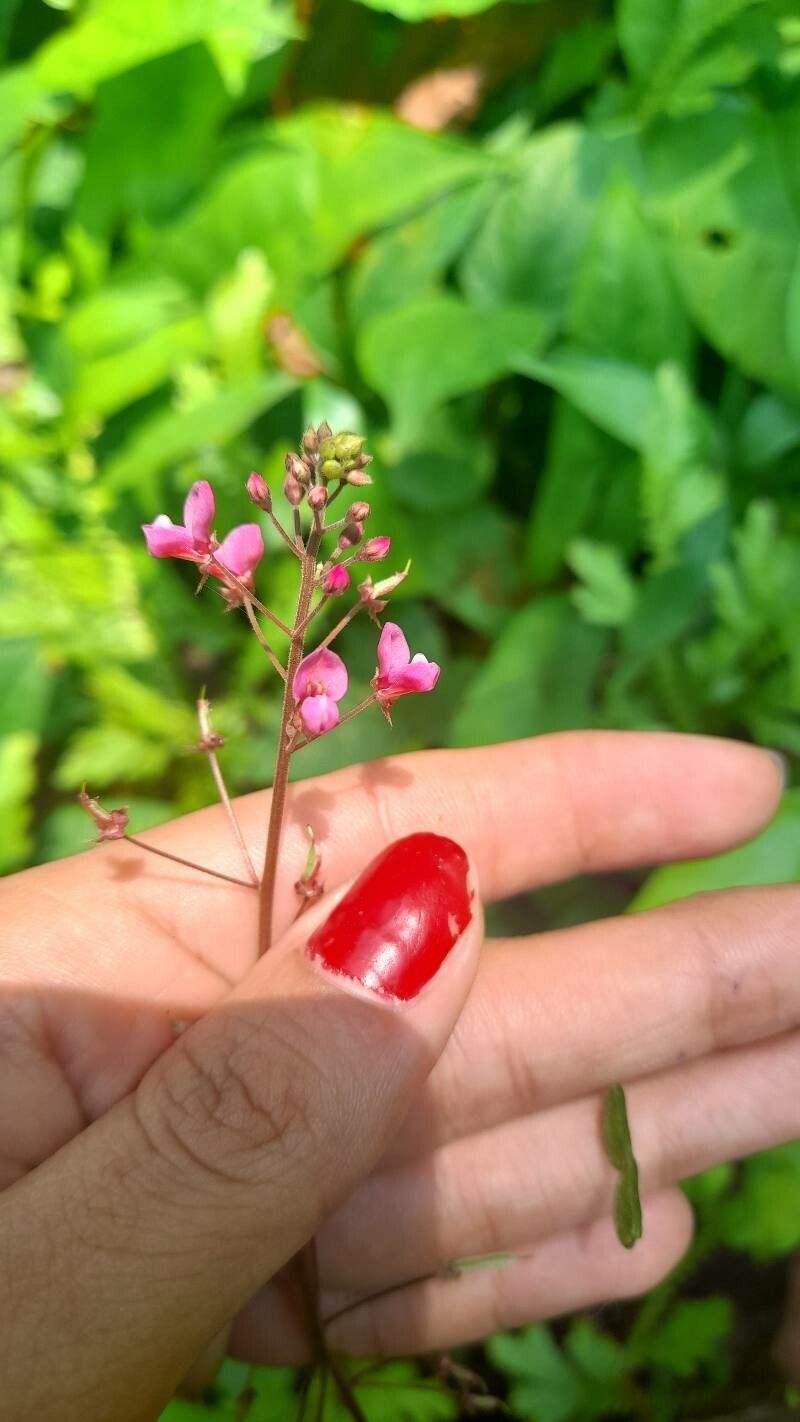
Desmodium canadense is a species of flowering plant in the legume family, Fabaceae. It is native to eastern North America. Its common names include showy tick-trefoil, Canadian tick-trefoil, and Canada tickclover.The plant is a perennial herb and grows in woods, prairies, and disturbed habitat, such as roadsides. It is cultivated as an ornamental plant. It is a larval host plant for butterflies such as the eastern tailed-blue, silver-spotted skipper, and hoary edge. The plant attracts butterflies and hummingbirds. Flowers are pea-shaped, pink to purple in color, and bloom between July to September.
Showy Tick-Trefoil is fairly resistant to disease and is generally not prone to illnesses. However, it can be vulnerable to pests and diseases present in its surroundings. These problems are typically mild. For care, this plant requires moderate maintenance. It should be pruned regularly to keep a neat appearance and support healthy growth. Fertilizing can also help encourage flowering. Showy Tick-Trefoil is suitable for anyone with outdoor space, such as a garden or patio, and does not demand extensive care experience. It may need more attention when grown indoors.
How to keep Desmodium Canadense.
Light
Showy Tick-Trefoil does best in locations with ample sunlight but can also tolerate areas with less exposure. A plentiful amount of sun promotes vigorous growth, and it can get by in places with moderate sun. However, too much or too little light can adversely affect its vigor.
Water
The Showy Tick-Trefoil, native to the prairies of North America, thrives in environments with moderate humidity and consistent moisture, as long as it is not waterlogged. To support its growth, it should be watered weekly. This plant flourishes outdoors, where it benefits from natural rainfall, making it ideal for regions with regular precipitation cycles.
Temperature
Showy Tick-Trefoil is native to areas where temperatures range from 32 to 90°F (0 to 32℃). It prospers in moderate conditions, and regular adjustments are needed during seasons with severe temperature fluctuations.
Fertilizer
The best time to fertilize a Showy Tick-Trefoil is in early spring, as it is coming out of dormancy and starting active growth. Fertilization supplies essential nutrients for healthy development. Although Showy Tick-Trefoil has relatively low fertilizer requirements, applying fertilizer annually can improve its survival and encourage better, longer-lasting flowers.
Pruning
Pruning your Showy Tick-Trefoil from early to late spring helps rejuvenate the plant and encourages it to flower. To maintain plant health and prevent fungal issues, remove dead or damaged stems and thin the canopy to improve airflow. Regular pruning also enhances the plant's shape and vigor, promoting more abundant blooms. For specific pruning practices suited to your region, consult local horticultural resources.
Botanical profile.
- Plant Type
- Herb
- Life Cycle
- Perennial
- Genus
- Desmodium
- Family
- Fabaceae
- Hardiness Zone
- 3-7
- Mature Height
- 0.61 m to 1.83 m
- Mature Spread
- 61 cm to 91 cm
- Leaf Color
- Green
- Leaf Type
- Deciduous
- Flower Color
- Purple, Lavender
- Flower Size
- 2.54 cm
- Bloom Time
- Early summer, Mid summer
- Planting Time
- Spring, Summer
- Harvest Time
- Mid summer
Other names.
Reader questions.
How should I water my Showy Tick-Trefoil?
To properly care for the Showy Tick-Trefoil plant, it is important to water it with filtered water at room temperature. Tap water may contain harmful particles that can affect the plant's health. The water should also be at room temperature or slightly warmer because this plant is accustomed to a warm environment and cold water can be detrimental. Avoid watering the plant from above as it can lead to issues with the foliage. Instead, focus on thoroughly soaking the soil with your filtered, room temperature water. This will help to moisturize the plant's roots and aid in the spread and absorption of necessary nutrients.
Why should I put fertilizer on my Showy Tick-Trefoil plant?
The Showy Tick-Trefoil's leaves are a significant part of its structure. Fertilization plays a vital role in maintaining the health and appearance of these leaves. By properly fertilizing, you can ensure that the leaves maintain consistent color and a healthy texture. Fertilization also benefits the plant beneath the soil by promoting the growth of new roots and maintaining existing ones. This not only keeps the plant healthy currently but also enhances its ability to absorb nutrients from the soil in the long run.
What are the sunlight requirements for Showy Tick-Trefoil?
Showy Tick-Trefoil requires full sun, meaning it needs above 6 hours of sunlight daily to thrive ideally. However, it can also adapt to partial sun conditions, which entail about 3-6 hours of sunlight. Observing how sunlight moves through your garden and choosing spots that offer a good balance of light and shade is crucial for the plant's health and happiness.
What is the ideal temperature range for growing Showy Tick-Trefoil?
Showy Tick-Trefoil, known botanically as Desmodium canadense, is native to climates with temperatures ranging from 32 to 90°F (0 to 32°C). It thrives in moderate conditions and requires regular adjustments during seasons with severe temperature fluctuations to ensure optimal growth.
What do I do if I give my Showy Tick-Trefoil too much or too little water?
Both overwatering and underwatering can harm the health of your Showy Tick-Trefoil plant, but overwatering is more common and has more severe consequences. When the plant gets too much water, its stems and leaves may wilt and turn yellow. Overwatering for a long time can also cause diseases like root rot, mold, and mildew, which can kill the plant. Underwatering is less likely for this plant since it can tolerate drought well. However, it can still happen, and when it does, the leaves become brittle and brown. It's important to spot the signs of overwatering early when caring for your Showy Tick-Trefoil. Some diseases caused by overwatering, such as root rot, might become irreversible if not addressed promptly. If you notice early signs of overwatering, reduce your watering schedule immediately. You should also check the soil quality; if it drains poorly, replace it with a loose, well-draining potting mix. On the other hand, if you see signs of underwatering, simply water the plant more regularly until the symptoms improve.
When should I fertilize my Showy Tick-Trefoil plant?
If you grow Showy Tick-Trefoil outdoors, it will start producing new growth in early spring. This is the signal to start fertilizing for the year. Usually, one application of fertilizer in the spring is sufficient for the plant to thrive. However, if you want to maximize its growth, you can fertilize it multiple times during spring and early summer. In this case, you can apply fertilizer once every month to a month and a half.
How can Showy Tick-Trefoil adapt to different lighting conditions?
Showy Tick-Trefoil thrives best in generous sunlight but can adjust to less sunny conditions. While it prefers an abundance of sunlight for healthy growth, it can tolerate moderate sun exposure. Both insufficient and excessive sunlight can adversely affect its vigor. To support its growth in less ideal conditions, artificial lighting can be a vital solution, especially indoors. LED lights are recommended due to their ability to provide specific wavelengths needed by the plant. The right amount of artificial light varies depending on the plant's light requirements, ranging from 10-50W/sq ft based on whether the plant needs full sun, partial sun, or shade. The light source should be placed 12-36 inches above the plant and kept on for 8-12 hours per day to mimic natural daylight conditions.
Does Showy Tick-Trefoil require frost protection measures during winter?
Showy Tick-Trefoil is highly cold-tolerant and does not require additional frost protection measures during the winter months. However, it is recommended to water the plant generously before the first freeze in autumn. This ensures the soil remains moist and enters a frozen state, which helps prevent drought and water scarcity for the plant during winter and early spring.
How often do I need to water my Showy Tick-Trefoil?
If your Showy Tick-Trefoil plant is in a pot, the easiest way to check if it needs water is to stick your finger into the soil. If the top two to three inches of soil feel dry, it's time to water it. If you have the plant planted outdoors in the ground, you can use the same method to test the soil. When the top few inches of soil are dry, it's time to water. Typically, during the spring and early fall, watering about once a week is sufficient. However, during extremely hot weather, you may need to water twice or more per week. It's worth noting that mature, well-established Showy Tick-Trefoil plants can handle drought well.
When is the best time to not use fertilizer on my Showy Tick-Trefoil?
During late fall and winter, your Showy Tick-Trefoil goes into a dormant phase and stops producing new growth. Therefore, it's best to avoid fertilizing it during this time. If you do choose to fertilize during spring and summer, gradually decrease the amount as summer approaches because the growth rate slows down. It's never a good idea to fertilize your Showy Tick-Trefoil when it's unusually hot or the soil is extremely dry, as this can cause stress and premature death.
What are the symptoms of inappropriate lighting conditions for Showy Tick-Trefoil?
Symptoms of lighting issues in Showy Tick-Trefoil include small, new leaves that may grow smaller than the previous ones, leggy or sparse growth with long spaces between leaves or stems, faster leaf drop as the plant sheds older leaves to conserve resources, slower or no new growth as the plant enters survival mode, paler or irregularly colored new leaves, which indicates a lack of chlorophyll and nutrients. Other symptoms include chlorosis (leaves losing green color), sunscald (damage from intense sunlight exposure), leaf curling (defense mechanism against excessive light), wilting (loss of turgor pressure), and leaf scorching (brown, dry edges on leaves due to excessive sunlight).
How does low temperature affect Showy Tick-Trefoil and what should I do?
Showy Tick-Trefoil is extremely cold-tolerant; however, if winter temperatures drop below -35°C, there may not be any noticeable changes during the winter itself, but you might observe a decrease in sprouting or even no sprouting during the spring. In such cases, it is advisable to remove any parts of the plant that have failed to sprout in spring.