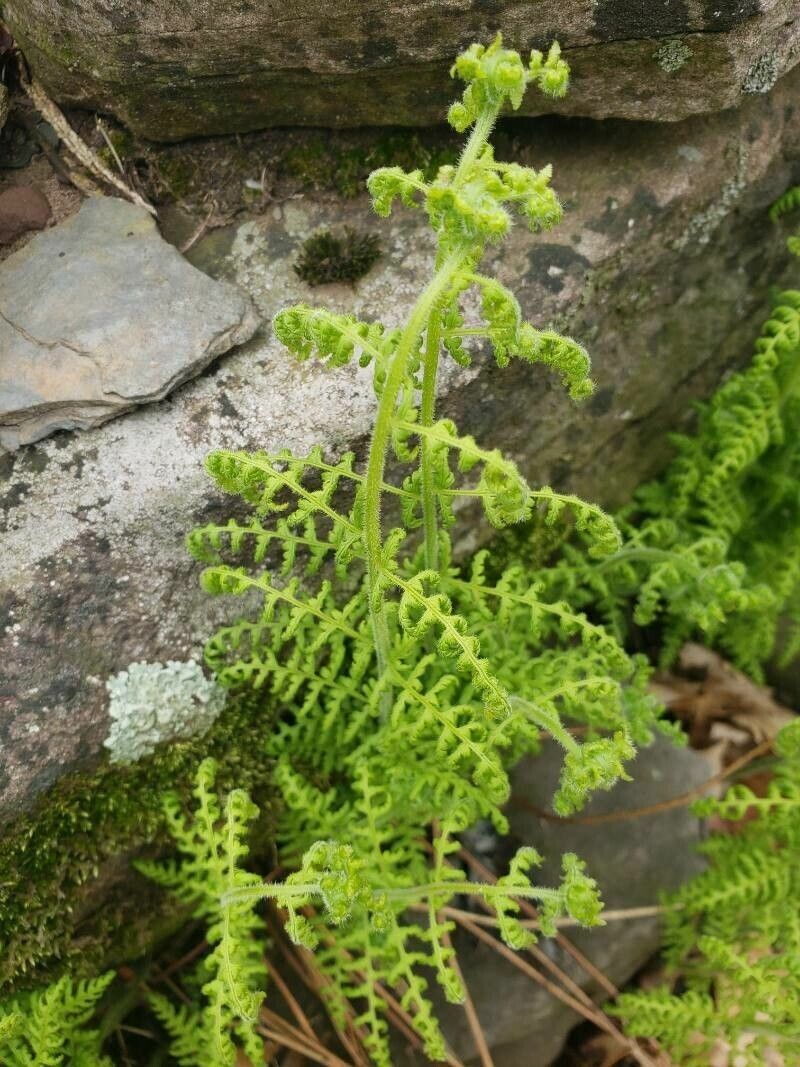
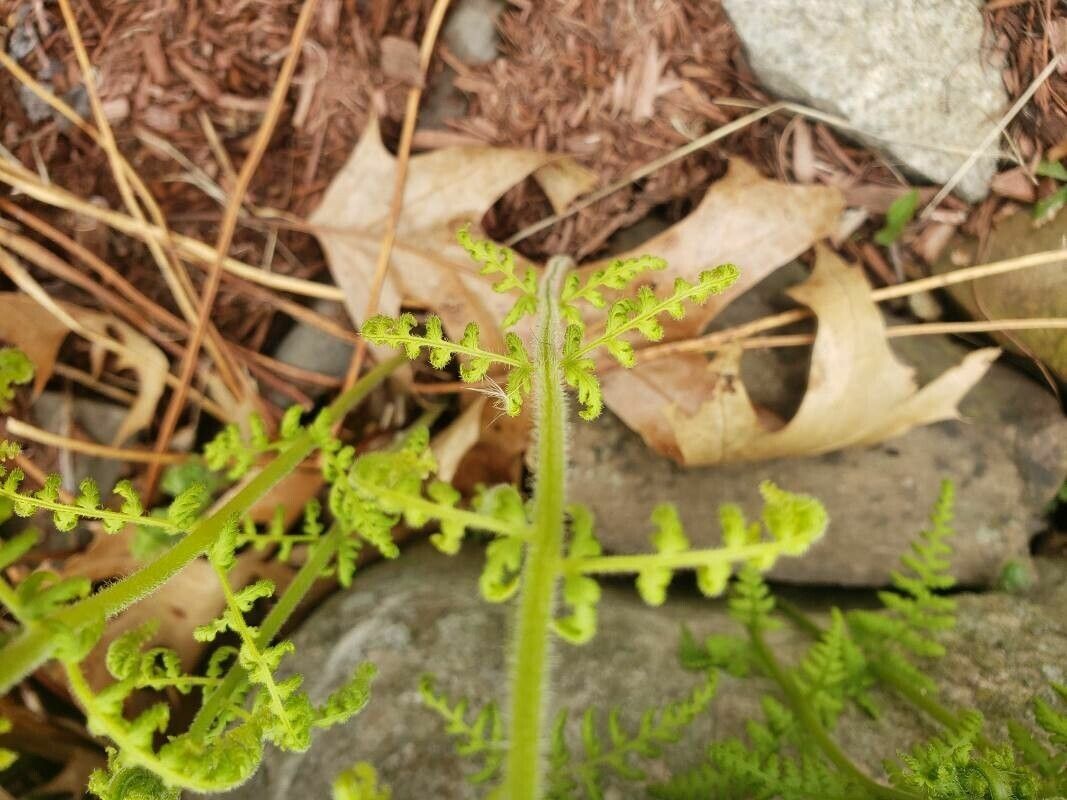
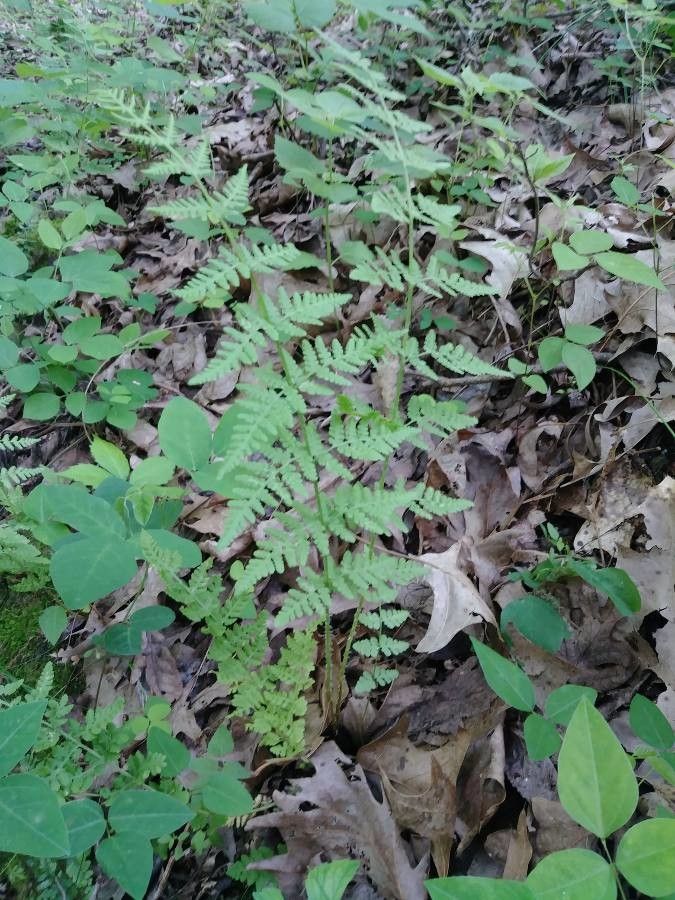
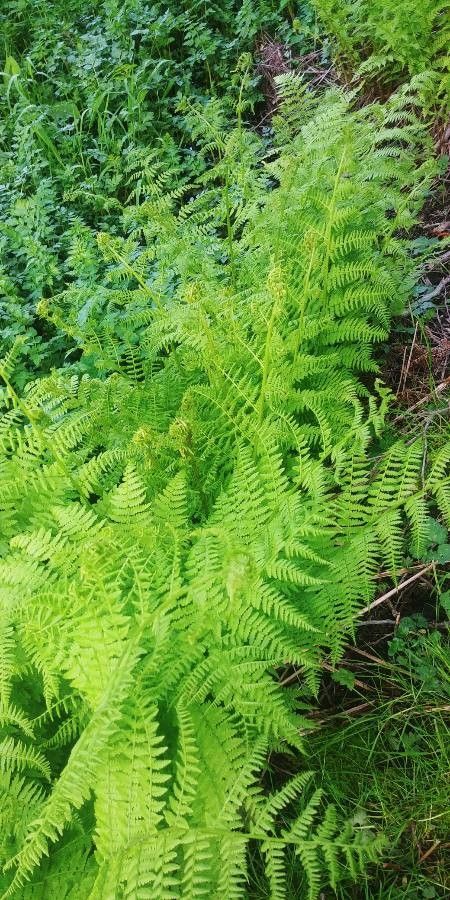
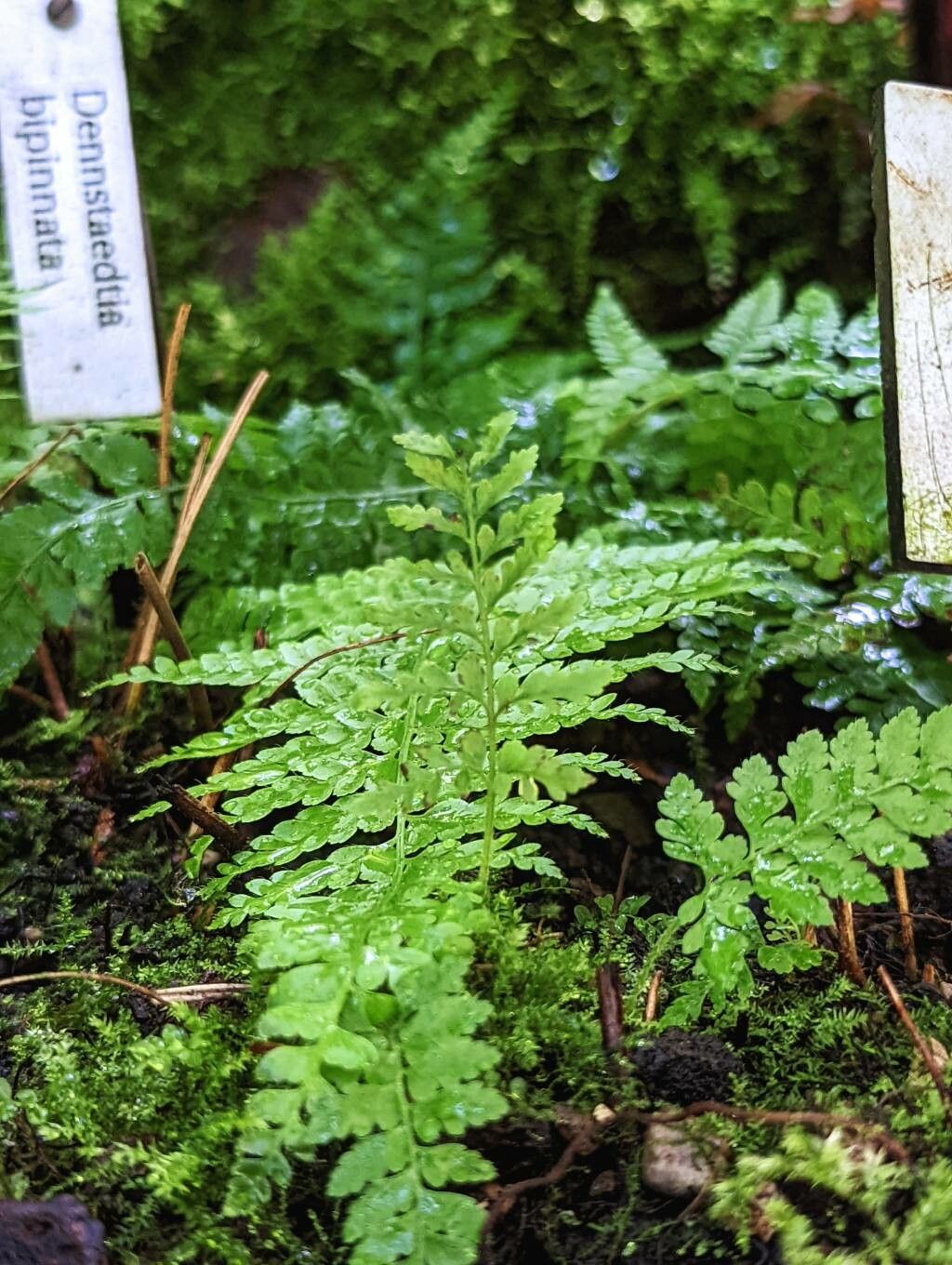
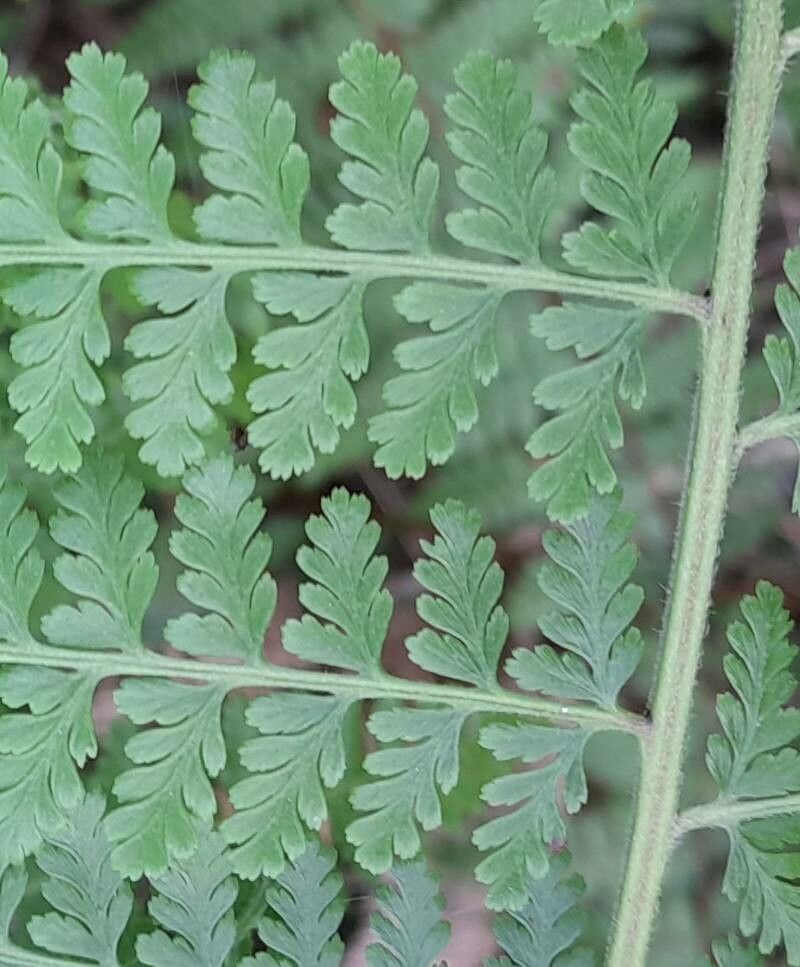
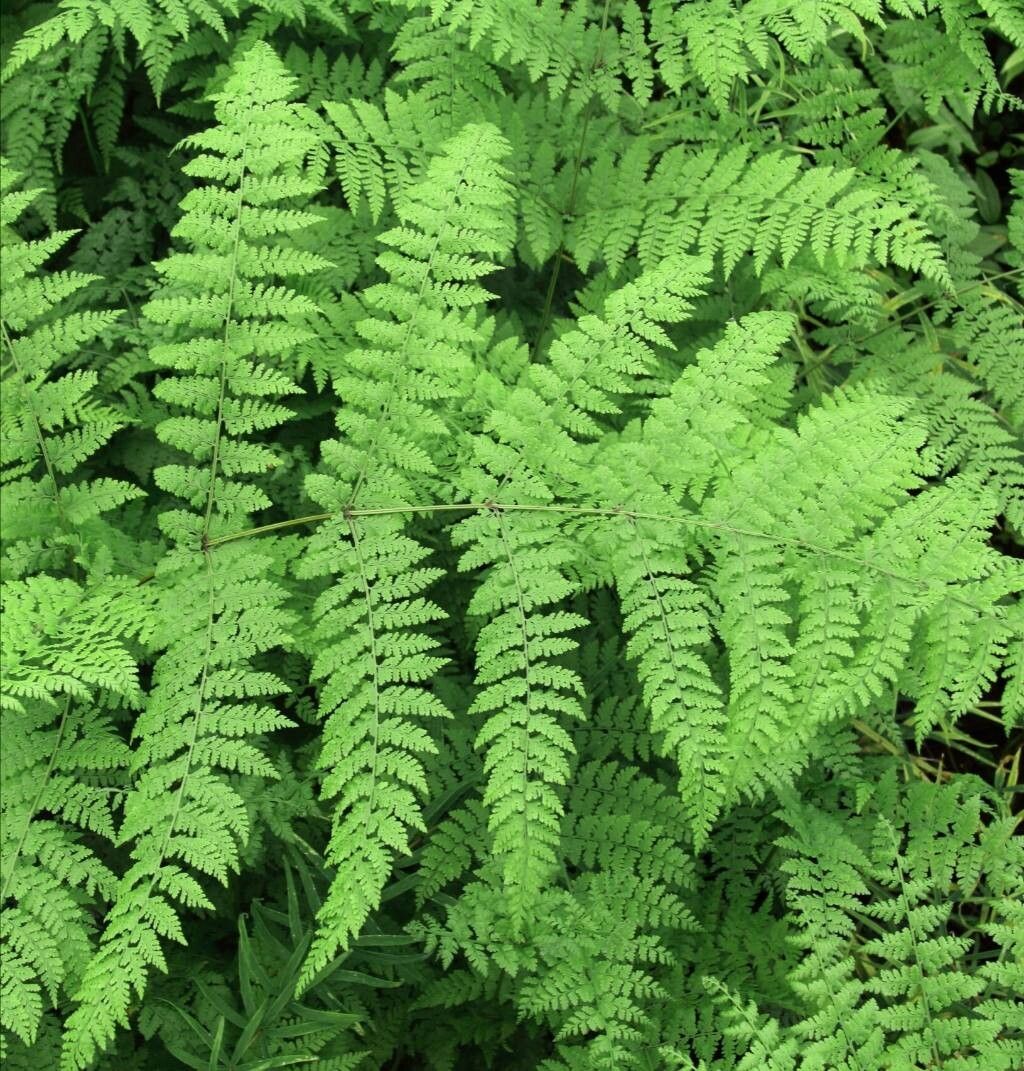
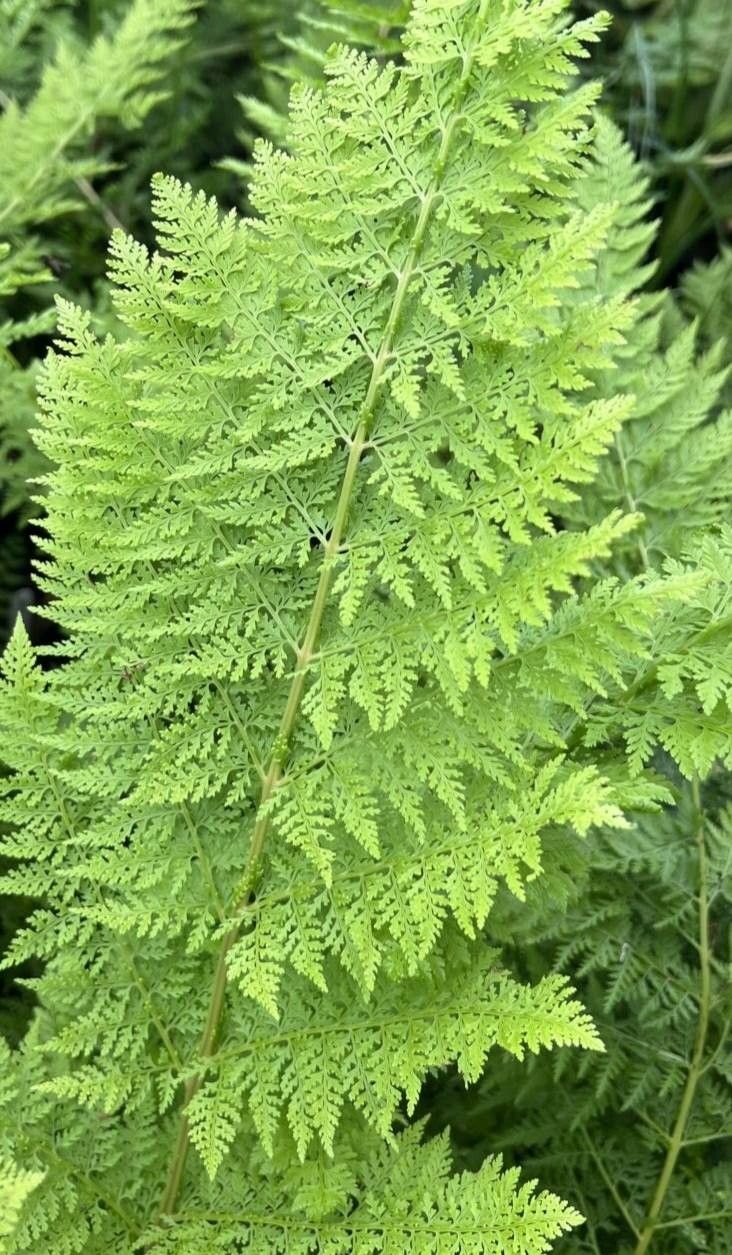
Dennstaedtia punctilobula, commonly known as the eastern hay-scented fern, is a deciduous fern species native to eastern North America. This fern typically grows in dense clusters in moist woodlands, along stream banks, and on rocky slopes. It can reach a height of up to 3 feet and features delicate, light green fronds that are triangular-shaped with finely divided leaflets. When the fronds are crushed or brushed against, they emit a pleasant hay-like scent.
The eastern hay-scented fern is an important component of forest ecosystems, providing habitat for various wildlife species such as birds, insects, and small mammals. Additionally, it helps prevent soil erosion by stabilizing the soil with its extensive root system.
Historically, Native American tribes used the plant for medicinal purposes, believing it had healing properties to treat ailments like fever, coughs, and colds. Today, it is primarily valued for its ornamental qualities, adding texture and color to gardens and landscapes.
Overall, Dennstaedtia punctilobula is an important native plant species that plays a crucial role in maintaining healthy forest ecosystems, while also offering aesthetic value for garden and landscape design.
Hay-scented fern generally has good resistance to disease and is affected by relatively few insect pests. The plant's care is considered difficult because it requires a moist environment and frequent watering. Its roots are prone to rotting if overwatered or if the surroundings are not well ventilated. Hay-scented fern is appropriate for people with some growing experience, as most individuals can keep it alive for a certain period. However, the fern may struggle to thrive and its leaves can dry out and become less healthy over time.
How to keep Dennstaedtia Punctilobula.
Light
The hay-scented fern is a fern that grows well with a moderate amount of sunlight, usually filtered through leafy canopies. It does not need constant exposure, but it does require regular periods of light to maintain balanced growth and to prevent root rot or wilting. It can also adapt to areas with limited light, demonstrating its versatility.
Water
The hay-scented fern thrives in humid environments with consistent moisture, and it should be watered twice a week. As an outdoor plant, it benefits from rainfall during the growing season because it does not tolerate drought well.
Temperature
Hay-scented fern is a fern species that favors a temperate climate. Its native habitat includes moist woodlands and hillsides. It can endure a wide temperature range from 32 to 90 ℉ (0 to 32 ℃), which makes it a hardy plant. In winter, it is advisable to lower the temperature to 50 to 55 ℉ (10 to 13 ℃) to provide a dormant period and encourage healthy growth in spring.
Fertilizer
Hay-scented ferns thrive when fertilized with high-nitrogen, balanced fertilizers applied monthly during the growing season. For sensitive varieties, use the fertilizer at quarter strength. Be careful not to over-fertilize, as it's better to under-fertilize these ferns. Pause feeding during their dormancy period and consider using slow-release fertilizers. As the ferns mature, they require less frequent fertilization, allowing them to support their natural growth more effectively.
Pruning
The hay-scented fern is a deciduous plant with delicate fronds that benefits from early spring pruning. Removing the old foliage at this time improves air circulation, which promotes healthy growth, enhances the plant's appearance, and prevents it from becoming invasive. Be sure to use sharp, sterilized tools to reduce the risk of spreading disease.
Pot & Repot
When repotting Hay-scented fern, choose a pot 1-2 inches (2.5–5.1 cm) larger with ample drainage. Use a well-draining potting mix. Repot in spring or fall, ensuring that the root ball sits slightly lower than the rim of the flower pot. Water thoroughly after repotting and place in a warm spot with indirect sunlight.
Botanical profile.
- Plant Type
- Fern
- Life Cycle
- Perennial
- Genus
- Dennstaedtia
- Family
- Dennstaedtiaceae
- Hardiness Zone
- 3-8
- Mature Height
- 0.46 m to 1.22 m
- Mature Spread
- 0.91 m to 1.22 m
- Leaf Color
- Green, Yellow
- Leaf Type
- Deciduous
- Flower Color
- Green
- Planting Time
- Spring, Summer
- Harvest Time
- Fall, Winter
Other names.
Reader questions.
What should I do if I give my Hay-scented fern too much or too little water?
The Hay-scented fern can be overwatered if it sits in a pool of water or if the planter doesn't have drainage holes. This can lead to the roots not being able to take up nutrients and moisture, and it can also cause fungal or bacterial diseases. Overwatering can be identified by wilted and yellow leaves, drooping or mushy stems. However, it's important to check for other causes of these symptoms as well. On the other hand, the Hay-scented fern can also become underwatered if not properly monitored. In dry conditions, it can quickly turn brown and crispy. In severe cases, it may seem completely dried up, but it's still possible to save the plant if some of the roots are healthy. This can be done by cutting off the dry and dead stems, thoroughly watering the plant, and placing it back in its original spot. With proper care, the plant can recover and start growing new fronds, although it may take several months to fully regrow.
Why should I put fertilizer on my Hay-scented fern?
Fertilizing Hay-scented fern is important for a few reasons. First, it provides the necessary nutrients for healthy new growth. Additionally, it supports the health of the existing foliage and helps the plant resist diseases and pests.
What kind of sunlight does the Hay-scented fern require?
The Hay-scented fern thrives with a little bit of indirect light every day, ideally from the filtered light under a tree canopy. It's important to limit the light exposure to a maximum of three hours per day. If the plant gets too much light (more than three hours) or direct light, it can easily get burnt, dried out, and eventually die.
What temperature is best for Hay-scented fern?
The temperature needs of Hay-scented fern vary depending on the time of year and the growth stage it is in. The changing seasons influence the plant's growth cycle, including flowering, dormancy, and sprouting. During the growing season, a temperature range of 65-80℉ (18-27℃) is generally recommended.
How should I water my Hay-scented fern correctly?
To meet the preferences of your Hay-scented fern, it is important to keep the soil consistently moist. In order to achieve this, you may need to water the plant every one or two days. It's crucial to avoid letting the soil dry out, so once you notice that the top layer of soil is starting to feel slightly dry, it's time to water again. When watering, it's important to thoroughly soak the soil until water drains out from the bottom of the pot. After this, be sure to remove any excess water to prevent the pot from sitting in a puddle. Following this method will help ensure that the soil never becomes too dry.
When should I fertilize my Hay-scented fern?
The feeding schedule of Hay-scented fern depends on its location. It is not a very demanding plant, but it does need some extra nutrients. Outdoor plants only need to be fertilized once in the spring, while indoor specimens should be fed monthly from spring to summer.
Should I keep Hay-scented fern away from the sun?
To ensure the health of your Hay-scented fern, it's important to avoid excessive sun exposure. This means gradually transitioning it to direct sunlight and avoiding midday sun, which is the hottest and most damaging. If you choose to grow your fern indoors, avoid placing it in direct sunlight from a window. Instead, find a spot that receives some indirect light each day. It's best to find the right balance of sunlight from the beginning, but if you notice your fern is getting too much light, quickly move its container or transplant it to a more shaded area.
Suggested temperature for Hay-scented fern while it's growing.
The temperatures during the growing season for Hay-scented fern are crucial. It requires warmer temperatures between 65-80℉ (18-27℃) to sprout, grow, and reproduce. However, if it gets too cold, the fern may not be able to complete its growth cycle and could either die or attempt to grow again the following year if it has enough energy. The growing season usually occurs from late spring to early autumn, but this timeframe can vary by a few weeks due to temperature fluctuations from year to year. The start and end of the growing season depend on the temperature. Once the daytime temperatures consistently stay above 15℉ (-10℃), the fern emerges from dormancy and begins to rapidly produce foliage.
What do I need to think about when watering my Hay-scented fern?
The frequency of watering your Hay-scented fern depends on the humidity level in the air. Higher humidity means less watering due to slower evaporation. Avoid placing the plant near heating or cooling vents as it can cause quick drying. It thrives in dappled and indirect sunlight with temperatures between 55-80 degrees F (13-27 degrees C). Placing it on a warm and sunny windowsill may lead to dehydration. Rainwater or distilled water is ideal, but tap water generally works fine, although it may cause brown leaf tips due to minerals and chemicals. Use a larger pot to provide more space and prevent rapid drying. Consider using a self-watering planter that maintains consistent moisture levels in the soil, benefiting the roots.
When is the best time to not fertilize my Hay-scented fern?
To ensure optimal growth, it is advisable to avoid fertilizing after early autumn, as this can lead to excessive growth before winter sets in. Additionally, it is not recommended to fertilize Hay-scented fern during hot and dry periods, as dry soil hampers the effective delivery of fertilizer and can stimulate growth that requires more water than may be available. It is more advisable to apply fertilizer earlier in the season when temperatures are cooler. Lastly, it is important to be cautious of inadvertently providing ferns with too much fertilizer, as Hay-scented fern can absorb fertilizer that has been applied to nearby plants or lawns.
What will happen if the Hay-scented fern doesn't get enough sunlight?
The Hay-scented fern doesn't need much light, but it does require a few hours of it to grow well. Without this light, it may lose its leaf color and grow slowly. However, this fern prefers shade, so it's less likely to suffer from a lack of sunlight than from too much.
How do I keep Hay-scented fern safe from very hot or very cold temperatures?
Hay-scented fern can withstand temperatures up to 85℉(30℃) during the growing season, but it needs constant moisture to survive hotter conditions. Providing shade during the hottest hours of the day and ensuring adequate moisture are two effective ways to prevent heat damage. On the other hand, if temperatures drop below 15℉(-10℃) during the growing season, it can cause issues for the sprouting fern. To protect it from cold damage, you can either create a mini greenhouse using clear polycarbonate plastic or use a thick layer of mulch for insulation.