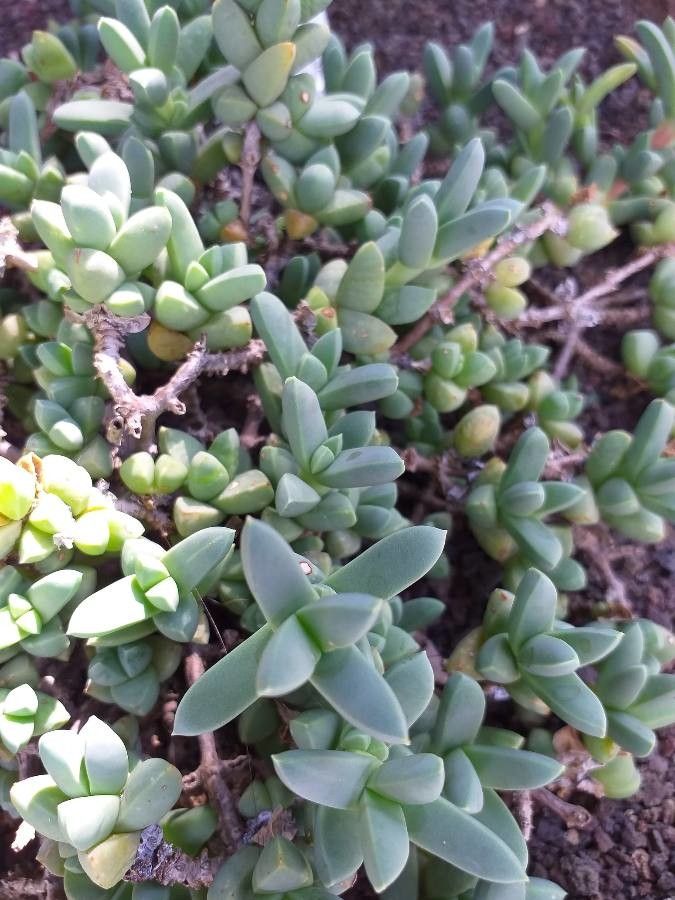
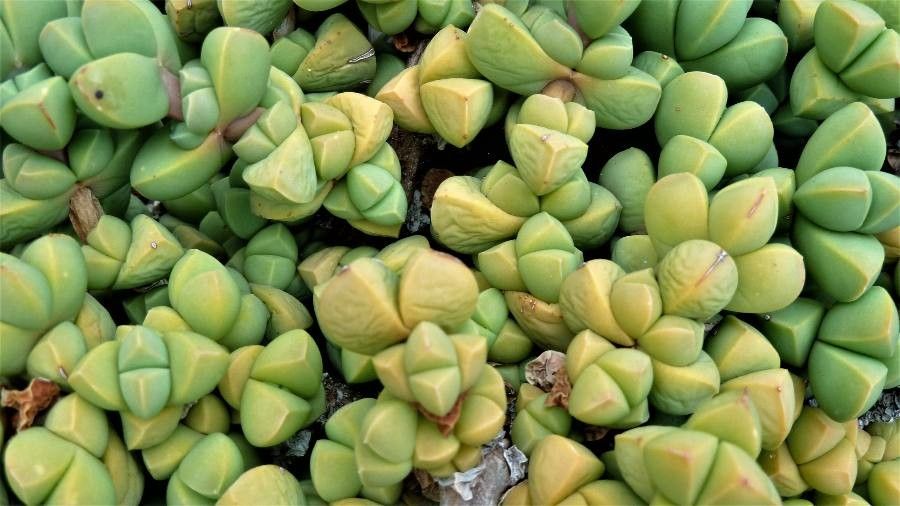
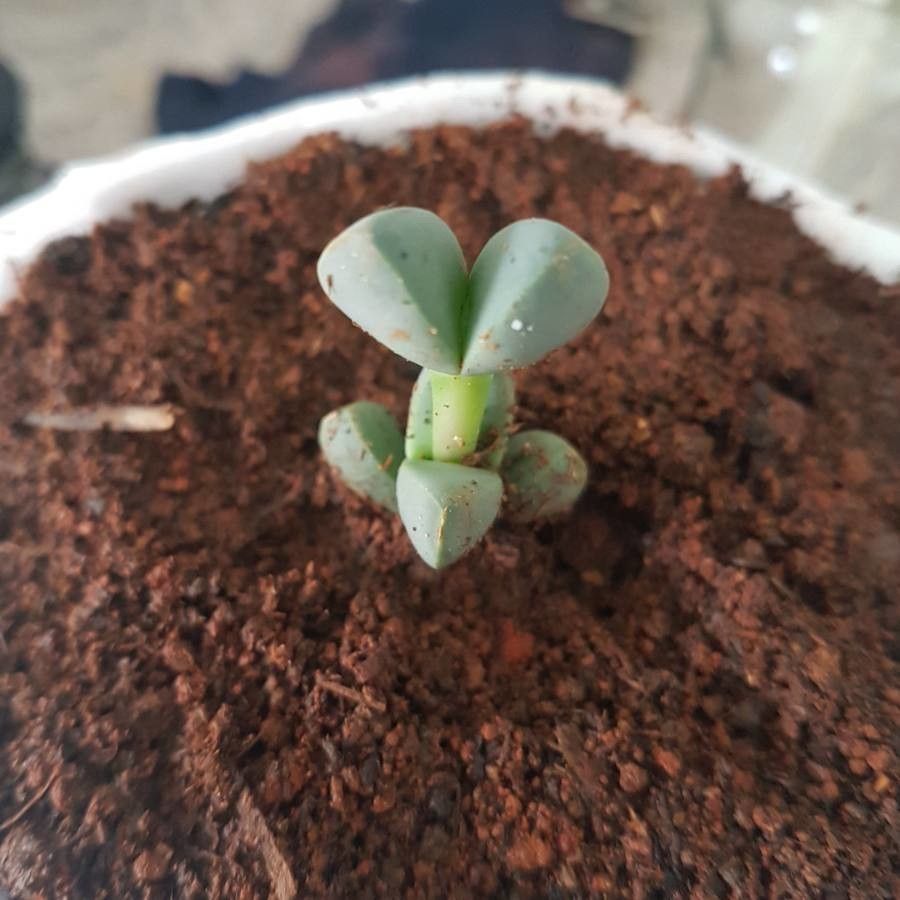
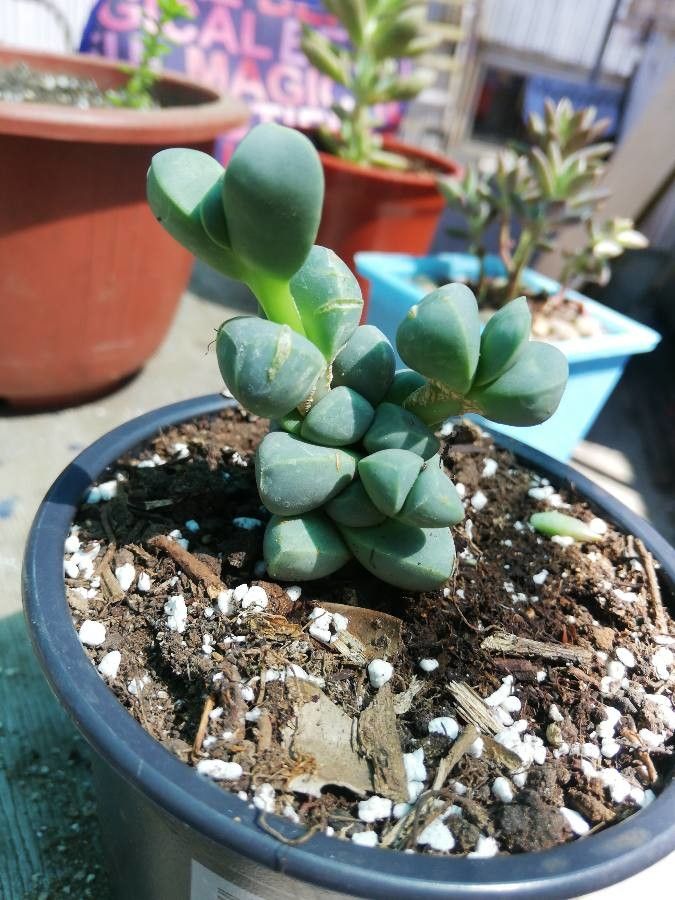
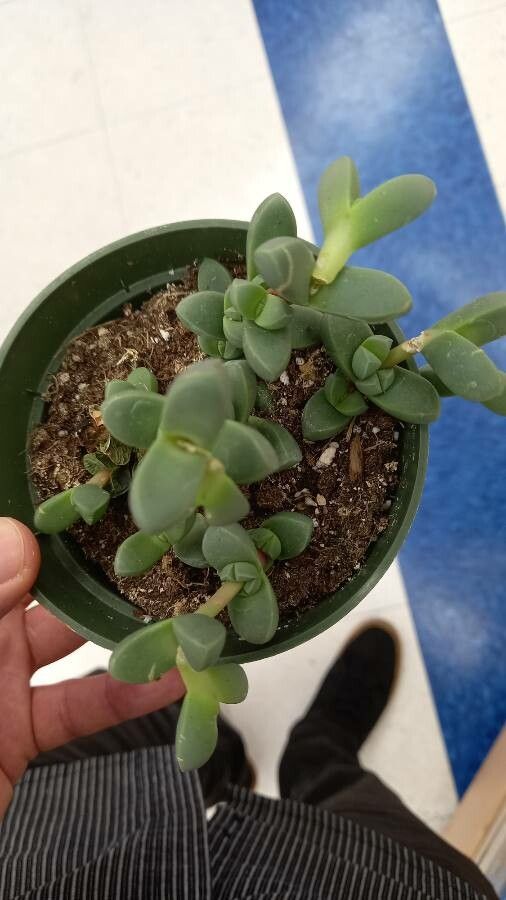
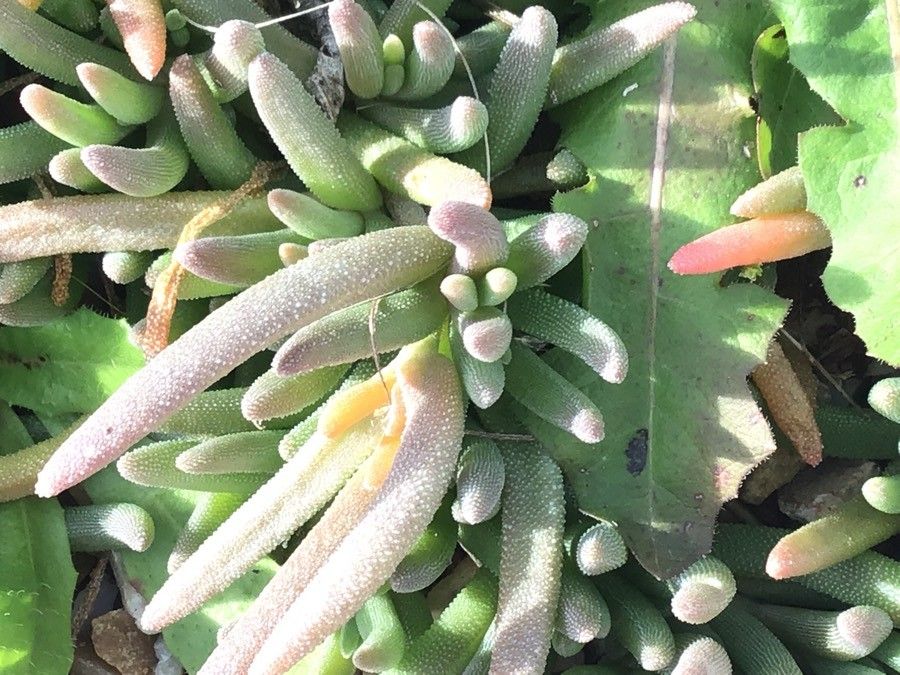
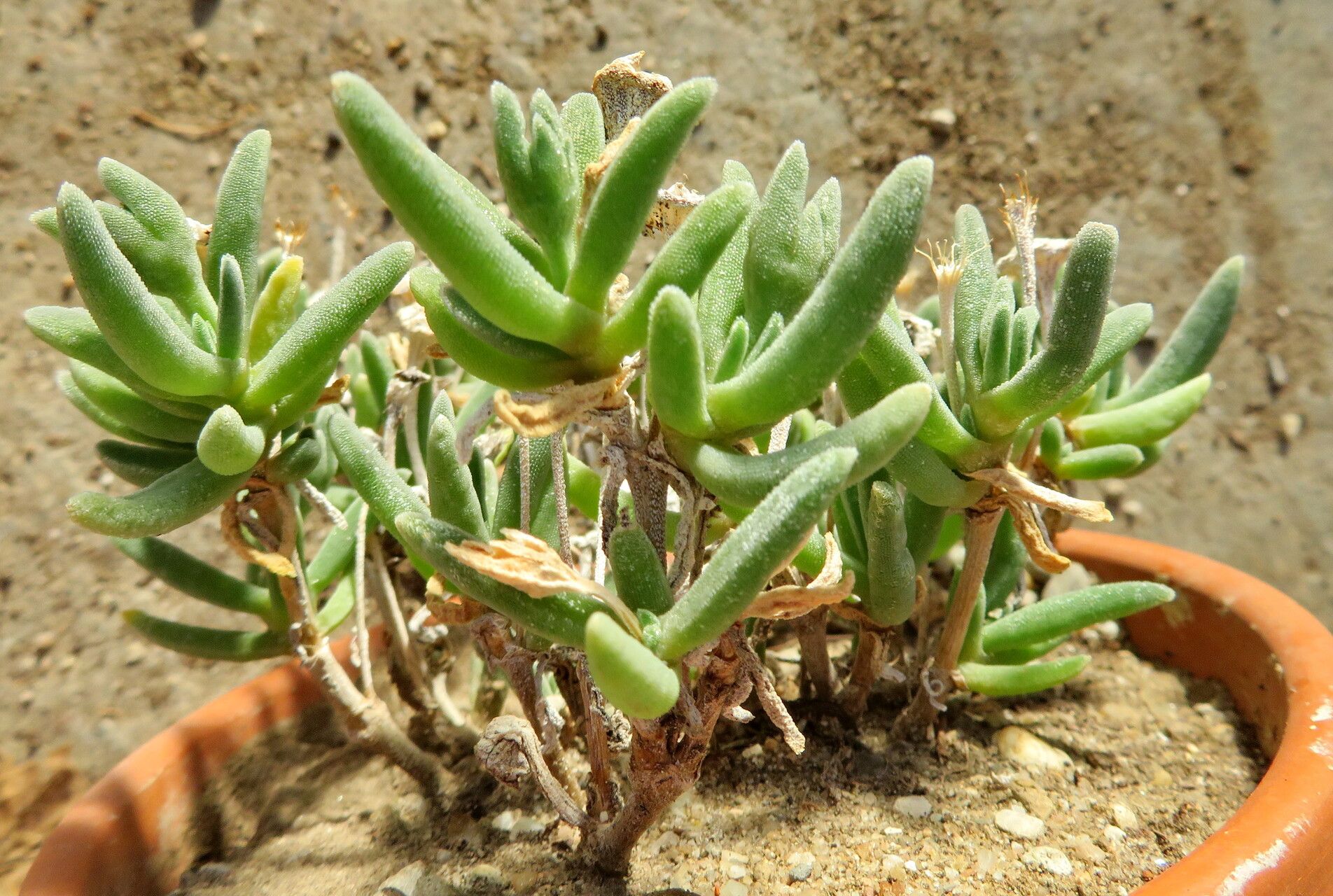
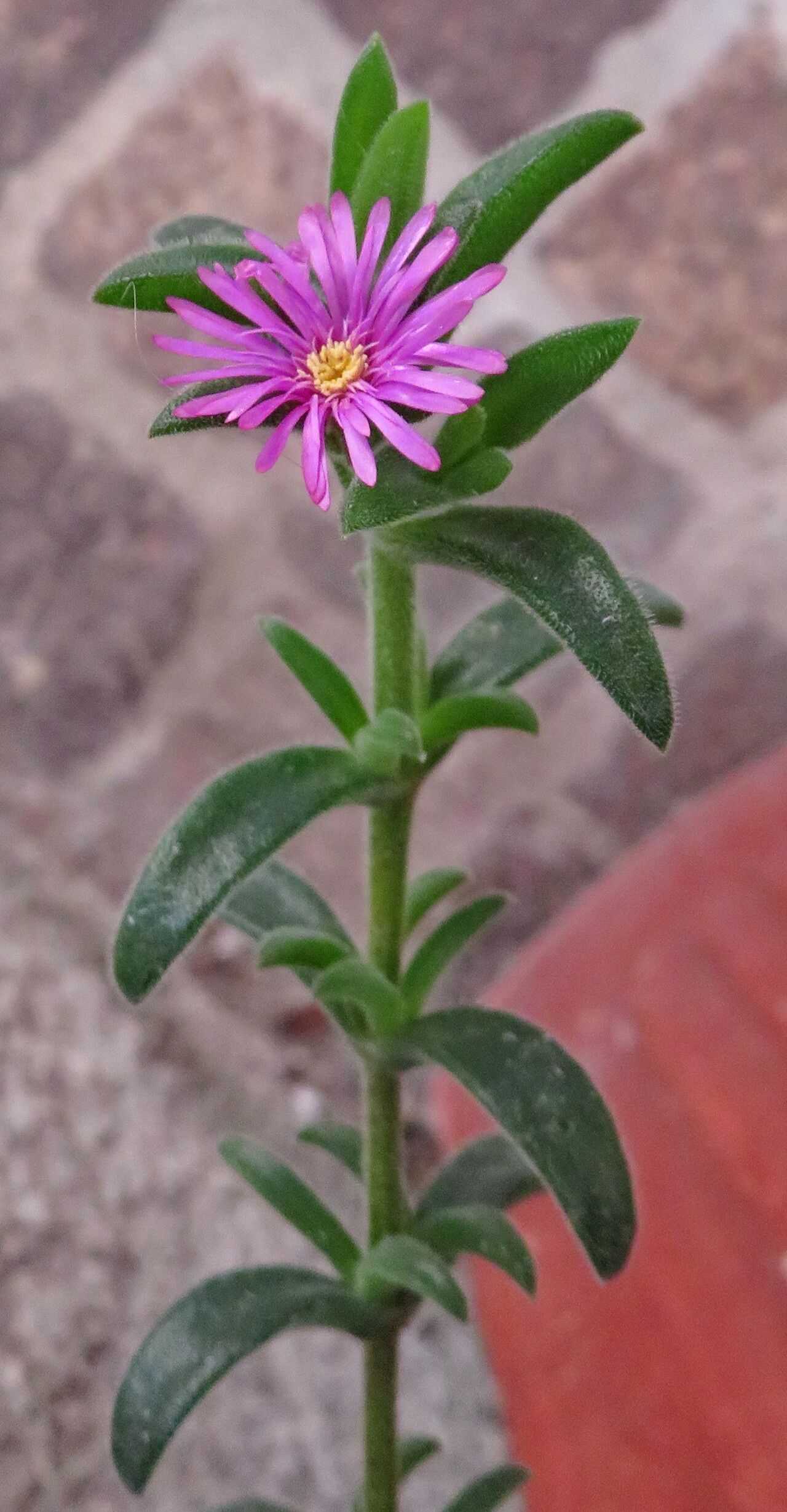
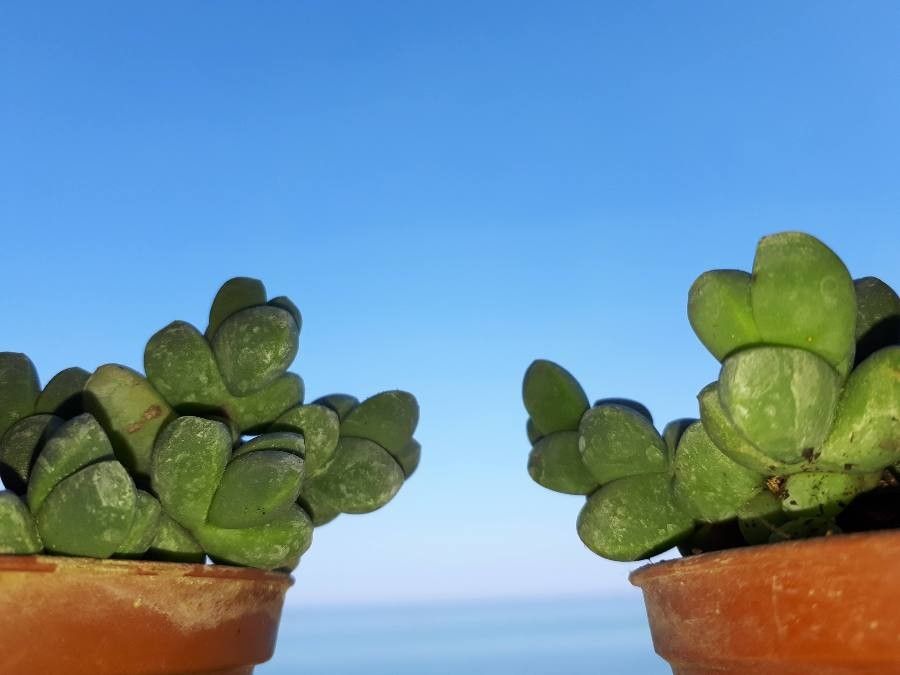
Delosperma lehmannii is a succulent plant native to parts of the Eastern Cape Province of South Africa. Sometimes called ice plant, it is grown as a decorative houseplant for its distinctive smooth, angular leaves. The specific epithet lehmannii honors the German professor of botany in Hamburg Johann Georg Christian Lehmann. Delosperma lehmannii grows in the eastern coastal strip of the Cape Peninsula over an area of about 70 km2 between Coega and Port Elizabeth. It grows on quartz soils in the Karoo. It tolerates aridity well and temperatures down to -5 °. Densely leafy, it forms a cushion with a tap root and some additional adventitious roots on sprawling, prostrate stems.Although it has not yet been subjected to an evaluation by the IUCN, the South African National Biodiversity Institute (SANBI) has classified it as a species at extremely high risk of extinction in the wild. In 2006, of the six registered populations, four were extinct due to the urban expansion of Port Elizabeth; in one of the remaining sub-populations near Coega over 60% of the habitat had been lost to mining.
The Ice Plant has moderate disease resistance and is more sensitive to humidity. High humidity makes it vulnerable to disease, and it is prone to root rot during dormancy. Regarding care, the Ice Plant is drought tolerant but requires more water during the growing season. Watering should be greatly reduced or stopped entirely during the dormant period. The Ice Plant is suitable for growers with some experience, though it can be difficult to care for, particularly during dormancy. It is especially appropriate for people who have the time to devote to its care during the winter months.
How to keep Delosperma Lehmannii.
Light
Originating in dry areas, the Ice Plant does best in full sun; its natural habitat has intense sunlight and very little shade. It can also tolerate partial sun, giving it some flexibility in its growth.
Humidity
This plant prefers dry conditions, so don't mist it. However, watering it less often can also thrive in higher humidity.
Temperature
Ice Plant originates from areas where temperatures range from 68 to 100 °F (20 to 38 ℃). It grows and spreads most successfully within that range. In colder periods, care should be taken to keep the temperature above 68 °F (20 ℃) for optimal growth.
Fertilizer
For Ice Plant, light fertilizing once or twice a year during the growing season is enough. Do not fertilize in winter or summer when it is dormant. Reduce fertilizer for plants that have been repotted and wait a couple of months after repotting before you start feeding. Fertilizing promotes healthy growth and encourages blooms.
Pruning
Although the ice plant doesn't require grooming, dead flowers and leaves can be removed to keep the plant appearing neat. After blossoms have faded, prune in the fall. Cut the plant back to a uniform height, removing all faded ice blooms, using sharp, clean pruning shears. As a result, seed production will be reduced, and plants will be able to conserve energy for a more colorful appearance.
Toxicity
This interesting succulent will grow to be 8 inches tall and 12 inches broad when fully mature. prefers shade in the afternoons and full sun in the mornings. To maintain its compact shape indoors, make sure this receives about 4-6 hours of sunlight each day. Additionally, this plant is non-toxic and pet-safe.
Further reading →
The toxicity and danger assessments provided are for reference only. We do not assure their accuracy, so it's crucial not to depend on them. Seek professional advice when necessary for accurate guidance.
Botanical profile.
- Plant Type
- Succulent
- Life Cycle
- Perennial
- Genus
- Delosperma
- Family
- Aizoaceae
- Hardiness Zone
- 9-11
- Mature Height
- 20 cm
- Mature Spread
- 30 cm
- Leaf Color
- Green, Gray, Blue
- Leaf Type
- Evergreen
- Flower Color
- Yellow
- Flower Size
- 2.03 cm to 3.05 cm
- Bloom Time
- Mid spring, Late spring, Summer
- Planting Time
- Spring, Summer
- Harvest Time
- Summer, Early fall, Mid fall
- Native Area
- South Africa
Other names.