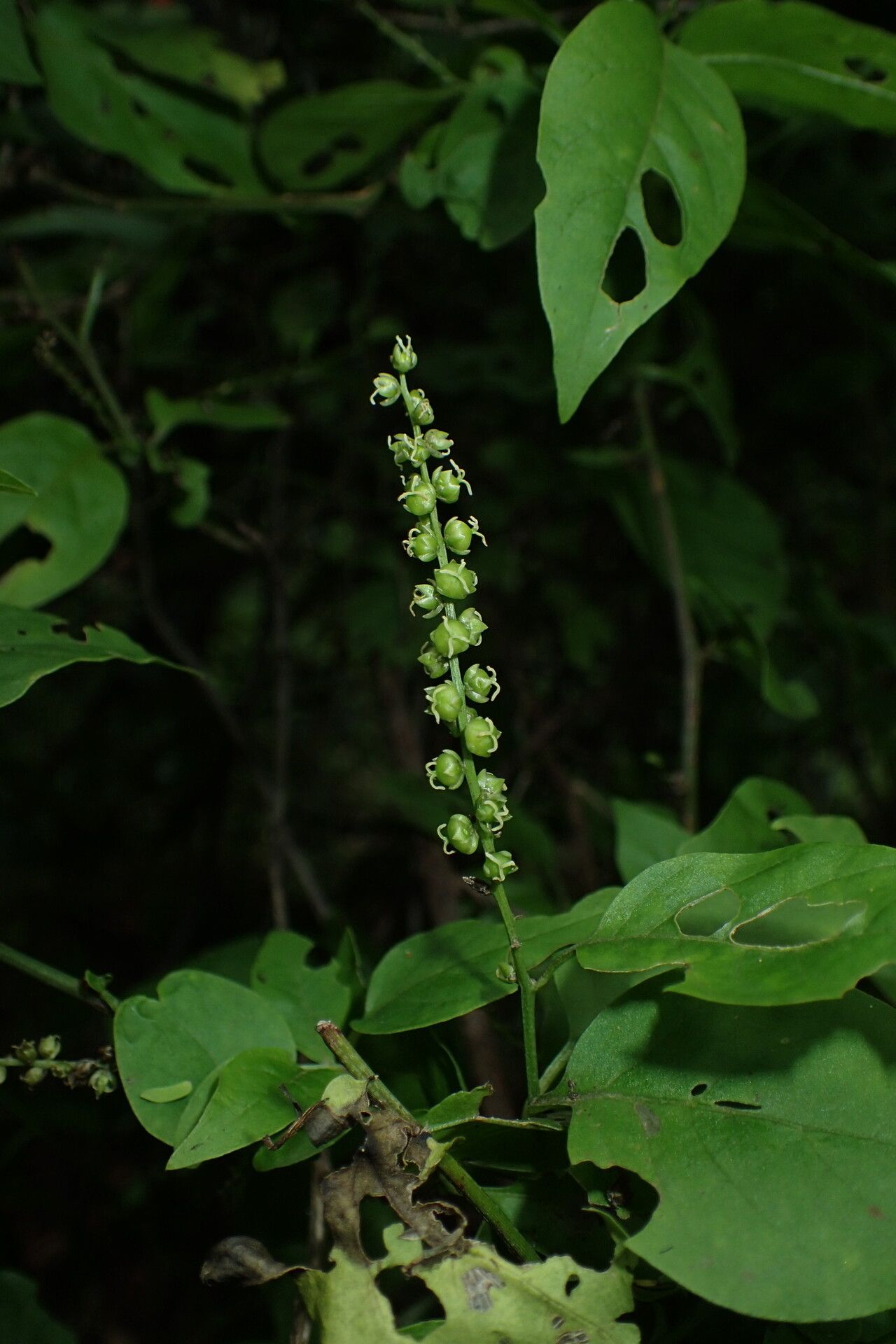
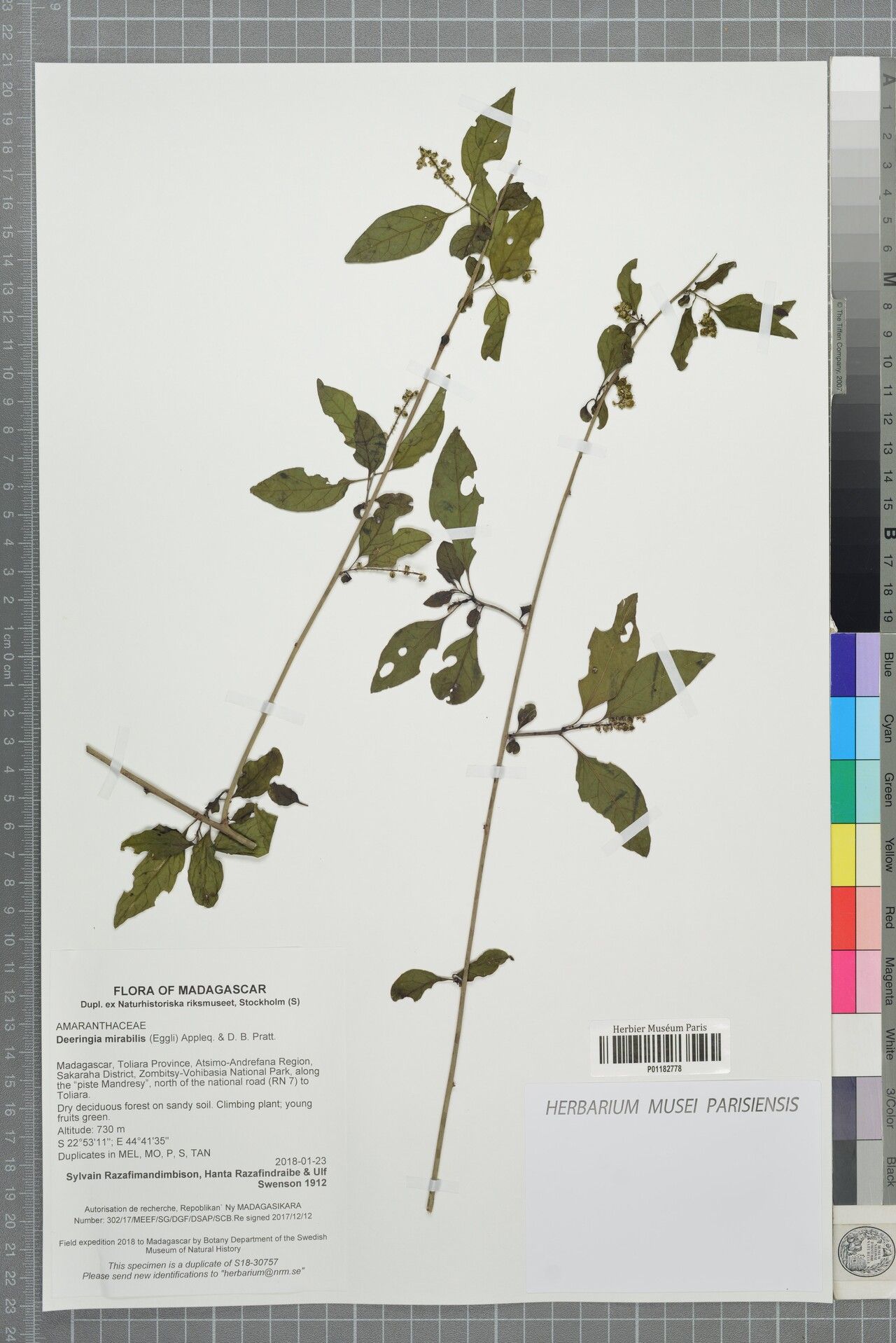
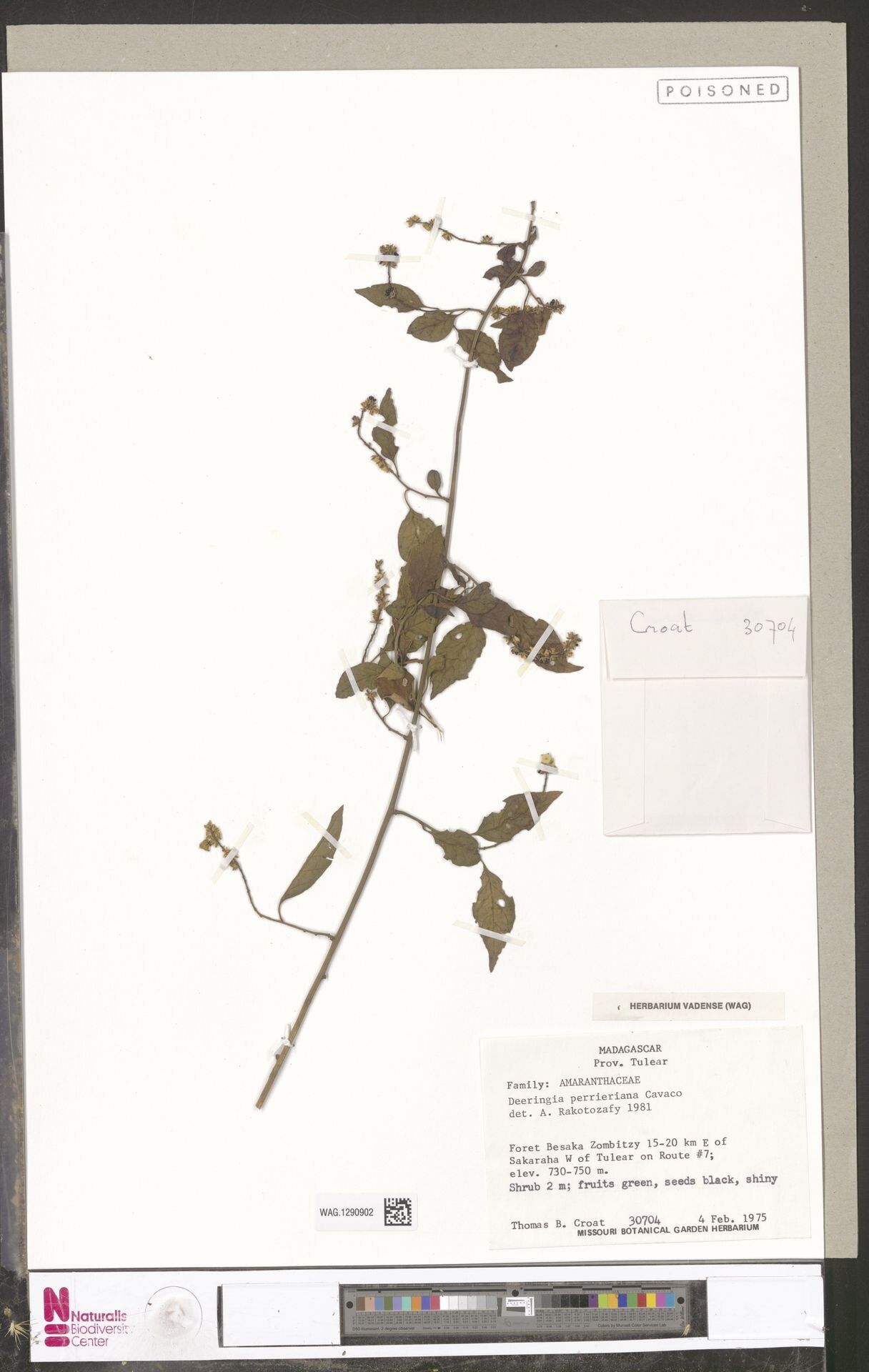
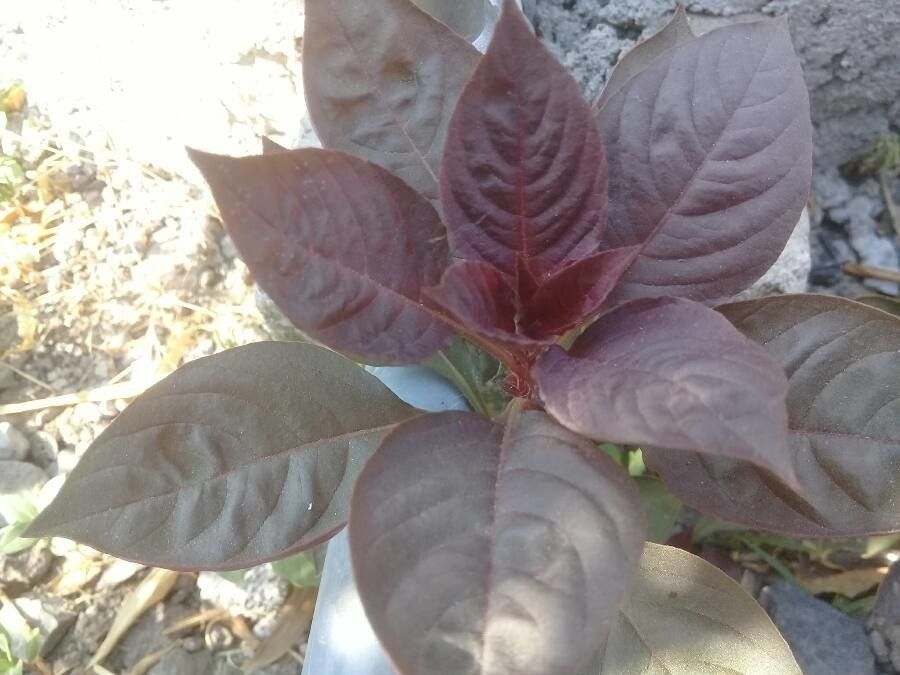
Deeringia amaranthoides is a species of plant in the Amaranthaceae family and is distributed from the western Himalayas east across southern China, down through south east Asia and Indonesia, across New Guinea to parts of Australia.It was first described as Achyranthes amaranthoides by Jean-Baptiste Lamarck in 1785 and reclassified as Deeringia amaranthoides by Elmer Drew Merrill in 1917.
Shrubby deeringia displays strong resistance to disease and is generally not susceptible to illnesses. With regard to care, this plant is fairly low-maintenance. When grown outdoors it needs only light watering, and larger specimens typically do not require pruning. Smaller plants, however, should be trimmed after they have finished blooming. Shrubby deeringiat is appropriate for anyone who has an outdoor area, such as a garden or deck, and it does not demand extensive plant-care experience.
How to keep Deeringia Amaranthoides.
Light
Shrubby deeringia is native to open habitats, like sunlit meadows and forest margins, which offer plentiful light. It does best in full sun but will also tolerate partial sun, adjusting well to a range of light conditions.
Water
The Shrubby Deeringia is well-suited for dry environments, requiring watering only once every three weeks. It's important to let the soil dry out between waterings. This drought-tolerant plant thrives in dry conditions and adapts well to seasonal rainfall, making it an excellent choice for gardeners looking for hardy outdoor foliage.
Temperature
Shrubby deeringia occurs naturally in regions with temperatures ranging from 41 to 95 °F (5 to 35 ℃), which softens the stark contrasts between seasons. Adjust care when temperatures fluctuate to promote healthier growth.
Fertilizer
The timing of fertilization is important for Shrubby deeringia. Apply fertilizer in early spring and continue monthly until early summer. Fertilizer encourages lovely blooms and supplies energy during both dormant and active growth phases.
Pruning
Shrubby deeringia is a woody plant known for its vibrant foliage and small drupes. To encourage a compact shape and promote new growth, prune the plant in early spring. Thinning the plant helps improve air circulation and reduces the risk of disease, leading to bushier growth and enhanced health and appearance.
Botanical profile.
- Plant Type
- Vine, Shrub
- Life Cycle
- Perennial
- Genus
- Deeringia
- Family
- Amaranthaceae
- Hardiness Zone
- 5-9
- Mature Height
- 2.13 m to 6.1 m
- Mature Spread
- 2.13 m to 3.96 m
- Leaf Color
- Green, Dark Green
- Leaf Type
- Semi-evergreen
- Flower Color
- White, Green
- Flower Size
- 0.20 cm to 0.25 cm
- Bloom Time
- Summer, Early fall, Mid fall
- Planting Time
- Spring, Summer, Autumn
- Harvest Time
- Late summer, Fall, Early winter
- Native Area
- Nepal, India, Malaysia, Philippines, Bangladesh, Pakistan, Laos, Fiji, China, Indonesia, Cambodia, Vietnam, Myanmar, Japan, Bhutan, Thailand
Other names.
Reader questions.
How should I water my Shrubby deeringia in the best way?
To ensure excellent root development in your plants, it's best to use a garden hose at the base. However, avoid spraying the leaves directly. If your plants are outdoors and exposed to direct sunlight, the leaves will need more watering. To provide moisture to the roots, you can use bubblers for each plant or soaker hoses that cover the entire garden or bed. When adding or removing plants, make sure to water deeply to encourage deep root growth. After watering, make sure to drain any excess water and allow the soil to dry before watering again. Watering at ground level is recommended to prevent diseases. On sunny days, it can be beneficial to spray the entire bush with water. Whether your plant is potted or in the ground, it's important to remember that Shrubby deeringia prefers deep watering rather than light sprinkling.
How much sunlight does Shrubby deeringia need to grow?
Shrubby deeringia needs both sunlight and shade to grow well. It thrives with 3-6 hours of direct sunlight every day, but it also requires some protection from the hot sun during the hottest parts of the day to avoid damage. The best time for sunlight is in the morning, but if it's not too hot, it can tolerate some afternoon sun. To give Shrubby deeringia the right amount of sunlight, consider planting it in an area that gets partial sun, like under a tree or on the east side of a building.
What is the best temperature for Shrubby deeringia?
The ideal temperature range for Shrubby deeringia to thrive is between 65 to 80℉ (18 to 27℃). During the main growth phase, the highest tolerable temperature is 95℉ (35℃), and the lowest tolerable temperature is 15℉ (-10℃). This species can withstand cold temperatures and survive freezing winters. Here is a breakdown of the perfect, highest, and lowest temperature ranges: - Perfect: 65 to 80℉ (18 to 27℃) - Highest: 85 to 95℉ (30 to 35℃) - Lowest: -5 to 15℉ (-20 to -10℃) or below.
What should I do if I give too much or too little water to Shrubby deeringia?
An overwatered Shrubby deeringia can display several signs of distress. These include yellowing leaves that eventually fall off and wilt. Additionally, the plant may look dull and unhealthy with mushy stems. When these signs become apparent, it is important to adjust your watering schedule accordingly. Wilting can also indicate under watering, which is characterized by leaves turning crispy and dry. In such cases, it is necessary to check the soil moisture level and provide a thorough watering when it is dry. Sufficient water will help the Shrubby deeringia recover, but it may still exhibit dryness and yellowing leaves due to root damage. Once the plant returns to normal, the yellowing will cease. For indoor plants, it is crucial to monitor moisture levels and avoid overwatering. If black spots appear, allow the soil to dry out by refraining from watering for a few days. Overwatering can lead to root rot, so it is advisable to transfer the plant to a different pot if discolored and slimy roots are observed. To prevent root rot, ensure the soil does not become excessively soggy. When planting the Shrubby deeringia outdoors, it is recommended to dig a little deeper. If the soil feels too dry, it may be a sign of underwatering, necessitating adequate watering for the plant's recovery.
What happens if Shrubby deeringia doesn't get enough sunlight?
To prevent sun damage, take steps to provide adequate shade for Shrubby deeringia. Excessive direct sunlight can cause its leaves to turn yellow, dry out, or burn. Additionally, you might observe wilting or stunted growth in the plant. During the hottest parts of the day, consider using a shade cloth or planting Shrubby deeringia near taller plants that can offer some natural shade.
Do I need to change the temperature for Shrubby deeringia as it grows?
According to research, Shrubby deeringia will show signs of stunted growth when exposed to prolonged high temperatures, particularly when axillary buds are developing and main shoots are growing. To ensure robust growth after germination or transplanting, it is recommended to keep temperatures consistent and cooler, at around 65℉ (18℃).
How frequently should I water my Shrubby deeringia?
The Shrubby deeringia prefers deep and infrequent watering. If you have them planted in pots, it's important to soak them in a gallon of water each time. Pots have limited water storage and the soil dries out faster. In colder regions, you should water every 3 to 5 days. Watering should be done early in the morning when the soil is dry, whether the plant is indoors or outdoors. You can also check the soil inside the pot to determine if watering is needed. If the top 2-3 inches of soil is dry, it's time for a full watering. During hot days, you may need to check the soil moisture daily as the heat can quickly dry it out. For gardens, irrigation is necessary. In hot climates, watering once a week is sufficient. Only water when about 2 to 3 inches of soil become too dry, indoors or outdoors. Take into account the amount of rainfall the plant receives and don't add water unnecessarily to avoid root rot. If there is ample rainfall, additional watering may not be needed. Shrubby deeringia usually grows during spring and fall. Outdoors, applying 3 to 4 inches of mulch can help conserve water. Sandy soil will require more frequent watering as it drains faster. On the other hand, clay soil needs less frequent watering and can tolerate 2-3 days of drying to avoid root rot. You can keep track of watering by marking the date on a calendar and watch for drooping leaves as a sign that watering may be necessary.
What happens if Shrubby deeringia gets too much sunlight?
If Shrubby deeringia doesn't receive sufficient sunlight, it might grow tall and skinny, with few leaves. The leaves may become yellow or pale green, which is a sign that the plant is not producing enough chlorophyll due to sunlight deficiency. To address this issue, you can either relocate Shrubby deeringia to a sunnier area or trim surrounding foliage to allow more light to reach the plant.
How can I keep Shrubby deeringia warm when it's cold outside?
Shrubby deeringia is able to tolerate freezing temperatures if it is planted directly into the ground in locations where temperatures do not drop below 15℉ (-10℃) during winter. However, if it is planted in pots or containers, the roots need to be safeguarded from the cold. This can be achieved by wrapping the container in a blanket or bringing it indoors for complete protection against the elements.
How much water does my Shrubby deeringia plant need?
The Shrubby deeringia typically requires about a gallon of water on a regular basis. For potted plants, water deeply until the water is dripping from the bottom of the pot. Allow the soil to dry before watering again. To determine the amount of water you've given your plant in a week, you can use a water calculator or moisture meter. During the flowering period, provide ample water but allow it to evaporate afterwards to avoid root rot. If the Shrubby deeringia is planted outdoors and receives adequate rainfall, additional watering may not be necessary. When the plant is young or newly planted, ensure it receives 1-2 inches of rain per week. As the Shrubby deeringia matures, it can rely on rainfall alone. However, during hot weather or extended periods without rainfall, consider providing a full watering during the cooler parts of the day to prevent heat damage. Additional watering may be needed during prolonged dry spells.
If the temperature gets too high or too low, what kind of harm will happen to Shrubby deeringia?
Shrubby deeringia is more likely to suffer from greater harm if exposed to consistently high temperatures compared to low temperatures. When the plant gets too hot, heat stress triggers hormones that reduce seed germination and photosynthesis efficiency. This will be evident through signs such as wilting, leaf browning, and potential death. Conversely, if the plant gets too cold, it can lead to the cessation of important functions like nutrient uptake and photosynthesis, potentially resulting in plant death. Even a single freezing event during the growing season can cause a membrane phase transition, which halts plant functions and can ultimately lead to the death of the plant.
Should I change how often I water my Shrubby deeringia based on the time of year or the weather?
The Shrubby deeringia is an outdoor plant that primarily relies on rainwater for its watering needs. During the spring and fall growing seasons, it is important to maintain moist but not soggy soil conditions. Alternating between dry and moist soil will promote healthy growth. However, in the summer, hot weather can cause water to evaporate quickly, so additional watering may be necessary if there is a lack of rainfall. In the winter, the Shrubby deeringia requires less water as it goes dormant and loses its leaves. Using a well-draining and moisture-retentive soil mixture like terracotta can help the water evaporate more effectively. Once the plant begins to leaf out in the spring, watering can be skipped altogether, relying on fall and winter rains for the dormant period. During the growing season, ensure good drainage to avoid ponding or drought. When the Shrubby deeringia is potted, its root growth is limited, so regular watering is essential, especially during the summer. Adequate drainage is crucial to prevent cold and wet roots. Deep soaking the root system once or twice a week, depending on the weather, is recommended instead of shallow sprinkling. It is important not to let the plant dry out completely in the fall or winter, even during dormancy. Avoid overwatering as well, as long periods of sitting in water can be harmful to the plant, particularly in winter. Applying mulch can help reduce stress, conserve water, and promote healthy blooms.