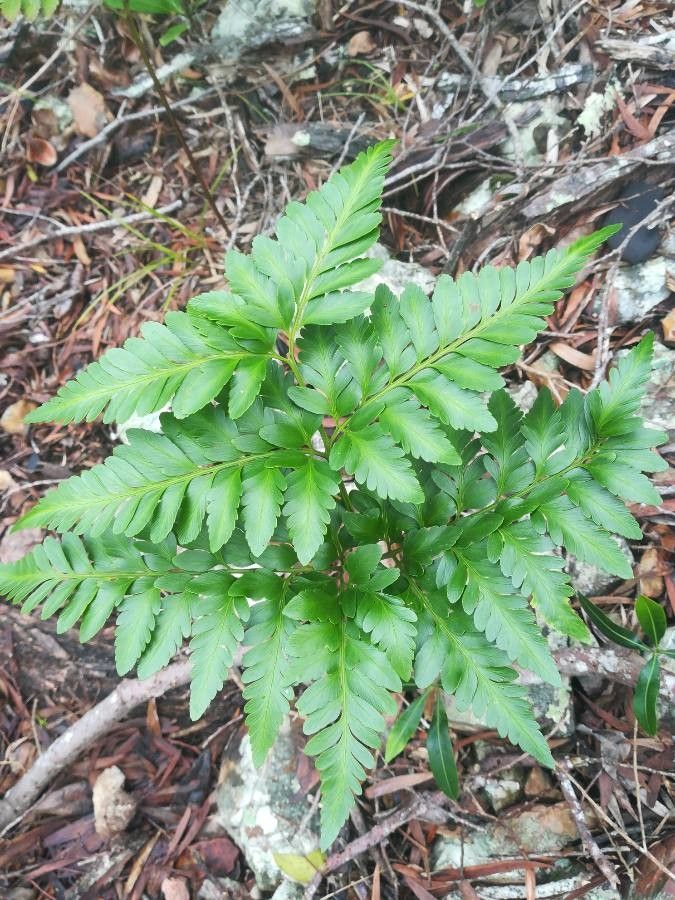
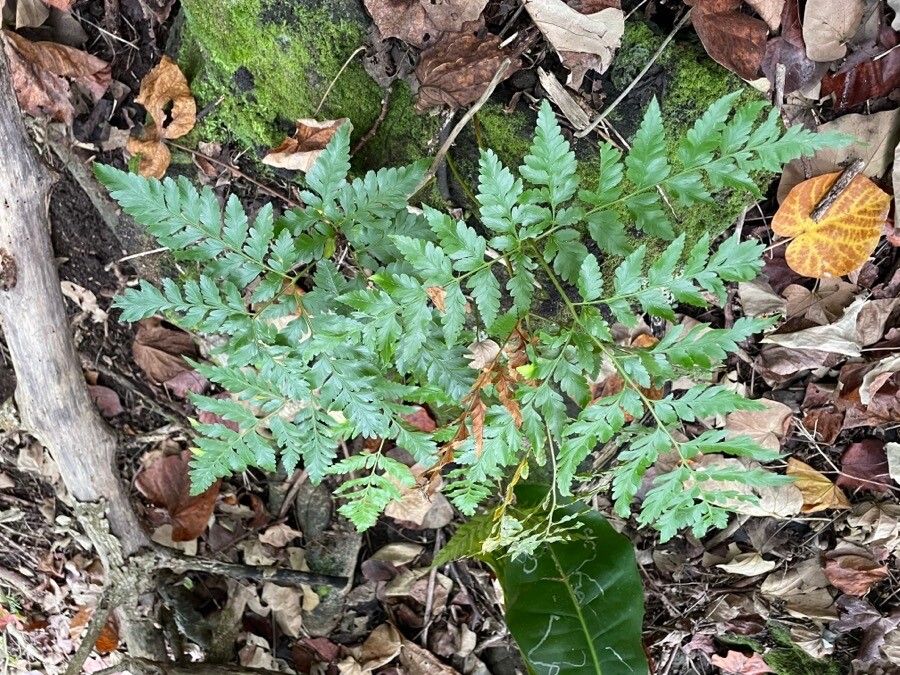
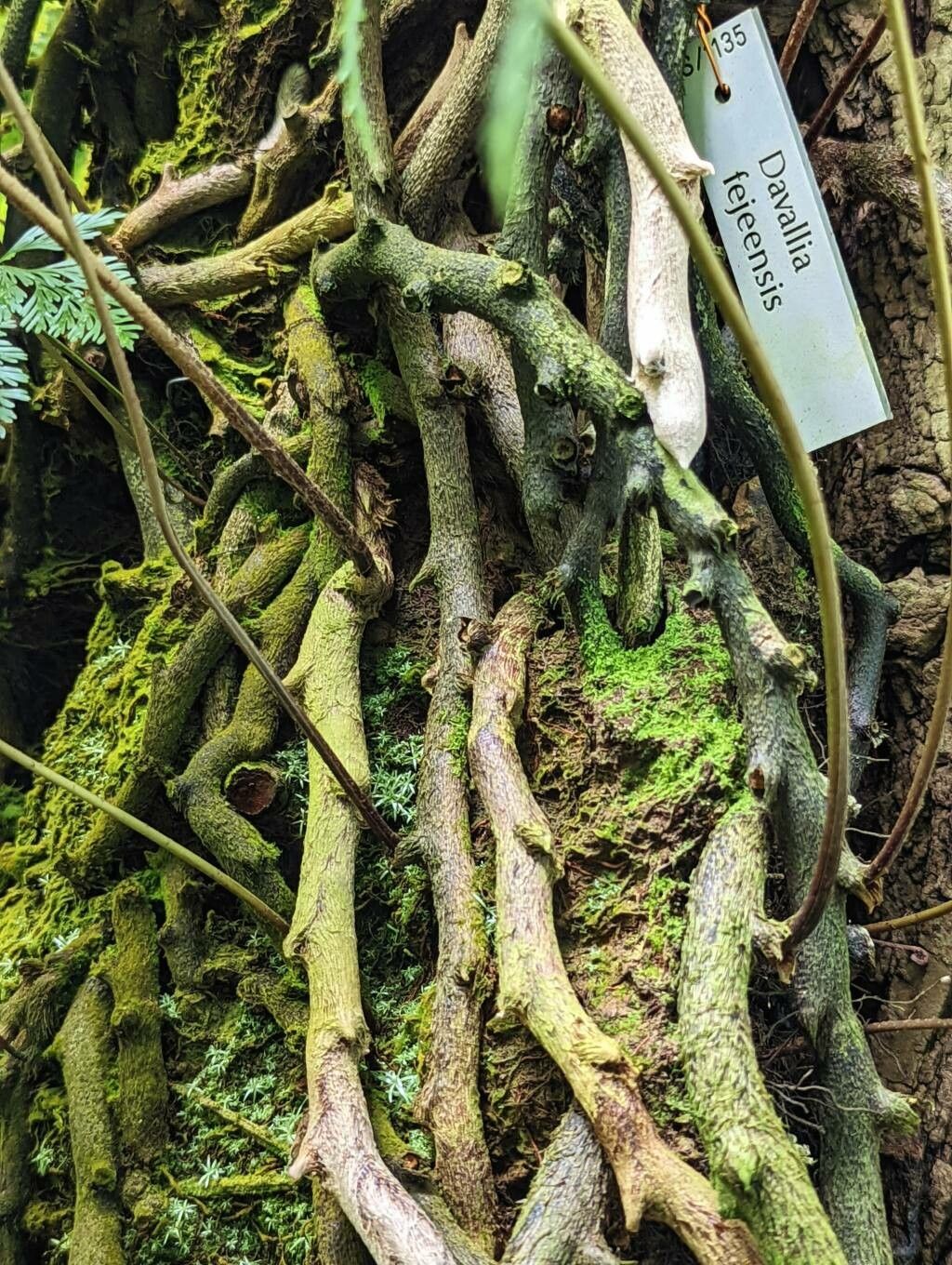
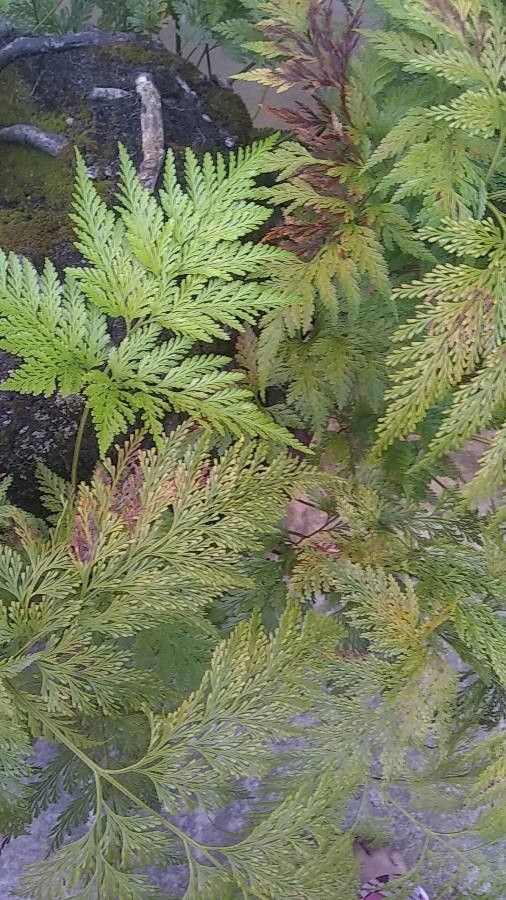
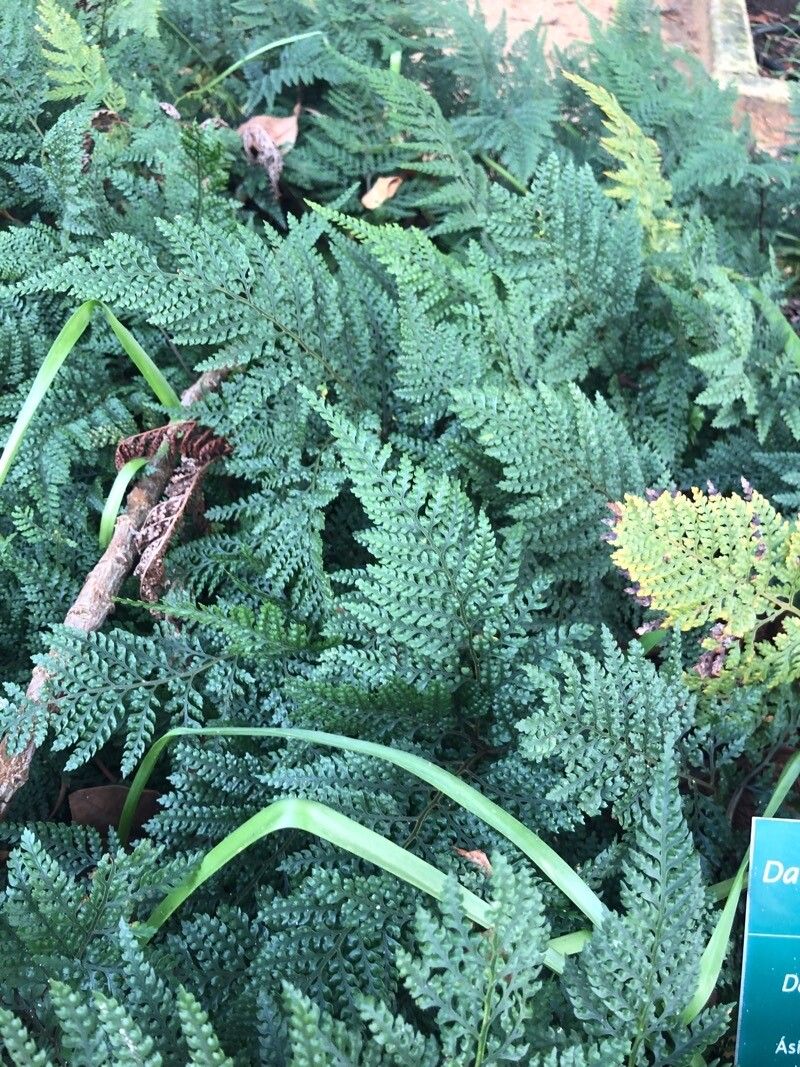
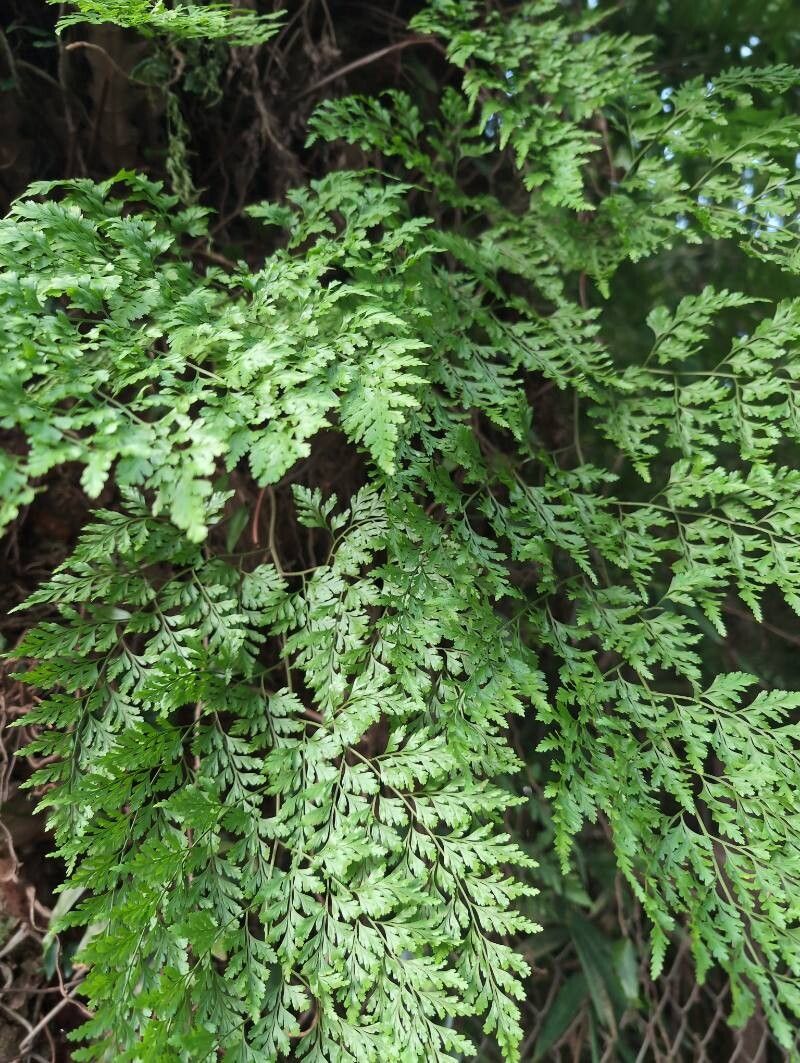
Davallia solida, commonly known as the rabbit's foot fern, is a species of fern that belongs to the family Davalliaceae. Native to the tropical regions of Asia and Australia, it is widely cultivated as an ornamental plant due to its distinctive appearance. The plant gets its name from its furry rhizomes, which resemble a rabbit's foot.
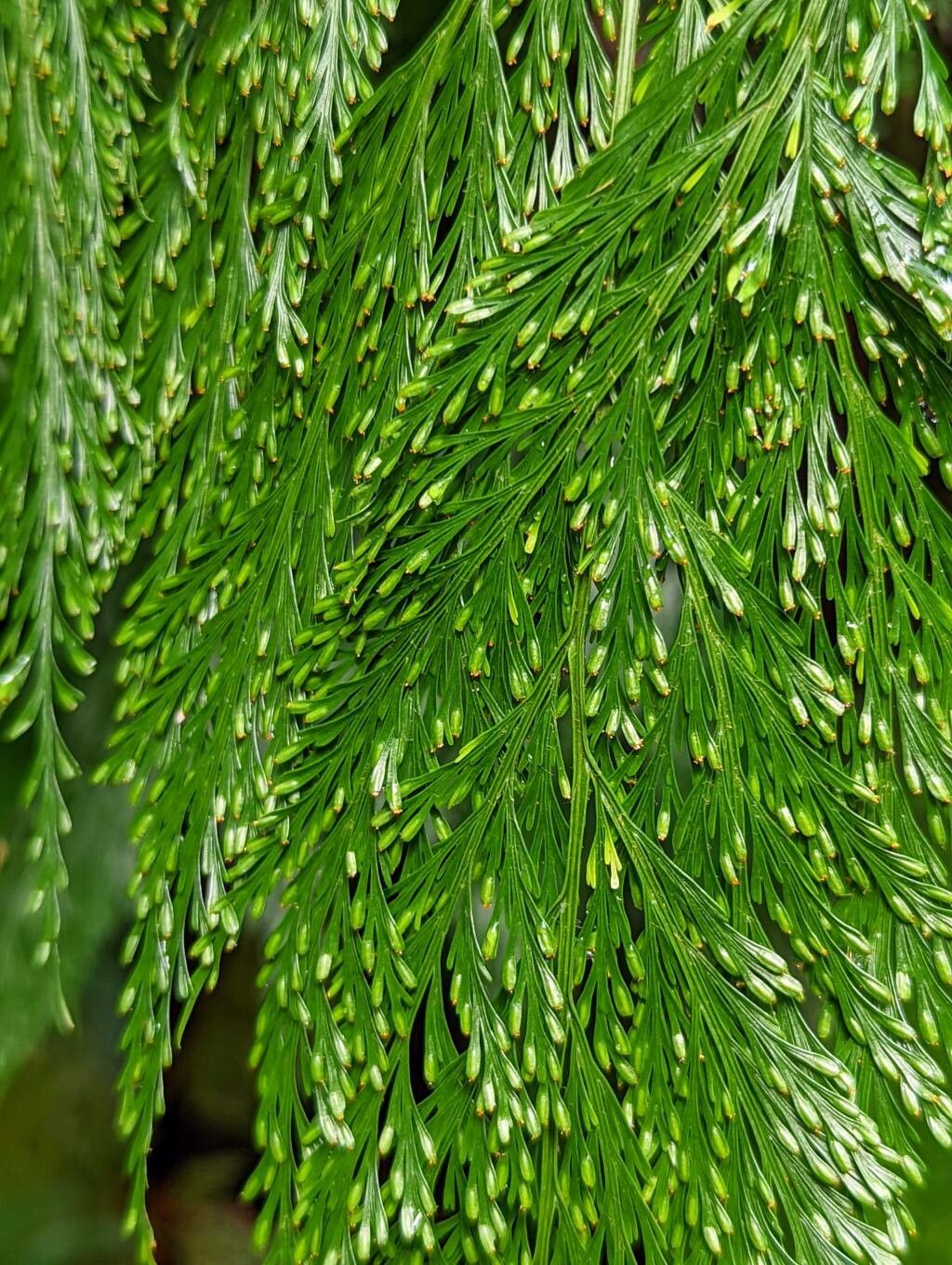
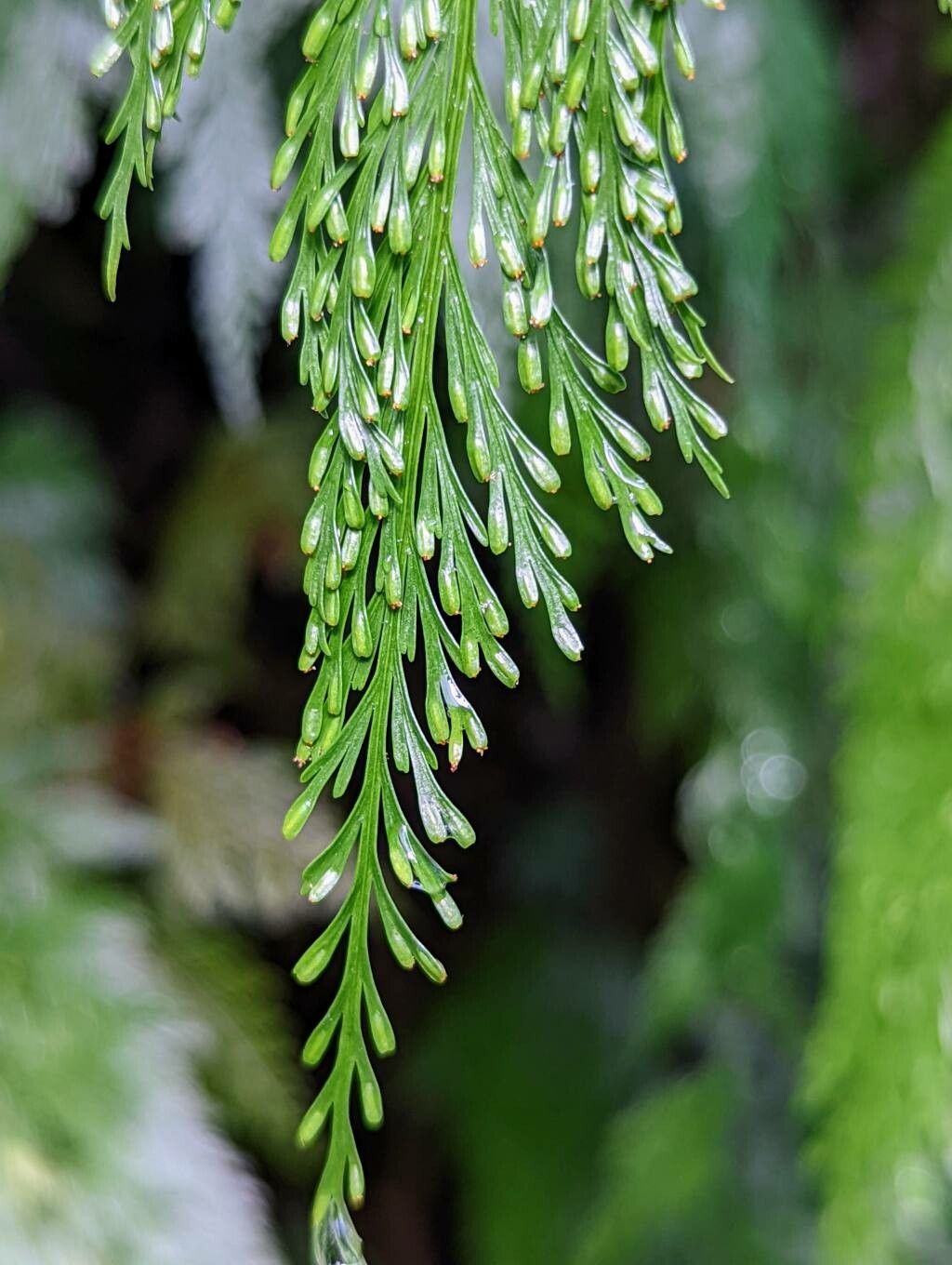
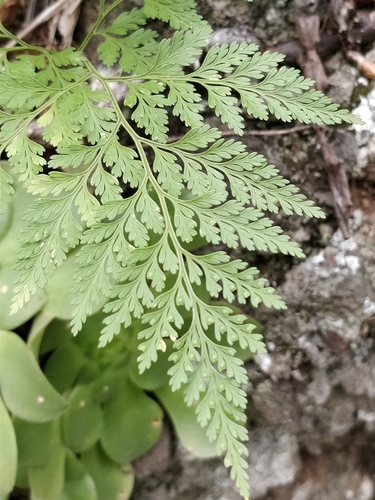
The fronds of Davallia solida are long and arching, featuring finely divided leaflets that give them a delicate look. These fronds can grow up to 60 cm in length and are light green in color. The rhizomes grow above ground and produce small furry roots that cling to surfaces such as rocks or tree trunks.
Davallia solida thrives in bright but indirect light, high humidity levels, and well-draining soil. It requires regular watering but not waterlogged conditions. This fern can be grown both indoors and outdoors in warm climates, provided temperatures do not drop below 10°C.
Indigenous people have used the rabbit's foot fern for medicinal purposes for centuries, valuing its anti-inflammatory properties to help alleviate pain caused by arthritis and other inflammatory conditions.
In summary, Davallia solida is an attractive ornamental plant with unique features that make it popular among gardeners worldwide. Additionally, its medicinal properties have made it useful in traditional medicine practices.
giant hare's foot fern typically has strong disease resistance and faces relatively few insect pests. Its care is considered difficult because it needs a consistently moist environment and frequent watering. However, the roots are susceptible to rot if overwatered or if the surroundings lack good ventilation. It is better suited to people with some growing experience, since most are able to keep it alive for a certain period. Still, the plant can struggle to truly thrive, and its leaves may dry out and deteriorate over time.
How to keep Davallia Solida.
Light
Giant hare's foot fern is native to habitats like forest understories and rocky locations that furnish natural shade. It favors Full Shade but can withstand Partial Sun.
Temperature
The giant hare's foot fern comes from tropical regions, where the climate is generally warm and humid. Consequently, it is well suited to high temperatures and moisture. It does not tolerate rapid temperature shifts and favors a steady thermal environment, so avoiding temperature fluctuations indoors is important. It typically cannot withstand cold conditions and needs warmer temperatures to grow. If the surrounding temperature falls too low, the plant may stop growing or even perish.
Pruning
The giant hare's foot fern is known for its unique rhizomes that resemble a hare's foot. To keep the plant healthy, prune the old fronds in early spring to promote new growth. Remove any damaged leaves to improve airflow, but be careful not to over-trim, as this can stress the plant. Regular pruning helps prevent disease and maintains the fern's vibrancy and appearance.
Botanical profile.
- Plant Type
- Fern
- Life Cycle
- Perennial
- Genus
- Davallia
- Family
- Polypodiaceae
- Hardiness Zone
- 10-12
- Mature Height
- 30 cm to 61 cm
- Mature Spread
- 49 cm to 91 cm
- Leaf Color
- Dark Green, Forest Green
- Leaf Type
- Evergreen
- Planting Time
- Spring, Summer
- Native Area
- Sri Lanka, India, Malaysia, Indonesia, Cambodia, Vietnam, Myanmar, Philippines, Singapore, Fiji, Brunei, Thailand, China
Other names.
Reader questions.
What are the sunlight requirements for a Giant Hare's Foot Fern?
The Giant Hare's Foot Fern, also known by its botanical name Davallia solida, thrives in full shade, meaning it requires less than 3 hours of sunlight daily. It's essential to observe how sunlight moves through your garden throughout the day to choose locations that provide the ideal balance of light and shade. This careful selection ensures the well-being and happiness of these plants.
What is the scientific name of the Giant Hare's Foot Fern?
The scientific name of the Giant Hare's Foot Fern is Davallia solida. This species is recognized for its distinct characteristics and belongs to the fern family.