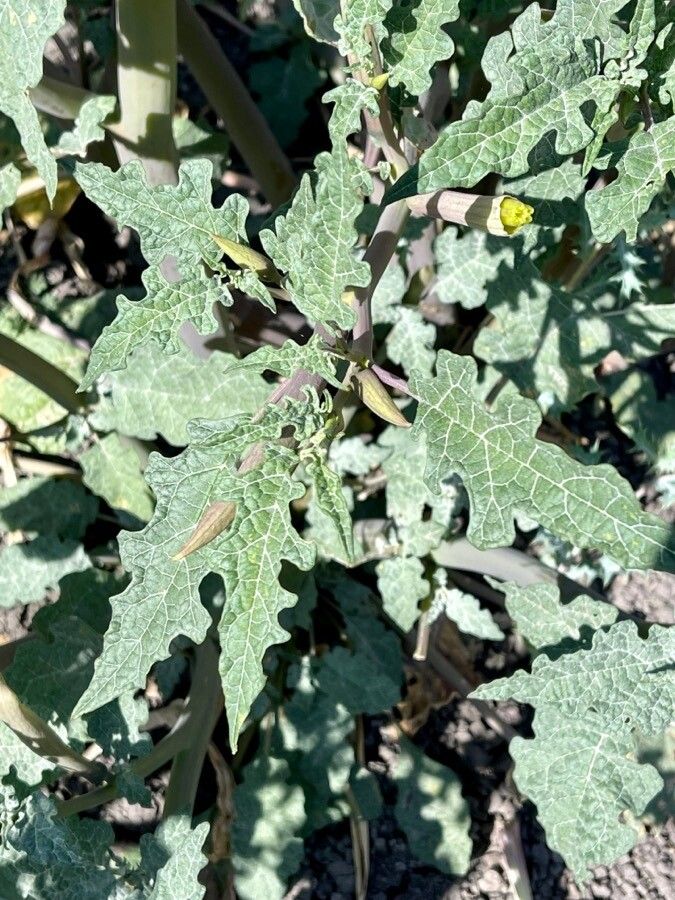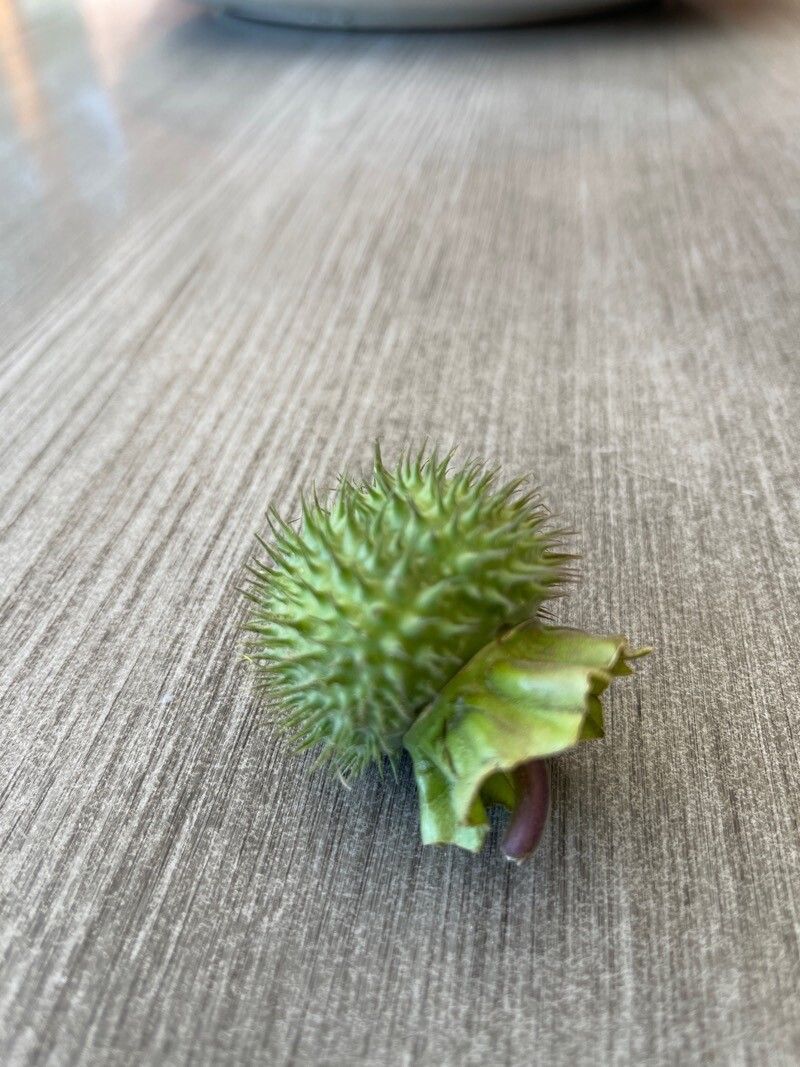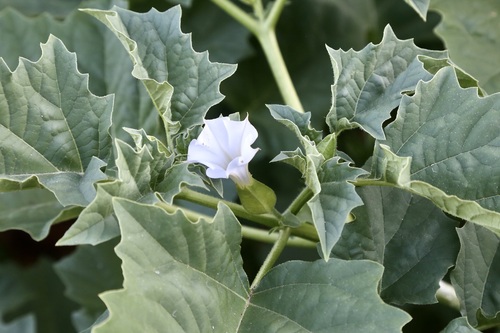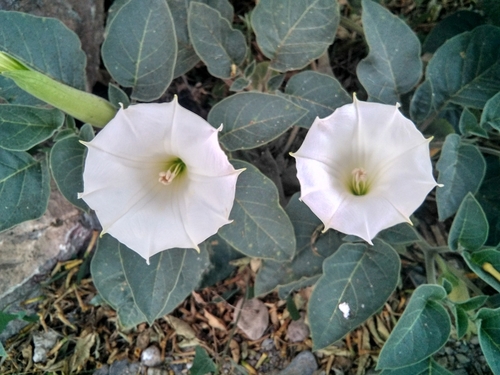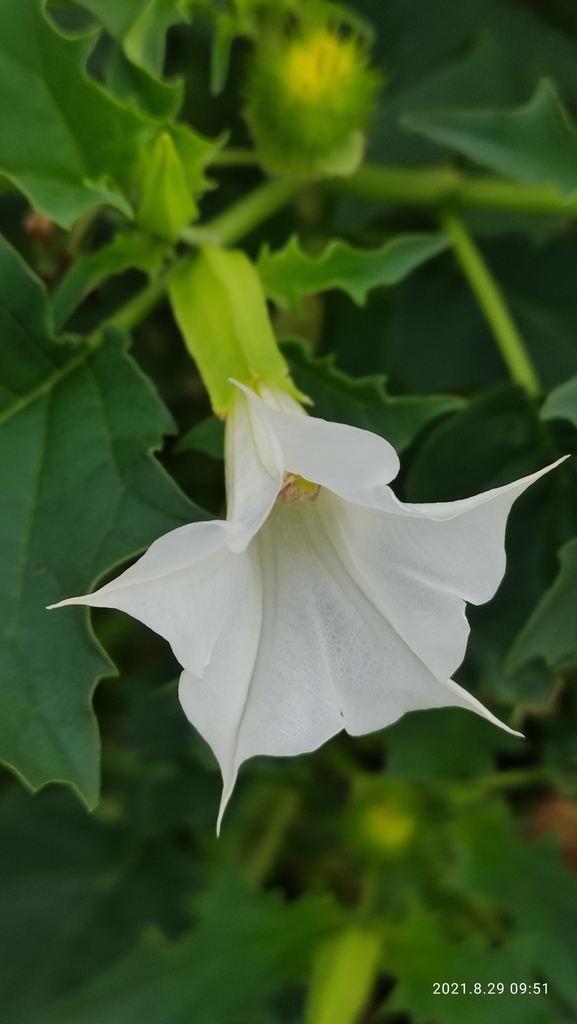
Datura stramonium, known by the common names thorn apple, jimsonweed (jimson weed), devil's snare, or devil's trumpet, is a species of flowering plant in the nightshade family Solanaceae. Its likely origin was in Central America, and it has been introduced in many world regions. It is an aggressive invasive weed in temperate climates across the world. D. stramonium has frequently been employed in traditional medicine to treat a variety of ailments. It has also been used as a hallucinogen (of the anticholinergic/antimuscarinic, deliriant type), taken entheogenically to cause intense, sacred or occult visions. It is unlikely ever to become a major drug of abuse owing to effects upon both mind and body frequently perceived as being highly unpleasant, giving rise to a state of profound and long-lasting disorientation or delirium (anticholinergic syndrome) with a potentially fatal outcome. It contains tropane alkaloids which are responsible for the psychoactive effects, and may be severely toxic.
Jimsonweed, also known occasionally as Jamestown weed, gets its name from the town of Jamestown, Virginia. This is where English soldiers consumed the plant while trying to suppress Bacon's Rebellion.
Jimsonweed is fairly disease-resistant and is typically not prone to illnesses. Nevertheless, it can be affected by pests and diseases present in its environment. These infections are usually mild. In terms of care, the plant needs a moderate amount of maintenance. Regular pruning is required to maintain a good appearance and healthy growth. Fertilizing can also help encourage flowering. Jimsonweed is suitable for anyone with outdoor space, such as a garden or patio, and does not demand extensive care experience. It may need more attention when grown indoors.
How to keep Datura Stramonium.
Light
The jimsonweed plant, native to sunny habitats, flourishes with plentiful sunlight, which promotes strong growth and good overall health. It can also tolerate conditions with less light. However, very low or excessively intense light can harm its vitality and vigor and may inhibit growth.
Water
Jimsonweed is well-suited for dry conditions and can thrive with little water. It's important to water it once a week to prevent the soil from becoming too saturated. In warmer climates, when planted outdoors, Jimsonweed benefits from consistently moist soil during the growing season. This helps support its robust flowering cycles.
Humidity
This plant will thrive in moderate humidity, which is probably the level in your home. However, misting it a few times a week can be very beneficial. Make sure the room has good ventilation.
Temperature
Jimsonweed originates from areas where temperatures range from 68 to 95 °F (20 to 35 ℃). It prefers warmer climates, so it's recommended to adjust conditions accordingly by placing it in cooler locations during hot seasons.
Fertilizer
Jimsonweed responds well to regular, light applications of fertilizer to encourage healthy leaf development. You should feed Jimsonweed about once a month during the summer. Nitrogen is essential for foliage, and providing nitrogen-rich sources helps Jimsonweed do well.
Pot & Repot
When repotting Jimsonweed, choose a pot that is 1–2 inches (2.5–5 cm) larger in diameter and that offers good drainage. Use a well-draining potting mix, and consider mixing in perlite to improve drainage. Repot in spring or early summer, water thoroughly afterward, and keep the plant in a shady spot at first.
Botanical profile.
- Plant Type
- Herb
- Life Cycle
- Annual, Perennial, Biennial
- Genus
- Datura
- Family
- Solanaceae
- Hardiness Zone
- 4-9
- Mature Height
- 0.61 m to 1.52 m
- Mature Spread
- 30 cm to 91 cm
- Leaf Color
- Green
- Leaf Type
- Deciduous
- Flower Color
- White
- Flower Size
- 3.05 cm to 5.08 cm
- Bloom Time
- Early summer, Mid summer
- Planting Time
- Spring, Summer
- Harvest Time
- Mid summer, Late summer, Early fall
- Native Area
- Mexico, Bolivia
Other names.
Reader questions.
How should I water my Jimsonweed plant?
There are various tools you can use to water Jimsonweed, such as a garden hose with a spray nozzle or a watering can. Jimsonweed is not too particular about its water source, so rainwater, tap water, or filtered water will suffice. It's important to avoid watering this plant from above, as it can harm the leaves and flowers and potentially cause disease. Using a drip irrigation system is often the best way to water Jimsonweed, as it delivers water evenly and directly to the soil. If you have a container-grown Jimsonweed, you can use a cup, watering can, or tap to water it directly into the soil.
What are the sunlight requirements for Jimsonweed?
Jimsonweed thrives best under generous sun exposure, a condition that endorses robust growth and overall health. It requires locations that ensure full sun, described as above 6 hours of sunlight, or partial sun, with about 3-6 hours of sunlight. However, the plant can also survive in environments with lesser sunlight. Extreme conditions of either limited or excessive light can harm its vitality, potentially impeding its growth. Observing the movement of sunlight through your garden and choosing spots that offer a perfect balance of light and shade are crucial for ensuring the plant's happiness.
What temperatures are ideal for growing Jimsonweed?
Jimsonweed flourishes in areas where temperatures range from 68 to 95 °F (20 to 35 ℃), thriving best in warmer climates. It's advised to adjust the environment for the plant during excessively hot seasons by placing it in cooler areas. Jimsonweed possesses strong resistance to cold, often not requiring special frost protection measures during winter. Nonetheless, if temperatures are expected to fall below the critical growth temperature (unspecified in the prompt), steps should be taken to protect the plant from the cold by covering it with soil or straw. To aid in water retention through winter and early spring, the plant should be watered abundantly before the first freeze of autumn, ensuring the soil stays moist.
How do I water my Jimsonweed at different stages of growth?
Throughout the year, Jimsonweed goes through different growth stages, each with its own water requirements. When starting as a seed, it's best to give more water during germination, ensuring consistent soil moisture. After a few weeks, as the seedling grows above the soil, it will need slightly less water. When the plant is mature, regular watering once a week is sufficient. During flower development, you may need to increase water slightly to support the process.
How can artificial lighting be used for Jimsonweed indoor growth?
For optimal growth of Jimsonweed indoors, especially in scenarios where natural sunlight is insufficient, artificial lighting serves as a vital solution. This is particularly useful in winter or less sunny spaces. LED lights are recommended due to their ability to provide specific wavelengths needed by plants. The requirement differs based on plant needs; full sun plants need 30-50W/sq ft, partial sun plants require 20-30W/sq ft, and full shade plants should have 10-20W/sq ft of artificial light. The artificial light source should be placed 12-36 inches above the plant to mimic natural sunlight effectively, ensuring the plant receives 8-12 hours of light per day, mimicking natural daylight hours.
How does low temperature affect Jimsonweed, and what are the solutions?
Jimsonweed is notable for its cold tolerance, performing best when the temperature remains above a certain minimum suitable growth temperature (unspecified in the prompt). During winter, it's crucial to maintain the temperature above the minimum tolerable growing temperature. Should temperatures drop below the critical growth limit (also unspecified in the prompt), there might not be immediate visible effects in winter, but there could be a decline in sprouting or a lack of sprouting come spring. To address this, any parts of the plant that have failed to sprout by spring should be removed.
What should I do if I give my Jimsonweed plant too much or too little water?
If you notice that your Jimsonweed is lacking moisture, the remedy is simply to water it more regularly. Overwatering, on the other hand, can be a more serious issue, as it can lead to diseases that cause the plant to decline and die. To prevent this, choose a suitable location for your Jimsonweed that has adequate sunlight and good drainage. If you are overwatering a potted Jimsonweed, consider transferring it to a new pot with better drainage. When repotting, use loose soil and a pot that drains well.
What are the symptoms of inadequate light for Jimsonweed when grown indoors?
When Jimsonweed is grown indoors and experiences inadequate light, it may show several symptoms indicating light deficiency. These include smaller new leaves, leggy or sparse growth indicating a stretched-out appearance due to longer spaces between leaves or stems, faster leaf drop as the plant conserves resources, slower or halted growth as the plant enters survival mode due to poor light conditions, lighter-colored new leaves signaling a lack of chlorophyll, chlorosis or yellowing of leaves due to chlorophyll breakdown from excessive sunlight indirectly hitting neighboring surfaces, sunscald marked by pale or necrotic areas on the plant from intense exposure, leaf curling as a defense mechanism against too much sun, wilting due to increased water loss, and leaf scorching characterized by brown, dry edges on leaves due to excessive sunlight.
What should be done when Jimsonweed is exposed to high temperatures?
During summer, maintaining Jimsonweed's temperature below the maximum suitable growth temperature (unspecified in the prompt) is crucial. Exposure to temperatures above the maximum tolerable growing temperature can lead to various stress signs in the plant, including leaves turning lighter, curling, suffering from sunburn, or in severe cases, the plant may wilt and dry out completely. Managing high temperature stress involves trimming away sunburned and dried parts, relocating the plant to a shaded area during the midday and afternoon, or employing a shade cloth for protection. Additionally, watering the plant in the morning and evening can help keep the soil appropriately moist.
How much water does my Jimsonweed need?
Jimsonweed needs regular watering throughout the growing season. In the spring, water the plant once per week. As the season gets warmer, increase watering to two to three times per week. Be careful not to exceed this frequency as it can harm the plant. Regardless of how often you water, make sure the soil is moist but not wet. If your Jimsonweed is in a pot, it will need more frequent watering than if it's planted in the ground. Generally, water a container-grown Jimsonweed a few times per week compared to just once per week for an in-ground plant.
What solutions can mitigate symptoms of inadequate sunlight for Jimsonweed?
To mitigate symptoms of inadequate sunlight for Jimsonweed, gradually moving plants to sunnier locations to ensure at least 6 hours of direct sunlight daily is crucial, especially for indoor plants. Use a south-facing window and keep curtains open during daylight for natural sunlight exposure. If natural sunlight is insufficient or the plant is large and not easily moveable, consider artificial lighting solutions, such as keeping a lamp on for at least 8 hours a day or investing in professional plant grow lights. For outdoor plants, a gradual move to sunnier spots helps in adapting to the light without causing sunburn. Pruning obstructing branches or transplanting smaller plants during their dormant period to areas with ample sunlight and good drainage are effective strategies for ground plants. It's important to note that parts of the plant already affected by insufficient sunlight may not recover, but new growth should be healthy with increased light exposure.
How much water does my Jimsonweed plant need?
Determining the correct amount of water to give to your Jimsonweed can be approached in a few different ways. One method is to feel the soil for moisture and water until the first six inches are moist. Another option is to use a set measurement, such as giving about two gallons of water per week, adjusting for factors like temperature and soil dryness. However, it's important to be cautious with strict guidelines, as overwatering can occur if your plant doesn't require that much water. For container-grown Jimsonweed, a different approach is needed. In this case, ensure all dry soil layers are moistened by testing with your finger or watering until you see a slight drainage of excess water from the pot's holes.