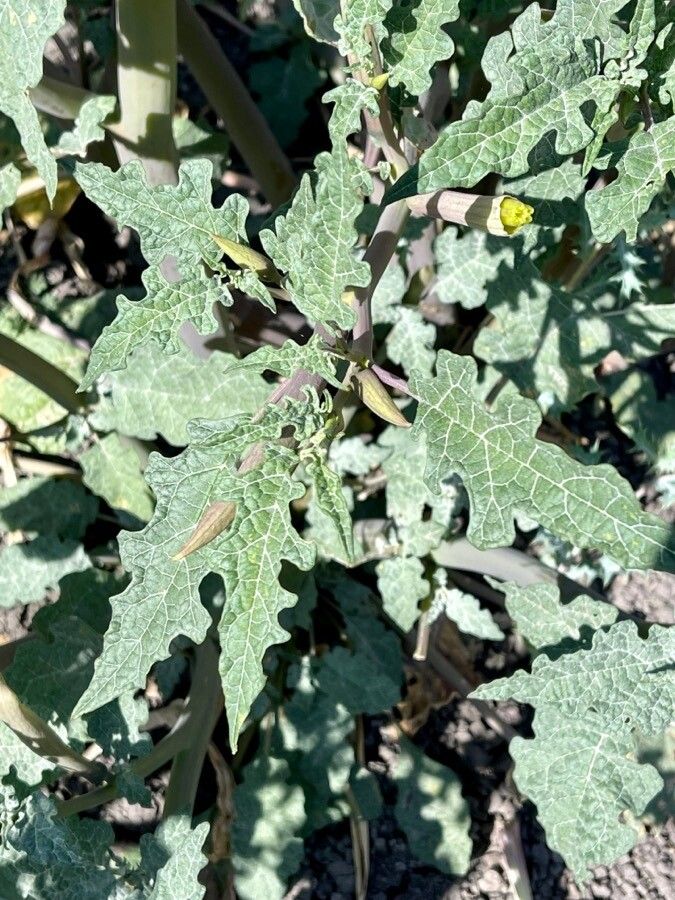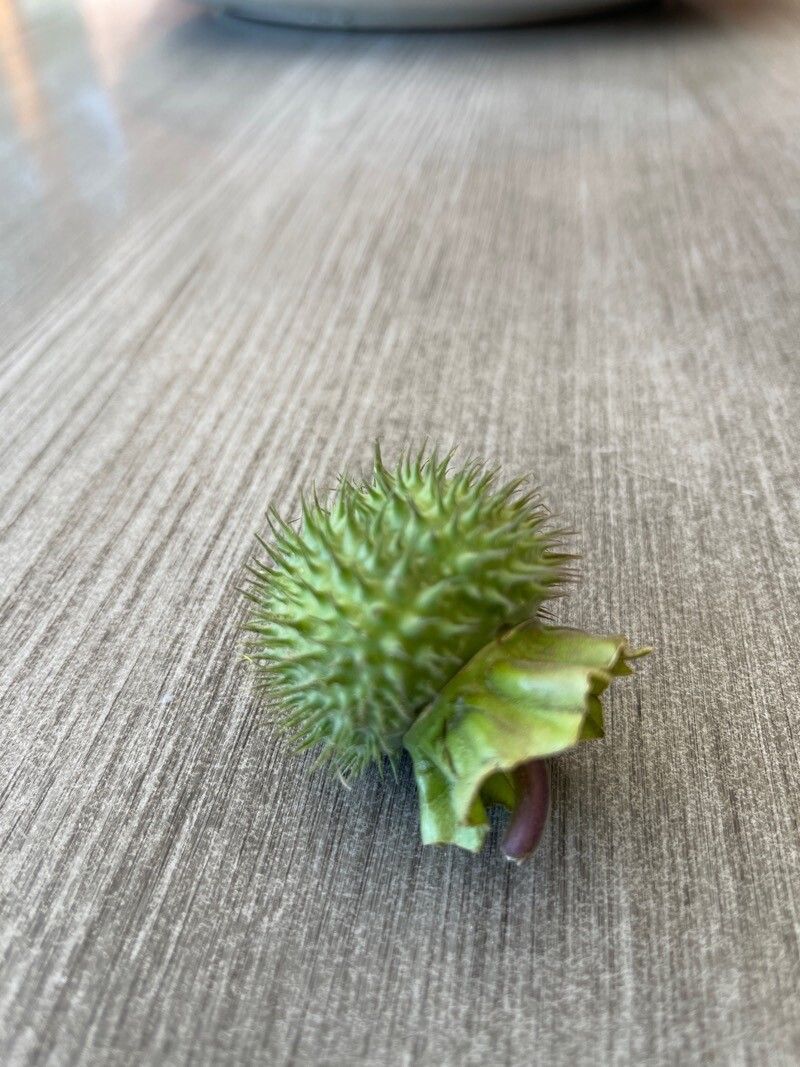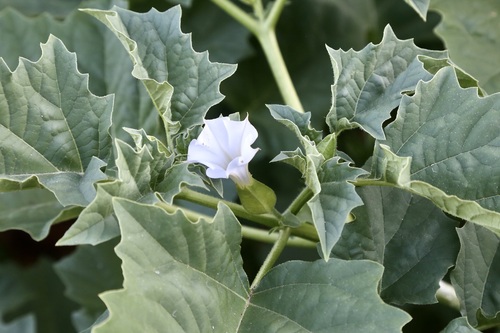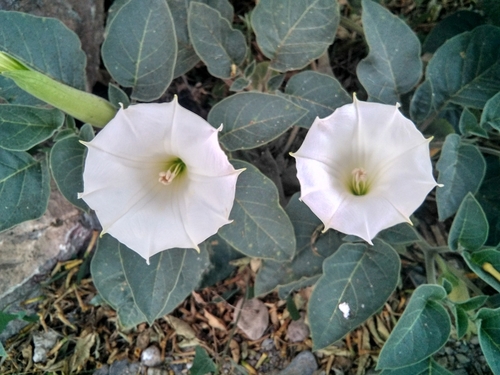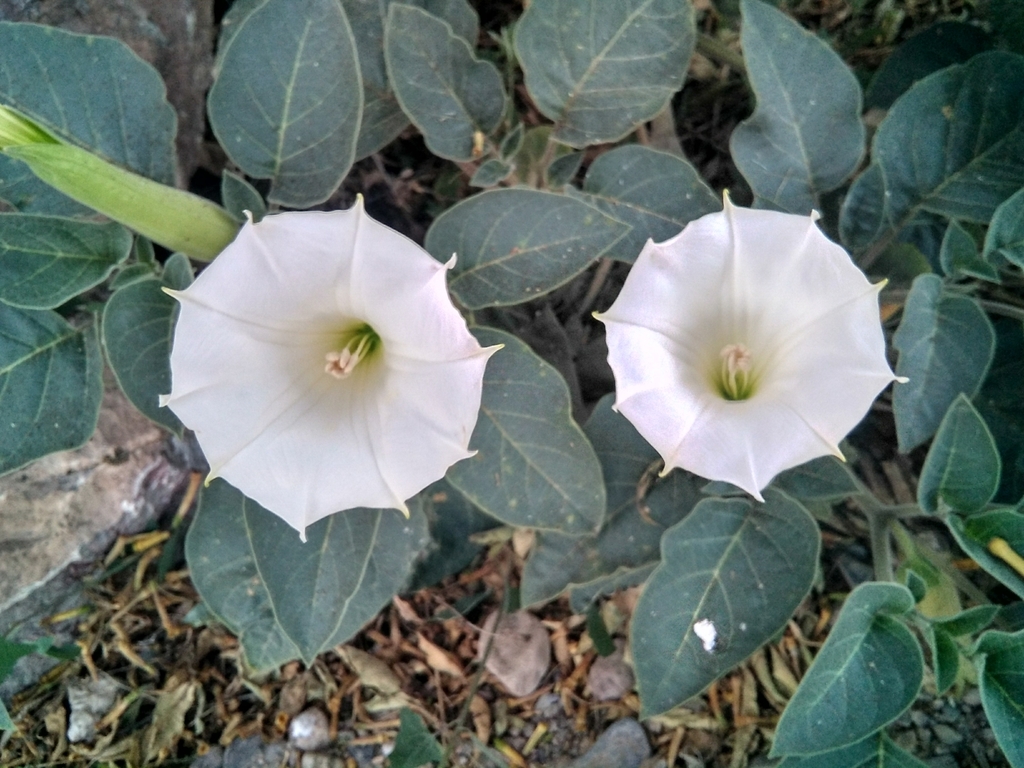
Datura metel, also known as Devil's Trumpet or Angel's Trumpet, is a highly toxic plant belonging to the Solanaceae family. Native to South and Central America, it has been introduced to other parts of the world as an ornamental plant.
This plant can grow to a height of 1-2 meters and features large, trumpet-shaped flowers in white, yellow, or purple. Its leaves are large and ovate, with slightly toothed margins.
All parts of the Datura metel plant contain toxic alkaloids such as scopolamine, hyoscyamine, and atropine. These substances can induce hallucinations, delirium, confusion, and even death if ingested in large quantities.
Despite its toxicity, Datura metel has been used in traditional medicine to treat various ailments such as asthma and to provide pain relief. However, given its high toxicity levels, it should only be used under strict medical supervision.
In conclusion, Datura metel is a visually striking but extremely dangerous ornamental plant that must be handled with great caution due to its toxic properties.
Downy thorn apple is fairly resistant to disease and typically does not suffer from many illnesses. Still, it can be vulnerable to local pests and diseases found in its environment. Such infections tend to be mild. For care, this plant is moderately demanding. It should be pruned on a regular basis to preserve its appearance and encourage healthy growth. Applying fertilizer can also assist in increasing bloom production. Downy thorn apple is appropriate for anyone with outdoor areas like a garden or patio and does not demand extensive gardening experience. It may need more attention if kept indoors.
How to keep Datura Metel.
Light
Downy thorn apple grows best with plentiful sunlight, similar to fully exposed conditions, for optimal growth and development. It can also tolerate some shade, described as partial exposure. Sun availability has a major impact on its health. Too much or too little sun can interfere with its normal growth.
Water
Devil's trumpet thrives in warm and humid environments. It requires consistent moisture but can tolerate short periods of dryness. To prevent waterlogging, water the plant weekly. As an outdoor plant prized for its flowers, it benefits greatly from rainwater during the growing season, which promotes healthy growth.
Temperature
Downy thorn apple is a warm-season species. It does best at temperatures between 68 and 95 °F (20 and 35 °C). The plant prefers hot, dry conditions with ample sunlight during the day. In colder weather it becomes dormant and stops growing until temperatures return to its preferred range.
Fertilizer
Downy thorn apple responds well to regular, dilute applications of fertilizer to encourage healthy leaf development. You should feed Downy thorn apple about once a month during the summer. Nitrogen is essential for foliage, and supplying nitrogen-rich sources helps Downy thorn apple thrive.
Pruning
Devil's trumpet thrives when pruned in early spring, as this removes dead or damaged branches and encourages healthy growth and abundant flowering. For the best results, use clean, sharp tools, and be careful not to cut the main stem. This approach helps prevent disease and keeps the plant robust and visually striking throughout the growing season.
Pot & Repot
When repotting Downy thorn apple, choose a pot that is 1-2 inches (2.5–5.1 cm) larger in diameter and has good drainage. Use a well-draining potting mix and consider adding perlite for extra drainage. Repot in spring or early summer, water thoroughly afterward, and initially place the plant in a shady location.
Botanical profile.
- Plant Type
- Herb
- Life Cycle
- Annual, Perennial
- Genus
- Datura
- Family
- Solanaceae
- Hardiness Zone
- 9-10
- Mature Height
- 0.61 m to 1.52 m
- Mature Spread
- 0.91 m to 1.83 m
- Leaf Color
- Green
- Leaf Type
- Deciduous, Evergreen
- Flower Color
- White
- Flower Size
- 6.35 cm to 10.16 cm
- Bloom Time
- Summer
- Planting Time
- Spring
- Harvest Time
- Mid summer, Late summer, Early fall
- Native Area
- Bahamas, Cuba, Honduras, Mexico, Haiti, Guatemala, Venezuela, Nicaragua, Dominican Republic, Jamaica
Other names.
Reader questions.
How should I water my Devil's trumpet?
There are various ways to water Devil's trumpet, such as using a garden hose with a spray nozzle, a watering can, or any other watering tool you may have. The plant is not too particular about the type of water it receives and can thrive with rainwater, tap water, or filtered water. However, it is best to avoid watering from above as it can harm the leaves, flowers, and make the plant more susceptible to disease. Setting up a drip irrigation system is often the most effective method as it ensures even and direct watering to the soil. When watering a Devil's trumpet in a container, you can follow a similar approach, using a cup, watering can, or tap to water the soil directly.
Why should I fertilize my Devil's trumpet plant?
Plants, including Devil's trumpet, require nutrients to survive. Gardeners, regardless of experience, understand this. Without proper nourishment, Devil's trumpet will die soon after the first pollination. To maintain the plant's vitality and promote the growth of large, stunning flowers throughout the blooming season, it is crucial to provide the right nutrients in the right amounts. Fertilizer plays a significant role in the development of a robust root system for Devil's trumpet. Given its thin and delicate roots, this plant greatly benefits from fertilizing at planting to establish a stable foundation. Moreover, timely fertilization can significantly lengthen Devil's trumpet's flowering period.
What are the sunlight requirements for Devil's trumpet?
Devil's trumpet thrives in full sunlight, requiring above 6 hours of sunlight daily, but it can also manage with partial sun, about 3-6 hours of sunlight. It's essential to observe how sunlight moves through your garden to pick spots that offer the right balance of light and shade, ensuring the plant's happiness. Originating from environments rich in sunlight, Devil's trumpet can withstand intense light exposure without suffering harm. However, low light conditions might inhibit its growth.
What is the optimal temperature range for growing Devil's trumpet?
Devil's trumpet thrives best within a temperature range of 68 to 95°F (20 to 35°C), which represents its native climate conditions. To ensure optimal growth, it's important to adjust the plant's surroundings to approximate these temperatures as the seasons change.
What should I do if I give my Devil's trumpet plant too much or too little water?
To properly care for a Devil's trumpet plant, it is important to address both underwatering and overwatering. If you notice that the plant lacks moisture, the obvious solution is to water it more regularly. However, overwatering can be a more serious issue that can lead to diseases and the eventual decline and death of the plant. To prevent this, it is important to choose a suitable growing location with adequate sunlight and good drainage. If you have overwatered a potted Devil's trumpet, it may be necessary to repot it in a container with better drainage and loose soils.
When should I fertilize my Devil's trumpet?
Devil's trumpet grows rapidly after the last frost. This is the best time to fertilize it, when you first plant it in the ground or in planters. This initial dose of fertilizer will sustain the plant until later in the year when it is blooming profusely. Once the plant is in full bloom, start fertilizing every three to four weeks, depending on the weather. However, once the plant starts producing fewer new blooms, stop fertilizing as it no longer needs it.
How can artificial lighting be used for indoor Devil's trumpet plants?
Indoor Devil's trumpet plants benefit from adequate lighting, especially when natural sunlight is insufficient. Artificial lighting, such as LED lights, is vital for promoting healthier growth. For optimal growth under artificial light, full sun plants require 30-50W/sq ft, partial sun plants need 20-30W/sq ft, and full shade plants need 10-20W/sq ft. The artificial light source should be placed 12-36 inches above the plant, mimicking natural sunlight conditions. Most plants will need 8-12 hours of light per day.
Does Devil's trumpet require special frost protection measures during winter?
Devil's trumpet exhibits strong cold resistance, which typically eliminates the need for special frost protection measures during winter. However, if temperatures are expected to drop significantly, it's wise to provide some level of cold protection by covering the plant with materials like soil or straw. Additionally, watering the plant abundantly before the first freeze in autumn helps keep the soil moist, aiding in preventing drought and water scarcity for the plant during the colder months.
How frequently do I need to water my Devil's trumpet?
To properly care for Devil's trumpet, you should water it regularly throughout the growing season. In the spring, water it once a week. As the season gets warmer, you may need to water it two to three times a week. However, be careful not to exceed this frequency as it can harm the plant. It's important to keep the soil moist but not overly wet, regardless of how often you water it. When it comes to Devil's trumpet in a pot, you'll need to water it more frequently compared to when it's planted in the ground. This is because the soil in the pot can heat up and dry out faster. Plan to water a potted Devil's trumpet a few times a week, whereas an in-ground plant only needs watering once a week.
When is the best time to not fertilize my Devil's trumpet?
Regular fertilizing is important for Devil's trumpet, but it can be applied at the wrong time. There are certain situations where it's better to hold back on fertilizing. These situations are usually related to the climate, but they can also involve other factors that we can control. Basically, if something is wrong with the plant, the soil, or the climate, it's best to wait until things have improved and the plant has recovered before fertilizing again. For example, if there are severe or unexpected changes in the weather, such as a sudden cold spell in the middle of summer, it's better to wait until it warms up again before starting to fertilize. The same goes for when the soil becomes too dry or compacted to absorb anything effectively. If this happens, the fertilizer will go straight to the roots instead of being dispersed properly by the soil. This can be harmful to the roots of Devil's trumpet. Additionally, it's not recommended to apply fertilizer when temperatures are soaring into the 90-degree Fahrenheit range during the hottest parts of the day. Since the breakdown of fertilizer can vary depending on temperature, it's crucial to avoid allowing hot temperatures to break it down too quickly. Lastly, it's important to address any pests or diseases before re-fertilizing. It's best to treat and clear them up first, as they can affect the health of the plant and its ability to benefit from fertilizer.
What are the symptoms of inadequate light in Devil's trumpet?
Symptoms of inadequate light in Devil's trumpet include smaller new leaves, leggy or sparse growth, faster leaf drop, slower or no new growth, lighter-colored new leaves, chlorosis (loss of green leaf color turning yellow), sunscald (damage from intense sunlight), leaf curling, wilting, and leaf scorching. These symptoms indicate that the plant is struggling with the lighting conditions, affecting its ability to photosynthesize and maintain overall health.
How should I care for Devil's trumpet during low temperatures?
Despite its cold tolerance, Devil's trumpet performs best when temperatures remain above a certain minimum. If winter temperatures are expected to fall below this minimum, there might not be noticeable changes immediately, but there could be a decrease in sprouting or a complete absence of it during spring. In such cases, removing the parts of the plant that fail to sprout come spring is recommended.