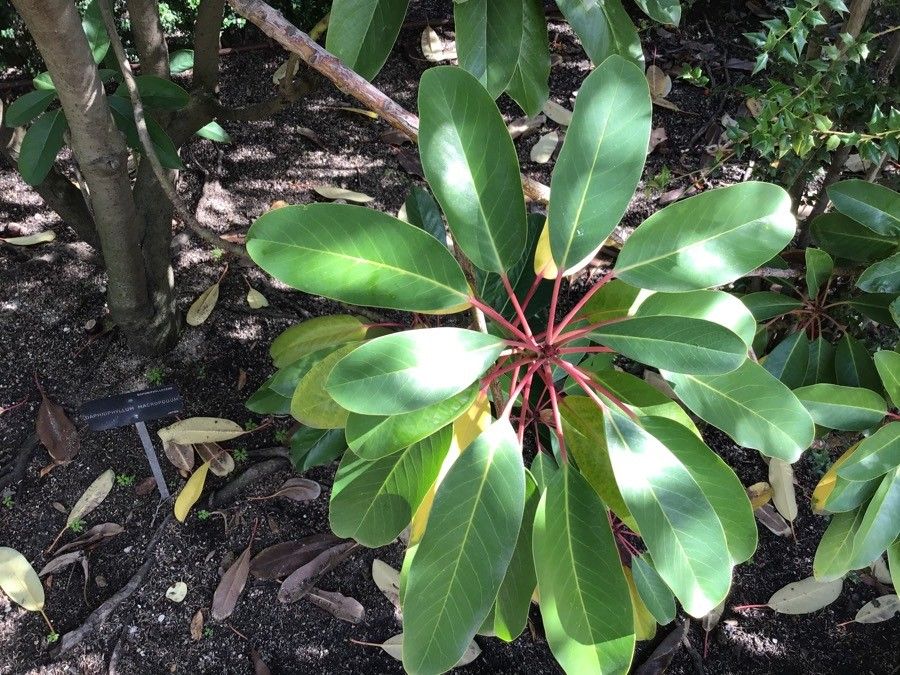
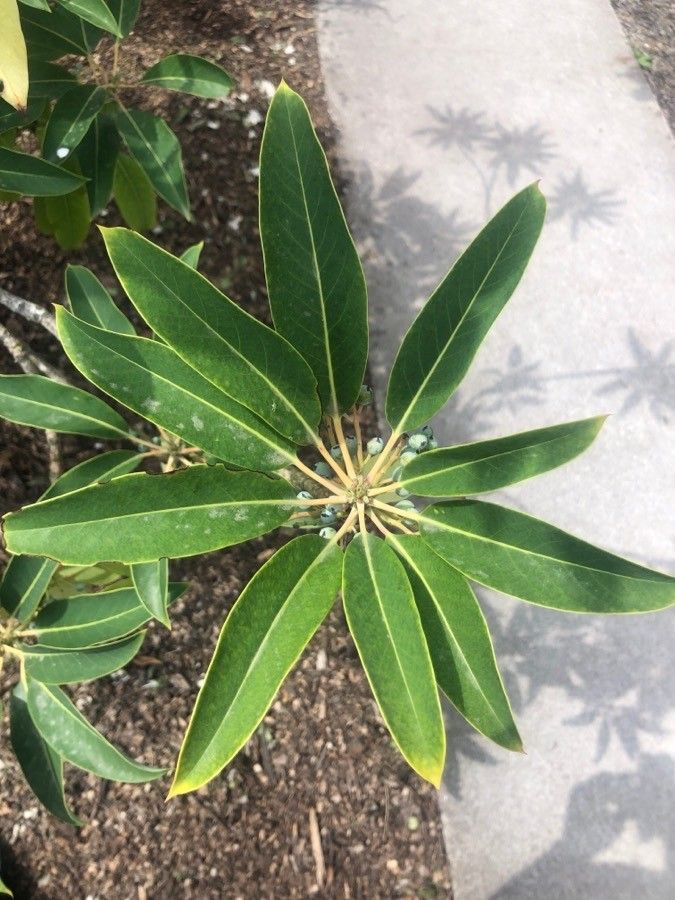
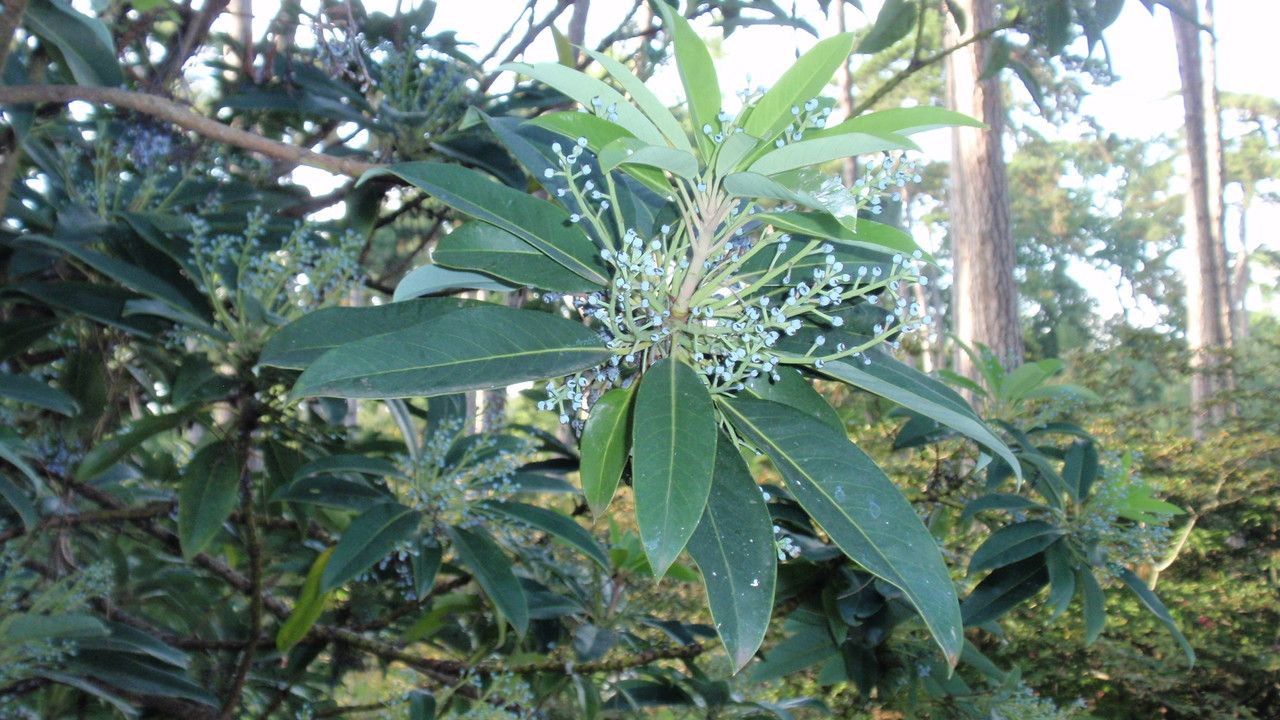
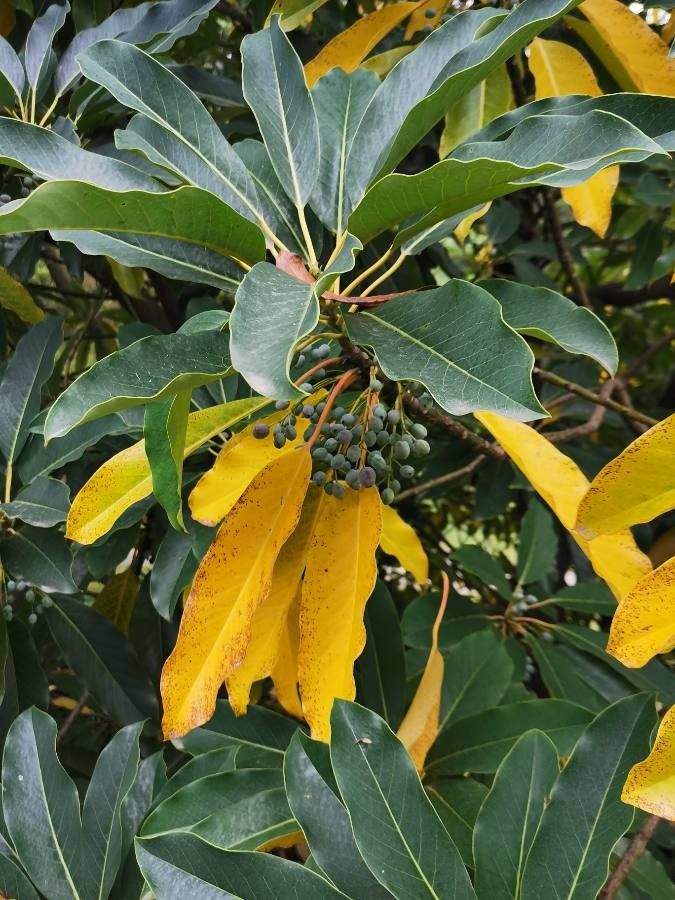
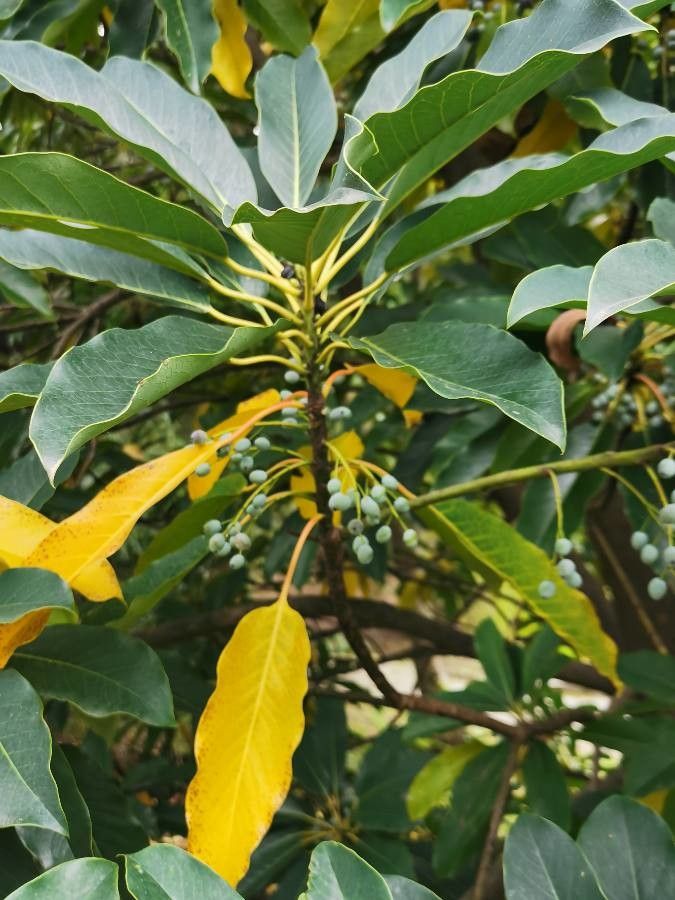
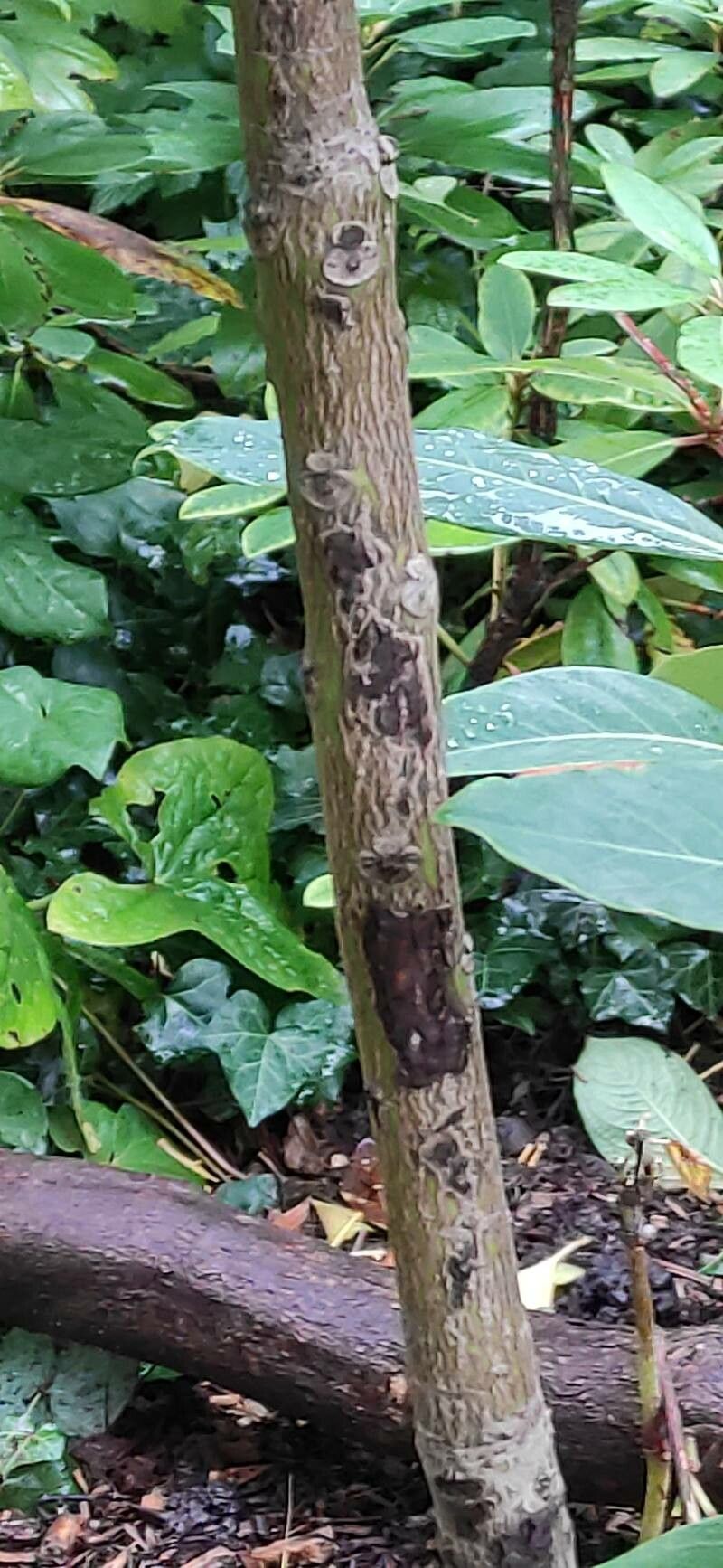
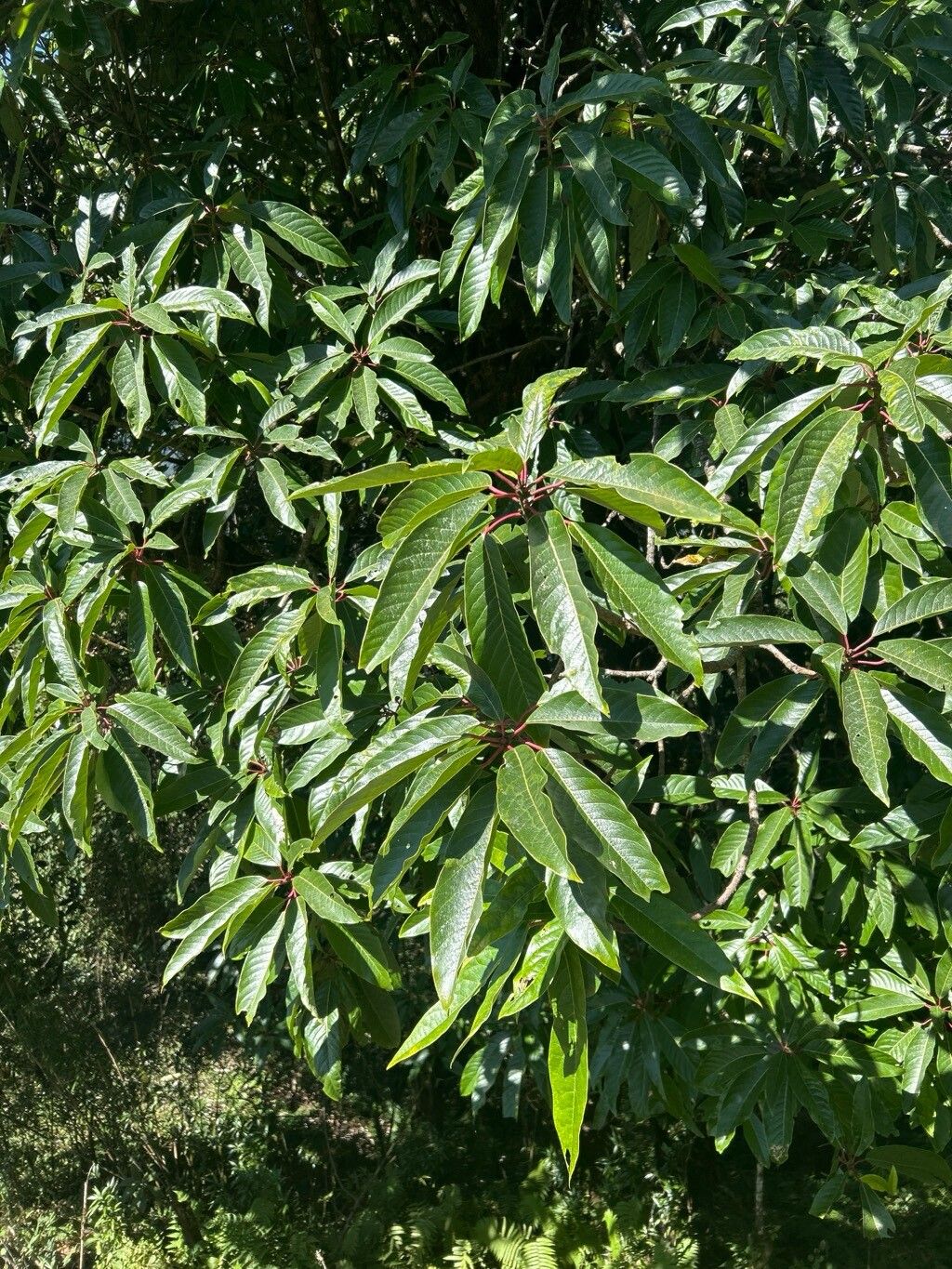
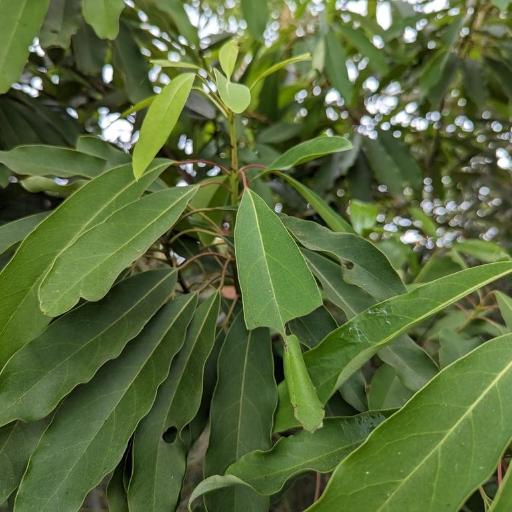
Daphniphyllum macropodum is an evergreen shrub or small tree from the family Daphniphyllaceae. Native to China, Japan, and Taiwan, it can reach heights of up to 10 meters. The plant features glossy, dark green leaves that are leathery to the touch and can grow up to 30 cm long. These leaves are alternately arranged on the stem and have a distinctive shape with pointed tips.
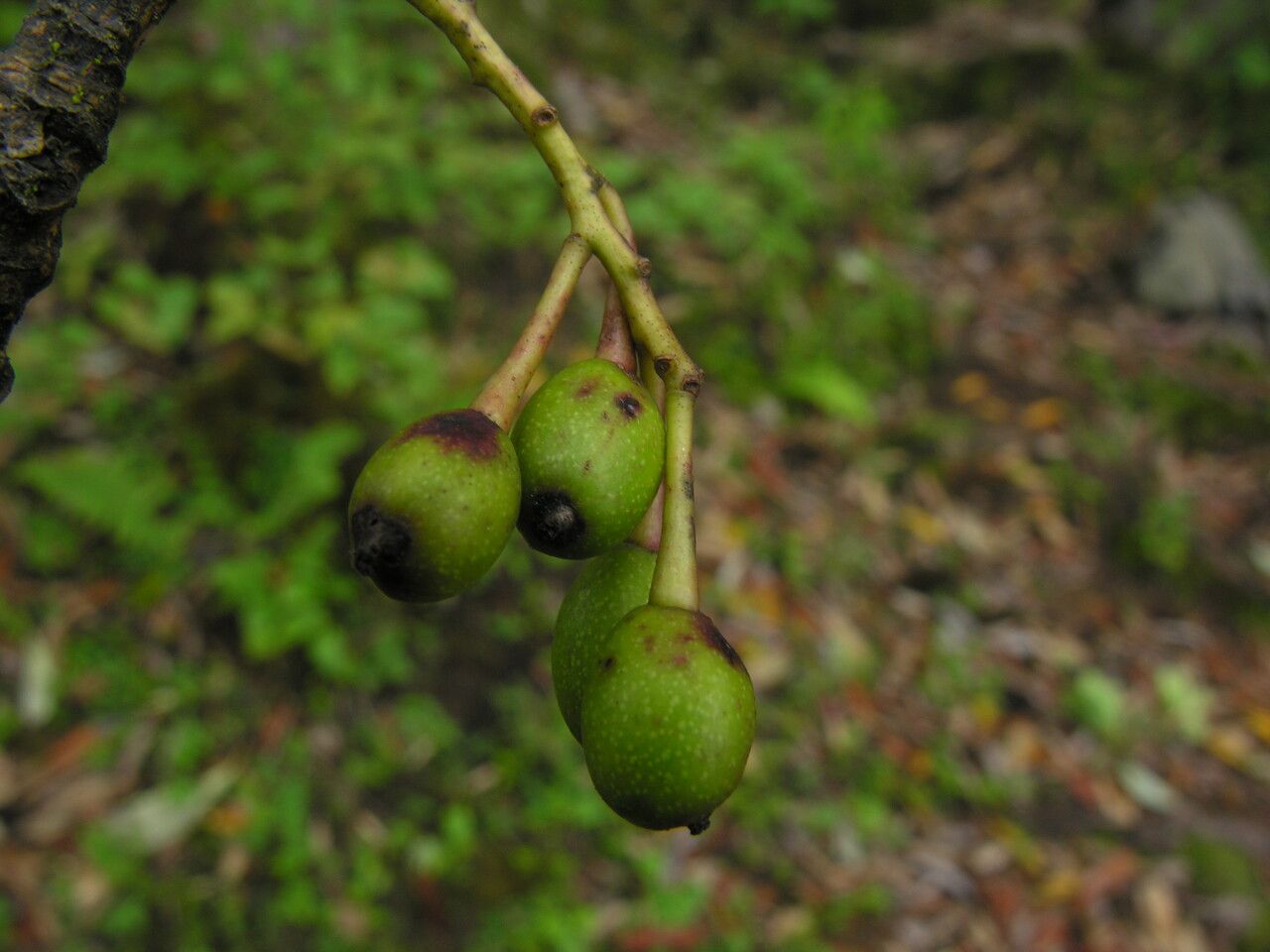
In the spring or early summer, Daphniphyllum macropodum produces small clusters of greenish-yellow flowers. These are followed by red or black berries in the autumn, which, while not edible, attract birds.
The plant thrives in partial shade and well-drained soil rich in organic matter. While it can tolerate a variety of soil types, it does not fare well in drought conditions.
Traditionally, Daphniphyllum macropodum has been used in Chinese medicine for its anti-inflammatory properties. However, it is important to note that all parts of the plant contain toxic compounds that can cause skin irritation if not handled properly.
Overall, Daphniphyllum macropodum is an attractive ornamental shrub or small tree with glossy foliage, intriguing flowers, and colorful berries. However, it should be handled with care due to its toxic properties.
Redneck rhody shows strong disease resistance and is generally not susceptible to illnesses. In terms of care, this plant is fairly low-maintenance. When grown outdoors it needs minimal watering, and larger specimens typically do not require pruning. Smaller plants, however, should be pruned after they finish blooming. Redneck rhodyt is appropriate for anyone with an outdoor area, such as a garden or a deck, and does not demand extensive gardening experience.
How to keep Daphniphyllum Macropodum.
Light
Redneck rhody does best in areas that receive a moderate amount of sun during the day, though it can tolerate places with slightly stronger sunlight. However, too much or too little sun can impede its growth. It originally evolved in habitats with fluctuating sun exposure, adapting over time to different light intensities.
Water
The Redneck Rhody thrives in high humidity and consistent moisture, requiring watering every two weeks. While it can withstand brief periods of drought, it should not be overwatered or exposed to waterlogged conditions. As an evergreen, it is important to regularly check the soil moisture levels when the plant is kept indoors, as indoor environments typically have lower humidity compared to the outdoors.
Temperature
Redneck rhody is native to temperate regions and favors a temperature range of 59 to 95 °F (15 to 35 ℃). Seasonal adjustments may be required to maintain optimal health. Avoid extreme changes in climate.
Fertilizer
Fertilize your Redneck rhody in early spring to encourage healthy growth. Regular feeding boosts overall health, leading to vigorous growth, better resilience in challenging conditions, and increased resistance to pests and diseases. Keeping a specific fertilization schedule for your Redneck rhody will ensure vibrant, deep-colored foliage and a lush appearance.
Pruning
The Redneck Rhody is an evergreen shrub valued for its glossy leaves. To maintain its shape and health, prune it during its dormant period, from early to late winter. This helps encourage spring growth, improves its appearance, and prevents pest infestations, ensuring a vigorous and healthy addition to your garden.
Pot & Repot
Repot the Redneck Rhody every 2-3 years in the spring to promote its growth. Use a spacious container to allow for root development, and slightly increase watering after repotting, being careful not to overwater. By following these steps, you'll enhance the vibrancy of the Redneck Rhody in your garden.
Botanical profile.
- Plant Type
- Tree, Shrub
- Life Cycle
- Perennial
- Genus
- Daphniphyllum
- Family
- Daphniphyllaceae
- Hardiness Zone
- 7-9
- Mature Height
- 3.05 m to 20.12 m
- Mature Spread
- 6.1 m
- Leaf Color
- Green
- Leaf Type
- Evergreen
- Flower Color
- Green, Pink, Purple
- Flower Size
- 5.08 cm to 6.35 cm
- Bloom Time
- Late spring, Early summer
- Planting Time
- Spring, Autumn
- Harvest Time
- Mid summer, Late summer
- Native Area
- South Korea, Japan, China
Other names.
Reader questions.
How should I water my Redneck rhody?
Your Redneck rhody is not too picky about how you water it. You can use any common watering tool like watering cans, hoses, or even cups to moisten the soil. It's important to apply the water directly to the soil and make sure all areas are evenly moistened to provide water to the entire root system. Using filtered water is recommended as tap water might have harmful particles. It's also better to use water at or slightly above room temperature to avoid shocking the Redneck rhody with cold or hot water. However, the Redneck rhody generally does well with any type of water.
Why should I put fertilizer on my Redneck rhody?
No matter which type of Redneck rhody you have, regular fertilization is important for the plant's overall health. Providing the right amount of nutrients promotes strong growth and helps the plant withstand challenging conditions and pests. To preserve the attractive foliage, it is essential to follow a regular fertilization schedule tailored to your Redneck rhody. This will result in vibrant leaves and a lush appearance.
How much sunlight does the Redneck rhody need to grow?
Redneck rhody, a type of plant, needs a good amount of sunlight to grow well, specifically around 3-6 hours each day. However, during the hottest parts of the day, it also benefits from some shade to avoid getting damaged by the sun. The best time for the plant to receive sunlight is in the morning, but it can tolerate some afternoon sun as long as the temperature isn't too high. To create the ideal conditions for the plant, it's recommended to plant it in an area that receives partial sun. For example, under a tree or on the east side of a building.
What is the best temperature for Redneck rhody?
The ideal temperature range for Redneck rhody to thrive is between 65 and 80 degrees Fahrenheit (18 to 27 degrees Celsius). During the primary growing phase, the highest tolerable temperature is 95 degrees Fahrenheit (35 degrees Celsius), while the lowest tolerable temperature is 15 degrees Fahrenheit (-10 degrees Celsius). This species can tolerate low temperatures and survive freezing winters. The perfect temperature range is 65 to 80 degrees Fahrenheit (18 to 27 degrees Celsius), the highest range is 85 to 95 degrees Fahrenheit (30 to 35 degrees Celsius), and the lowest range is -5 to 15 degrees Fahrenheit (-20 to -10 degrees Celsius) or below.
What should I do if I give too much water or too little water to my Redneck rhody?
Outdoor plants, especially newly planted ones or seedlings, can easily experience a lack of watering. It's important to remember that you should continue watering them consistently for a few months while they are still small or recently planted. This is because once the roots are established, Redneck rhody plants can rely on rain for hydration most of the time. When Redneck rhody plants are potted, overwatering is more commonly observed. If you accidentally overwater your plant, take immediate action to address the situation. The first step is to stop watering your plant right away to minimize the negative effects of overwatering. Next, remove the Redneck rhody from its pot to inspect the roots. If you don't find any signs of root rot, you can generally return the plant to its container. However, if root rot is present, trim away the affected roots and consider applying a fungicide to prevent further damage. Lastly, ensure the plant is repotted in well-draining soil. On the other hand, if your Redneck rhody is underwatered, simply increase the frequency of watering. Underwatering is usually easily resolved. When a plant is underwatered, its leaves tend to droop, dry out, and fall off. However, with sufficient watering, the leaves will quickly regain their fullness. Make sure to adjust your watering frequency as soon as you notice any signs of underwatering.
When should I fertilize my Redneck rhododendron for optimal growth?
To ensure healthy growth, it is best to fertilize your Redneck rhody in late winter or early spring. This provides the necessary nutrients for the upcoming warm weather. If you live in a warm climate, an additional fertilizer feeding in early fall can be beneficial. This not only adds nutrients for the following growing season but also helps the plant survive winter without foliage damage. Early fertilization allows new branches enough time to grow and withstand the cold.
What will happen if the Redneck rhody doesn't get enough sunlight?
If Redneck rhody receives excessive direct sunlight, its leaves may turn yellow, become dry, or get burned. Additionally, you might observe that the plant wilts or becomes stunted. To protect Redneck rhody from sun damage, it is important to provide some shade during the hottest periods of the day. One way to achieve this is by using a shade cloth or by placing Redneck rhody near taller plants that can offer natural shade.
Should I change the temperature for Redneck rhody when it is growing at different stages?
According to research, Redneck rhody tends to show stunted growth when exposed to extended periods of higher temperatures. This is particularly apparent during the development of axillary buds and the growth of main shoots. To promote strong growth after germination or transplanting, it is recommended to maintain a consistent and cool temperature of around 65℉(18℃).
How many times do I need to water my Redneck rhododendron?
To properly take care of your outdoor plants, it's important to consider the rainfall in your area. If there's not enough rain, make sure to water your plants every 2 weeks in the spring and fall, and more frequently in the summer. In the winter, when growth slows down, you can water less often or not at all. However, if you have a young or newly planted Redneck rhody, it's important to water more frequently to help it establish and grow. When it comes to potted plants like the Redneck rhody, there are two main approaches for watering. The first is to have a set schedule, watering once a week or every other week. However, this may not always work since the plant's growing conditions can vary. Another option is to determine watering frequency based on soil moisture. Wait until the top 2 to 4 inches of soil have completely dried out before watering again. This method takes into account the specific needs of the plant in different seasons, especially in the summer when it requires more water.
When shouldn't I put fertilizer on my Redneck rhododendron?
There are a few times throughout the year when you should avoid fertilizing your Redneck rhody. The first time is during the early and mid-winter months when the plant is dormant and doesn't require any feeding. It's also not a good idea to fertilize it during the late spring and summer when the weather is hotter and drier. These conditions can have a negative impact on your Redneck rhody if fertilized. To prevent any issues, it's best to stick to a fertilization schedule that only includes feeding in the early spring and early fall.
What will happen if Redneck rhody gets too much sun?
If Redneck rhody doesn't receive sufficient sunlight, it might grow tall and thin, with few leaves. Additionally, the leaves may become yellow or pale green, which suggests that the plant is not getting enough sunlight to produce chlorophyll. To fix this issue, you can consider relocating Redneck rhody to a sunnier area or trimming nearby foliage to allow more light to reach the plant.
How can I make sure Redneck rhody stays warm during cold seasons?
Redneck rhody is able to tolerate freezing temperatures when it is planted in the ground in areas that do not reach below 15℉ (-10℃) during winter. However, if it is planted in pots or containers, it is necessary to protect the roots from the cold. This can be done by wrapping the container in a blanket or bringing it inside, ensuring full protection from the elements.