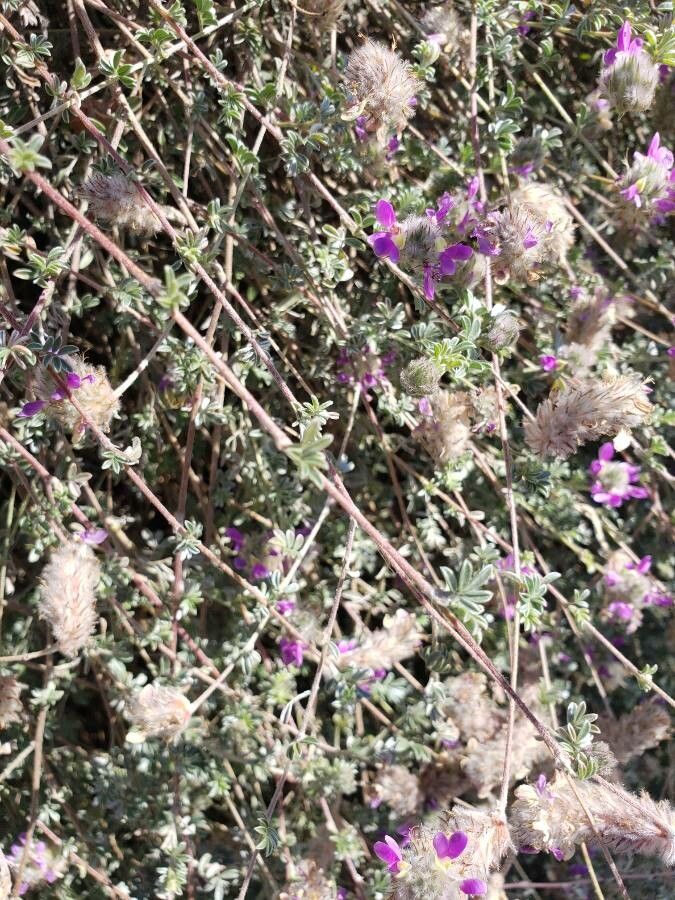
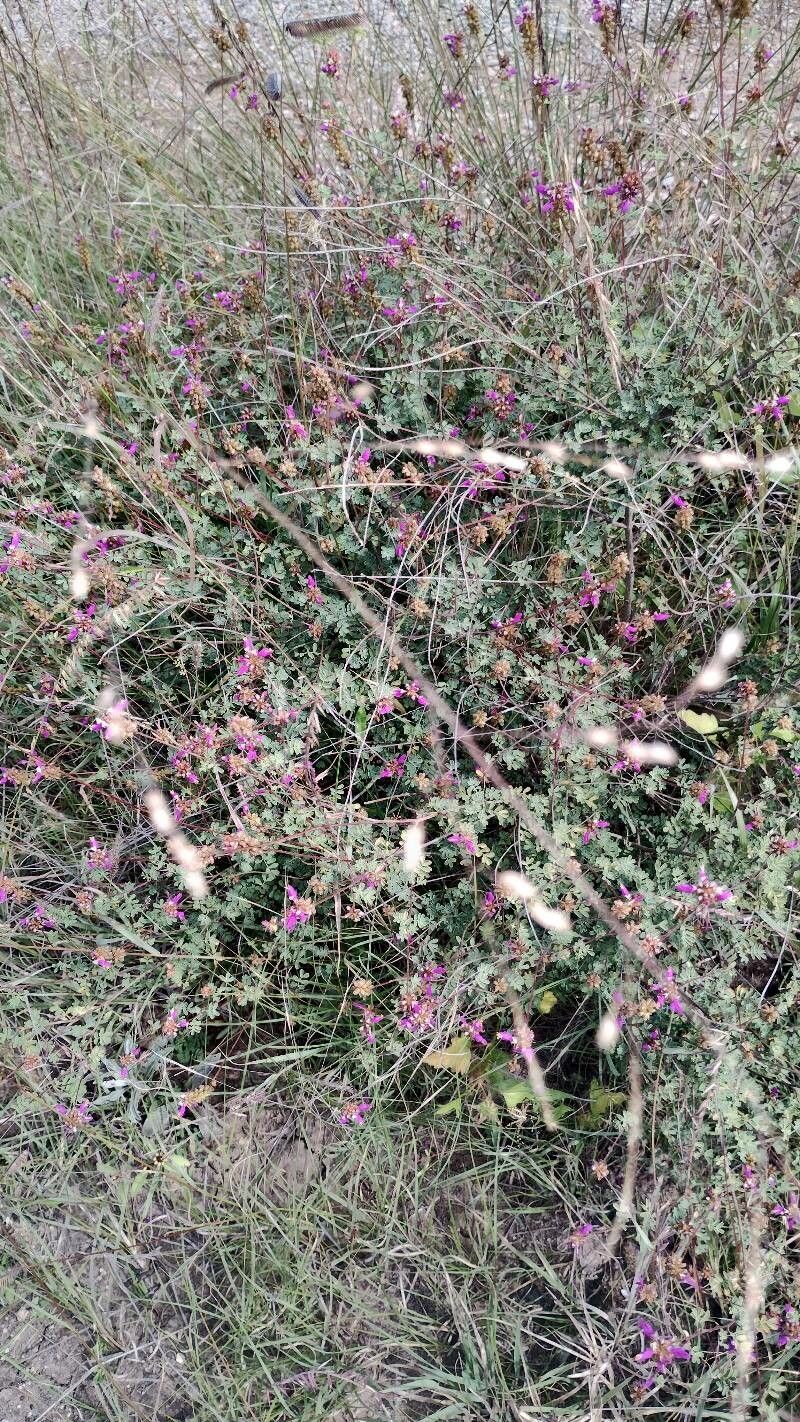
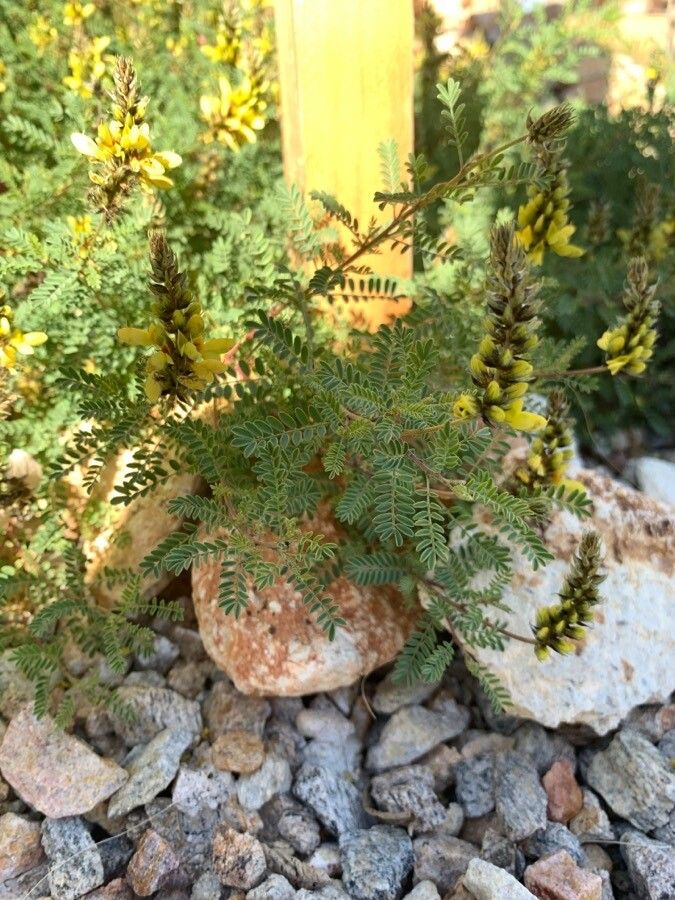
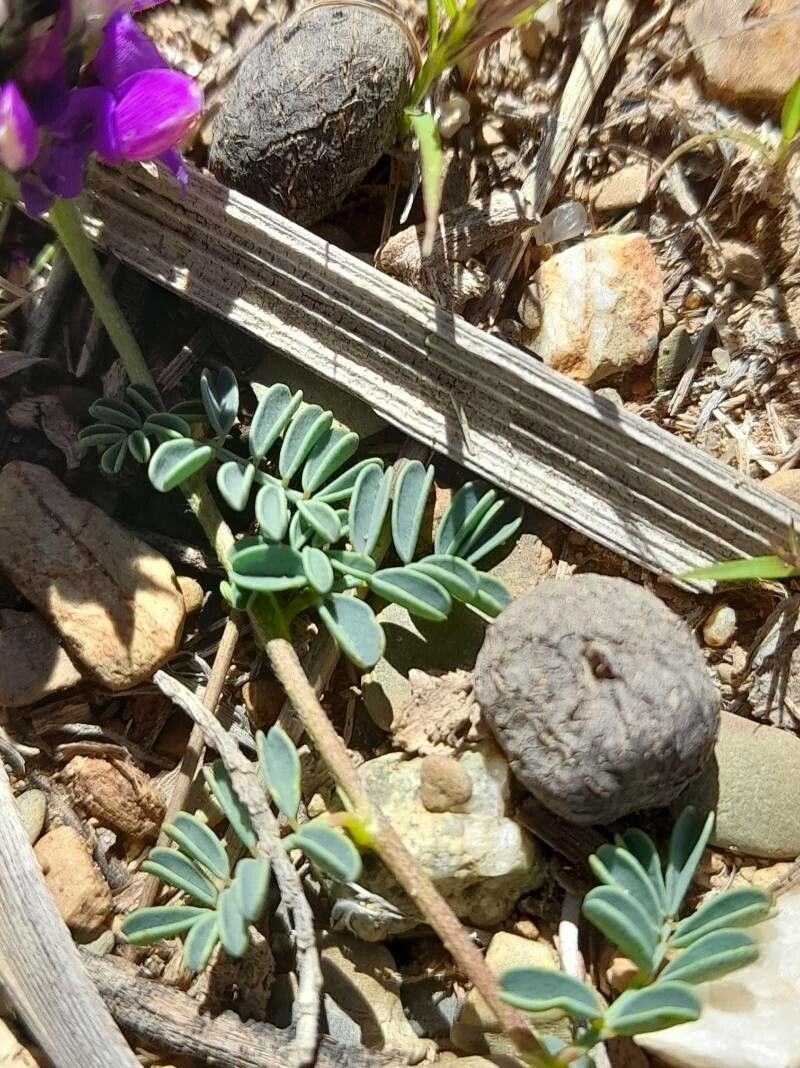
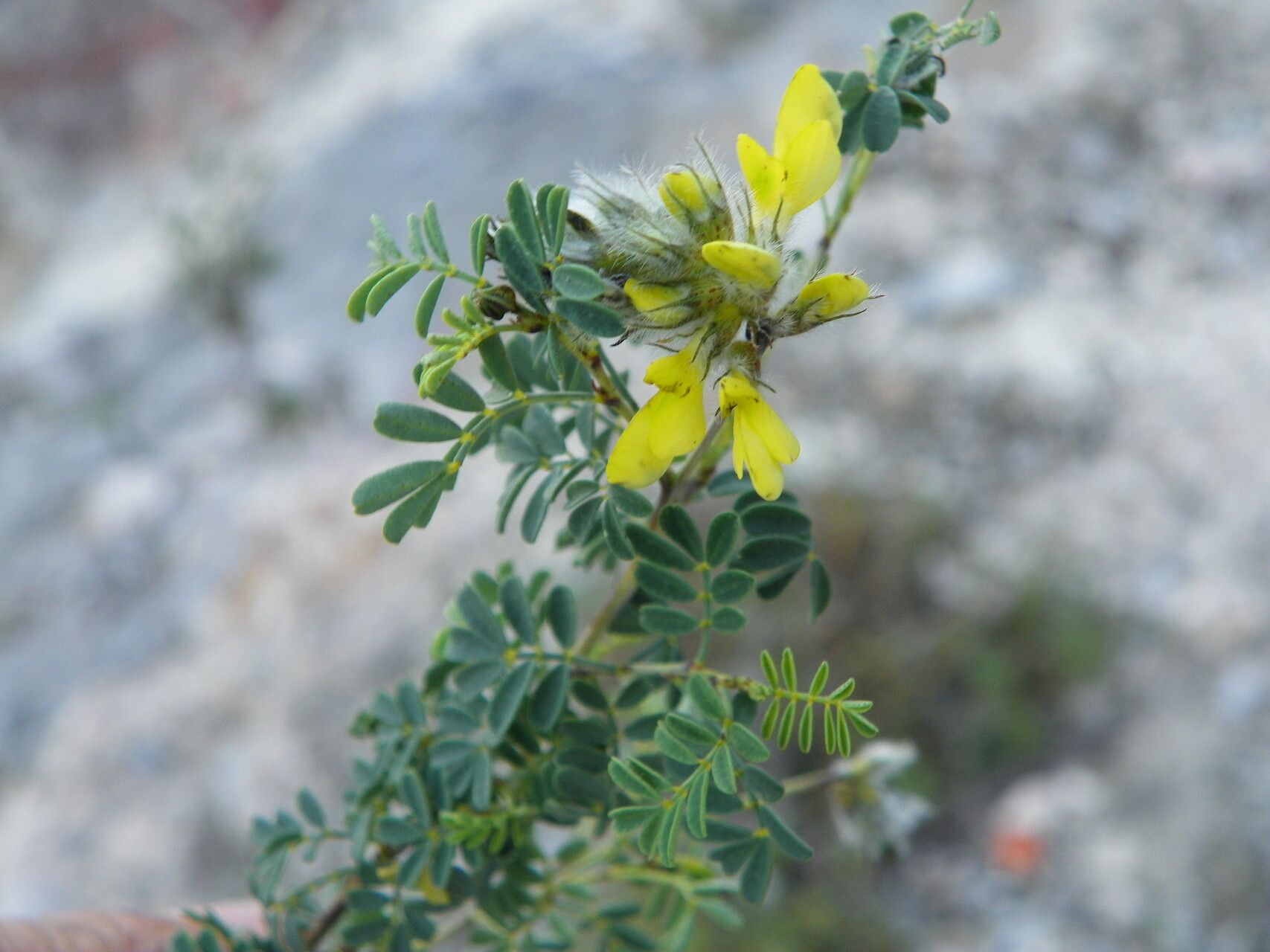
Dalea pulchra, the Santa Catalina prairie clover or indigo bush, is a perennial shrub or subshrub of the subfamily Faboideae in the pea family-(Fabaceae). It is found in the southwestern United States and Northwestern Mexico in the states of Arizona, New Mexico, Sonora, and Chihuahua, in the Madrean sky islands region and associated areas. Santa Catalina prairie clover can be found in some common resource locations, for example: Ironwood Forest National Monument of southern Arizona. It has deep purple flowers. As a shrub it can grow to 1.2 metres (4 ft) tall. The Santa Catalina prairie clover has the same name as the sky island mountain range of southeast Arizona, the Santa Catalinas.
Santa catalina prairie clover has strong disease resistance and is generally not prone to disease. Regarding care, this plant is fairly low maintenance. Planted outdoors, it needs only minimal watering, and larger plants usually do not require pruning. Smaller plants, however, should be pruned after they have finished blooming. Santa catalina prairie clover is suitable for anyone with an outdoor area, such as a garden or deck, and does not demand much gardening experience.
How to keep Dalea Pulchra.
Light
Santa catalina prairie clover is native to open habitats, such as sunny meadows and forest edges, which provide abundant light. It performs best in full sun but can also tolerate partial sun, adapting well to various sunlight conditions.
Temperature
Santa catalina prairie clover comes from tropical areas, where the climate is generally warm and humid. As a result, it is well adapted to high temperatures and humidity. It does not tolerate sudden temperature shifts and prefers a stable temperature environment, so it's important to avoid temperature fluctuations indoors. It typically cannot withstand cold temperatures and needs warmer conditions to grow. If the surrounding temperature drops too low, the plant may stop growing or even die.
Fertilizer
The best time to fertilize a Santa Catalina prairie clover is in early spring as it breaks dormancy. This encourages overall growth and flower formation. Fertilization improves foliage, stems, and branches, and supports larger, more vibrant, and longer-lasting flowers. It helps transport nutrients from the roots to the blooms and strengthens the plant’s health and resistance to disease.
Pruning
The Santa Catalina prairie clover is known for its vibrant purple flowers and drought tolerance. To maintain its health and encourage blooming, it should be pruned in early spring. During this time, trim away any dead or damaged stems and thin out any overcrowded areas to improve air circulation. It's also important to regularly check for pests and diseases while pruning to ensure the plant remains healthy.
Botanical profile.
- Plant Type
- Shrub
- Life Cycle
- Perennial
- Genus
- Dalea
- Family
- Fabaceae
- Hardiness Zone
- 7-10
- Mature Height
- 1.52 m
- Mature Spread
- 1.52 m
- Leaf Color
- Green, Dark Green
- Leaf Type
- Deciduous
- Flower Color
- Purple, Lavender
- Flower Size
- 1.02 cm to 2.03 cm
- Bloom Time
- Mid spring, Late spring, Early summer
- Planting Time
- Spring, Summer, Autumn
- Harvest Time
- Summer
- Native Area
- Mexico
Other names.