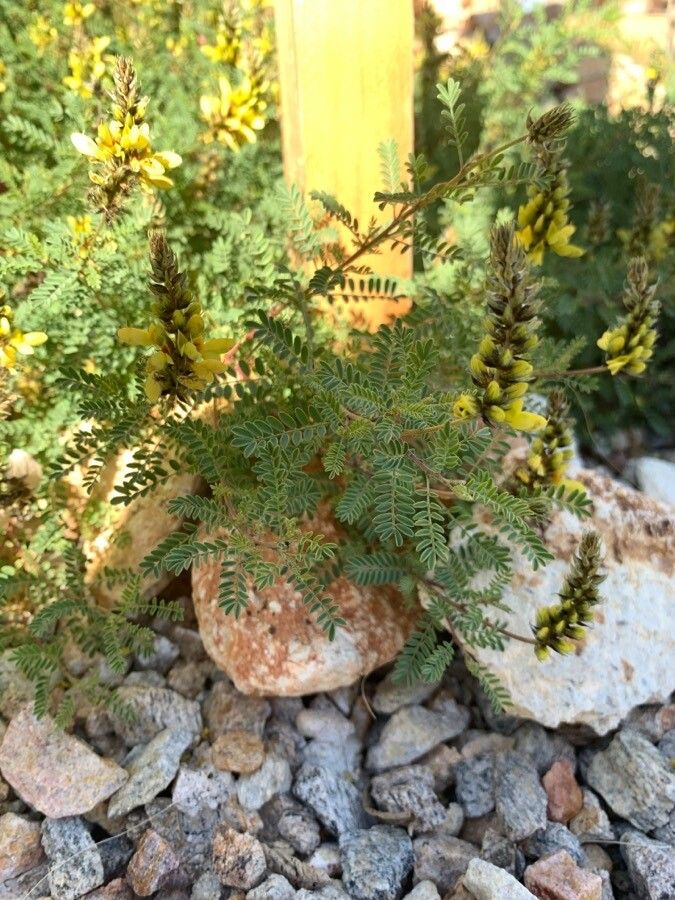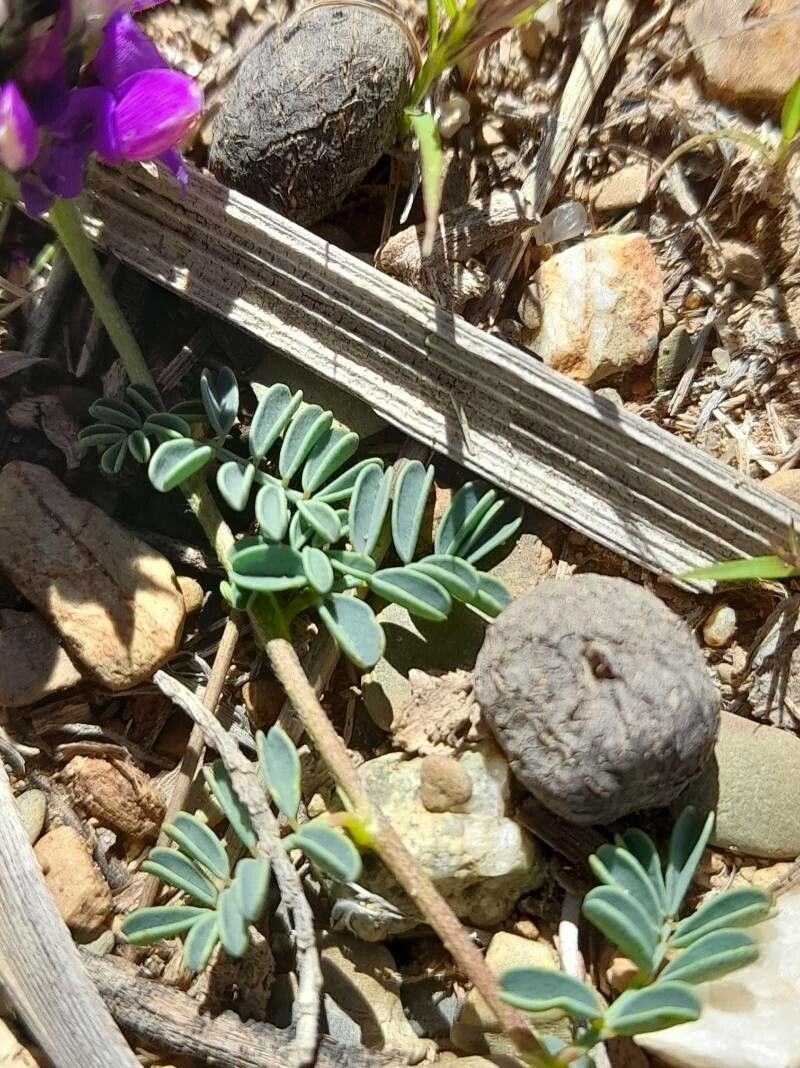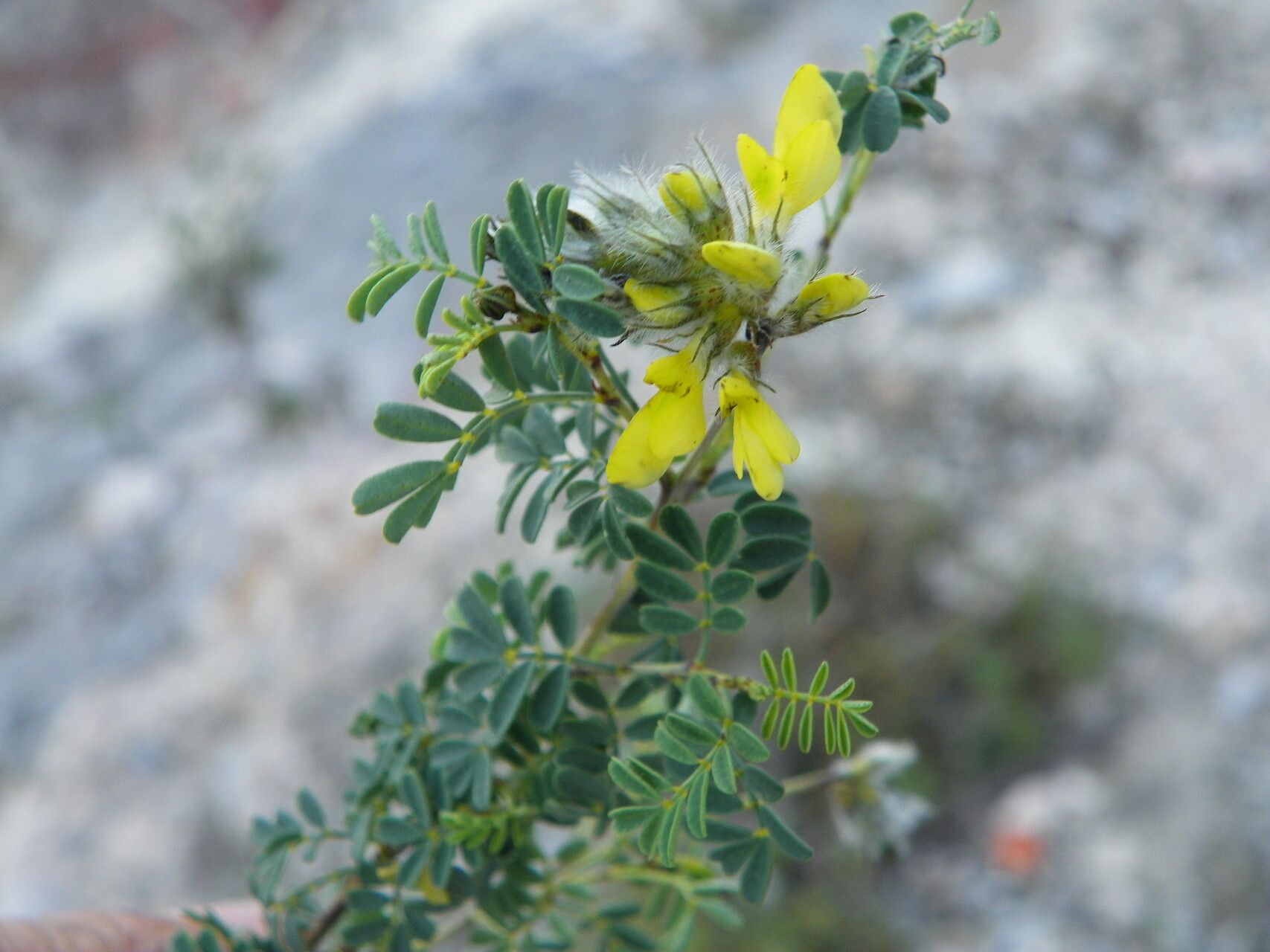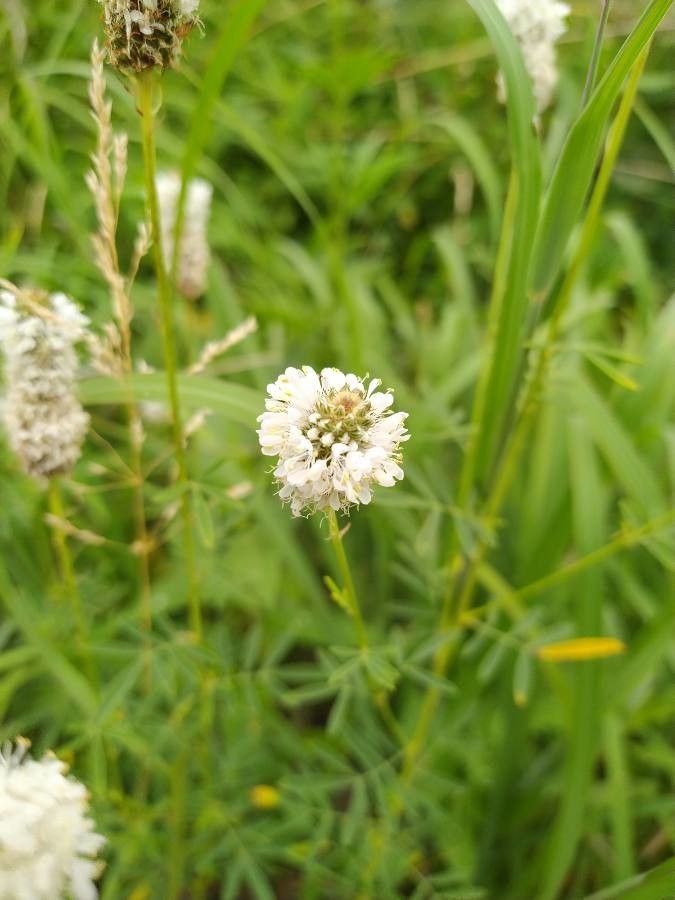
Dalea multiflora, commonly called roundhead prairie clover, is a species of flowering plant in the legume family (Fabaceae). It is native to North America, where it is found in Mexico and the United States. In the U.S., it is primarily found in the Great Plains and South Central regions. Its natural habitat is in dry rocky prairies, particularly in limestone soils. It is a conservative species and can be indicative of undisturbed prairie communities.It is an erect herbaceous perennial, with pinnate-compound leaves. It produces spikes of white flowers in summer. Flowers bloom June to July.
Roundhead prairie clover has strong resistance to disease and is generally not susceptible to illnesses. Regarding care, this plant is fairly low maintenance. When grown outdoors it needs only minimal watering, and larger plants typically do not require pruning. Smaller plants, however, should be pruned after they finish blooming. Roundhead prairie clovert is appropriate for anyone with outdoor space, such as a garden or a deck, and does not demand much prior experience in plant care.
How to keep Dalea Multiflora.
Fertilizer
Fertilize your Roundhead prairie clover in early spring to encourage healthy growth. Regular feeding improves overall health, leading to vigorous growth, greater tolerance of difficult conditions, and enhanced resistance to diseases and pests. Follow a set fertilization schedule for your Roundhead prairie clover to keep the foliage vibrant, richly colored, and lush in appearance.
Pruning
To promote the health and air circulation of the roundhead prairie clover, it's best to prune it in early spring. Pruning techniques involve removing dead branches and lightly shaping the plant to encourage more abundant flowering. Pruning at the right time helps prevent disease and enhances growth, resulting in healthier plants that adapt better to their environment.