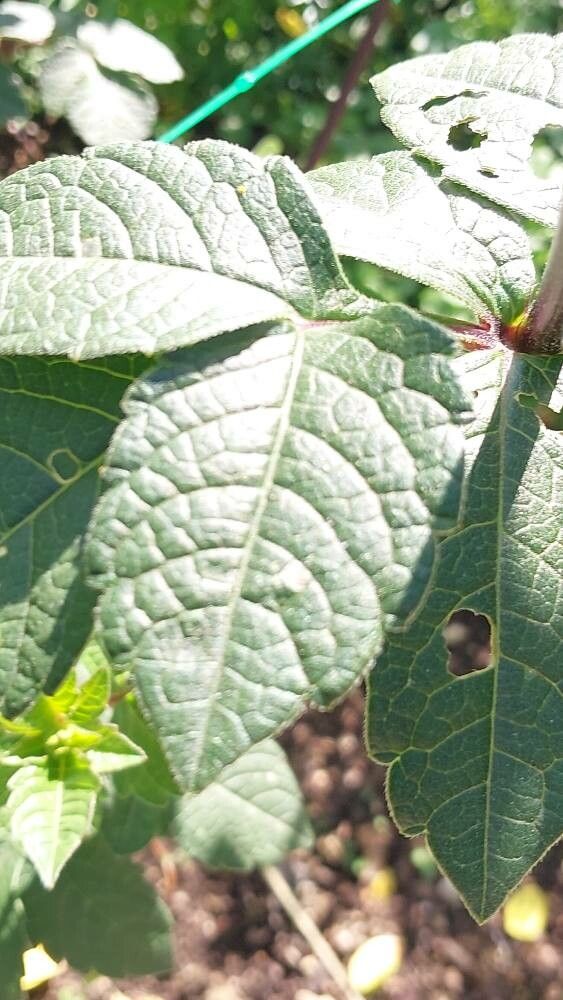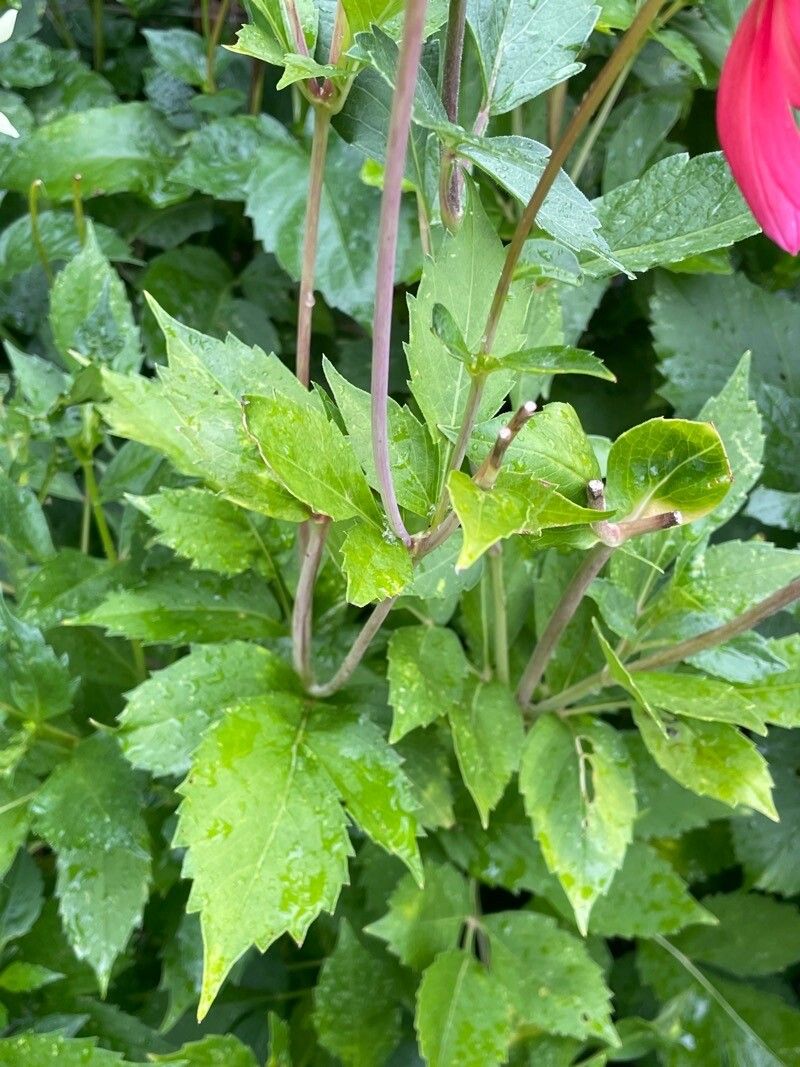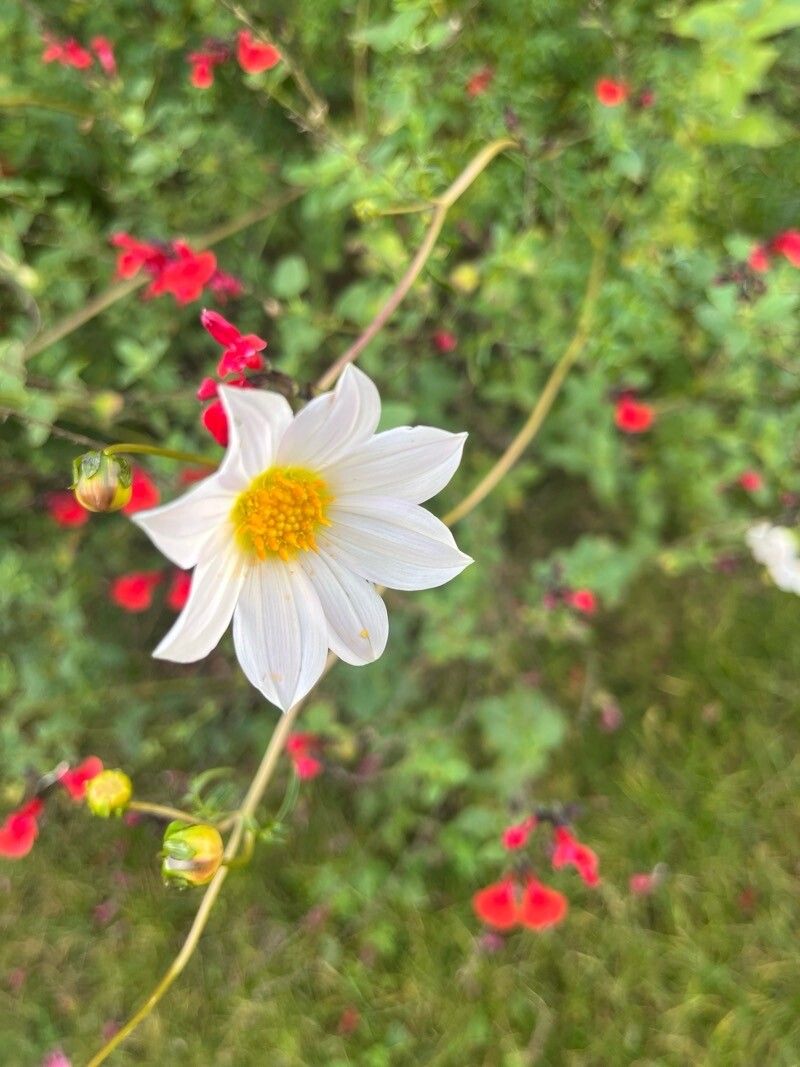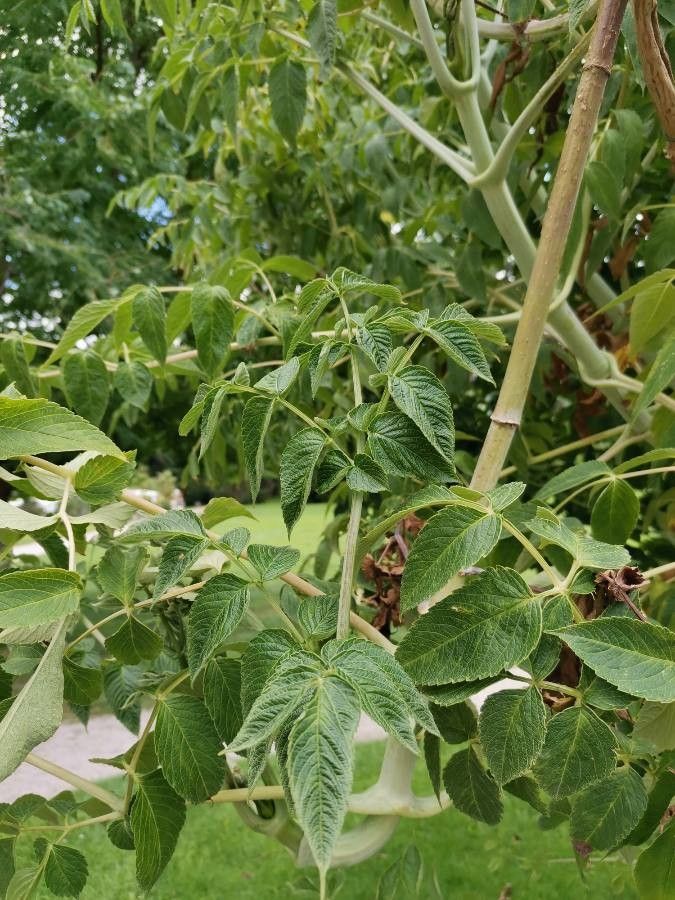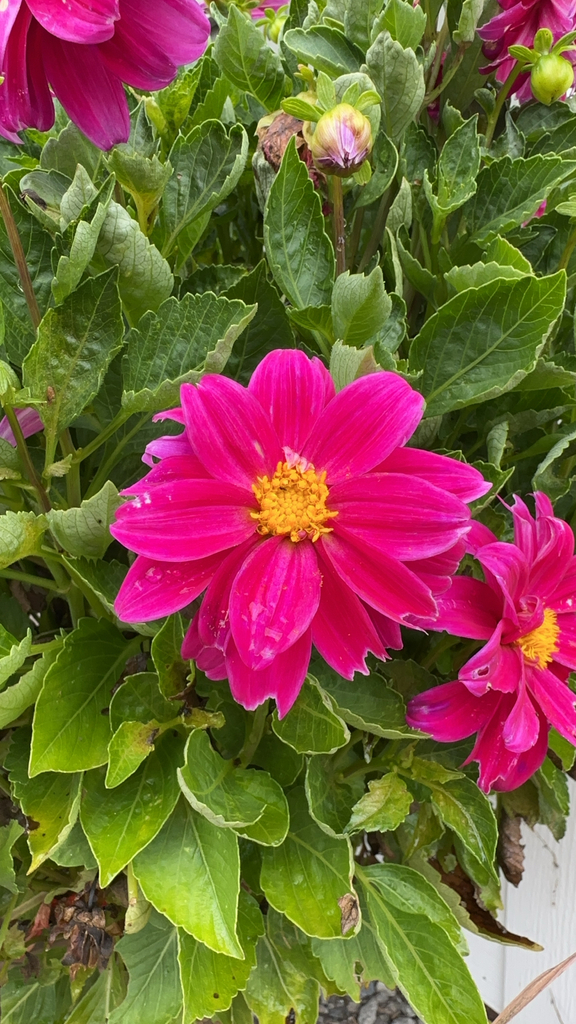
Dahlia pinnata is a species of flowering plant belonging to the Asteraceae family. Native to Mexico and Central America, it has been extensively cultivated and naturalized in many parts of the world. The plant typically grows to a height of 1 to 2 meters, with a bushy habit and dark green leaves that are deeply divided into small leaflets.
The flowers of Dahlia pinnata are large, showy, and available in a wide range of colors, including white, yellow, orange, pink, red, and purple. They bloom from mid-summer until the first frost, attracting bees and butterflies with their nectar-rich blossoms.
Dahlia pinnata is commonly grown as an ornamental plant in gardens or used as cut flowers in floral arrangements due to its attractive blooms. The plant prefers well-drained soil and full sun exposure but can tolerate partial shade.
The garden dahlia is renowned worldwide for its beauty. With its thick petals, it conveys an impression of elegance and nobility, symbolizing generosity, wealth, and happiness. Some dahlias bloom in magnificent, vibrant shades of red, making them a popular choice for weddings or milestone birthdays, especially for older adults, as they embody long-lasting happiness. Thus, one of the flower's significances is a wish for good fortune and good health. FUN FACT · FROM THE LIBRARY
It requires regular watering during the growing season but should be allowed to dry out between watering sessions. Dahlia pinnata can be propagated either by seeds or by dividing its tubers during dormancy periods.
Overall, Dahlia pinnata is an easy-to-grow garden favorite that adds color and beauty wherever it is planted!
The garden dahlia is named to honor the Swedish botanist Andreas Dahl; the genus name "Dahlia" is derived from his surname. Because this plant is commonly found in gardens, it has become known as the garden dahlia.
Dahlia is fairly resistant to disease and is generally not prone to illness. That said, it can develop leaf spots if light and ventilation are inadequate and if it is overwatered. Its care requirements are considered easy, since it mainly needs regular watering and little additional attention. Dahlia is suitable for people who do not have time or energy to dedicate to regular care.
How to keep Dahlia Pinnata.
Light
Dahlia prospers with ample sunlight, making it essential for its healthy development. Coming from sun-rich environments, it is accustomed to tolerating a significant amount of light without harm. Nevertheless, excessive sun can still inflict damage, just as inadequate exposure leads to less-than-optimal growth.
Water
Garden dahlias thrive in moist, mountainous regions, showing resilience to brief dry spells. They require moderate moisture and generally do well with watering every 1-2 weeks. As herbaceous perennials, dahlias flourish outdoors when the soil maintains consistent moisture levels. It is important to avoid both waterlogging and drought stress to ensure their optimal growth.
Temperature
The dahlia prefers temperatures between 59 and 100 °F (15 and 38 °C). Its native habitat shows it does best in moderate temperatures, and therefore it goes dormant in winter when temperatures fall below 50 °F (10 °C). In summer it needs regular watering to maintain its preferred temperature.
Fertilizer
The best time to fertilize a Dahlia is in early spring, as it comes out of dormancy and begins active growth. Fertilizing supplies vital nutrients for healthy development. Although a Dahlia needs relatively little fertilizer, an annual application can improve its survival and encourage better, longer-lasting flowers.
Pruning
To help your garden dahlias thrive, start by pruning them from early to late spring. Remove any dead stems to improve air circulation and prevent disease. Pinch young shoots to encourage bushier growth, and cut back spent flowers to extend blooming. Regular pruning promotes better health and ensures a more vibrant display.
Pot & Repot
Repot Dahlia in early spring. Choose a pot that is wider than it is deep and provides good drainage. Use a well-draining, loamy potting mix enriched with compost. Gently remove old soil from the bulb and plant it at a depth equal to the bulb’s height. Water thoroughly after repotting and place the pot in a sunny spot. Avoid overwatering to prevent bulb rot.
Botanical profile.
- Plant Type
- Herb
- Life Cycle
- Perennial
- Genus
- Dahlia
- Family
- Asteraceae
- Hardiness Zone
- 7-11
- Mature Height
- 0.91 m to 2.13 m
- Mature Spread
- 30 cm
- Leaf Color
- Green
- Leaf Type
- Deciduous
- Flower Color
- Red, Pink, Yellow, Orange, Purple, White
- Flower Size
- 5.08 cm to 30.48 cm
- Bloom Time
- Summer
- Planting Time
- Spring
- Harvest Time
- Mid summer, Late summer, Early fall
- Native Area
- Mexico
Other names.
Reader questions.
When Should I Water My Garden Dahlia?
Understanding the right time to water garden dahlia, Dahlia pinnata, is crucial for its health and growth. You should check for soil surface dryness; when the top one to two inches of soil feels dry, it's time to water. Wilting leaves, a change in leaf color to pale green or yellow, and lower leaf drop are indicators that your garden dahlia needs water. Both underwatering and overwatering can have significant negative impacts, including stunted growth or fungal diseases, so it's vital to recognize these signs and water accordingly.
How can I add nutrients to my Garden dahlia plants?
To fertilize a Garden dahlia, the most common method is to use granular or pellet fertilizer applied to the soil around the plant. It's important to fertilize when the plant is transitioning from its winter dormant phase to active growth, typically in early spring when shoots start to emerge. If you prefer using liquid fertilizer, dilute it with water before applying. Regardless of the type of fertilizer used, it is recommended to moisten the soil before, during, and after the application.
What are the sunlight requirements for Garden Dahlia?
Garden Dahlia requires various levels of sunlight depending on its growth stage and location. It thrives in full sun, which is defined as more than 6 hours of sunlight a day, but it can also grow in partial sun, receiving about 3-6 hours of sunlight. It's important to observe the movement of sunlight through your garden to provide your plants with the ideal balance of light and shade, ensuring their health and happiness.
What temperature conditions are ideal for the growth of the garden dahlia?
The garden dahlia, or Dahlia pinnata, prefers temperature ranges between 59 to 100°F (15 to 38°C) for optimal growth. It thrives in moderate temperatures and goes dormant in winter when temperatures fall below 50°F (10°C). Despite its strong cold resistance, it's crucial to ensure the plant is adequately watered during summer to maintain its preferred temperature conditions. In regions where winter temperatures dip below -15°C, additional measures such as covering the plant with soil or straw are recommended to protect it from frost. An important pre-winter care tip includes watering the plant abundantly before the first freeze, to keep the soil moist and prevent drought stress during the colder months.
How Should I Water My Garden Dahlia?
Watering garden dahlia, Dahlia pinnata, involves a balance to avoid both overwatering and underwatering. Use a watering can with a long spout for precise, soil-level watering to prevent wetting the foliage, which can lead to fungal diseases. A moisture meter can help ensure you're providing optimal hydration levels, focusing on watering at the base of the plant. It's best to err on the side of underwatering, encouraging deep, rather than shallow watering, to promote root health and resistance to dry periods.
Why should I put fertilizer on my Garden dahlia?
Fertilization is important for Garden dahlias because it provides essential nutrients that promote overall plant growth. While the fertilization needs for a Garden dahlia are relatively low, annual fertilization can greatly benefit the plant. It helps to maintain the plant's health and encourages the production of longer-lasting and more beautiful flowers. To ensure that your Garden dahlia looks its best, regular fertilization is recommended.
How essential is sunlight for the growth of Garden Dahlia?
Sunlight plays a crucial role in the growth and health of Garden Dahlia. Originating from sun-rich habitats, the plant is adapted to withstand a significant amount of sunlight. Adequate sun exposure is vital for its wholesome growth, whereas excessive sunlight can cause damage, and insufficient exposure may lead to suboptimal growth. In cases where natural sunlight is not enough, especially during winter or in less sunny locations, artificial lighting is recommended. Adequate lighting, such as LED, mimics natural sunlight and promotes healthier, faster growth. For full sun plants, 30-50W/sq ft of artificial light is needed, 20-30W/sq ft for partial sun plants, and 10-20W/sq ft for full shade plants.
How does low temperature affect garden dahlias and what are the solutions?
Garden dahlias can endure cold temperatures and prefer to be kept above -10°C during winter to prevent damage. However, when temperatures fall below -15°C, there may not be visible damage during the winter, but a significant decrease in sprouting, or complete lack of sprouting, can occur in the spring. To address this issue, it's advised to remove any parts of the plant that have failed to sprout in spring, facilitating the plant's recovery and promoting new growth.
How Much Water Does Garden Dahlia Really Need?
Garden dahlia, native to Mexico and Central America, has a modest water requirement, indicative of its shallow root system which reaches 6-8 inches into the soil. A moderate amount of water, which keeps the soil evenly moist but not saturated, is beneficial. An adult plant in a 10-inch pot typically needs about 1-1.5 liters of water per session. Proper hydration manifests as lush leaves, sturdy stems, and abundant flowering, while both overwatering and underwatering can lead to issues such as yellowing leaves, root rot, or reduced vitality.
When should I add fertilizer to my Garden dahlia?
The best time to fertilize a Garden dahlia is in late winter to early spring when it is coming out of its dormant phase and starting to grow. Fertilizing at this time helps promote healthy growth for the season. While it is usually best to fertilize in the early spring, you can also fertilize in the fall if you prefer. However, it is not recommended to fertilize in the summer or winter.
What are the common symptoms of inadequate sunlight for Garden Dahlia?
Garden Dahlia may not show immediate abnormalities due to insufficient sunlight, but over time, the lack of adequate light can negatively affect its flowering and fruiting. Common symptoms include leggy or sparse growth, leading to a weakened plant structure. The plant may also experience slower or no new growth as it enters survival mode. In low light conditions, early leaf drop can occur as the plant conserves its resources. Additionally, excessive sunlight can cause chlorosis, sunscald, leaf curling, wilting, and leaf scorching. Each of these symptoms impacts the plant's ability to photosynthesize and maintain overall health.
What should be done if a garden dahlia is exposed to high temperatures?
When a garden dahlia experiences temperatures above its preferred maximum of 38°C, especially if it exceeds 43°C, the plant can show signs of stress such as lighter colored leaves, curling, susceptibility to sunburn, and severe wilting or drying. To manage this, it's important to trim away any sunburned or dried parts of the plant. Relocating the plant to a shaded area or using a shade cloth to protect it from the midday and afternoon sun can be beneficial. Additionally, ensuring the plant is watered in the morning and evening will help maintain soil moisture and mitigate the effects of high temperatures.