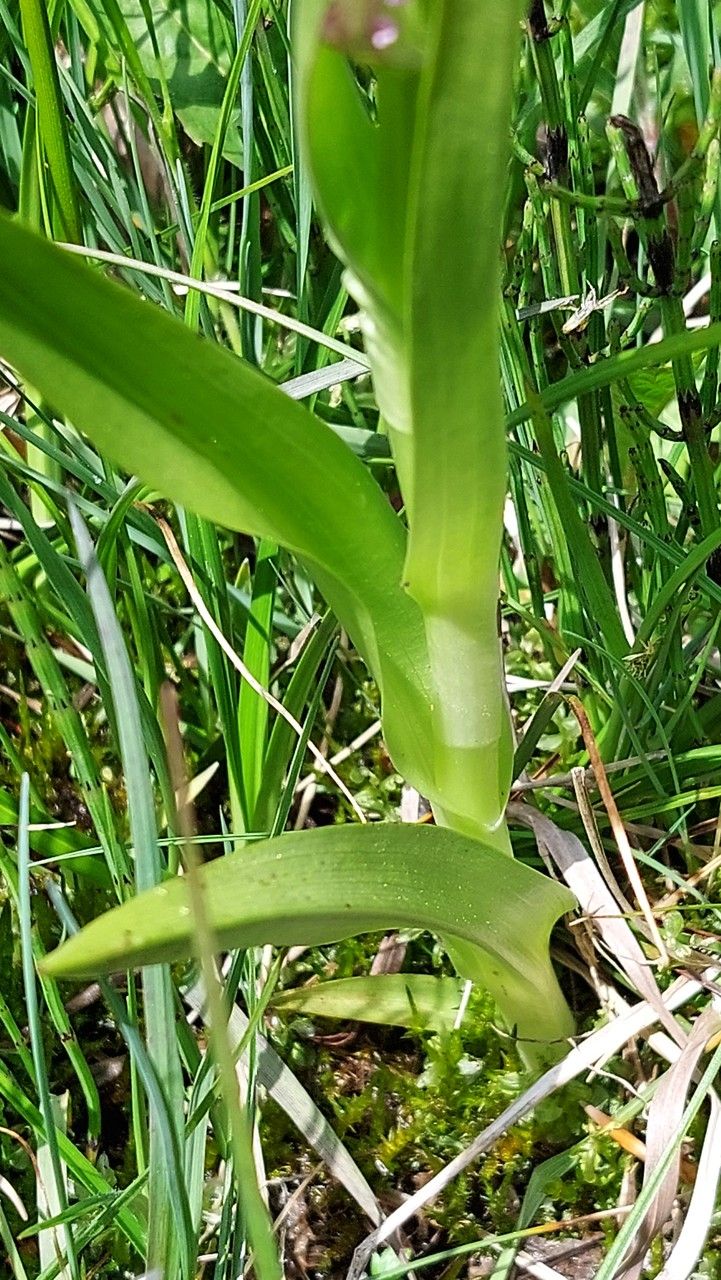
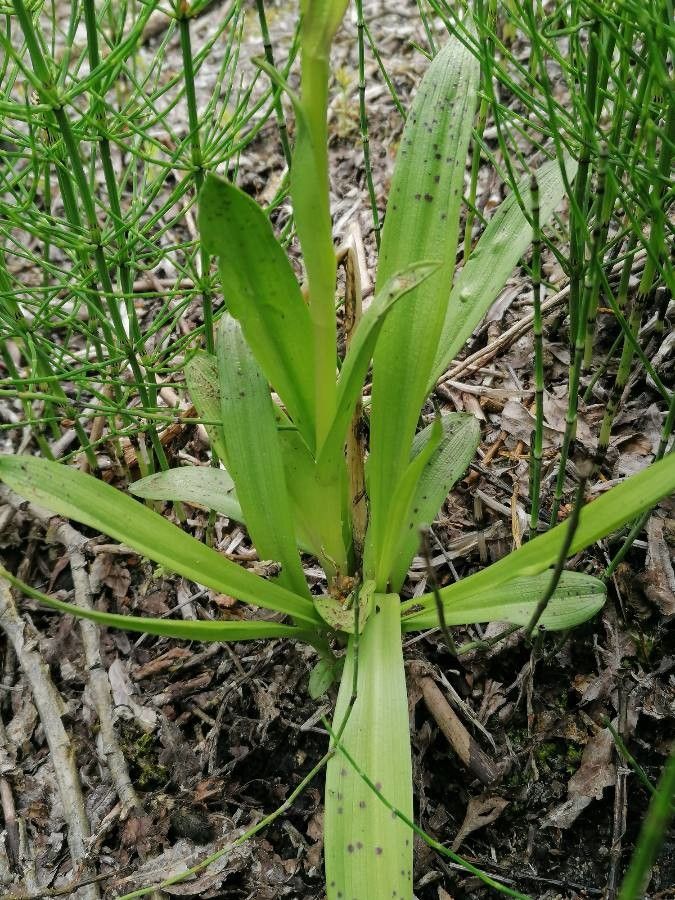
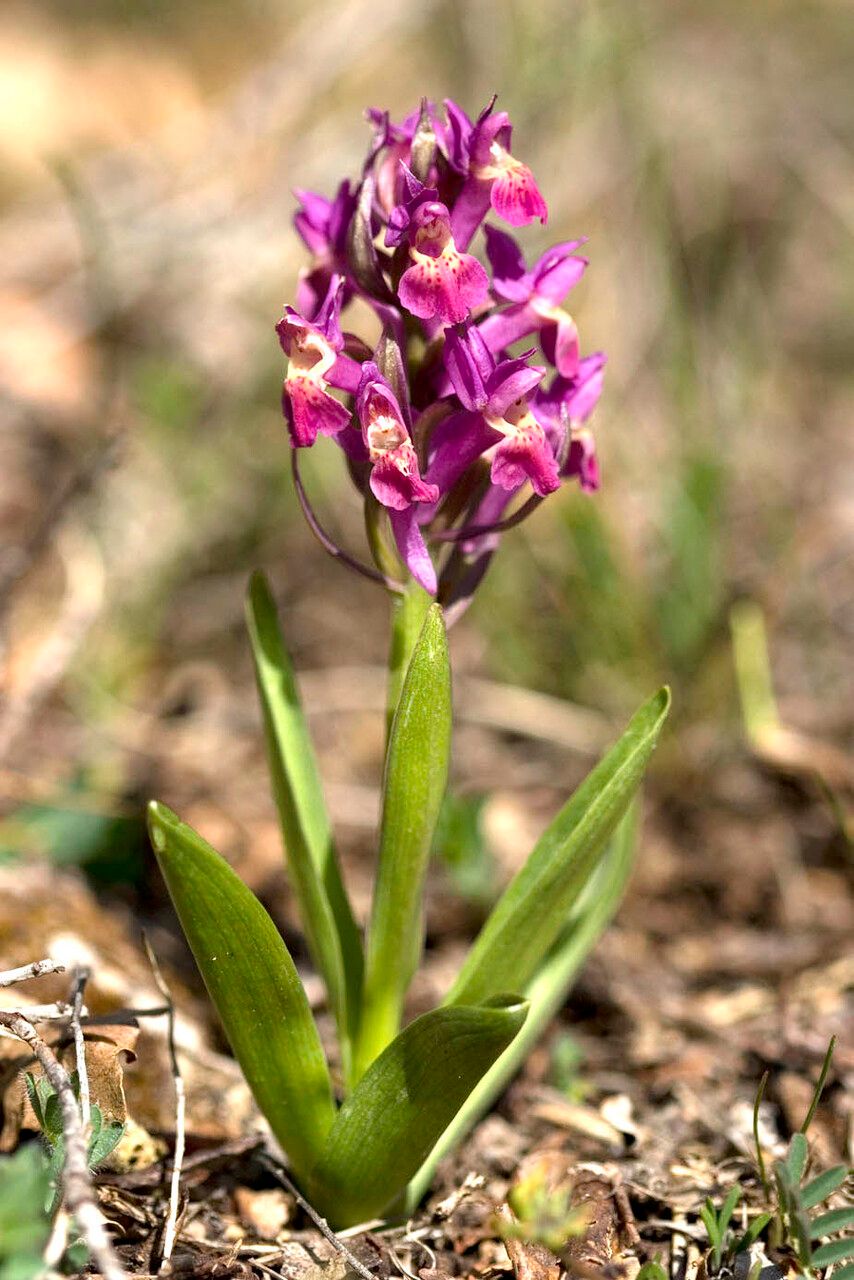
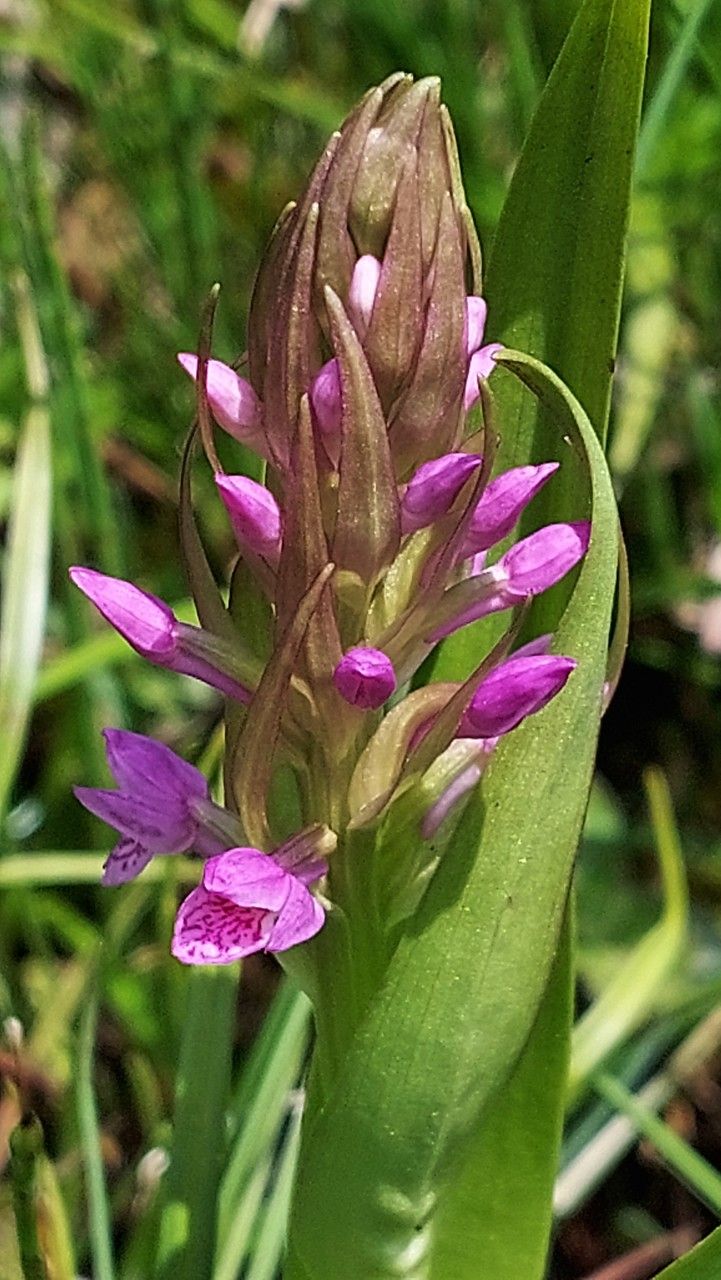
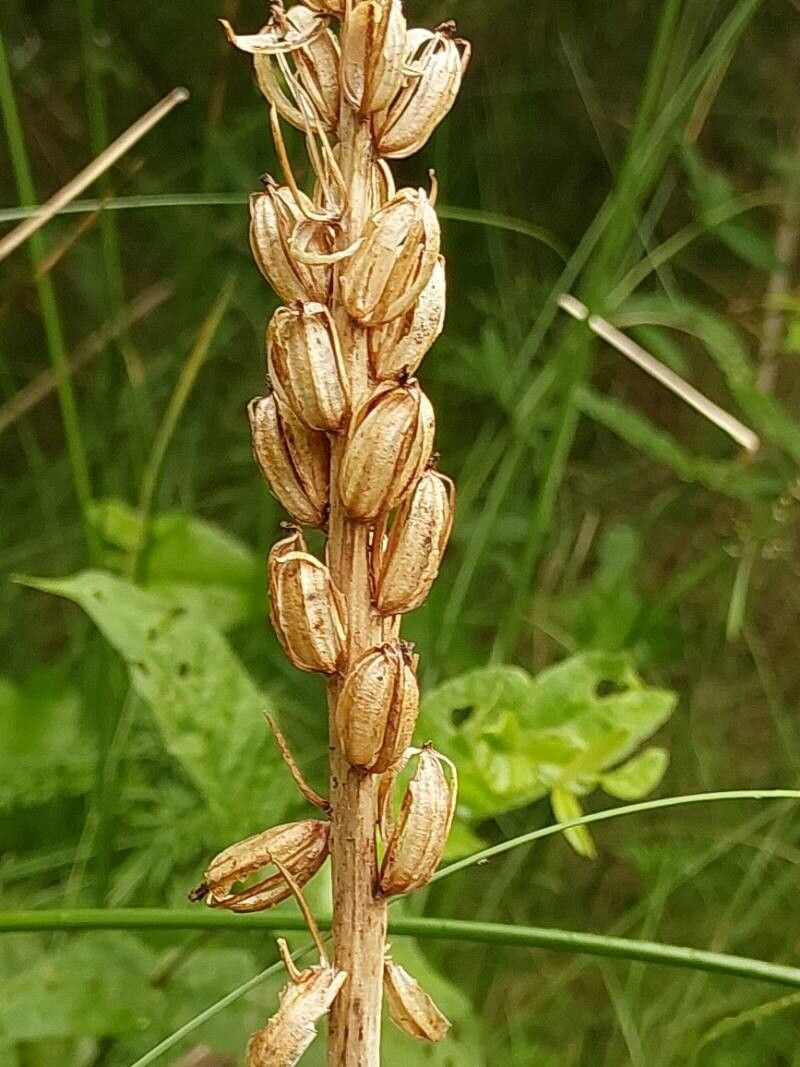
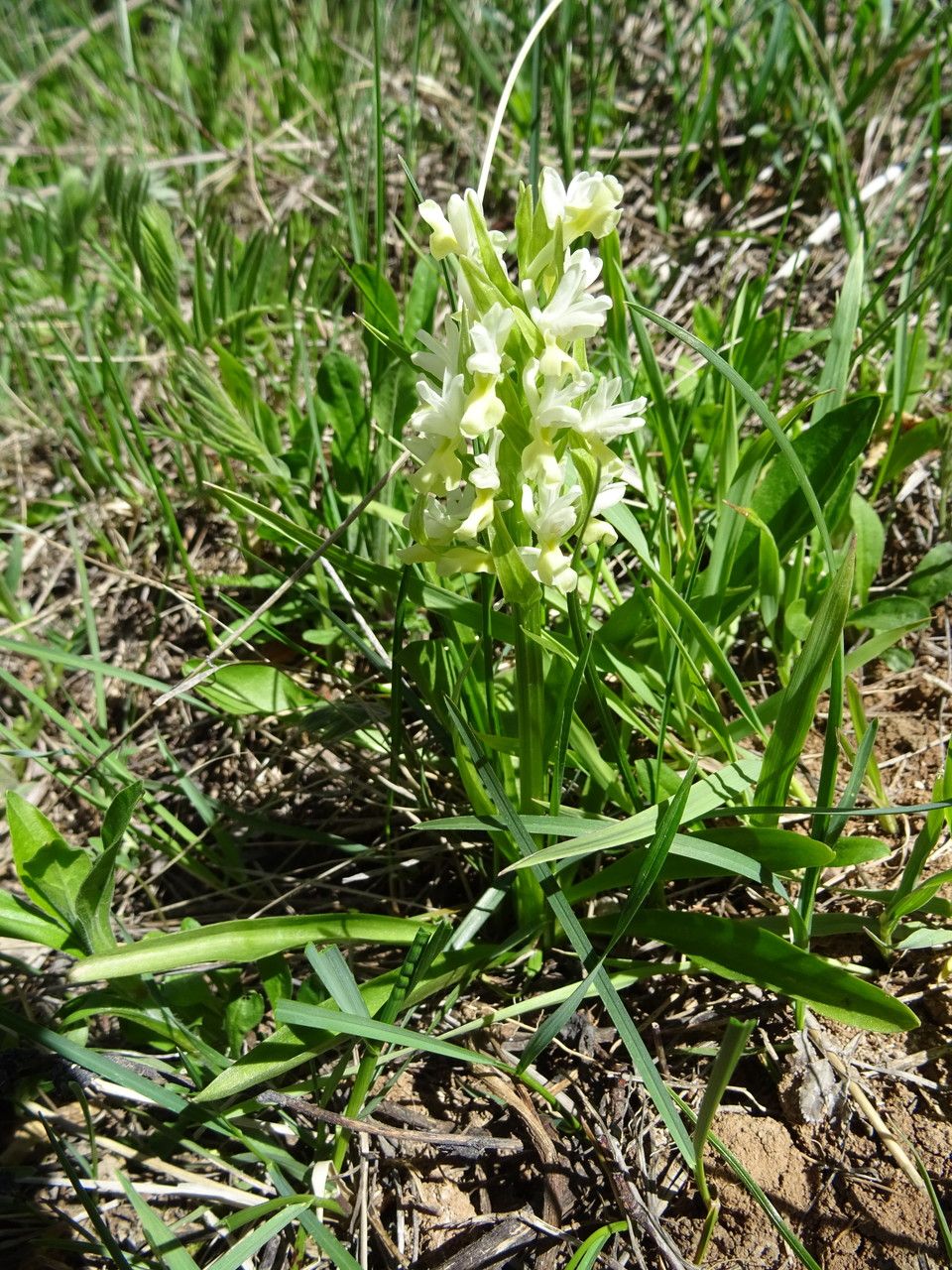
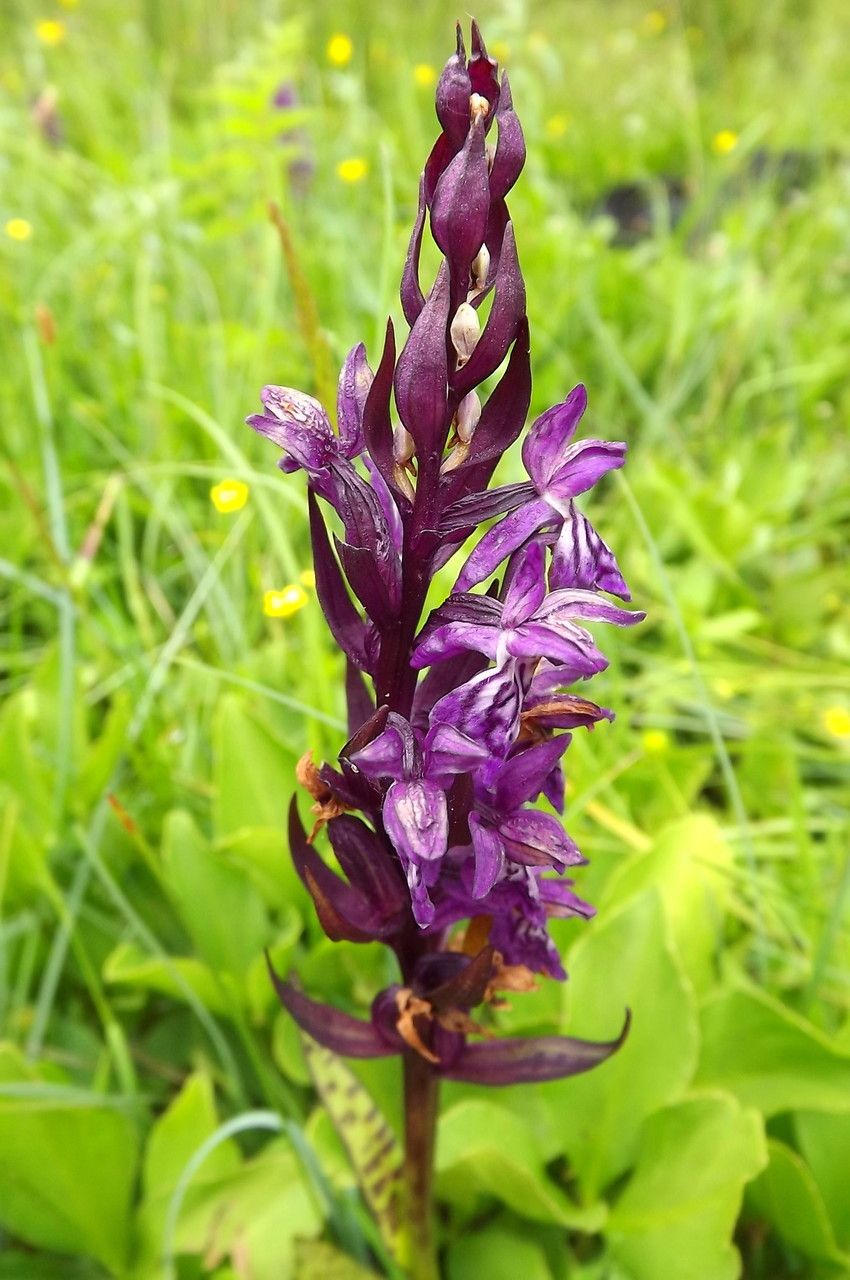
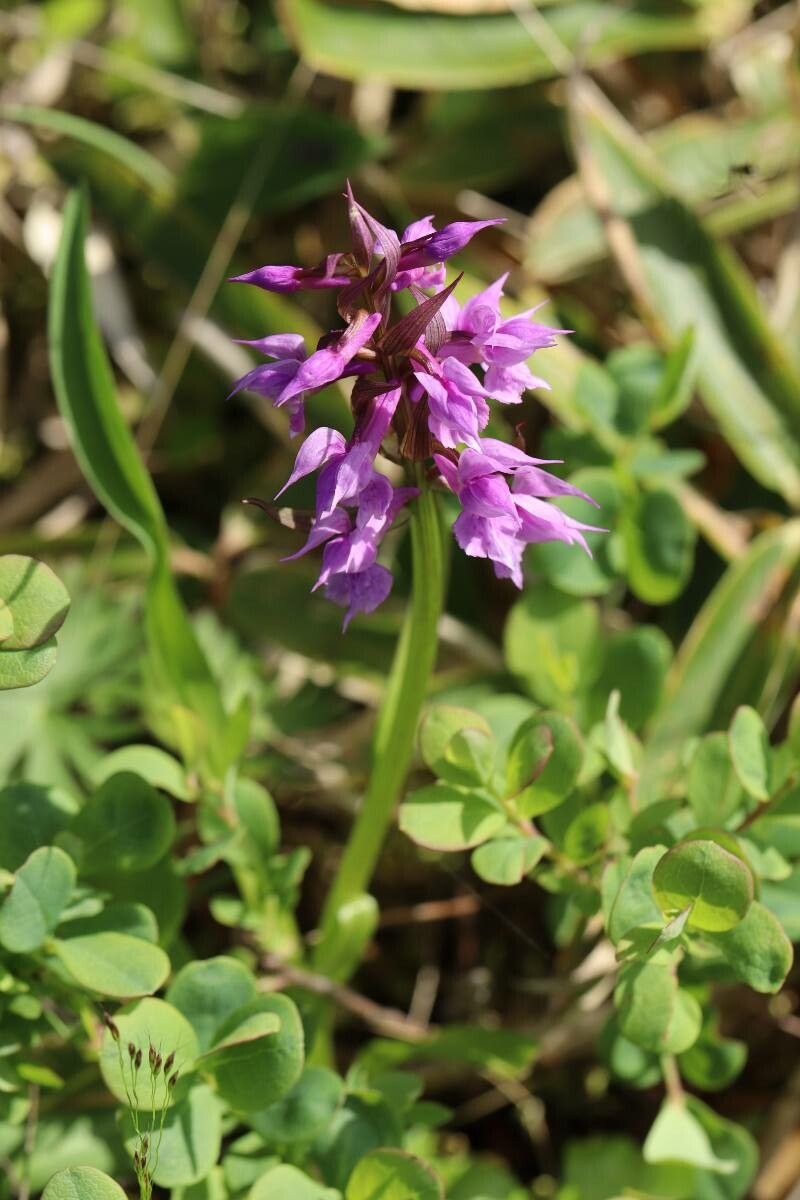
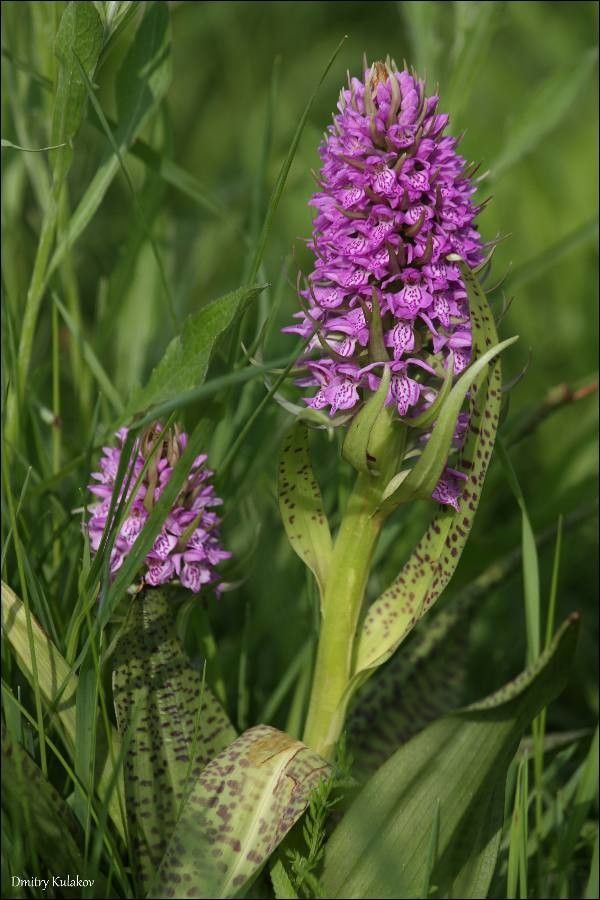
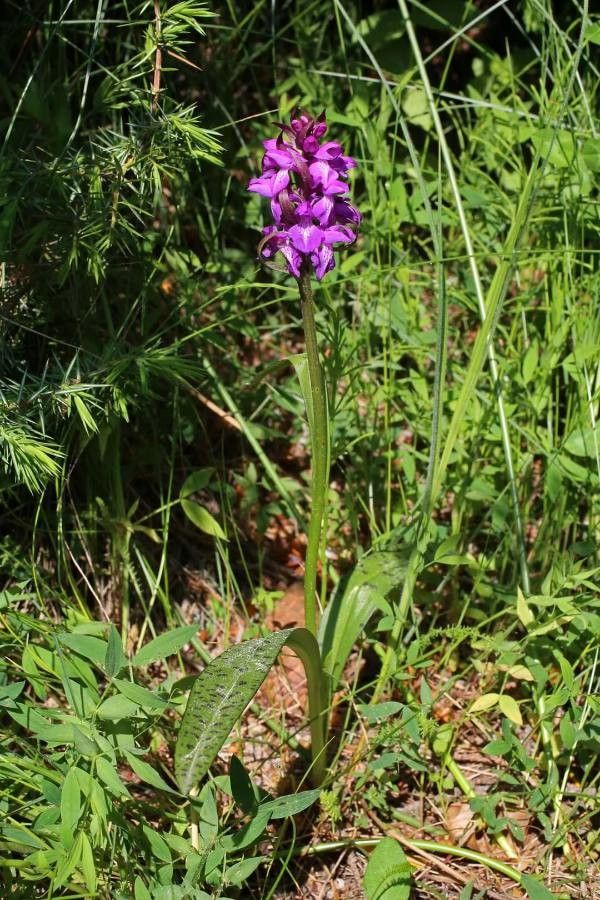
Dactylorhiza incarnata, the early marsh-orchid, is a perennial, temperate-climate species of orchid generally found growing in wet meadows, and generally on base-rich soils, up to about 2100m asl. The species occurs widely in Europe and Asia from Portugal and Ireland east to Siberia and Xinjiang.There are several subspecies and also hybrids, rendering the identification of this species more difficult, but typically, the flowering spike is robust with a hollow stem, 25–60 cm tall, and bearing up to 50 flowers. Plants grow to a height of from 15 to 70 cm. The 4–7 erect yellowish-green leaves are hooded at the tip. The inflorescence is 4–12 cm long, with up to 50 blooms. The labellum appears long and narrow, since its sides are strongly reflexed (folded back). The tip is shallowly three-lobed. The flower is often flesh-coloured (the meaning of incarnata) and the labellum normally has loop-shaped markings. The flowering period is from May to mid-July, dependent on latitude and subspecies.
Early marsh-orchid typically has strong resistance to disease and is affected by relatively few insect pests. Its care is considered difficult because it needs high humidity along with good ventilation and an environment with few harmful pathogens. Overwatering can cause root rot. Although growing Early marsh-orchid is suitable for anyone, keeping it healthy and getting it to bloom again requires more cultivation experience.
How to keep Dactylorhiza Incarnata.
Light
Sunlight is essential for the early marsh-orchid, which comes from habitats that generally offer abundant sun. It can endure areas with diffused light, but performs best when it receives plenty of light throughout the day. Both too little and too much light can impede its healthy growth.
Water
The Early Marsh-orchid thrives in consistently moist environments, making wetland habitats ideal for its growth. To mimic its natural conditions, it requires regular weekly watering and can tolerate high humidity levels. This outdoor plant flourishes in temperate climates, where it benefits from natural rainfall for optimal growth and water absorption.
Temperature
The early marsh-orchid is native to areas with moderate temperatures, thriving best in a range of 50 to 95 °F (10 to 35 ℃). When temperatures become extreme, it is advisable to move the plant indoors or provide shade to protect its health.
Fertilizer
The primary time to fertilize Early marsh-orchid is in early spring when the flowers are developing. The appropriate fertilizer promotes better blooms and helps Early marsh-orchid produce attractive flowers. Fertilizing in early spring ensures strong flowering during the season and supplies energy for dormant growth phases.
Pruning
The early marsh-orchid flourishes in marshy environments, where it displays its vibrant blooms. To maintain its health, prune in early to late spring, removing any damaged leaves and trimming dying stems after blooming has finished. Be careful not to disturb the new growth or roots, as this will help ensure the plant's health, vigor, and optimal blooming in the following season.
Botanical profile.
- Plant Type
- Herb
- Life Cycle
- Perennial
- Genus
- Dactylorhiza
- Family
- Orchidaceae
- Hardiness Zone
- 6-9
- Mature Height
- 15 cm to 30 cm
- Mature Spread
- 15 cm to 30 cm
- Leaf Color
- Green, Dark Green
- Leaf Type
- Deciduous
- Flower Color
- Pink
- Flower Size
- 4.06 cm to 11.43 cm
- Bloom Time
- Late spring, Early summer
- Planting Time
- Spring, Summer
- Harvest Time
- Mid summer, Late summer
Other names.
Reader questions.
How should I water my Early marsh-orchid?
The way you water your Early marsh-orchid depends on whether it's in an active growth phase or not. During active growth, water the soil and occasionally water the leaves if the weather is warm. In winter or cool, wet weather, stick to watering the soil only. You'll know it needs more water if the roots and leaves look dry or discolored. If the plant receives too much water, it will look mushy. Grow it in a well-draining potting mix and water several times a week during the growing season. Each watering should drain quickly to avoid standing water. The size of the pot determines how much water to give, with larger pots needing less frequent watering. Use rainwater or distilled water that matches the air temperature.
Why should I put fertilizer on my Early marsh-orchid?
The Early marsh-orchid relies heavily on its leaves, so fertilization is crucial for both their appearance and function. Proper fertilization results in consistent leaf color and a healthy texture. Fertilization also benefits the plant below the surface by promoting new root growth and maintaining the existing root system. This not only keeps the plant healthy in the present but also improves its ability to absorb nutrients from the soil in the future.
What are the sunlight requirements for Early marsh-orchid?
Early marsh-orchid thrives best in conditions where it can receive abundant sunlight throughout the day, originating from an environment that favors ample sun exposure. It requires full sun, which is above 6 hours of sunlight a day, but can also tolerate partial sun, around 3-6 hours of sunlight a day. Watching how sunlight moves through your garden and choosing spots with the perfect balance of light and shade ensures the plant's happiness. Insufficient or excessive light might hamper its healthy growth. Additionally, artificial lighting can be a viable solution for indoor plants when natural sunlight is insufficient, with recommendations on light types, wattage per square foot, placement, and duration to mimic natural conditions.
What is the ideal temperature range for Early marsh-orchid?
The Early marsh-orchid thrives in environments with moderate temperatures, finding its ideal range between 50 to 95 °F (10 to 35 °C). It is native to these conditions and flourishes best within this temperature spectrum.
What should I do if I give too much or too little water to my Early marsh-orchid?
To keep your Early marsh-orchid healthy, it's important to avoid keeping the soil too wet for too long. While these plants need regular watering during their active growth, they also need well-draining soil. Overwatering can cause the plant to become mushy and develop root rot. If that happens, you can use sterile pruning shears to remove any rotted roots. Afterward, repot the orchid in a container with good drainage and use a fast-draining potting mix. However, be aware that Early marsh-orchids don't respond well to frequent repotting, so it's important to find the right balance with watering. If you notice the orchid becoming dry and shriveled, it may be underwatered. In that case, increase your watering frequency to ensure the soil doesn't dry out too quickly.
When should I fertilize my Early marsh-orchid for the best results?
When you grow your Early marsh-orchid outdoors, it will start growing new leaves in early spring. This signals that it's time to fertilize the plant for the year. Usually, one application of fertilizer in the spring is sufficient for the Early marsh-orchid to thrive. However, if you want to maximize its growth, you can fertilize it multiple times during the spring and early summer. In this case, you can feed the Early marsh-orchid approximately once every month to a month and a half.
What are the symptoms of insufficient or excessive sunlight in Early marsh-orchid?
Insufficient sunlight in Early marsh-orchid may lead to symptoms such as smaller new leaves compared to previous ones, leggy or sparse growth, faster leaf drop, slower or halted new growth, lighter-colored new leaves indicating a lack of chlorophyll and essential nutrients, and chlorosis leading to yellowing leaves. Excessive sunlight exposure can cause symptoms like sunscald, leaf curling as a defense mechanism, wilting due to increased water loss, and leaf scorching evidenced by brown, dry, crispy edges on the leaves. These symptoms highlight the plant's struggle in non-ideal light conditions and emphasis on the importance of balanced sunlight exposure.
How does the Early marsh-orchid cope with extreme temperatures?
To cope with extreme temperatures, it's advised to move the Early marsh-orchid indoors or provide shade to protect its health during very hot weather. Despite its strong cold resistance, in winters where temperatures are expected to drop below -25°C, the plant should be protected by covering it with soil or straw. Additionally, watering the plant abundantly before the first freeze is recommended to ensure the soil remains moist and enters a frozen state, helping to prevent drought and water scarcity during winter and early spring.
How frequently do I need to water my Early marsh-orchid plant?
To ensure the well-being of your Early marsh-orchid, it is important to adjust your watering routine according to the different seasons. During the spring and summer, which are the active growth stages, aim to water your plant once or twice a week. However, in cases of hot and dry weather, this frequency should be increased to about three times a week or even more. During the winter months, your Early marsh-orchid will also require watering, but not as frequently. About two to three times a month should suffice to keep it alive during the colder period. However, if you choose to keep your plant indoors during winter, be aware that indoor environments can lead to faster soil drying. This means you may need to water your plant more frequently than the suggested monthly frequency. Lastly, as fall approaches, it is advisable to gradually reduce the watering frequency from the summer rate to a reduced winter schedule.
When is it not a good idea to fertilize my Early marsh-orchid?
During the late fall and winter, your Early marsh-orchid will go into a dormant phase and stop growing. During this time, it's best to avoid fertilizing it. If you do decide to fertilize during the spring and summer, start reducing the amount as summer approaches since the growth rate of the Early marsh-orchid will also decrease. In general, it's not a good idea to fertilize your Early marsh-orchid when it's exceptionally hot or when the soil is extremely dry. Fertilizing in these conditions can put stress on the orchid and cause it to die early.
How can you manage sunlight exposure for Early marsh-orchid?
Managing sunlight exposure for Early marsh-orchid involves both indoor and outdoor solutions to ensure optimal growth. Indoor solutions include gradually moving the plant to a sunnier location each week until it receives at least 6 hours of direct sunlight daily, using a south-facing window for maximum sunlight, and considering artificial lighting for additional support. Outdoor and ground solutions involve gradually transitioning plants to sunnier spots to prevent sunburn and reducing obstructions like pruning nearby trees to enhance sunlight penetration. Transplanting smaller plants during their dormant period can also improve sunlight access. It's crucial to avoid sudden changes in light intensity and remember that parts of the plant affected by poor light may not recover, but new growth will be healthy with improved light conditions.
What are the symptoms of low temperature effects on Early marsh-orchid and how can they be mitigated?
Early marsh-orchid is cold-tolerant, best kept above 10°C during winter, and should stay above -15°C. If the temperature drops below -25°C, there may not be noticeable changes during winter, but there could be a decrease in sprouting or no sprouting at all in the spring. In spring, any parts of the plant that have failed to sprout should be removed as a mitigation measure.