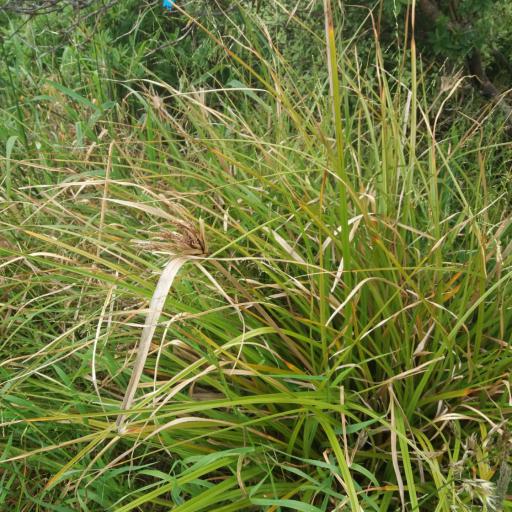
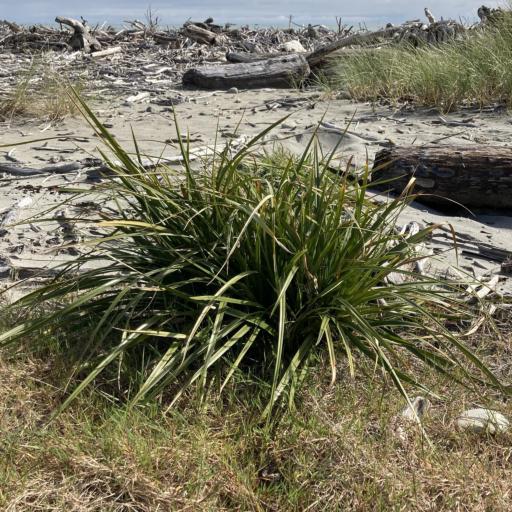
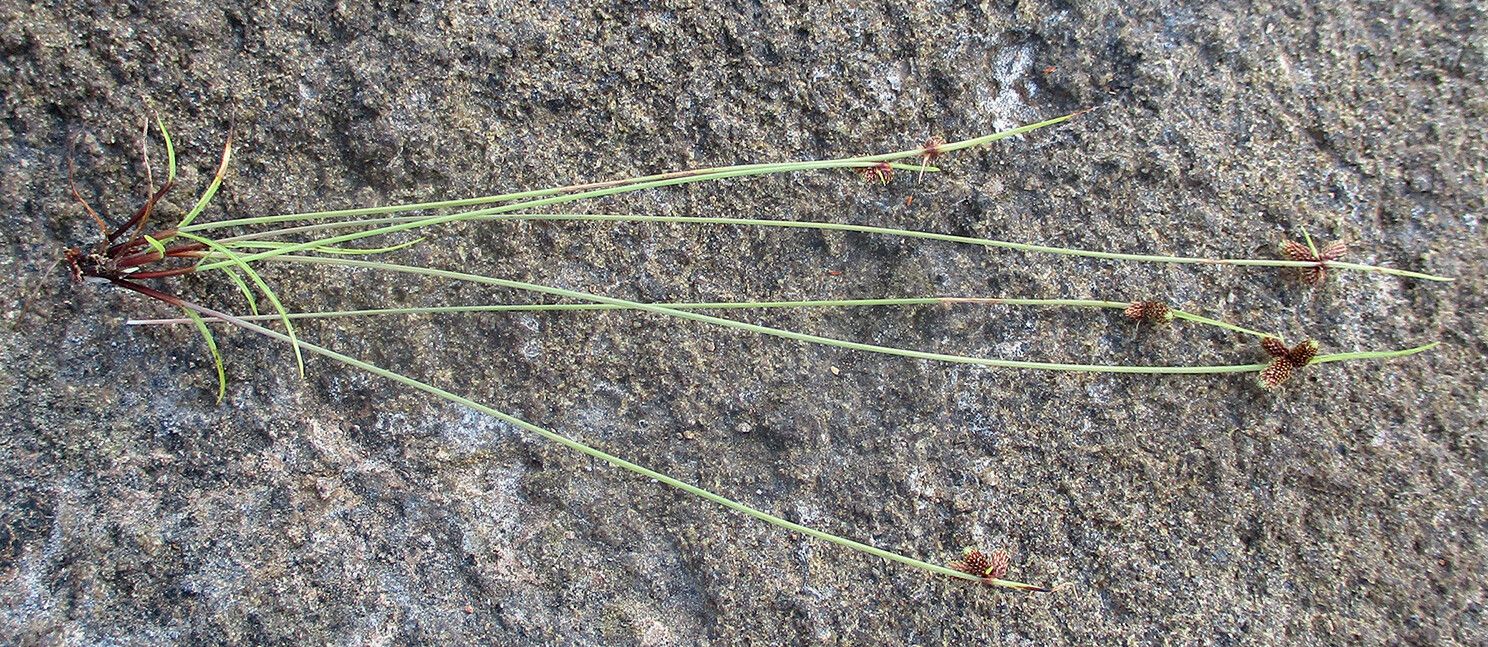
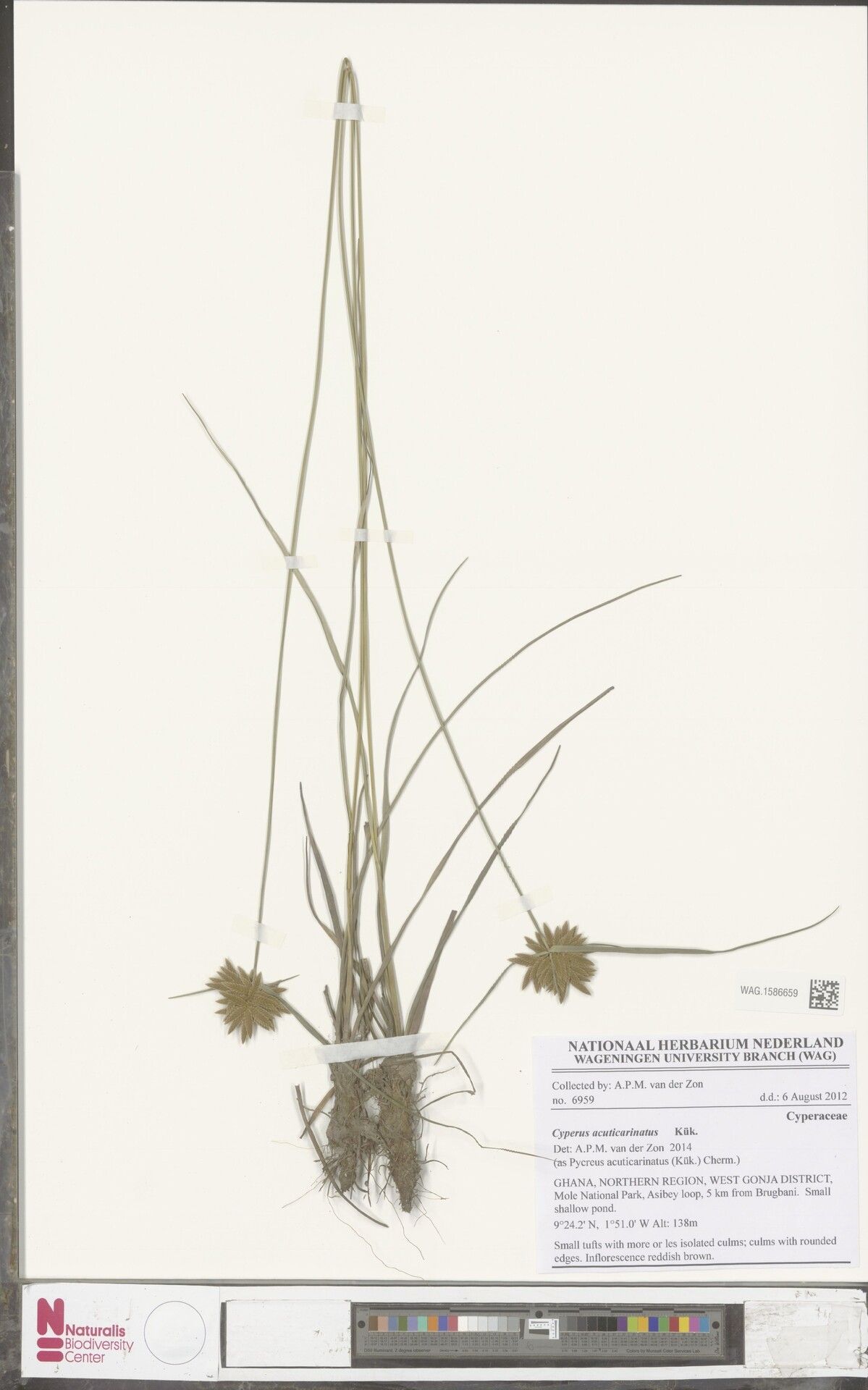
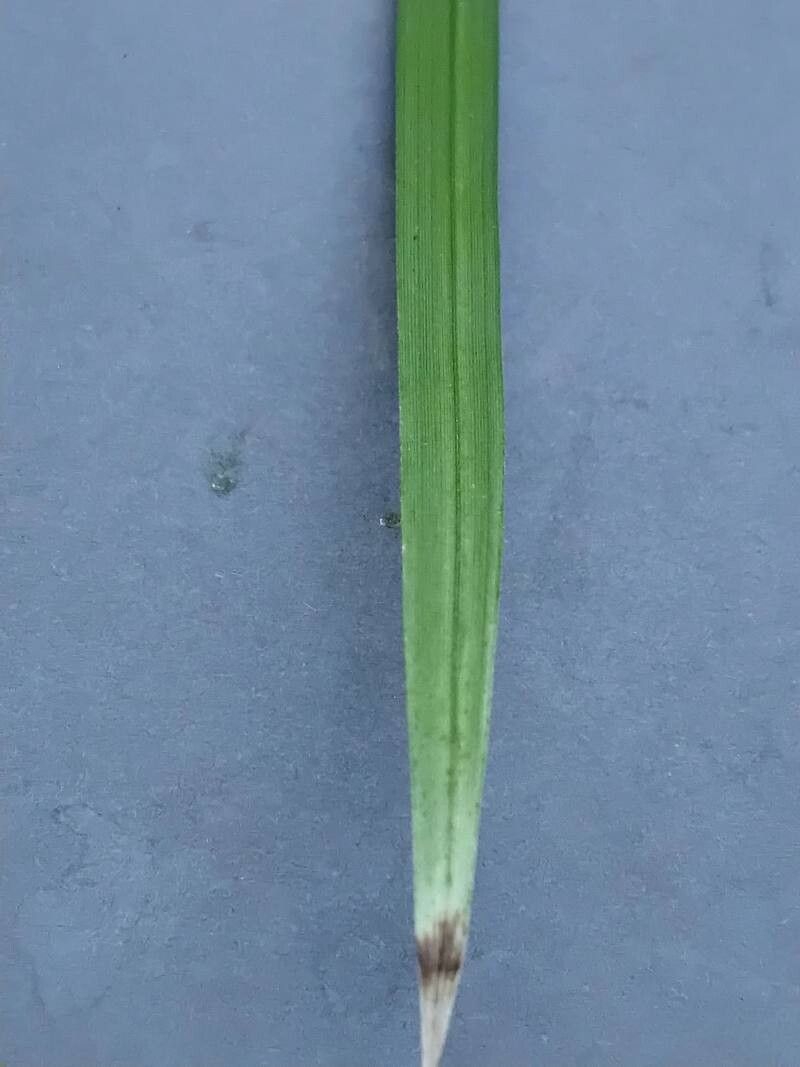
Cyperus ustulatus, also known as giant umbrella-sedge or coastal cutty grass is a species of sedge native to New Zealand. C. ustulatus generally grows in coastal or lowland areas near water in the North Island and on the Kermadec Islands. The leaves are wide, shiny and folded. It produces long, dark brown seed heads after flowering in summer. The seed heads are held by a cluster of leaves at the top of the plant. The Māori name for the plant is toetoe upoko-tangata. The name toetoe by itself generally refers to Austroderia which are in Poaceae, a different family. Alonside raupō (Typha orientalis), upoko-tangata was a material used in traditional kite making by Māori.
Coastal cutty grass has strong disease resistance and typically does not suffer from illnesses. Still, it can be affected by pests and diseases present in its environment. These problems are generally not serious. For care, the plant requires a moderate amount of maintenance. It needs regular pruning to keep a neat appearance and to support healthy growth. Fertilizing can also assist in encouraging flowering. Coastal cutty grass is appropriate for anyone with outdoor space, such as a garden or patio, and does not demand extensive care experience. It may need more attention when kept indoors.
How to keep Cyperus Ustulatus.
Light
Coastal cutty grass is a sun-loving perennial herbaceous plant native to open habitats, often found growing in meadows and grasslands. It prefers full sun but can also tolerate partial sun conditions.
Temperature
Coastal cutty grass can tolerate a broad range of temperatures, but its distribution may still be restricted by different combinations of moisture and heat. It performs best in warm summer climates with sufficient rainfall or watering. Extended periods of cloudy, rainy weather or prolonged high temperatures can heighten the chance of Coastal cutty grass dying. In winter, adequate protection from cold can increase the plant's survival rate.
Fertilizer
Coastal cutty grass needs extra nutrients to encourage healthy new growth. In spring, adding compost around the base of the plant can effectively supply the nourishment it requires. Fertilizing helps promote strong growth and aids the plant in resisting diseases and pests.
Botanical profile.
- Plant Type
- Herb
- Life Cycle
- Perennial
- Genus
- Cyperus
- Family
- Cyperaceae
- Hardiness Zone
- 8-11
- Mature Height
- 3 cm to 48 cm
- Mature Spread
- 61 cm to 91 cm
- Leaf Color
- Green
- Leaf Type
- Evergreen
- Flower Color
- Brown
- Flower Size
- 0.20 cm to 0.25 cm
- Bloom Time
- Summer
- Planting Time
- Spring, Summer, Autumn
- Harvest Time
- Late summer, Early fall, Mid fall
- Native Area
- New Zealand
Other names.