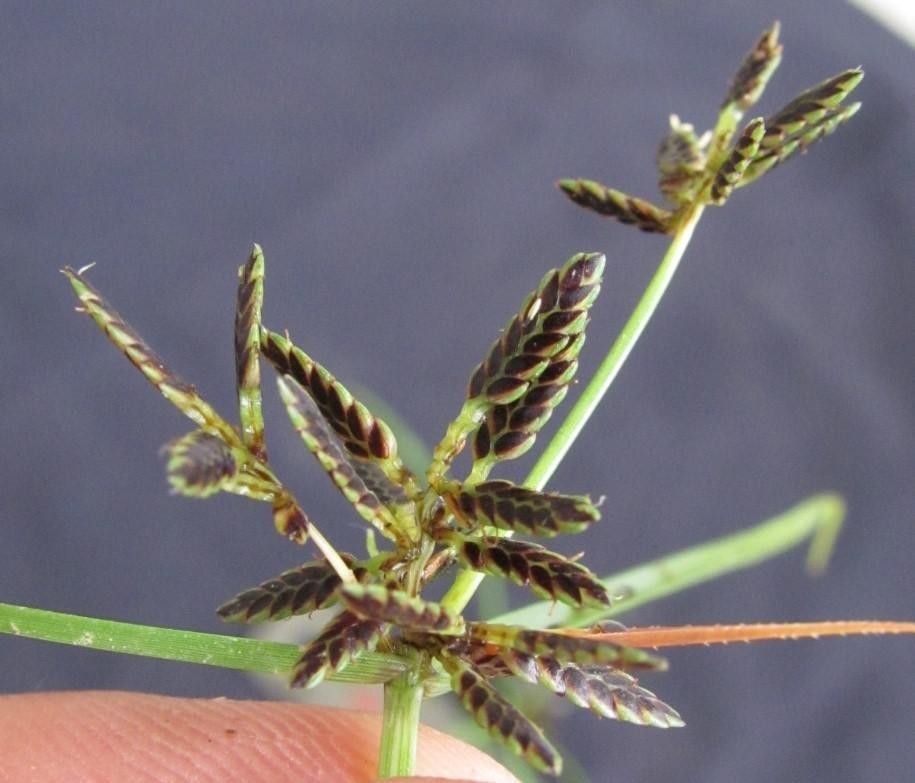
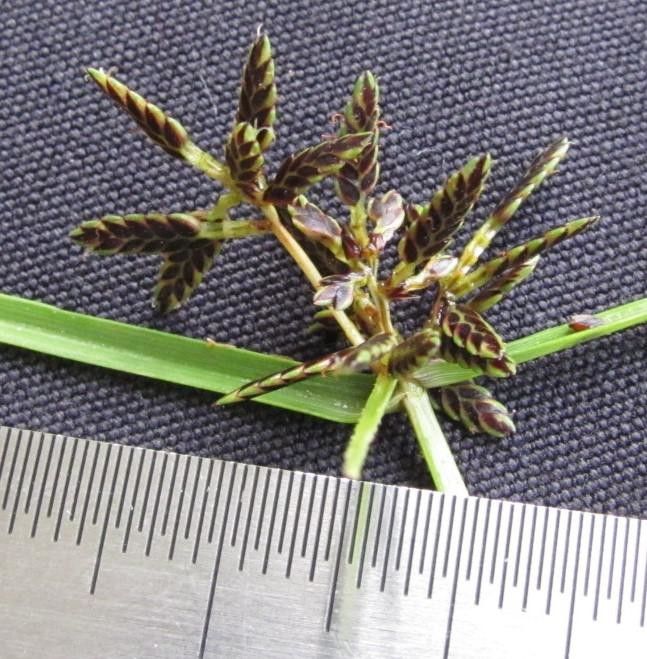
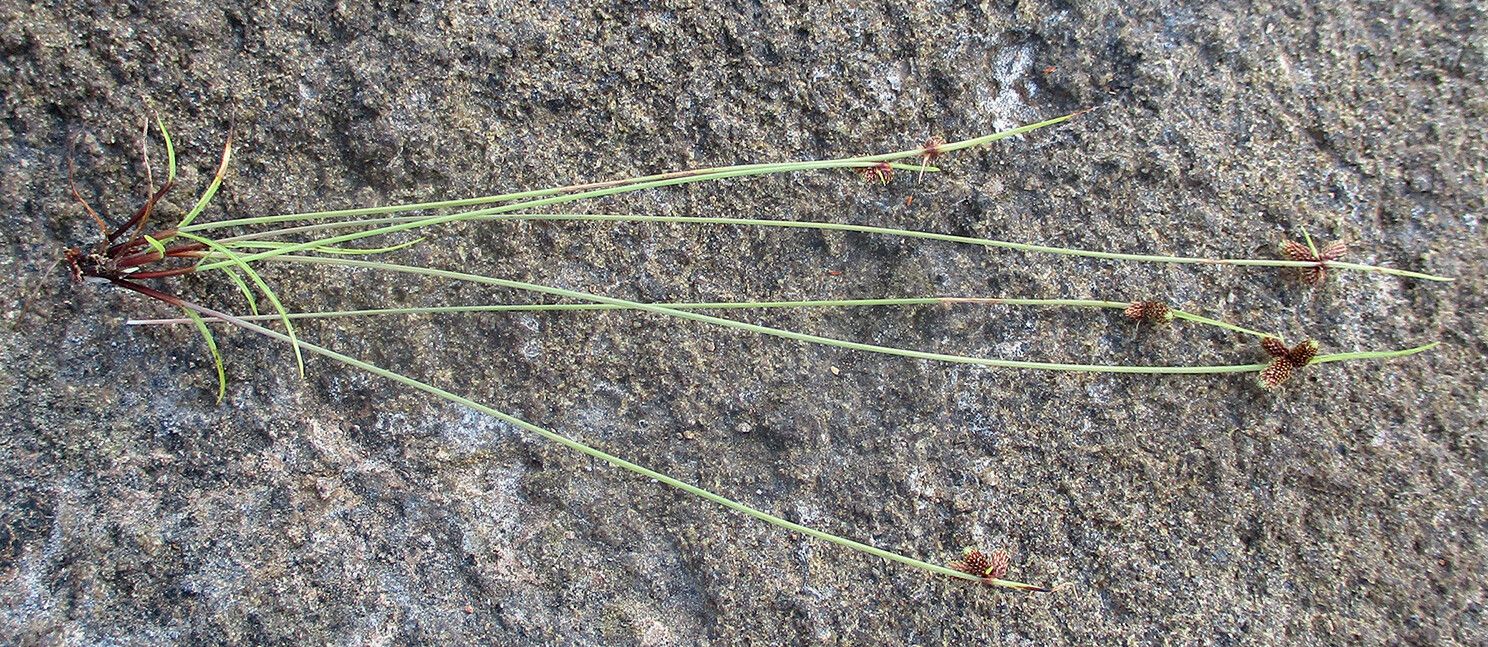
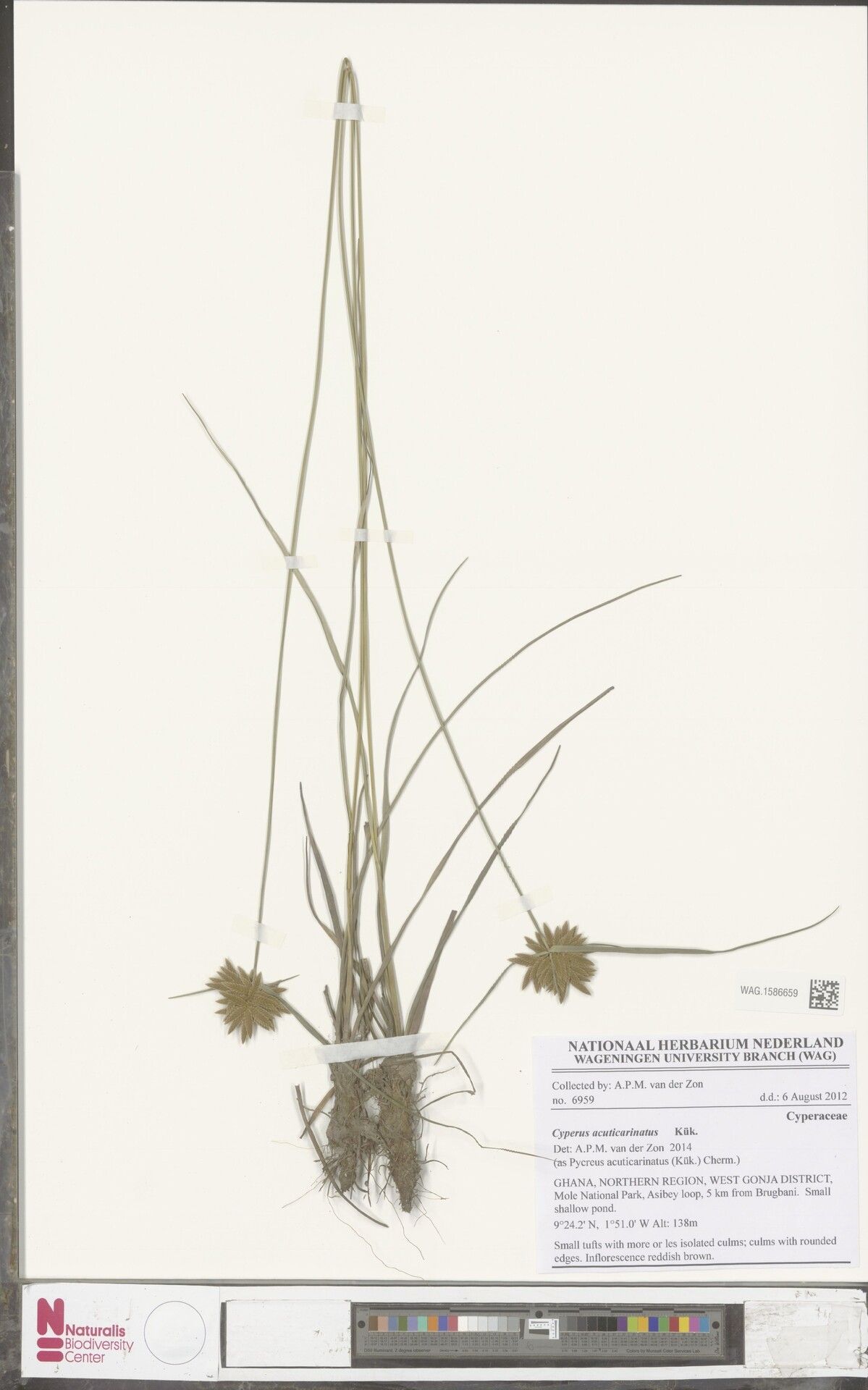
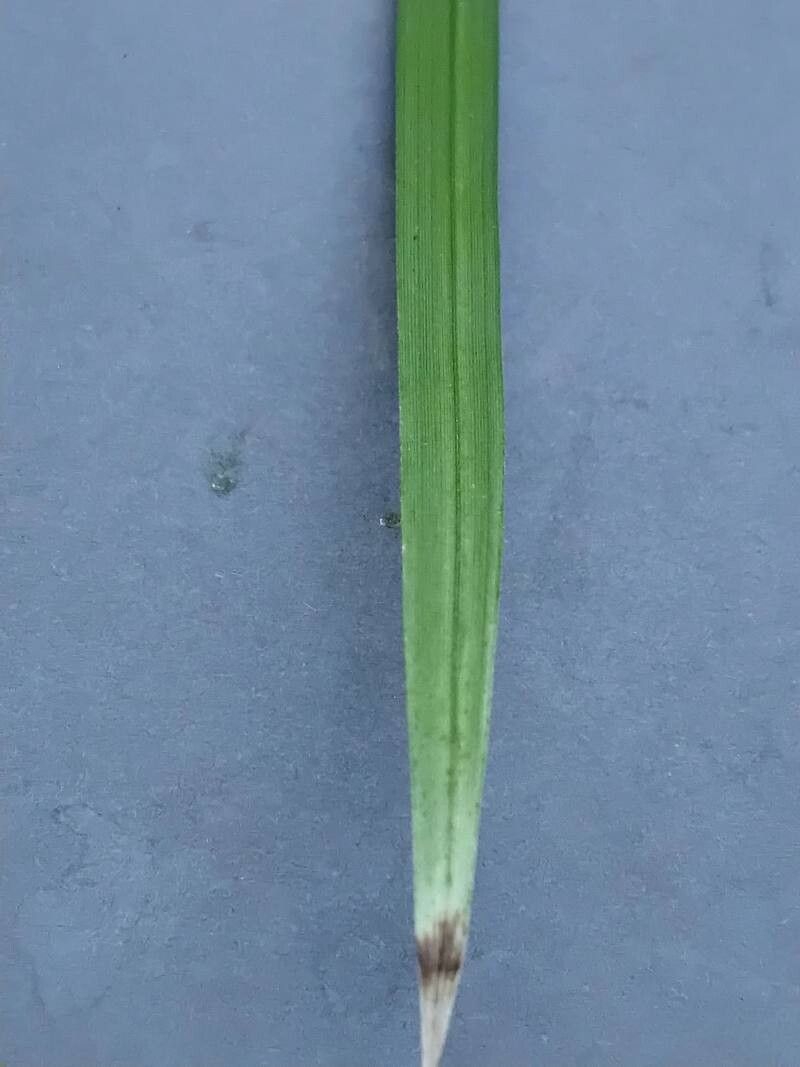
Cyperus niger is a species of sedge known by the common name black flatsedge. This plant is native to the Americas, where it can be found in wet areas from South and Central America to the southwestern United States, from California and Oklahoma south to Argentina.Cyperus niger is a perennial herb with small, wispy rhizomes. There may be a few long, thin leaves around the base of the plant. The thin stems often grow bunched together and may reach half a meter in height. The inflorescence contains a few to over 20 spikelets, each under a centimeter long, flat, and containing usually fewer than ten flowers. Each flower is covered by an oval-shaped dark brown or greenish bract. The fruit is a discoid achene just over a millimeter long.
Black flatsedge shows strong disease resistance and is typically not susceptible to diseases. As for upkeep, this plant is fairly low maintenance. When planted outdoors, it needs only minimal watering, and larger specimens generally do not require pruning. Smaller plants, however, should be pruned after they have finished blooming. Black flatsedget is suitable for anyone with an outdoor area, such as a garden or deck, and does not demand extensive care experience.
How to keep Cyperus Niger.
Light
Black flatsedge is native to locales with filtered sunlight, like underbrush in forests or stony terrains with inherent shading. It flourishes in partly sunny settings but is also capable of adjusting to areas with unobstructed sunlight.
Water
Black flatsedge thrives in aquatic environments and can withstand overwatering. It's important to keep water levels consistent, particularly in drip trays. In cooler temperatures, reduce watering to avoid root rot, and ensure there is always a small area in the tray or pot that remains dry.
Temperature
The Black flatsedge plant is capable of adjusting to different temperature conditions, though its spread may still be restricted by varying water and heat circumstances. It usually prospers in hot climates during summer, provided there is sufficient rainfall or irrigation. Extended durations of overcast and wet weather, as well as prolonged extreme temperatures, have the potential to heighten the possibility of Black flatsedge perishing. During the winter, giving suitable protection from the cold can enhance the survival ability of the plant.
Pruning
Black flatsedge flourishes in wet environments and benefits from pruning in early to late spring. By removing dead stems, you can invigorate new growth. Trimming back old foliage not only promotes healthy development but also prevents overcrowding, which enhances both its ornamental appeal and ecological benefits.
Botanical profile.
- Plant Type
- Grass
- Life Cycle
- Annual, Perennial
- Genus
- Cyperus
- Family
- Cyperaceae
- Hardiness Zone
- 8-11
- Mature Height
- 30 cm to 61 cm
- Mature Spread
- 20 cm to 40 cm
- Leaf Color
- Dark Green
- Leaf Type
- Deciduous
- Flower Color
- Brown
- Flower Size
- 0.20 cm to 0.25 cm
- Bloom Time
- Summer, Early fall, Mid fall
- Planting Time
- Spring, Autumn
- Harvest Time
- Late summer, Fall, Early winter
- Native Area
- Colombia, Honduras, Mexico, Guatemala, Bolivia, Venezuela, Peru, Brazil, Nicaragua, Ecuador, Costa Rica, Panama
Other names.
Reader questions.
How much sunlight does Black flatsedge require?
Black flatsedge, or Cyperus niger, thrives in varying amounts of sunlight. It requires 'full sun' exposure, which means it should receive above 6 hours of sunlight daily, to flourish optimally. However, it can also grow in 'partial sun' conditions, exposing it to about 3-6 hours of sunlight a day. When deciding where to place your Black flatsedge, it's important to observe how sunlight moves through your garden throughout the day. By doing so, you can find a location that ensures a harmonious balance of light and shade, catering to the plant's needs and promoting its well-being.
What is the common name of Cyperus niger?
The common name of Cyperus niger is Black flatsedge. Black flatsedge is known scientifically as Cyperus niger and does not have additional common names provided in this context.
What are the key characteristics of Black flatsedge?
There are no specific key characteristics provided for Black flatsedge (Cyperus niger) in this context. For detailed information, it's advisable to consult a botanical reference or database.