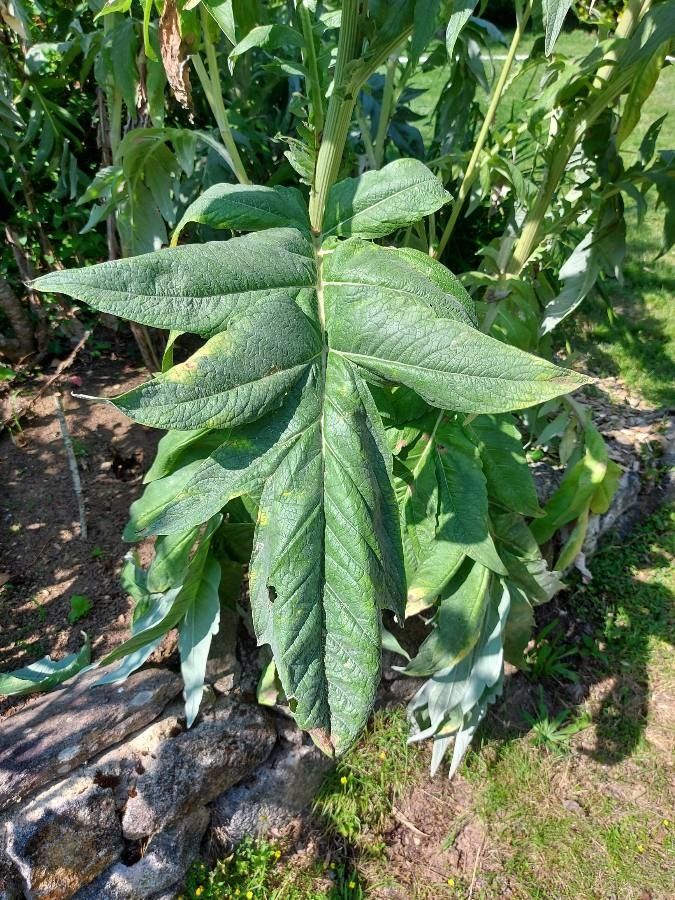
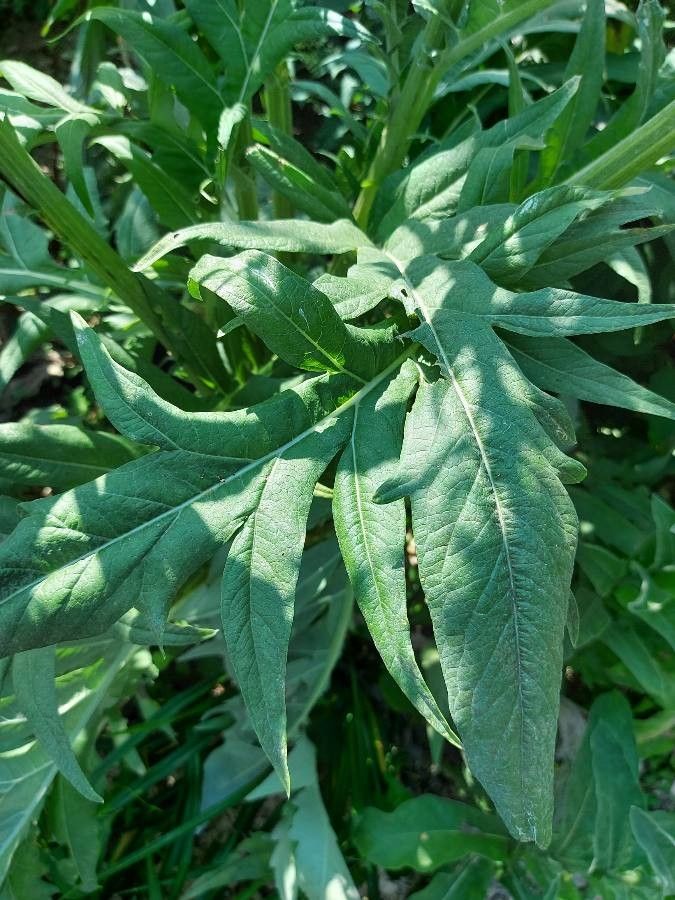
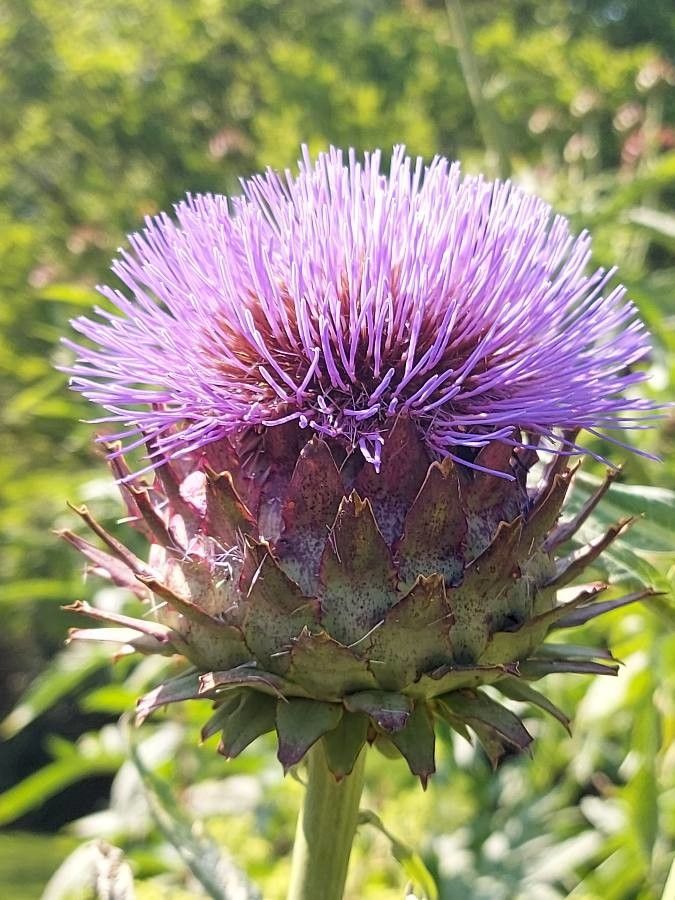
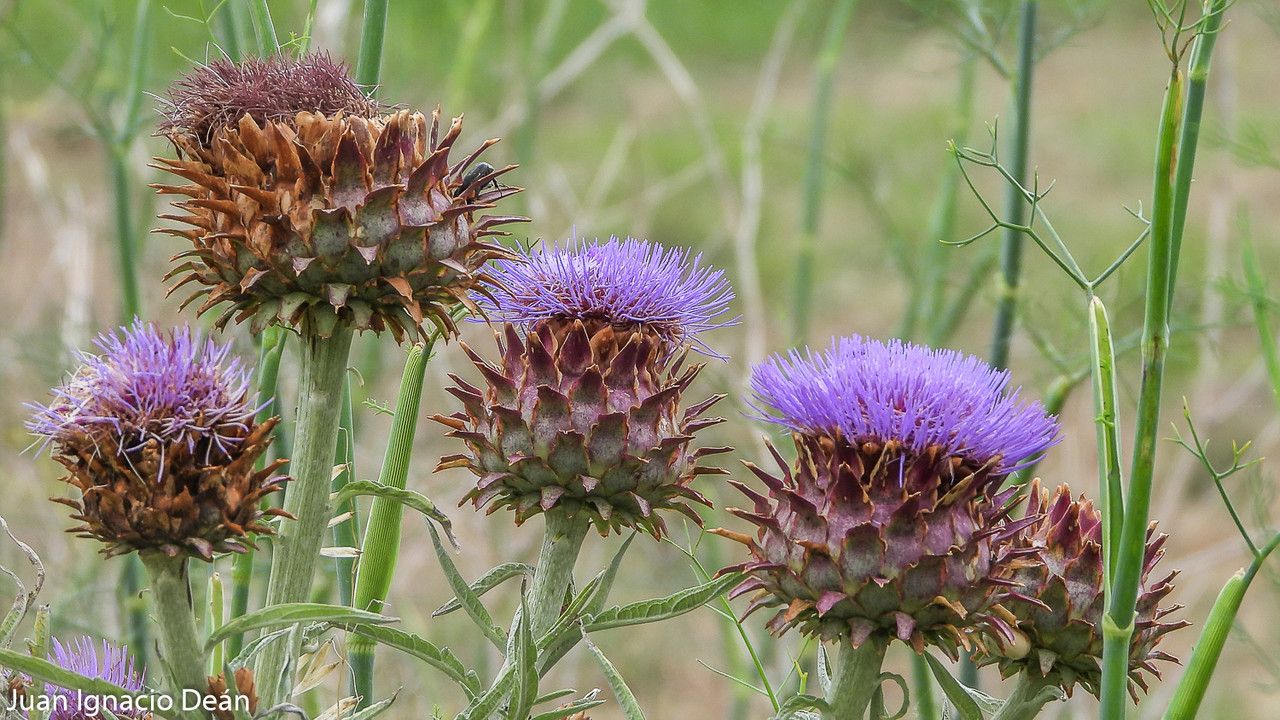
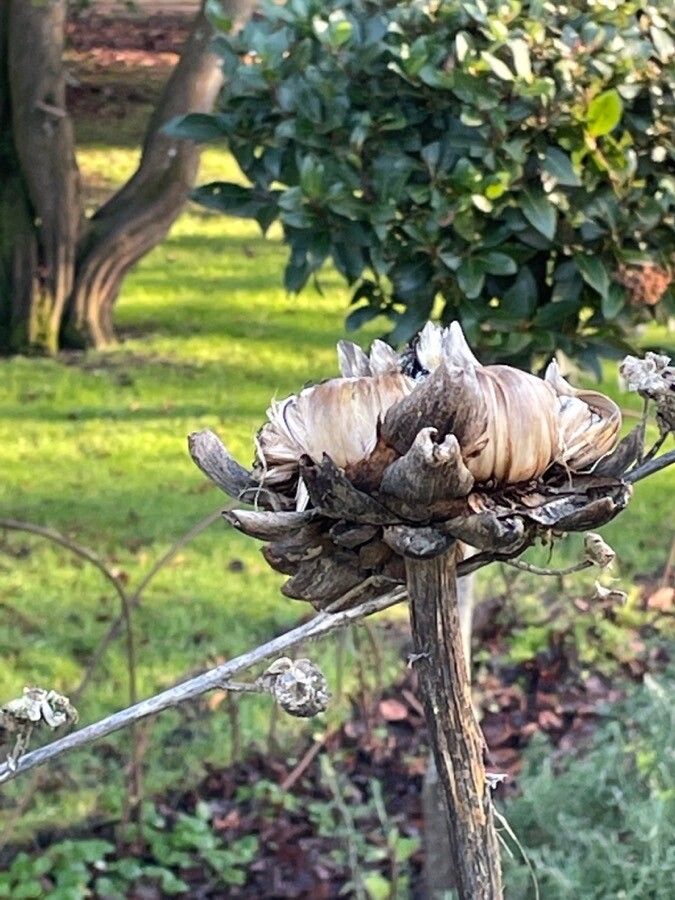
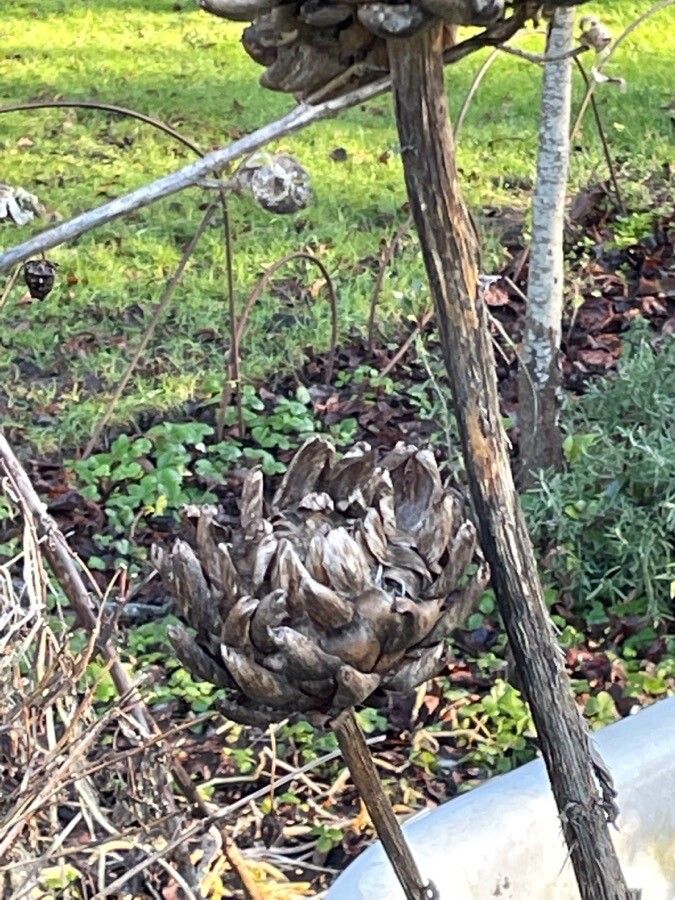
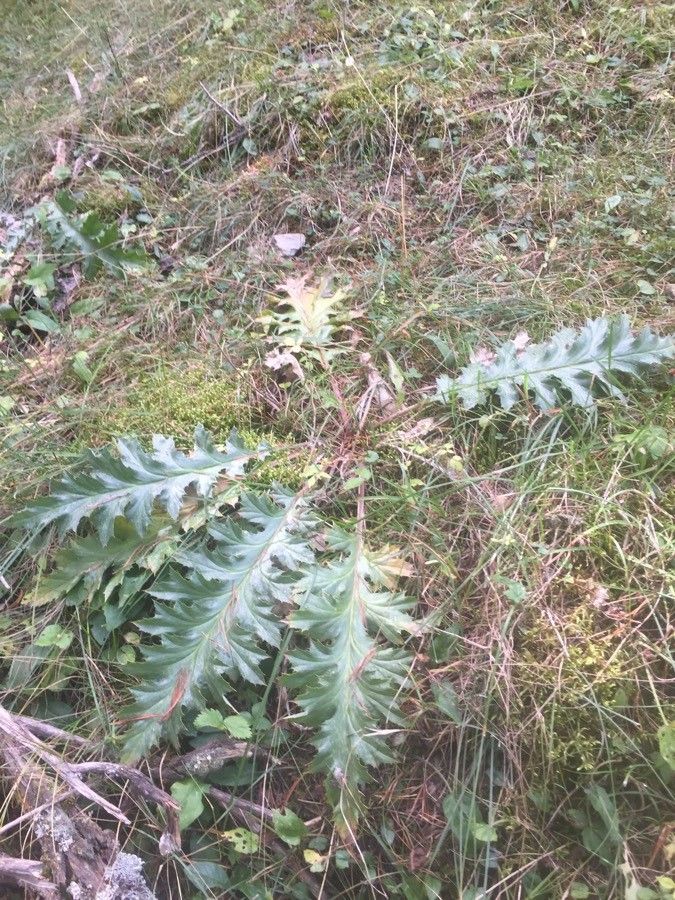
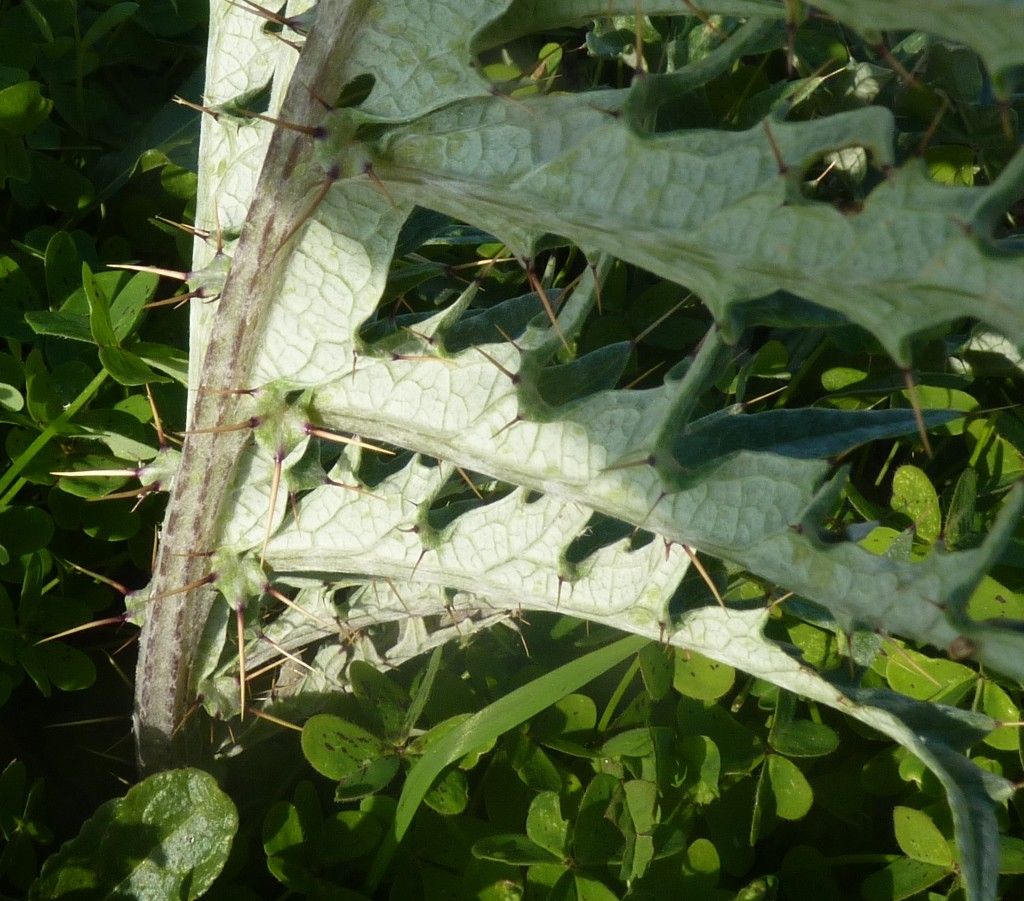
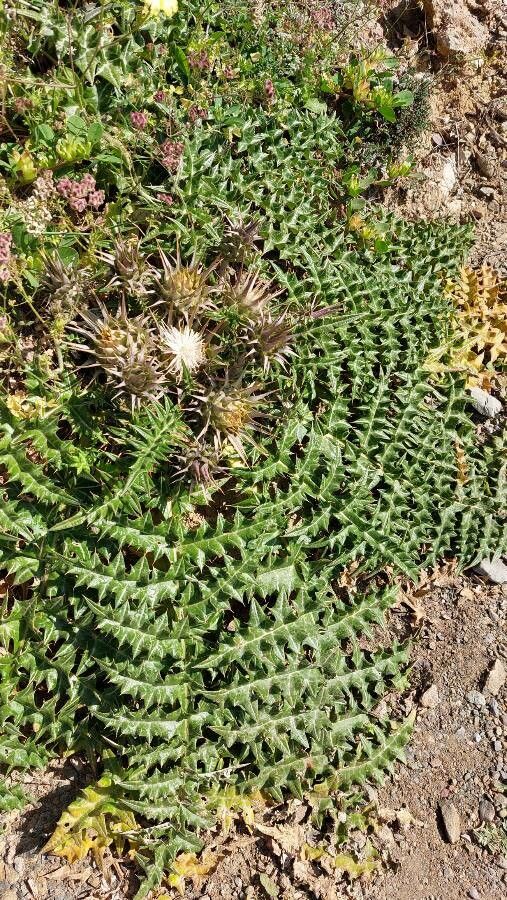
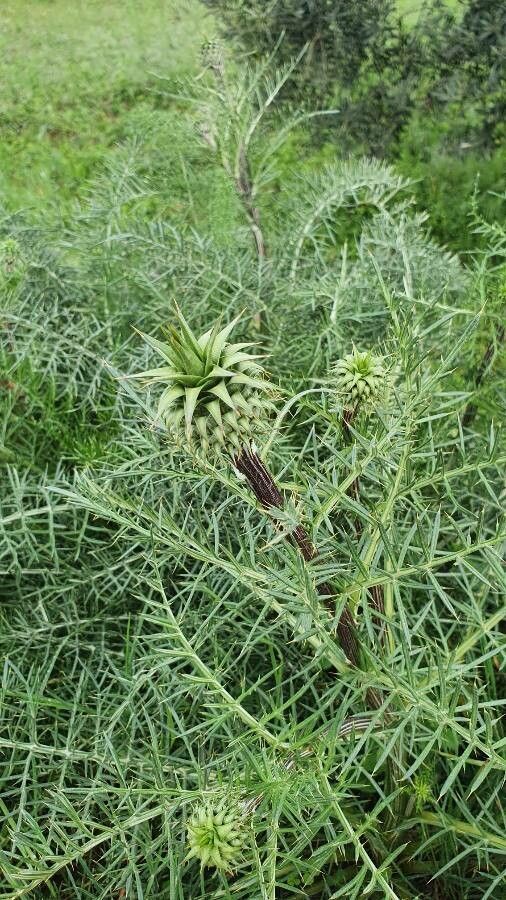
Cynara cardunculus, commonly known as the cardoon, is a perennial plant belonging to the Asteraceae family. Native to the Mediterranean region, it has been cultivated for centuries for its edible stems and leaves. The plant can reach heights of up to 1.5 meters and features large, spiny, silvery-green leaves.
During the summer, the cardoon produces large purple flowers that attract bees and other pollinators. It thrives best in well-drained soil with full sun exposure but can also tolerate some shade.
Beyond its culinary applications, Cynara cardunculus has been used for medicinal purposes for centuries, serving as a diuretic, liver tonic, and digestive aid. It contains compounds like cynarin, which have demonstrated antioxidant properties.
Overall, Cynara cardunculus is a versatile plant with both culinary and medicinal benefits, adding beauty to any garden with its striking foliage and flowers.
Cardoon: In Sicily, the stalks of certain types of thistles are commonly eaten. This dish is known as carduna, derived from the Latin term "carduus," which is the primary genus of the plant. In Italian, the word "cardo" is a more general term that doesn’t refer to a specific scientific family. As a result, the dish is referred to as Cardoon.
Botanical profile.
- Plant Type
- Herb
- Life Cycle
- Perennial, Annual, Biennial
- Genus
- Cynara
- Family
- Asteraceae
- Hardiness Zone
- 7-10
- Mature Height
- 0.76 m to 1.52 m
- Mature Spread
- 61 cm to 91 cm
- Leaf Color
- Silver, Green, Gray
- Leaf Type
- Evergreen, Deciduous
- Flower Color
- Purple, Lavender
- Flower Size
- 6.35 cm
- Bloom Time
- Early summer, Mid summer
- Planting Time
- Spring
- Harvest Time
- Mid summer
- Native Area
- Libya, Turkey, Tunisia, Italy, Portugal, Spain, Cyprus, Albania, Algeria, Greece, Croatia, Morocco, France
Other names.