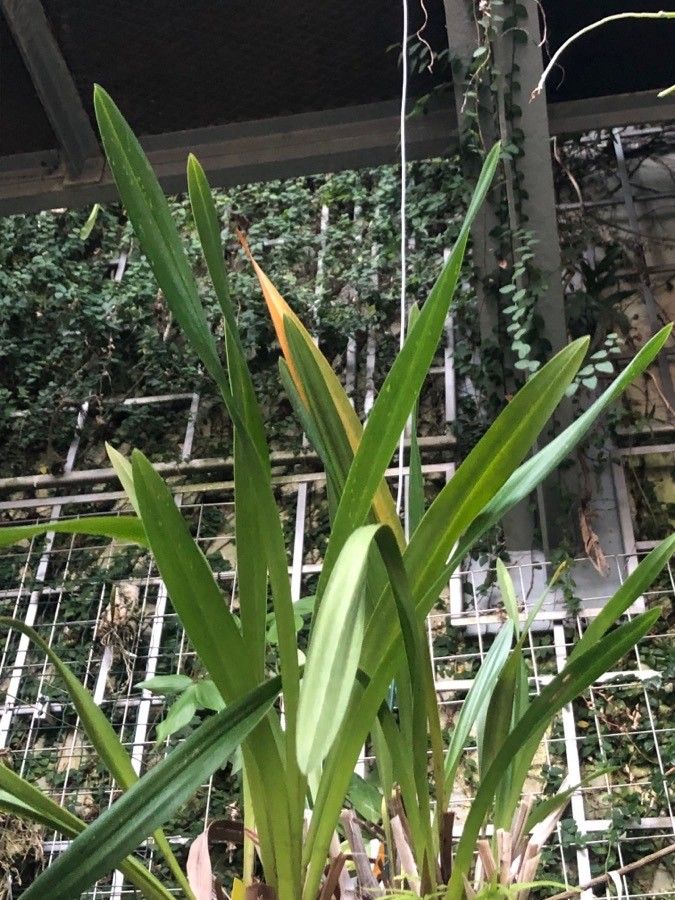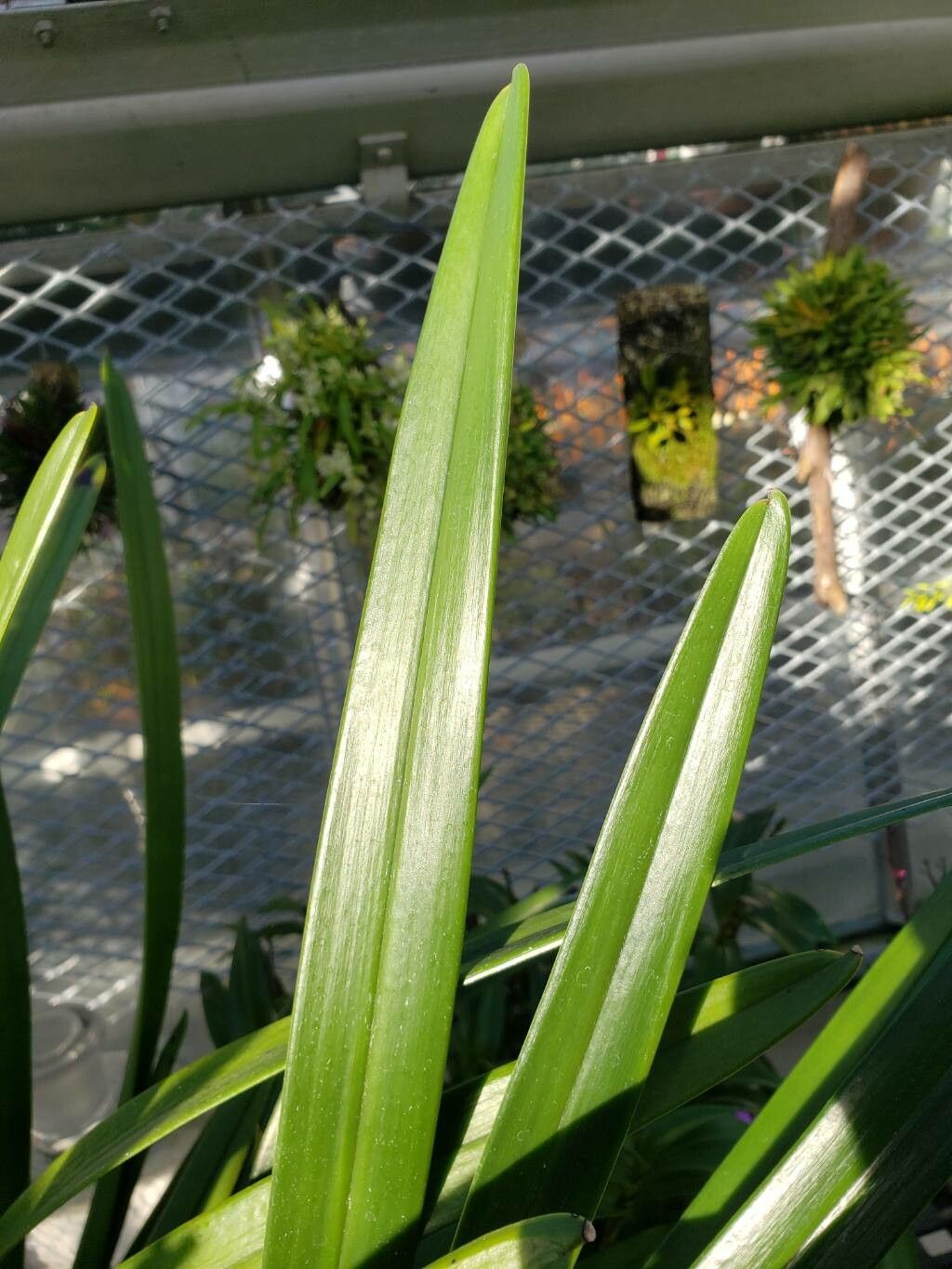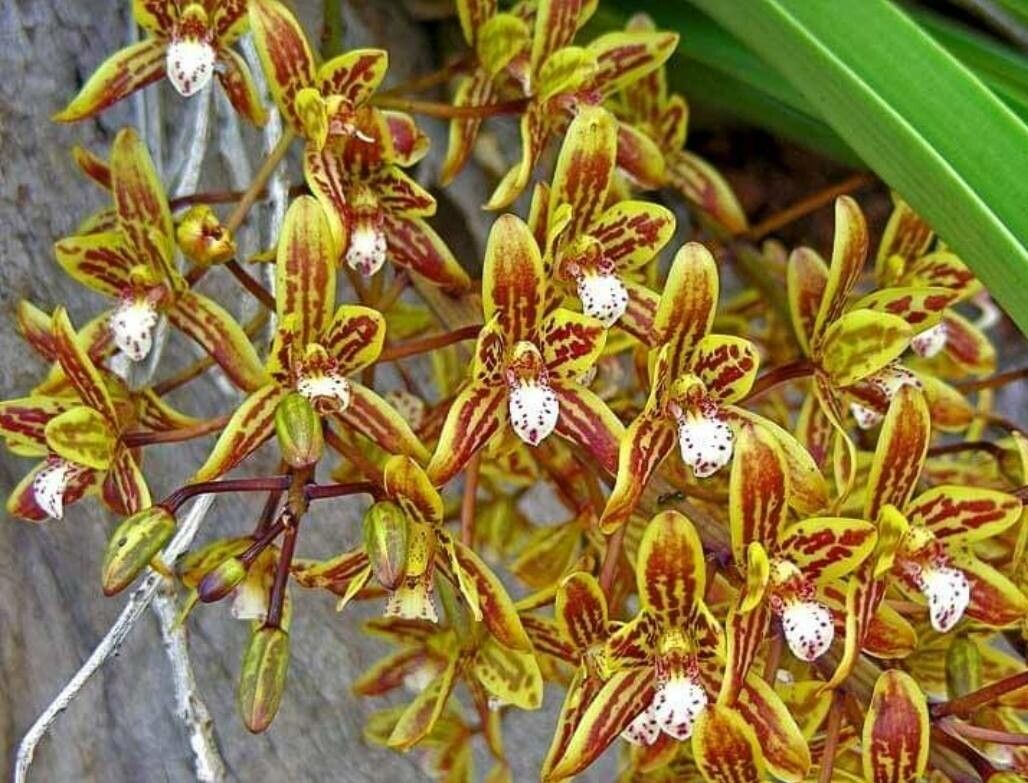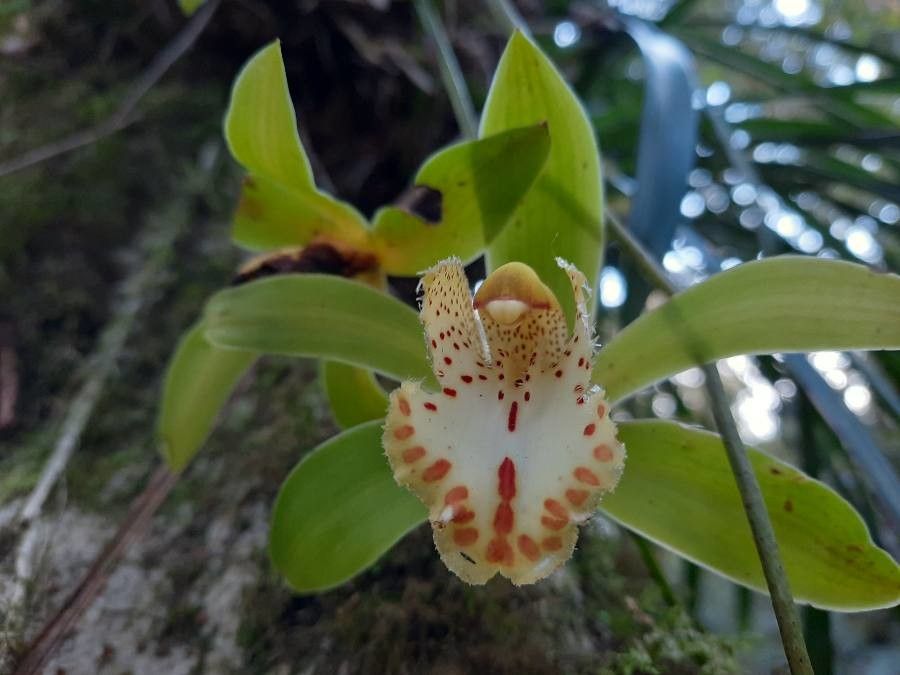
Cymbidium hookerianum (common name Hooker's Cymbidium) is a species of orchid found in India, China, and Vietnam. It is distributed widely in Bhutan, especially in the cool temperate forests.
Hooker's cymbidium is generally resistant to disease and is troubled by relatively few insect pests. Its care is regarded as difficult because it needs high humidity along with good ventilation and minimal harmful pathogens. Overwatering can cause root rot. While anyone can grow Hooker's cymbidium, keeping it healthy and getting it to flower again requires more growing experience.
How to keep Cymbidium Hookerianum.
Light
Hooker's cymbidium does well in conditions with moderate sunlight exposure — not in full shade but also not in full sun. Native to habitats with that kind of light, the plant can tolerate levels that are neither excessively bright nor too weak. Excessive light may cause leaf burn, while insufficient light can result in poor growth.
Water
Hooker's cymbidium, native to the forests of the Himalayas, thrives in conditions of consistent moisture, high humidity, and dappled light. To keep this plant well-hydrated and simulate its natural environment, it should be watered weekly. Typically grown indoors, Hooker's cymbidium needs moist soil during its active growth period, but it is important to avoid waterlogging. Proper care ensures healthy development and vibrant blooms.
Temperature
Hooker's cymbidium can tolerate a wide range of temperatures, but its distribution may still be restricted by particular combinations of water and heat. It performs best in warm summer climates with sufficient rainfall or watering. Extended periods of cloudy, rainy weather or sustained high temperatures can raise the chance of Hooker's cymbidium dying. In winter, adequate protection from cold can increase the plant's survival rate.
Fertilizer
The best time to fertilize a Hooker's cymbidium is in early spring, as it comes out of dormancy and begins active growth. Fertilizing supplies essential nutrients needed for healthy development. Even though Hooker's cymbidium requires relatively little fertilizer, applying it once a year can improve its chances of survival and encourage stronger, longer-lasting blooms.
Pruning
Hooker's cymbidium is known for its arching, grass-like leaves and captivating flowers. To keep the plant healthy and encourage future growth, it's important to prune it after flowering, which usually occurs in early spring or late winter. During pruning, remove any spent flower spikes and dead leaves, but be careful not to cut any live parts. This practice promotes new growth and enhances blooms in the coming seasons. (Source: Royal Horticultural Society)
Botanical profile.
- Plant Type
- Herb
- Life Cycle
- Perennial
- Genus
- Cymbidium
- Family
- Orchidaceae
- Hardiness Zone
- 9-11
- Mature Height
- 76 cm
- Mature Spread
- 91 cm
- Leaf Color
- Green
- Leaf Type
- Evergreen
- Flower Color
- White, Yellow, Pink, Green, Purple, Red
- Flower Size
- 11.43 cm to 11.43 cm
- Bloom Time
- Early spring, Mid spring
- Planting Time
- Spring, Summer
- Harvest Time
- Late spring, Early summer, Mid summer
- Native Area
- Nepal, India, Vietnam, Myanmar, Bhutan, Thailand, China
Reader questions.
How should I water my Hooker's cymbidium plant to keep it healthy?
The way you water your Hooker's cymbidium depends on whether it's actively growing or not. If it is, water the soil and occasionally allow water to fall on the leaves when the weather is warm. During winter or cool and wet weather, stick to watering the soil only. You can tell if your plant needs more water by checking if the roots and leaves are dry or discolored. If the plant is overwatered, it will appear mushy and limp. It's recommended to grow the Hooker's cymbidium in a pot with good drainage. During the growing season, water it multiple times a week, ensuring that the water drains quickly. The amount of water will depend on the pot size, with larger pots needing less frequent watering. Rainwater and distilled water are ideal, and try to match the water temperature with the air temperature.
Why is it necessary to fertilize my Hooker's cymbidium?
Fertilization is important for the Hooker's cymbidium because it provides essential nutrients for the plant's growth. While the overall fertilization needs for this plant are relatively low, annual fertilization can greatly benefit its survival and enhance flower quality. Therefore, those who want their Hooker's cymbidium to thrive should prioritize regular fertilization.
What are the sunlight requirements for Hooker's cymbidium?
Hooker's cymbidium requires moderate exposure to sunlight, thriving well in conditions that are neither fully shaded nor fully exposed to light. Typically, it does best with about 3-6 hours of sunlight daily. It's important to observe how sunlight moves through your garden to choose spots that provide a balance of light and shade, ensuring the plant's wellbeing. Overexposure to sunlight can cause leaf burn, while insufficient light can lead to poor growth.
What should I do if I give too much or too little water to my Hooker's cymbidium?
One common way to kill a Hooker's cymbidium plant is by letting it sit in overly moist soil for too long. While these plants need frequent watering during active growth, they also require well-draining soil. Overwatering can lead to mushy roots and root rot, in which case you should remove any rotting roots with sterile pruning shears. Afterward, it's important to repot the plant in a container with good drainage and fill it with a fast-draining potting mix. However, excessive repotting may not be beneficial for Hooker's cymbidium, so it's crucial to find the right watering balance. If the plant is underwatered, it will shrivel and feel dry to the touch. In such cases, increase the watering frequency as the soil may be drying out faster than expected.
When should I fertilize my Hooker's cymbidium?
The best time to fertilize a Hooker's cymbidium is in late winter to early spring when it is transitioning from dormancy to active growth. Fertilizing at this time promotes healthy growth and sets the plant up for a successful season. Although it is best to fertilize in early spring, fertilizing during the fall is also acceptable. However, it is not recommended to fertilize during summer or winter.
How can artificial lighting be used for Hooker's cymbidium?
When natural sunlight is not available, especially during winter or in less sunny spaces, artificial lighting is a viable solution for Hooker's cymbidium. For optimal growth under artificial light: 1. LED lights are recommended as they can be customized to provide specific wavelengths needed by the plant. Full sun plants require 30-50W/sq ft, partial sun plants need 20-30W/sq ft, and shade plants require 10-20W/sq ft of light. 2. The light source should be placed 12-36 inches above the plant to mimic natural sunlight conditions. 3. Most plants, including Hooker's cymbidium, need 8-12 hours of light per day to thrive.
How frequently do I need to water my Hooker's cymbidium plant?
In the active growth stage, which is during spring and summer, water your Hooker's cymbidium once or twice per week. If it's hot and dry for a long period, increase watering to three times per week or more. In winter, water less frequently. Two to three times per month should be enough to keep it alive during the coldest months. However, if you keep it indoors during winter, be aware that indoor locations can dry out the soil faster. You may need to increase the number of monthly waterings. During fall, gradually reduce watering from multiple times per week to the reduced winter schedule.
When is the best time to not add fertilizer to my Hooker's cymbidium?
To avoid overfertilization and potential complications, it is recommended to fertilize your Hooker's cymbidium only in late winter and early spring. This plant has low fertilization needs and a single annual feeding is sufficient. If you didn't fertilize in spring, it is acceptable to feed it in the fall. It is important to refrain from fertilizing throughout the rest of the growing season and during the winter since the plant enters a dormant phase without new growth during that time.
What are the symptoms of insufficient light for Hooker's cymbidium?
When grown indoors with inadequate light, Hooker's cymbidium may exhibit symptoms such as smaller leaves compared to previous ones, leggy or sparse growth, faster leaf drop, slower or no new growth, and lighter-colored new leaves. These symptoms indicate light deficiency. Conditions like chlorosis, sunscald, leaf curling, wilting, and leaf scorching can also occur due to excessive sunlight or inadequate sunlight.
What do I need to think about when watering my Hooker's cymbidium during different seasons and stages of growth?
When planning the watering schedule for your Hooker's cymbidium, there are two important growth phases to consider. The first phase is the active growth period, which occurs in spring and summer. During this time, it's important to water your plant multiple times per week. The second phase is the rest period, which occurs in winter for about two to three months. During this period, your plant will need much less water and fertilization than usual. You should water it about once or twice per month. In the fall, it's recommended to gradually reduce the frequency of watering from multiple times per week to the appropriate rate for winter, which is once or twice per month.
What kind of plant food does my Hooker's cymbidium need?
When it comes to fertilizing a Hooker's cymbidium, any general-purpose fertilizer with an even balance of the three main plant nutrients will work well. However, there are some specific nutrient blends that can provide additional benefits. One popular belief among gardeners is that higher amounts of phosphorus can lead to stronger roots and improved flowers. Since Hooker's cymbidium is a flowering plant, using a fertilizer rich in phosphorus may be the best choice. Whether you choose a granular or liquid fertilizer, make sure it contains plenty of nutrients. Aside from manufactured fertilizers, you can also use organic methods to enhance the soil for your Hooker's cymbidium. Compost, manure, and similar materials can greatly contribute to creating a healthy growing medium.
What solutions can optimize Hooker's cymbidium's growth in terms of lighting?
To optimize Hooker's cymbidium growth regarding lighting: 1. Indoor plants can be gradually shifted to sunnier spots each week until they get 3-6 hours of direct sunlight daily or use artificial lighting sources like desk or ceiling lamps for at least 8 hours daily. 2. Outdoor plants should also be moved gradually to sunnier locations to avoid sunburn. 3. If dealing with obstructions, consider pruning trees that block sunlight or transplanting smaller plants during their dormant period to a location with ample sunlight and good drainage. It's vital to enable gradual adaptation to changing light conditions to ensure the health of new growth.