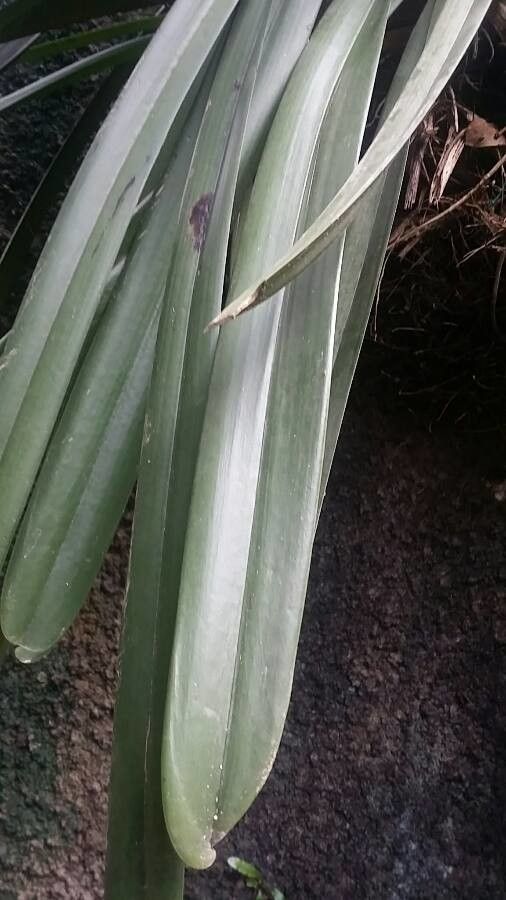
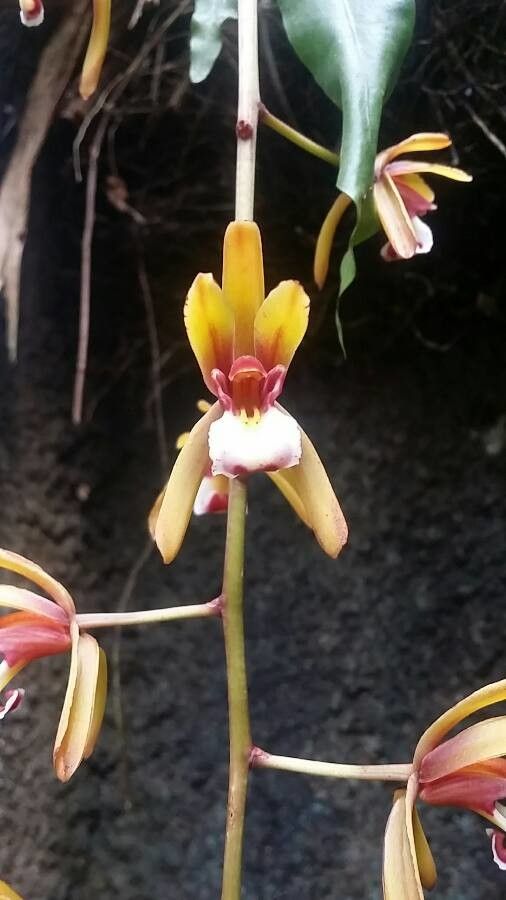
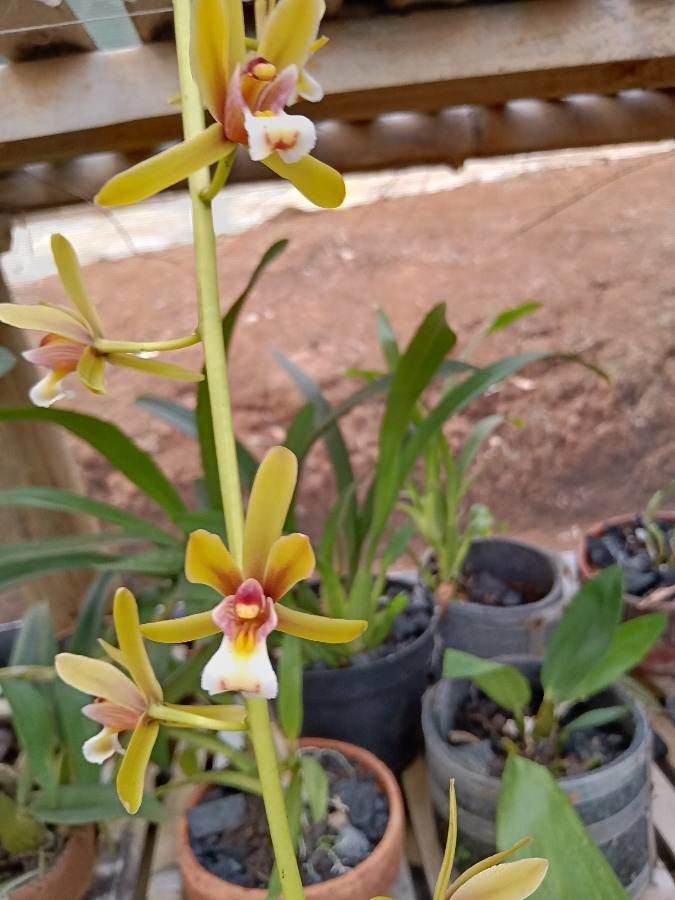
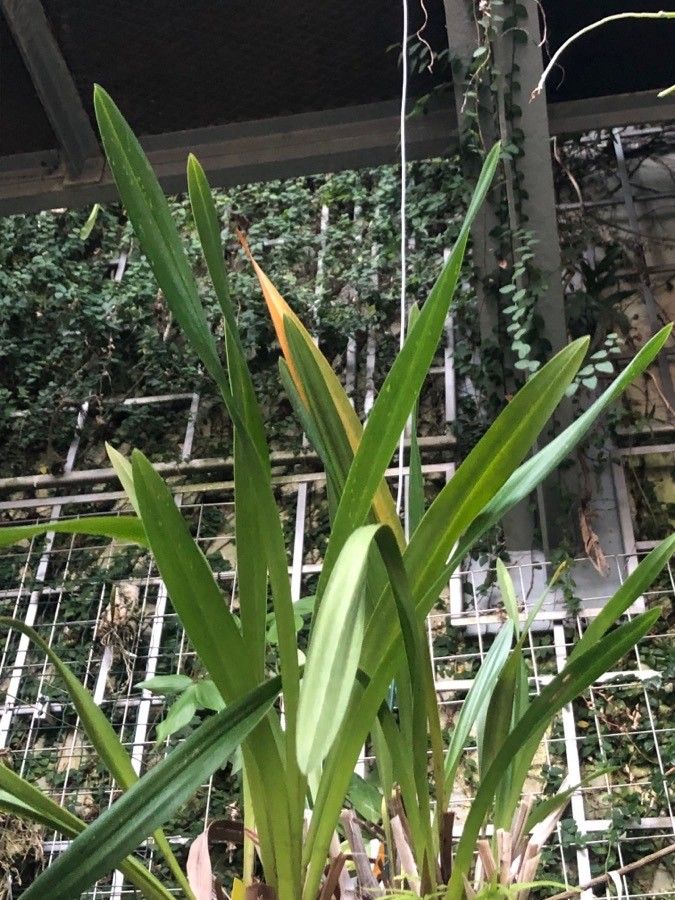
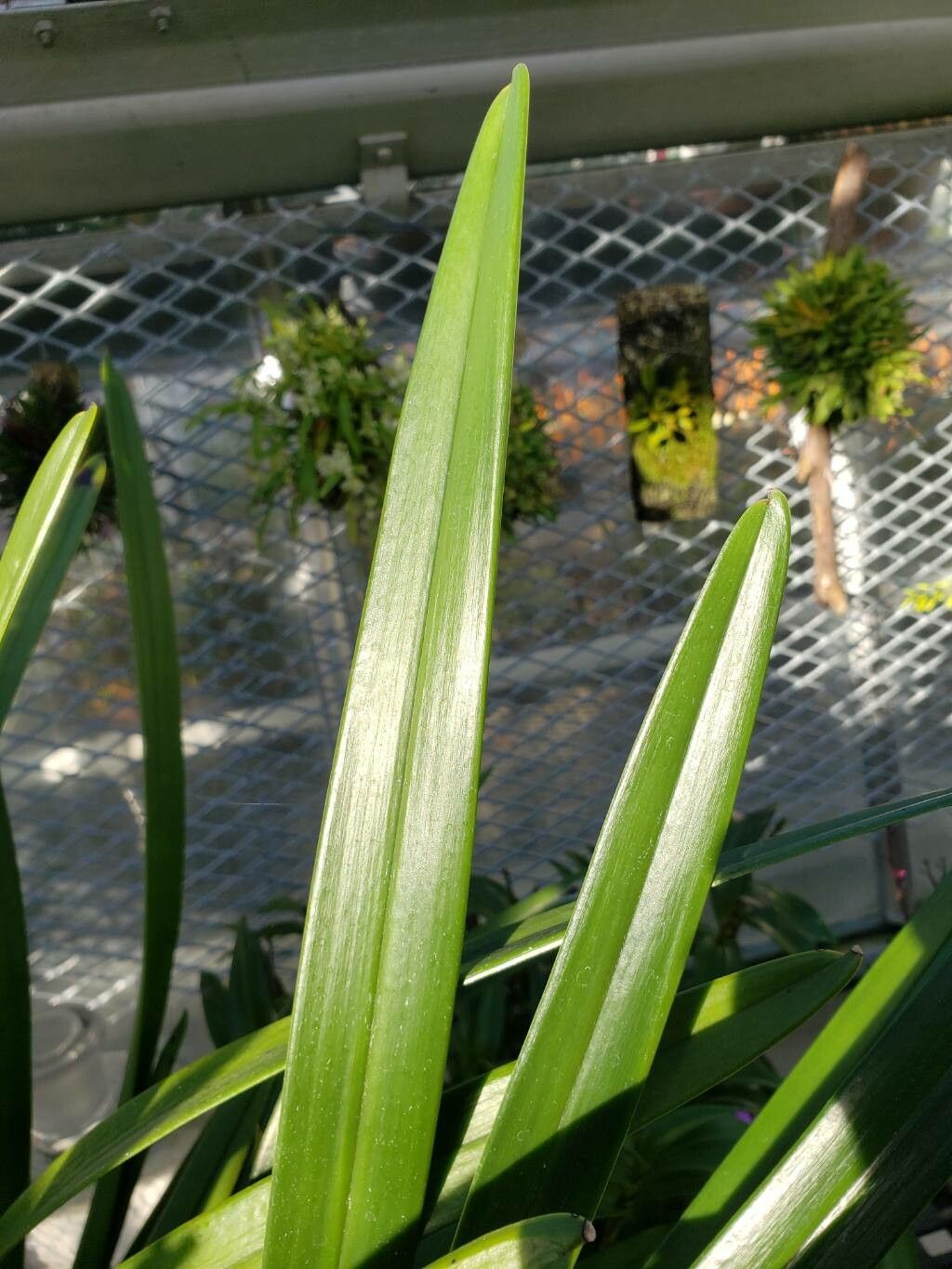
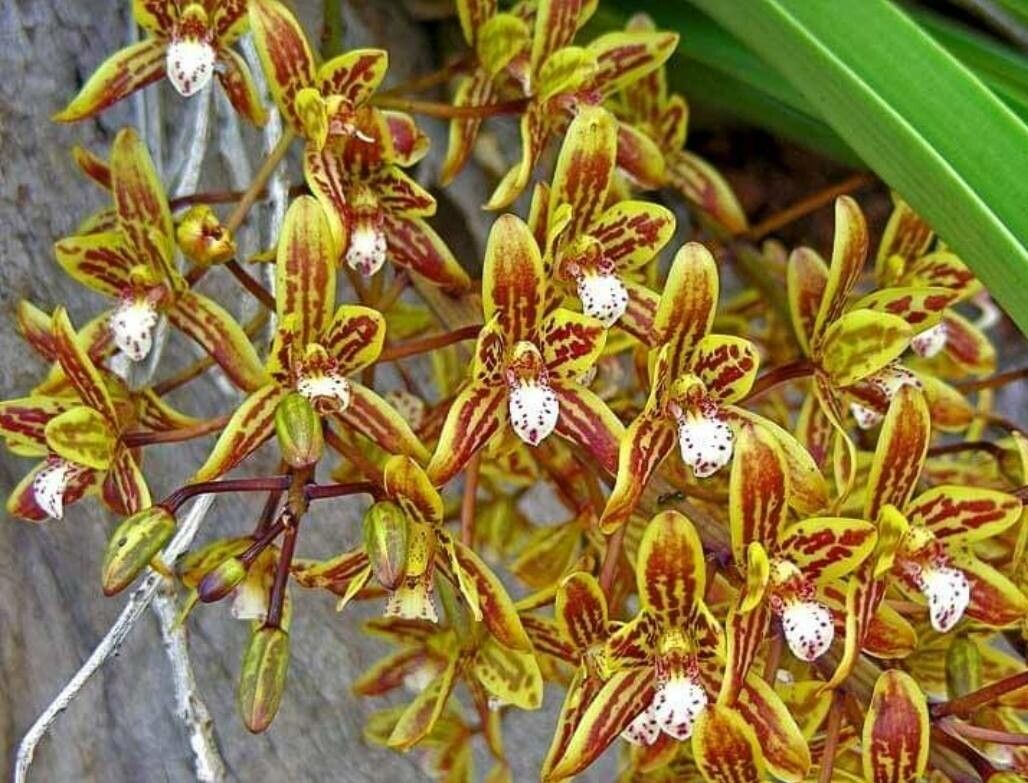
Finlayson's cymbidium typically has strong resistance to disease and faces relatively few insect pests. Its care is considered difficult because it needs high humidity combined with good ventilation and a low presence of harmful pathogens. Overwatering can cause root rot. Although anyone can grow Finlayson's cymbidium, keeping it healthy and getting it to bloom again requires more cultivation experience.
How to keep Cymbidium Finlaysonianum.
Light
Finlayson's cymbidium is a sun-preferring plant that does best with moderate sunlight. The environment where it naturally grows is known for its medium light levels. Too much sun can harm its growth, while too little light may stop it from flowering. At any stage of growth, moderate light is recommended.
Water
Finlayson's Cymbidium, native to Southeast Asia, flourishes in humid environments with consistent moisture. It typically requires weekly watering. As an epiphyte, this orchid thrives indoors and benefits from high humidity levels. To achieve this, you can place the pot on a tray filled with wet pebbles, which helps increase humidity without oversaturating the plant.
Temperature
Finlayson's cymbidium prefers warm conditions. It performs best at moderately high temperatures but not in excessively hot, humid weather. Sunlight helps warm the plant and stimulates flowering. However, long periods of direct sun in summer can cause sunburn, so it's necessary to regulate how much sunlight it gets during that season. The plant typically does not tolerate cold well and needs proper protection and warmer conditions in winter to avoid freezing.
Fertilizer
Proper fertilization is essential for the health and appearance of Finlayson's cymbidium. Fertilize Finlayson's cymbidium during summer, repeating the application monthly throughout the season. Nutrients fuel growth and support the plant's components. Fertilization improves Finlayson's cymbidium's flower display, helping it achieve its best blooms.
Pruning
To maintain the health and appearance of Finlayson's cymbidium, which features long-lasting blossoms and strap-like leaves, it's important to prune the plant after it blooms, typically from early to late spring. Remove any spent flowers and dead foliage to improve airflow and light exposure. Regular maintenance not only enhances its aesthetic appeal but also boosts its vigor, ensuring vibrant floral displays each year.
Pot & Repot
When repotting a Finlayson's cymbidium, select a slightly larger pot with good drainage, preferably a clear orchid pot. Use a well-draining, orchid-specific mix that includes bark or moss. Gently clean the roots and trim any that are dead or rotting. Repot after flowering, usually in spring or fall, water thoroughly, and keep the plant in bright, indirect light. Once repotted, avoid disturbing the roots.
Botanical profile.
- Plant Type
- Herb
- Life Cycle
- Perennial
- Genus
- Cymbidium
- Family
- Orchidaceae
- Hardiness Zone
- 12-13
- Mature Height
- 91 cm
- Mature Spread
- 0.91 m to 1.22 m
- Leaf Color
- Green
- Leaf Type
- Evergreen
- Flower Color
- Yellow
- Flower Size
- 5.08 cm to 6.35 cm
- Bloom Time
- Winter, Early spring, Mid spring
- Planting Time
- Summer, Autumn
- Harvest Time
- Spring, Early summer, Mid summer
- Native Area
- Malaysia, Indonesia, Cambodia, Vietnam, Myanmar, Philippines, Singapore, Brunei, Thailand
Reader questions.
What are the sunlight requirements for Finlayson's cymbidium?
Finlayson's cymbidium requires about 3-6 hours of sunlight daily, thriving in partial sun conditions. It's essential to observe how sunlight moves through your garden to choose spots that provide the perfect balance of light and shade, ensuring the plants' happiness. This species' natural growth environment is known for moderate light intensity. Excessive sun exposure can impair growth, while insufficient light may hinder blossoming. Whether at different growth stages or conditions, maintaining moderate luminosity is advisable.
What is Finlayson's cymbidium?
Finlayson's cymbidium, known botanically as Cymbidium finlaysonianum, is a species of orchid. This orchid species does not have detailed information provided regarding its essentials, such as care, growth conditions, or specific characteristics in the provided data. Additionally, there are no symptoms related to common issues or diseases listed for this species.
How can artificial lighting be used for Finlayson's cymbidium?
Indoor Finlayson's cymbidium plants require adequate lighting for optimal growth, especially when natural sunlight is insufficient, such as in winter or less sunny spaces. Artificial lighting, like LED lights, can be customized to provide specific wavelengths needed by your plants, promoting faster, healthier growth. Full sun plants require 30-50W/sq ft, partial sun plants need 20-30W/sq ft, and full shade plants need 10-20W/sq ft of artificial light. Position the light source 12-36 inches above the plant to mimic natural sunlight and ensure it's on for 8-12 hours per day to mimic natural daylight hours.
What are the symptoms of light deficiency in Finlayson's cymbidium?
Signs of light deficiency in Finlayson's cymbidium include smaller new leaves, leggy or sparse growth, accelerated leaf drop, halted new growth, pale or irregularly colored new leaves, and overall weaker plant resilience. Conversely, symptoms of excessive sunlight exposure can manifest as chlorosis, sunscald, leaf curling, wilting, and leaf scorching, each indicating various degrees of distress related to light exposure. These symptoms highlight the plant's need for a balanced light environment, whether grown indoors or outdoors.
What solutions are there for Finlayson's cymbidium experiencing light-related issues?
Optimizing light for Finlayson's cymbidium involves gradual adaptation to sunlight by shifting them to sunnier spots each week until receiving 3-6 hours of direct sunlight daily. For indoor or immovable plants, artificial light like professional grow lights or keeping a desk or ceiling lamp on for at least 8 hours daily can provide sufficient light. Outdoors, gradually moving plants to sunny locations can prevent sunburn. Reducing sunlight obstructions, transplanting smaller plants during their dormant period to sunny locations with good drainage, and pruning nearby trees to enhance sunlight penetration are effective strategies. It is crucial to note that parts affected by insufficient light may not recover, but new growth should be healthy with improved light conditions.