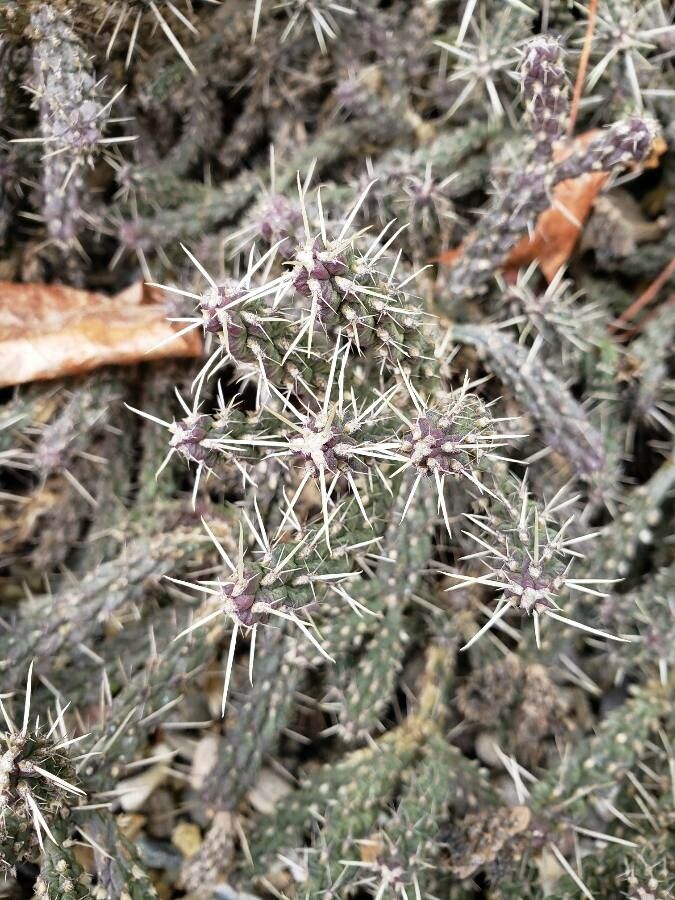
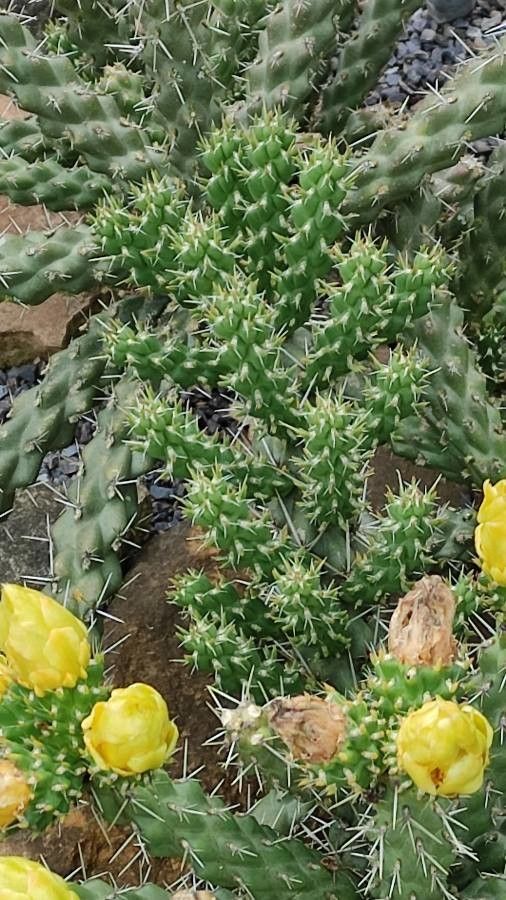
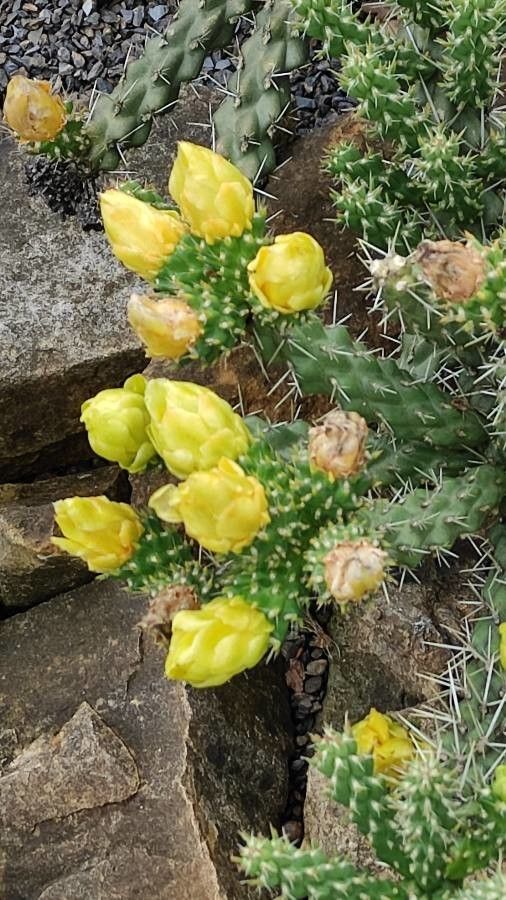
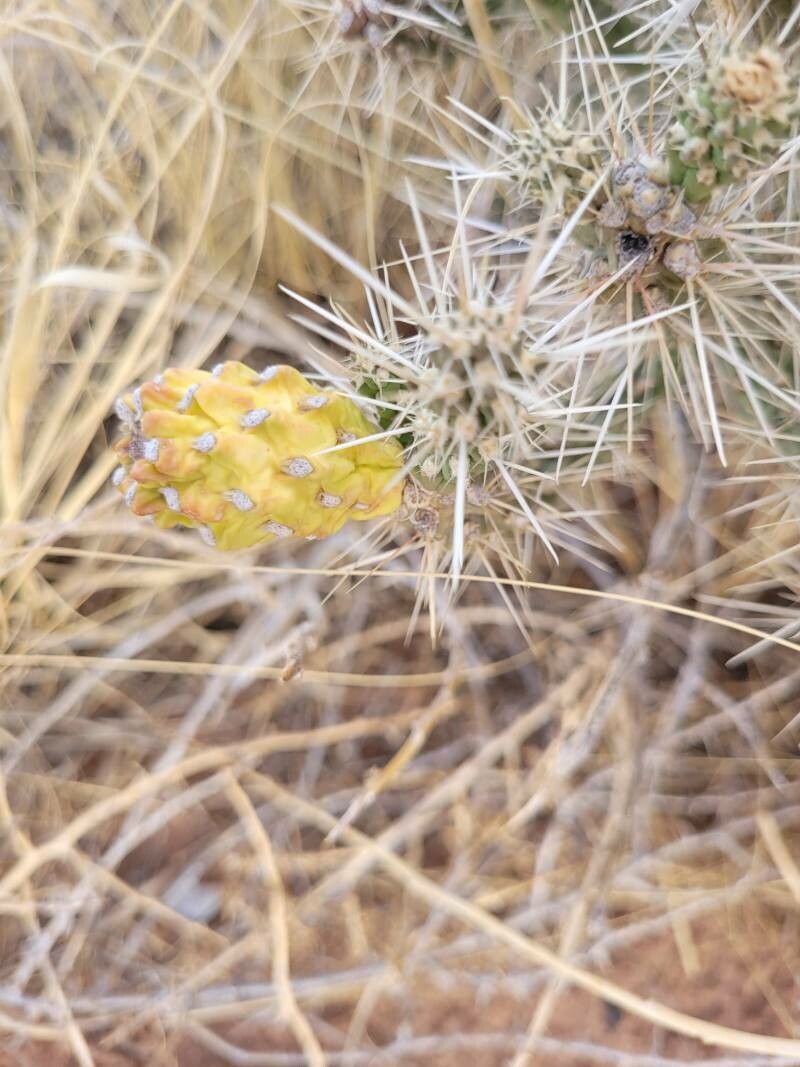
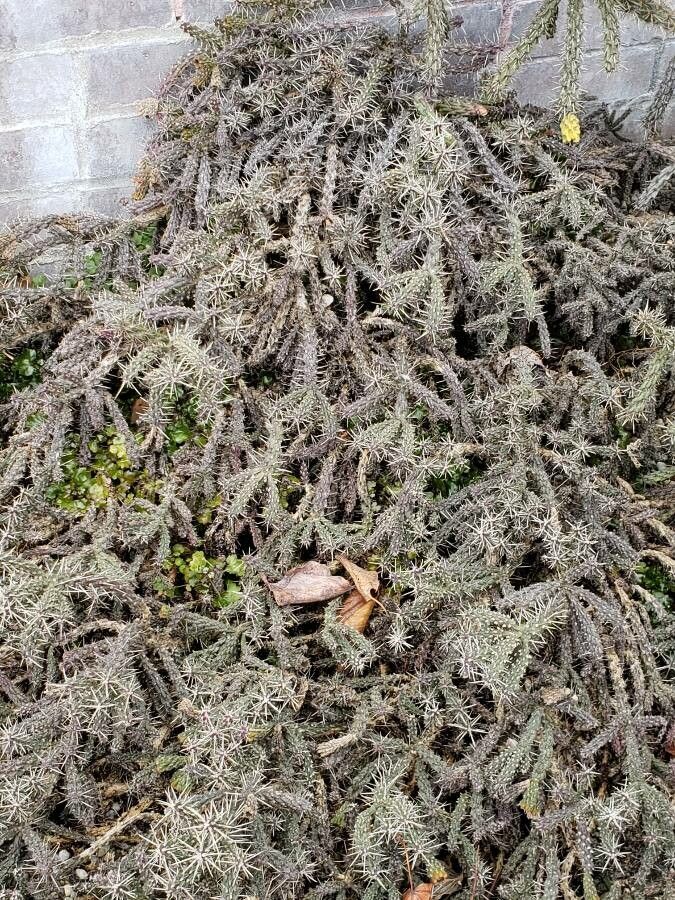
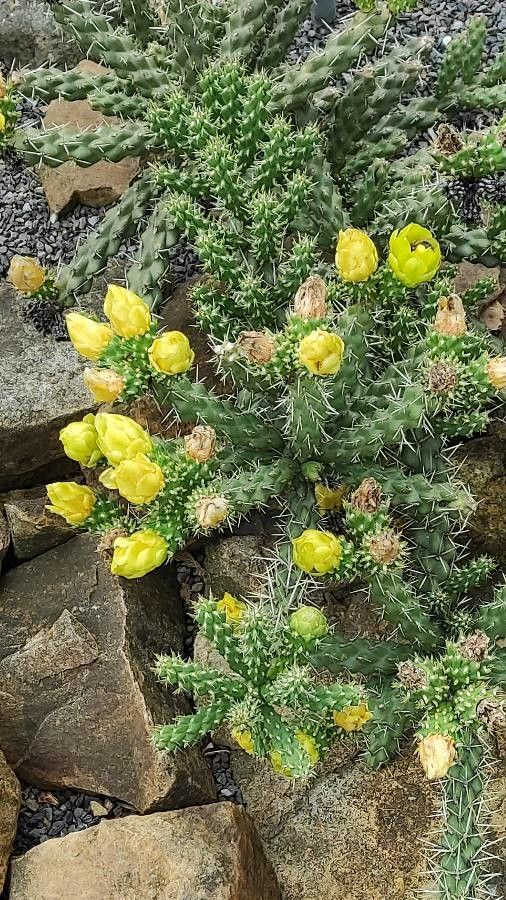
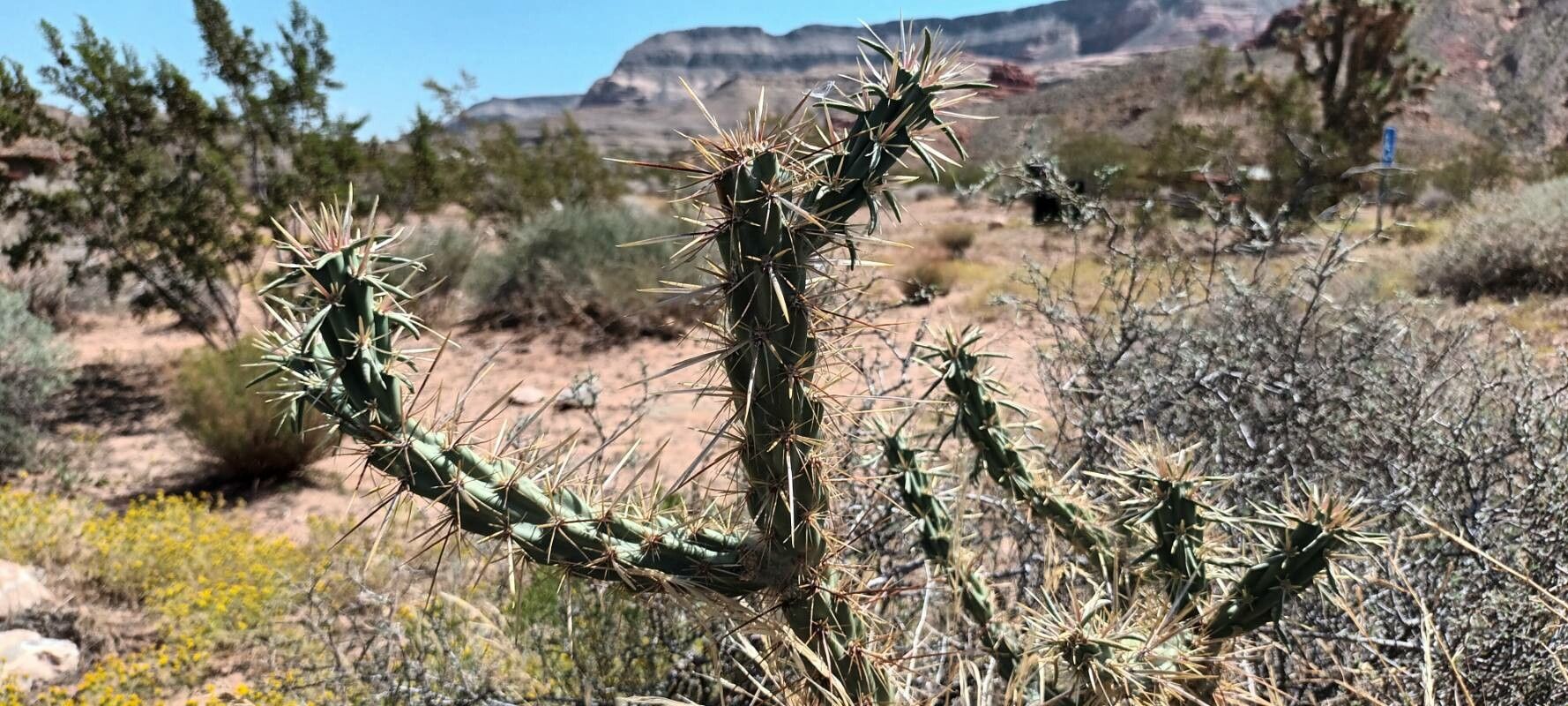
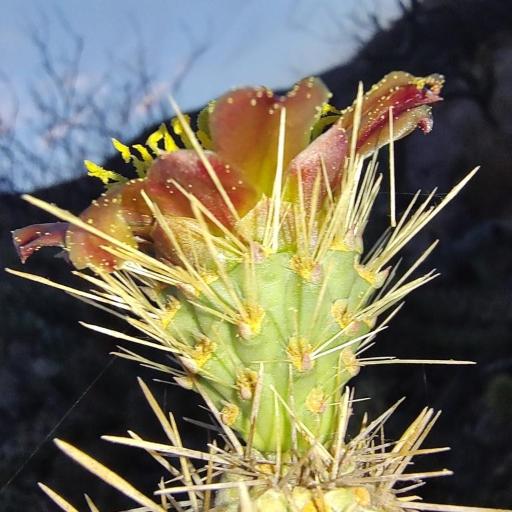
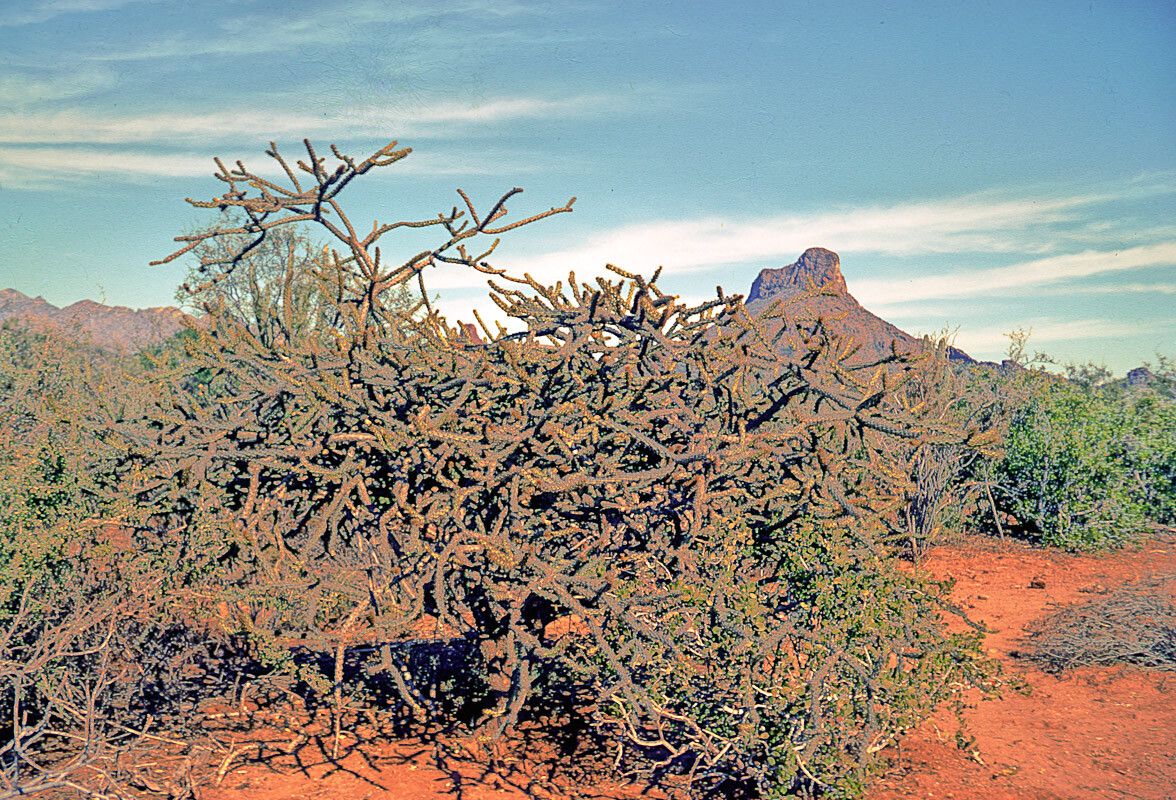
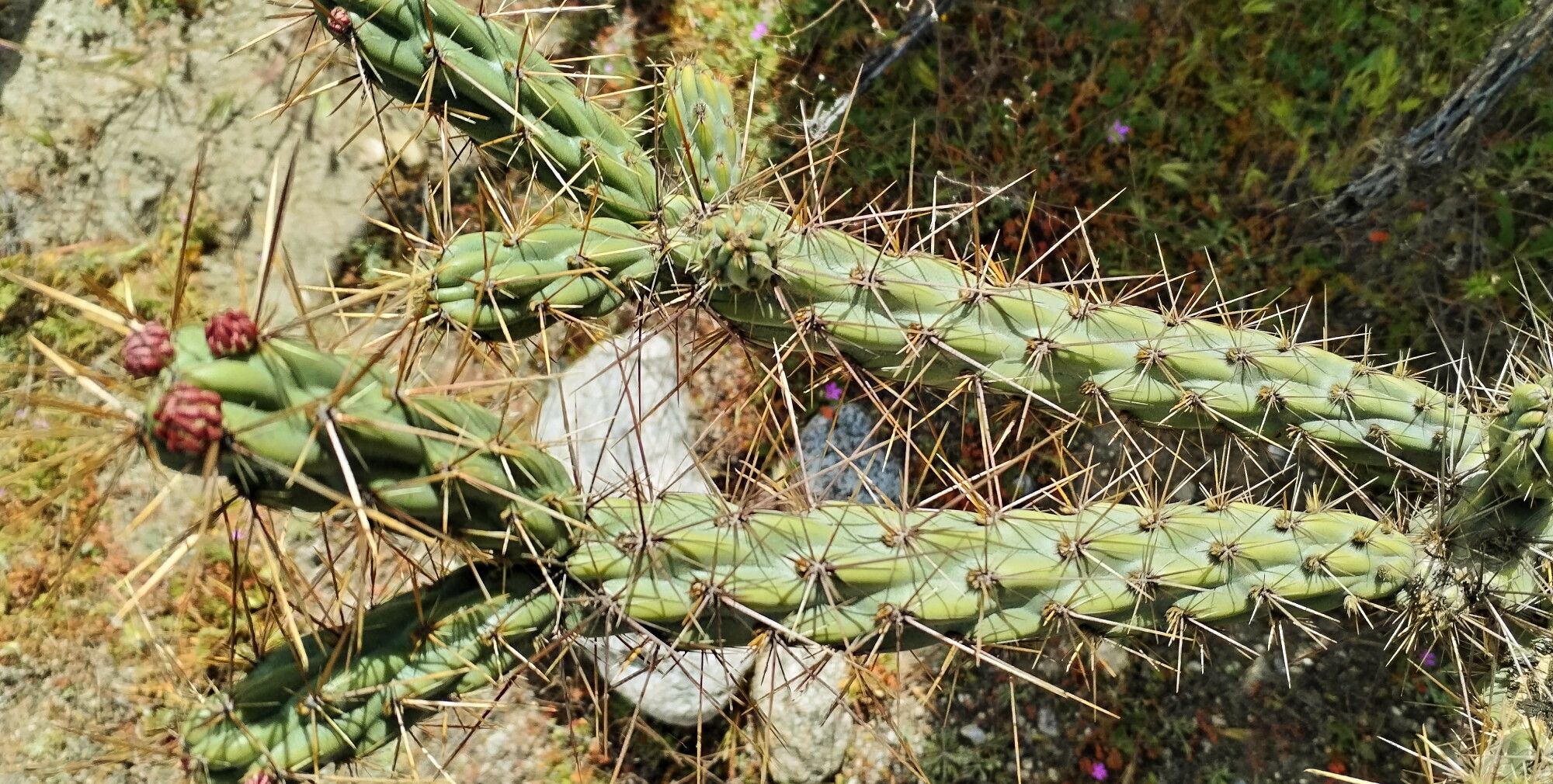
Cylindropuntia whipplei, commonly known as Whipple's cholla or cane cholla, is a species of cactus native to the southwestern United States and northern Mexico. This shrubby plant can grow up to 10 feet tall and 6 feet wide. Its cylindrical stems are covered in spines that can reach up to 2 inches in length. In the spring, the plant produces small yellow flowers, which are followed by edible red fruit in the summer.
Whipple's cholla is well-adapted to arid environments with minimal water availability. It features a deep root system that enables it to access water from underground sources. The spines on the stems serve a dual purpose: they protect the plant from herbivores and provide shade to the plant's surface.
Indigenous peoples have utilized Whipple's cholla for centuries as a source of food, medicine, and building material. In modern times, it is also valued as an ornamental plant because of its unique appearance.
Although Whipple's cholla is not currently facing any major threats, habitat loss due to urbanization or agriculture could pose risks in the future if not properly managed.
Whipple cholla is fairly resistant to diseases and tolerates typical care routines without becoming ill easily. It can, however, be vulnerable to mealybugs; these pests may cause some harm but are usually not a major problem. Regarding care, Whipple cholla is drought-tolerant and does not require frequent watering. It can go long periods without water and needs little fertilizer. That said, it is very prone to root rot if it receives poor light and is overwatered. In general, Whipple cholla is a good choice for people who prefer low-maintenance plants, though it remains important to know and meet its basic requirements. It is especially appropriate for those who are away for extended periods and might forget to water regularly.
How to keep Cylindropuntia Whipplei.
Light
Whipple cholla thrives in places that receive plentiful light throughout the day. Its native habitats were exposed to naturally unfiltered sunlight all day long. Although the plant can tolerate low-light conditions, this may affect its growth and health, possibly resulting in plants that do not thrive or are unhealthy.
Water
The Whipple cholla is well-suited for arid environments, thanks to its high drought tolerance and ability to thrive with minimal moisture. Watering it every four weeks is sufficient to meet its needs. Usually grown outdoors, this plant thrives in full sunlight and is an excellent choice for xeriscaping because it can store water in its succulent structure.
Temperature
Whipple cholla is native to habitats where temperatures typically range from 41 to 95 °F (5 to 35 ℃). Those temperatures are ideal for its growth and should be matched in its habitat. If necessary, seasonal adjustments can be implemented to maintain this ideal.
Fertilizer
For Whipple cholla, light doses of fertilizer once or twice a year during the growing season are adequate. Avoid fertilizing in winter and summer when it is dormant. Use less fertilizer for repotted plants and wait a couple of months after repotting before applying fertilizer. Fertilizing supports healthy growth and encourages blooms.
Pruning
The Whipple cholla has dense, spiny stems and needs careful pruning in late spring to stay healthy and maintain its shape. To prevent infections, use sterilized tools to remove any damaged sections. Thin out crowded areas to improve air circulation, and always wear protective gloves to handle the plant safely. Proper pruning reduces pest problems and encourages healthy growth.
Botanical profile.
- Plant Type
- Shrub
- Life Cycle
- Perennial
- Genus
- Cylindropuntia
- Family
- Cactaceae
- Hardiness Zone
- 5-10
- Mature Height
- 2.13 m
- Mature Spread
- 1.52 m
- Leaf Color
- Green
- Leaf Type
- Evergreen, Deciduous
- Flower Color
- Yellow
- Flower Size
- 2.03 cm to 5.08 cm
- Bloom Time
- Late spring, Early summer
- Planting Time
- Spring, Autumn
- Harvest Time
- Mid summer, Late summer, Early fall
- Native Area
- North America, South America
Other names.
Reader questions.
How should I water my Whipple cholla plant?
Your Whipple cholla doesn't have specific preferences when it comes to watering. You can use common watering tools like cans, hoses, or cups to water it. It's important to water the plant directly on the soil, making sure all areas receive equal moisture to support the entire root system. Filtering the water can be helpful as tap water may contain harmful particles. Also, using water that is at or slightly above room temperature is beneficial as extremely cold or hot water can shock the Whipple cholla. However, overall, the plant usually responds well to any type of water.
Do I have to give my Whipple cholla plant fertilizer?
Fertilizing your Whipple cholla is important for several reasons. One of the main benefits is that it helps the cholla produce beautiful blooms. To achieve optimal results, it is best to fertilize in early spring. Additionally, fertilizer provides the cholla with ample energy that it can store in the ground while it is dormant. This energy is especially useful during the fall planting or late spring, as it allows the cholla to have more resources when it enters a period of active growth again.
How many hours of sunlight per day does Whipple cholla need to grow healthy?
To ensure healthy growth, it is important to provide Whipple cholla with a minimum of 3-6 hours of sunlight every day. Although most plants that can tolerate partial sunlight can also do well in full sun, they are more adaptable because they require less light for photosynthesis compared to plants that need full sun or partial shade.
What temperature is best for Whipple cholla plants?
Whipple cholla thrives best in temperature ranges between 65-80℉ (18-27℃). During the main growing phase, it can tolerate temperatures as high as 95℉ (35℃) and as low as 15℉ (-10℃). This species can survive freezing winter temperatures because it is tolerant of cold conditions. The ideal temperature range for Whipple cholla is 65-80℉ (18-27℃), with the highest tolerable range being 85-95℉ (30-35℃) and the lowest tolerable range being -5 to 15℉ (-20 to -10℃) or colder.
What should I do if I give my Whipple cholla too much water or not enough water?
Outdoor plants, especially newly planted ones or seedlings, are prone to lack of watering. Make sure to water them enough for a few months while they are still small or newly planted. Once the roots are established, Whipple cholla can mostly rely on rain. When your Whipple cholla is in pots, overwatering is more likely. If you accidentally overwater your plant, take immediate action. Stop watering to minimize the impact. Remove the Whipple cholla from its pot and inspect the roots. If there is no root rot, you can return the plant to its container. If you find signs of root rot, trim the affected roots and consider applying fungicide to prevent further damage. Repot the Whipple cholla in well-draining soil. In the case of underwatering, simply water the Whipple cholla more frequently. This is an easy fix. If underwatered, the plant's leaves will droop, dry out, and fall off. The leaves will regain fullness after sufficient watering. Adjust your watering frequency immediately when underwatering occurs.
When should I fertilize my Whipple cholla plant?
For successful fertilization of Whipple cholla, timing is key. It's important to avoid fertilizing too early, while the plant is still dormant, as the fertilizer won't be effective and might be washed away by rainwater, causing waste and pollution. Instead, the first application of fertilizer should be done in the early spring. Afterward, continue fertilizing once a month until early summer.
What kind of sunlight does Whipple cholla require?
For optimal growth, Whipple cholla thrives when exposed to full or part sun. To ensure the best performance, it is recommended to provide direct morning light. However, during the summer months, it is important to shield the plant from the intense afternoon sun. Excessive exposure to the hot afternoon sun in moderate climates can result in leaf burn and negatively impact the plant's overall appearance and health.
Should I change the temperature for Whipple cholla at different stages of growth?
According to research, Whipple cholla plants tend to show stunted growth when temperatures are consistently high, especially during the development of axillary buds and main shoots. To promote strong growth after germination or transplanting, it is advisable to maintain cooler temperatures of around 65℉ (18℃).
How often do I need to water my Whipple cholla?
Most outdoor plants can grow fine with natural rainfall. But if your area doesn't get much rain, you should water your plants every 2 weeks in the spring and fall. In the summer, you'll need to water more often. During the winter, when plants grow slower and need less water, you can water less frequently or not at all. If you have a young or newly planted Whipple cholla, it needs more water to establish and grow. But once it matures, it becomes more adaptable and drought tolerant. For potted Whipple cholla, there are two ways to determine how often to water. You can set a regular watering schedule, like once a week or every other week. However, this may not always work since it doesn't consider the specific conditions of your plant's environment. Another approach is to check the soil moisture. Wait until the top two to four inches of the soil in the pot has dried out before watering again. This method is especially important during summer when the plant needs more water.
When is the best time to not add fertilizer to my Whipple cholla plant?
To help Whipple cholla thrive, it's important to be mindful of its fertilizer needs. Avoid using a fertilizer high in nitrogen, as it can result in leafy growth but fewer blooms. Instead, opt for a fertilizer that contains a lower level of nitrogen compared to other nutrients. It's also crucial to time your fertilization correctly. Avoid fertilizing after early autumn, as this can cause excessive growth just before winter. Additionally, refrain from fertilizing during hot and dry periods, as dry soil doesn't effectively deliver nutrients, and the resulting growth may require more water than is available. For best results, apply fertilizer earlier in the season when temperatures are cooler. Lastly, be aware that Whipple cholla can absorb fertilizer intended for nearby plants or lawns, so be cautious not to inadvertently provide the tree or shrub with a double-dose of fertilizer.
Can the sun harm Whipple cholla plants? How can we shield Whipple cholla from the sun and heat?
Indoor Whipple cholla plants can be easily damaged by direct sunlight during outdoor movements. The best approach to prevent sunburns is to gradually move the pots from a shaded area to a brighter spot. However, even plants accustomed to the summer sun can be harmed by extreme heat. In heatwaves, it's crucial to keep the soil consistently moist to help the plants cope with excessive heat. To safeguard sensitive Whipple cholla during severe weather events, consider relocating container plants to areas with afternoon shade or using a shade cloth.
How can I make sure Whipple cholla stays warm during cold weather?
Whipple cholla plants are able to tolerate freezing temperatures when planted directly in the ground, as long as the temperatures do not drop below 15℉ (-10℃) during winter. However, if these plants are planted in pots or containers, their roots need extra protection from the cold. To do this, you can wrap the container in a blanket or bring it indoors to ensure it is fully shielded from the elements.