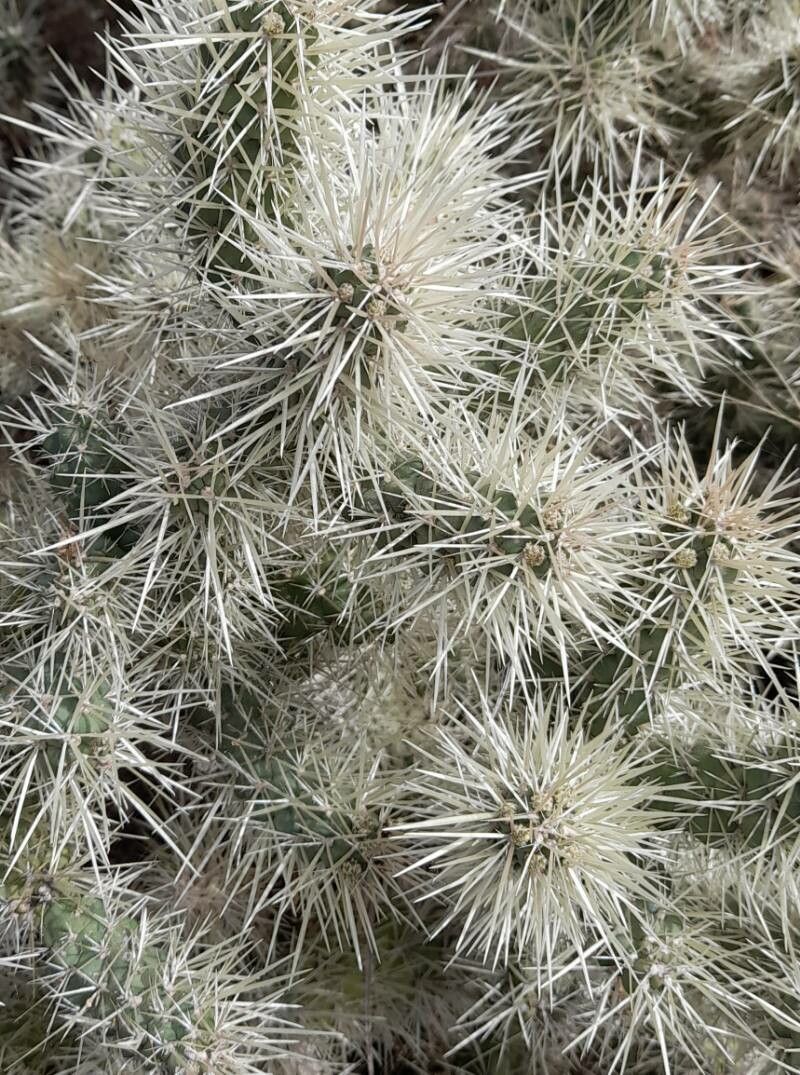
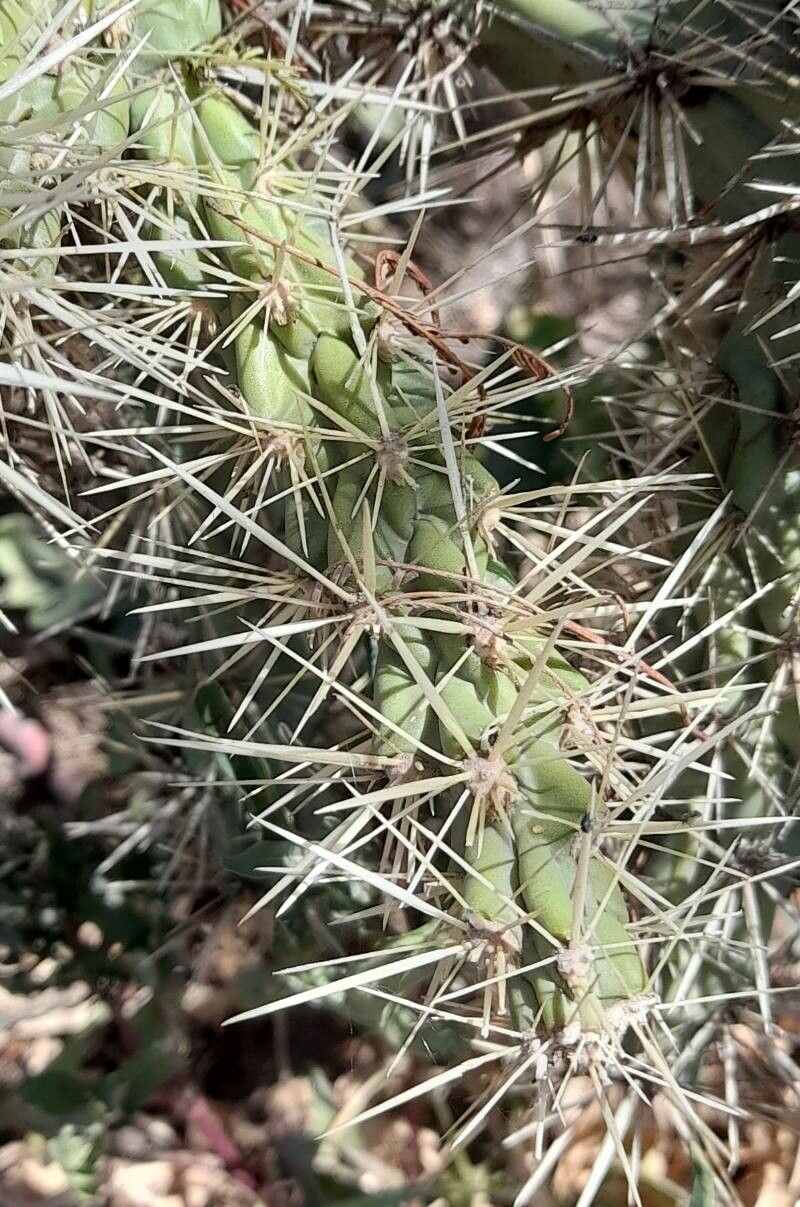
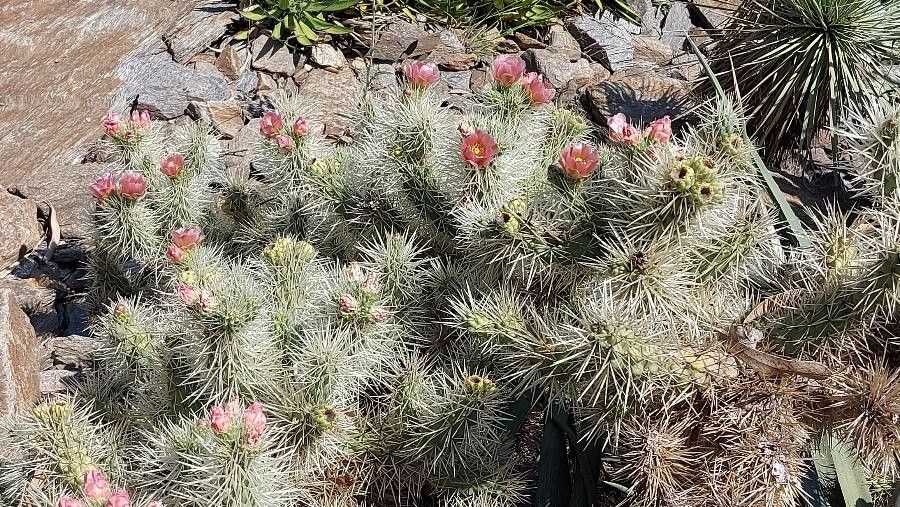
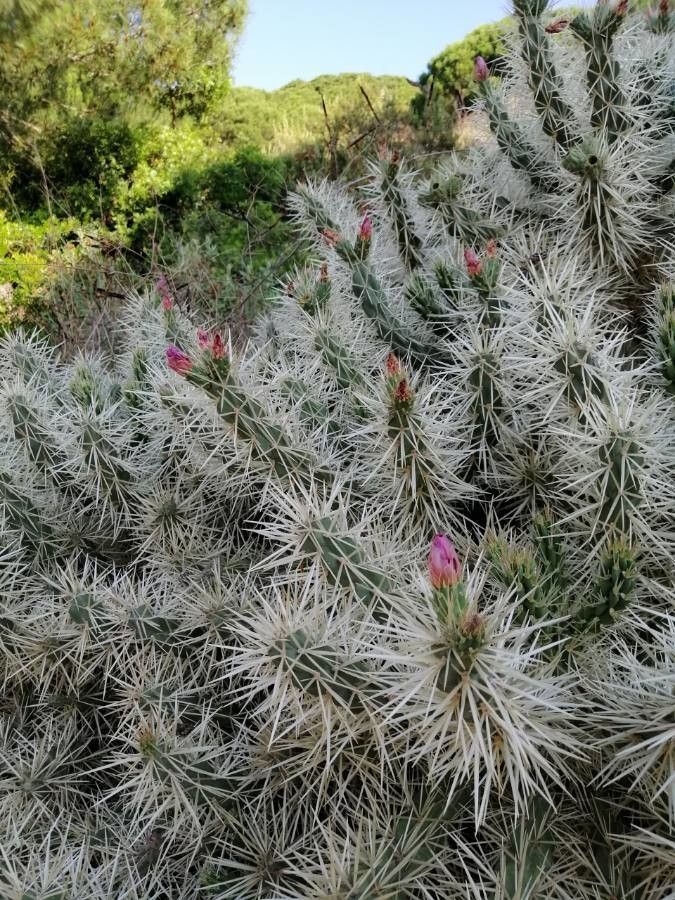
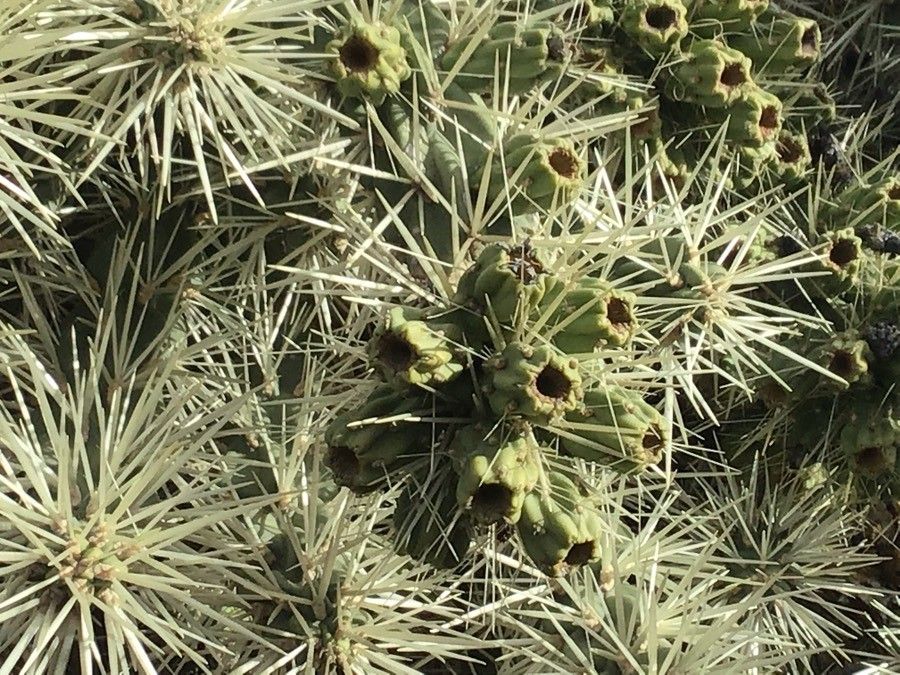
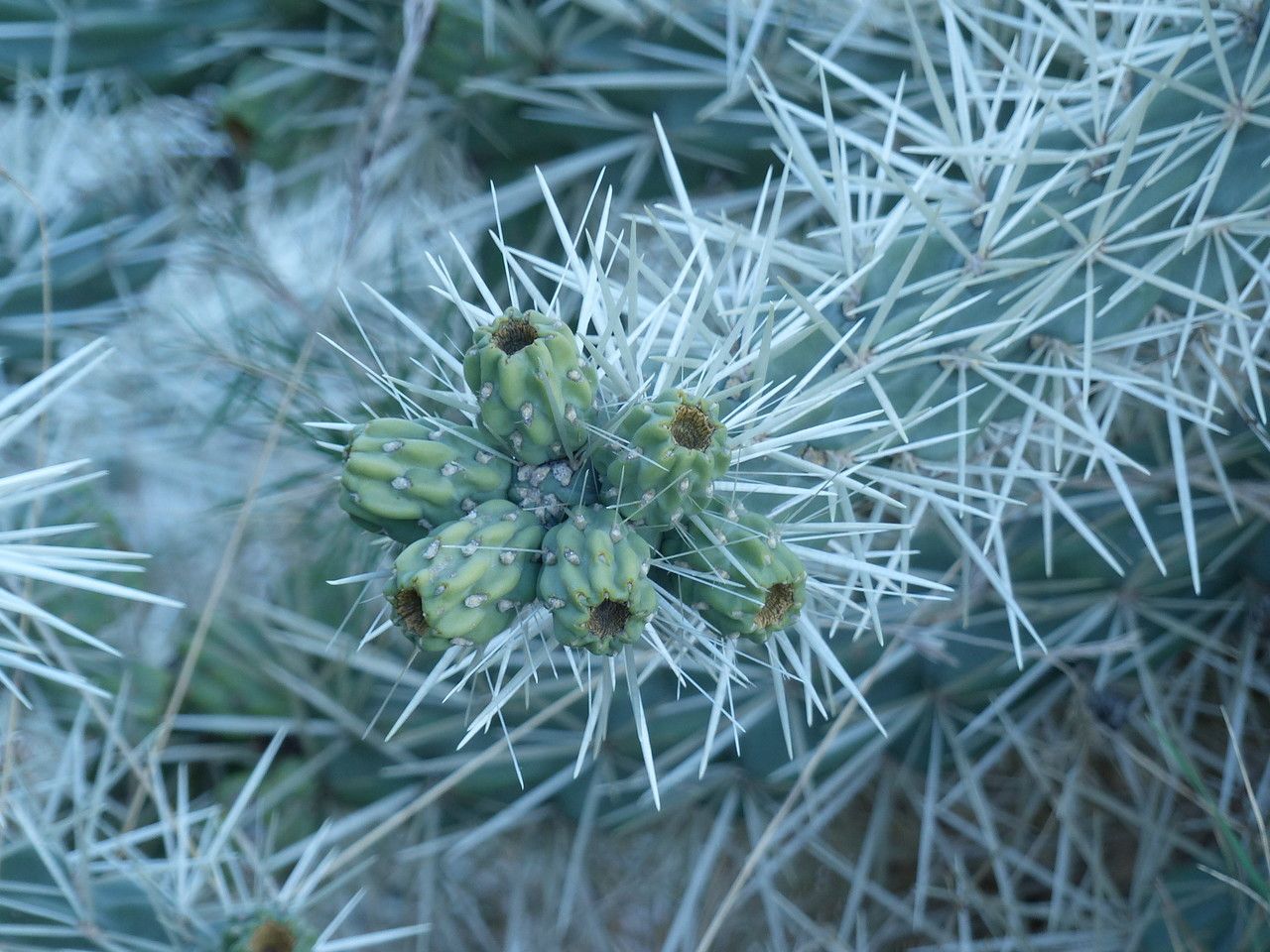
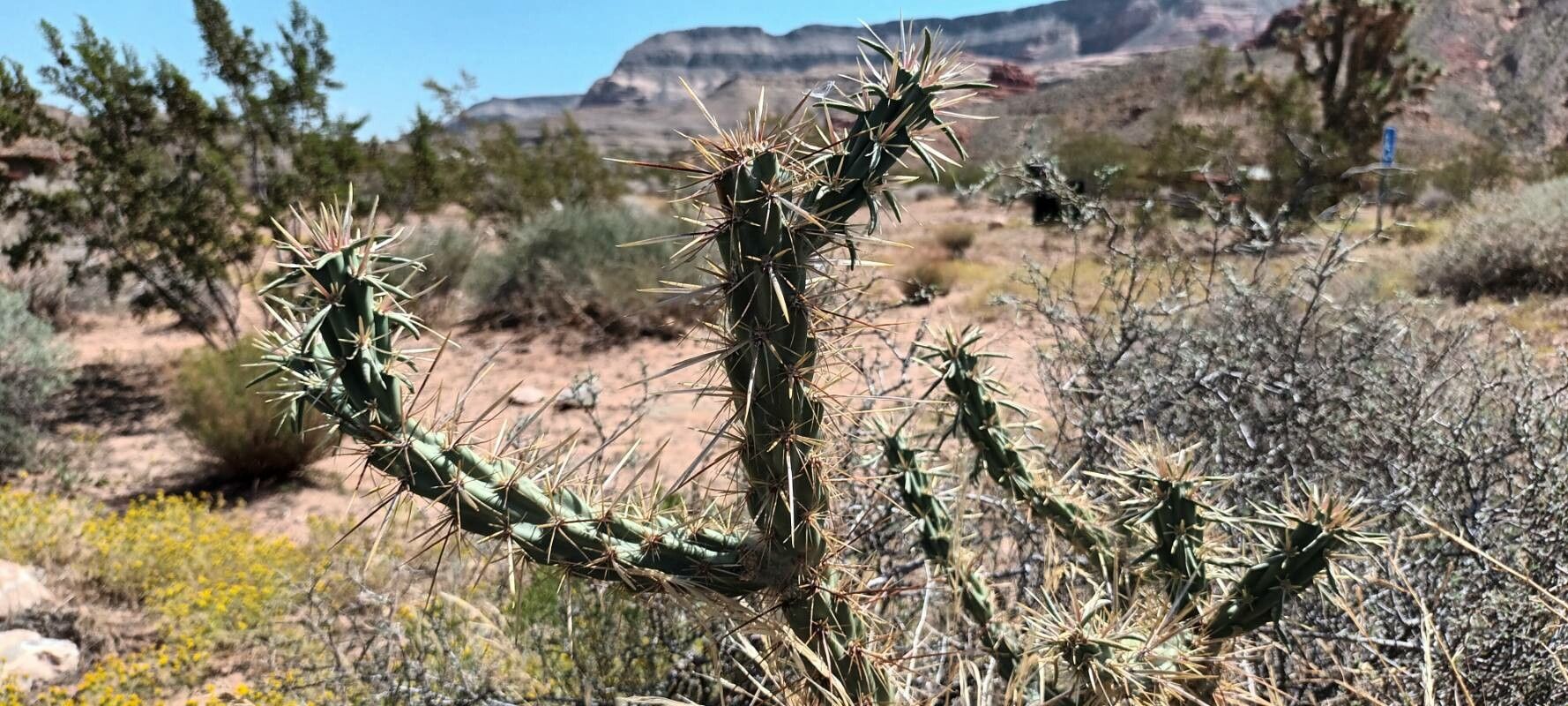
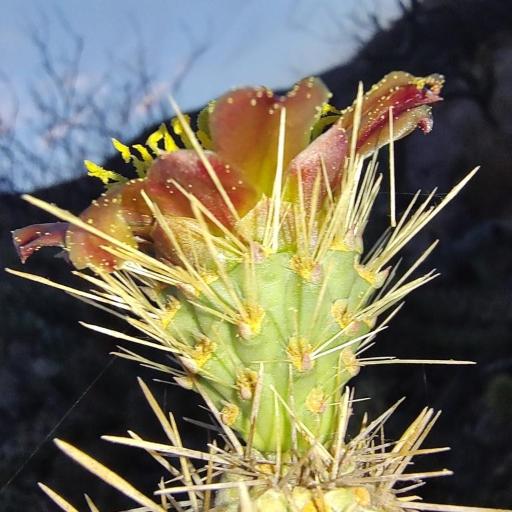
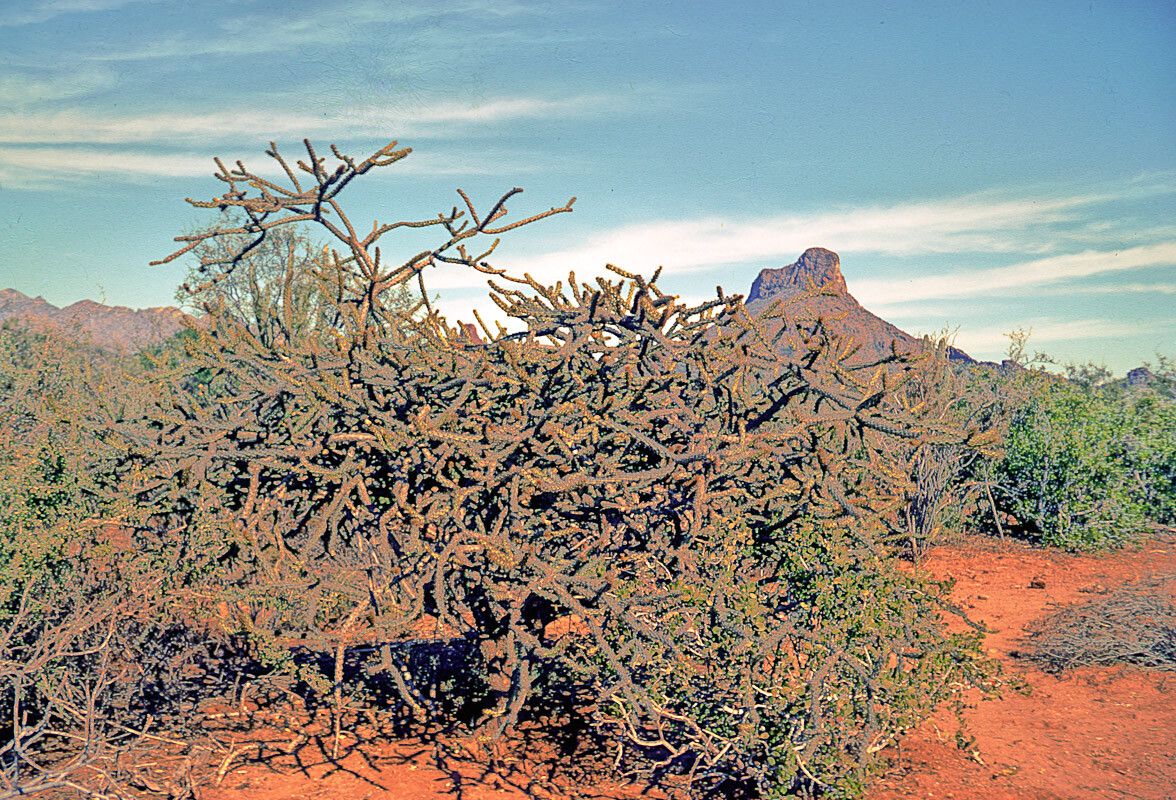
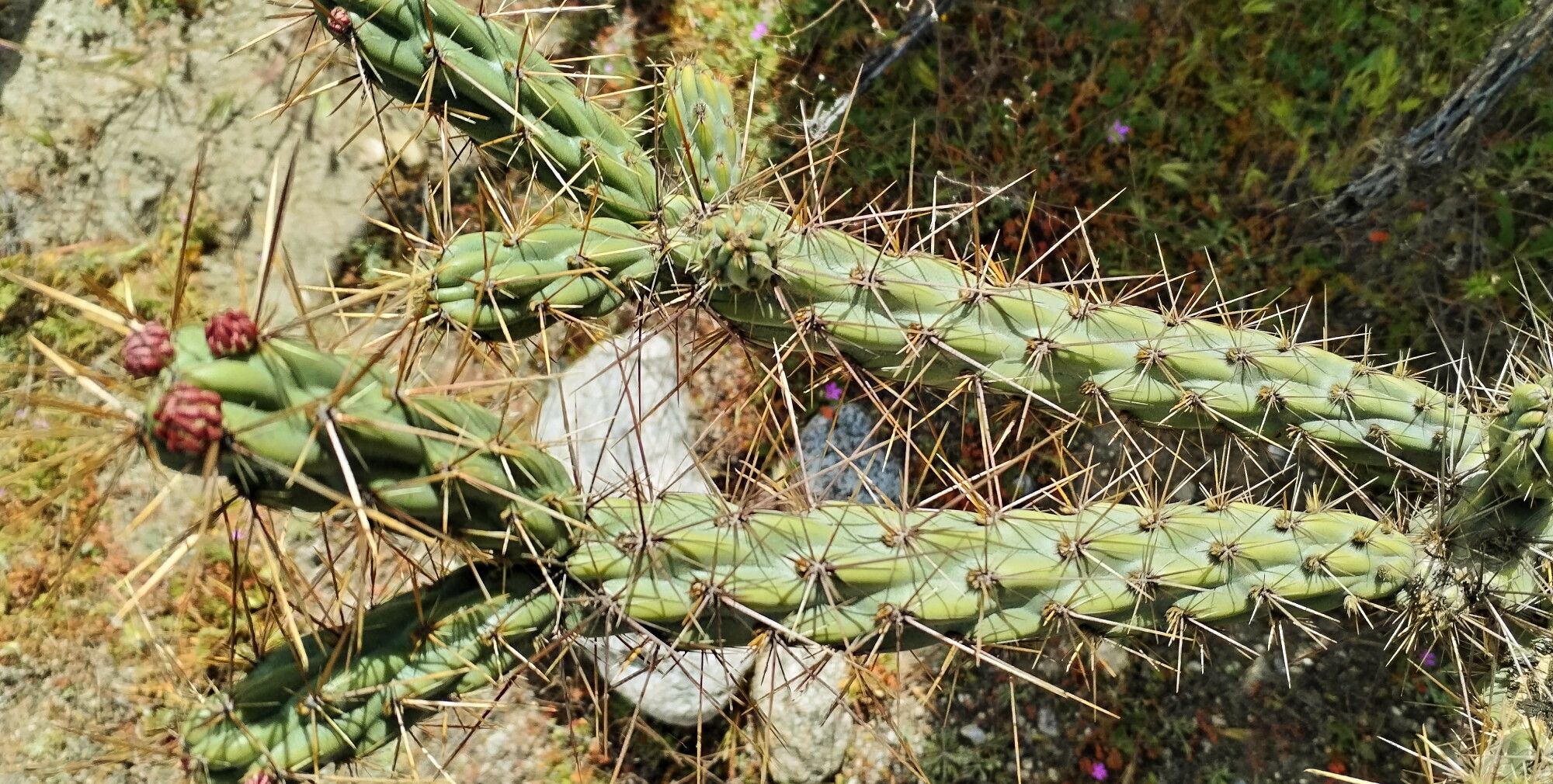
Cylindropuntia tunicata, commonly known as the Cholla cactus, is a species of cactus native to the southwestern United States and northern Mexico. This shrubby plant can grow up to 3 meters tall and 2 meters wide. Its cylindrical stems are covered with yellowish-brown spines, which are modified leaves that help protect the plant from predators.
The Cholla cactus produces small, greenish-yellow flowers that bloom from April to June, followed by small fruits containing seeds. These seeds can be dispersed by animals or the wind.
This cactus species prefers well-drained soils and full sun exposure but can also tolerate partial shade. While it is drought-tolerant, it requires occasional watering during hot summers.
For centuries, Native Americans have used the Cholla cactus for medicinal purposes, including treating wounds, infections, and digestive issues.
Overall, Cylindropuntia tunicata is a unique desert plant with striking features, such as its cylindrical stems covered in spines. These characteristics make it an interesting addition to any garden or landscape design project.
Thistle cholla has strong disease resistance and tolerates routine care without becoming ill easily. It can, however, be prone to mealybugs; these pests may cause some harm but are usually not a major risk. Regarding care, Thistle cholla is drought-tolerant and does not require frequent watering. It endures long stretches without water and needs little fertilizer. That said, it is very susceptible to root rot if kept in poor light and is overwatered. In general, Thistle cholla is well suited to people who want a low-maintenance plant, but it remains important to know and meet its basic needs. It is especially appropriate for those who are away for long periods and may forget to water regularly.
How to keep Cylindropuntia Tunicata.
Light
Thistle cholla is adapted to environments with extensive sunlight, which greatly contributes to its healthy growth. The sun's rays, plentiful in its natural habitat, are important at all stages of its development. Excessive exposure can cause stress, while too little light can impede its growth.
Water
Thistle cholla is a drought-tolerant plant that requires only minimal watering—about once every 1-2 weeks is sufficient. It thrives outdoors in well-draining soil that prevents waterlogging, showcasing its adaptation to arid environments and resilience to dry climates.
Temperature
Thistle cholla naturally occurs in habitats where temperatures range from 59 to 100 °F (15 to 38 ℃). It prefers warm, dry conditions and is able to tolerate considerable temperature swings. For best growth, adjust temperatures each year as necessary, paying special attention during colder months.
Fertilizer
For Thistle cholla, light applications of fertilizer once or twice a year during the growing season are enough. Do not fertilize in winter or in summer when the plant is dormant. Cut back on fertilizer for repotted plants and wait a couple of months after repotting before applying fertilizer. Fertilizing helps maintain healthy growth and encourages blooms.
Pruning
Thistle cholla should be pruned to maintain its shape and remove any dead parts, ideally during the winter. It's important to use clean tools to prevent the spread of disease. Regular pruning encourages healthier growth, reduces plant density, and lowers the risk of pests and fungal infections common in cacti.
Botanical profile.
- Plant Type
- Shrub
- Life Cycle
- Perennial
- Genus
- Cylindropuntia
- Family
- Cactaceae
- Hardiness Zone
- 8-11
- Mature Height
- 2.44 m
- Mature Spread
- 1.52 m
- Leaf Color
- Green, Dark Green
- Leaf Type
- Evergreen
- Flower Color
- Yellow, Green
- Flower Size
- 3.05 cm to 5.08 cm
- Bloom Time
- Late spring, Early summer, Mid summer
- Planting Time
- Spring, Autumn
- Harvest Time
- Mid summer, Late summer, Early fall
- Native Area
- Mexico
Other names.
Reader questions.
How should I water my Thistle cholla plant?
Your Thistle cholla is not picky about how you water it. You can use any common watering tool like cans, hoses, or cups. It's important to water directly on the soil and ensure all areas are evenly moistened. Using filtered water is preferable as tap water may have harmful particles. Water should be at or slightly above room temperature to avoid shocking the plant. However, the Thistle cholla usually does well with any type of water.
Why should I add fertilizer to my Thistle cactus?
No matter which type of Thistle cholla you have, regular fertilization is important for the overall health of your plant. Supplying the right nutrients will promote stronger growth, enhance resilience to tough conditions, and help fight off diseases and pests. Keeping the foliage intact is crucial as it is one of the plant's most attractive features. To achieve this, follow a specific fertilization schedule for your Thistle cholla, which will result in deep-colored leaves and an overall lush appearance.
What are the sunlight requirements for Thistle cholla?
Thistle cholla requires full sun for its healthy growth, meaning it should receive above 6 hours of sunlight daily. It's crucial to observe the movement of sunlight through your garden to ensure your plants are positioned in areas that offer a balance of light and shade, optimizing their growth and happiness.
What is the native environment for Thistle cholla?
Thistle cholla thrives in warm and dry climates, native to environments where temperatures range between 59 to 100 °F (15 to 38 °C). This plant is adapted to handle significant fluctuations in temperature, making it suitable for regions that experience a wide range of weather conditions.
What do I do if I give my Thistle cholla plant too much or too little water?
Outdoor plants, especially newly planted ones or seedlings, are often prone to lack of watering. It's important to remember that you need to consistently water them enough for a few months until the tree is small or just planted. Once the roots are established, Thistle cholla can rely on rain most of the time. When your Thistle cholla is planted in pots, overwatering is more likely to happen. If you accidentally overwater your Thistle cholla, you should take immediate action to fix the situation. Firstly, stop watering the plant right away to minimize the effects of overwatering. Then, remove the Thistle cholla from its pot and inspect the roots. If you find that none of the roots have developed root rot, you can return the plant to its container. However, if there are signs of root rot, trim away the affected roots and consider applying a fungicide to prevent further damage. Finally, repot the Thistle cholla in well-draining soil. In the case of underwatering, simply water the Thistle cholla more frequently. Underwatering is often an easy fix. When the plant is underwatered, its leaves will droop, dry out, and fall off. However, they will quickly return to fullness after sufficient watering. It's important to correct your watering frequency as soon as you notice underwatering happening.
When should I fertilize my Thistle cholla plant?
To ensure healthy growth of your Thistle cholla, it is recommended to fertilize it for the first time in late winter or early spring. This will provide the necessary nutrients for the plant to thrive when the weather warms up. In warm climate regions, it is beneficial to provide an additional fertilizer feeding in early fall. This not only enriches the soil with nutrients for the upcoming growing season, but also helps the Thistle cholla withstand winter without foliage damage. By fertilizing earlier, the new branches will have enough time to grow and be able to endure the cold winter.
How essential is sunlight for Thistle cholla's growth?
Sunlight plays a critical role in the growth of Thistle cholla, with the plant being accustomed to extensive exposure in its natural environment. The right amount of sunlight is key throughout all stages of its growth. While overexposure can cause stress, insufficient light will hinder its development.
What temperature range can Thistle cholla tolerate?
Thistle cholla has a moderate tolerance to cold and can generally withstand temperatures above -5°C without needing extra protection. For optimal growth, it's best to ensure the temperature remains within its preferred range of 59 to 100 °F (15 to 38 °C). However, if temperatures are expected to drop below -5°C, it's necessary to take temporary measures to protect the plant from cold.
How often do I need to water my Thistle cactu
Most plants can grow naturally with rainfall, but if your area lacks rainfall, water your plants every 2 weeks in the spring and fall. Water more frequently in the summer and less sparingly in the winter. For Thistle cholla, water more regularly if it's young or newly planted to help it establish and grow. For potted plants, you can either follow a predetermined watering schedule, like once a week or once every other week, or adjust the watering frequency based on soil moisture. In the summer, when the plant's water needs are highest, a predetermined schedule may not be enough. Instead, wait until the top 2 to 4 inches of soil in the pot have dried out completely before watering again.
When is a bad time to fertilize my Thistle cholla?
There are certain times of the year when it is best to avoid fertilizing your Thistle cholla. The first period is in the early and mid-winter months when the plant is in a dormant state and does not require any nutrients. It is also not recommended to fertilize the Thistle cholla during the late spring and summer when the weather is typically hotter and dryer. Fertilizing during this time can have a negative effect on the plant. To prevent any issues, it is advisable to follow a fertilization schedule that involves feeding only during the early spring and early fall.
Can artificial lighting be used for Thistle cholla, and how?
Yes, artificial lighting can be used for Thistle cholla, especially indoors where natural sunlight is limited. It's important to select the appropriate type of light, with LED lights being a common choice due to their ability to provide the specific wavelengths needed by plants. The required intensity varies from 10-50W per square foot depending on the plant's sunlight needs. The light source should be placed 12-36 inches above the plant to mimic natural sunlight, ensuring the plant receives 8-12 hours of light daily.
How can Thistle cholla be protected during cold temperatures?
To protect Thistle cholla from cold temperatures, especially if they drop below -5°C, you should wrap the plant with plastic film, fabric, or employ other insulating materials to maintain a warmer environment. Once the temperatures rise again, it's important to remove these protective layers to prevent any potential damage due to overheating or limited air circulation.