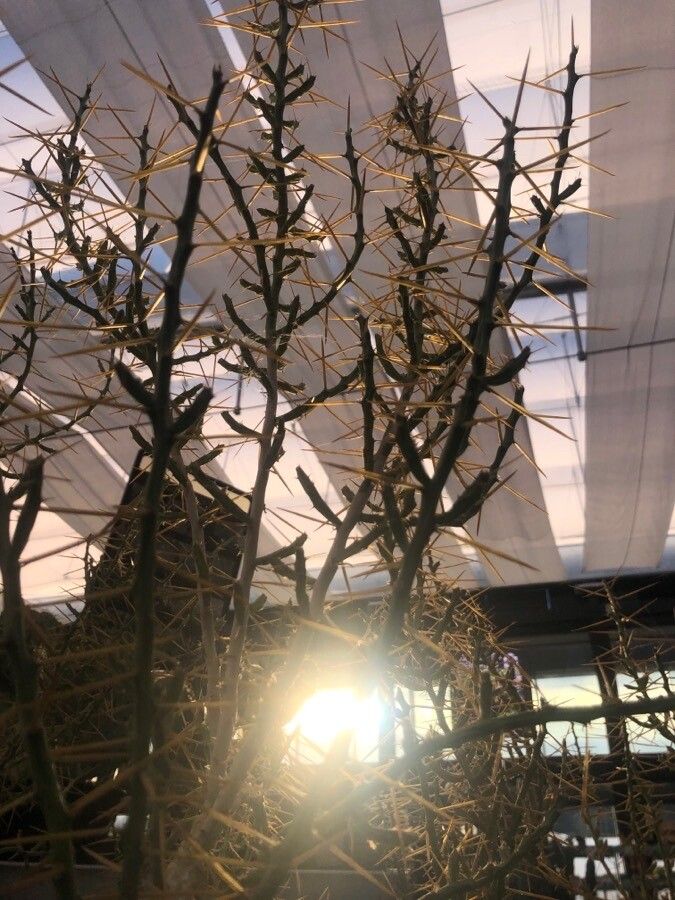
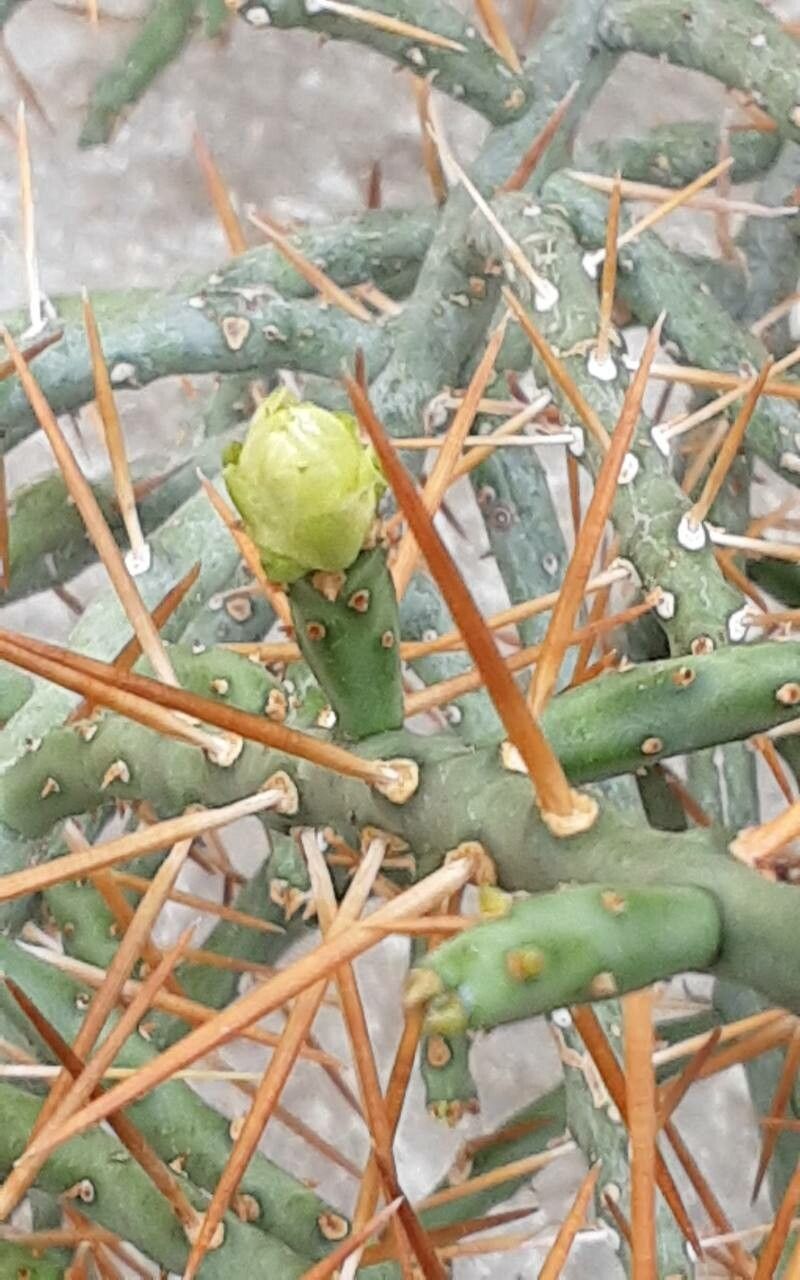
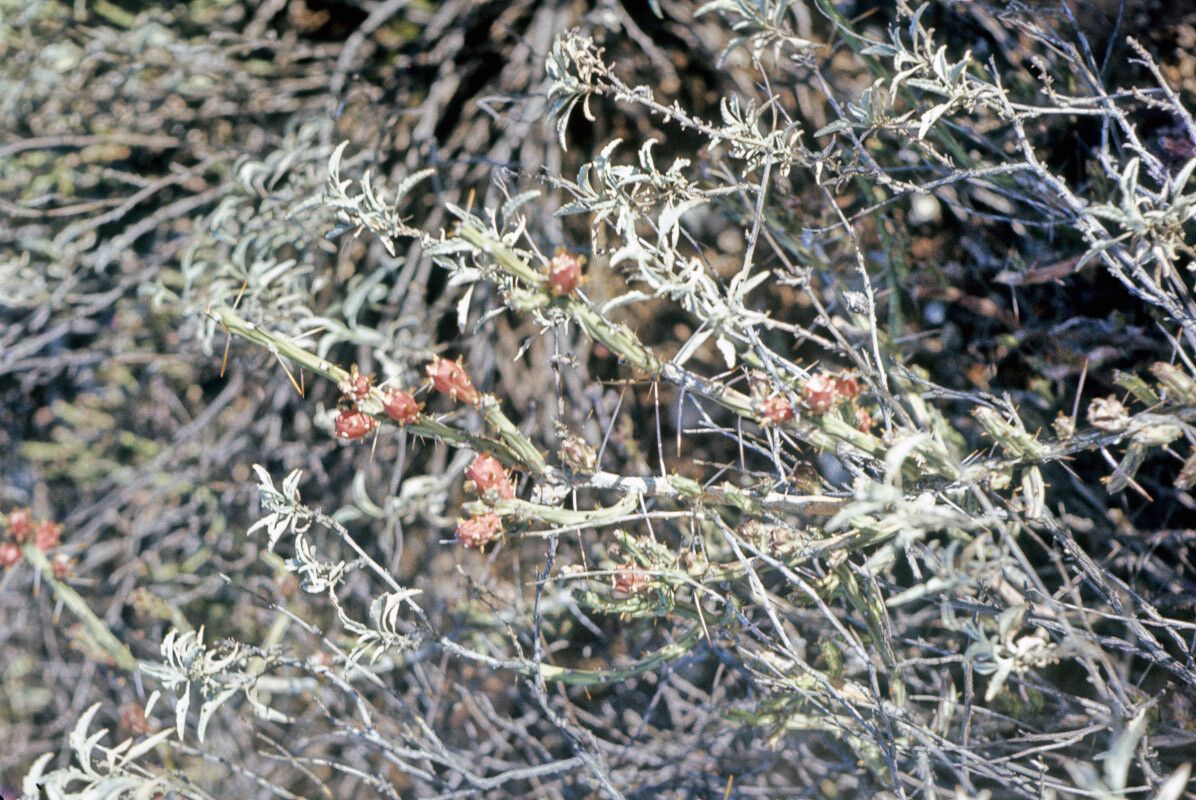
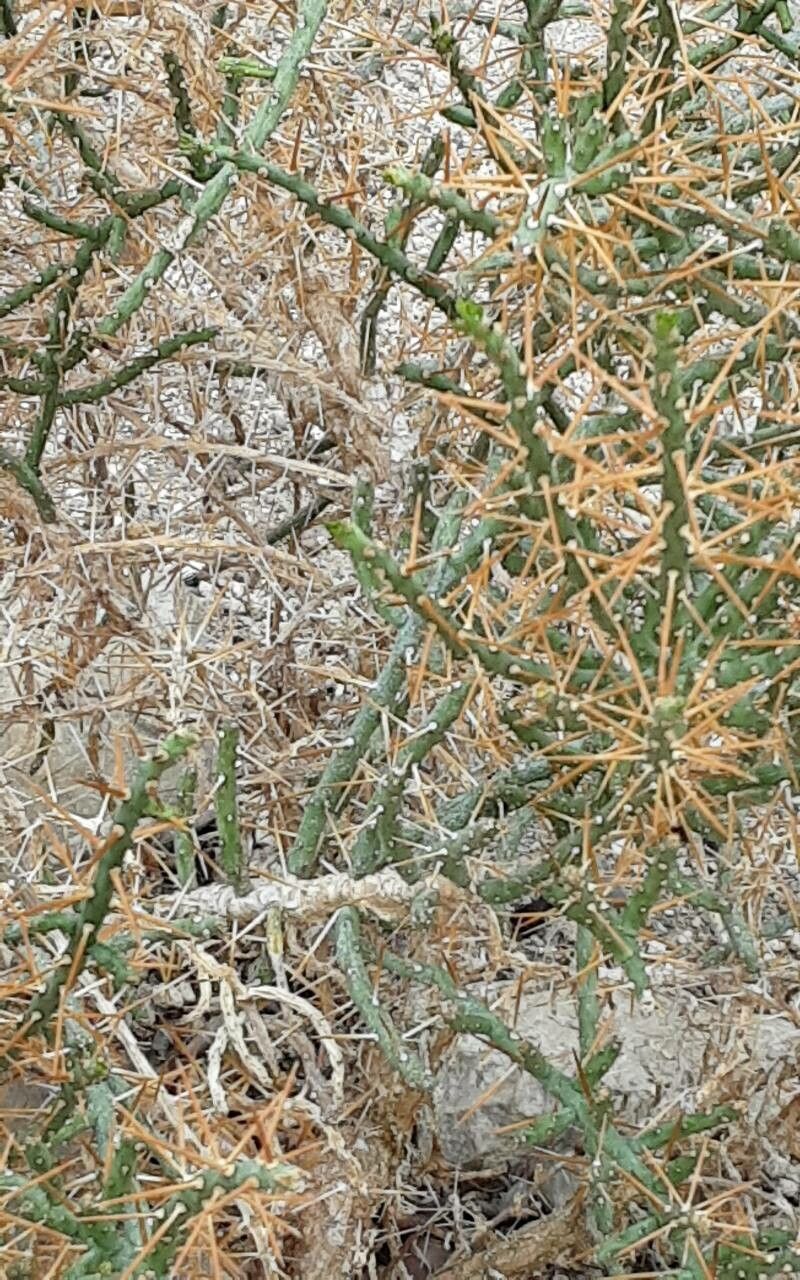
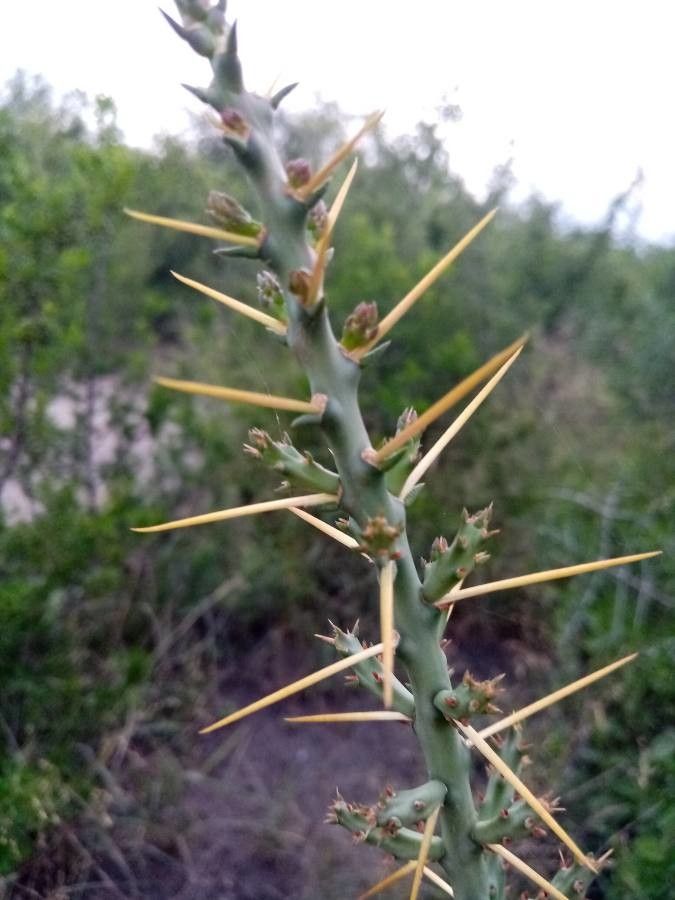
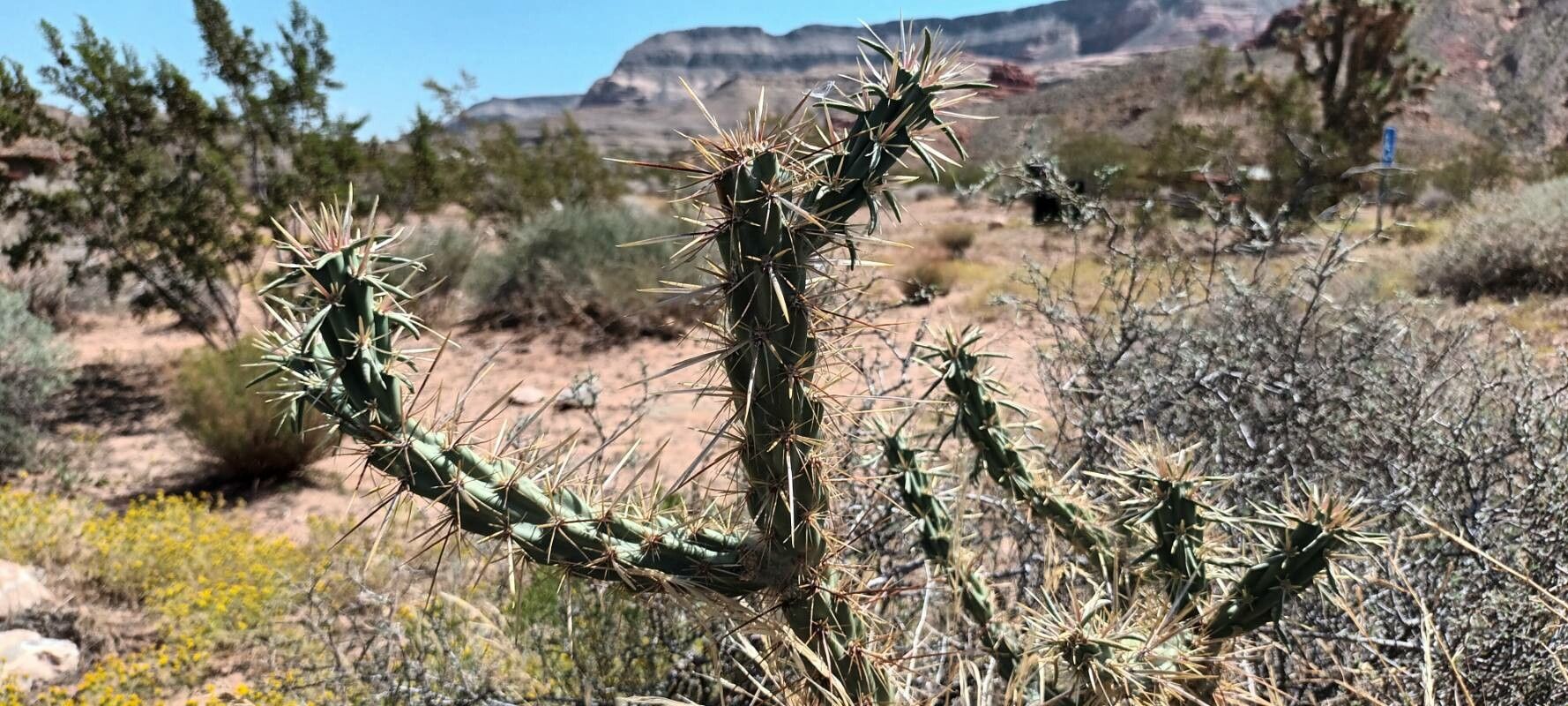
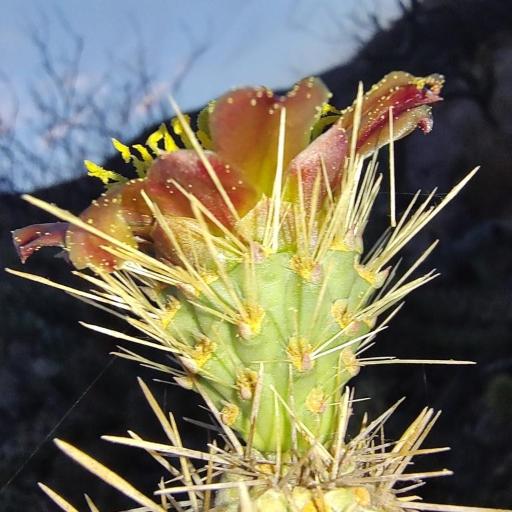
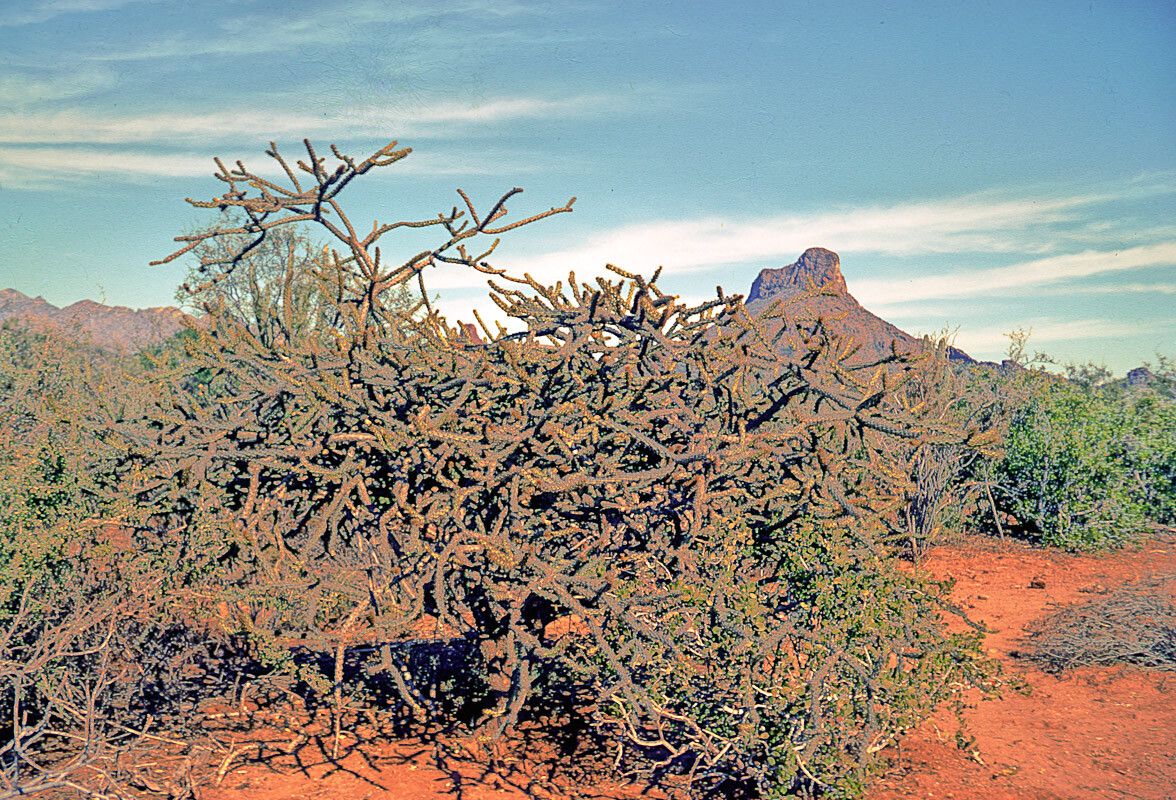
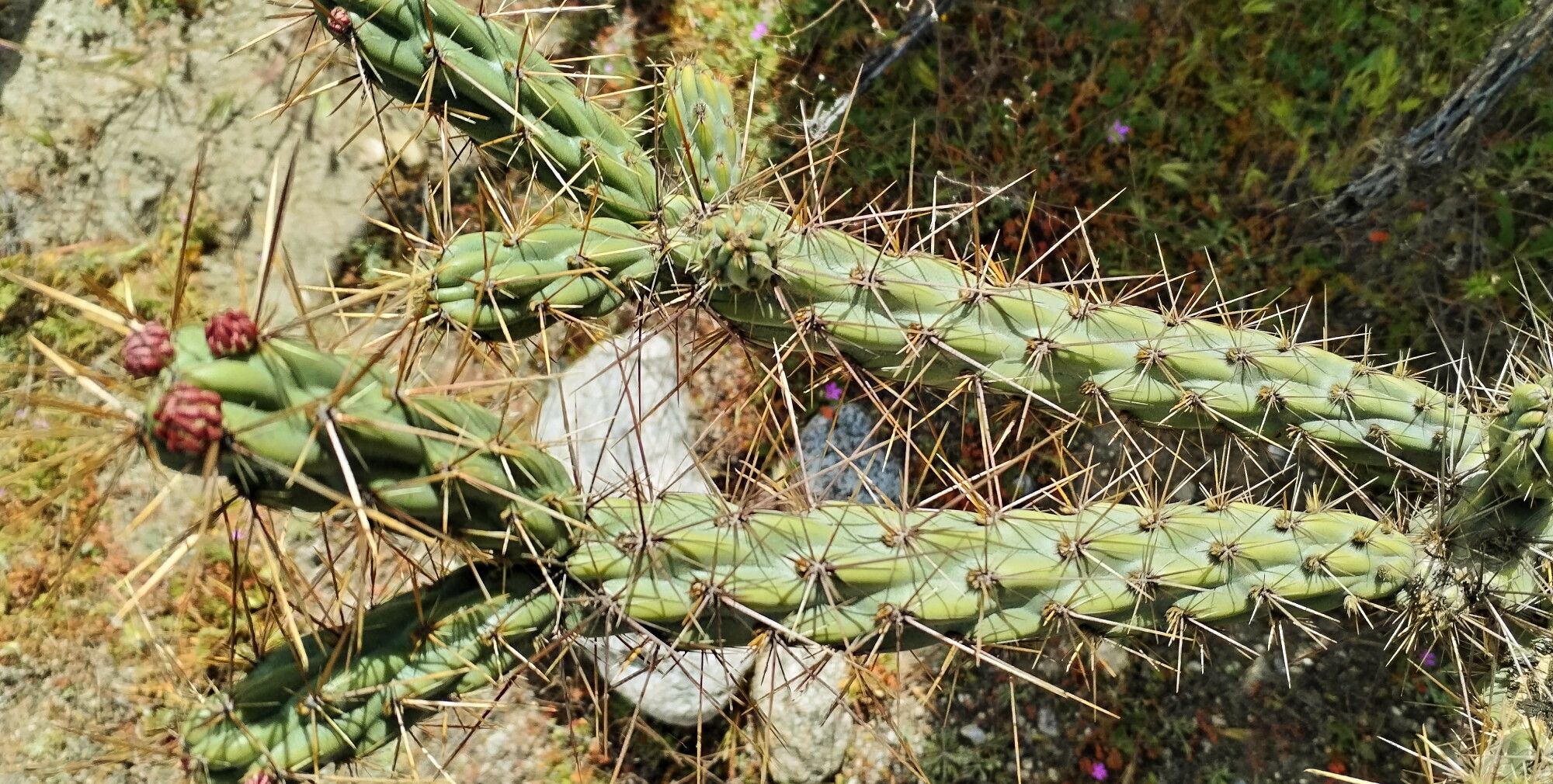
Cylindropuntia leptocaulis, commonly known as the Christmas cactus or pencil cactus, is a species of cactus native to the southwestern United States and northern Mexico. This shrubby plant can grow up to 10 feet tall and 6 feet wide. Its cylindrical, segmented stems are adorned with small spines along their edges. In the spring, the plant produces small yellow flowers, which are followed by red or purple fruit in the summer. Well adapted to arid environments, the Christmas cactus can survive long periods of drought by storing water in its stems. It thrives in well-drained soil and full sun exposure but can also tolerate partial shade. For centuries, Native American tribes have used various parts of this plant for medicinal purposes to treat ailments such as fever, diarrhea, and skin conditions. While its unique appearance makes it an attractive addition to a garden or landscape, it should be handled with care. The plant's spines can cause irritation if touched without protection.
The Desert christmas cactus is fairly disease-resistant and tolerates normal care without becoming ill easily. It can, however, be vulnerable to mealybugs; these pests may cause some damage but are generally not a serious threat. Regarding care, the Desert christmas cactus is drought-tolerant and does not need frequent watering. It can withstand long periods without water and requires little fertilizer. That said, if lighting is poor and it is overwatered, it is highly prone to root rot. Overall, the Desert christmas cactus suits people who want to spend less time on plant care, but it remains important to know and meet its basic needs. It is particularly well-suited to those who are away for long periods and may forget to water regularly.
How to keep Cylindropuntia Leptocaulis.
Light
The desert Christmas cactus flourishes with abundant sunlight, reflecting the open, sun-drenched habitat of its origin. Both too much and too little light can adversely affect its growth and overall health. At every stage of growth, generous light boosts its development. However, balance is important because excessive exposure can cause damage.
Water
The desert Christmas cactus is well-adapted to arid environments, allowing it to conserve moisture efficiently. It requires minimal watering, typically needing water only once every four weeks. This plant thrives outdoors in full sun, similar to its native dry habitats, and exhibits high drought tolerance. As a result, it is better suited for garden environments than indoor settings.
Temperature
The desert Christmas cactus is native to dry habitats where temperatures range from 68 to 100 °F (20 to 38 ℃). It does best in these warm conditions. Care adjustments may be necessary during colder seasons to keep the temperature within its preferred range.
Fertilizer
For Desert christmas cactus, apply light amounts of fertilizer once or twice a year during the growing season. Do not fertilize in winter or summer when the plant is dormant. Use less fertilizer for repotted plants and wait a couple of months after repotting before applying fertilizer. Fertilizing supports healthy growth and encourages blooms.
Pruning
The desert Christmas cactus requires very little pruning. Simply remove any withered flowers and branches to help the plant direct its nutrients toward healthy growth.
Pot & Repot
For a desert Christmas cactus, it's best to repot it every 2-3 years in the spring to encourage healthy growth. Choose a container that is only slightly larger than the current one to avoid excess moisture, which can harm the plant. After repotting, use well-draining soil and limit watering until you see new growth, which indicates that the cactus has successfully established itself.
Botanical profile.
- Plant Type
- Shrub, Succulent
- Life Cycle
- Perennial
- Genus
- Cylindropuntia
- Family
- Cactaceae
- Hardiness Zone
- 9-11
- Mature Height
- 0.49 m to 1.83 m
- Mature Spread
- 49 cm to 91 cm
- Leaf Color
- Green, Blue
- Leaf Type
- Evergreen, Deciduous
- Flower Color
- Yellow
- Flower Size
- 1.02 cm to 1.52 cm
- Bloom Time
- Late spring, Early summer
- Planting Time
- Spring, Summer, Autumn
- Harvest Time
- Late summer, Early fall, Mid fall
- Native Area
- Mexico
Other names.
Reader questions.
What should I do if I give my Desert Christmas cactus too much water or too little water?
Desert Christmas cactus is a type of succulent that can tolerate long periods without water. However, if you forget to water it for a month or more, it may show signs of thirst or damage. An underwatered Desert Christmas cactus will look dull and wrinkled, with some plants drying up completely or turning brown. The soil will also be completely dried out. To remedy this, give the plant plenty of water by submerging the pot in water for 5-10 minutes until the soil feels moist on the surface. On the other hand, overwatering can be harmful to the Desert Christmas cactus, leading to root rot. Root rot occurs when fungi and bacteria thrive in wet soil, preventing the roots from absorbing nutrients and water. Symptoms of overwatering include yellow, swollen, translucent organs, and possible bursting from excess water. If left untreated, the plant may turn brown or black and its leaves may fall off easily. Check the soil to confirm if overwatering is the issue. Saving an overwatered Desert Christmas cactus can be challenging but not impossible. Catching the problem early is key. Start by removing the plant from its pot and inspecting the roots and soil. Gently remove wet soil and rinse the roots in room-temperature water to remove any lurking fungus and assess their health. If the roots are dark brown or black, soft, mushy, or slimy, root rot has likely occurred. In severe cases, it may not be possible to save the plant. However, if only some roots are affected, the plant may have a chance. Use sterilized cutting tools to remove unhealthy roots and dip the remaining firm, pale roots in fungicide to eliminate any remaining spores. Repot the Desert Christmas cactus in fresh, well-draining potting soil. While this method may not always work, in most cases the plant will recover and begin new growth in the next growing season.
Why is it important to add fertilizer to my Desert Christmas cactus?
To support healthy growth and encourage blooms, it is beneficial to fertilize desert Christmas cactus. Although it already stores water and nutrients, applying plant food during the growing season adds nutrients to the growing medium.
How much sunlight does the Desert Christmas Cactus need to grow?
To ensure the well-being of your Desert Christmas cactus, it is recommended to provide it with at least 6 hours of sun daily, although more is preferable. The specific minimum number of hours may differ based on sunlight intensity and environmental conditions, but it is unlikely for the cactus to receive excessive sunlight. In fact, they can thrive with up to 14 hours of sun per day.
What temperature is best for your Desert christmas cactus?
The Desert christmas cactus thrives in a specific temperature range, preferably between 75-90℉ (25-32℃). It is important to maintain a minimum temperature of 75℉ (25℃) during early winter to keep the plant healthy. Bringing it indoors during this time can provide extra protection. While the Desert christmas cactus can withstand some extreme temperatures, such as lows of 50℉ (15℃), it is not recommended. If winter conditions are expected outside, it is best to bring the plant inside.
How frequently should I give water to my Desert Christmas cactus?
There is no set rule for how frequently you should water a Desert Christmas cactus. The easiest way to determine when to water is by checking the soil and only watering when it is completely dry. You can test the soil by sticking your finger in the pot or using a moisture meter to check below the surface. If you have planted the cactus in a deep pot, you can use a stick or chopstick to test the moisture level. If it still feels slightly moist, wait a few more days before checking again. In general, most people will need to water their Desert Christmas cactus every two weeks during the summer and once a month in the winter. However, there are various factors that can affect the watering frequency. The following section provides some considerations to help you determine how often to water.
When should I fertilize my Desert christmas cactus?
Desert Christmas cactus only requires a small amount of fertilizer during the growing season, about 1-2 times a year. Ideally, fertilize the cactus in the spring and autumn, avoiding winter and summer when it is dormant. If your cactus has been repotted, be cautious about fertilizing it and reduce the amount used. It's recommended to wait a few months after repotting before applying fertilizer.
What kind of sunlight does the Desert Christmas cactus need?
The desert christmas cactus requires ample bright sunlight to thrive. These plants do well in direct light or bright indirect sun as they are deemed full-sun plants. While certain types may be able to tolerate partial sun, more sunlight is generally recommended for optimal growth.
How do I change the temperature for my Desert Christmas Cactus as it grows?
The desert Christmas cactus goes through different stages of growth. First, the dormant seed germinates and becomes a seedling. To germinate, the seeds require specific conditions and a temperature of 75-90℉ (25-32℃). During the summer, when the temperature is around 85℉(30℃), it is the best time for the cactus to grow vigorously. To ensure it receives enough sunlight during this time, you can move the cactus from indoors to a sunny spot.
What should I think about when watering my Desert Christmas cactus?
Knowing the right watering schedule for your Desert Christmas cactus depends on various environmental factors, such as the size of the container, type of soil, temperature, and humidity. The container and soil you choose affect how often and how much water you should use. It's best to use a container with good drainage to prevent excess water from accumulating. Smaller containers hold less soil and need to be watered more frequently, while larger pots retain moisture and require less frequent watering. Avoid placing your cactus in an oversized pot, as this can lead to overwatering. When repotting, opt for a container just one size larger. Shallow containers are better suited for Desert Christmas cacti, as they have shallow root systems. The watering needs of your Desert Christmas cactus change with the seasons. During winter, when growth slows down, the plant requires less water and energy. In cooler temperatures, evaporation is reduced, keeping the soil moist for longer. The climate of your location also plays a role in determining watering frequency. Humid and rainy regions require less watering compared to dry and arid climates. Keep in mind that conditions can vary within the same geographic area due to seasonal changes and indoor heating or air conditioning. If you have planted your Desert Christmas cactus in the ground, it typically doesn't need additional watering once the root system is established. It relies on precipitation and dew for moisture. However, if there is a prolonged dry period, occasional watering may be necessary. In areas where the cactus can only be grown in a container, it can be moved outdoors during the appropriate temperature range in spring and summer but should be brought indoors as temperatures start to drop. A potted Desert Christmas cactus kept outside usually requires more water due to increased sun exposure, even on a shaded porch.
When is not a good time to fertilize my Desert Christmas cactus?
Desert Christmas cactus, like other plants, has a dormancy period where you should avoid using fertilizer. During the summer and winter, the plant stops growing, so it's important to stop applying fertilizer during these times. Additionally, it's wise to refrain from fertilizing for the initial few months after repotting in the spring.
Do I need to keep Desert christmas cactus away from the sun?
The Desert Christmas cactus is highly adapted to hot and sunny climates, so it doesn't require protection from the sun. However, if you're transitioning it into a particularly sunny location, be cautious. Plants need time to adjust to new conditions. Begin by gradually exposing the cactus to a couple of hours of sunlight per day and gradually increase the duration. Most varieties of the Desert Christmas cactus will thrive in full sun without any need for protection.
How can I make sure my Desert christmas cactus stays warm during cold seasons?
To protect your Desert Christmas cactus from the winter weather, it is recommended to bring it indoors. Some people choose to use grow lights to provide sunlight, but if your home is not very dark, you may not need them. Instead, place your cactus in the area with the most sunlight. This should be enough to keep it healthy during the winter. If you have multiple cacti, you can rotate them to ensure they all get sufficient sunlight. However, if you live in a northern area with very cold weather, avoid placing your cactus too close to the window as the extreme cold could damage it.