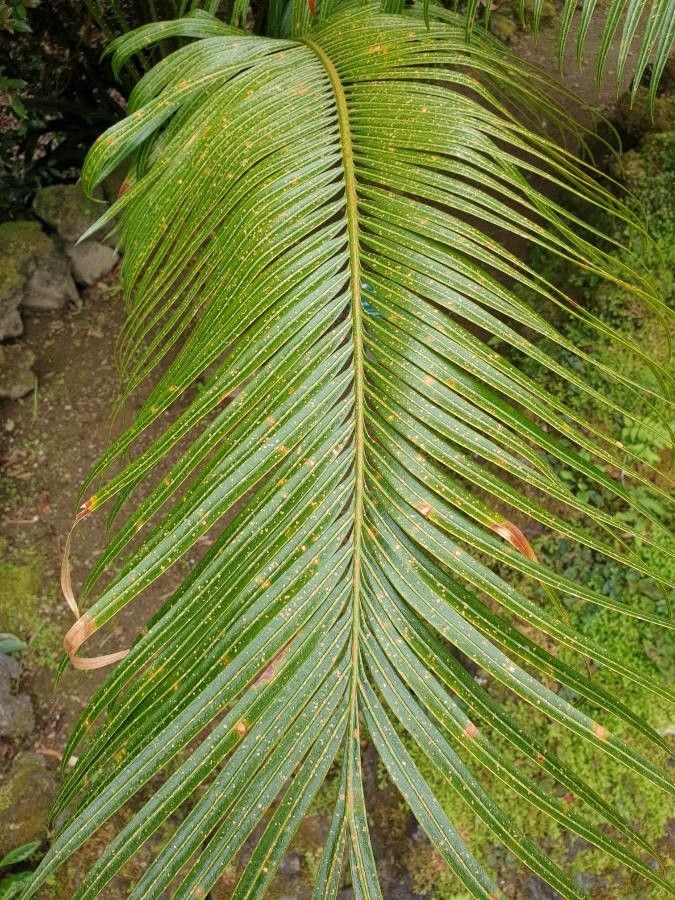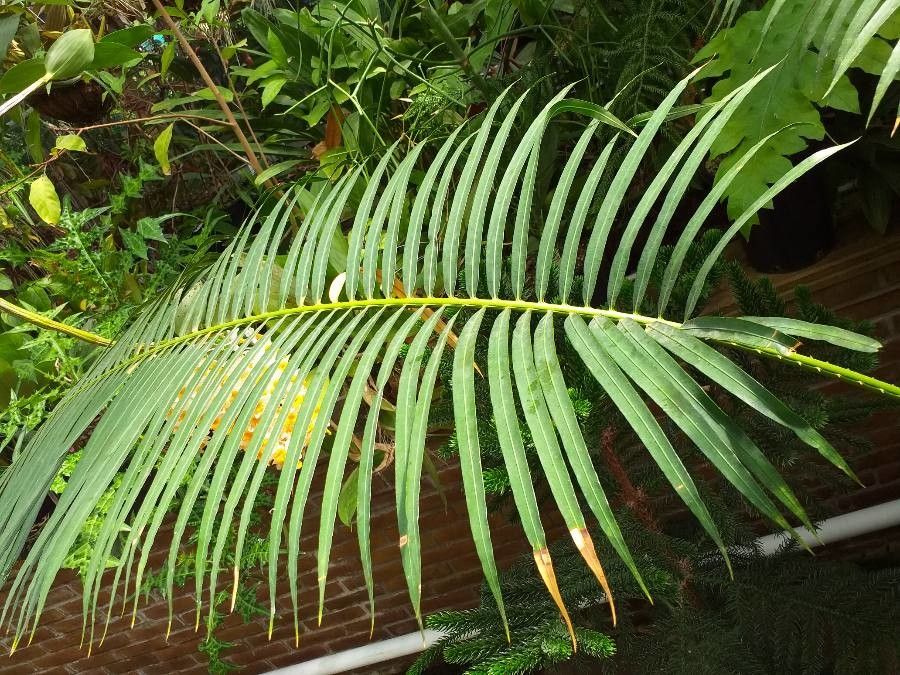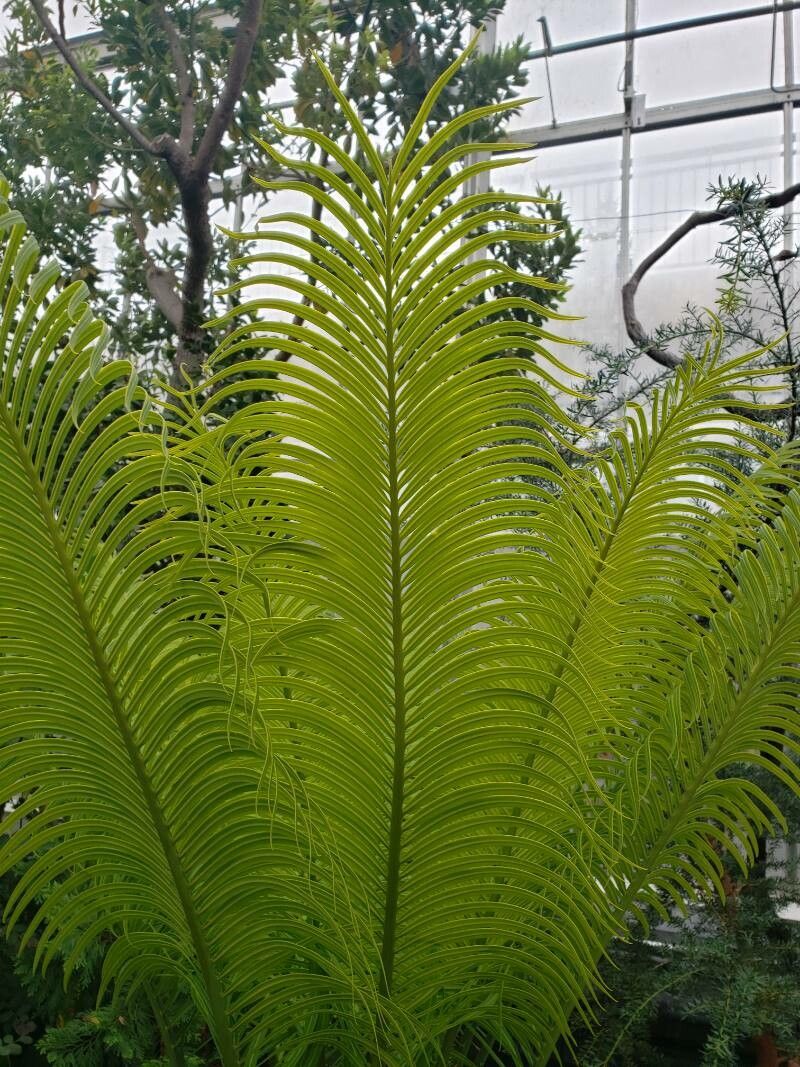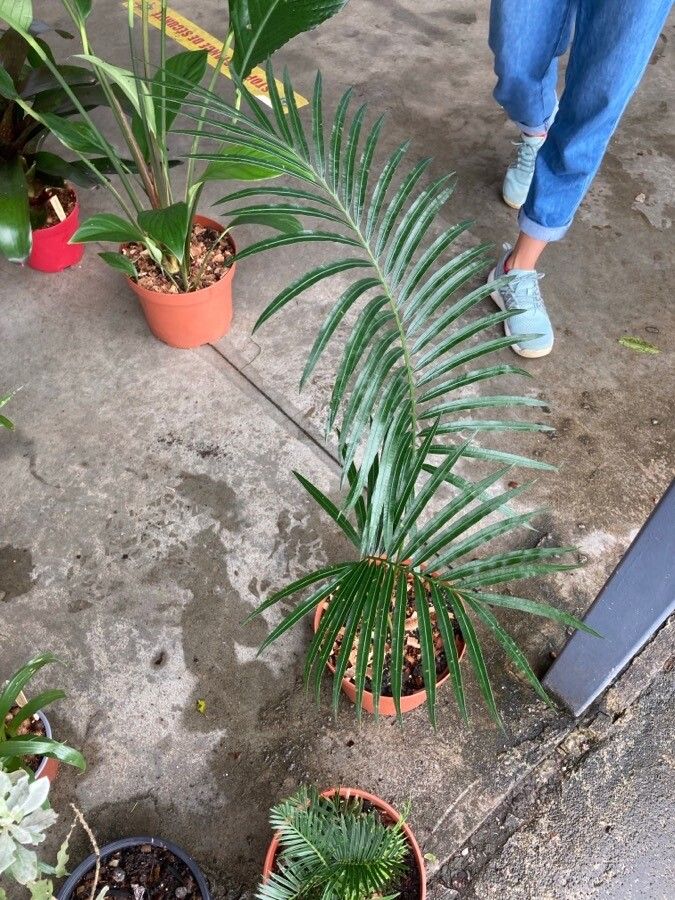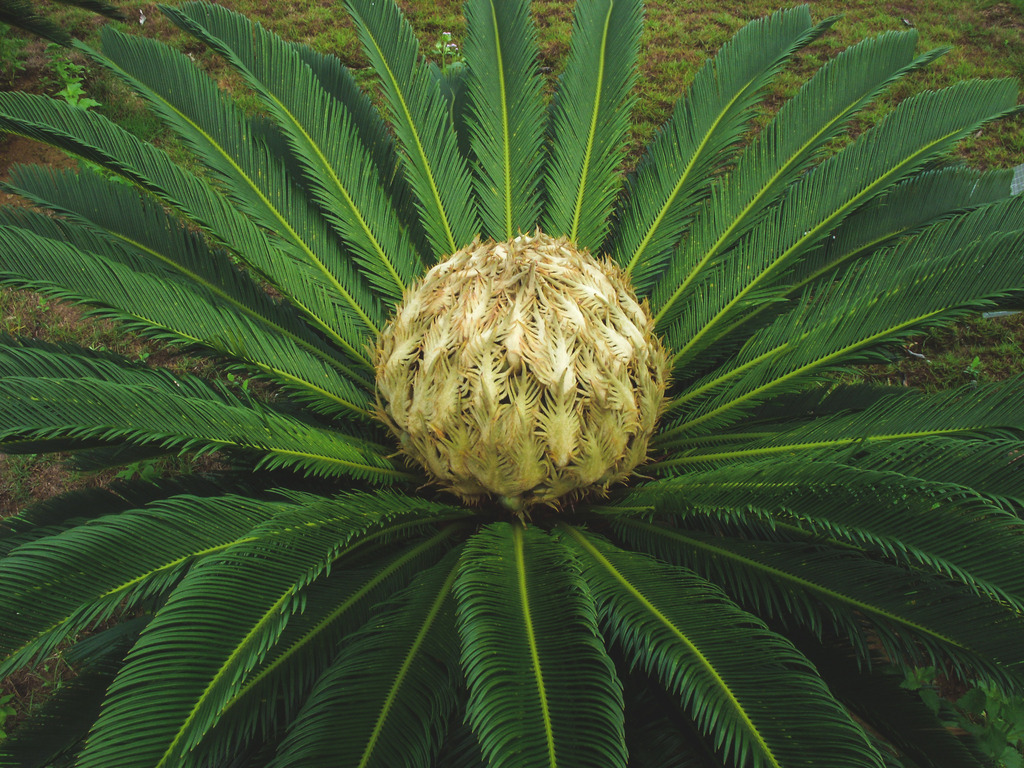
Cycas revoluta, commonly known as the Sago Palm, is a slow-growing evergreen plant that belongs to the Cycad family. Native to Japan, it is widely cultivated as an ornamental plant in gardens and indoor spaces around the world. The Sago Palm has a stout trunk that can grow up to 3 meters tall and 30 cm in diameter, crowned with dark green leaves at the top. These leaves are pinnate with numerous leaflets that are stiff and glossy, giving them an almost plastic-like appearance.
The Sago Palm produces male and female cones on separate plants. The male cones are cylindrical, while the female cones resemble large pinecones with fleshy seeds inside.
The plant prefers well-drained soil but can tolerate some drought conditions once established. It requires bright light but should be protected from direct sunlight during hot summer months.
Although Cycas revoluta has been used for medicinal purposes in traditional Chinese medicine for centuries, all parts of this plant contain toxins that can be harmful if ingested by humans or pets. Therefore, it should be handled with care when pruning or transplanting.
Overall, Cycas revoluta is an attractive ornamental plant suitable for both indoor and outdoor spaces due to its unique appearance and low maintenance requirements once properly established.
Sago palm is fairly resistant to disease and typically not susceptible to illnesses. However, when kept in poor conditions it can become more prone to disease. This plant also has relatively few insect pests. Regarding care, its requirements are moderate. It needs plenty of sunlight, because a lack of light can make it vulnerable to disease and produce thin growth. Since it is often kept indoors, it may need to be moved regularly to a well-lit spot. It does not need frequent watering. Overall, the sago palm is suitable for most people, though it is best for those who can provide good light conditions.
How to keep Cycas Revoluta.
Light
The sago palm prefers moderate sun exposure but can tolerate both deep shade and very bright sunlight. Native to habitats that alternate between shade and light, it can grow well under a variety of light conditions. Still, too much or too little sunlight can hinder its optimum growth.
Water
The sago palm originates from dry, subtropical regions and is known for its drought tolerance, thriving with minimal moisture. It typically requires watering every 1 to 2 weeks and remains evergreen when provided with consistent moisture. This plant is also resilient to changes in watering schedules and can effectively withstand periods of water stress.
Humidity
This plant will thrive in moderate humidity, which is probably the level in your home. However, misting it a few times a week can be very beneficial. Make sure the room has good ventilation.
Temperature
The sago palm comes from temperate regions and does best in temperatures between 15 and 38 ℃ (59 to 100.4 ℉). In winter it should be kept cooler, around 15–22 ℃ (59–72 ℉), while in summer it can tolerate temperatures up to 38 ℃ (100.4 ℉).
Fertilizer
Sago palm has specific nutrient needs and does not require heavy fertilization. Spring is the best time to apply fertilizer for optimal growth. Providing nutrients strengthens its health, increases its resistance to pests and diseases, and helps sustain its long lifespan.
Pruning
The sago palm is characterized by its stiff, feathery leaves and slow growth rate. It requires minimal pruning. You should trim any dead fronds between early and late winter, using sterilized tools to prevent disease. To ensure optimal photosynthesis, avoid cutting healthy, green fronds. Pruning helps encourage new growth and increases resistance to pests. Remember to wear gloves to protect yourself from the plant’s sharp tips.
Pot & Repot
When repotting a Sago palm, select a pot 1–2 inches (2.5–5.1 cm) larger with good drainage. Use a well-draining potting mix. Repot in spring or fall, making sure the root ball is slightly lower than the rim of the flower pot. Water thoroughly after repotting and place in a warm spot with indirect sunlight.
Botanical profile.
- Plant Type
- Shrub
- Life Cycle
- Perennial
- Genus
- Cycas
- Family
- Cycadaceae
- Hardiness Zone
- 8-12
- Mature Height
- 3.05 m to 7.92 m
- Mature Spread
- 0.91 m to 3.05 m
- Leaf Color
- Green, Blue
- Leaf Type
- Evergreen
- Flower Color
- Yellow, Brown
- Flower Size
- 7.62 cm to 15.24 cm
- Bloom Time
- Early summer, Mid summer
- Planting Time
- Spring, Autumn
- Harvest Time
- Mid summer, Late summer
- Native Area
- Japan, China
Other names.
Reader questions.
When should I water my Sago Palm?
To determine the optimal time to water a Sago Palm, observe several key indicators. First, check the soil moisture by inserting your finger about 1-2 inches into the soil; if it feels dry, it's time to water. Look for signs such as leaf wrinkling or wilting, color changes to yellow or brown, and stunted growth, all of which suggest the plant needs water. Examining the root condition for dryness or brittleness can also guide your watering schedule. Remember to let the soil dry out adequately between waterings to avoid risks of over-watering, which can lead to root rot and fungal growth. Conversely, delaying watering for too long can result in wilted leaves, loss of vitality, and, in extreme cases, death of the plant. Keeping track of the last watering date and observing your plant’s response will help you establish an effective watering routine.
Why should I put fertilizer on my Sago palm?
To promote healthy growth of the Sago palm, it is beneficial to fertilize it in the spring. Keep in mind that this plant has a long lifespan and requires support. By adding nutrients to the soil, you can enhance the plant's overall health and increase its ability to withstand common pests and diseases that can hinder its growth or reduce its lifespan.
What are the sunlight requirements for a sago palm?
The sago palm thrives in moderate sunlight but can tolerate both heavy shade and intense sunlight. It originates from environments that experience a mix of shadows and light, allowing it to grow healthily across a variety of light conditions. Although it has this adaptability, receiving either too much or too little sunlight can prevent it from reaching its optimal growth. In general, 'Partial sun' refers to about 3-6 hours of sunlight, while 'Full sun' or 'Full shade' refers to receiving over 6 hours of sunlight per day. It's important to observe how sunlight moves through your garden to choose locations that offer a balance of light and shade, ensuring the best conditions for your plants.
What are the essential care requirements for a Sago Palm?
The Sago Palm (Cycas revoluta) thrives in temperate regions and prefers temperatures between 15 to 38°C (59 to 100.4°F). During winter, it should be kept at a cooler range of 15-22°C (59-72°F), whereas in the summer months, it can tolerate temperatures up to 38°C (100.4°F). The plant has some degree of cold tolerance and usually doesn't need special measures if temperatures are above its minimum tolerable limit. However, if temperatures are expected to fall below this minimum threshold, it's advisable to protect the plant using plastic film, fabric, or similar materials for cold protection, which should be removed once temperatures rise again.
How should I water my Sago Palm?
Watering a Sago Palm properly is pivotal for its health. One of the best methods is bottom-watering, where the plant pot is placed in a tray of water, allowing the roots to absorb moisture from below, ensuring thorough hydration without over-saturating the soil. If you're using a watering can, choose one with a narrow spout to direct water to the base of the plant, minimizing leaf wetness and preventing fungal diseases. This technique encourages targeted hydration, meeting the plant’s specific needs efficiently.
When should I fertilize my Sago palm for the best results?
The growing medium may not provide sufficient nutrients for healthy growth, but the Sago palm is unique compared to garden annuals and perennials. It does not need a lot of extra nutrients. For optimal results, it is recommended to fertilize the Sago palm in the spring, before new growth emerges.
How can artificial lighting be used for indoor sago palms?
Artificial lighting is essential for the growth of indoor plants like the sago palm when natural sunlight is insufficient, especially during winter or in less sunny spaces. Indoor plants benefit from adequate lighting for optimal growth, with different requirements based on their sunlight needs: full sun plants require 30-50W/sq ft, partial sun plants 20-30W/sq ft, and full shade plants 10-20W/sq ft of artificial light. LED lights are a popular choice because they can be tailored to provide specific wavelengths needed by plants. The light source should be placed 12-36 inches above the plant, mimicking natural sunlight, and kept on for 8-12 hours per day to simulate natural daylight hours.
How should I care for my Sago Palm in low temperatures?
Sago Palm has a moderate tolerance to low temperatures, flourishing optimally when the temperature stays above its minimum growth threshold. During winter, be sure to maintain temperatures above this minimum limit. Exposure to temperatures below its growth limit may cause the leaves to droop; while they may recover in mild cases, severe cold can lead to wilted leaves that may eventually fall off. If frost damage occurs, trim off the damaged parts. To prevent damage in cold temperatures, wrap the plant with non-woven fabric or cloth and set up a wind barrier to shield it from cold winds.
How much water does Sago Palm really need?
The amount of water your Sago Palm requires depends on several factors, including container size, root depth, and plant size. For a standard 10-inch pot, about 1 litre of water ensures a thorough soaking, reaching the deep roots essential for the plant's growth. Mature Sago Palms may need more water compared to younger ones due to their size difference. It's crucial to mimic the plant's natural sporadic watering cycle by allowing heavy watering followed by a period of drought. Ensure the soil is slightly damp but not overly wet to avoid risks of root rot from overwatering or leaf browning from underwatering.
When should I not put fertilizer on my Sago palm?
Unlike many other plants, Sago palm does not require frequent fertilization. It does not need a high amount of extra nutrients, and too much fertilizer can actually harm it by causing it to die back. To ensure its health, it is best to only apply fertilizer in the spring and avoid using any during the summer, fall, and winter seasons. Additionally, refrain from adding any organic matter to the soil during these periods.
What symptoms indicate insufficient light for indoor sago palms?
Insufficient light can cause indoor sago palms to exhibit several symptoms. These include leggy or sparse growth, where spaces between leaves or stems become longer, resulting in a plant that looks thin and stretched. New leaves may appear lighter colored, indicating a lack of chlorophyll and essential nutrients. Other symptoms include chlorosis, where leaves lose their green color and turn yellow due to a breakdown of chlorophyll from excessive sunlight, negatively affecting photosynthesis. Additionally, symptoms like sunscald, leaf curling, wilting, and leaf scorching can occur, each indicating varying levels of light stress from too much or too little light.
What should I do if my Sago Palm is exposed to high temperatures?
During the summer, it's crucial to keep the Sago Palm below its maximum suitable growth temperature. Exceeding this temperature can lead to a lighter leaf color, dry and withered leaf tips, curling leaves, and increased susceptibility to sunburn. To remedy this, trim away the sunburned and dried parts of the plant. Relocate the plant to a spot that offers shade during the midday and afternoon sun, or use a shade cloth. Ensure the plant is watered in the morning and evening to maintain soil moisture.