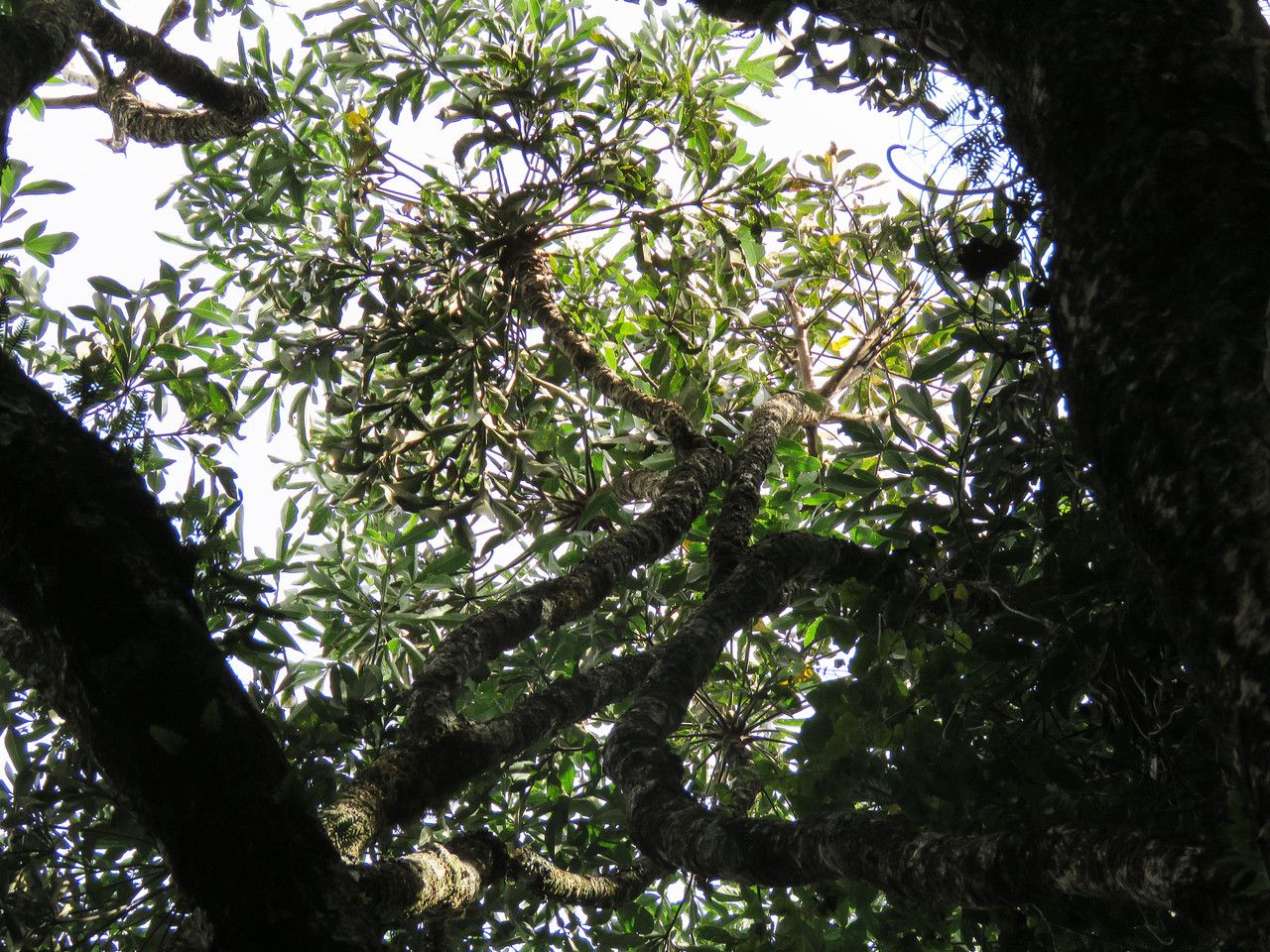
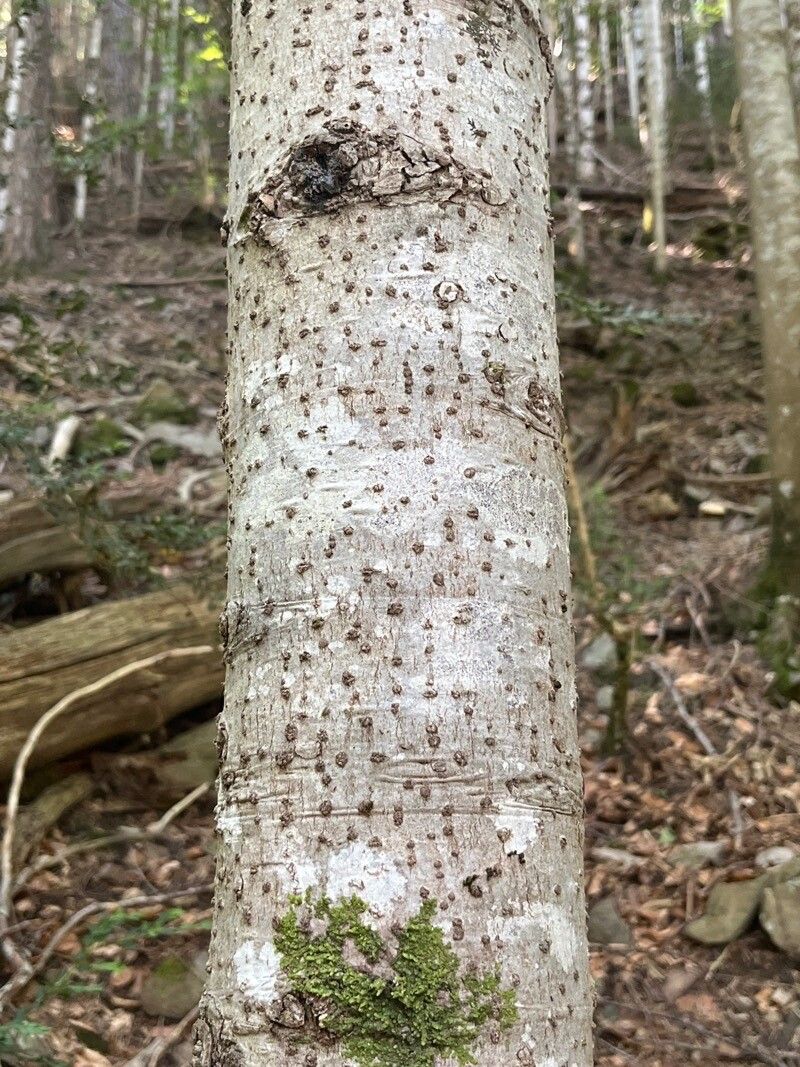
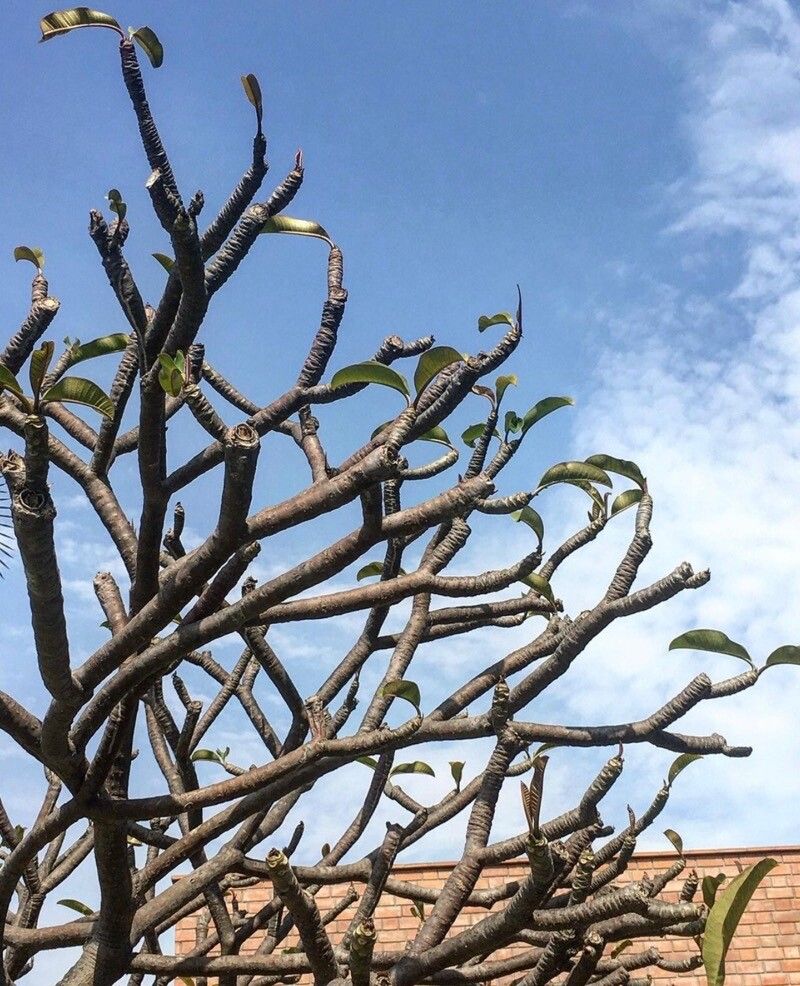
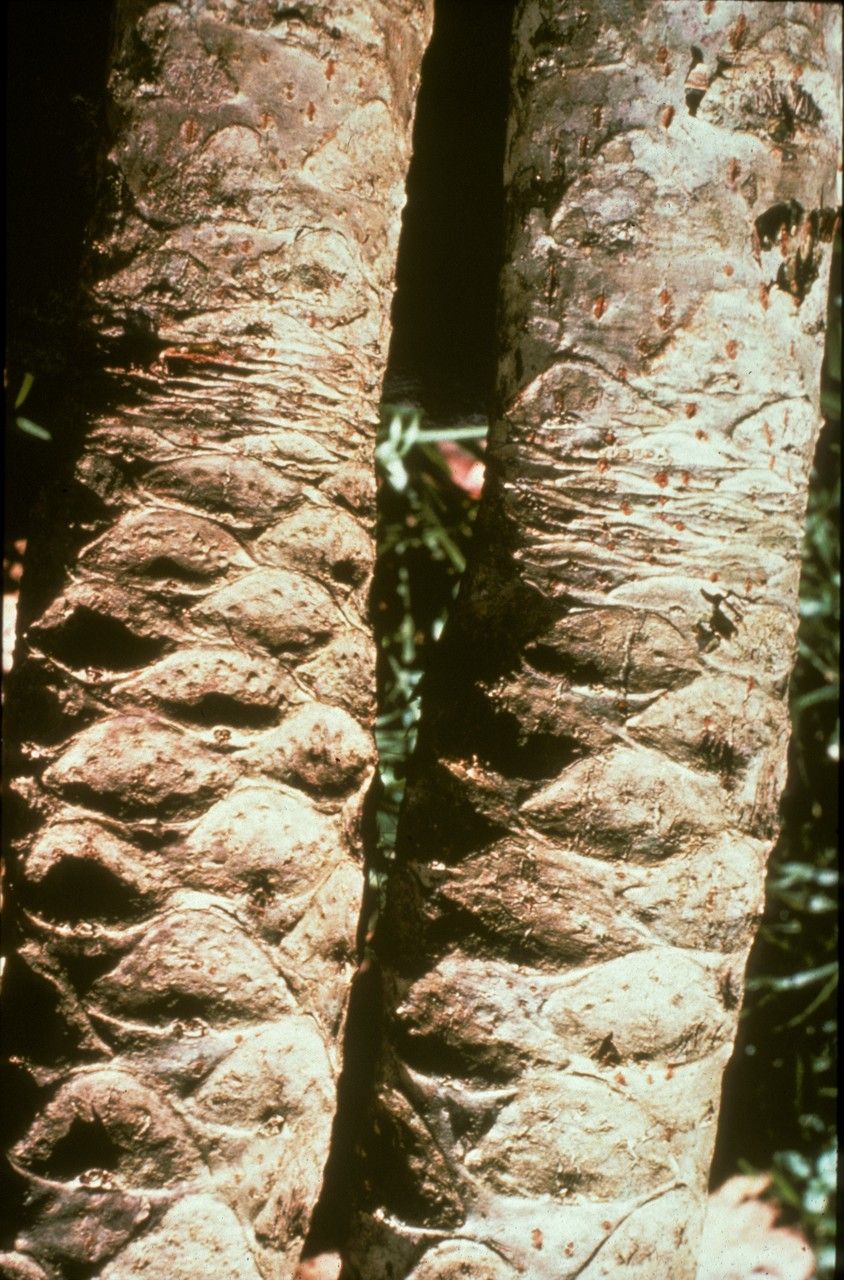
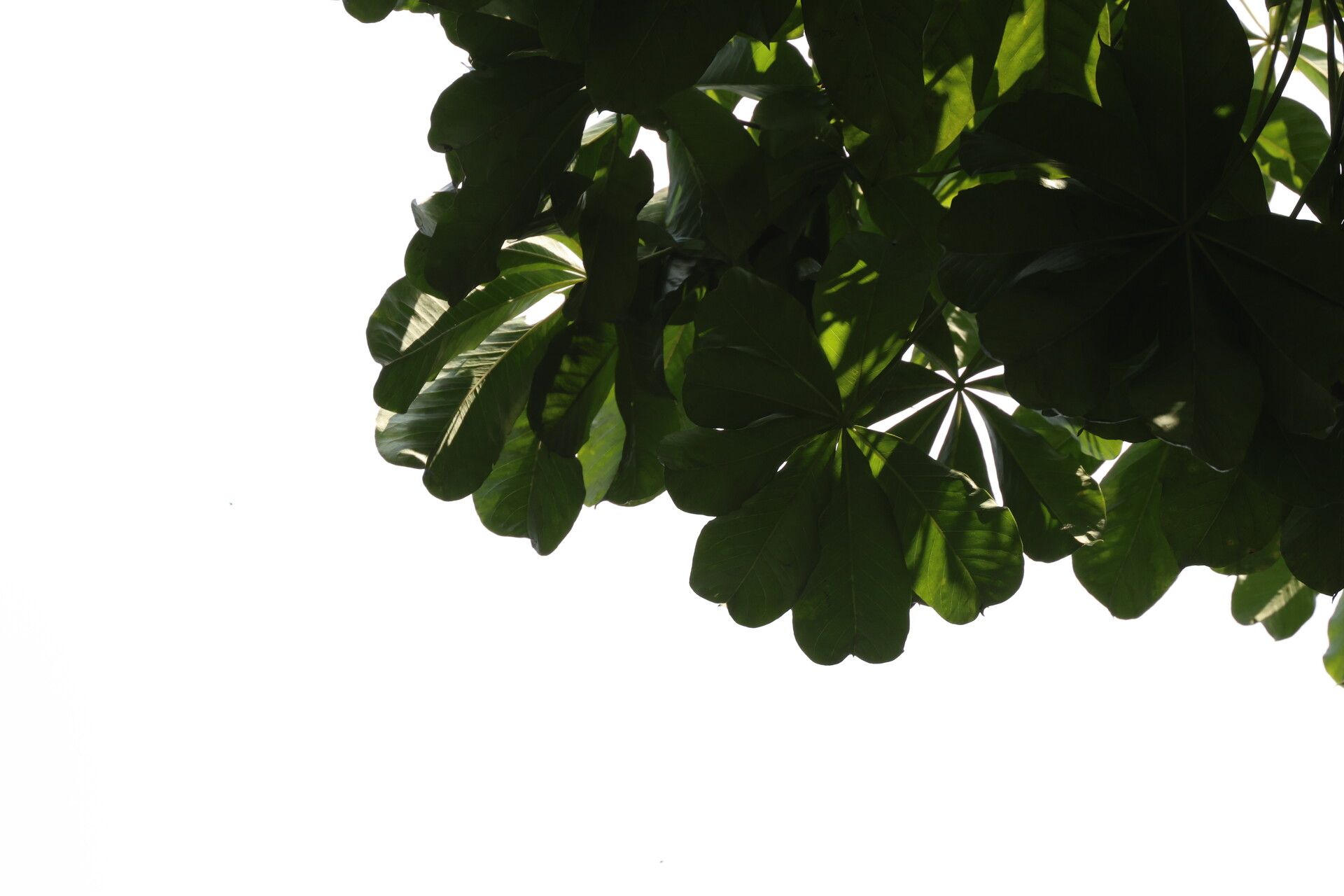
Cussonia sphaerocephala, commonly known as the Mountain Cabbage Tree, is a large and striking tree native to southern Africa. Belonging to the Araliaceae family, this tree can reach heights of up to 10 meters, with a trunk diameter of up to 1 meter. Its distinctive spherical cluster of leaves at the top of the trunk lends it its common name.
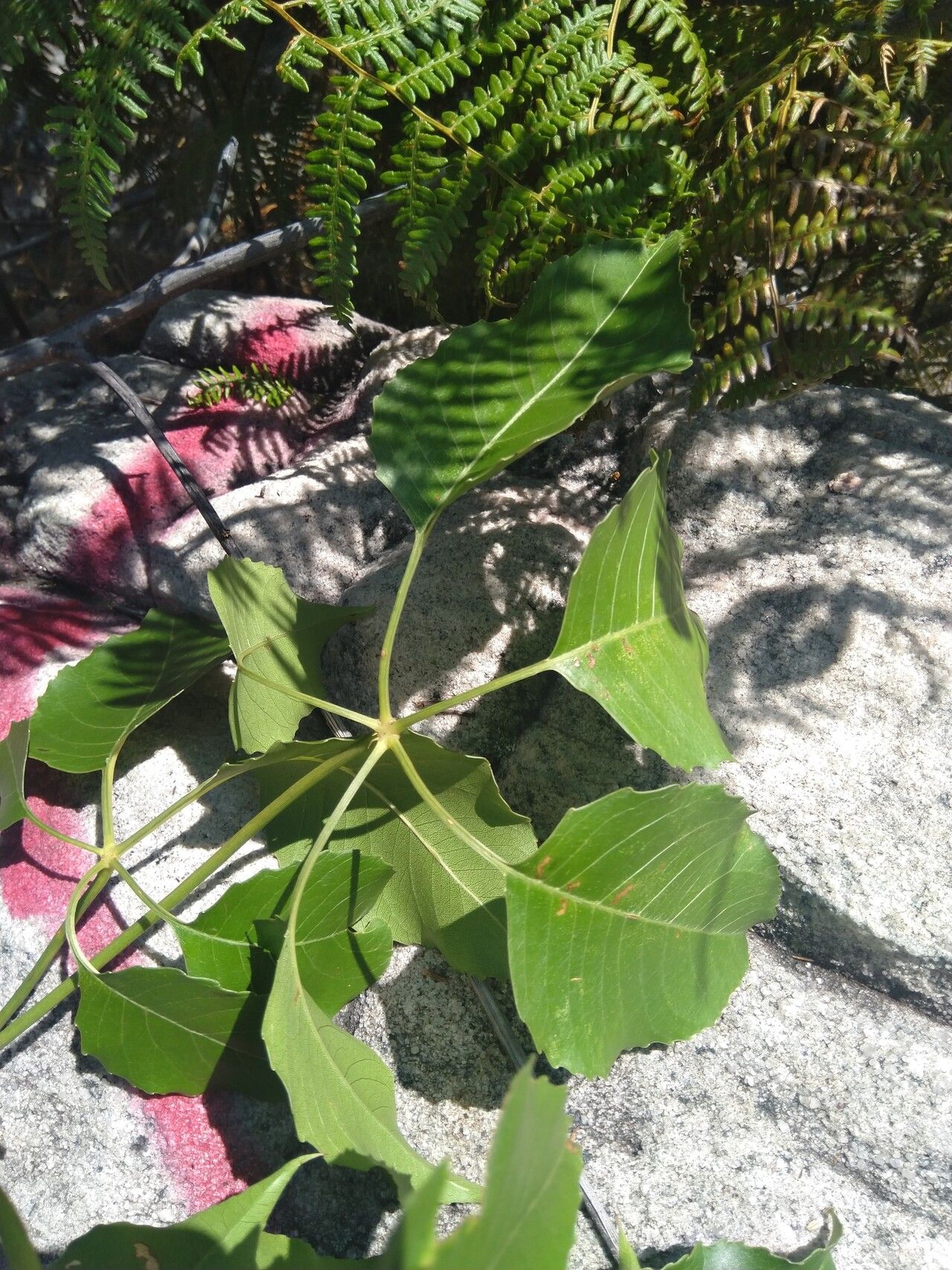
The tree's leaves are large, glossy green, and feature serrated edges. The small, greenish-yellow flowers appear in dense clusters on long stalks during the summer months. The fruit is small, round, and has a hard outer shell that splits open when ripe.
The Mountain Cabbage Tree is typically found in rocky areas on hillsides or mountainsides at altitudes between 1,000 and 2,000 meters above sea level. It prefers well-drained soils but can tolerate some drought conditions once established.
In traditional medicine, various parts of the plant have been used to treat ailments such as fever, coughs, colds, and skin conditions like eczema and psoriasis.
Overall, the Mountain Cabbage Tree is valued both for its unique ornamental appearance and its medicinal properties, making it an important part of African culture.
Forest cabbagetree is fairly disease-resistant and typically does not suffer from many illnesses. As for care, this species is fairly low-maintenance. Planted outdoors, it needs only minimal watering, and larger specimens usually do not require pruning. Smaller plants, however, should be trimmed after they finish blooming. Forest cabbagetree is appropriate for anyone who has outdoor space, such as a garden or a deck, and does not demand much prior plant-care experience.
How to keep Cussonia Sphaerocephala.
Temperature
The forest cabbagetree comes from tropical areas, where the climate is generally warm and humid. Consequently, it is adapted to high temperatures and humidity. It is sensitive to sudden temperature changes and prefers a stable thermal environment, so indoor temperature fluctuations should be avoided. It typically cannot tolerate cold and needs higher temperatures to grow. If the surrounding temperature falls too low, the plant may stop growing or even die.
Fertilizer
Fertilization is essential to the care of Forest cabbagetree. Consistent feeding throughout the growing season helps maintain the energy required for its showy leaves and supports overall growth. Ignoring fertilization can lead to unhealthy foliage, reduced ornamental value, and stunted or weak growth that is more susceptible to breaking.
Botanical profile.
- Plant Type
- Tree
- Life Cycle
- Perennial
- Genus
- Cussonia
- Family
- Araliaceae
- Hardiness Zone
- 9-11
- Native Area
- South Africa
Other names.