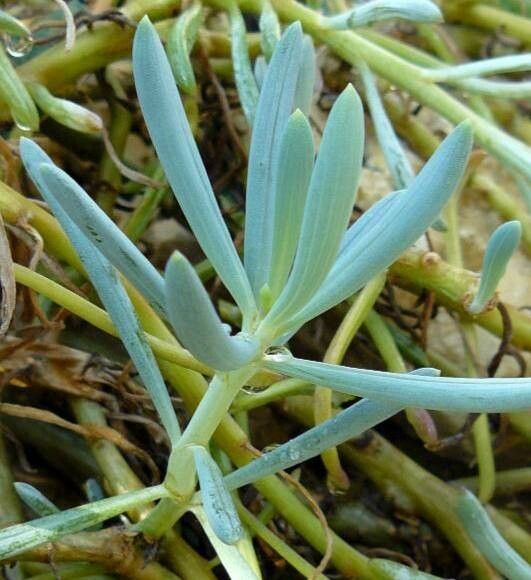
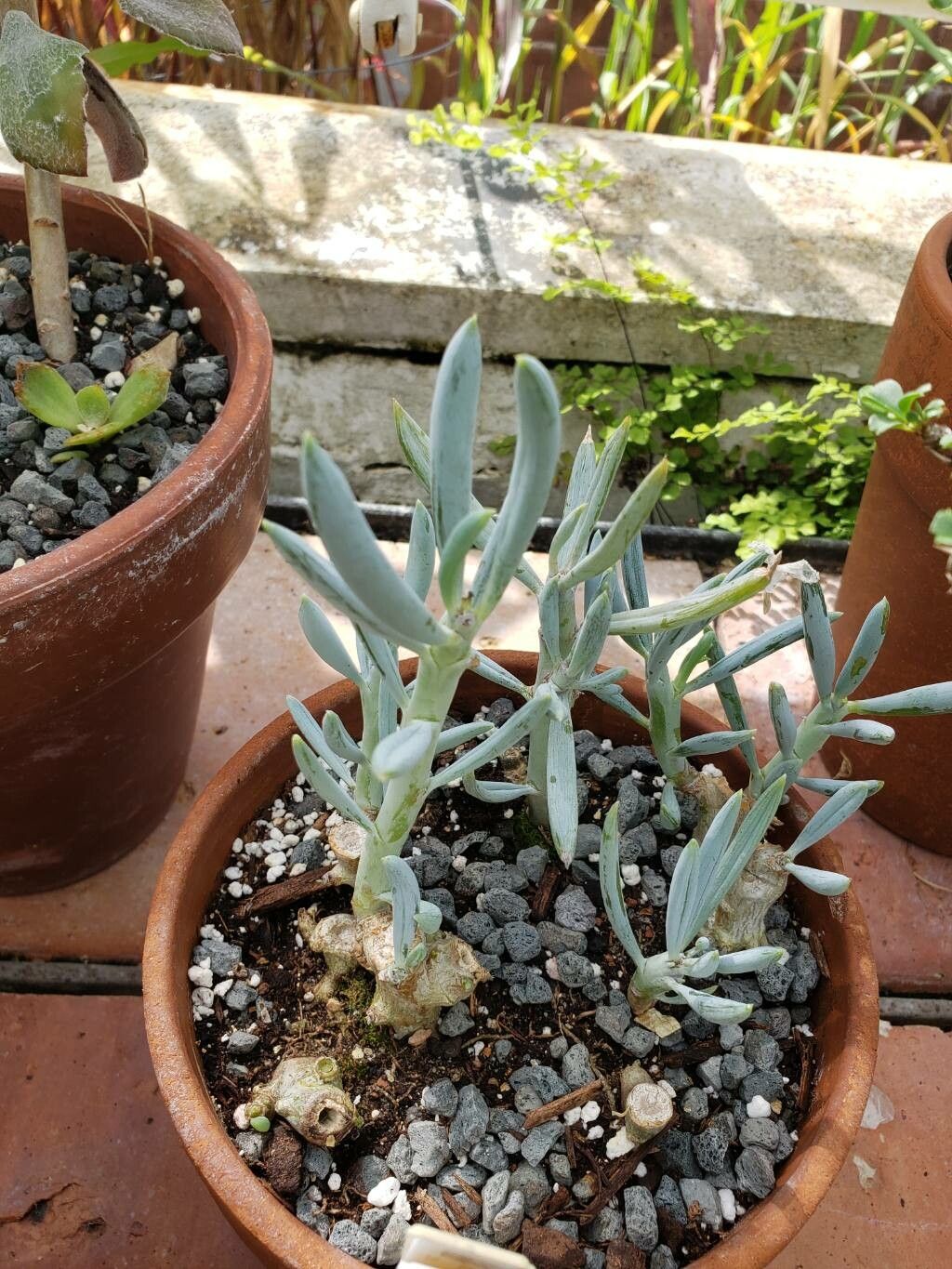
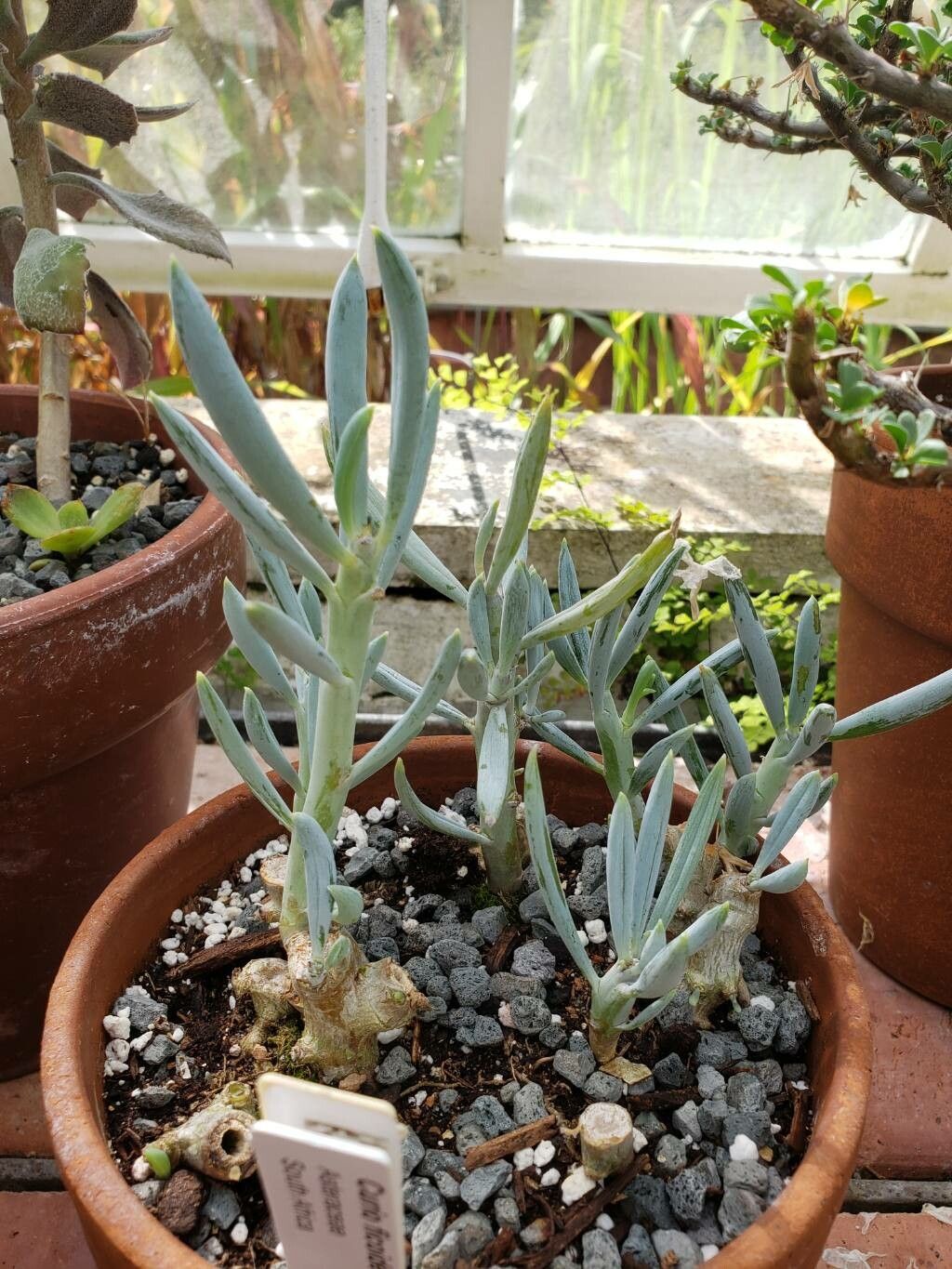
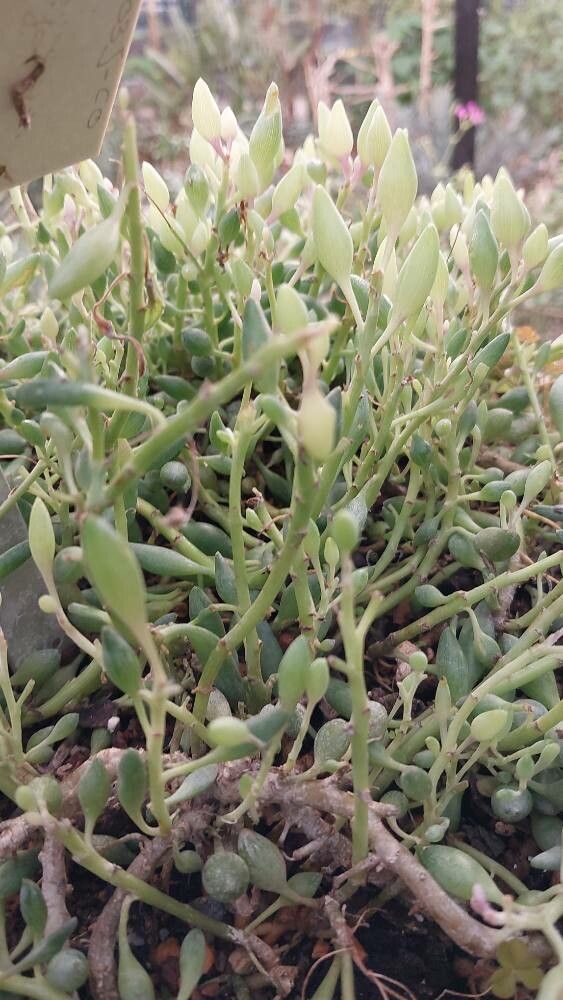
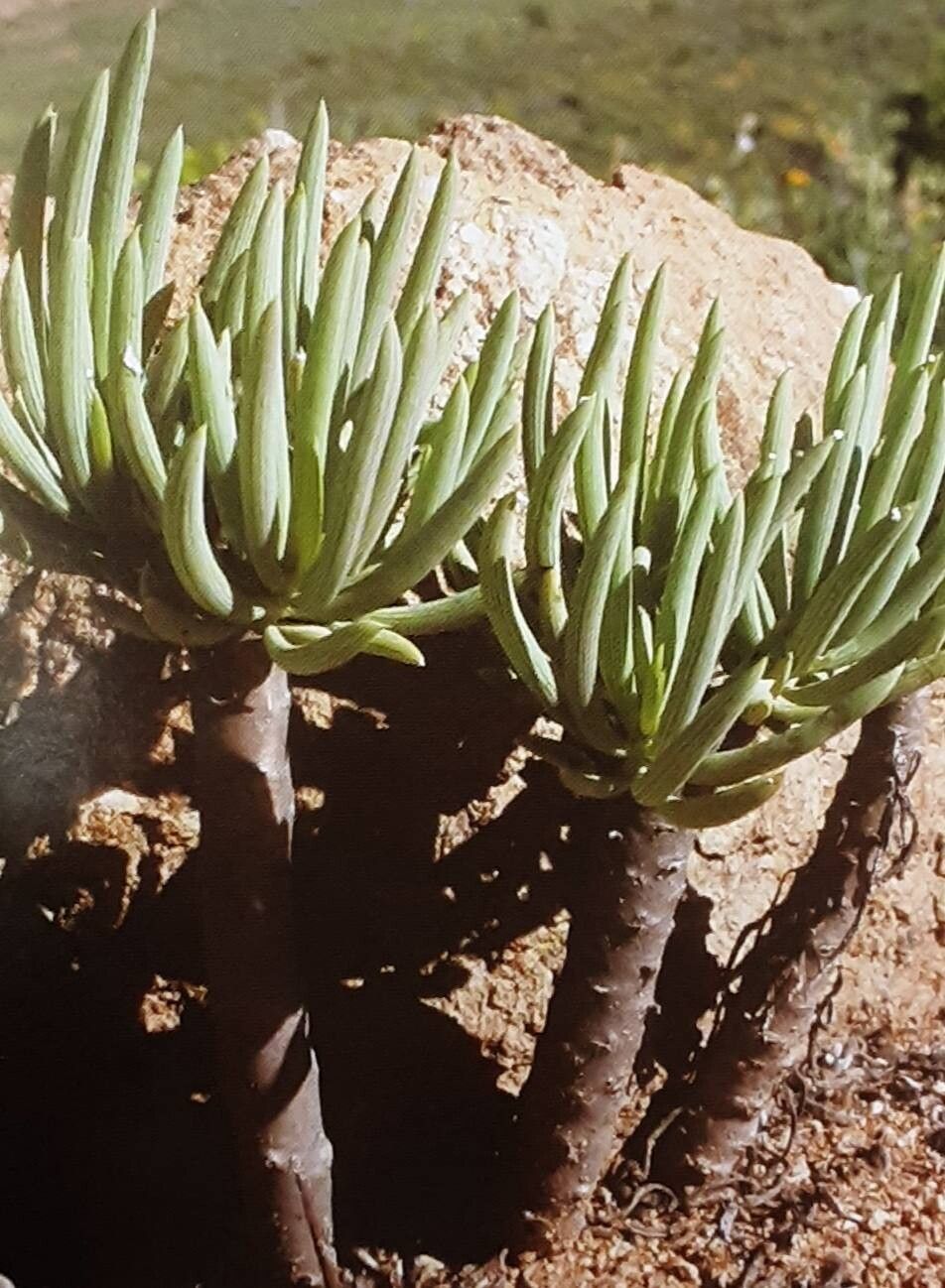
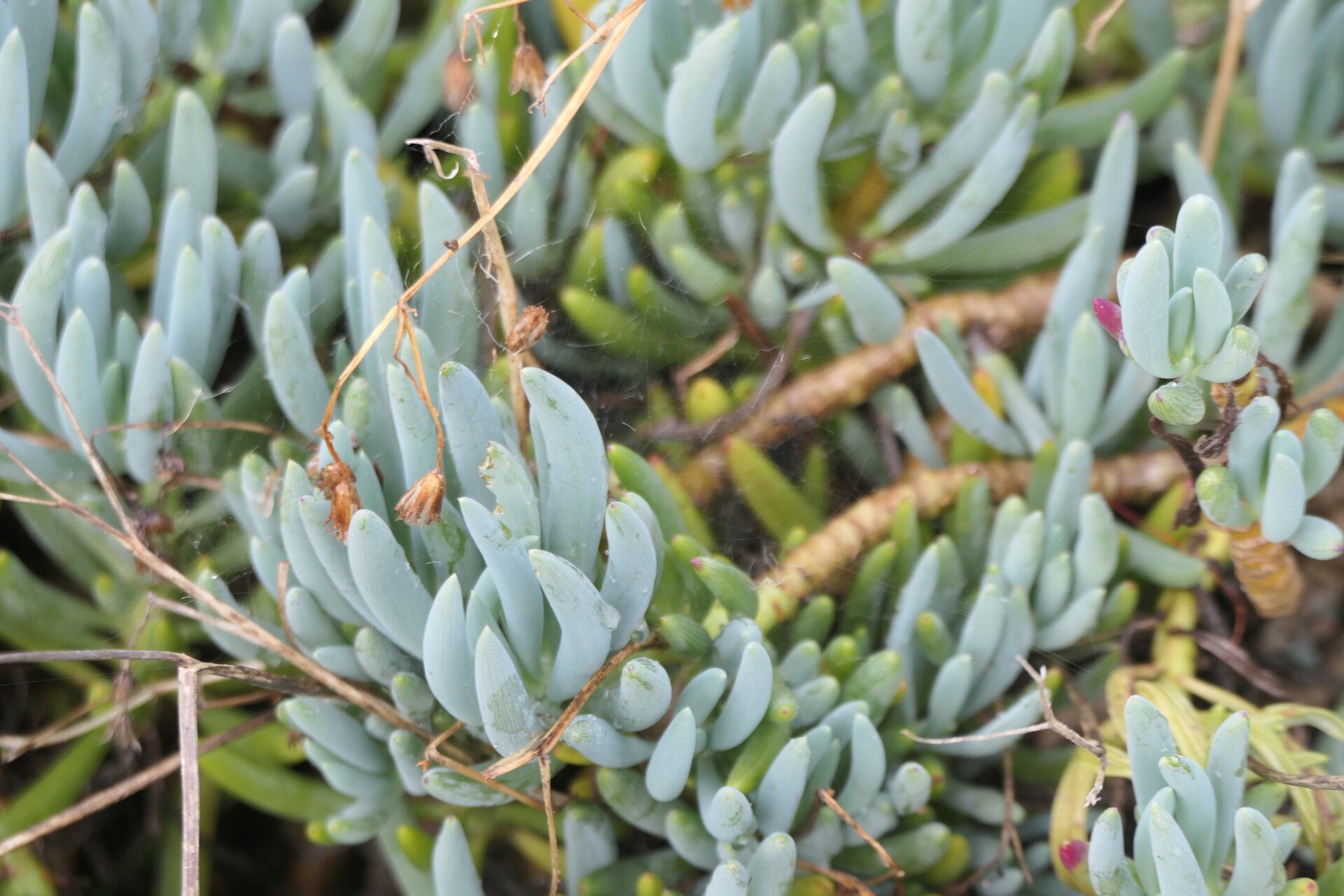
Curio ficoides, syn. Senecio ficoides, also known as skyscraper senecio, Mount Everest senecio or flat-leaved senecio, is a species of succulent plant, in the genus Curio (Asteraceae), indigenous to South Africa.
Blue chalkstick has moderate resistance to disease but is more vulnerable to high humidity and excess watering. It also becomes more prone to illness when it receives insufficient light and is overwatered. Regarding care, Blue chalkstick is drought-tolerant and can withstand extended periods without water. It requires little fertilizer and only occasional pruning. Because of these traits, it is appropriate for growers at any experience level, particularly those who prefer to spend minimal time on plant care or who may be away from home for extended stretches. It is a suitable option for people who do not want to devote much time to plant maintenance but still want an easy-to-care-for plant.
How to keep Curio Ficoides.
Light
Native to arid regions, Blue chalkstick thrives in full sun, as its natural habitat is marked by intense sunlight and minimal shade. It also tolerates partial sun, providing some flexibility in its growth.
Water
Blue chalkstick excels in dry conditions, showing remarkable drought tolerance and requiring water only once every three weeks. This versatile evergreen can withstand a wide range of climates and temperature fluctuations, making it suitable for both arid and humid environments.
Temperature
Blue chalkstick grows best in warm environments, favoring temperatures of 68 to 100°F (20 to 38°C). To promote optimal growth, change indoor temperatures with the seasons so they stay within this preferred range.
Fertilizer
Blue chalkstick only needs light applications of fertilizer once or twice a year during the growing season. Do not fertilize in winter or summer when it is dormant. Use less fertilizer for repotted plants and wait a couple of months after repotting before applying any fertilizer. Fertilizing promotes healthy growth and encourages blooms.
Pruning
Blue chalkstick is a low-growing succulent known for its blue-grey foliage. To improve its health and appearance, prune it in early spring by removing dead stems and any leggy branches. Regular trimming encourages dense growth, helps prevent disease, and maintains a compact shape. Be sure to use clean, sharp tools for effective pruning.
Botanical profile.
- Plant Type
- Succulent
- Life Cycle
- Perennial
- Genus
- Curio
- Family
- Asteraceae
- Hardiness Zone
- 10-12
- Mature Height
- 20 cm
- Mature Spread
- 40 cm
- Leaf Color
- Blue, Light Blue
- Leaf Type
- Evergreen
- Flower Color
- Yellow
- Flower Size
- 1.02 cm to 2.03 cm
- Bloom Time
- Summer, Early fall, Mid fall
- Planting Time
- Spring, Autumn
- Harvest Time
- Late summer, Fall, Early winter
- Native Area
- South Africa
Other names.