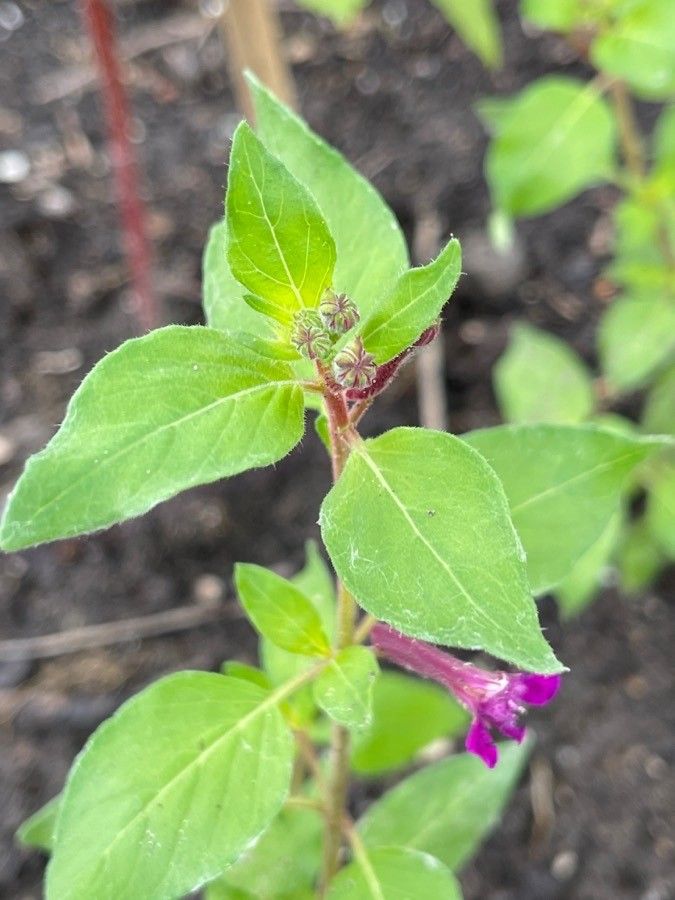
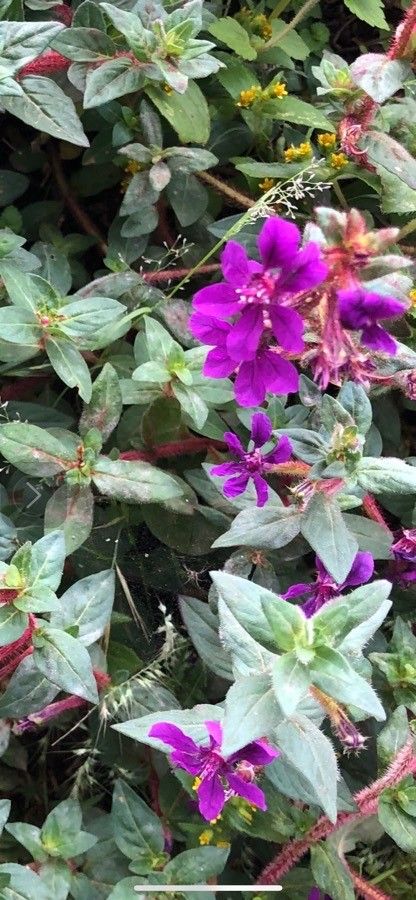
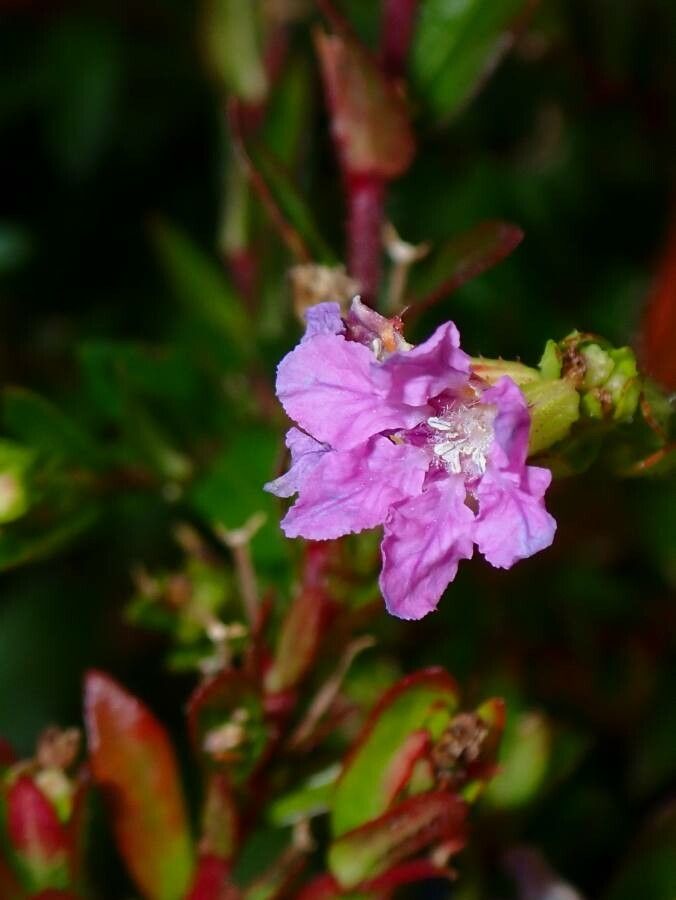
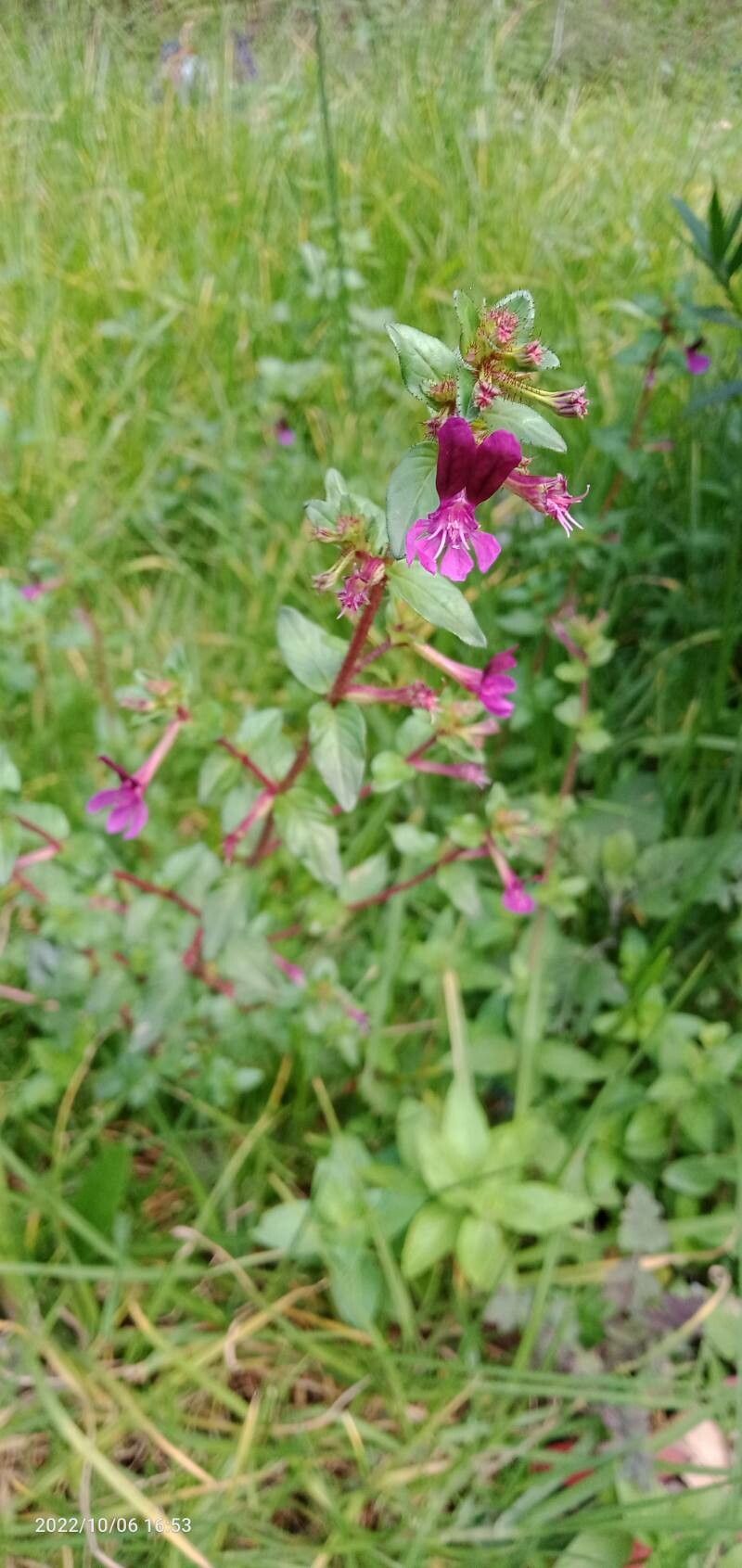
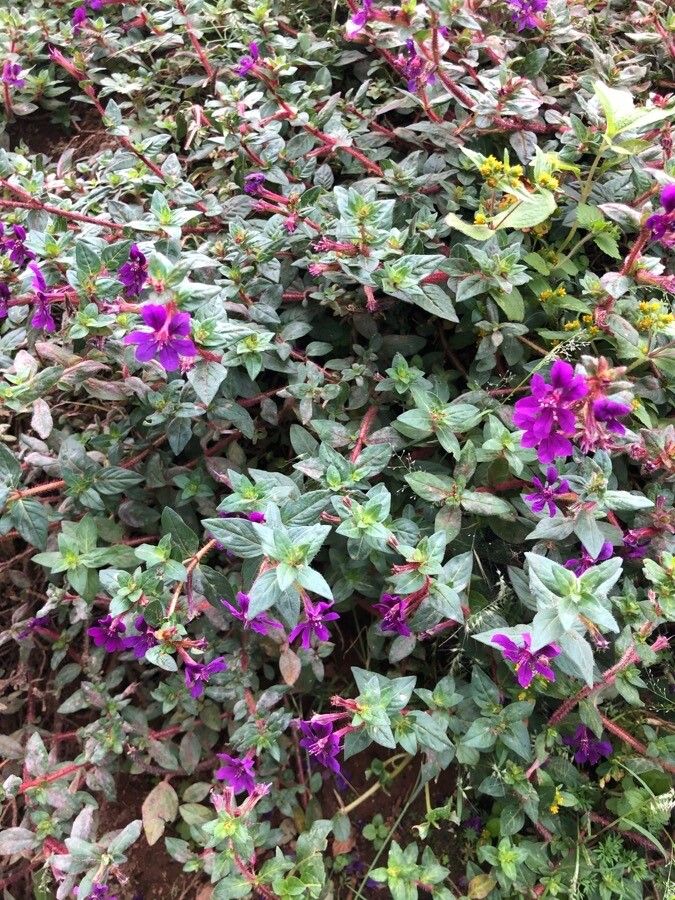
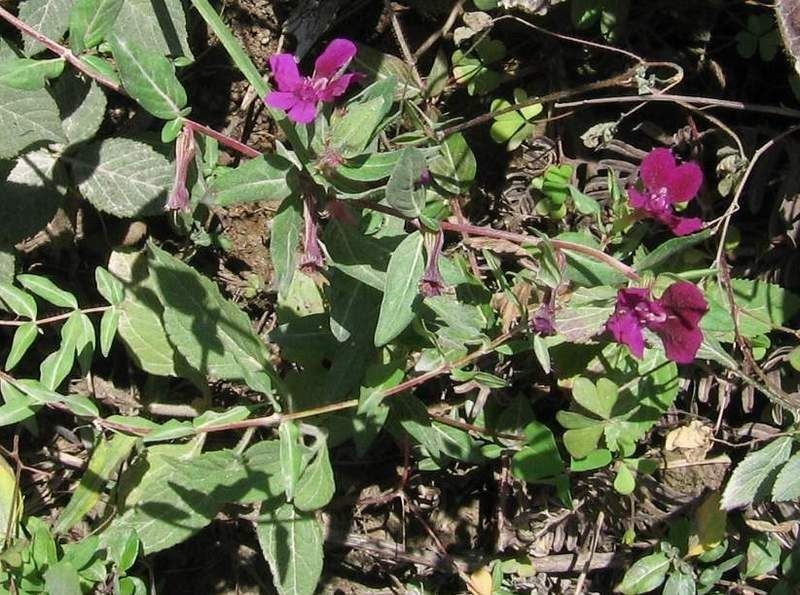
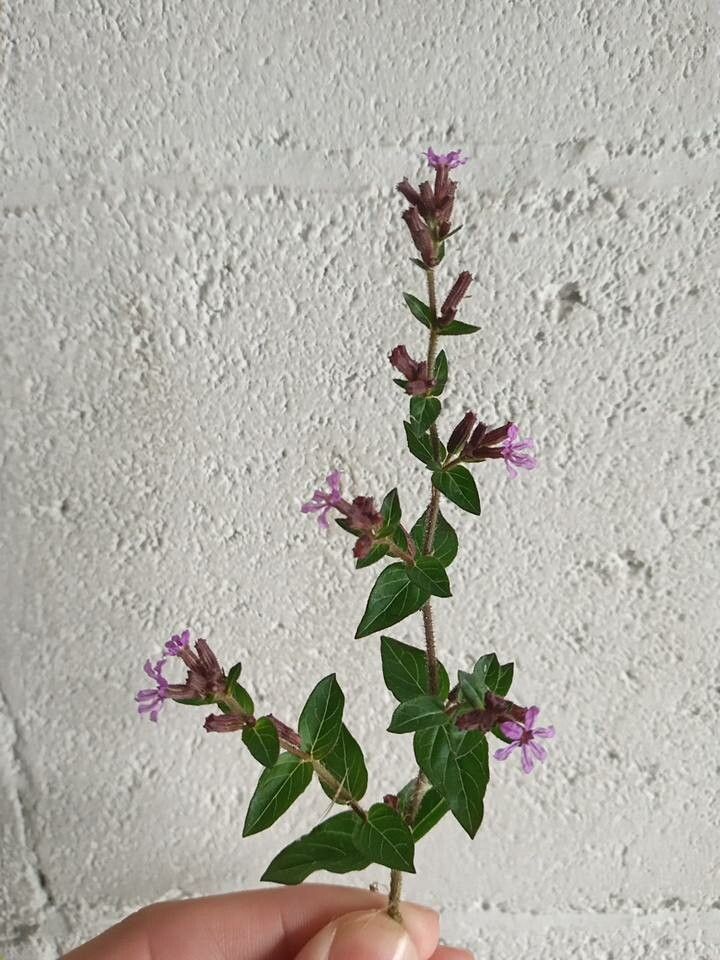
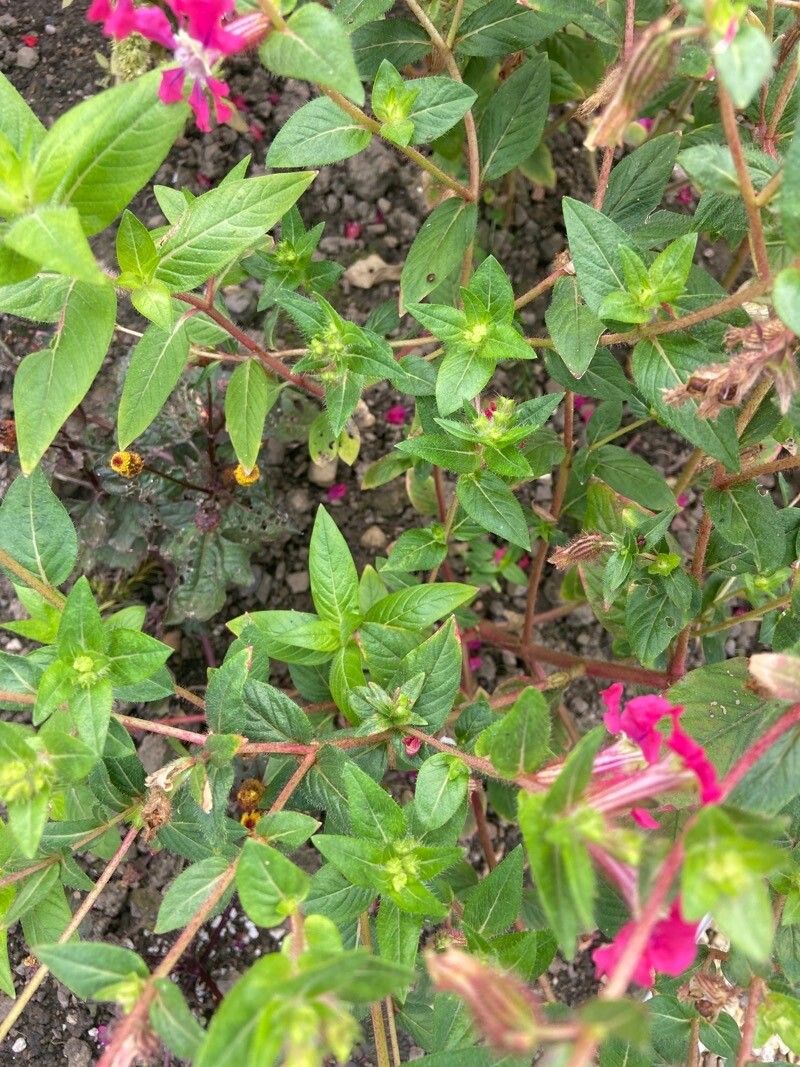
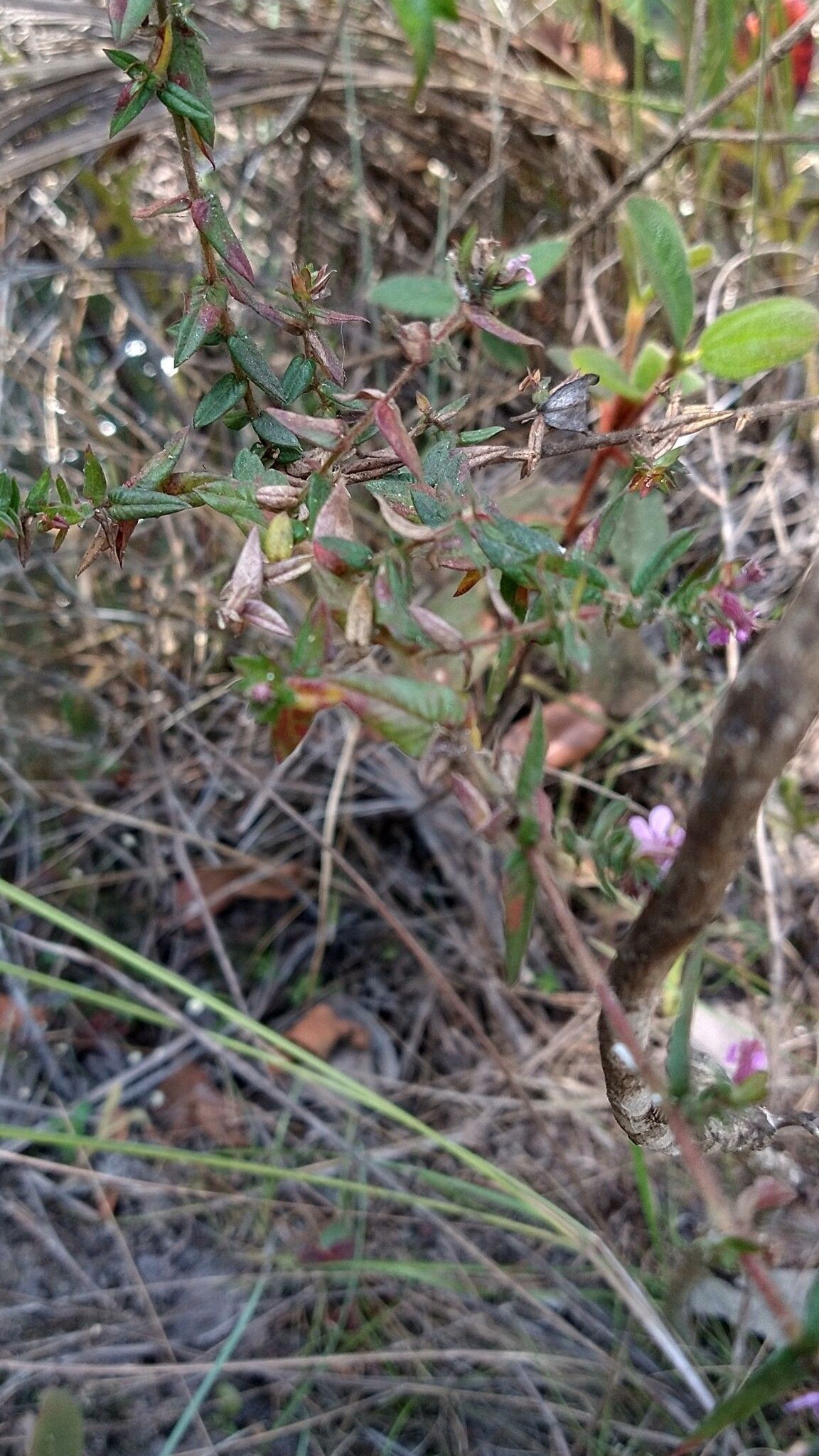
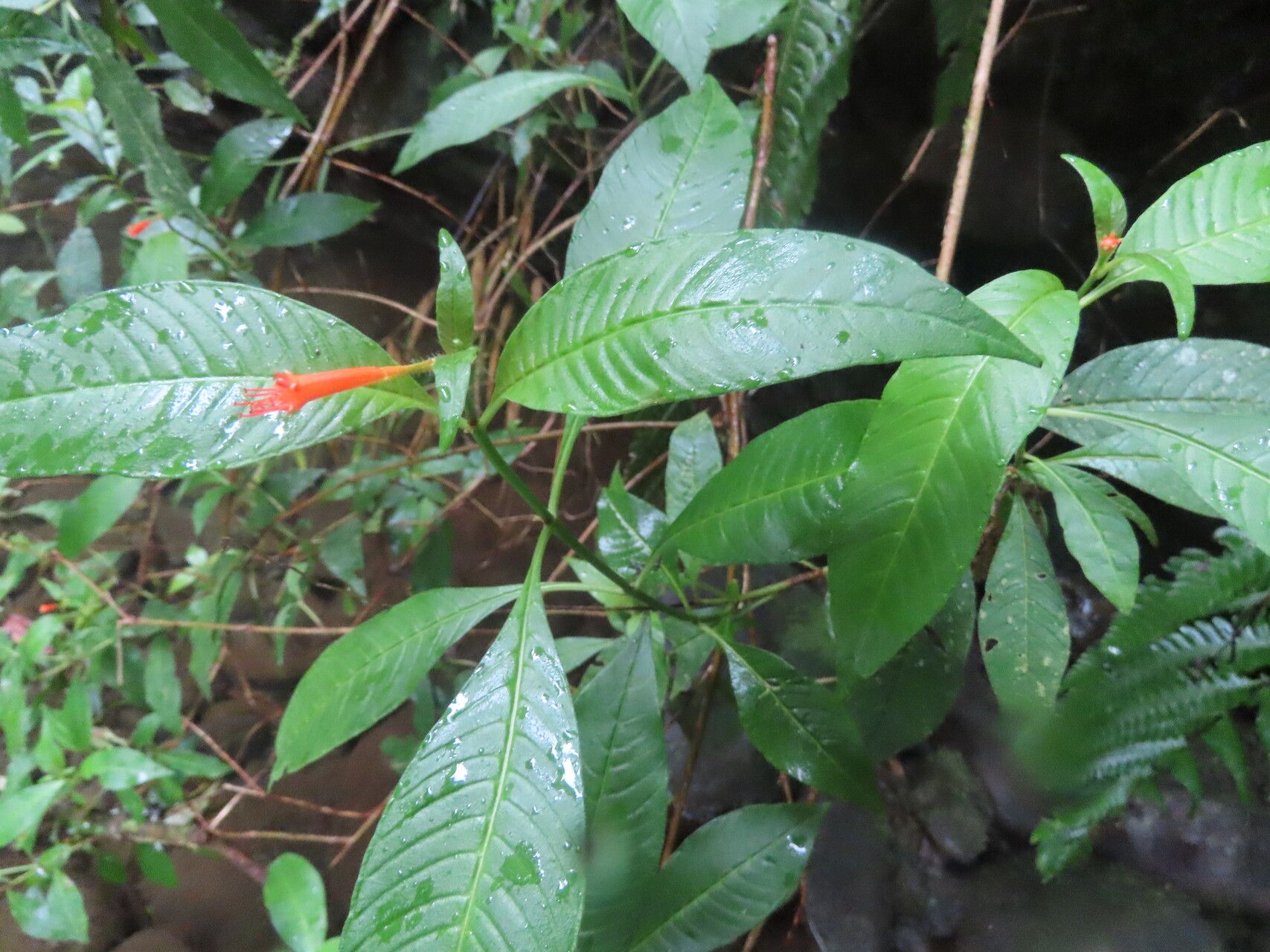
Cuphea aspera is a species of flowering plant in the loosestrife family known by the common names tropical waxweed and Chapman's waxweed. It is endemic to Florida in the United States, where it is limited to Gulf and Franklin Counties on the central Florida Panhandle. It has likely been extirpated from Calhoun County.This perennial herb grows up to about 40 centimeters tall from a woody, branching rootstock. The stems are coated in white hairs and purplish glandular hairs. The oppositely arranged or whorled leaves are each up to 2.5 centimeters long. The opposite or whorled flowers have lavender or pink petals and reddish sepals. Blooming occurs in June and July. This plant is somewhat similar to the nonnative Colombian waxweed, which has alternately arranged flowers.This plant grows in moist and wet habitat, such as wet prairies and seeps. It also occurs on roadsides. It prefers open habitat, such as fire-maintained openings in forest.There are about twenty populations, most of which are located on private property owned by timber companies. The habitat has been converted to silviculture of slash pine. Threats include fire suppression, which eliminates the normal fire regime and allows closure of the canopy, shading out the plants. The species is not tolerant of shade. Besides fire suppression and conversion of the habitat, threats include herbicide use and mechanical disturbance such as mowing.
Tropical waxweed has strong disease resistance and is generally not likely to suffer from diseases. However, it can be vulnerable to pests and diseases that exist in its environment. Such infections are typically mild. Regarding care, this plant needs medium maintenance. It should be pruned on a regular basis to preserve its appearance and encourage healthy growth. Applying fertilizer can also help stimulate flowering. Tropical waxweed is appropriate for anyone with outdoor space, such as a garden or patio, and does not demand extensive care experience. It may need more attention if grown indoors.
How to keep Cuphea Aspera.
Light
Tropical waxweed is indigenous to habitats like forest understories and rocky areas, where it grows in natural shade. It prefers partial sun but can also tolerate full sun or full shade, reflecting its hardy, adaptable nature.
Temperature
Tropical waxweed adapts well to heat, tolerating higher temperatures and large temperature fluctuations. In hot conditions, attention should be paid to watering and providing adequate shade to prevent sunburn. However, it is fairly sensitive to cold; while it can endure some chill, very low temperatures can cause frost damage.
Fertilizer
Typically, one fertilizer application in spring is enough for Tropical waxweed, though additional feedings can boost growth. Apply fertilizer every month to six weeks. Fertilizing improves leaf appearance and function, helping maintain consistent color and a healthy texture. It also encourages root growth and nutrient uptake, supporting the plant's long-term health.
Botanical profile.
- Plant Type
- Herb
- Life Cycle
- Perennial
- Genus
- Cuphea
- Family
- Lythraceae
- Hardiness Zone
- 9-11
- Mature Height
- 30 cm to 61 cm
- Mature Spread
- 30 cm to 46 cm
- Leaf Color
- Green, Dark Green
- Leaf Type
- Deciduous
- Flower Size
- 1.02 cm to 1.52 cm
- Bloom Time
- Summer, Fall
- Planting Time
- Spring, Summer, Autumn
- Harvest Time
- Late summer, Fall, Early winter
- Native Area
- Honduras, Mexico, Guatemala
Other names.