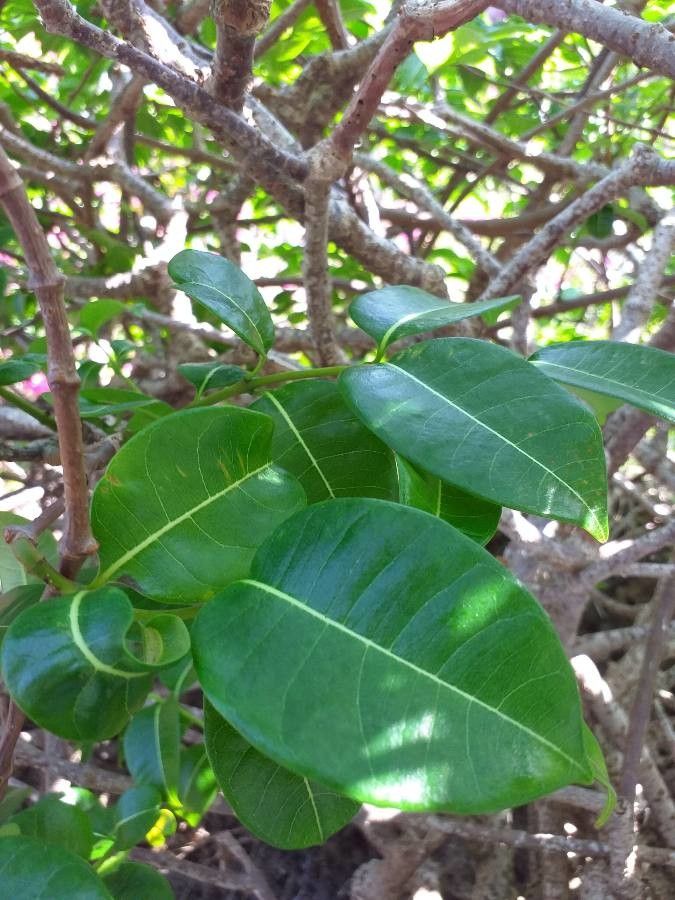
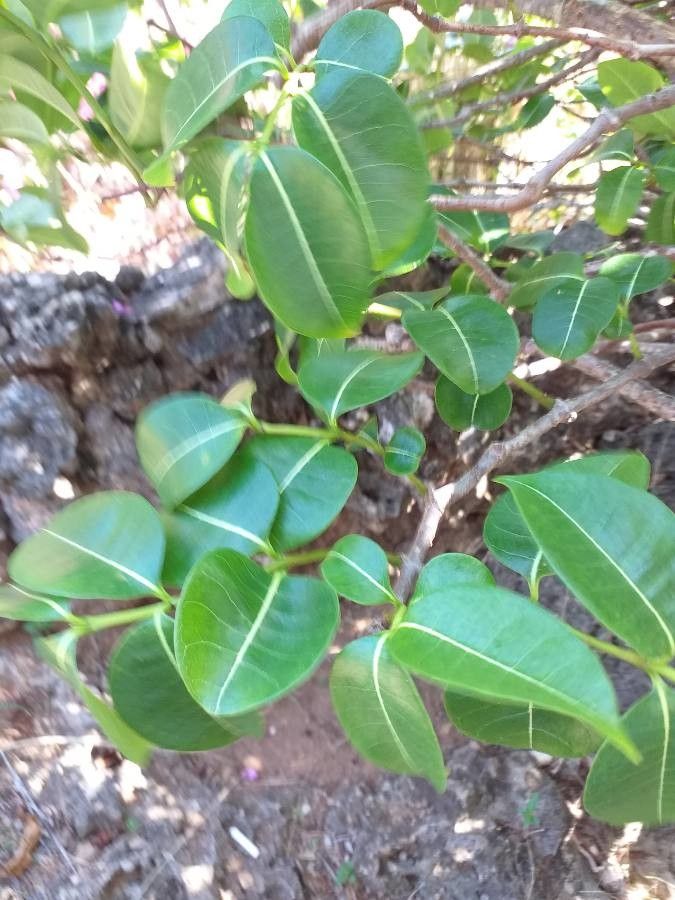
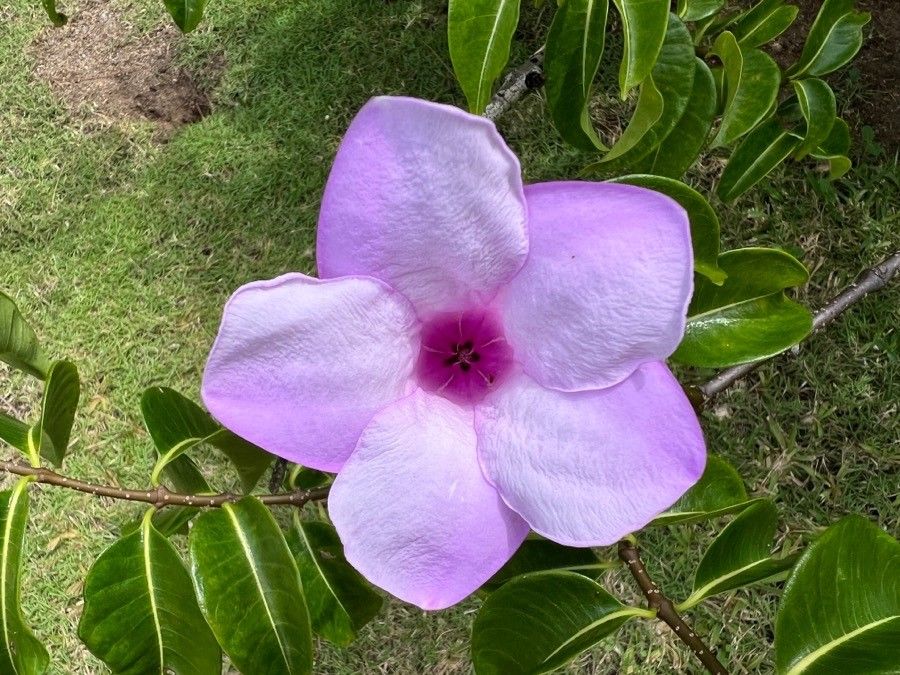
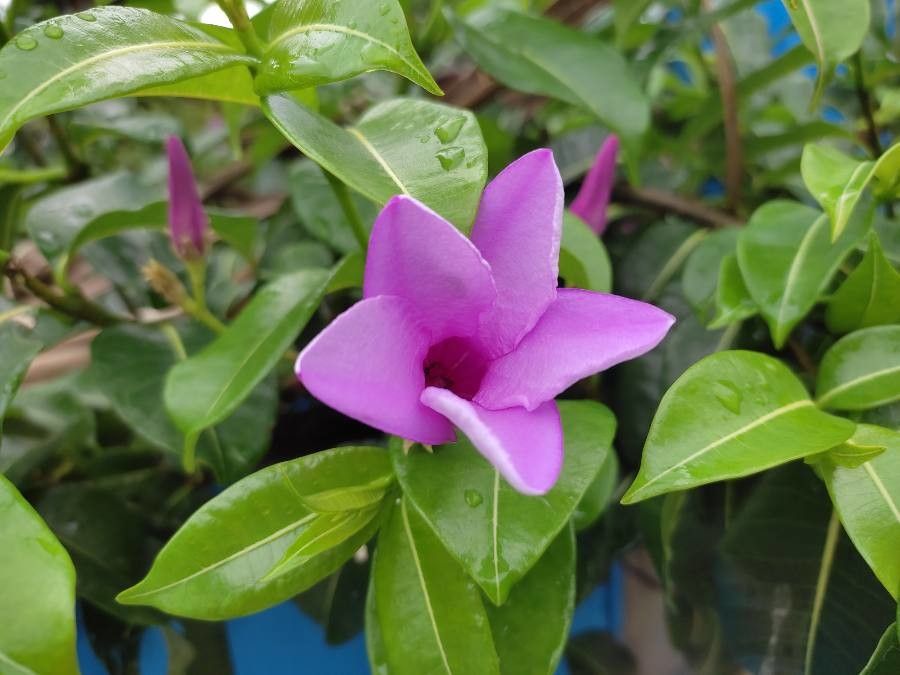
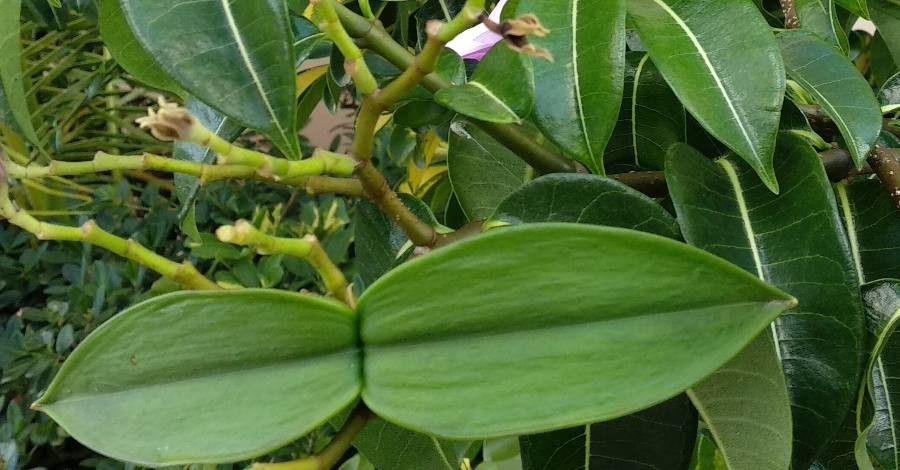
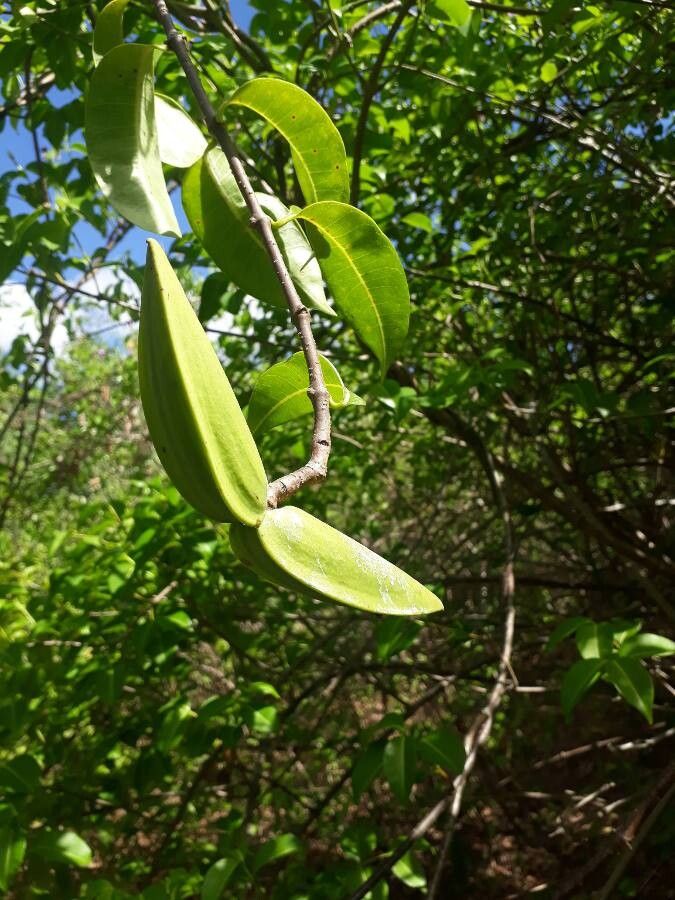
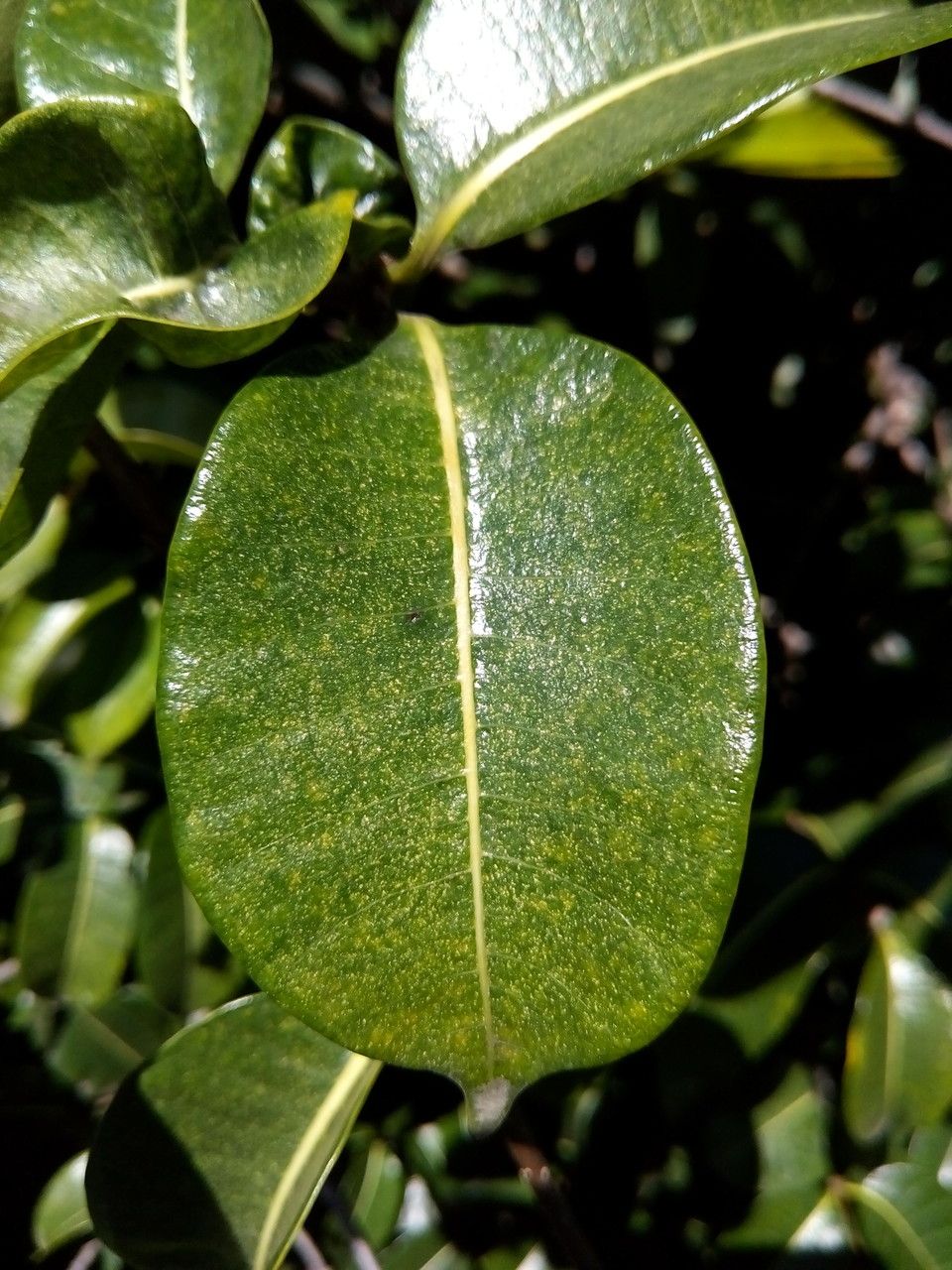
Cryptostegia madagascariensis, commonly known as the Madagascar rubber vine, is a woody vine native to Madagascar that has become invasive in many parts of the world. Belonging to the family Apocynaceae, this vine can grow up to 10 meters in length. It features glossy green leaves arranged in opposite pairs along the stem and produces clusters of pink or white flowers that bloom from summer through fall.
The invasive nature of this plant is attributed to its rapid growth and ability to form dense thickets, which can smother native vegetation. Additionally, it produces a milky sap that can cause skin irritation in some individuals.
Despite its negative impact on ecosystems, Cryptostegia madagascariensis possesses some medicinal properties. Traditionally, its stem sap has been used to treat skin conditions such as eczema and psoriasis.
Efforts are being made worldwide to control or eradicate this invasive species through various methods, including manual removal, herbicide application, and biological control using insects or fungi specific to this plant.
Madagascar rubbervine is highly resistant to disease and typically not susceptible to illnesses. Regarding care, this plant is fairly low-maintenance. When grown outdoors it needs only light watering, and larger specimens usually do not require pruning. Smaller specimens, however, should be trimmed after they finish flowering. Madagascar rubbervine is appropriate for anyone who has an outdoor area, like a garden or deck, and it does not demand extensive care experience.
How to keep Cryptostegia Madagascariensis.
Light
Madagascar rubbervine is native to open habitats, such as sunny meadows and forest edges, where abundant light is available. It thrives in Full Sun but can also tolerate Partial Sun, adapting well to a range of light conditions.
Temperature
Madagascar rubbervine comes from tropical areas where the climate is generally warm and humid. Consequently, it is adapted to high temperatures and humidity. It does not tolerate sudden temperature changes and prefers a steady thermal environment, so avoiding temperature swings indoors is important. It typically cannot withstand cold and requires higher temperatures to grow. If the surrounding temperature falls too low, the plant may stop growing or even die.
Fertilizer
The best time to fertilize a Madagascar rubbervine is in early spring as it breaks dormancy. This encourages overall growth and supports flower development. Fertilizing improves the foliage, stems, and branches, while encouraging large, bright, long-lasting flowers. It helps transport nutrients from the roots to the blooms and enhances the plant's health and resistance to disease.
Botanical profile.
- Plant Type
- Vine
- Life Cycle
- Perennial
- Genus
- Cryptostegia
- Family
- Apocynaceae
- Hardiness Zone
- 10-12
- Mature Height
- 3.05 m to 10.06 m
- Mature Spread
- 2.13 m to 4.88 m
- Leaf Color
- Dark Green
- Leaf Type
- Deciduous
- Flower Size
- 5.08 cm to 6.35 cm
- Bloom Time
- Summer, Early fall, Mid fall
- Planting Time
- Summer
- Harvest Time
- Fall, Early winter, Mid winter
- Native Area
- Madagascar
Other names.