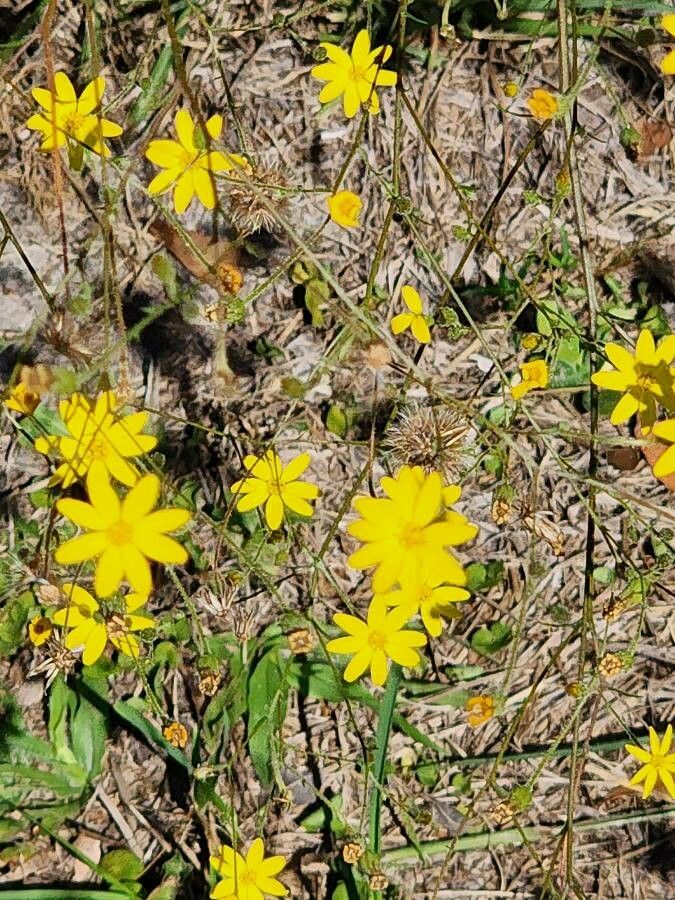
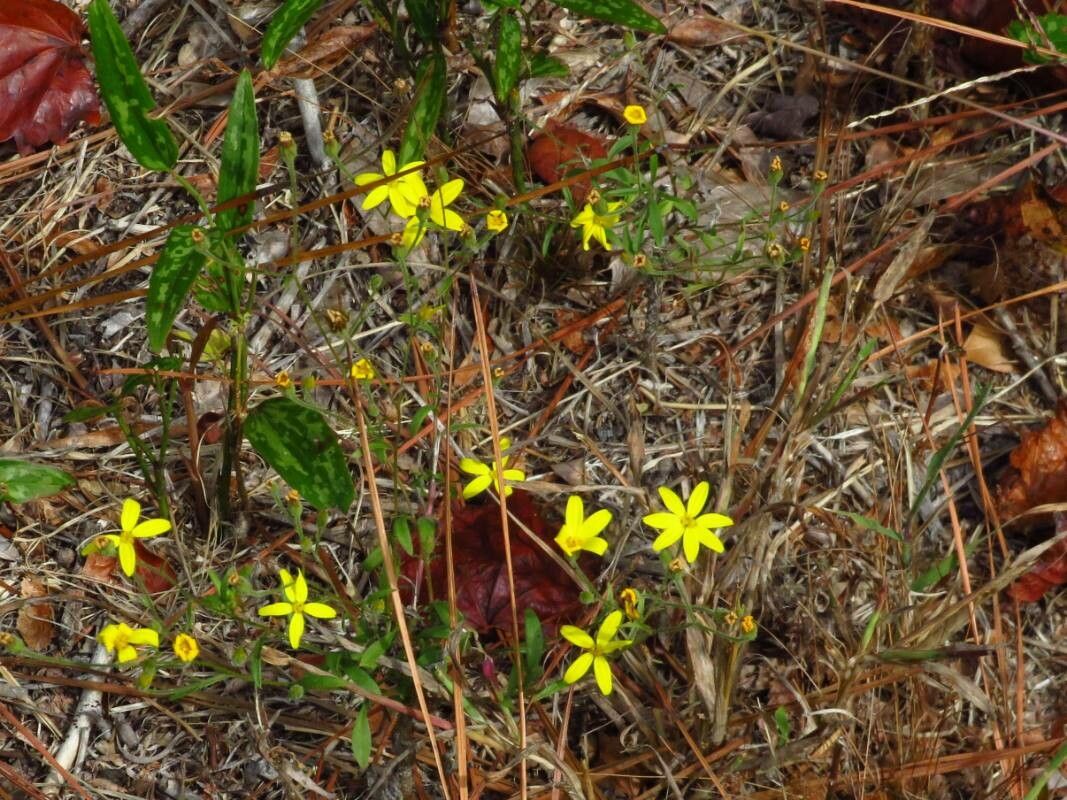
Croptilon divaricatum, called the slender scratchdaisy, is a North American species of flowering plants in the tribe Astereae within the family Asteraceae. It is native to the southeastern and south-central United States, in the states of Texas, Oklahoma, Arkansas, Louisiana, Mississippi, Alabama, Florida, Georgia, Virginia, and the Carolinas.Croptilon divaricatum is an annual or perennial herb sometimes reaching a height of 150 cm (5 feet) and forming a large taproot. Each plant produces one or more yellow flower heads, each with up to 30 ray florets and as many as 100 disc florets.
Slender scratch daisy has strong disease resistance and is generally not prone to disease. However, it can be susceptible to pests and diseases present in its surroundings. These infections are usually not severe. In terms of care, this plant requires moderate maintenance. Regular pruning is needed to maintain a good appearance and healthy growth. Fertilization can also help promote flowering. Slender scratch daisy is suitable for anyone with outdoor space, such as a garden or patio, and does not require much care experience. It may need more attention when grown indoors.
How to keep Croptilon Divaricatum.
Light
Slender scratch daisy comes from bright, open habitats and performs best in full sun. It can tolerate some partial shade but favors direct sunlight for optimal growth. This plant, which may be annual or biennial, is noted for its sun-loving habit.
Water
The slender scratch daisy flourishes with moderate watering, requiring hydration twice a week to remain healthy. It is adapted to the moisture levels of its native habitat, striking a balance between not being constantly wet and not being highly drought-tolerant. During extended dry periods, careful water management is crucial.
Temperature
Slender scratch daisy can tolerate a wide range of temperatures, but its distribution may still be restricted by different combinations of moisture and heat. It performs best in warm summer conditions with sufficient rainfall or watering. Extended stretches of cloudy, rainy weather, as well as prolonged high temperatures, raise the likelihood of the plant dying. In winter, protecting it from cold can increase its chances of survival.
Fertilizer
Slender scratch daisy responds well to regular, low-strength fertilizer applications to encourage healthy leaf growth. Fertilize Slender scratch daisy about once a month during the summer. Nitrogen is essential for foliage, and adding nitrogen-rich sources helps the plant thrive.
Pruning
The slender scratch daisy is a hardy perennial featuring delicate, daisy-like flowers. To promote better branching, manage its size, and improve air circulation, it is best to prune this plant from early to late spring. Be sure to use clean, sharp tools for the task. Regular pruning not only enhances the plant's health but also its visual appeal.
Botanical profile.
- Plant Type
- Herb
- Life Cycle
- Annual
- Genus
- Croptilon
- Family
- Asteraceae
- Hardiness Zone
- 7-10
- Mature Height
- 0 cm to 30 cm
- Mature Spread
- 20 cm to 49 cm
- Leaf Color
- Green
- Leaf Type
- Semi-evergreen
- Flower Color
- Yellow
- Flower Size
- 1.02 cm to 2.03 cm
- Bloom Time
- Late summer, Early fall, Mid fall
- Planting Time
- Spring
- Harvest Time
- Fall
Other names.