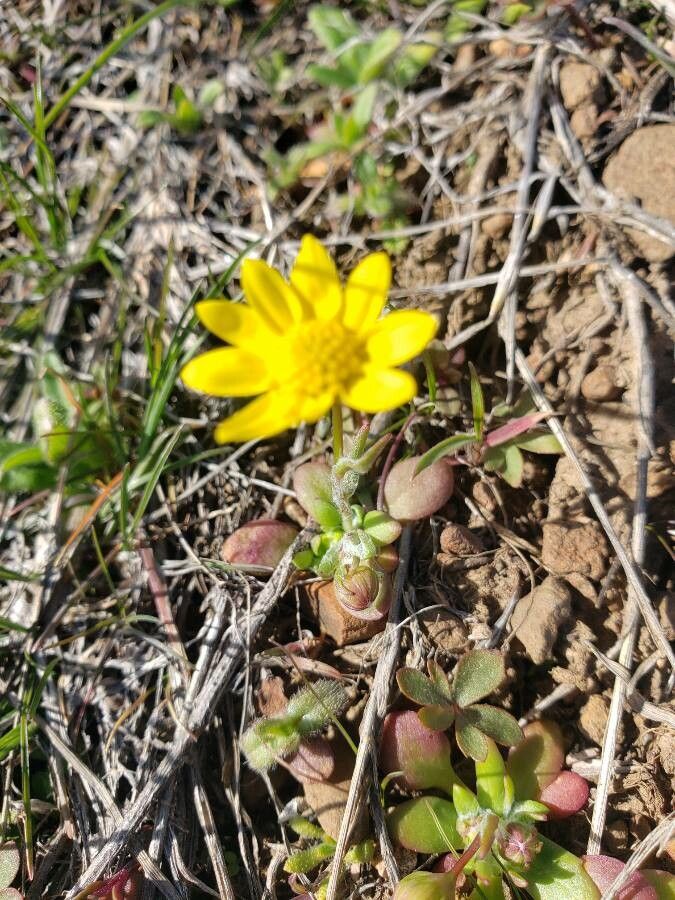
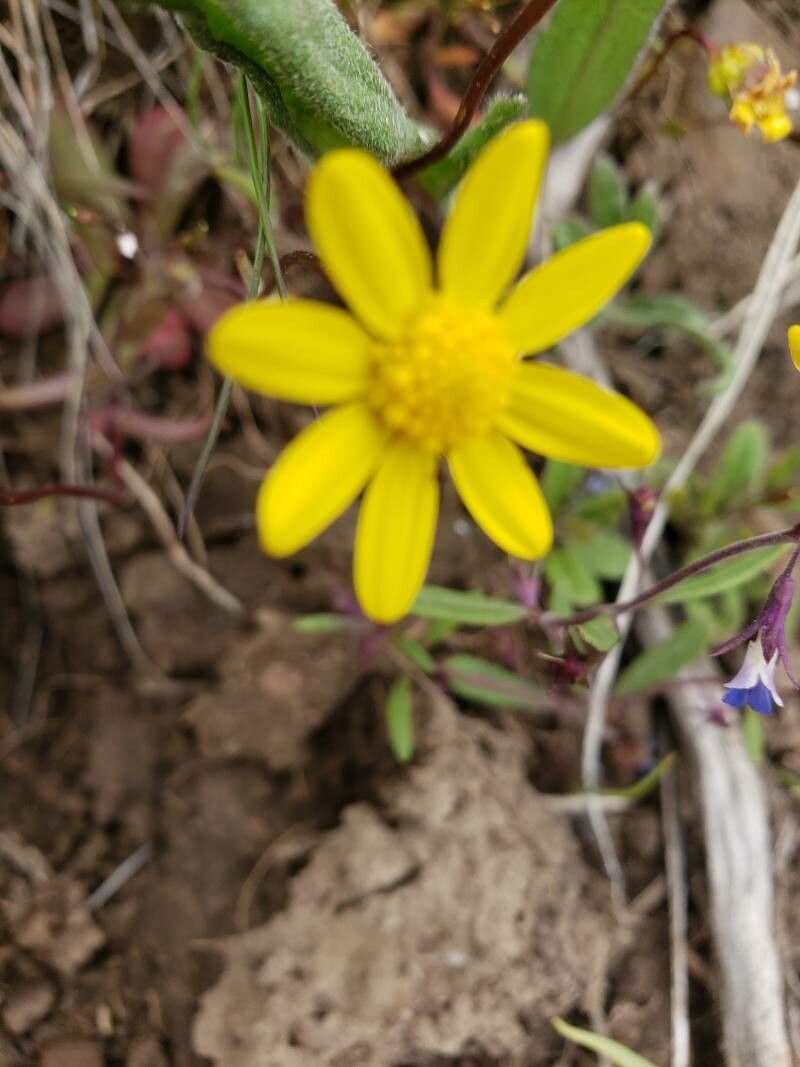
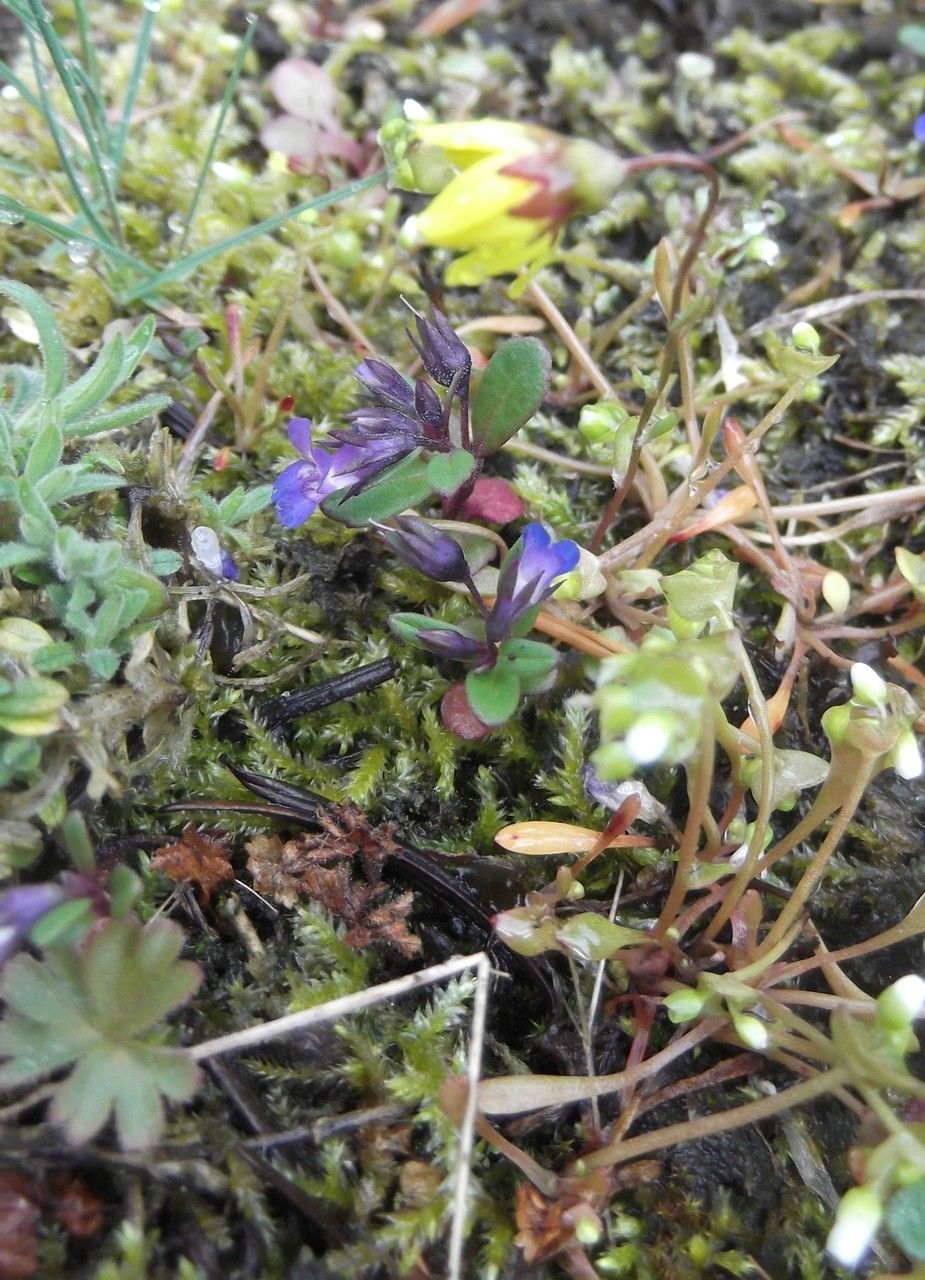
Crocidium multicaule is a species of plants in the daisy family known by the common name spring gold. This plant is native to western North America from British Columbia to California, where it can be found in varied habitats from grassland to woodland. It is a small annual, typically not exceeding 30 centimetres (12 in) in height. It grows from a small patch of somewhat fleshy leaves at the ground and erects several very tall, very thin gangly stems, each of which is topped with a flower head. The flower head is made up of five to 13 lemon yellow ray florets, each up to a centimeter long. The center of the head is filled with tiny disc florets, in a similar shade of bright yellow. The fruits are fuzzy brown achenes only one or two millimeters long which turn gluey when wet.
Spring gold is fairly disease-resistant and generally not prone to illness. However, it can be affected by pests and diseases present in its surroundings. These problems are usually mild. For care, this plant requires moderate maintenance. It should be pruned regularly to preserve a tidy appearance and healthy growth. Fertilizing can also encourage flowering. Spring gold is suitable for anyone with an outdoor area, such as a garden or patio, and does not demand much gardening experience. It may need more attention when grown indoors.
How to keep Crocidium Multicaule.
Light
Spring gold comes from bright, open areas and does best in full sun. It can tolerate partial sun but prefers direct sunlight for optimal growth. This plant, which can be annual or biennial, is known for its sun-loving nature.
Water
Spring gold is well-suited for dry conditions, displaying some tolerance to drought. It thrives with weekly watering, as long as the soil doesn’t become saturated. When planted outdoors, this plant produces vibrant blooms during its growing season. For optimal growth, it's important to manage moisture carefully, ensuring the soil stays moist but not waterlogged.
Temperature
Spring gold can tolerate a wide range of temperatures, but its distribution may still be constrained by different combinations of water and heat. It performs best in warm summer climates with sufficient rainfall or watering. Extended periods of cloudy, rainy weather or prolonged high temperatures increase the risk of Spring gold dying. In winter, protecting the plant from cold can improve its chances of survival.
Fertilizer
When most of Spring gold's blooms have fully opened, it's time to resume feeding. At the peak of flowering, begin fertilizing again every three to four weeks, weather permitting. Once Spring gold begins producing fewer new blooms, stop fertilizing; there's no reason to fertilize if the plant can no longer produce more flowers.
Pruning
Spring gold produces beautiful golden-yellow blooms and requires minimal pruning. The best time to prune is in early spring, right after it finishes blooming. Pruning at this time promotes new growth and allows you to remove spent flowers and any dead or damaged stems. Regular deadheading, which involves removing faded flowers, can enhance and prolong flowering. Always use sharp, clean tools to prevent the spread of disease. Additionally, be sure to follow species-specific horticultural guidelines for optimal care.
Botanical profile.
- Plant Type
- Herb
- Life Cycle
- Annual
- Genus
- Crocidium
- Family
- Asteraceae
- Hardiness Zone
- 7-9
- Mature Height
- 5 cm to 20 cm
- Mature Spread
- 5 cm to 15 cm
- Leaf Color
- Green
- Leaf Type
- Semi-evergreen
- Flower Color
- Yellow
- Flower Size
- 1.02 cm to 2.03 cm
- Bloom Time
- Late winter, Early spring
- Planting Time
- Spring, Summer
- Harvest Time
- Mid spring, Late spring
Other names.
Reader questions.
How should I water my Spring gold plant?
To water Spring gold, you have several options such as using a garden hose with a spray nozzle, a watering can, or any other common watering tool. Spring gold is not too picky about their water source and can survive on rainwater, tap water, or filtered water. It's generally not recommended to water this plant from overhead as it may harm the leaves and flowers and increase the chances of disease. Using a drip irrigation system is often the best method for watering Spring gold as it provides even and direct water to the soil. When watering a container-grown Spring gold, you can use a cup, watering can, or tap water to water the soil directly.
How many hours of sunlight does Spring gold need each day to grow well?
To ensure optimal growth and survival, plants should be exposed to a minimum of 6 to 8 hours of sunlight each day. In particular, they thrive when given ample morning light, especially during the summer months. The Spring gold variety, in particular, requires full sun and benefits from as much sunlight as possible. Increased light allows these plants to produce more food, showcase stunning blooms, and improve their overall chances of survival.
What do I do if I give my Spring gold plant too much water or too little water?
To prevent underwatering your Spring gold, simply water it more regularly when you notice it lacks moisture. Overwatering, on the other hand, can have more serious consequences. It can lead to diseases and ultimately the decline and death of the plant. To avoid this, choose a location that gets plenty of sunlight to dry the soil and has good drainage to prevent water from pooling. If you have overwatered your potted Spring gold, consider changing it to a new pot with better drainage. When repotting, use loose soils and a pot that drains efficiently.
What kind of sunlight does Spring gold need?
The Spring gold plant thrives in full sunlight, so it's important not to overcrowd them. This allows each plant to receive an equal amount of sun exposure, preventing the leaves from being deprived of sunlight. If you choose to plant them in pots, make sure to place them in windows that receive direct sunlight throughout the day. Regardless of the season, it's crucial for these herbaceous flowers to be exposed to full sunlight. They don't fare well in partial or filtered light, as this can lead to weak stems and unhealthy flowers. For optimal growth, it's recommended to always keep the Spring gold in direct sunlight.
How often should I water my Spring gold? - How frequently should I water my Spring gold?
To keep your Spring gold plant healthy, it needs regular watering. At the start of spring, water it once a week. As the weather gets warmer, you may need to water it two to three times a week. However, be careful not to overwater it, as that can harm the plant. Regardless of how often you water, make sure the soil is consistently moist but not too wet. Watering a potted Spring gold plant requires more frequent watering compared to one in the ground. Generally, you should water a potted plant a few times per week, while an in-ground plant only requires watering once a week.
Can the sun harm plants? How can I prevent Spring gold from getting damaged by the sun and heat?
When the temperature exceeds 90℉(32℃), Spring gold can be damaged by extreme temperatures, especially if it is exposed to long hours of sun. To prevent damage, it is ideal to provide some shade during the afternoon in the summer. It is important to keep in mind that sunlight is stronger in the summer than in the winter, and exposure to sunlight is 50% longer in the summer. If Spring gold is stressed from sunlight, it is recommended to keep them well hydrated. Water the plants when the top of the soil is about 2 inches dry and consider moving them indoors if it is too hot outside, especially if they are planted in containers. While it is normal for the plant leaves to wilt during the day, they typically recover at night. However, if the Spring gold continues to droop, it means the plant is losing water rapidly and needs to be watered.
How much water does my Spring gold plant need?
Determining the right amount of water for your Spring gold plant can be done in a few ways. Some gardeners prefer to gauge moisture levels by feeling the soil, suggesting that you water until the top six inches of soil feel damp. Alternatively, you can use a specific measurement, like two gallons per week, depending on temperature and soil dryness. However, these guidelines could result in overwatering if your plant needs less. In containers, check the soil's dryness by sticking your finger in or water until it begins to drain from the pot's holes.
Do I need to keep Spring gold away from the sun?
The Spring gold plants thrive in sunlight and do not require any protection from the sun. They actually love the sun and some species are heliotropic, meaning they move towards the sun. It is recommended to plant them in south-facing gardens to maximize their exposure to the sun from morning to afternoon. However, it's important to note that while sunlight can be beneficial, some species may be at risk of sunburn. To prevent this, it is recommended to provide protection from the afternoon and midday sun using the shade of a tree or a wall, for example. It's not advisable to grow the Spring gold plants in shady areas because the larger flowers would require a significant amount of energy to grow and produce. Therefore, it's best to always provide optimal lighting conditions by placing them in an area with full sun for the best results.
How can I know if I'm giving enough water to my Spring gold plant?
Avoiding overwatering your Spring gold can be somewhat difficult due to various factors. These plants have deep roots that need to be watered weekly to keep the soil moist. However, Spring gold is also highly prone to root rot, which can cause browning of the plants. Underwatering is less of a concern as Spring gold can survive for some time without additional watering. However, if you go too long without watering, the plant may wilt and develop dry leaves.
What happens if Spring gold doesn't get enough sunlight?
When the Spring gold does not receive enough sunlight, its photosynthetic process slows down. Without adequate sunlight, the stems become thin and long, as they try to find more sunlight. In the shade, they do not bloom or produce seeds. Additionally, insufficient sunlight can cause older leaves to die, the color of new leaves to be lighter, and new growth to be smaller. Spring gold thrives in the sun but can wilt in excessive heat and ultraviolet light during the summer. Consider protecting them with a green shade net or using a fan to reduce heat when they are indoors.
How should I make sure my Spring gold gets enough water all year round?
As the seasons change, the water needs of your Spring gold plant will also change. In the spring, it is recommended to water your plant once a week. However, as the summer heat intensifies, you will need to increase the frequency of watering to about three times per week. This is especially crucial for Spring gold plants grown in containers, as the soil in containers tends to dry out faster in warm weather. As autumn arrives and the temperature cools down, your Spring gold plant will require less water as the sun becomes less intense.
Do Spring gold plants need extra attention to sunlight at each stage of their growth?
During the growth of Spring gold, the younger plants require more light compared to the mature ones. While they should be exposed to sufficient light, sudden full sunlight may be overwhelming for them, especially if they were raised in a nursery. Young plants can be more susceptible to the intense summer sun, so it is advisable to gradually and slowly increase their exposure to light.