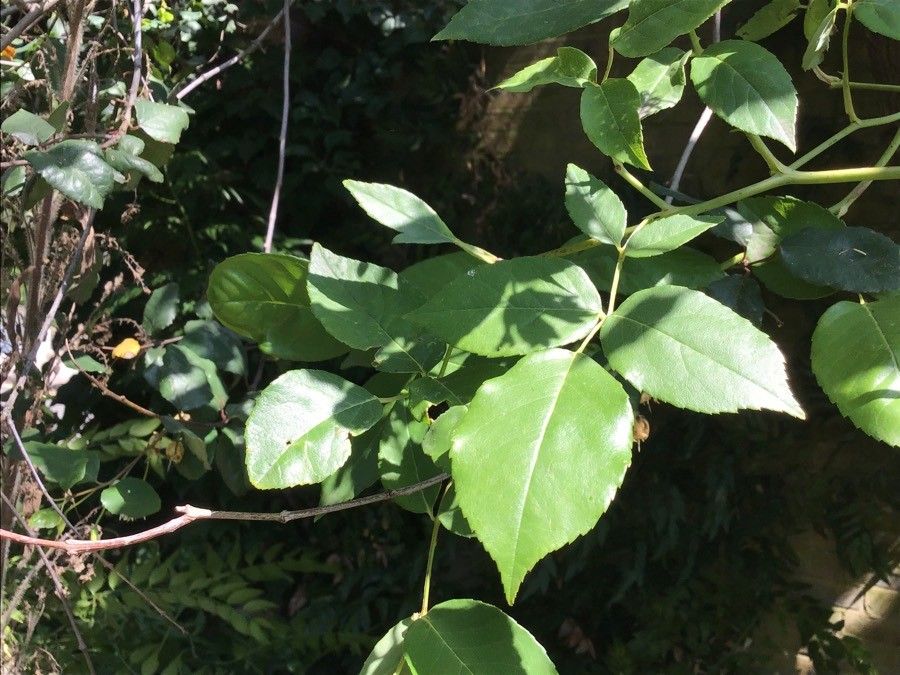
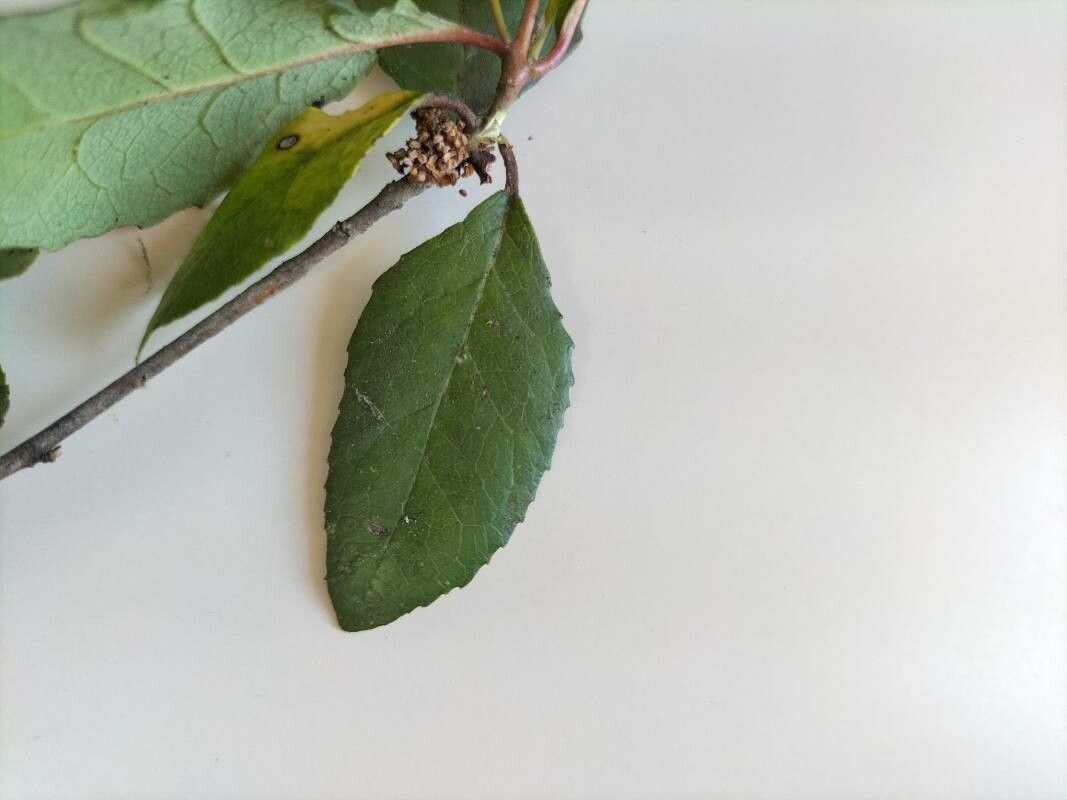
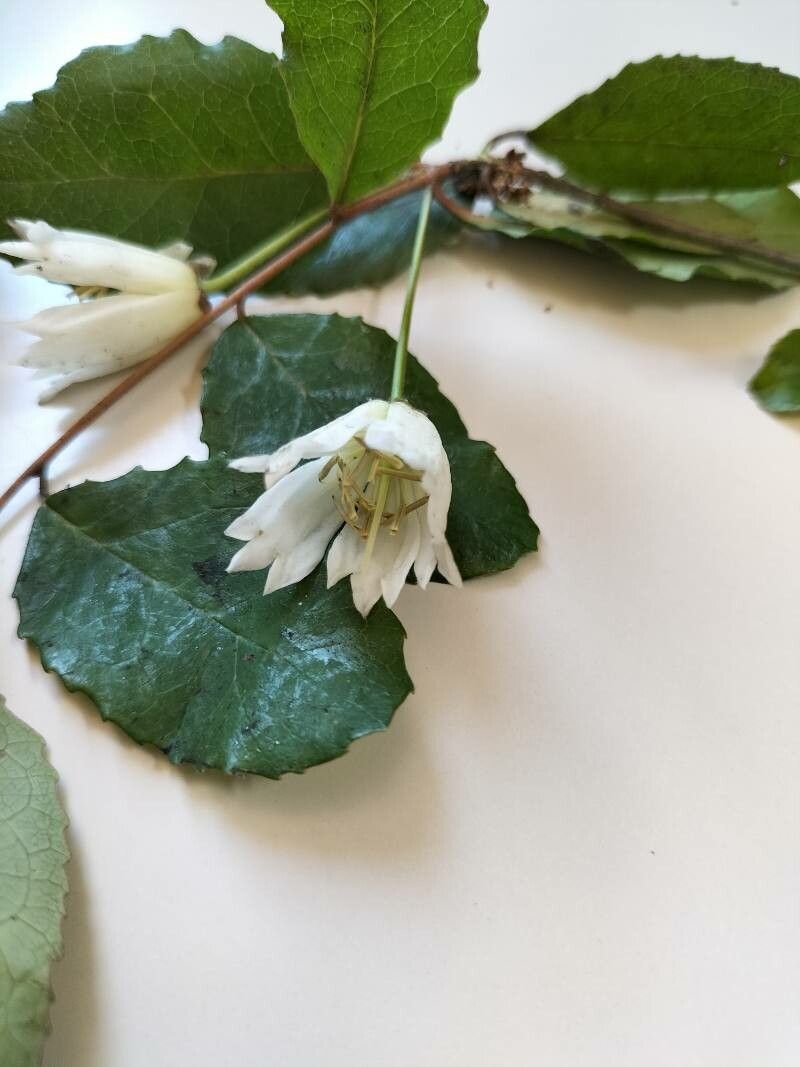
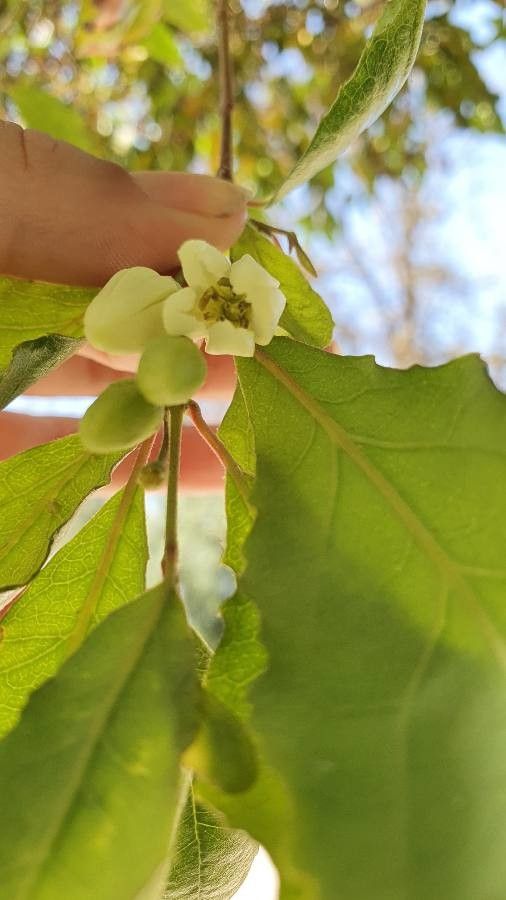
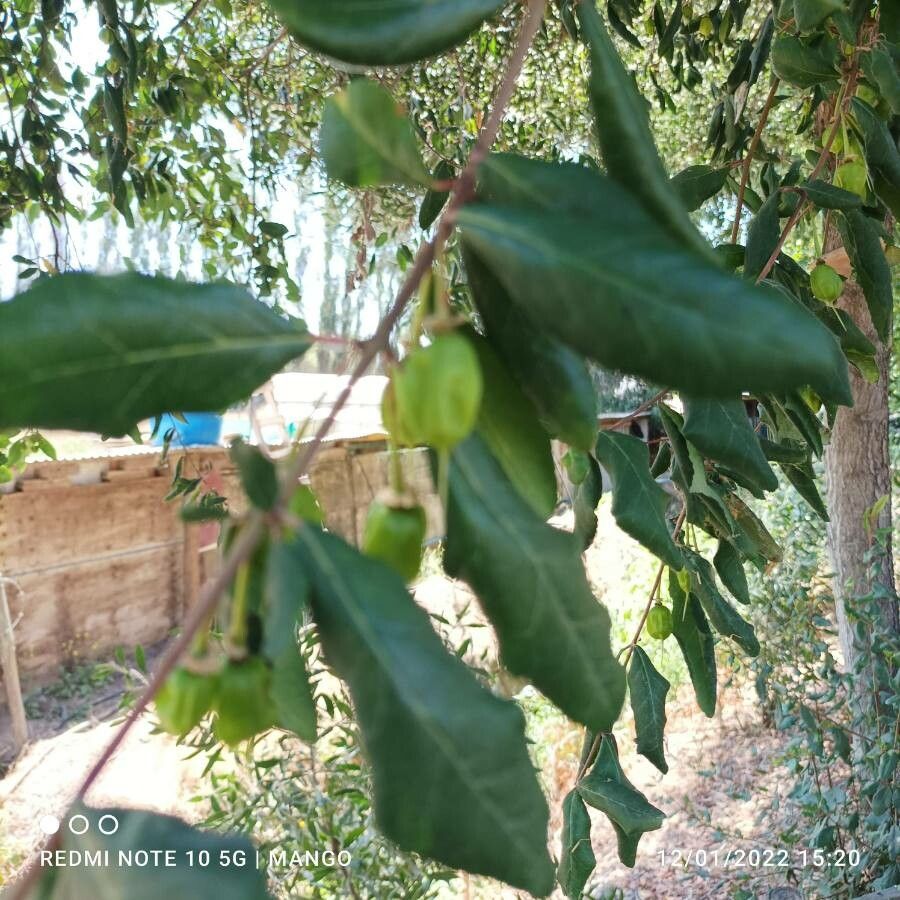
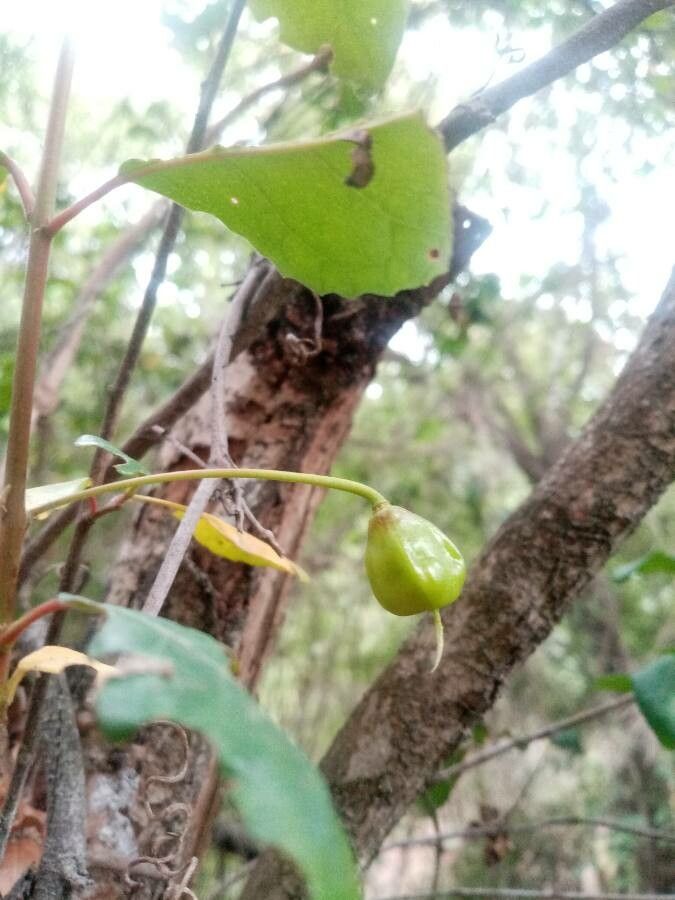
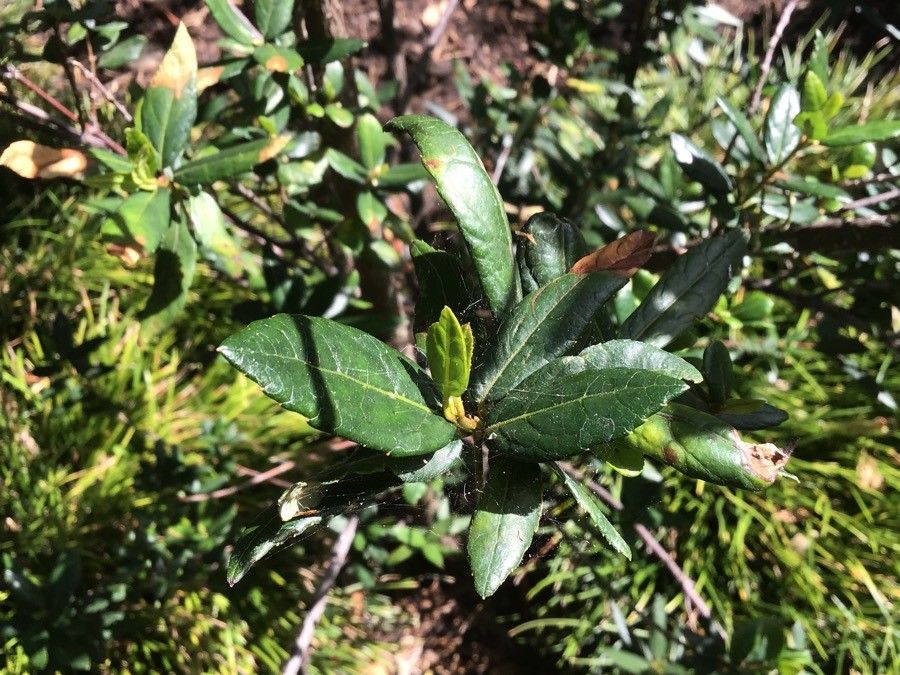
Crinodendron patagua, the patagua or lily of the valley tree (also a name for Clethra arborea), is an evergreen tree that grows in Chile from 33° to 36° South latitude, up to 1200 m (4000 ft) above sea level in elevation. It lives in wet places and prefers ravines. An endangered associate tree is the Chilean wine palm, Jubaea chilensis, whose distribution was much wider prehistorically. This tree reaches a height up to 10 m (33 ft).Leaves are simple, oblong with serrate margin. It produces white flowers with bell-shaped corolla of five petals, the fruit is a capsule which is orange-colored when mature. According to Chilean folklore the patagua originates from women who cried before God in repentance of their sins. Because of this they were saved from obliteration but suffered, in contrast to "just" people, transformation into trees. This would explain the pataguas common resemblance to human figures and why some Indigenous people would fall in love with some pataguas. Folklore also says pataguas may signal the presence of an entierro.
The Lily of the valley tree is resistant to disease and is typically not susceptible to illnesses. Care-wise, this plant is fairly low-maintenance. When grown outdoors it needs little watering, and larger specimens usually do not require pruning. Smaller plants, however, should be pruned after they finish blooming. The Lily of the valley tree is suitable for anyone with outdoor space, such as a garden or a deck, and does not require extensive care experience.
How to keep Crinodendron Patagua.
Light
The lily-of-the-valley tree is native to open habitats, such as sunny meadows and forest edges, which provide abundant light. It flourishes in Full Sun but can also tolerate Partial Sun, adapting well to a range of sunlight conditions.
Temperature
The lily of the valley tree is highly adaptable to a range of climate conditions, from scorching summers to chilly winters. Nevertheless, it has an optimal temperature range for growth. If temperatures become too high, the plant is vulnerable to heat and humidity stress, which can lead to its death. In areas where temperatures near the lower limit of its cold tolerance, it is important to provide insulation to protect the plant.
Fertilizer
Timing is essential when fertilizing a Lily of the valley tree. Fertilize in early spring and continue every month until early summer. Fertilizer encourages beautiful blooms and supplies energy during both dormant and active growth phases.
Pruning
The lily of the valley tree is an evergreen shrub or small tree known for its bell-shaped flowers. To care for this plant, it is important to prune it properly. Key pruning steps include removing any dead branches, thinning out crowded areas to improve air circulation, and shaping the plant to enhance its form. It is best to prune during the early to late winter to minimize stress on the plant. Always use clean, sharp tools to promote healthy growth and flowering.
Botanical profile.
- Plant Type
- Tree
- Life Cycle
- Perennial
- Genus
- Crinodendron
- Family
- Elaeocarpaceae
- Hardiness Zone
- 8-11
- Mature Height
- 7.92 m to 14.94 m
- Mature Spread
- 4.88 m to 7.92 m
- Leaf Color
- Green
- Leaf Type
- Evergreen
- Flower Color
- White
- Flower Size
- 1.02 cm to 1.52 cm
- Bloom Time
- Early summer, Mid summer
- Planting Time
- Spring, Summer
- Harvest Time
- Late summer, Early fall, Mid fall
Other names.