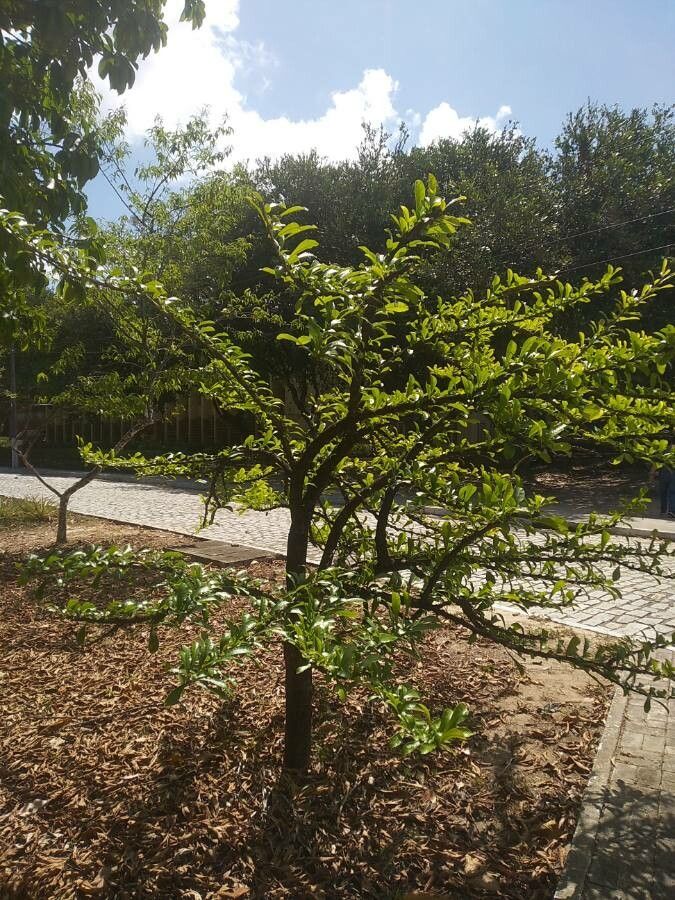
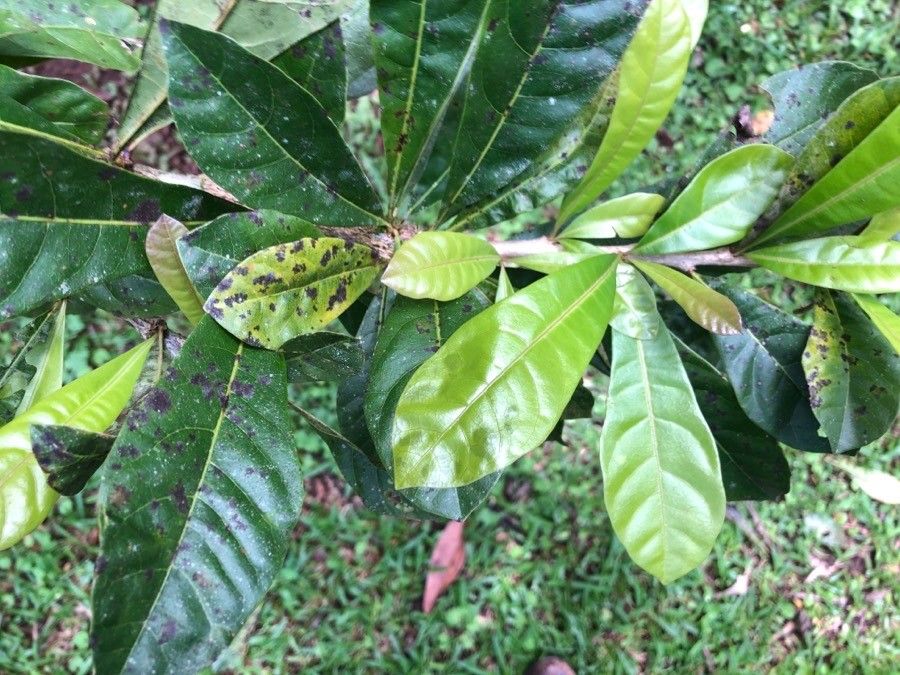
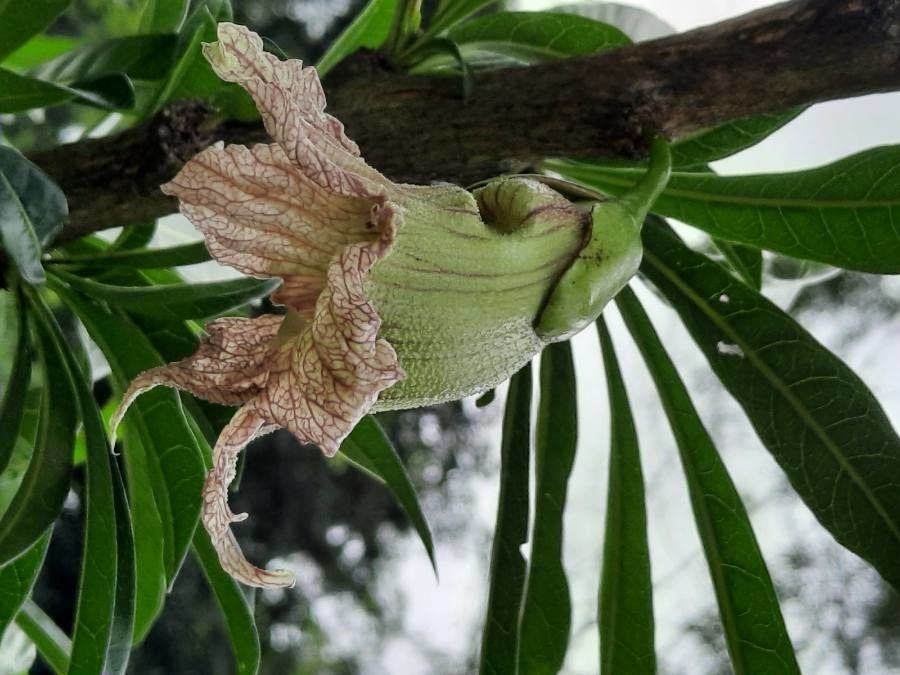
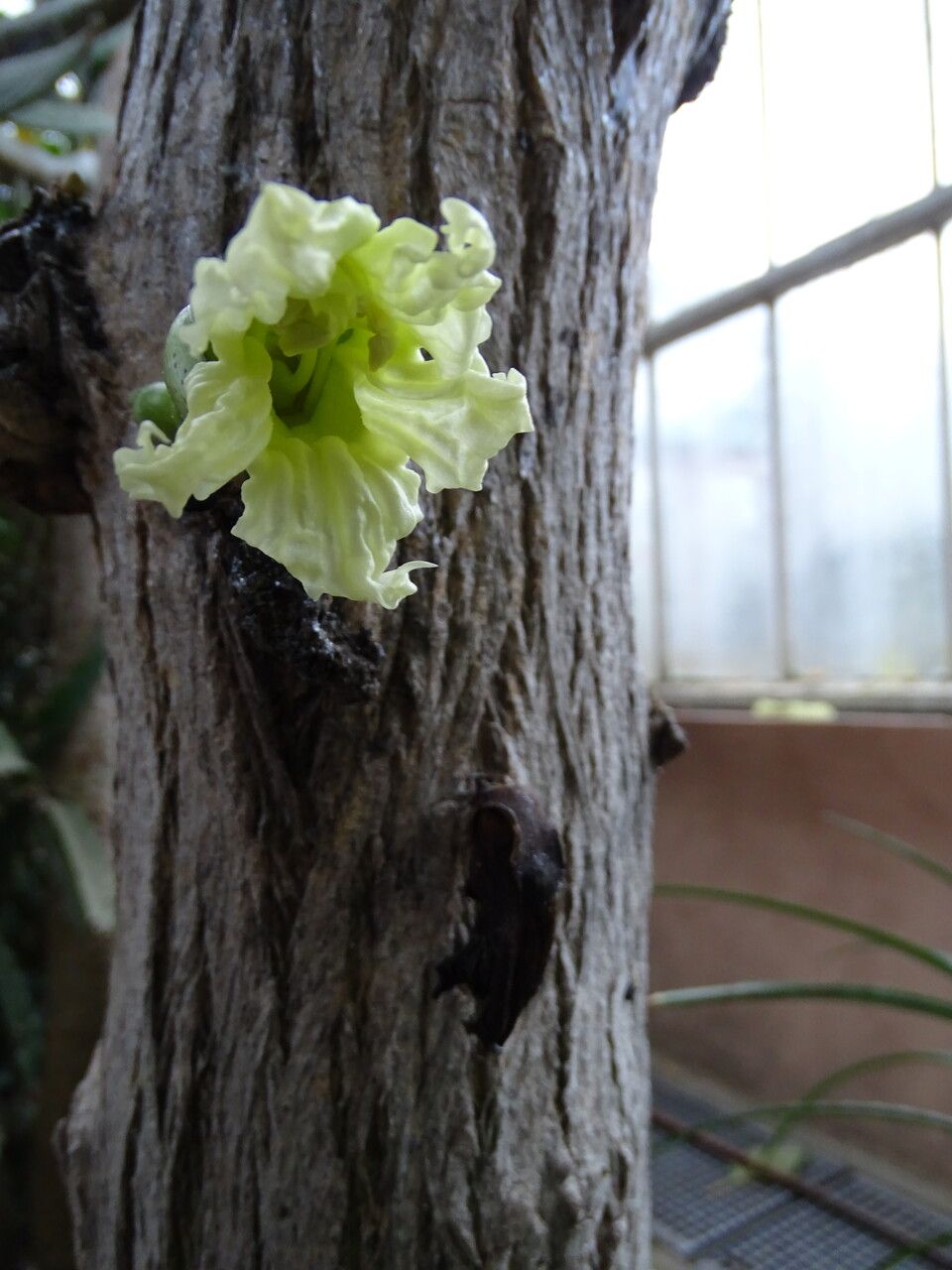
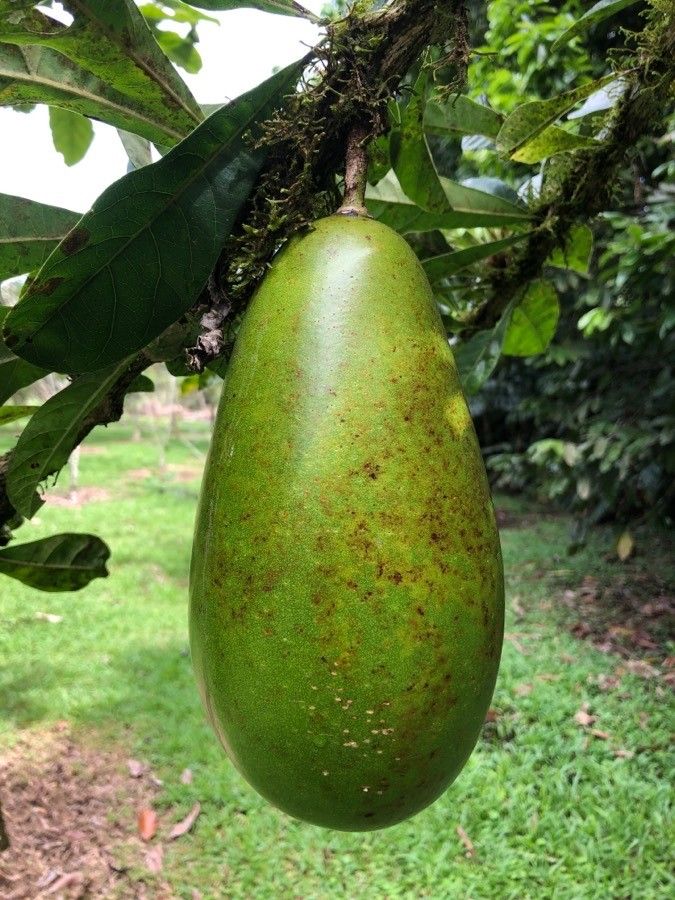
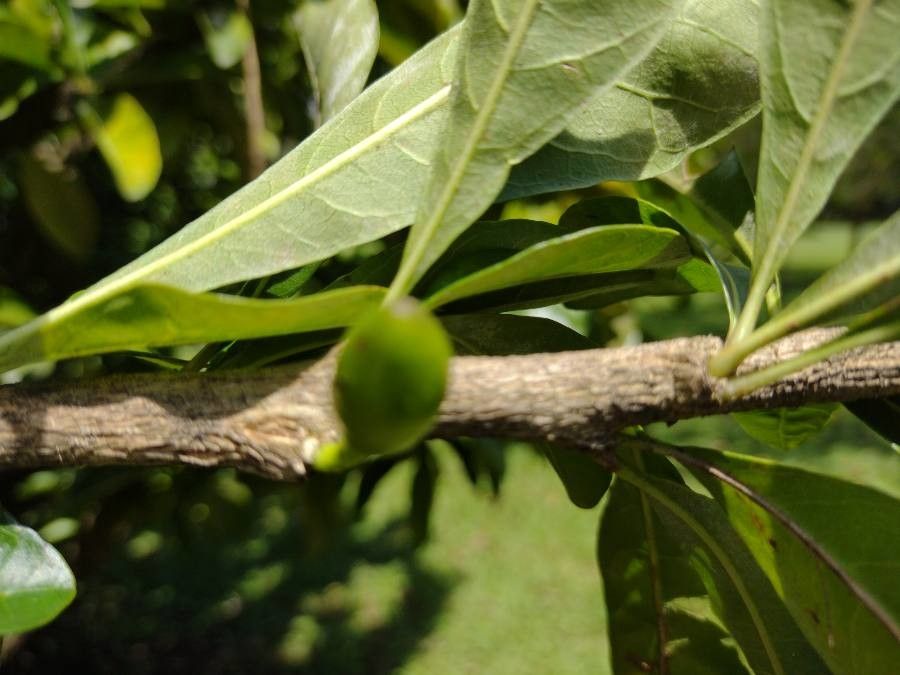
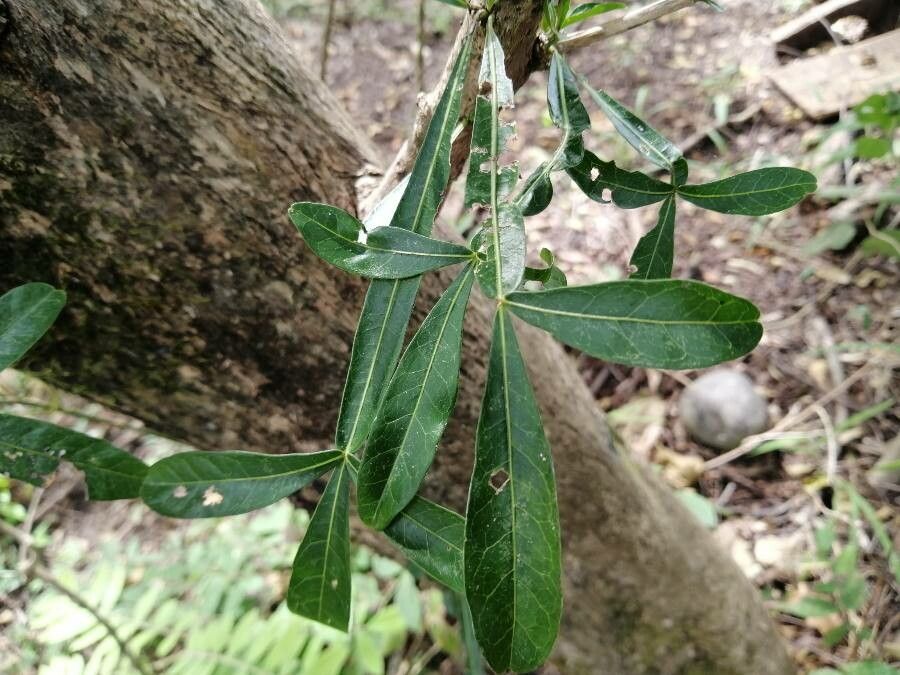
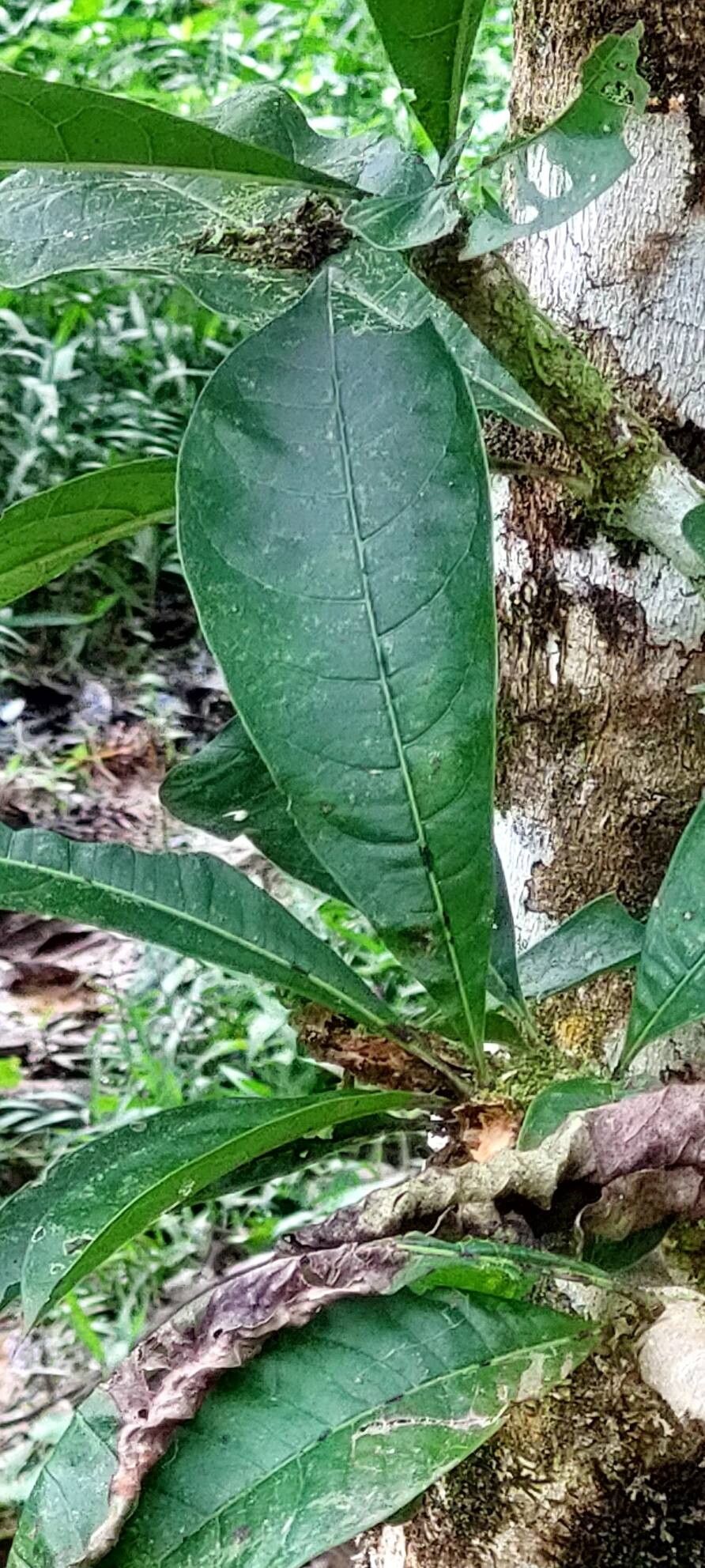
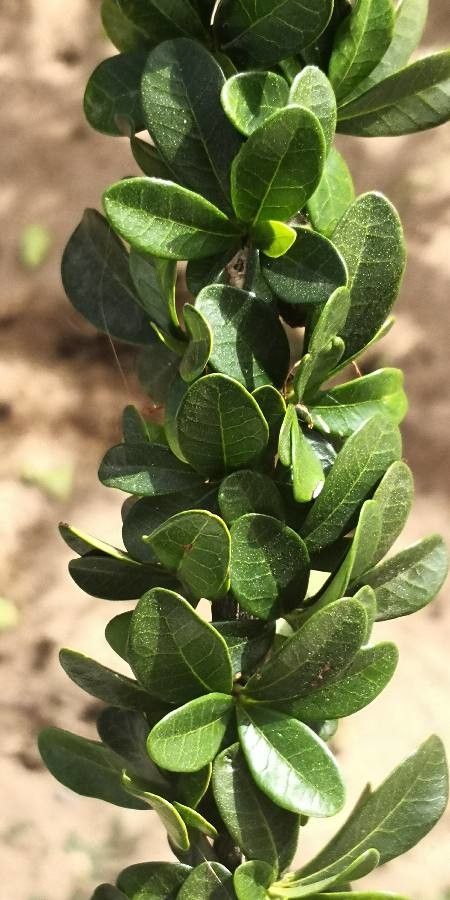
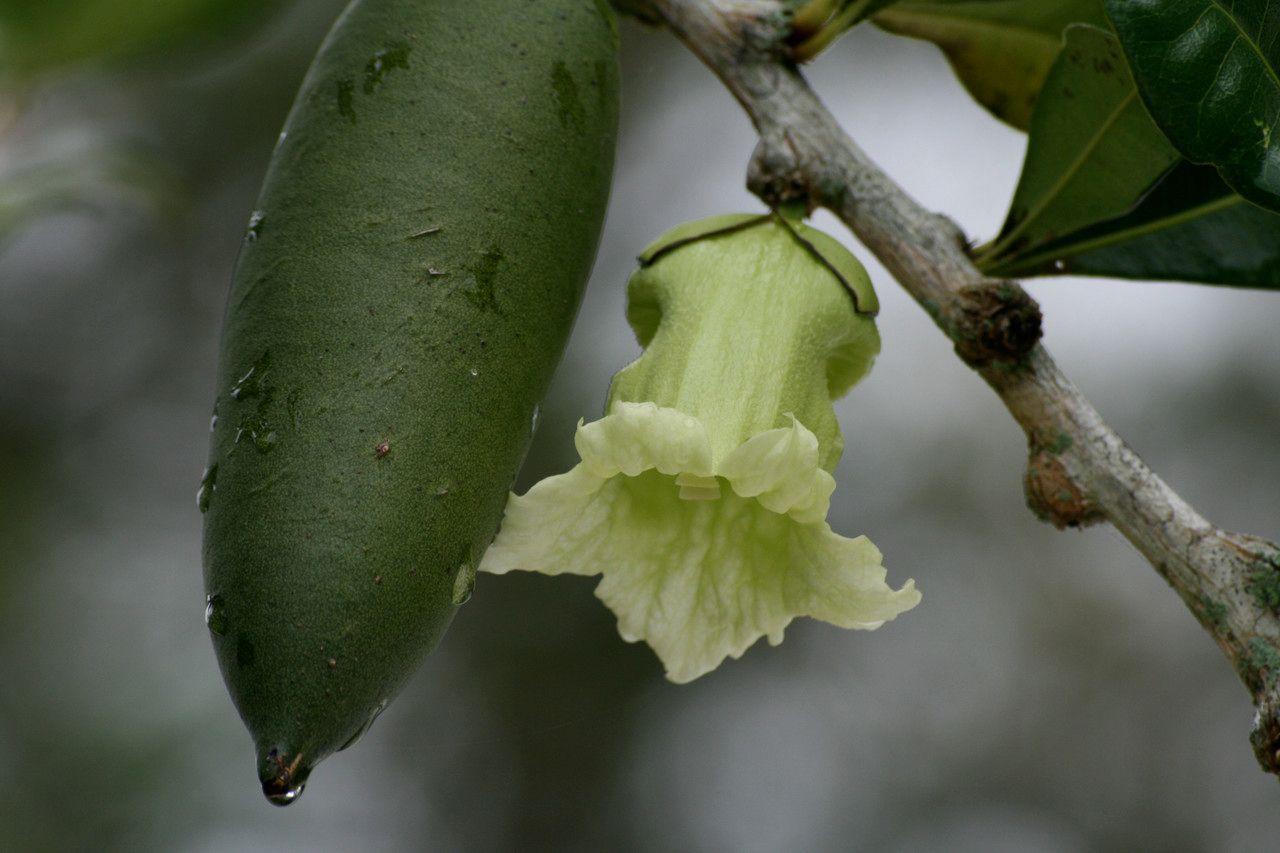
Crescentia cujete, commonly known as the calabash tree, is a species of flowering plant native to the Americas, that is grown in Africa, Central America, South America, the West Indies and extreme southern Florida. It is the national tree of St. Lucia. It is a dicotyledonous plant with simple leaves, which are alternate or in fascicles (clusters) on short shoots. It is naturalized in India. The tree shares its common name with that of the vine calabash, or bottle gourd (Lagenaria siceraria).In Cuba, this tree is known to grow in both disturbed habitat and areas of poor drainage. It can grow up to 10 meters tall.
The calabash tree has strong resistance to disease and is usually not susceptible to illnesses. In terms of upkeep, this plant is fairly low-maintenance. Planted outdoors, it needs little watering, and larger specimens typically do not require pruning. Smaller plants, however, should be trimmed after they have finished blooming. The calabash tree is suitable for anyone with outdoor space, such as a garden or deck, and does not demand extensive caretaking experience.
How to keep Crescentia Cujete.
Light
The calabash tree grows exceptionally well in direct, unshaded sunlight. Sunlight is essential, energizing the plant's tissues to promote vigorous growth. At any stage of development the calabash tree requires full exposure to sunlight. Its native habitat favors environments where full sun exposure is the norm. If it does not receive sufficient sun, the plant may suffer reduced vigor and weak growth.
Water
The calabash tree flourishes in tropical and humid regions, where it thrives on consistent moisture and has some tolerance for drought. It should be watered every two weeks. Usually grown outdoors, the calabash tree benefits from natural rainfall patterns that match its growth cycles.
Temperature
Calabash tree is commonly found in environments with temperatures between 68 and 100 °F (20 to 38 ℃). For healthy growth in different seasons, it is advisable to maintain its surroundings within that temperature range.
Fertilizer
Fertilizing is essential to the care of the Calabash tree. Regular feeding during the growing season keeps up the energy needed for its showy leaves and supports overall growth. Ignoring fertilization can lead to unhealthy leaves, reduced ornamental value, and stunted or weak growth that is prone to breaking.
Pruning
The Calabash tree is a drought-tolerant tropical species that produces large, spherical fruits. To enhance its shape and health, prune the tree from early to late winter. Focus on removing any dead or crossing branches. Always use clean tools, avoid heavy pruning, and maintain a routine of gentle pruning to encourage growth and vitality.
Botanical profile.
- Plant Type
- Tree, Shrub
- Life Cycle
- Perennial
- Genus
- Crescentia
- Family
- Bignoniaceae
- Hardiness Zone
- 10-12
- Mature Height
- 7.62 m to 9.14 m
- Mature Spread
- 6.1 m to 9.14 m
- Leaf Color
- Green
- Leaf Type
- Evergreen
- Flower Color
- Yellow
- Flower Size
- 5.08 cm
- Bloom Time
- Mid spring, Late spring, Early summer, Mid summer
- Planting Time
- Spring, Autumn
- Harvest Time
- Early spring, Mid summer, Late summer, Fall, Winter
- Native Area
- Colombia, Bahamas, Belize, Cuba, Honduras, Mexico, Guatemala, Haiti, Venezuela, El Salvador, Nicaragua, Costa Rica, Dominican Republic, Trinidad and Tobago, Panama, Jamaica
Other names.
Reader questions.
How should I water my Calabash tree in the best way?
Your Calabash tree is not demanding when it comes to watering methods. You have the flexibility to use various common tools, such as watering cans, hoses, or even cups, to moisten the soil. It is important to water the tree directly at the soil, ensuring that all areas receive equal amounts of moisture to nourish the entire root system. Choosing filtered water over tap water is ideal, as tap water may contain harmful particles. Additionally, using water that is at or slightly above room temperature is beneficial, as extreme temperatures can be distressing to the tree. However, the Calabash tree generally handles different types of water well.
Why is it important to put fertilizer on my Calabash tree?
Regular fertilization is essential for Calabash trees due to their energy-intensive showy leaves. These trees not only need enough energy to maintain their leaves, but also to support the growth of stems, branches, roots, and other vital structures. Neglecting fertilization can lead to two likely outcomes. Firstly, the leaves lose their natural color and texture, appearing unhealthy and diminishing their ornamental appeal. Secondly, the tree's overall growth slows down or produces weak growth that may be prone to breakage.
What are the sunlight requirements for a Calabash tree?
The Calabash tree requires full sunlight to thrive, needing over 6 hours of sunlight daily. It is vital for its growth at all stages, originating in habitats where full exposure is the norm. Inadequate sunlight can lead to reduced vigor and weak growth. It's important to observe how sunlight moves through your garden, choosing spots that offer a perfect balance of light and shade, ensuring the plant’s health and happiness.
What is the preferred temperature range for growing a Calabash tree?
The Calabash tree thrives in environments where temperatures are between 68 to 100 °F (20 to 38 °C). To ensure the tree's healthy growth throughout the different seasons, it's crucial to adjust its surroundings to stay within this temperature range. Given its preference for heat, the Calabash tree is particularly sensitive to cold. Therefore, during autumn, it's advisable to bring outdoor-grown Calabash trees indoors, placing them near a bright window but at a safe distance from heaters to avoid damage. Maintaining a temperature above 20°C during winter supports the plant's growth, while temperatures around 5°C or lower can be harmful.
What should I do if I give my Calabash tree too much or too little water?
When planting outdoor plants, especially new ones or seedlings, it's important to water them regularly for the first few months. Once the roots are established, they can rely on rain most of the time. However, if you have a Calabash tree in a pot, overwatering is more likely. If you accidentally overwater your Calabash tree, you should immediately stop watering it and remove it from the pot to check its roots. If there is no root rot, you can put it back in the pot. But if there is root rot, trim away the affected roots and apply a fungicide. Then, repot the tree in well-draining soil. If your Calabash tree is underwatered, simply increase its watering frequency. Underwatering can be easily fixed, as the leaves will droop and dry out, but they will bounce back after sufficient watering. Make sure to adjust your watering frequency when underwatering occurs.
When should I fertilize my Calabash tree?
To ensure the health and growth of your Calabash tree, occasional feedings are beneficial. This means you don't have to follow a strict feeding schedule when you first plant this tree. One convenient way to fertilize your Calabash tree is by applying the fertilizer during watering sessions. Additionally, during the growing season, it's important to provide an adequate amount of water for your tree. To maintain a good feeding routine, you can feed the plant every two to three weeks while it produces new growth.
Can artificial lighting be used for Calabash trees, and if so, how?
Yes, artificial lighting can be utilized for Calabash trees, especially indoors when natural sunlight is insufficient, like in winter or less sunny areas. LED lights are recommended because they can be tailored to provide specific wavelengths needed by the plants. For full sun plants, 30-50W/sq ft is needed; for partial sun, 20-30W/sq ft; and for full shade, 10-20W/sq ft. The light source should be placed 12-36 inches above the plant to mimic natural sunlight, and the duration should match the natural daylight hours, usually 8-12 hours per day.
How do you care for a Calabash tree when experiencing low temperatures?
The Calabash tree prefers warm temperatures and struggles in cold weather. It's best kept in conditions above 20°C, especially during winter, where temperatures should not drop below 5°C. Exposure to temperatures below 1°C may lead to leaf discoloration, with the leaves turning lighter and eventually browning or blackening after frost damage, accompanied by wilting and drooping. If your tree suffers from frost damage, trim off the affected parts and move the plant to a warm environment indoors. Positioning the plant near a south-facing window ensures it gets plenty of sunlight, but remember to avoid placing it too close to heaters or air conditioning vents, which can overly dry out the air around the plant.
How frequently should I give water to my Calabash tree?
Here are some tips for watering your plants: - Most outdoor plants can thrive with rainfall alone. However, if your area doesn't receive much rain, you'll need to water them every 2 weeks in spring and fall, and more frequently in summer. - In winter, when plants need less water, you can water them less often or even not at all. - If you have a young or newly planted Calabash tree, it will need more frequent watering to help it establish and become more drought-tolerant as it matures. - For potted plants like the Calabash tree, there are two ways to determine watering frequency. - A predetermined watering schedule, such as once a week or every other week, can be used. However, this may not always be accurate for your specific plant and growing environment. - It's important to adjust the watering frequency based on the season. For example, the predetermined schedule may not be sufficient during the high-water needs of summer. - Another option is to check the soil moisture before watering. Wait for the top two to four inches of soil (about ⅓ to ½ depth of the pots) to dry out completely before providing more water.
When is the best time to not add fertilizer to my Calabash tree?
For most of the year, you can fertilize your Calabash tree on a regular schedule. This means during the active growing season of spring, summer, and early fall. However, it is important to not fertilize the tree at all during the winter. During this time, the Calabash tree goes into a dormant growth phase where it does not produce much, if any, new growth. Since the tree is using less energy during this phase, it does not require fertilizer.
What are the symptoms of insufficient light for a Calabash tree?
Symptoms of insufficient light in Calabash trees include smaller new leaves, leggy or sparse growth, faster leaf drop, slowed or halted growth, lighter-colored new leaves, conditions such as chlorosis, where leaves turn yellow due to decreased chlorophyll, sunscald indicated by pale or necrotic areas on plant tissues, leaf curling as a defense against excessive sunlight, wilting due to loss of turgor pressure, and leaf scorching characterized by brown, dry edges on leaves. These symptoms usually occur when the tree is placed in an area with inadequate lighting.
What steps should be taken if a Calabash tree experiences high temperatures?
During the summer months, it's important to prevent the Calabash tree from getting too hot, ideally keeping it below 38°C. If temperatures soar above 43°C, you might notice the leaves lightening in color, indicating a risk of sunburn. To address this, trim away the sunburned and dried parts of the plant. Then, relocate the tree to an area with shade, especially protection from the midday and afternoon sun, to mitigate further risk of sunburn. Providing water in the morning and evening can help to maintain soil moisture, which is crucial for the tree's health in high temperatures.