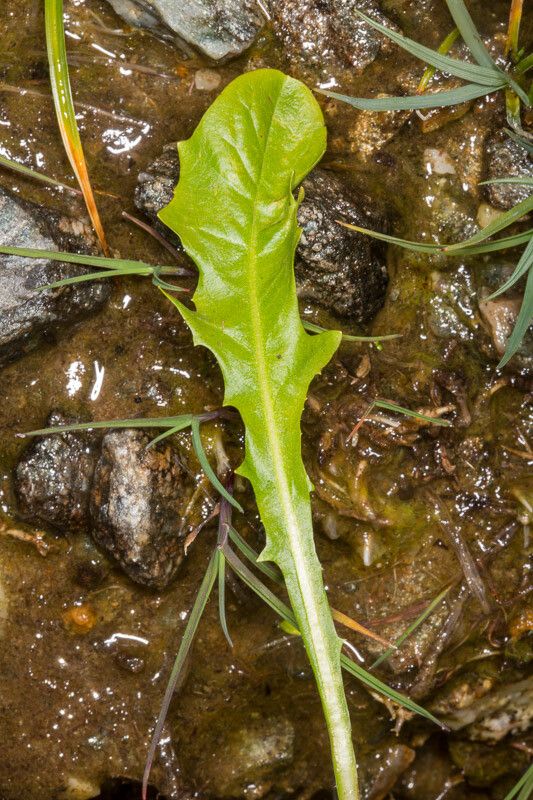
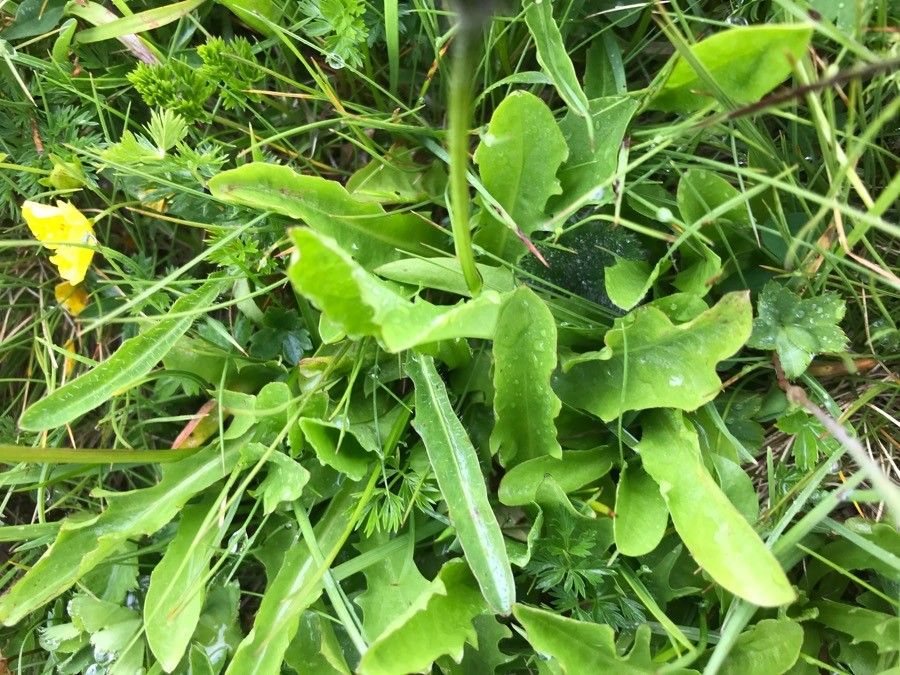
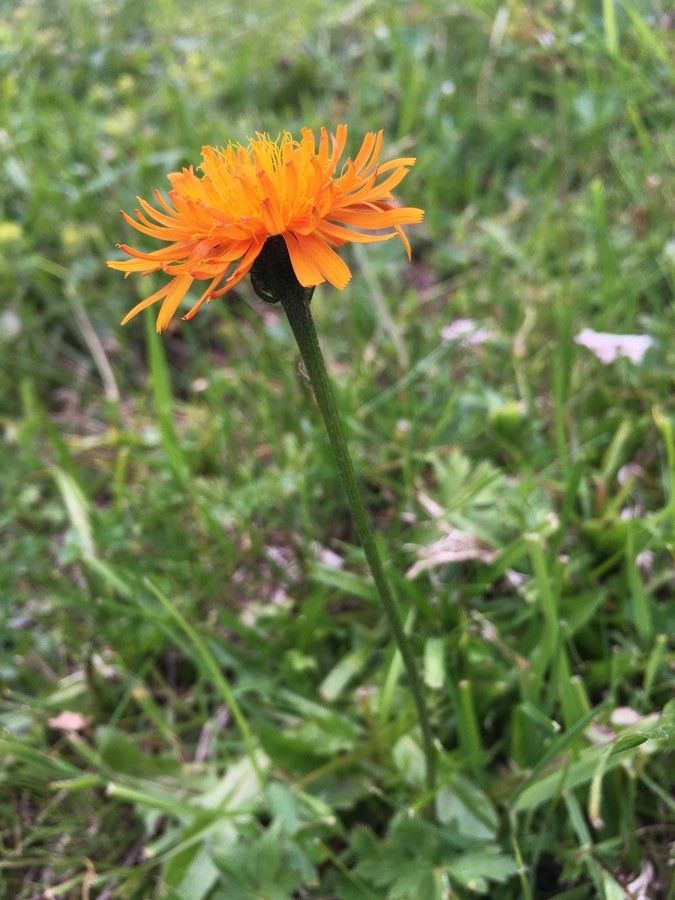
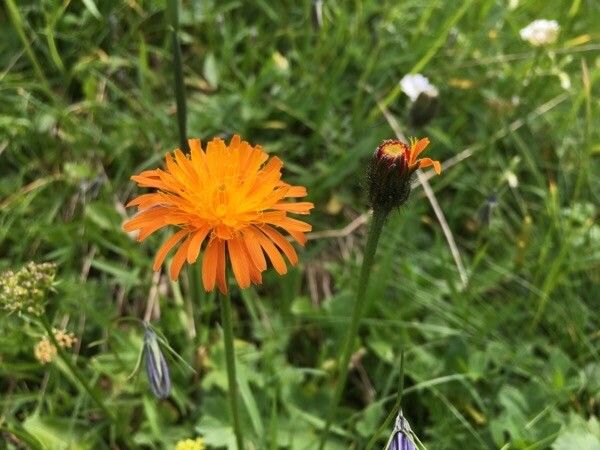
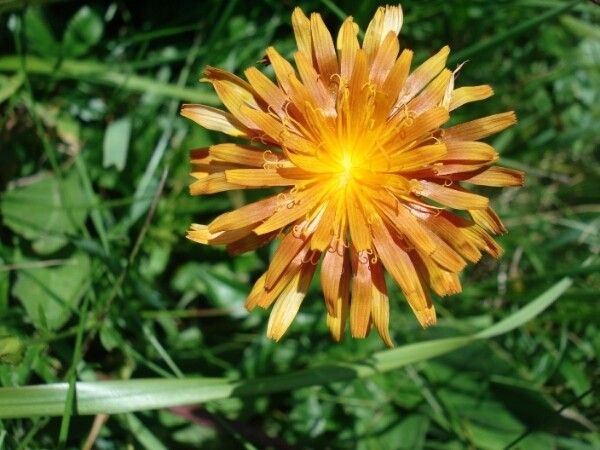
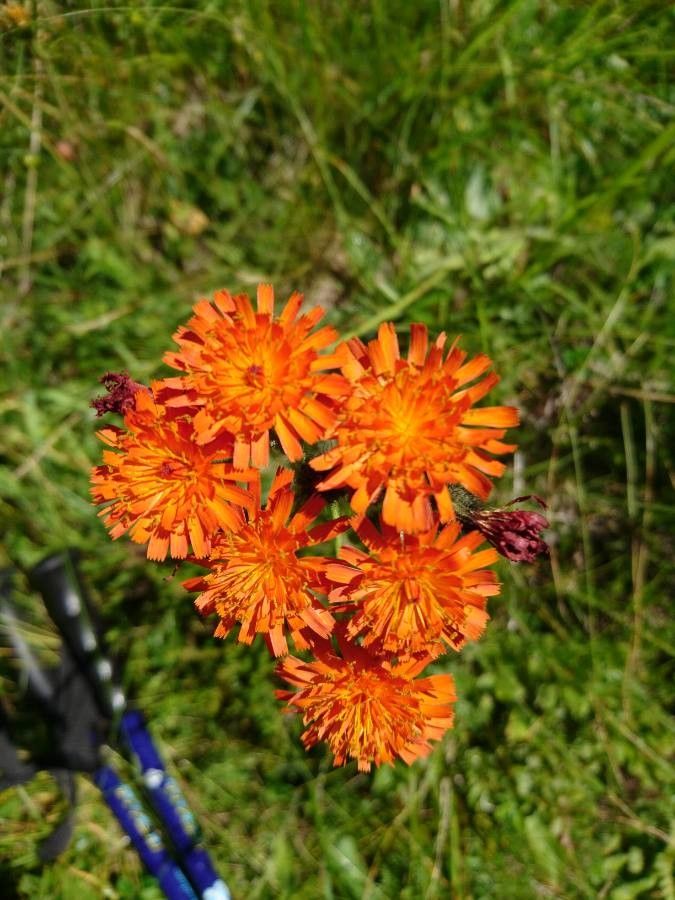
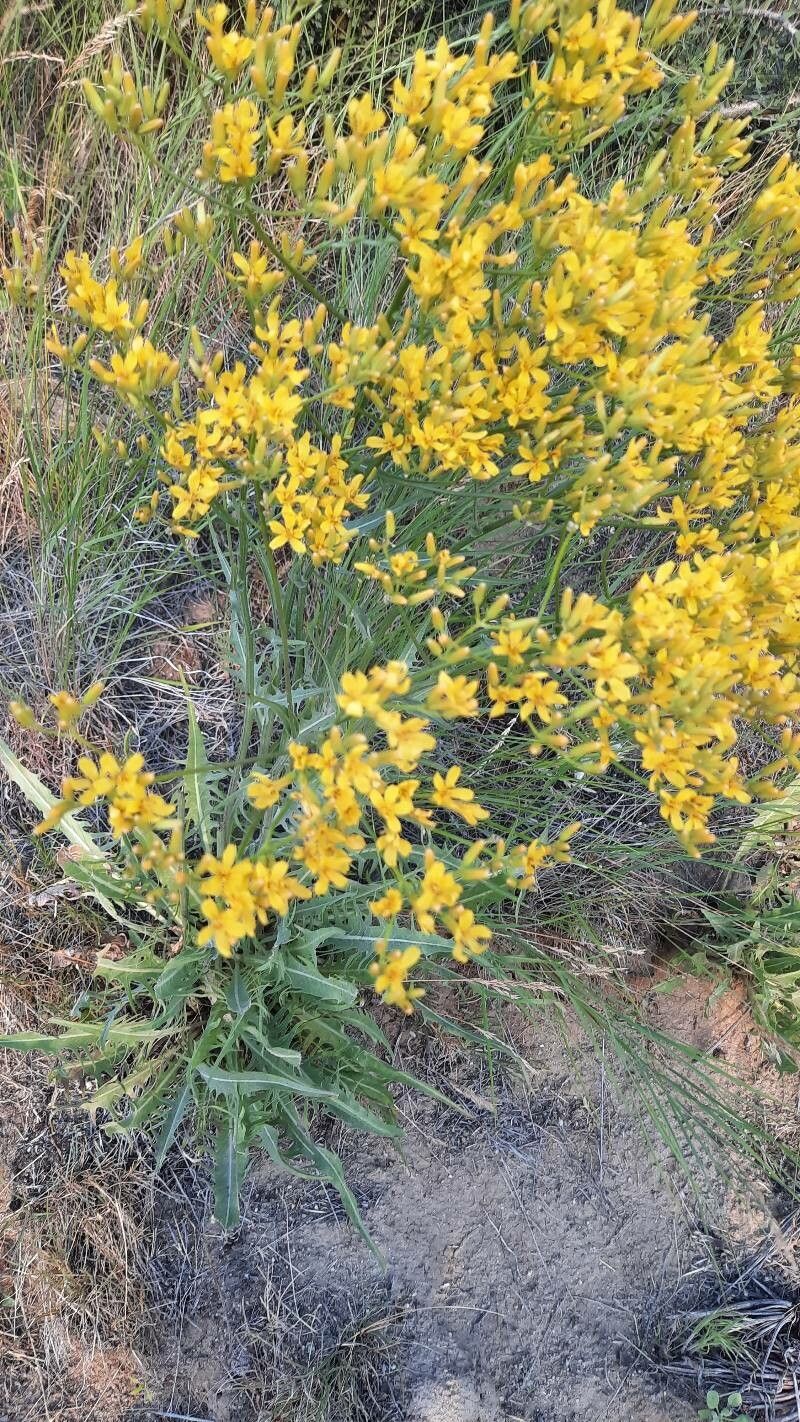
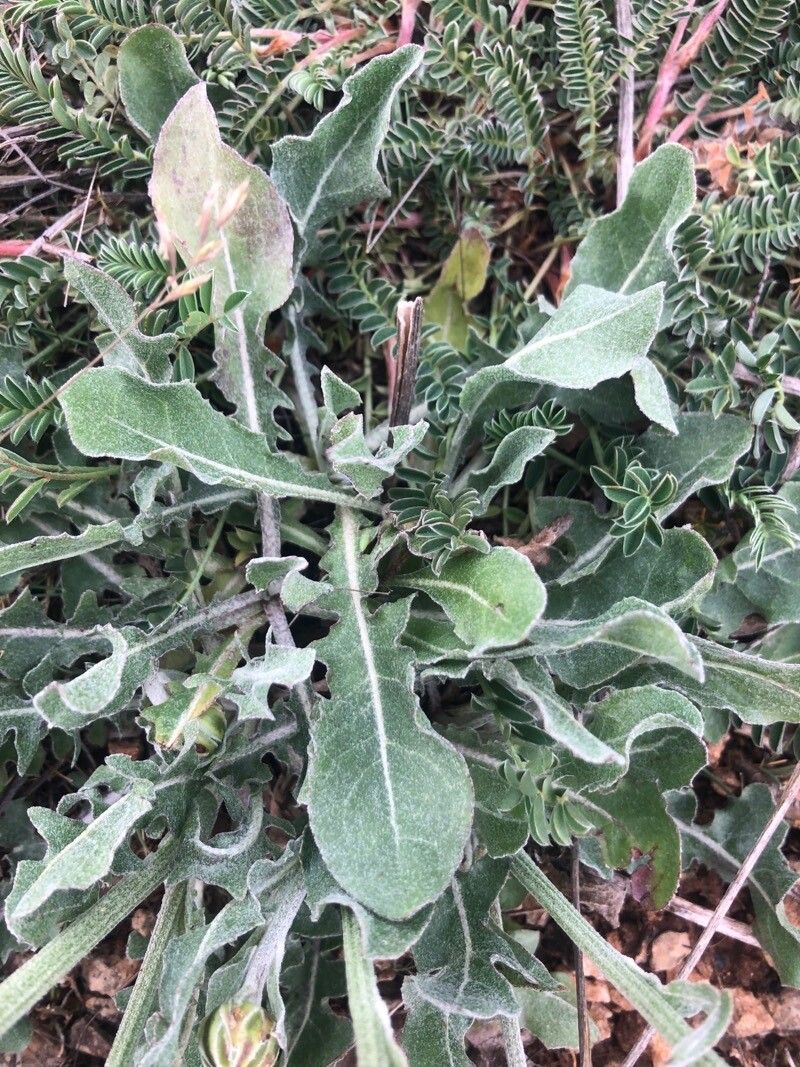
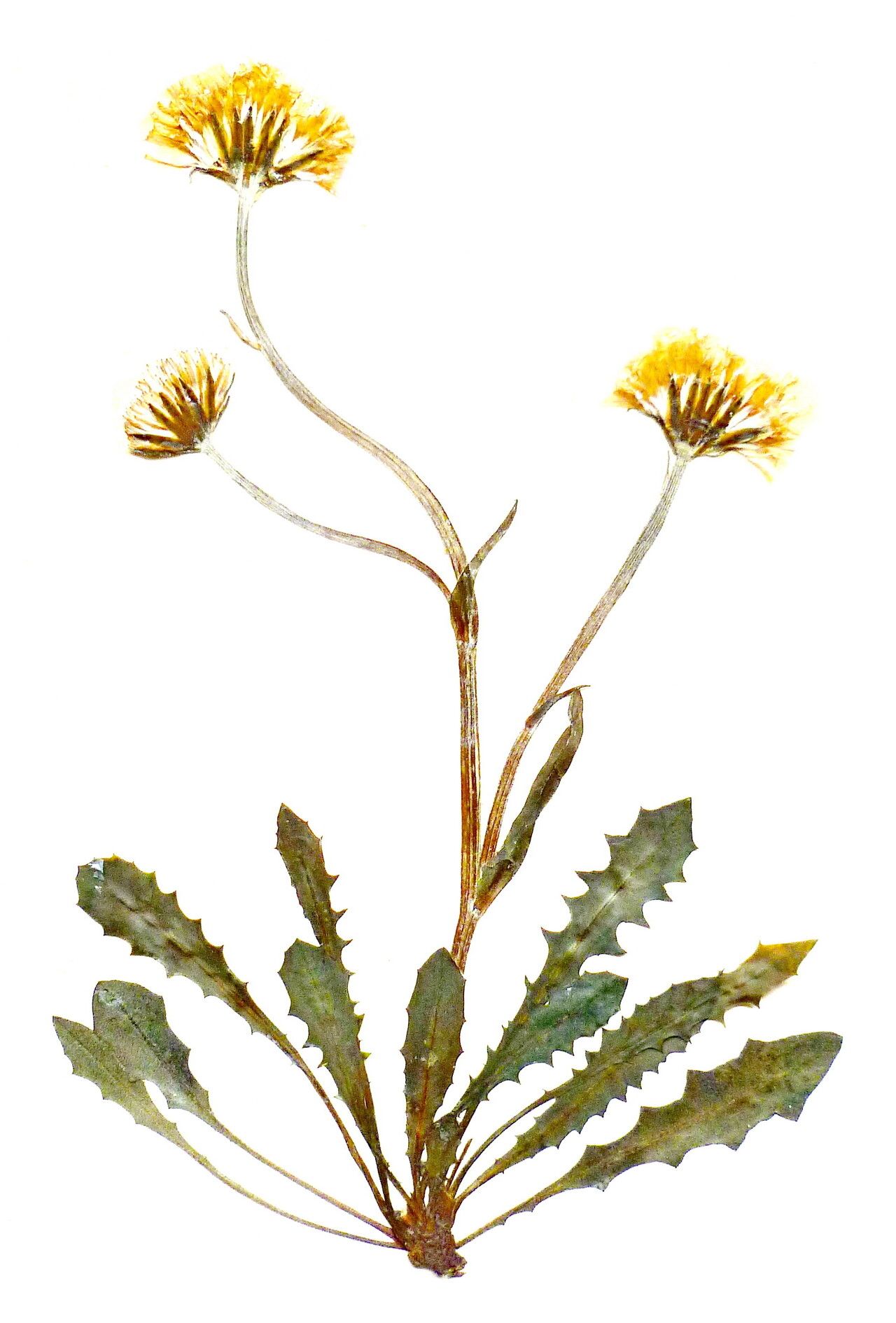
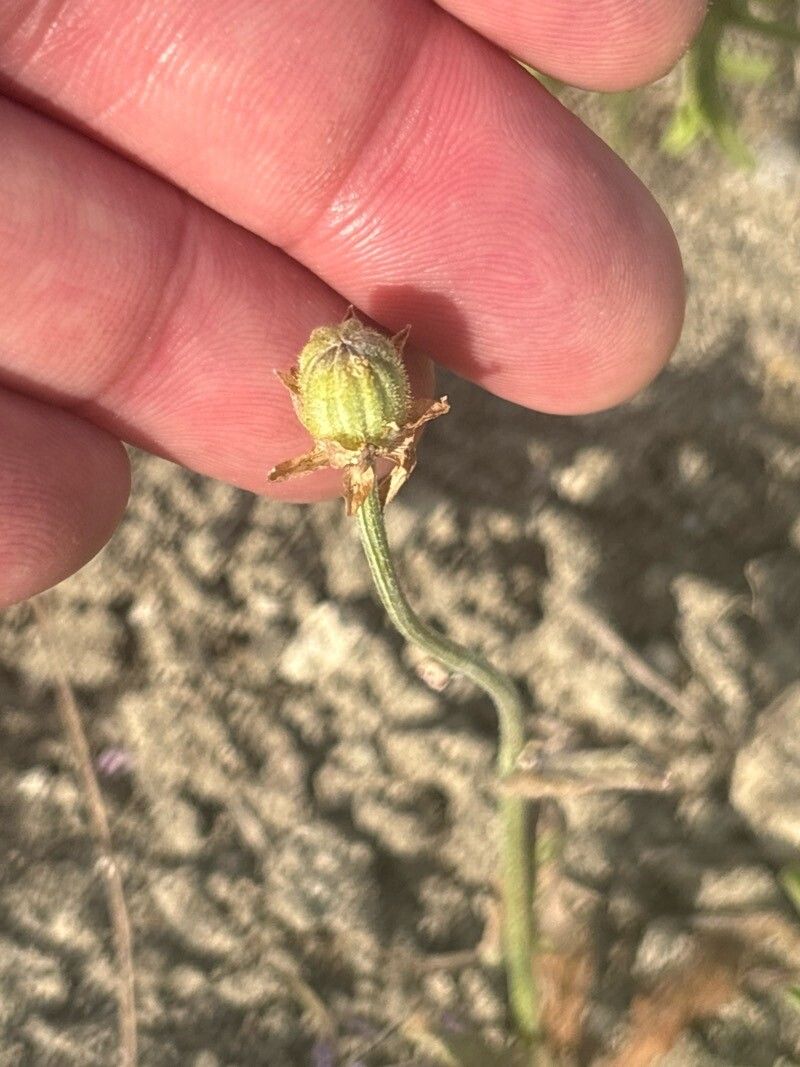
Crepis aurea, commonly known as golden hawksbeard, is a perennial herbaceous plant that belongs to the Asteraceae family. Native to Europe and Asia, it has also been introduced and naturalized in North America. The plant can grow up to 60 cm tall and features a basal rosette of deeply lobed leaves with toothed edges. Its hairy stem supports yellow flowers that bloom from June to August.
Golden hawksbeard thrives in well-drained soils and can grow in full sun or partial shade. It is commonly found in meadows, fields, roadsides, and disturbed areas. The plant is particularly important for bees, as it produces nectar-rich flowers.
Indigenous people have used the plant for medicinal purposes to treat ailments such as coughs, colds, fever, and digestive problems. However, scientific research on its medicinal properties remains limited.
Overall, Crepis aurea adds beauty to natural landscapes while providing ecological benefits, such as serving as a crucial food source for pollinators like bees. This makes it a valuable addition to any garden or landscape design project.
Golden hawk's-beard has strong resistance to disease and is typically not prone to illness. Still, it can be vulnerable to pests and diseases present in its environment. These issues are generally not serious. Regarding care, this plant requires a moderate amount of maintenance. It should be pruned regularly to keep a good appearance and support healthy growth. Fertilizing can also encourage flowering. Golden hawk's-beard is suitable for anyone with outdoor space, such as a garden or patio, and does not demand extensive care experience. It may need more attention if grown indoors.
How to keep Crepis Aurea.
Light
Golden hawk's-beard is a sun-loving plant that does best with abundant sunlight, which benefits its growth. Its place of origin receives plentiful light. However, an imbalance—either too much or too little sun—can harm this species' development and health.
Water
Golden hawk's-beard thrives in alpine meadows and requires weekly watering to maintain consistent moisture without causing waterlogging. It benefits from moderate humidity and well-draining soil, making it ideal for outdoor cultivation. Additionally, it can adapt to varying rainfall patterns for optimal growth.
Temperature
Golden hawk's-beard comes from temperate regions and does best in temperatures of 59 to 95 °F (15 to 35 ℃). If colder conditions occur, carefully adjusting its surroundings to reproduce its native temperature range is recommended.
Fertilizer
The primary time to fertilize Golden hawk's-beard is in early spring, when the flowers are developing. Using the right fertilizer promotes better blooms and helps Golden hawk's-beard produce attractive flowers. Fertilizing in early spring ensures excellent flowers during the season and provides energy for dormant growth phases.
Pruning
The vibrant perennial golden hawk's-beard boasts bright orange-yellow flowers. To encourage new growth and flowering, prune it in early to late spring by trimming away dead stems and faded blooms. Make sure to disinfect your tools to prevent the spread of disease. Regular pruning not only boosts the plant's vitality and foliage density but also ensures it maintains a lush appearance.
Botanical profile.
- Plant Type
- Herb
- Life Cycle
- Perennial
- Genus
- Crepis
- Family
- Asteraceae
- Hardiness Zone
- 7-10
- Mature Height
- 30 cm
- Mature Spread
- 30 cm
- Leaf Color
- Green
- Leaf Type
- Deciduous
- Flower Color
- Gold, Orange
- Flower Size
- 2.03 cm to 3.05 cm
- Bloom Time
- Late spring, Early summer, Mid summer
- Planting Time
- Winter, Spring
- Harvest Time
- Mid summer, Late summer
Other names.
Reader questions.
How should I water my Golden hawk's-beard plant?
To properly water the Golden hawk's-beard, it is recommended to use filtered water at room temperature. Tap water should be avoided as it may contain harmful particles. It is important to use room temperature or slightly warm water because this plant is accustomed to warm environments and cold water can be stressful for it. Additionally, overhead watering should be avoided as it can cause issues with the foliage. Instead, it is best to water the plant by applying filtered room temperature water directly to the soil until it is completely soaked. This method is beneficial as it helps to moisten the roots and allows them to spread and absorb the necessary nutrients from the soil.
Why should I add fertilizer to my Golden hawk's-beard?
Fertilization is important for the Golden hawk's-beard because it provides essential nutrients for the plant's growth. Although the fertilization needs of the Golden hawk's-beard are relatively low, annual fertilization can greatly benefit the plant. It helps to keep it alive and may also result in better and longer-lasting flowers. Therefore, those who want their Golden hawk's-beard to thrive should remember to fertilize it annually.
What are the sunlight requirements for Golden hawk's-beard?
Golden hawk's-beard requires full sun, meaning it should receive above 6 hours of sunlight daily. It's crucial to observe your garden's sunlight patterns to find spots that offer the right balance of light and shade, ensuring the plant's wellbeing. This sun-loving plant thrives in conditions similar to its native habitat, where it is exposed to abundant light. However, both too much and too little sunlight can negatively affect its growth and health.
What is the native climate for Golden hawk's-beard, and how does it affect its care?
Golden hawk's-beard is native to temperate climates, thriving in temperatures ranging from 59 to 95 °F (15 to 35 °C). It has a strong resistance to cold and typically does not require special frost protection measures. However, in colder seasons or if temperatures are expected to drop below -15°C, it is necessary to adjust its surroundings to maintain its preferred temperature range. It's recommended to cover the plant with soil or straw for cold protection and water it abundantly before the first freeze in autumn to keep the soil moist and prevent drought during winter and early spring.
What should I do if I give too much or too little water to my Golden hawk's-beard?
Both overwatering and underwatering can harm the health of your Golden hawk's-beard, but overwatering is more common. When this plant gets too much water, its stems and leaves wilt and turn yellow. Overwatering for a long time can also cause diseases like root rot, mold, and mildew, which can kill the plant. Underwatering is less common because the Golden hawk's-beard is fairly drought-tolerant. However, it can still happen, and in that case, the leaves become brittle and brown. It's important to identify signs of overwatering early and take action. Some diseases caused by overwatering, like root rot, may be irreversible if not addressed promptly. If you notice early signs of overwatering, reduce watering schedule and check the soil quality. If drainage is poor, replace the soil with a loose, well-draining potting mix. On the other hand, if you see signs of underwatering, simply increase the watering frequency until the signs improve.
When should I fertilize my Golden hawk's-beard plant?
The best time to fertilize a Golden hawk's-beard is late winter to early spring when it is transitioning from dormancy to active growth. Fertilizing during this time promotes healthy growth and prepares the plant for the season. Although early spring is the preferred time, fertilization in the fall is also acceptable. However, it is not recommended to fertilize during summer or winter.
How can artificial lighting benefit indoor Golden hawk's-beard plants?
Indoor Golden hawk's-beard plants benefit from adequate lighting, especially when natural sunlight is insufficient. During winter or in less sunny spaces, artificial lights such as LED lights, which can be customized to provide specific wavelengths, play a critical role. For full sun plants like Golden hawk's-beard, 30-50W/sq ft of artificial light is recommended. Position the light source 12-36 inches above the plant and mimic natural daylight hours, generally 8-12 hours per day, to promote healthy growth.
How does Golden hawk's-beard respond to low temperatures, and what are the recommended solutions?
Golden hawk's-beard is cold-tolerant, ideally thriving when temperatures stay above 15°C and managing well during winter if kept above -10°C. If temperatures fall below -15°C, the plant may exhibit decreased sprouting or fail to sprout in spring, despite not showing noticeable changes in winter. To address this, in spring, it's advised to remove any parts of the plant that have failed to sprout.
How much water does my Golden hawk's-beard need?
If your Golden hawk's-beard is in a pot, the most precise way to determine if it needs water is by checking the soil. Plunge your finger into the soil and if the top two to three inches are dry, then it's time to water it. If you have your Golden hawk's-beard planted outdoors in the ground, you can use a similar method to check the soil. When the top few inches of soil have dried out, it's time to water. In the spring and early fall, watering once a week is usually sufficient. However, during extremely hot weather, you may need to water twice or more per week. It is worth noting that mature, well-established Golden hawk's-beard plants have a remarkable ability to withstand drought.
When is it a good idea to not put fertilizer on my Golden hawk's-beard?
To ensure the best care for your Golden hawk's-beard plant, it is important to follow these guidelines for fertilization. Firstly, avoid fertilizing this plant at any time of the year except for late winter and early spring. This plant has low fertilization needs, so a single feeding during this time will be sufficient. Overfertilization can easily occur if you continue to fertilize during spring, summer, and fall, leading to complications. However, if you happened to skip fertilizing in spring, it is acceptable to feed the plant in the fall. Additionally, refrain from fertilizing during the winter months when the Golden hawk's-beard is in a dormant growth phase and not actively growing. Fertilization during most of the winter is not advisable due to this dormancy.
What symptoms indicate inadequate lighting for Golden hawk's-beard?
Symptoms of inadequate lighting in Golden hawk's-beard include smaller new leaves, leggy or sparse growth, faster leaf drop, slower or stopped new growth, lighter-colored new leaves indicating a lack of chlorophyll, and symptoms associated with too much light like chlorosis, sunscald, leaf curling, wilting, and leaf scorching. These signs show the plant's struggle with insufficient or excessive light, impacting its overall health.
What should be done if Golden hawk's-beard is exposed to high temperatures?
In summer, it's crucial to ensure that Golden hawk's-beard is kept below 35°C. Exposure to temperatures exceeding 41°C can cause the plant's leaves to lighten in color, curl, become prone to sunburn, and in severe cases, cause the plant to wilt and dry. To mitigate these effects, trim away any sunburned and dried parts. Move the plant to a shaded location, especially during the midday and afternoon sun, or use a shade cloth. Additionally, watering the plant in the morning and evening helps keep the soil moist and supports the plant's health.