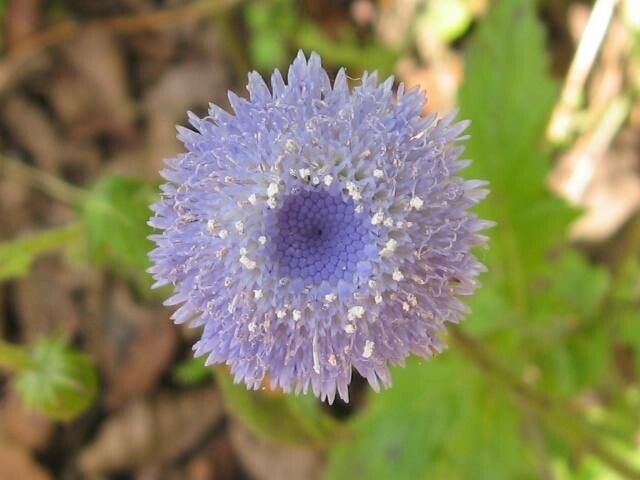
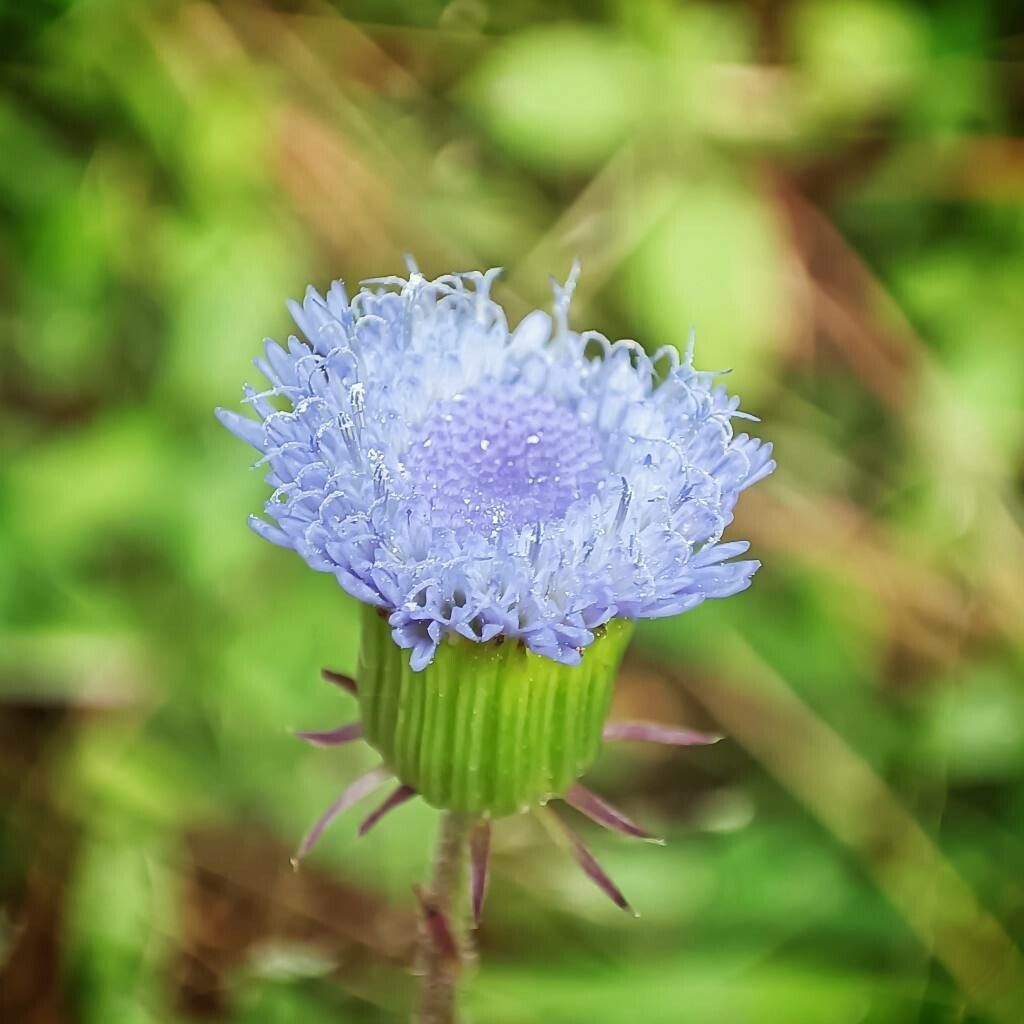
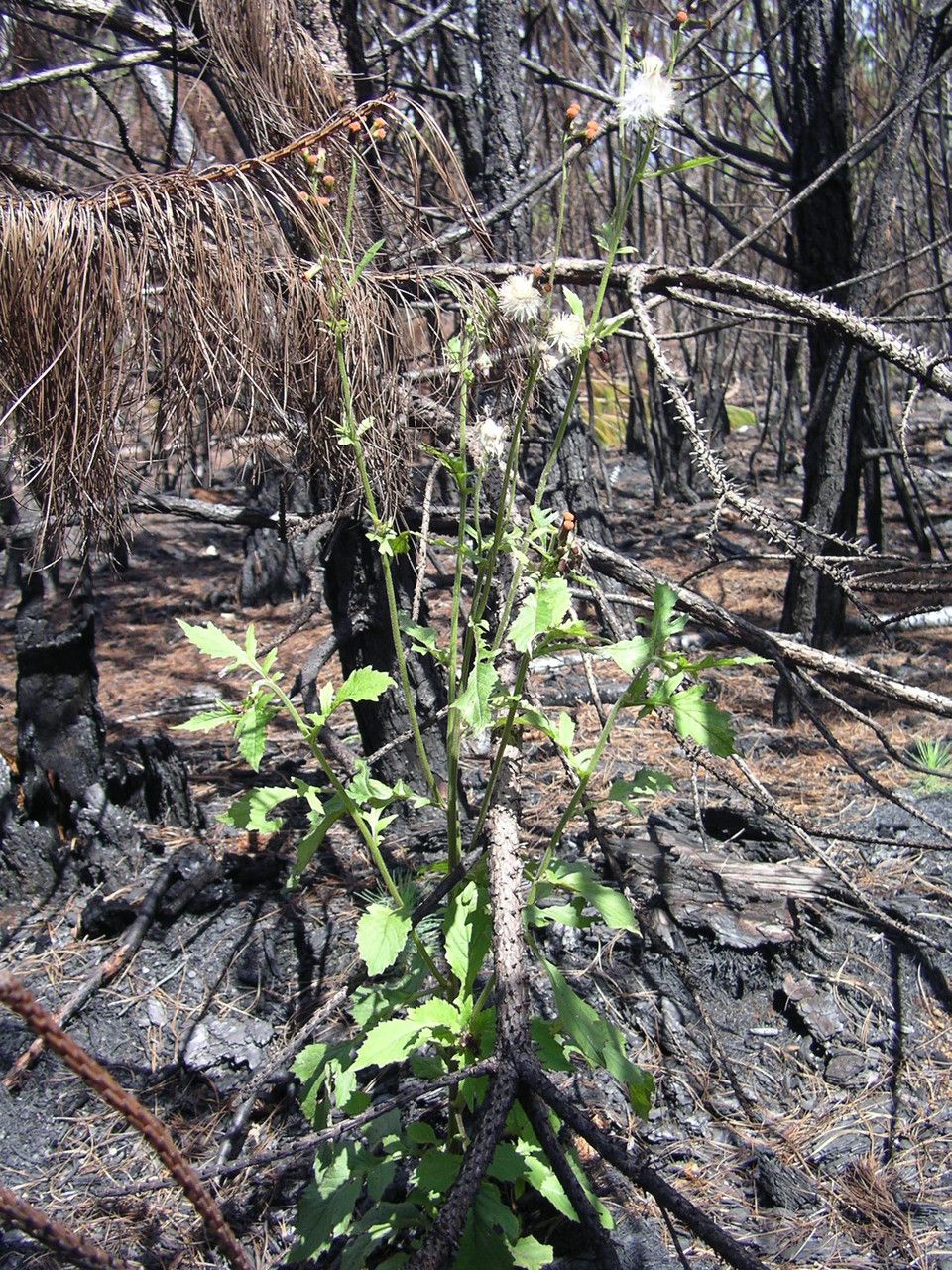
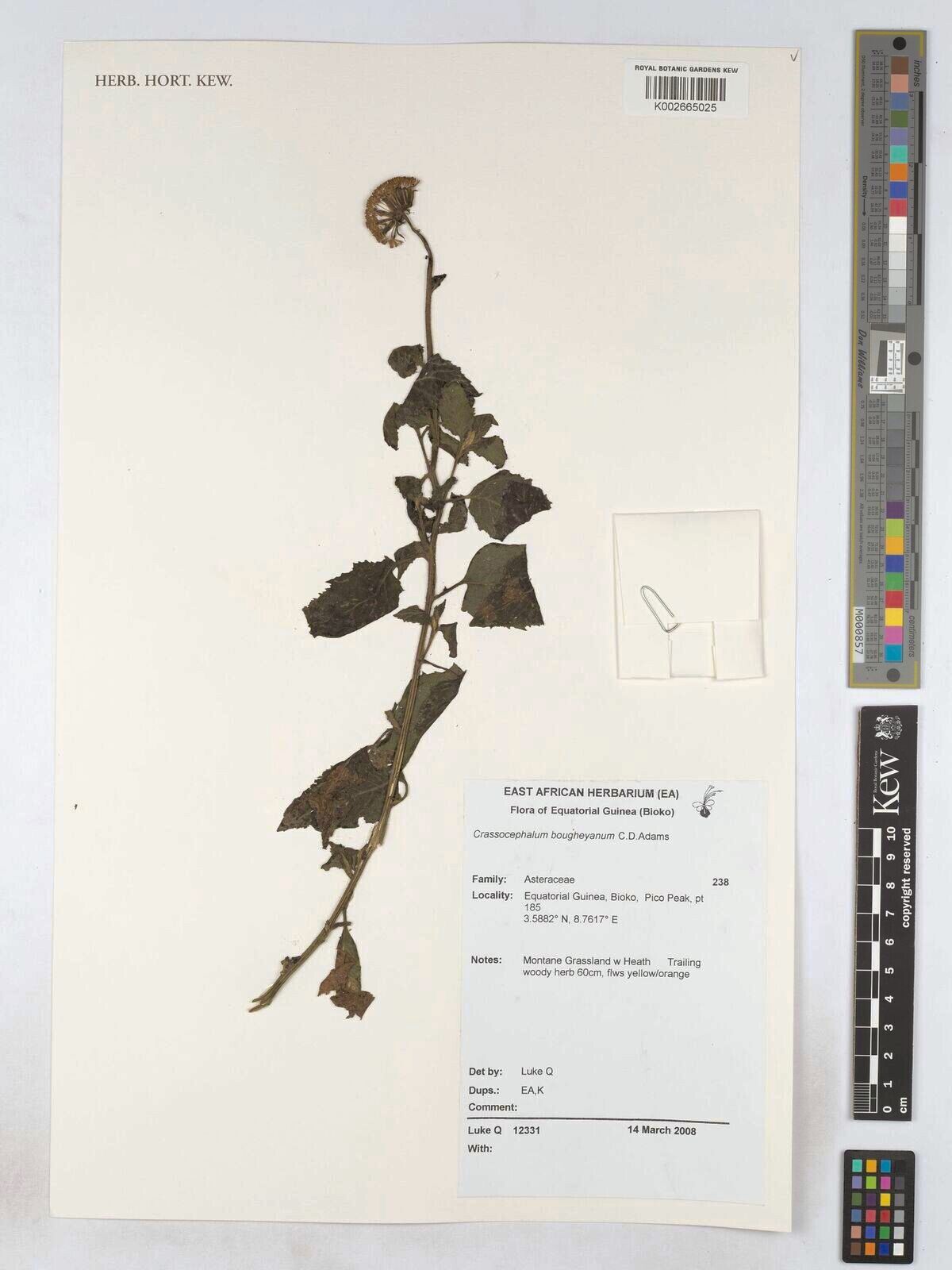
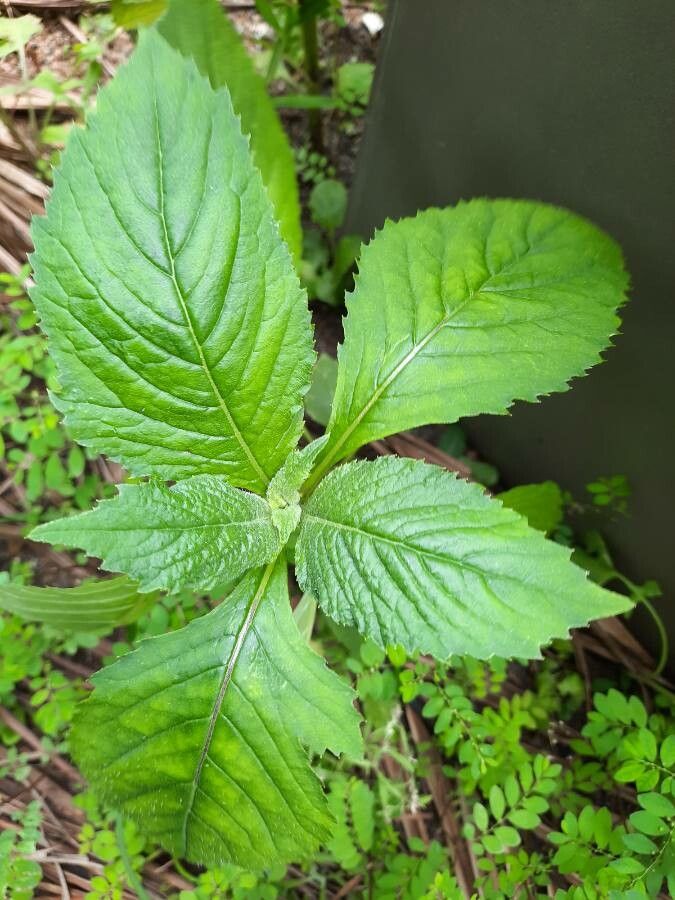
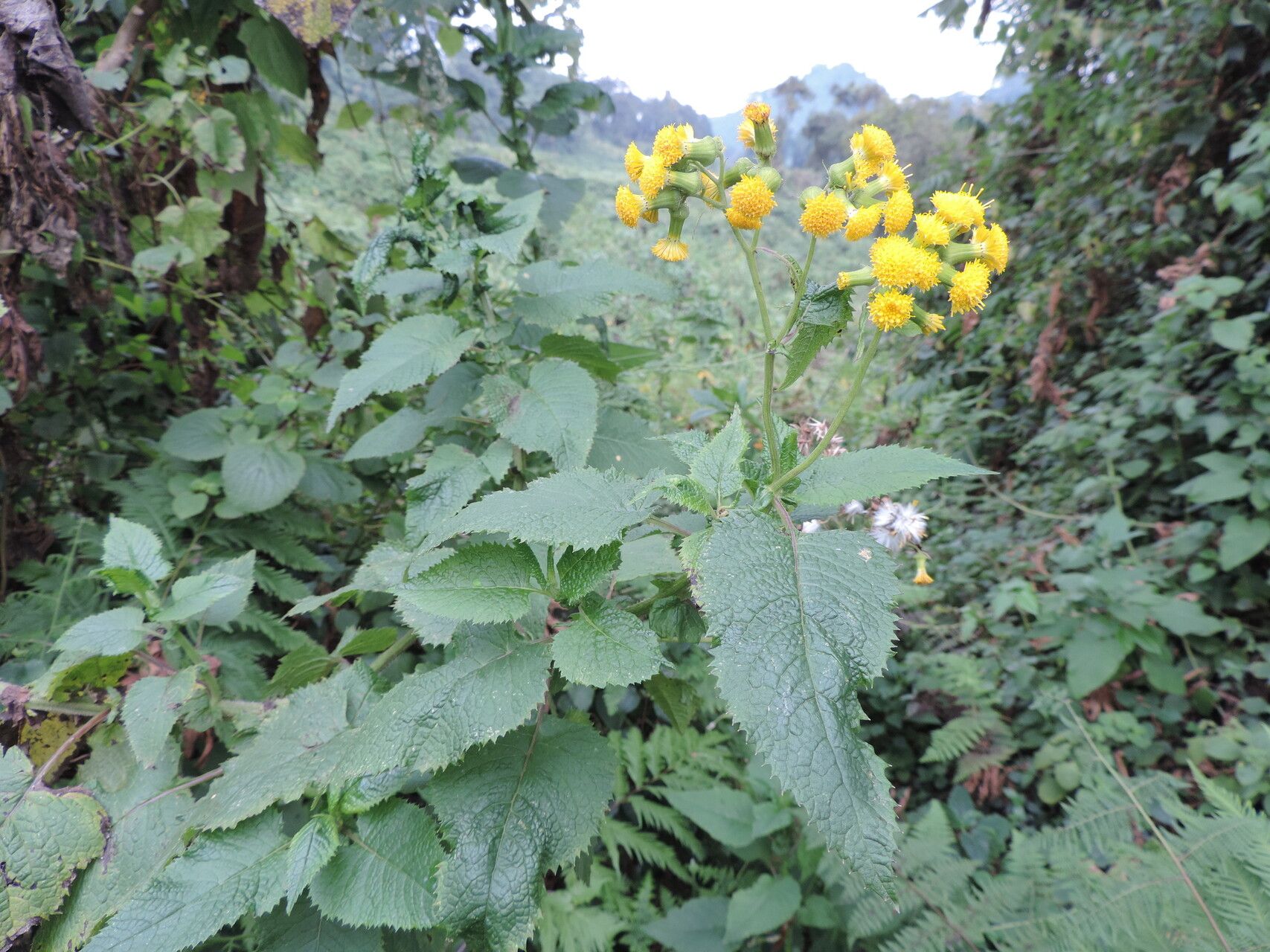
Crassocephalum rubens, commonly known as redflower ragleaf or fireweed, is a perennial herbaceous plant belonging to the Asteraceae family. It is native to the tropical and subtropical regions of Africa and Asia. The plant can reach a height of 1 to 2 meters, with a woody stem at its base. Its large leaves are deeply lobed with toothed edges, green on top, and purple beneath, presenting an attractive appearance.
The flowers of Crassocephalum rubens are small and red or pink in color, arranged in clusters at the top of long stems that rise above the foliage. They bloom from late summer through fall, attracting bees and butterflies for pollination.
In traditional African medicine, Crassocephalum rubens has been used for treating various ailments such as fever, coughs, colds, and digestive issues like diarrhea. It is also applied externally on wounds due to its antibacterial properties.
The plant prefers well-drained soils with full sun exposure but can tolerate partial shade, making it an ideal choice for gardens or landscapes. It can be grown both indoors and outdoors, depending on climatic conditions.
Overall, Crassocephalum rubens is a beautiful ornamental plant that adds color to any garden while also providing medicinal benefits, making it an excellent addition to any garden enthusiast's collection!
Yoruban bologi has moderate resistance to disease but can be prone to problems such as leaf spot. Its susceptibility to insect pests varies by variety, although most varieties are relatively less resistant to pests. Regarding care, Yoruban bologi needs consistent watering and fertilizing, and frequent removal of yellow leaves. It is important to manage pests and diseases when they occur and to harvest the plant promptly. Yoruban bologi is suitable for people who can spare some time and energy for regular care.
How to keep Crassocephalum Rubens.
Light
Yoruban bologi comes from habitats that receive abundant sunlight, such as open fields and sunny meadows. It prefers full sun but is also able to tolerate partial sun.
Water
Yoruban bologi thrives in high humidity and prefers consistent moisture, usually requiring watering twice a week. This plant originates from tropical rainforests, so it can withstand brief periods of dryness. However, it grows best when its watering schedule matches the seasonal rainfall, which is essential for its growth cycle.
Temperature
Yoruban bologi prefers moderate temperatures — the sort most people find comfortable. It does best in conditions that are neither excessively hot nor cold. The main concern with high temperatures is sunburn, so providing some shade in summer is recommended to prevent overheating. When temperatures decline, Yoruban bologi goes dormant. If continuous growth is wanted, it is necessary to keep temperatures higher during the winter. Frost can harm the plant and should be avoided.
Fertilizer
To maximize yield, Yoruban bologi benefits from regular applications of a balanced fertilizer, particularly one high in nitrogen. Apply fertilizer before planting, at planting time, and when seedlings are 2 inches tall. Adding compost or manure also provides a continuous supply of nutrients. Insufficient nutrients in the soil lead to underdeveloped leaves and stems, inferior flavors, thin stems, and a potentially bitter taste.
Pruning
Yoruban bologi is known for its vibrant foliage and rapid growth. To encourage bushier growth, improve air circulation, and maintain an attractive shape, it is best to prune the plant from early to late spring. During pruning, remove any dead stems to help enhance sunlight exposure and minimize legginess. These practices contribute to healthier development and increase the plant's longevity.
Botanical profile.
- Plant Type
- Herb
- Life Cycle
- Annual
- Genus
- Crassocephalum
- Family
- Asteraceae
- Hardiness Zone
- 9-11
- Mature Height
- 76 cm
- Mature Spread
- 20 cm to 40 cm
- Leaf Color
- Green
- Leaf Type
- Semi-evergreen
- Flower Color
- Red
- Flower Size
- 0.76 cm to 1.27 cm
- Bloom Time
- Late spring, Summer, Early fall, Mid fall
- Planting Time
- Spring, Summer, Autumn
- Harvest Time
- Mid summer, Late summer, Fall, Early winter
- Native Area
- Malawi, Angola, South Africa, Zambia, Madagascar, Rwanda, Eritrea, Sudan, Nigeria, Guinea, Yemen, Guinea-Bissau, Central African Republic, Gabon, Zimbabwe, Benin, Mali, Chad, Sierra Leone, Cameroon, Liberia, Mozambique, Burundi, Togo, Senegal, Côte d'Ivoire, Ethiopia, Congo (DRC), Congo
Other names.
Reader questions.
What type of sunlight is required for Yoruban bologi to thrive?
Yoruban bologi (Crassocephalum rubens) thrives under specific sunlight conditions. It requires full sun, which means it needs more than 6 hours of sunlight daily, for optimal growth. Alternatively, it can also grow under partial sun, defined as about 3-6 hours of sunlight daily. Monitoring the movement of sunlight through your garden can help you choose the ideal location that offers the right balance of light and shade, ensuring the plant's health and happiness.