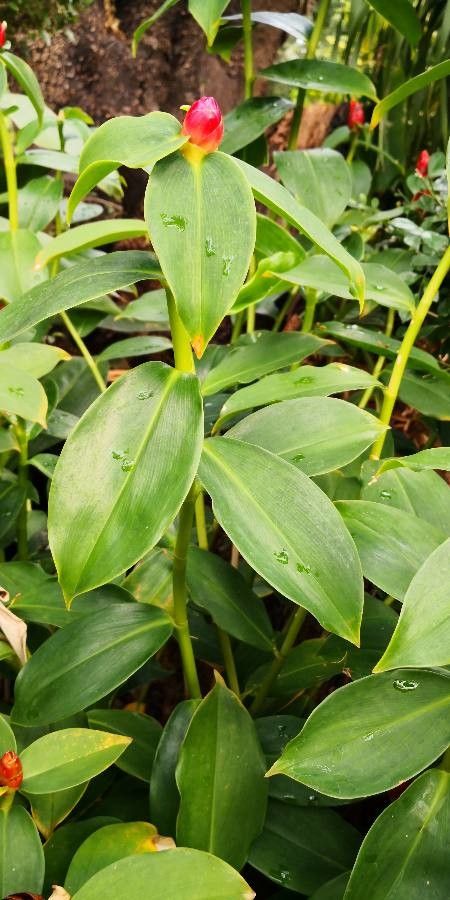
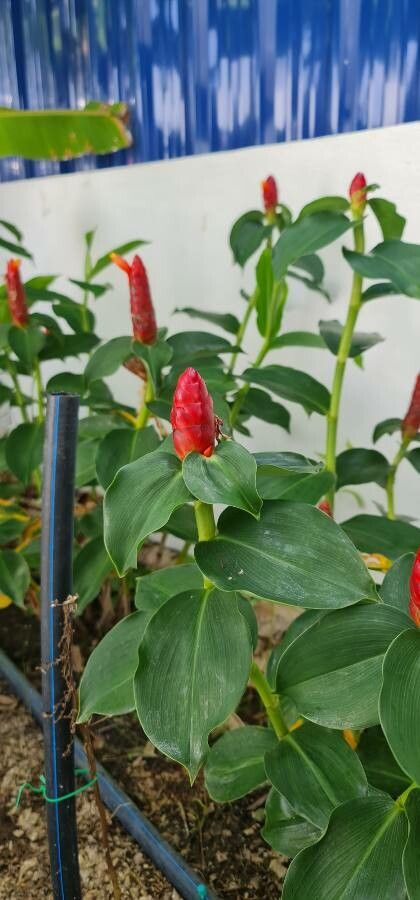
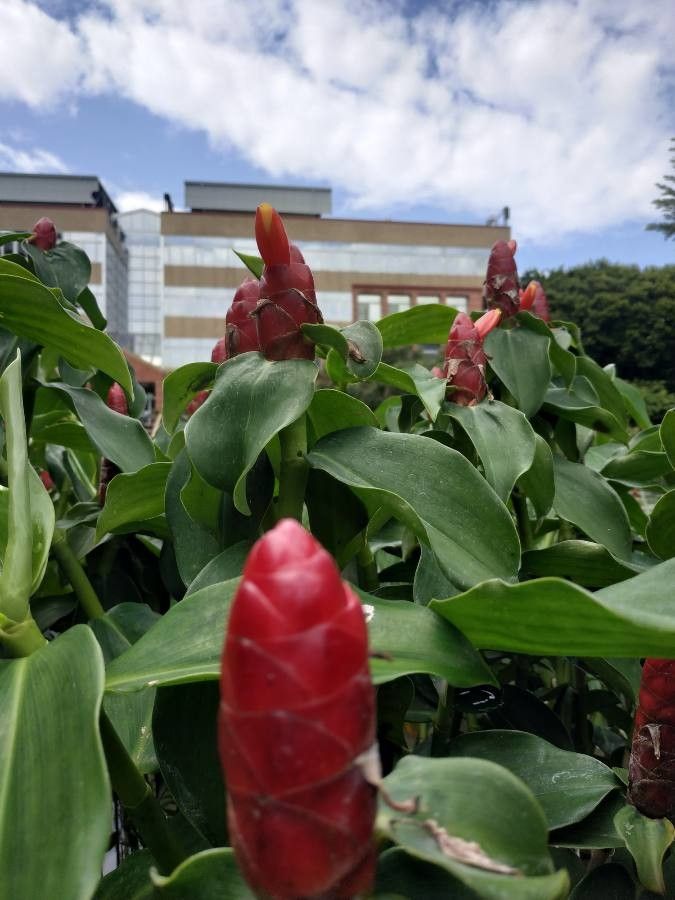
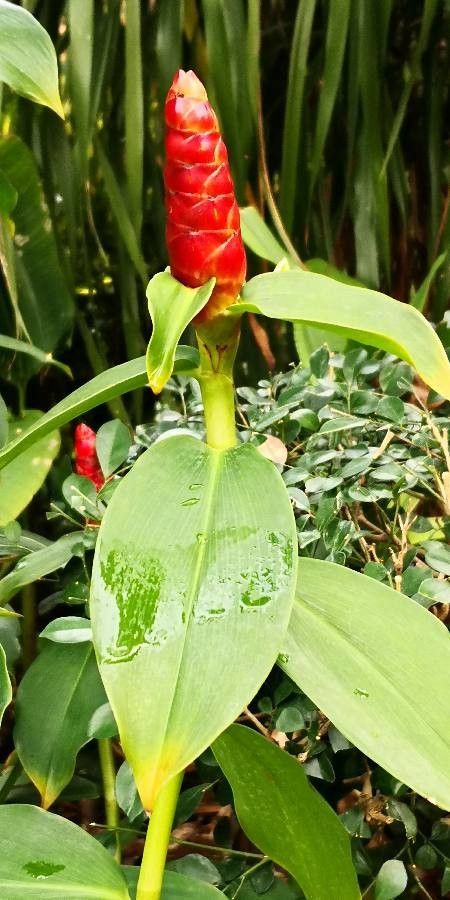
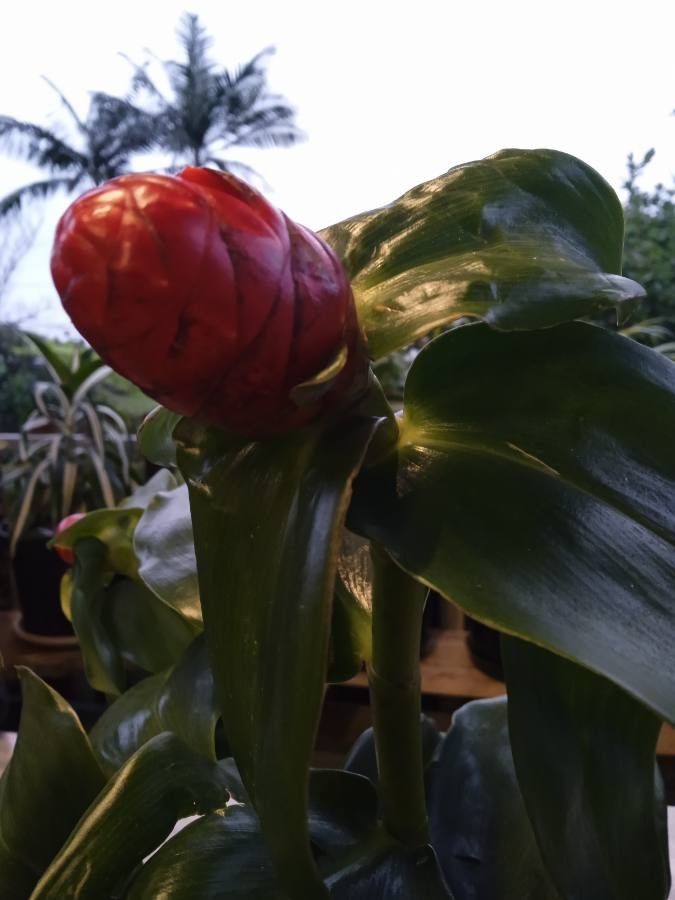
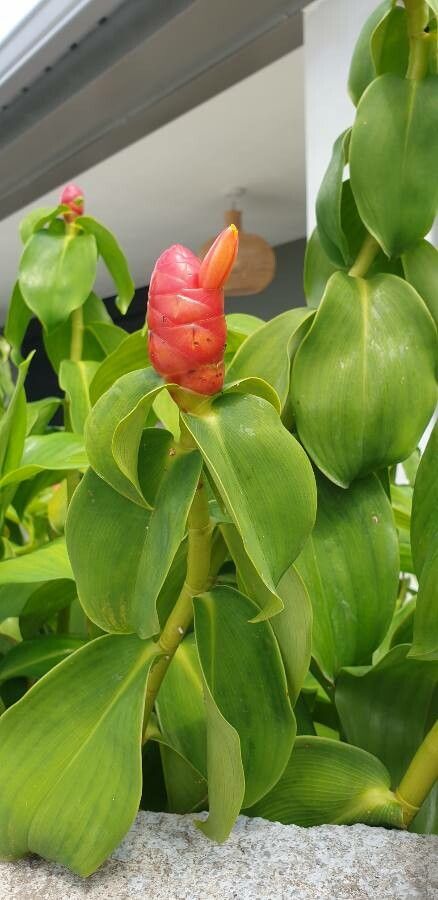
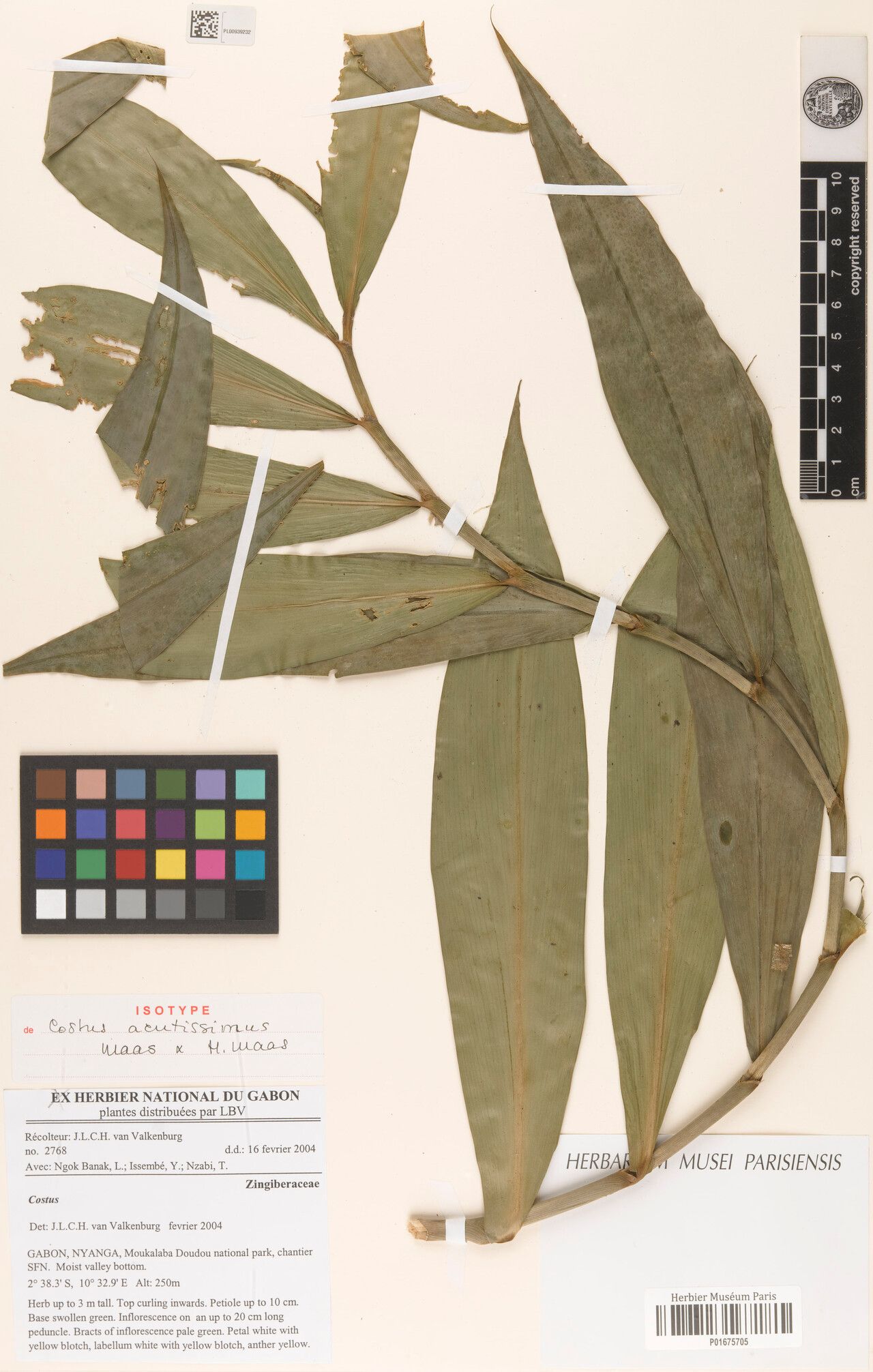
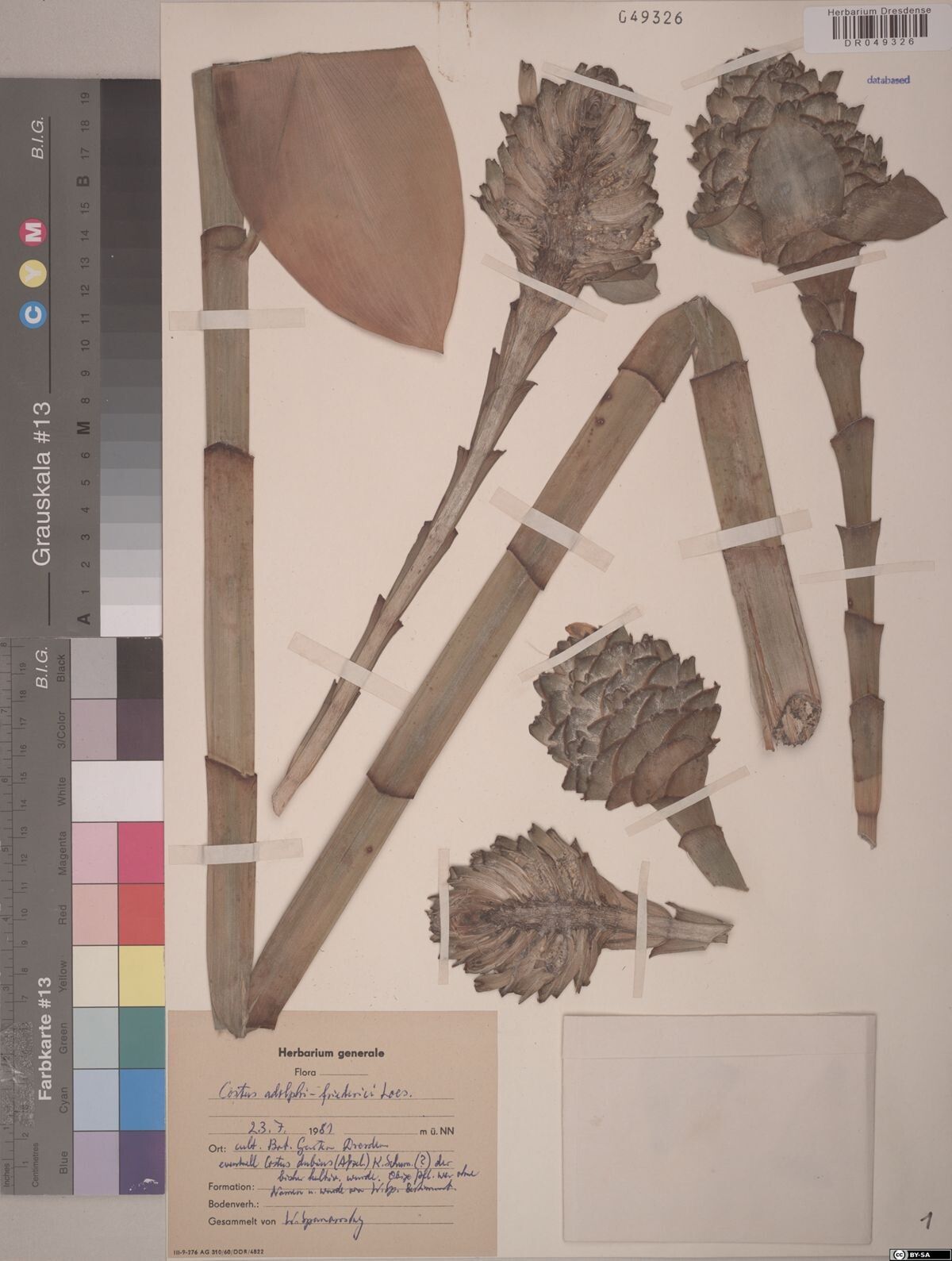
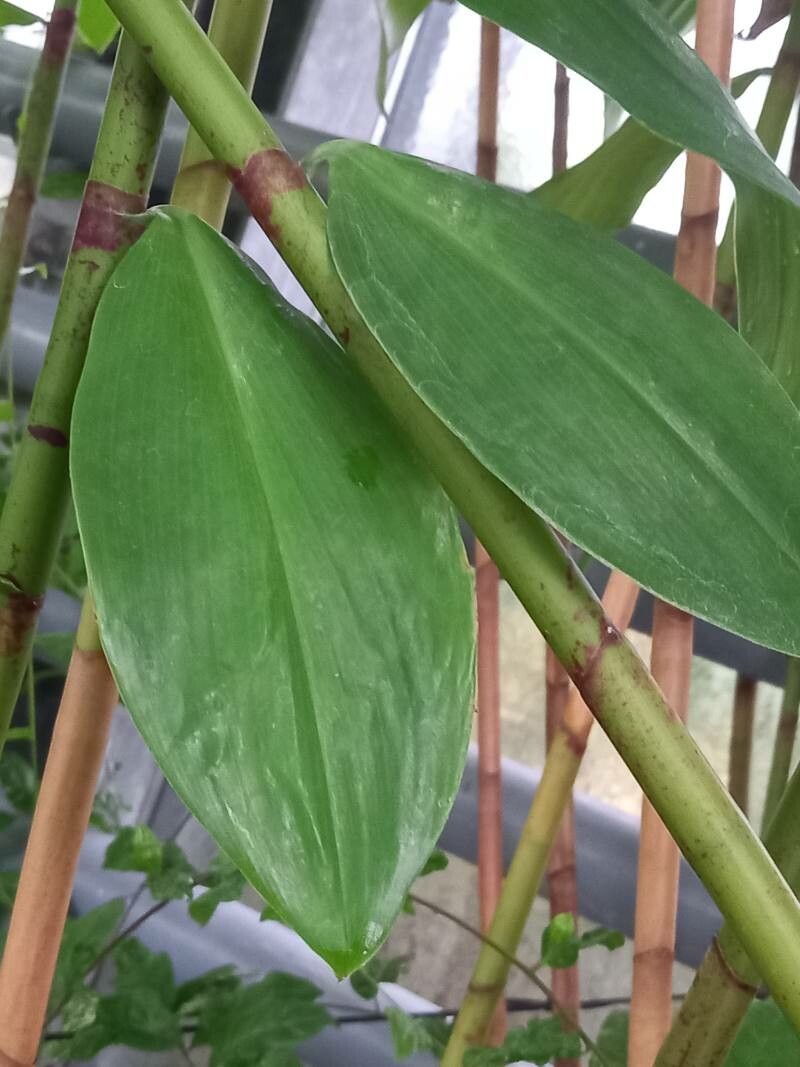
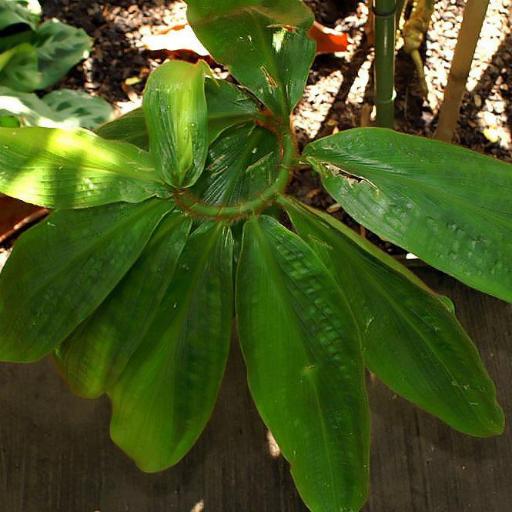
Costus spicatus is a tropical plant species belonging to the Costaceae family. Commonly known as the spiked spiral flag or spiral ginger, it is noteworthy for its distinctive spiral-shaped inflorescence. This plant is native to Central and South America but can also be found in other tropical regions worldwide.
Costus spicatus can grow up to 2 meters tall and features long, lance-shaped leaves that are alternately arranged on its stem. Its small yellow flowers are organized in a striking spiral pattern, making them quite eye-catching.
The spiked spiral flag thrives in moist soil conditions and partial shade, making it an excellent choice for gardens or indoor spaces with bright, indirect light. Additionally, it possesses medicinal properties thanks to its compounds such as flavonoids, alkaloids, and tannins, which have traditionally been used to treat various ailments, including fever reduction.
Overall, Costus spicatus is an attractive ornamental plant with unique features that make it stand out in any garden or indoor space, while also providing medicinal benefits.
Spiked spiral-flag has good disease resistance and is generally not likely to develop illnesses. Still, it can be affected by pests and diseases present in its surroundings. These infections are usually mild. For care, this plant requires moderate maintenance. It should be pruned regularly to keep a tidy appearance and encourage healthy growth. Fertilizing can also help stimulate flowering. Spiked spiral-flag is suitable for anyone with outdoor space, such as a garden or patio, and does not demand extensive care experience. It may need more attention when grown indoors.
How to keep Costus Spicatus.
Light
Spiked spiral-flag is native to habitats like forest understories or rocky areas, where it grows in natural shade. It prefers partial sun but can adapt to full sun or full shade, showing its versatile and hardy nature.
Temperature
Spiked spiral-flag is native to tropical regions, where the climate is usually warm and humid. Consequently, it is well adapted to high temperatures and humidity. It does not tolerate sudden shifts in temperature and prefers a steady thermal environment, so avoiding indoor temperature fluctuations is important. It typically cannot withstand cold and needs higher temperatures to grow. If the environmental temperature falls too low, the plant may stop growing or even die.
Fertilizer
Proper fertilization is essential for Spiked spiral-flag's health and appearance. Fertilize Spiked spiral-flag in summer, repeating the application monthly during that season. Nutrients support growth and preserve the plant's parts. Fertilization improves Spiked spiral-flag's flower display, ensuring the best blooms.
Botanical profile.
- Plant Type
- Herb
- Life Cycle
- Perennial
- Genus
- Costus
- Family
- Costaceae
- Hardiness Zone
- 10-12
- Mature Height
- 3.05 m
- Mature Spread
- 91 cm
- Leaf Color
- Dark Green, Forest Green
- Leaf Type
- Evergreen
- Flower Color
- Red, Pink
- Flower Size
- 5.08 cm to 6.35 cm
- Bloom Time
- Summer, Early fall, Mid fall
- Planting Time
- Spring
- Harvest Time
- Late summer, Fall, Early winter
- Native Area
- Haiti, Mexico, United States, Dominican Republic
Other names.