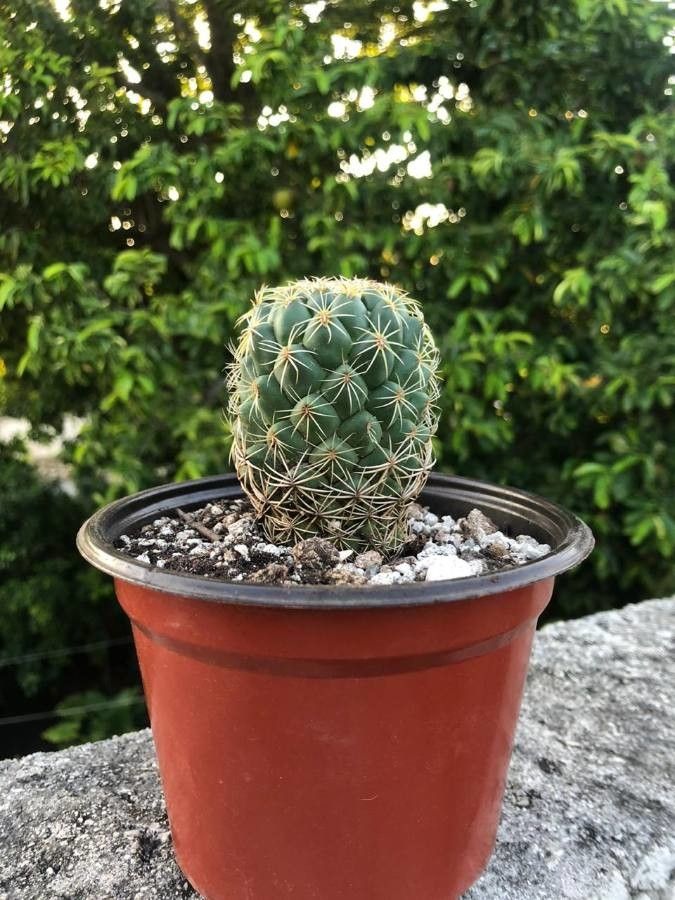
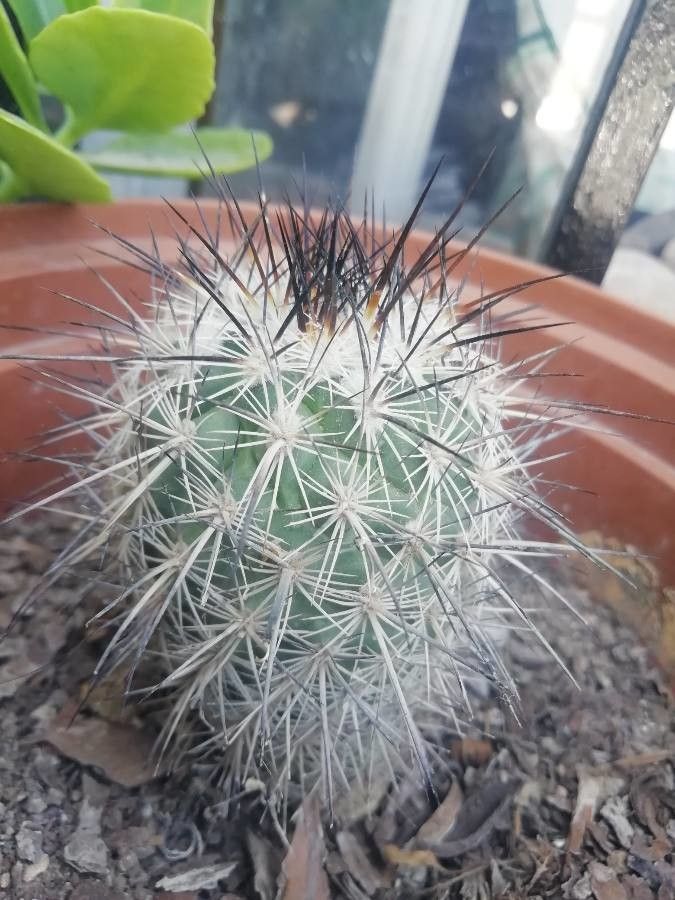
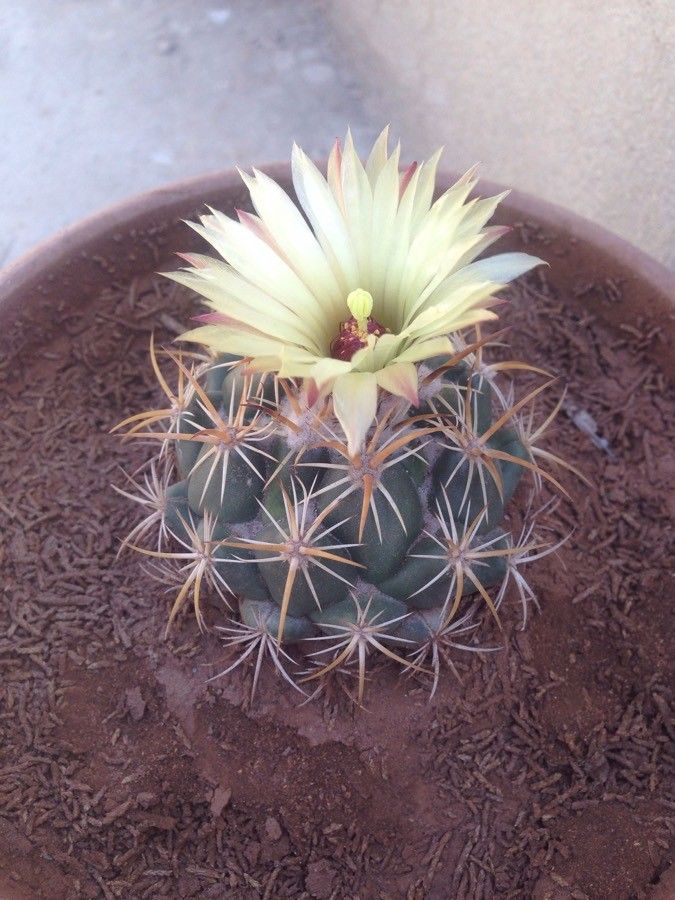
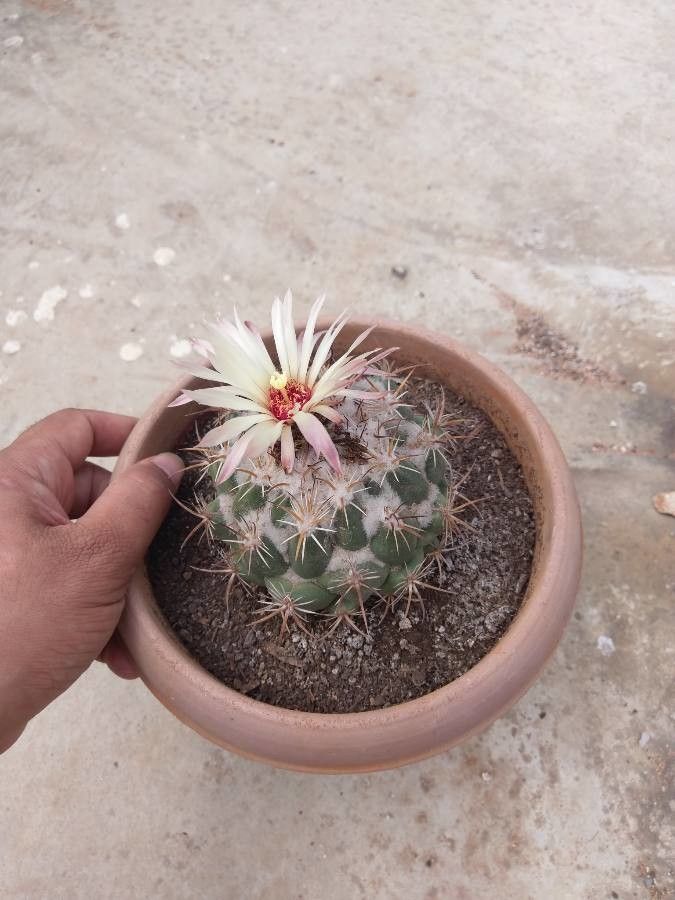
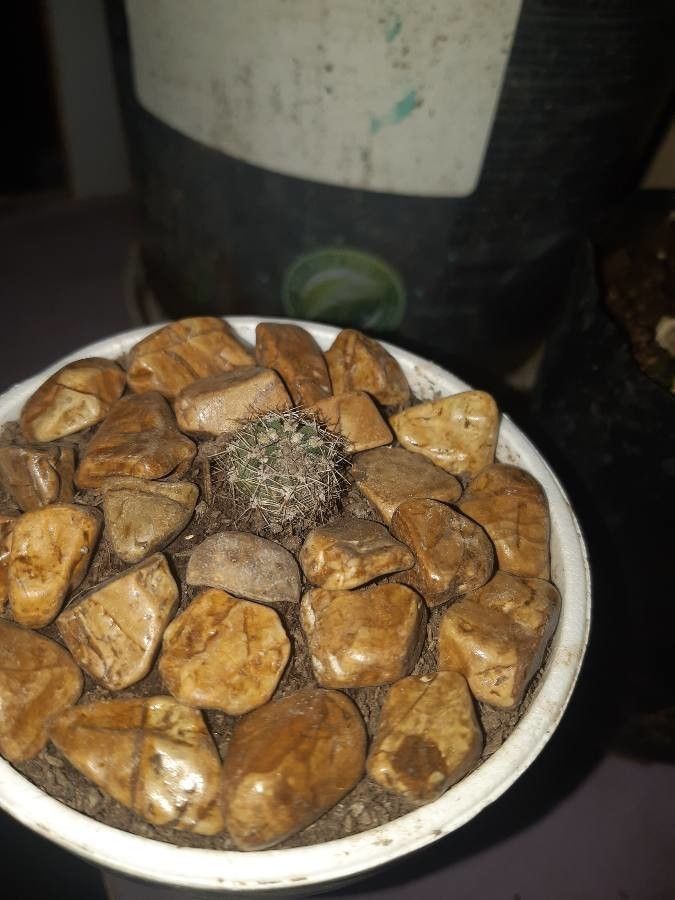
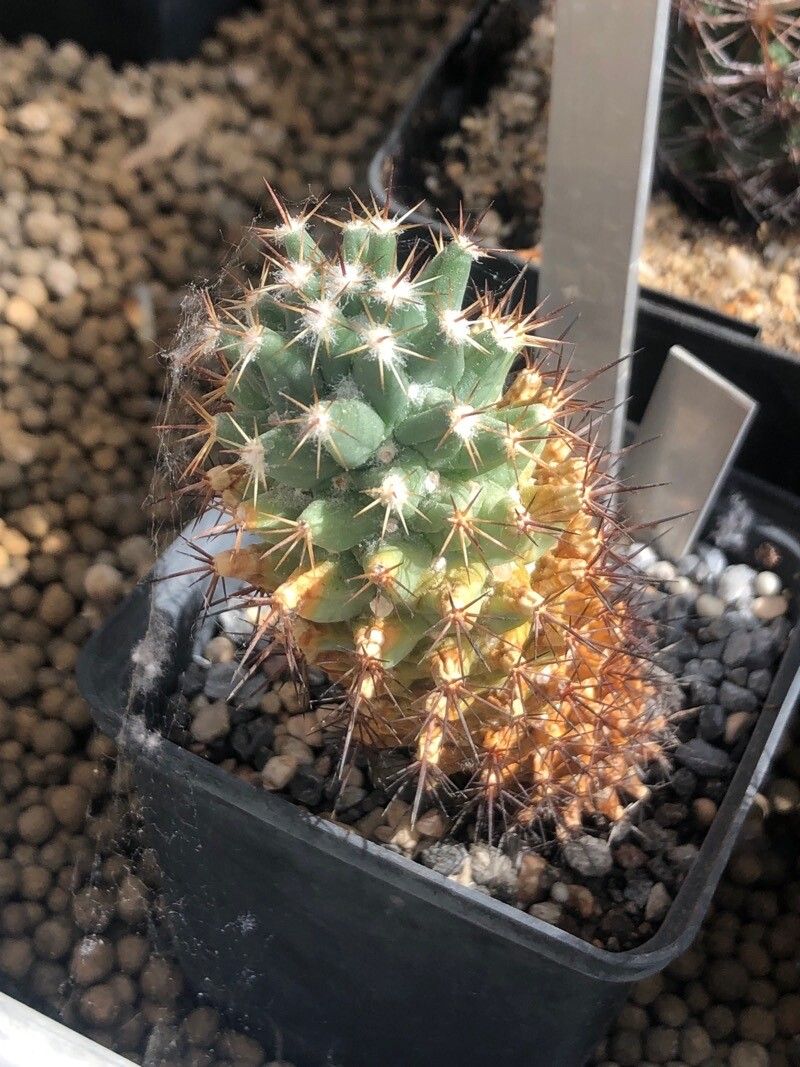
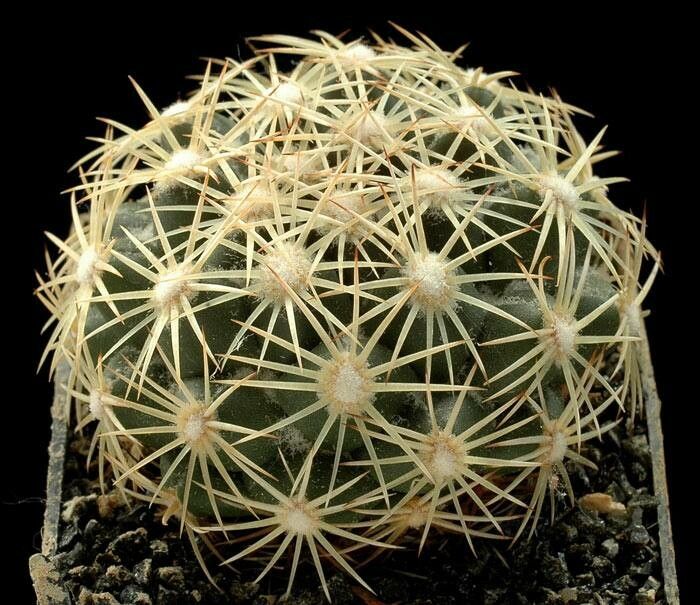
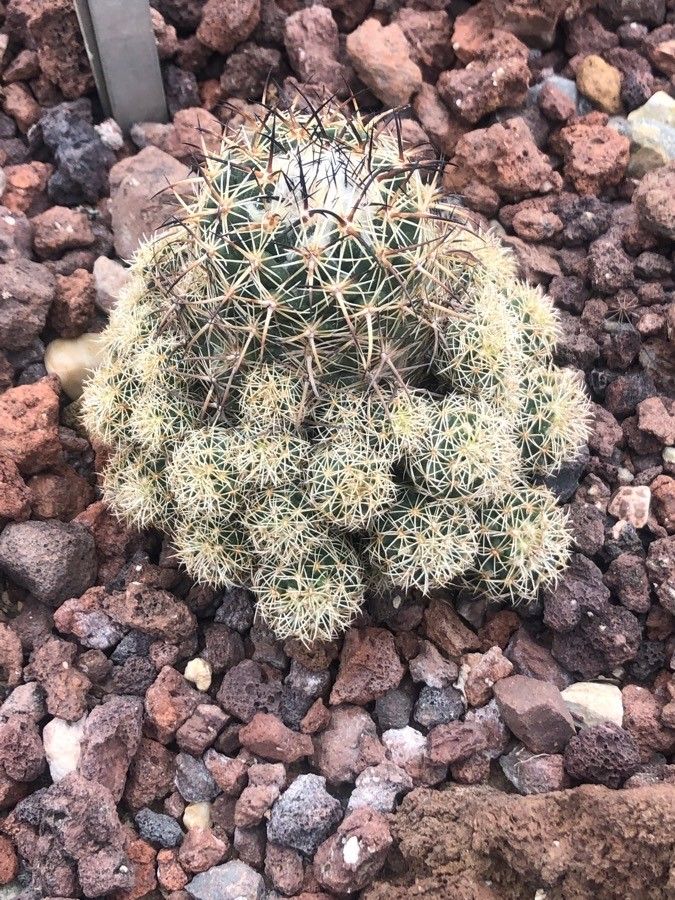
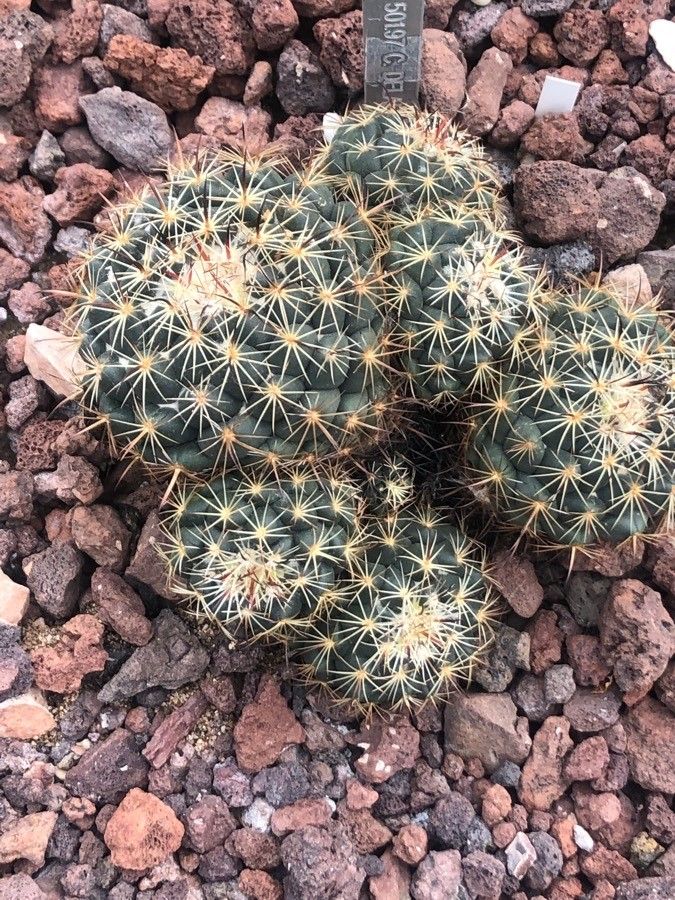
Coryphantha ramillosa is a rare species of cactus known by the common names bunched cory cactus and whiskerbush. It is native to the border region between Texas in the United States and Coahuila in Mexico. Because it was believed to be rare and threatened by a number of processes, it was federally listed as a threatened species of the United States in 1979.The range and abundance of this plant are not well known, especially within Mexico, and it may not be as uncommon as was thought in 1979. The cactus occurs in at least seven locations in Texas, several being within the bounds of Big Bend National Park. One of the most recent estimates of abundance in Texas is 5,000 to 10,000 individuals in two counties. The range of appropriate habitat in Mexico covers 2.5 times the amount of land as in Texas. Many of the plants are located in remote areas, which helps protect them from people. A major threat to the species is harvesting by cactus enthusiasts and dealers.This cactus is generally spherical or cylindrical in shape, and unbranched. It grows up to about 9.5 centimeters long and is textured with protruding areoles up to 2 centimeters tall. The areoles bear curving spines, the central one thick, dark, and up to 4.3 centimeters in length. The smaller spines are light in color, often white. The showy flower occurs at the apex of the cactus body and measures up to 6.5 centimeters long. Its tepals are pink, lightening to pale pink or white near the center, and sometimes with darker midstripes. The rounded fruit is pale to dark green, fleshy and juicy and 1 or 2 centimeters long. The plant blooms in the summer, with an extended blooming period when rainfall is higher.The cactus occurs in desert scrub habitat, generally in dry, rocky, barely accessible areas where few other plants grow. The substrate is limestone. The plant is being propagated and studied at Desert Botanical Garden in Phoenix, Arizona.
Whiskerbush is resistant to many diseases and tolerates normal care conditions without becoming ill easily. That said, it can be vulnerable to mealybugs; these pests may cause some damage but are usually not a serious problem. Regarding care, Whiskerbush is drought-tolerant and does not require frequent watering. It can endure long stretches without water and needs little fertilizer. However, if lighting is poor and it is overwatered, it is highly prone to root rot. Overall, Whiskerbush suits people who prefer to spend less time on plant care, though it remains important to understand and meet its basic needs. It is particularly fitting for those who are away for long periods and may forget to water regularly.
How to keep Coryphantha Ramillosa.
Light
Originating in arid regions, Whiskerbush does best in full sun, since its native habitat features intense sunlight and little shade. It can also tolerate partial sun, offering some flexibility in its growth.
Temperature
Whiskerbush does best in warm settings and needs higher temperatures during the growing season to support growth and metabolism. It prefers abundant sunlight, proper moisture levels, and good airflow. However, it can be damaged by very low temperatures and by excessive watering. It's important to maintain a balance and avoid both overly high temperatures and excessively dry conditions.
Fertilizer
For Whiskerbush, light applications of fertilizer once or twice a year during the growing season are adequate. Avoid fertilizing in winter and in summer when the plant is dormant. Reduce feeding for plants that have been repotted, and wait a couple of months after repotting before fertilizing. Fertilizing supports healthy growth and encourages blooms.
Pruning
Whiskerbush needs very little pruning. Simply remove any withered flowers and branches to help direct nutrients towards healthy growth.
Pot & Repot
Repot Whiskerbush in spring or summer, placing it in a pot slightly larger than the existing one that has good drainage. Use a sandy or gritty cactus mix that drains well. Handle the plant carefully to avoid its spines. Let the cactus dry out before repotting to reduce the chance of root rot. After repotting, wait a week before watering so the roots can heal.
Botanical profile.
- Plant Type
- Succulent, Shrub
- Life Cycle
- Perennial
- Genus
- Coryphantha
- Family
- Cactaceae
- Hardiness Zone
- 8-11
- Mature Height
- 10 cm to 15 cm
- Mature Spread
- 5 cm to 8 cm
- Leaf Color
- Green
- Leaf Type
- Evergreen
- Flower Color
- Pink
- Flower Size
- 4.06 cm to 5.08 cm
- Bloom Time
- Late spring, Early summer, Mid summer
- Planting Time
- Spring, Summer
- Harvest Time
- Late summer, Early fall, Mid fall
Other names.