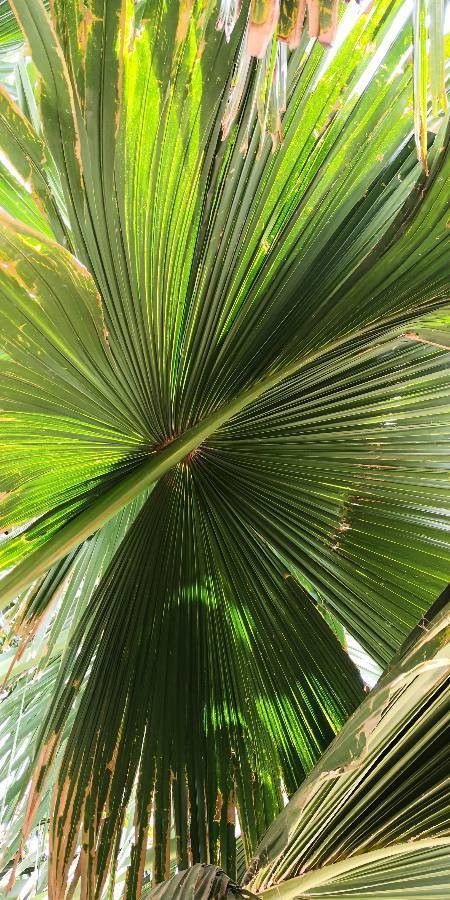
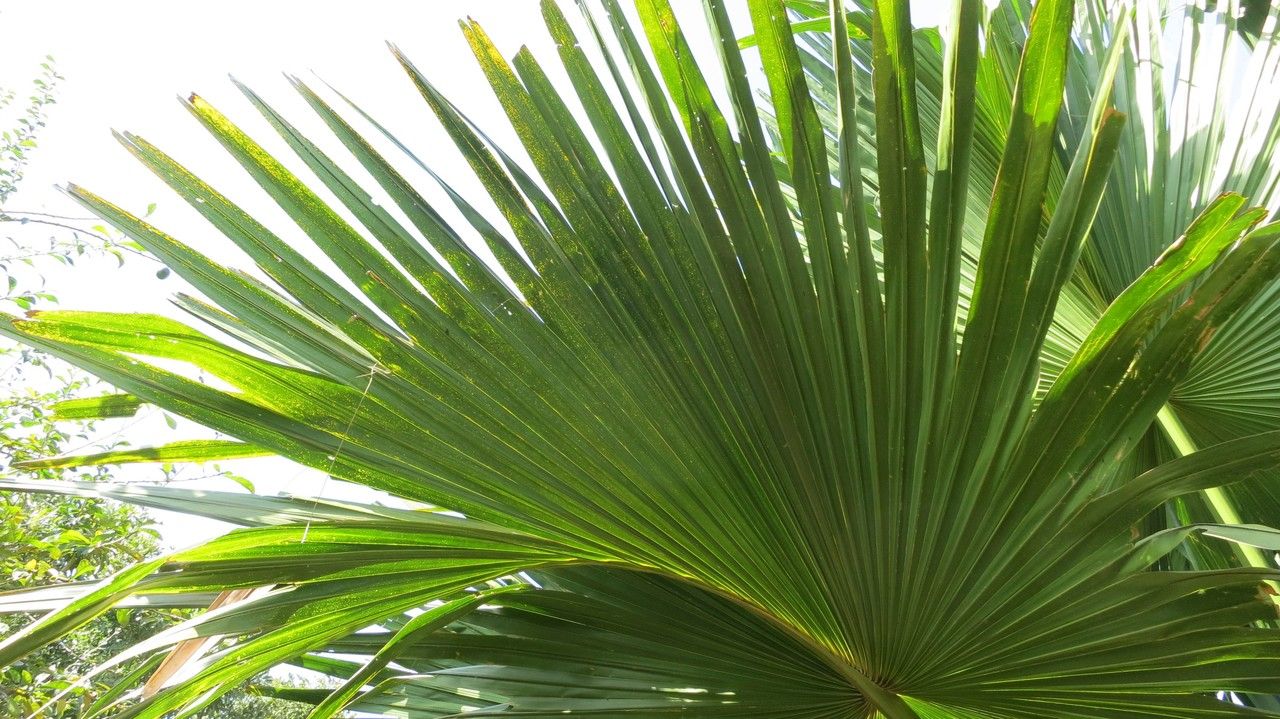
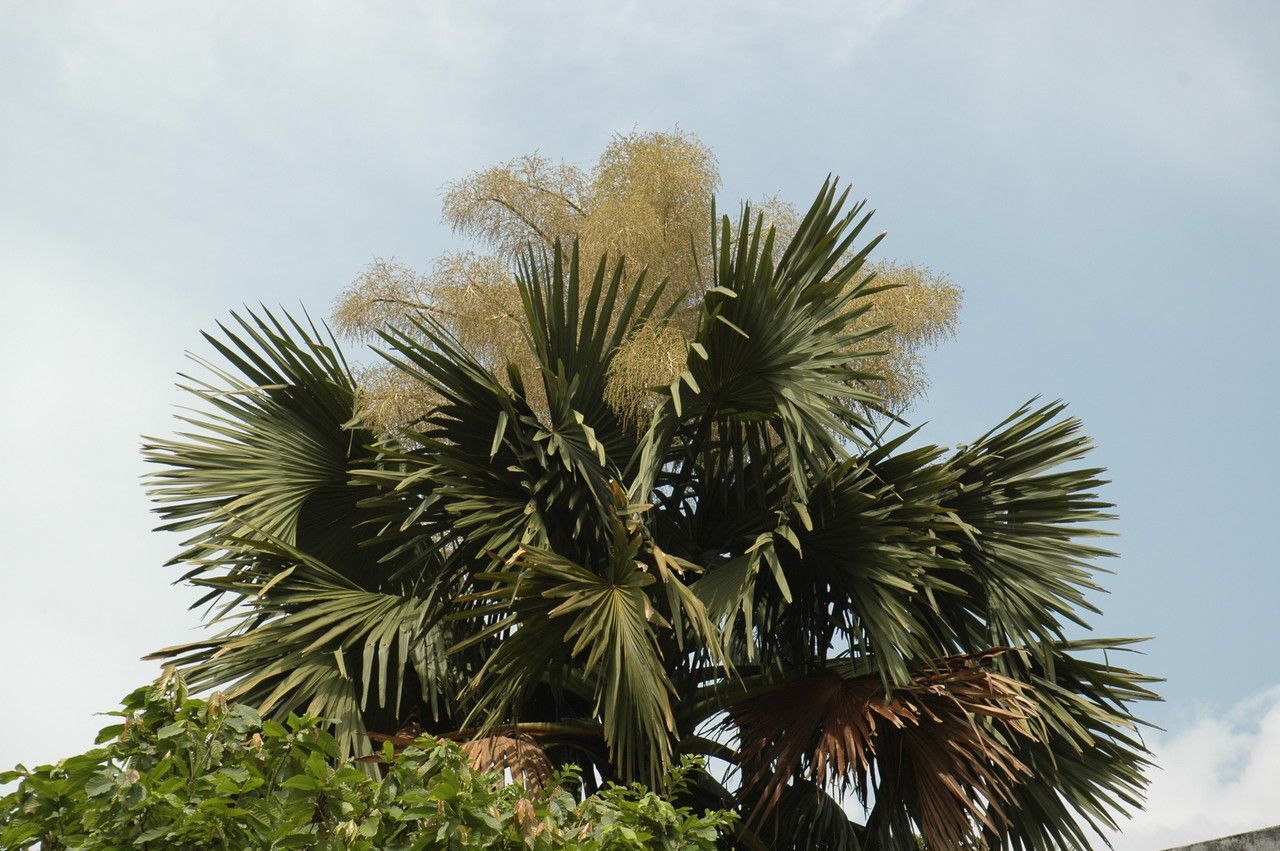
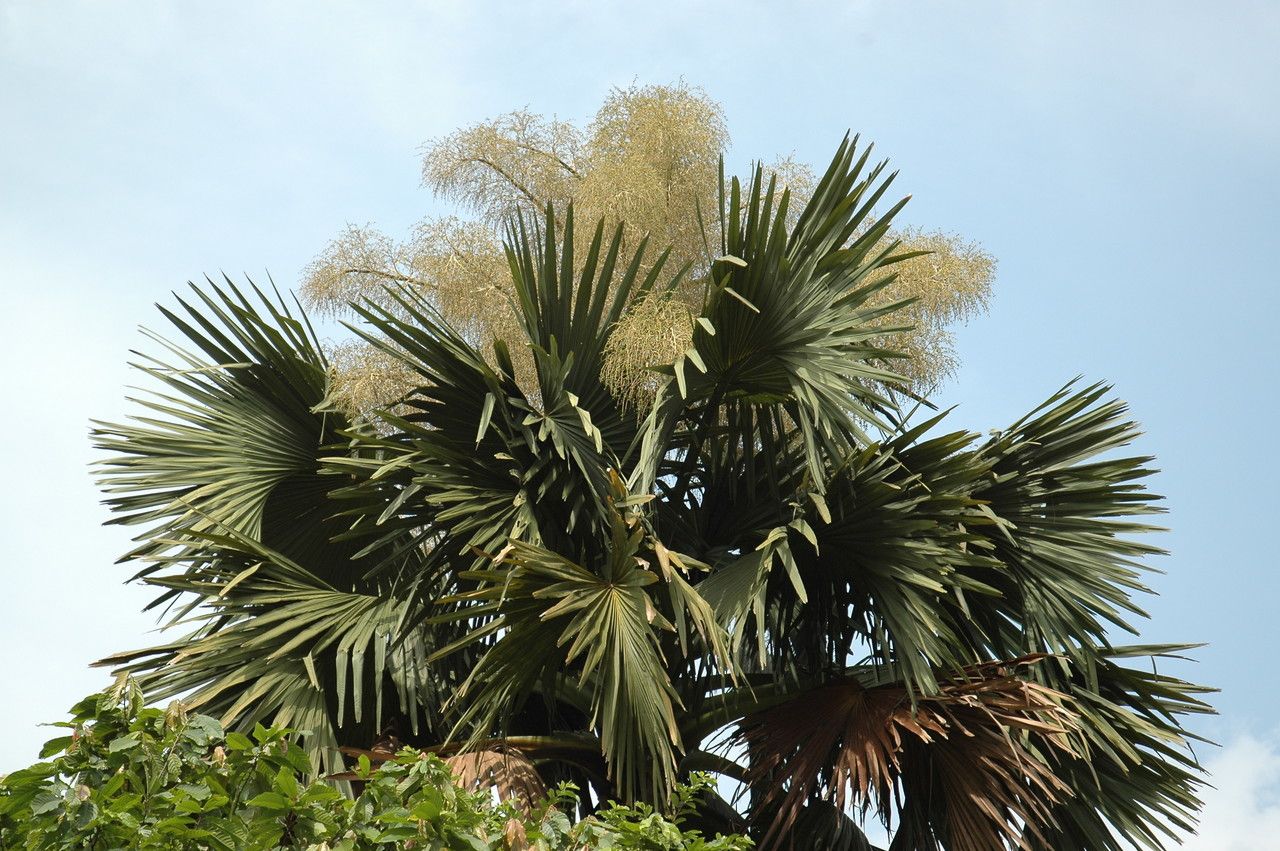
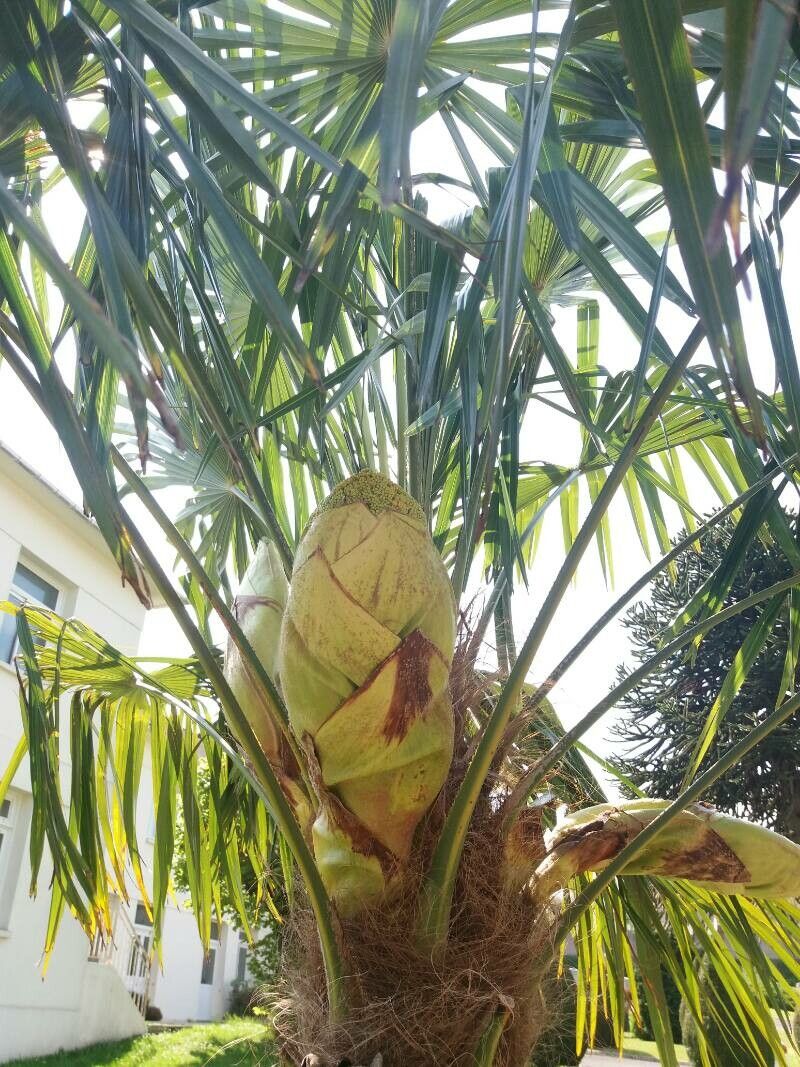
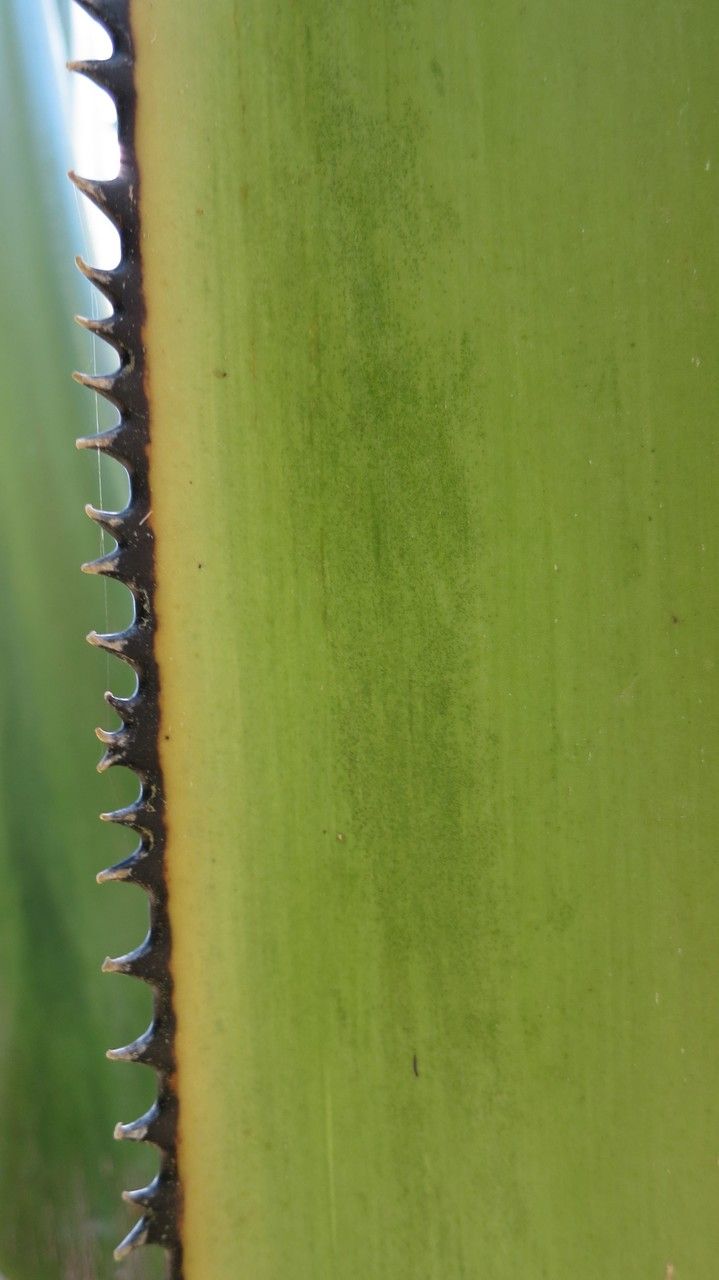
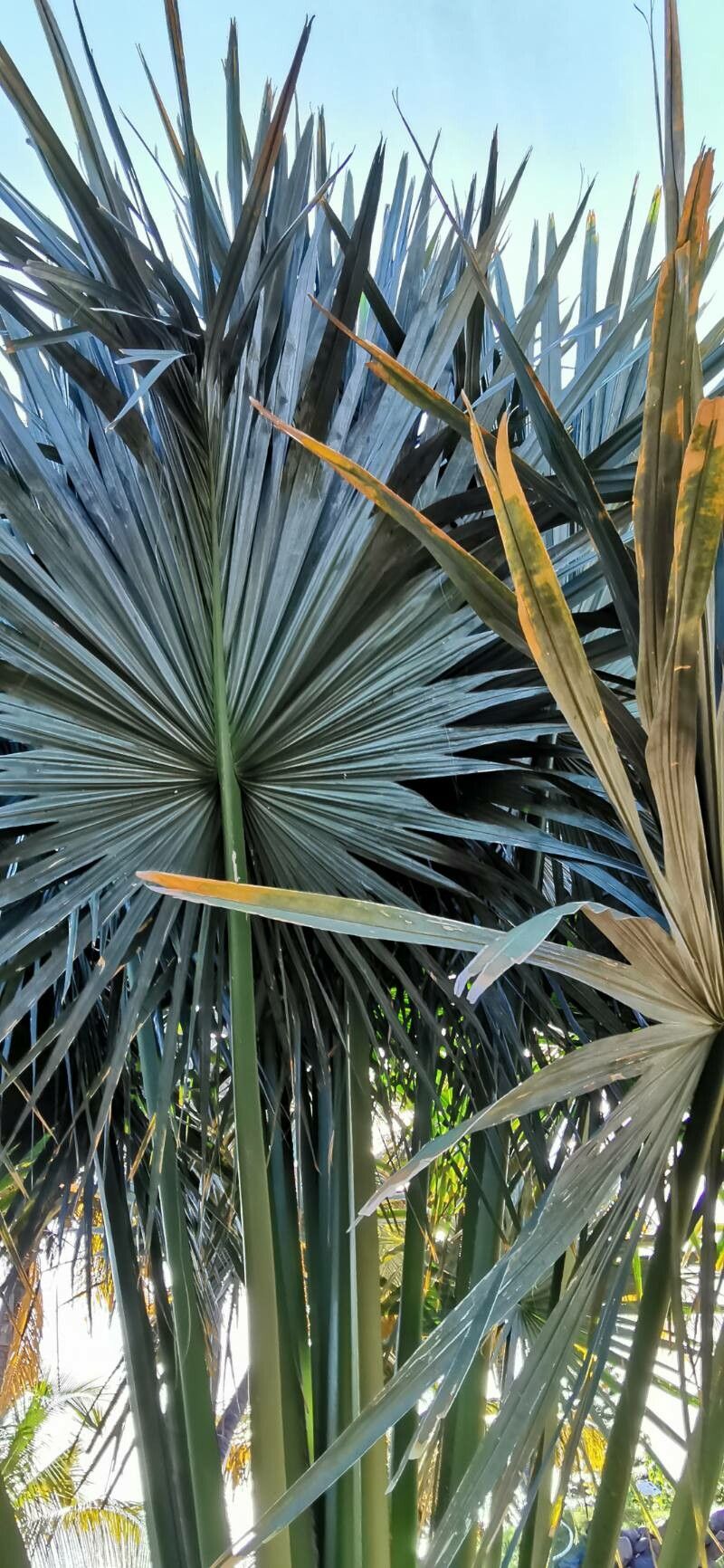
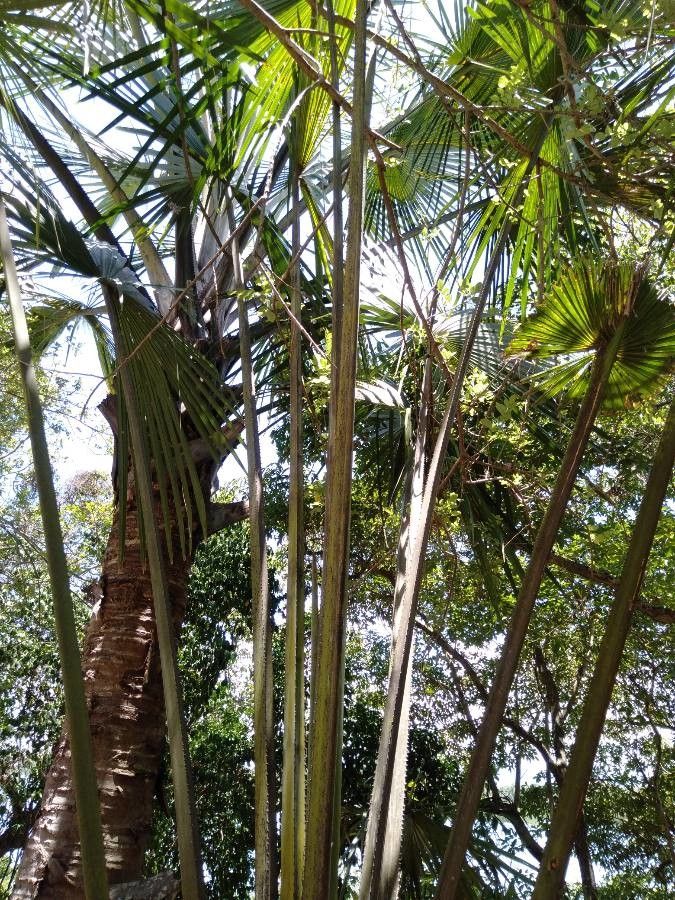
Corypha umbraculifera, commonly known as the Talipot Palm, is a large and notable palm tree native to the Indian subcontinent and Southeast Asia. It ranks among the largest palm species globally, featuring a single trunk that can reach heights of up to 25 meters and a diameter of approximately 1.3 meters. The leaves of Corypha umbraculifera are equally remarkable, with each leaf extending up to 5 meters in length and 3 meters in width. Arranged in a circular pattern at the top of the trunk, these leaves give the tree its characteristic umbrella-like appearance. For centuries, local communities have utilized the Talipot Palm for various purposes. In India and Sri Lanka, its leaves served as writing material for ancient texts, while its sap was used to produce palm sugar or fermented into an alcoholic beverage. Regrettably, Corypha umbraculifera has become endangered due to habitat loss from deforestation for agricultural and urbanization purposes. Although conservation efforts have been implemented by governments across its native range, more actions are required to ensure the survival of this magnificent plant species for future generations.
Cabbage palm is resistant to disease and usually not susceptible to illnesses. Regarding care, this plant is fairly low-maintenance. When grown outdoors it needs little watering, and larger specimens typically do not require pruning. Smaller plants, however, should be pruned after they have finished blooming. Cabbage palm is appropriate for anyone who has an outdoor area, like a garden or deck, and it does not demand extensive plant-care experience.
How to keep Corypha Umbraculifera.
Light
The cabbage palm performs best with plentiful, unobstructed sunlight but can tolerate a certain amount of shade. Native to sunny regions, the plant achieves its greatest growth in those conditions. Too much or too little light can harm its health, so a balance of light is important.
Water
The Talipot Palm, native to tropical Asia, thrives in environments with consistent humidity and moisture. To care for this plant, you should water it every two weeks, and regularly misting it indoors can help retain moisture. Being an evergreen, the Talipot Palm requires consistently moist soil throughout the year, even when it is not actively growing.
Temperature
The cabbage palm occurs naturally in warm climates and prefers temperatures of 68 to 100 ℉ (20 to 38 ℃). It requires warmth during its growing season to thrive. In colder months it can tolerate temperatures as low as 20 ℉ (-6.67 ℃).
Fertilizer
Fertilize your Cabbage palm in early spring to encourage healthy growth. Regular feeding boosts its overall health, producing vigorous growth, increased resilience to harsh conditions, and improved resistance to pests and disease. Keep to a set fertilization schedule for your Cabbage palm to maintain vibrant, deeply colored foliage and a lush appearance.
Pruning
The Talipot palm features large, fan-shaped leaves and benefits from pruning in early spring. To encourage growth and maintain an attractive appearance, remove any dead or damaged fronds. Doing so also enhances air circulation, which helps reduce the risk of disease. Additionally, regular inspections for pests and following local care guidelines are important for improving the plant's overall health and vitality.
Pot & Repot
When repotting a Cabbage palm, choose a pot that is slightly larger and has excellent drainage. Use a well-draining potting mix. Repot in spring, taking care not to damage the roots while doing so. Set the palm at the same level it had in the old pot. Water well after repotting, and place it in a warm spot with bright, indirect light. Avoid overwatering to prevent root rot.
Botanical profile.
- Plant Type
- Palm
- Life Cycle
- Perennial
- Genus
- Corypha
- Family
- Arecaceae
- Hardiness Zone
- 10-12
- Mature Height
- 6.1 m to 9.14 m
- Mature Spread
- 3.05 m to 4.57 m
- Leaf Color
- Green
- Leaf Type
- Evergreen
- Flower Color
- White
- Flower Size
- 2.54 cm
- Bloom Time
- Early summer, Mid summer
- Planting Time
- Spring, Autumn
- Harvest Time
- Mid summer, Late summer, Early fall
- Native Area
- Bahamas, Cuba
Other names.
Reader questions.
How should I water my Talipot palm tree?
Your Talipot palm is not very particular about how you water it. So, you can use any common watering tool, like watering cans, hoses, or even cups, to water the plant. It's best to water the plant directly on the soil and make sure all areas of the soil are evenly moistened to provide water to all parts of the root system. Filtering the water is helpful because tap water may contain harmful particles for plants. It's also beneficial to use water that is at or slightly above room temperature, as using colder or hotter water may shock the Talipot palm. However, the Talipot palm usually responds well to any type of water.
Why should I put fertilizer on my Talipot palm?
The Talipot palm requires regular fertilization because its showy leaves require a significant amount of energy to produce and maintain. This energy is also needed to support the growth of its stems, branches, roots, and other vital structures. Neglecting fertilization can lead to two likely outcomes. Firstly, the leaves of the Talipot palm may lose their natural color and texture, causing them to appear unhealthy and diminishing its ornamental appeal. Secondly, the overall growth of the palm may slow down or produce weak growth that is susceptible to breakage.
What are the sunlight requirements for Talipot Palm?
The Talipot Palm, scientifically known as Corypha umbraculifera, thrives in conditions where it is exposed to full sunlight for more than 6 hours daily. It's important to observe the movement of sunlight through your garden to ensure your plants receive a proper balance of light and shade, which is crucial for their growth and health.
What is the native environment of the Talipot palm?
The Talipot palm, also known by its botanical name Corypha umbraculifera, is native to environments where temperatures range from 68 to 100°F (20 to 38°C). These warmth-loving plants thrive in conditions where the temperature is kept consistent within this range. Due to its preference for heat, it is important to make seasonal adjustments depending on the local climate to ensure the Talipot palm remains in its ideal temperature range.
What should I do if I give my Talipot palm too much or too little water?
Outdoor plants, especially newly planted ones or seedlings, are often susceptible to not getting enough water. It is important to water them sufficiently for the first few months, particularly when the tree is small or has just been planted. Once the roots are established, Talipot palm plants can generally rely on rainwater. However, when planted in pots, overwatering becomes more likely. If you accidentally overwater your Talipot palm, take immediate action to address the situation. Stop watering the plant right away to minimize the effects of overwatering. Then, remove the plant from its pot and inspect the roots. If there are no signs of root rot, you can return the plant to its container. However, if you do find root rot, trim the affected roots and consider applying a fungicide as a preventive measure. Additionally, repot the Talipot palm in well-draining soil. On the other hand, if your Talipot palm is underwatered, simply water it more frequently. This is an easy fix, as the leaves will droop, dry out, and fall off when underwatered, but they will regain fullness once they are adequately watered. Make sure to adjust your watering frequency promptly when you notice underwatering occurring.
When should I fertilize my Talipot palm tree?
To ensure the well-being of your Talipot palm, it is beneficial to occasionally provide fertilizer. Consequently, there is no need to adhere to a fixed feeding schedule upon planting these plants. One convenient method of fertilizing your Talipot palm is to apply fertilizer while watering it on occasion. During the growing season, this plant requires a sufficient amount of water. Ideally, you should feed the palm once every two to three weeks. It is important to maintain this feeding frequency throughout the duration of new growth production.
How does insufficient or excessive sunlight affect the Talipot Palm?
The Talipot Palm benefits from ample light throughout its growth stages, with insufficient light potentially stunting its growth and excessive exposure causing damage. Symptoms of light deficiency include smaller leaves, leggy growth, early leaf drop, halted new growth, pallid new leaves, chlorosis, sunscald, leaf curling, wilting, and leaf scorching. To mitigate these issues, ensure the palm receives adequate sunlight or use artificial lighting when natural light is insufficient.
How does low temperature affect the Talipot palm, and what are the solutions?
Talipot palms prefer warm temperatures and are not tolerant of low temperatures. They thrive best when the temperature is consistently above 20°C. During winter, it's crucial to keep the plant above 5°C to prevent damage. Exposure to temperatures below 1°C can lead to the leaves lightening in color. Following frost damage, the color may gradually turn brown or black, accompanied by wilting and drooping. If frost damage occurs, you should trim off the affected parts and move the plant indoors to a warm environment near a south-facing window for ample sunlight. It's advisable to avoid placing the plant near heaters or air conditioning vents to prevent the air from becoming excessively dry.
How often do I need to water my Talipot palm?
Here are some tips to follow for watering your Talipot palm plant. If you have this plant growing outdoors and your area does not receive enough rainfall, you should water it adequately every two weeks during the spring and fall. During the summer, you will need to water it more frequently due to increased water needs. In winter, when plants grow slower and require less water, water sparingly and you may not need to water it at all. If your Talipot palm is young or newly planted, it will need more frequent watering to help it establish and grow into a more adaptable and drought-tolerant plant. For potted plants, there are two main approaches to determine watering frequency. The first is to set a regular watering schedule, which can be once a week or once every other week. However, this method may not be suitable as it does not consider the specific conditions of your growing environment. The watering frequency can also change based on the season. For example, during summer when the plant's water needs are highest, a predetermined watering schedule may not be sufficient. An alternative is to base watering on soil moisture. It is recommended to wait until the top two to four inches of soil, about one-third to half the depth of the pot, have completely dried out before watering again.
When is not a good time to add fertilizer to my Talipot palm?
For most of the year, you can fertilize your Talipot palm on a regular schedule. This is allowed in the active growing season, which includes spring, summer, and early fall. However, during winter, you should not give any fertilizer to the plant. During winter, the Talipot palm goes into a dormant growth phase. This means it won't produce much or any new growth. Since the plant is using less energy during this time, it doesn't require fertilization.
How can artificial lighting supplement natural sunlight for Talipot Palm?
When natural sunlight is not enough, especially in winter or less sunny spaces, artificial lighting can be a vital solution for the Talipot Palm. LED lights, which can be customized to provide specific wavelengths, are recommended. Full sun plants need 30-50W/sq ft, partial sun plants need 20-30W/sq ft, and full shade plants require 10-20W/sq ft of artificial light. The artificial light source should be placed 12-36 inches above the plant to mimic natural sunlight, and the duration should match the natural daylight hours, generally 8-12 hours per day.
What measures should be taken for the Talipot palm during high temperatures?
During the summer, it's important to keep the Talipot palm's temperature below 38°C to prevent heat stress. Temperatures exceeding 43°C can lighten the leaves' color and make the plant more susceptible to sunburn. To address this, trim away the sunburned and dried-up parts of the plant. Then, relocate the plant to a shaded area that protects it from the midday and afternoon sun. Additionally, make sure to water the palm in the morning and evening to maintain soil moisture and help the plant cope with the heat.