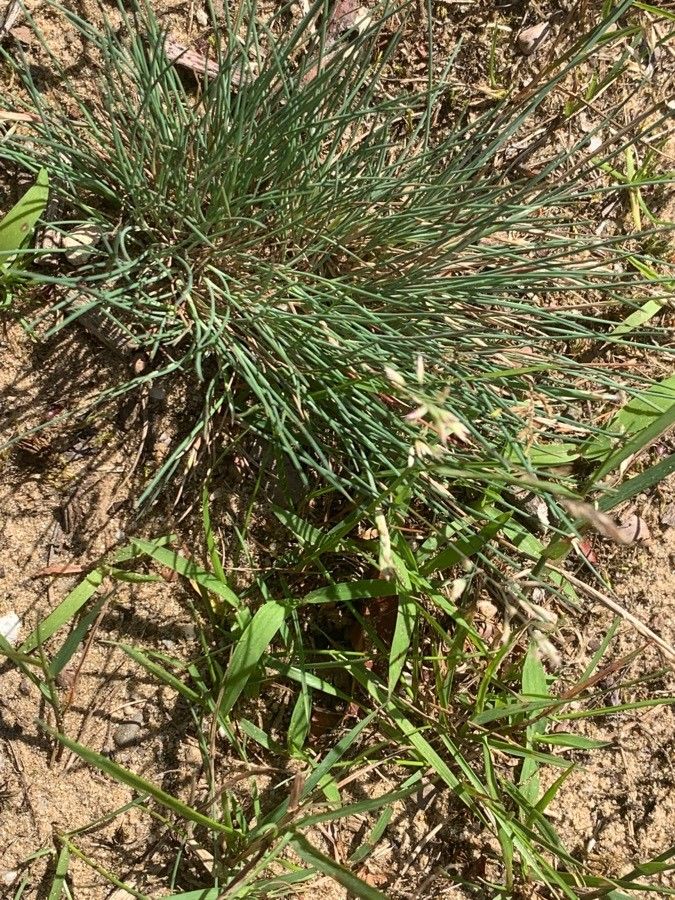
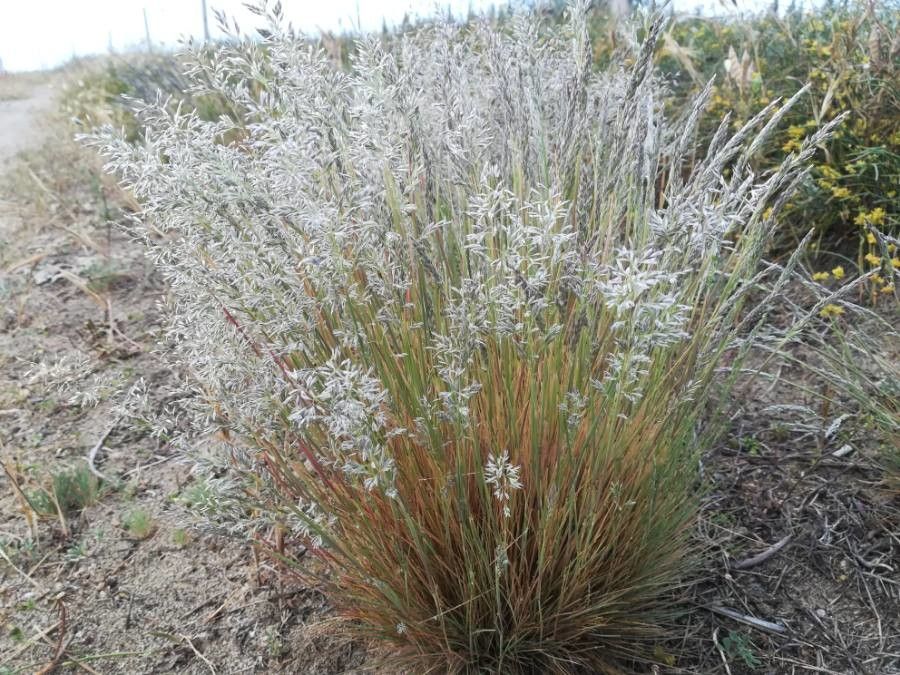
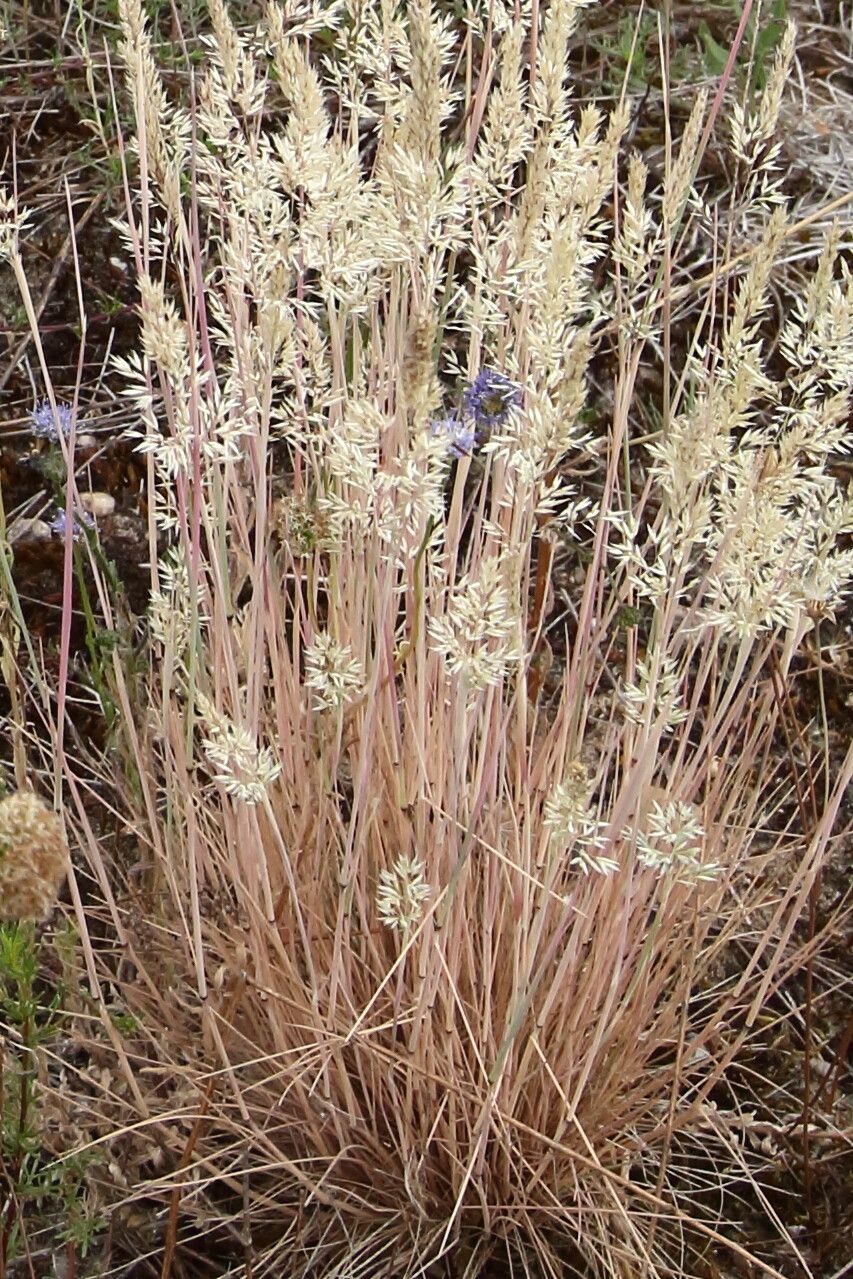
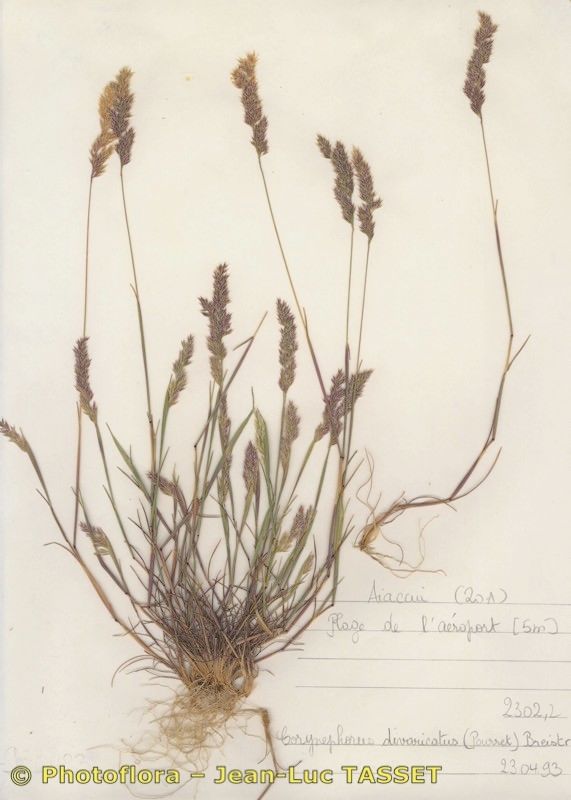
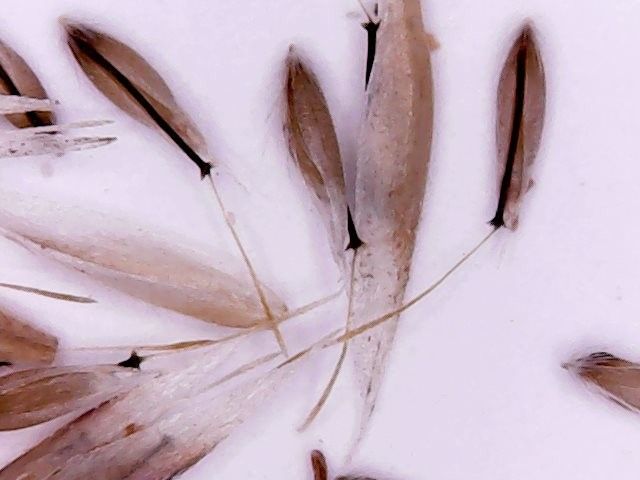
Corynephorus canescens, commonly known as grey hair grass or silver hair grass, is a perennial plant belonging to the Poaceae family. Native to Europe and Asia, it thrives in dry, sandy habitats such as heaths, dunes, and rocky slopes.
This plant exhibits a tufted growth habit, with slender stems reaching up to 30 cm in height. Its narrow, grey-green leaves are covered in fine hairs, giving the plant its characteristic silvery appearance. The flowers are small and inconspicuous, with spikelets that can grow up to 10 cm long.
Corynephorus canescens plays a crucial role in soil stabilization due to its deep root system, which helps prevent soil erosion on slopes and disturbed areas. It also provides habitat for small mammals such as voles and birds like larks.
In horticulture, Corynephorus canescens is popular as an ornamental grass. Its appealing appearance makes it a preferred choice for mass planting, rock gardens, or containers.
Overall, Corynephorus canescens is a hardy species that is vital for maintaining ecological balance and offers significant aesthetic value for landscaping purposes.
Gray clubawn grass is resistant to disease and typically not susceptible to illnesses. Regarding care, this plant is fairly low-maintenance. When grown outdoors it needs only light watering, and larger specimens usually do not require pruning. Smaller plants, however, should be pruned after they finish blooming. Gray clubawn grass is suitable for anyone with outdoor space, such as a garden or deck, and does not demand much gardening experience.
How to keep Corynephorus Canescens.
Light
Gray clubawn grass does best in environments with very high daylight intensity. The species' health and growth improve greatly when it receives ample light. Both excessive and insufficient light can negatively affect its growth. It's important to pay attention to lighting conditions that reflect gray clubawn grass's origins.
Water
Gray clubawn grass flourishes in well-drained sandy soils with limited water availability, demonstrating strong drought tolerance. It needs watering once a week, ensuring the soil does not become saturated. While it is primarily grown outdoors in arid climates, gray clubawn grass can also adapt to container planting, provided there is proper drainage.
Temperature
Gray clubawn grass is native to areas with mild temperatures and mainly flourishes at 68 to 95 °F (20 to 35 °C). When seasons change, artificially regulating ambient temperatures to fall within its preferred range would enhance its growth.
Pruning
Gray clubawn grass is a hardy perennial known for its striking silver-gray foliage. To keep it healthy and promote dense growth, it's best to prune the plant from early to late spring. During this time, trim back about two-thirds of its height. Avoid pruning in late summer, as this can lead to dormancy stress. With regular pruning, you can enhance both the growth and visual appeal of the grass.
Botanical profile.
- Plant Type
- Grass
- Life Cycle
- Annual, Perennial
- Genus
- Corynephorus
- Family
- Poaceae
- Hardiness Zone
- 6-9
- Mature Height
- 30 cm
- Mature Spread
- 49 cm
- Leaf Color
- Blue, Gray, Silver, Green
- Leaf Type
- Evergreen
- Flower Color
- Silver
- Flower Size
- 0.51 cm to 1.52 cm
- Bloom Time
- Early summer, Mid summer
- Planting Time
- Spring, Summer
- Harvest Time
- Late summer, Early fall
- Native Area
- Sweden, Austria, Czech Republic, Slovakia, Poland, Croatia, Morocco, Belarus, Ukraine, Russia, Lithuania, Norway, Hungary, Germany, Portugal, Italy, Spain, Denmark, France, United Kingdom, Romania, Latvia, Belgium, Netherlands
Other names.
Reader questions.
What should I do if I give my Gray clubawn grass too much or too little water?
Proper watering is crucial for the performance of this beautiful ornamental grass. When planted in the ground, watering problems can be solved. However, in a container, overwatering or underwatering can quickly kill Gray clubawn grass. Insufficient water can cause it to stop growing, while overwatering leads to yellow leaves with brown tips. Underwatering results in drooping leaves, weak seed head production, and browned leaves. If you suspect improper watering, first determine if it's too much or too little water. If it's too much, stop watering immediately and wait for heavy soils to dry out. Test the soil for moisture once new growth appears and decide if more water is necessary. If it's too little water, simply give the grass a deep drink and observe if it perks up. Remember that deep, infrequent watering is better than shallow, frequent watering. It encourages the growth of deep roots, making the grass more drought resistant and less prone to watering issues.
What are the sunlight requirements for Gray clubawn grass?
Gray clubawn grass requires full sun, meaning it needs to be exposed to more than 6 hours of sunlight daily for optimal growth. It's important to observe your garden's sunlight patterns to ensure you choose locations that provide the right balance of light and shade. This grass species thrives under these conditions, ensuring its growth and health are significantly boosted when bathed in abundant light.
What is the optimal temperature range for growing Gray clubawn grass?
Gray clubawn grass, botanically known as Corynephorus canescens, thrives in mild temperature regions. The ideal temperature range for its growth is between 68 to 95°F (20 to 35°C). Maintaining ambient temperatures within this range, particularly through the alteration of seasons, is crucial for optimizing its growth. This grass species exhibits strong cold resistance, making special frost protection measures unnecessary in most cases during the winter. However, in extreme conditions where winter temperatures are expected to drop below -25°C, protective measures such as covering the plant with soil or straw are recommended. Additionally, it is advised to water the plant abundantly before the first freeze in autumn to keep the soil moist, which helps to prevent drought and water scarcity during the colder months.
How often should I water my Gray clubawn grass?
The watering needs of Gray clubawn grass will vary depending on its location. Generally, watering once a week is recommended. In hot climates, watering once or twice a week during the summer may be necessary. In moderate climates, watering once every seven days or more may be sufficient. Grass in containers generally requires more frequent watering than grasses planted in the ground. However, the location also plays a role, as shaded grasses need less frequent watering compared to grasses planted in the ground. It is important to water Gray clubawn grass only when the soil is dry. To determine if the soil is dry, you can press your finger a couple of inches into the soil or use a portable scale to weigh a potted grass. Signs of insufficient water include folded blades and thinner appearance. Although Gray clubawn grass is drought tolerant, regular and deep waterings will enhance its color. Despite growing in open scrubland in the wild, this grass still requires care and attention. Consistent watering is beneficial for its growth and vitality. Initially, newly planted Gray clubawn grass needs more frequent watering until it establishes deep roots. For potted grass, the soil dries out quickly, especially when exposed to hot and direct sun. It is recommended to test the soil every 3 to 4 days and water when it feels dry. Gray clubawn grass planted in the ground generally requires less watering, but this depends on the soil type. Clay soil retains moisture below the surface, so it may feel dry at the top even if it has enough moisture. Sandy soils, on the other hand, drain quickly and may need more frequent watering.
How does artificial lighting benefit indoor plants like Gray clubawn grass?
Indoor plants, including Gray clubawn grass, require adequate lighting for optimal growth, especially when natural sunlight is insufficient, such as in winter or less sunny spaces. Artificial lighting can be a vital solution, promoting faster, healthier growth. LED lights are recommended for their customizable wavelength capabilities, ensuring plants receive the specific types of light they need. For full sun plants, 30-50W/sq ft of artificial light is ideal, while partial sun plants need 20-30W/sq ft, and full shade plants require 10-20W/sq ft. The light source should be placed 12-36 inches above the plant to mimic natural sunlight, and most plants need 8-12 hours of light per day.
How does Gray clubawn grass react to low temperatures, and what should be done?
Gray clubawn grass is notably cold-tolerant and prefers temperatures above 20°C (68°F). During winter, it's important to ensure the temperature stays above 0°C to maintain its health. If temperatures fall below -25°C, the grass may not show immediate damage but could suffer from decreased sprouting or a complete lack of sprouting when spring arrives. To address these issues in spring, it's advisable to remove any parts of the grass that have failed to sprout, as this can help encourage new growth and maintain the plant's overall health.
What should I watch out for when watering my Gray clubawn grass in different seasons, climates, or during different stages of growth?
To determine if you are watering enough, observe the growth rate of your grass. Gray clubawn grass tends to double in size during the hottest months of the year. If the weather is hot but the grass isn't growing vigorously, it may be necessary to adjust your watering schedule. In winter, you may only need to water once a month, but it's still important to check the soil for moisture. During the warmest months, the grass will need more water than usual, while water requirements decrease significantly in winter and cooler months. Remember to let the soil dry out completely before watering your Gray clubawn grass.
What are the symptoms of light deficiency in Gray clubawn grass when grown indoors?
When grown indoors with inadequate light, Gray clubawn grass may exhibit several symptoms, including smaller new leaves compared to mature ones, leggy or sparse growth, faster leaf drop, slower or no new growth, and lighter-colored new leaves. These symptoms indicate that the plant is not receiving enough light to support its growth and maintain its energy.
What precautions should be taken for Gray clubawn grass in high temperatures?
In the summer months, it’s important to keep Gray clubawn grass below 35°C (95°F) to prevent heat stress. Temperatures exceeding 38°C (100.4°F) can lead to the plant's leaves becoming lighter, curling, and becoming susceptible to sunburn. In severe cases, the plant may wilt and dry out entirely. To mitigate these issues, affected parts of the plant should be trimmed away. The plant should be moved to a location that provides shade during the intense midday and afternoon sun or covered with a shade cloth. Additionally, watering the plant in the morning and evening will help to keep the soil moist and aid in preventing heat-related stress.
How does excessive sunlight affect Gray clubawn grass?
Excessive sunlight can lead to several negative effects on Gray clubawn grass, such as chlorosis (leaves losing their green color), sunscald (damaged leaves or stems from intense light), leaf curling (a defense mechanism to reduce surface area exposed to sunlight), wilting (loss of turgor pressure causing the plant to droop), and leaf scorching (brown, dry edges on leaves due to excessive light). These conditions significantly affect the plant's ability to photosynthesize and maintain overall health.
What solutions are recommended for Gray clubawn grass facing light-related issues?
For indoor Gray clubawn grass facing light deficiency, gradually moving the plant to a sunnier location each week, ensuring at least 6 hours of direct sunlight daily, or using artificial light such as desk, ceiling lamps, or professional grow lights for at least 8 hours daily is advised. Outdoors, it's recommended to gradually shift the plants to spots with better sunlight exposure to avoid sunburn. Reducing obstructions like pruning trees can help maximize sunlight exposure. For plants affected by insufficient sunlight, though parts may not recover, new growth should be healthy with increased light exposure.