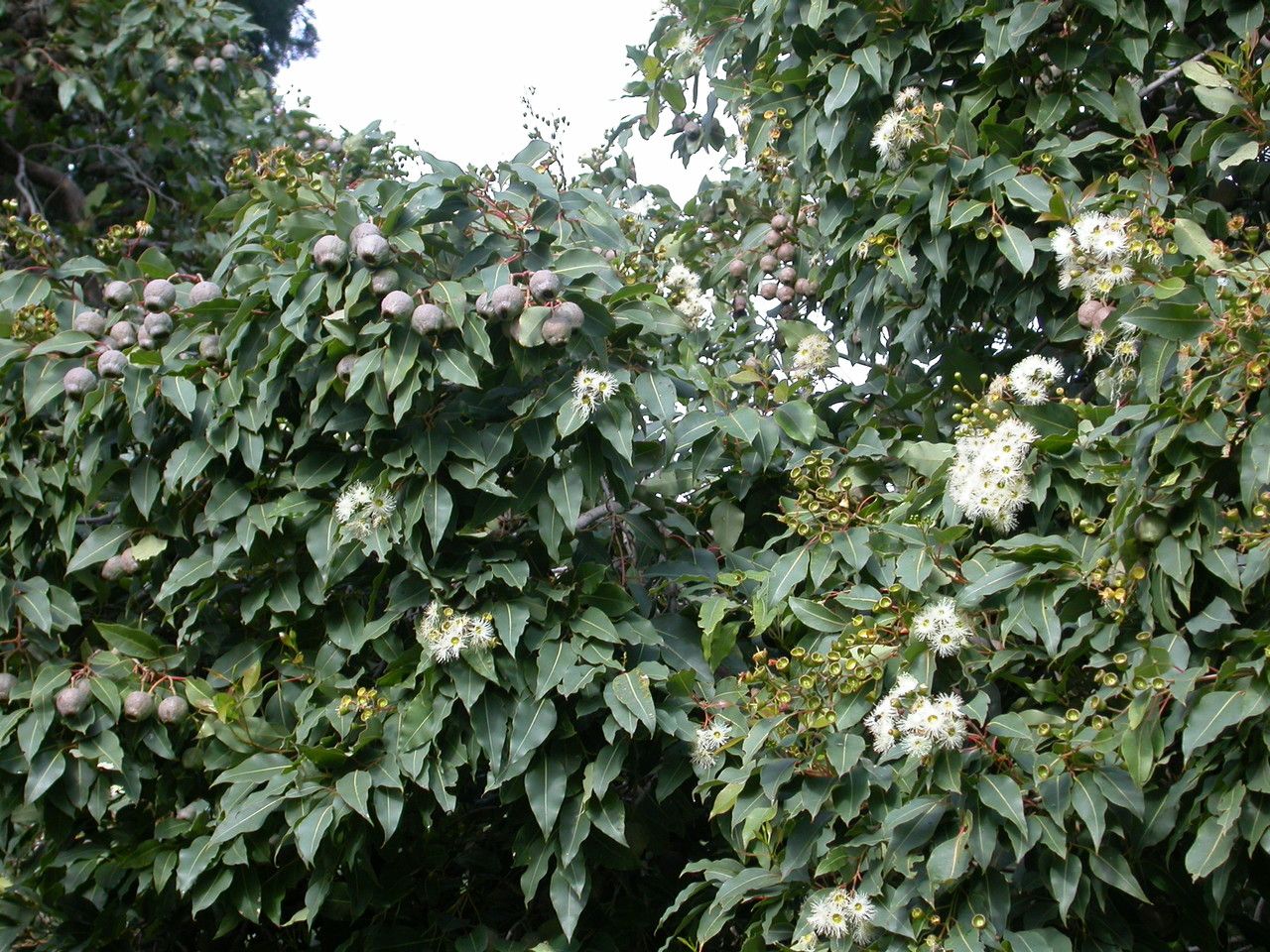
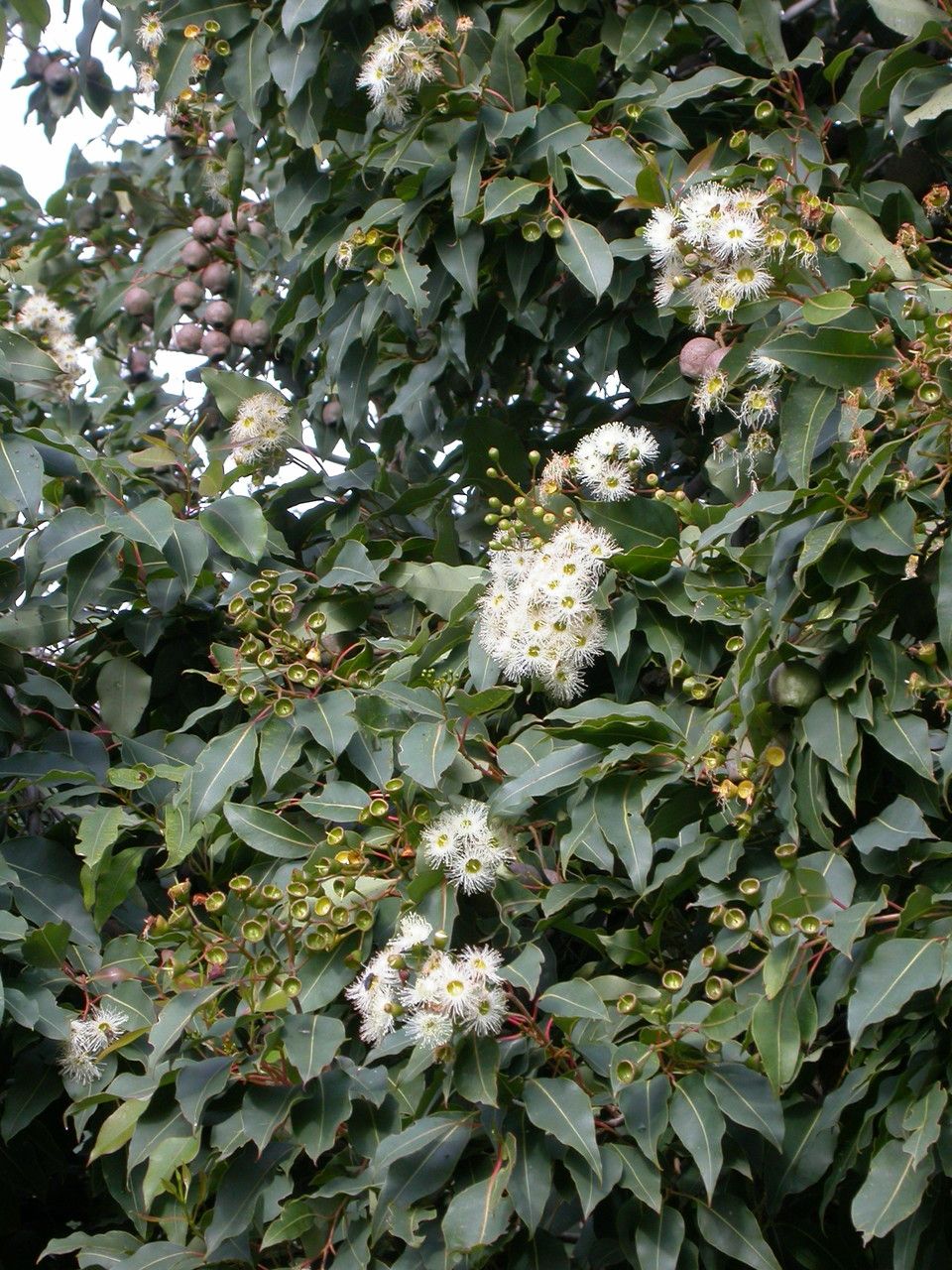
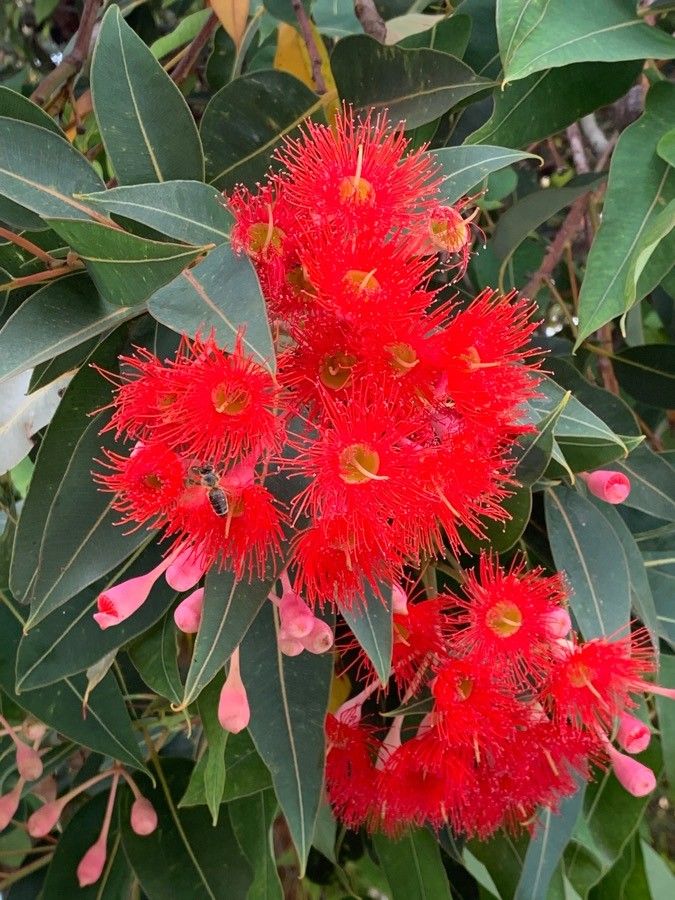
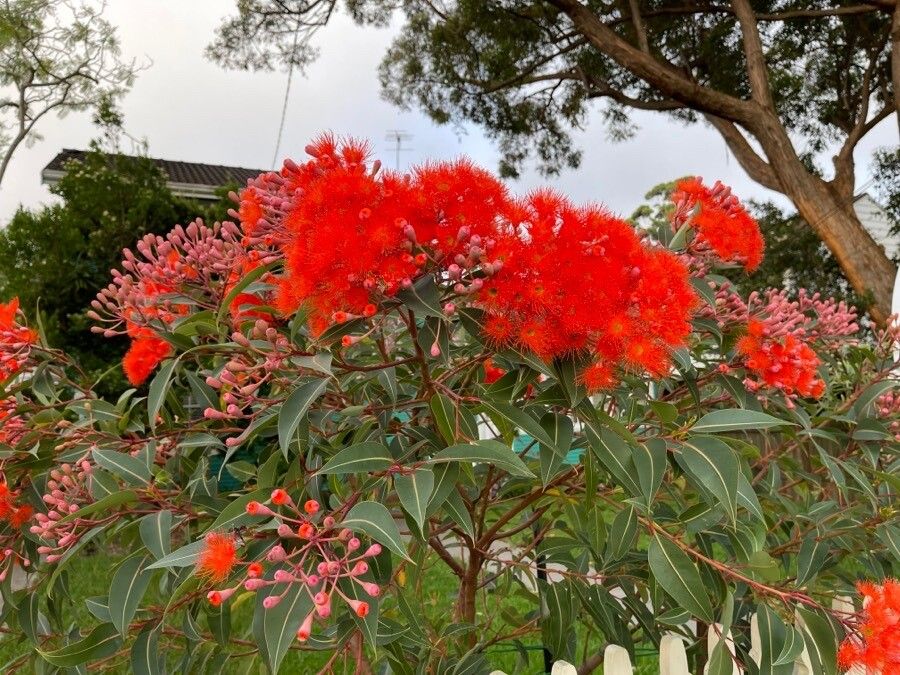
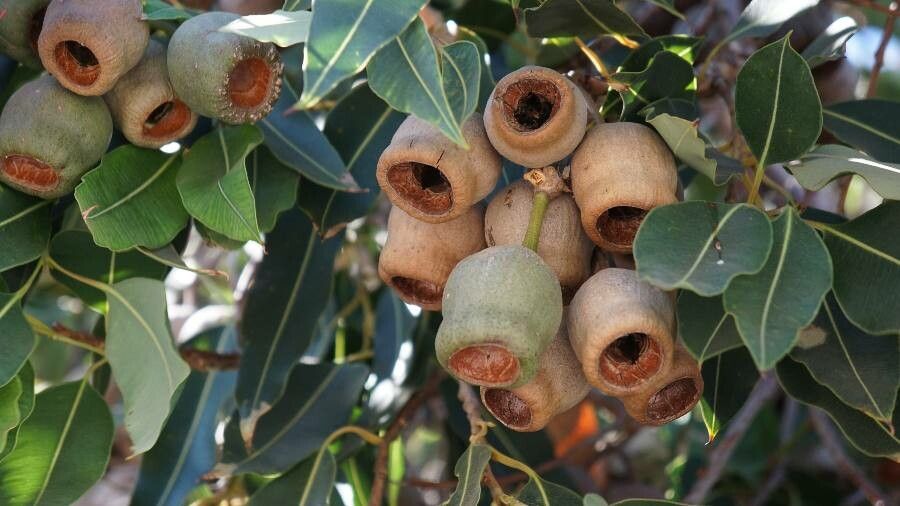
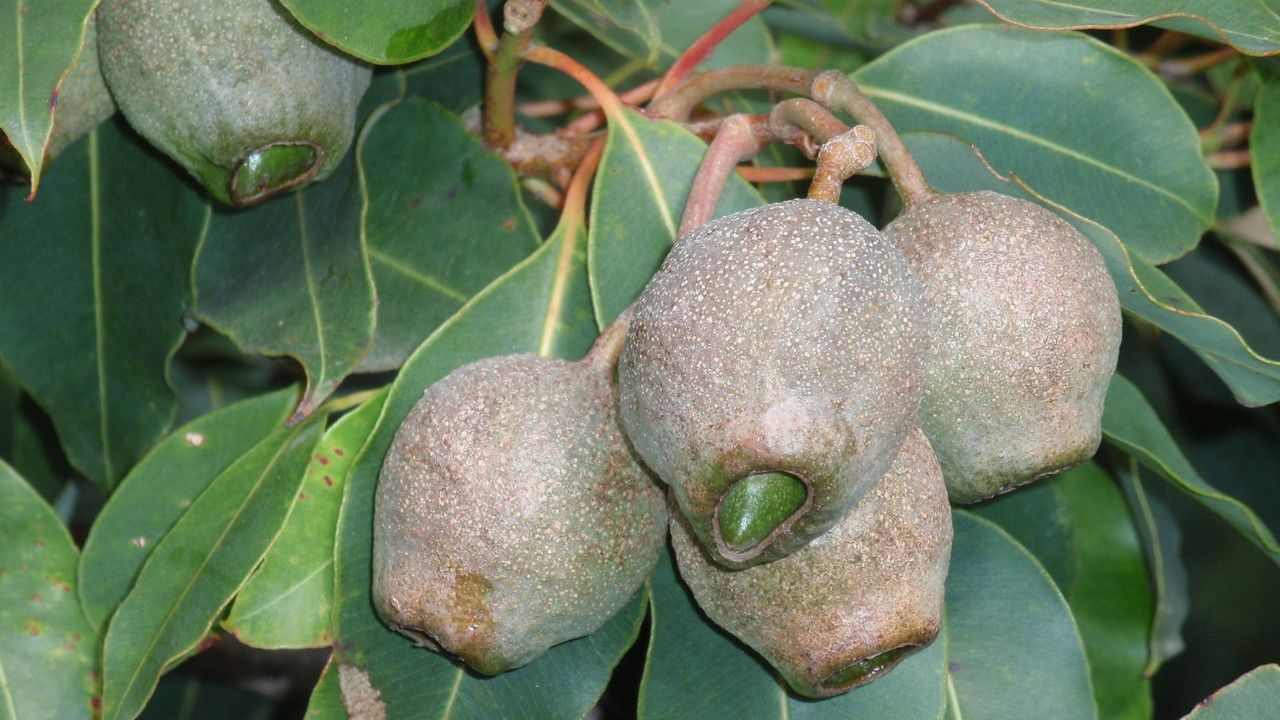
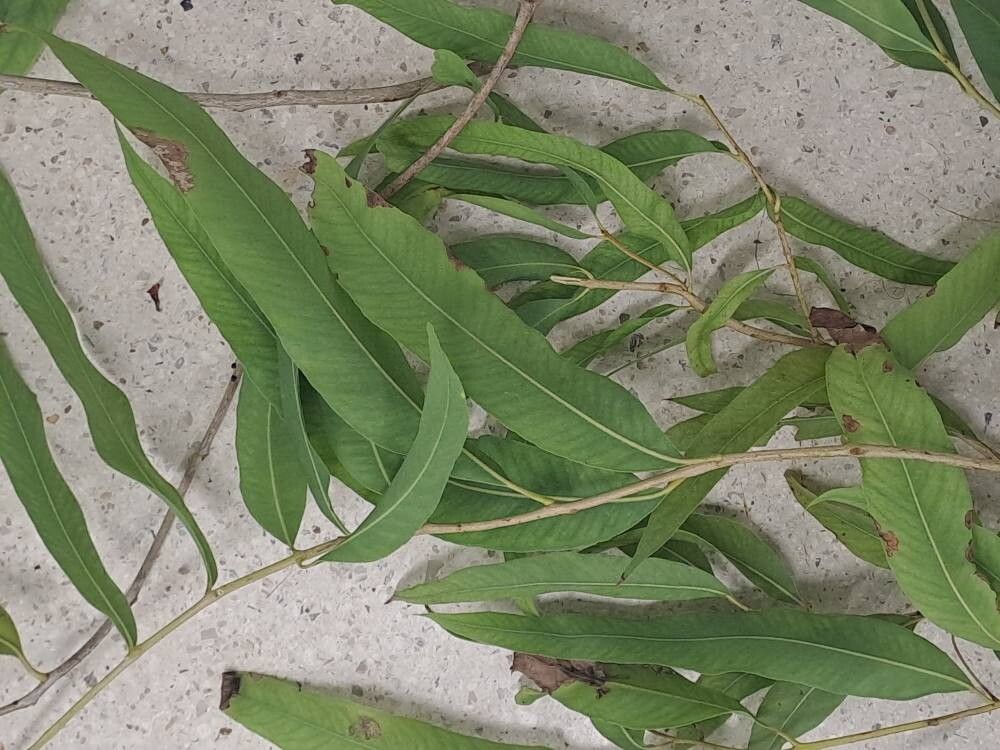
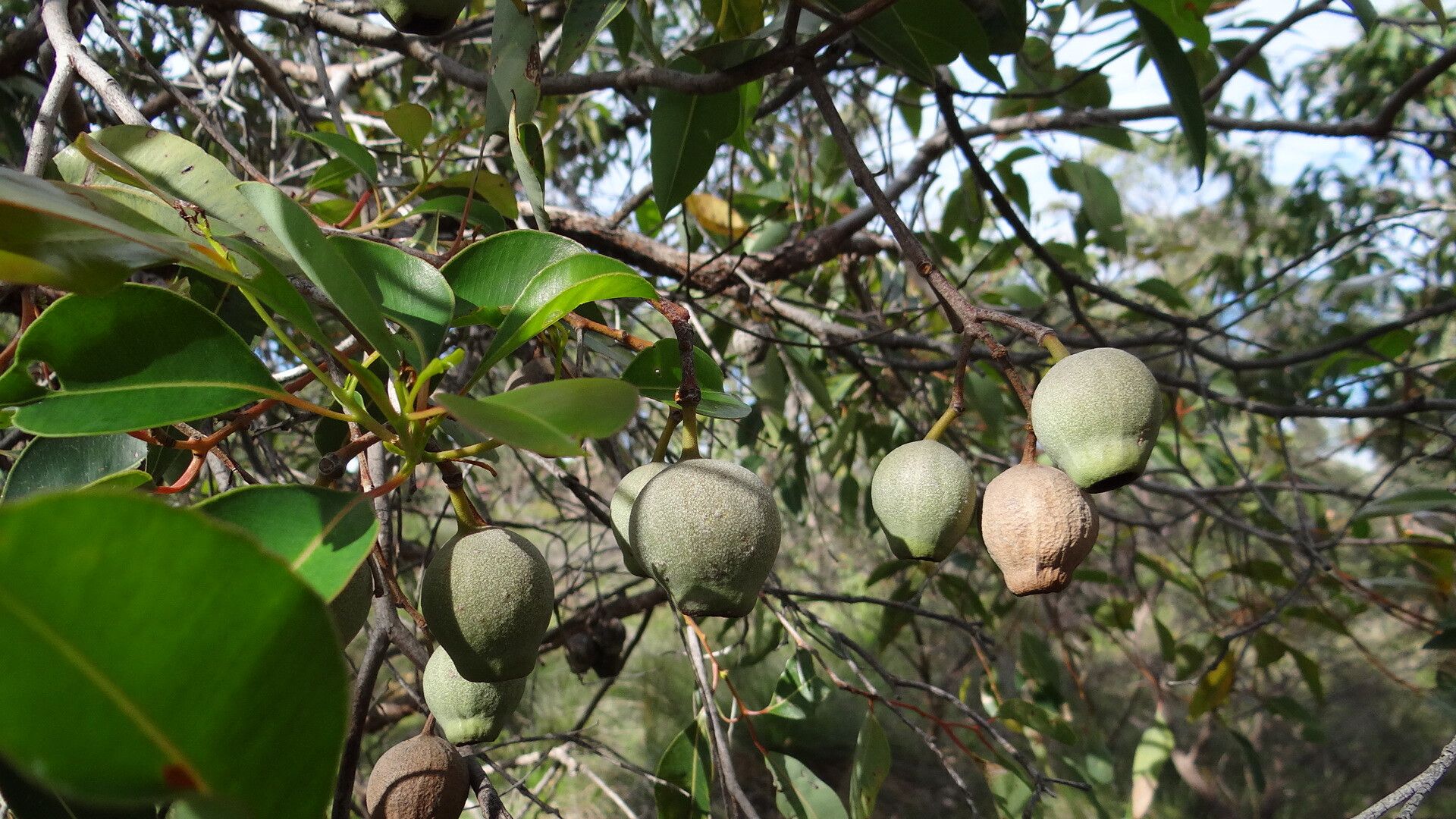
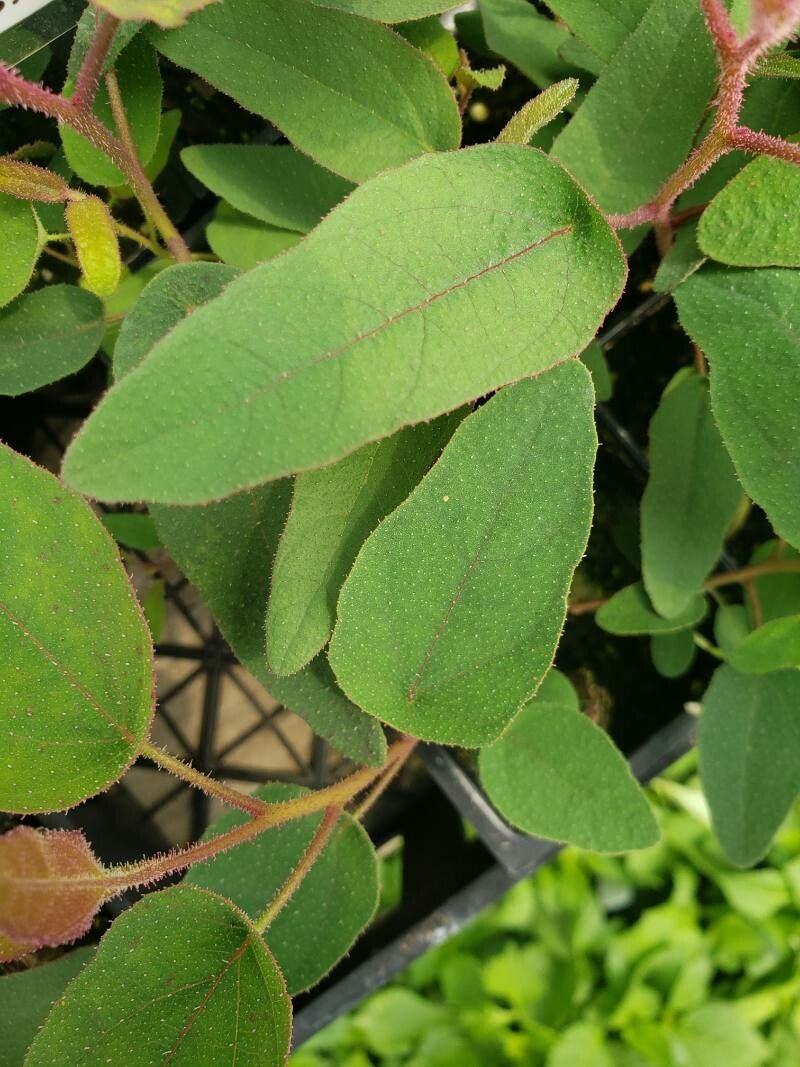
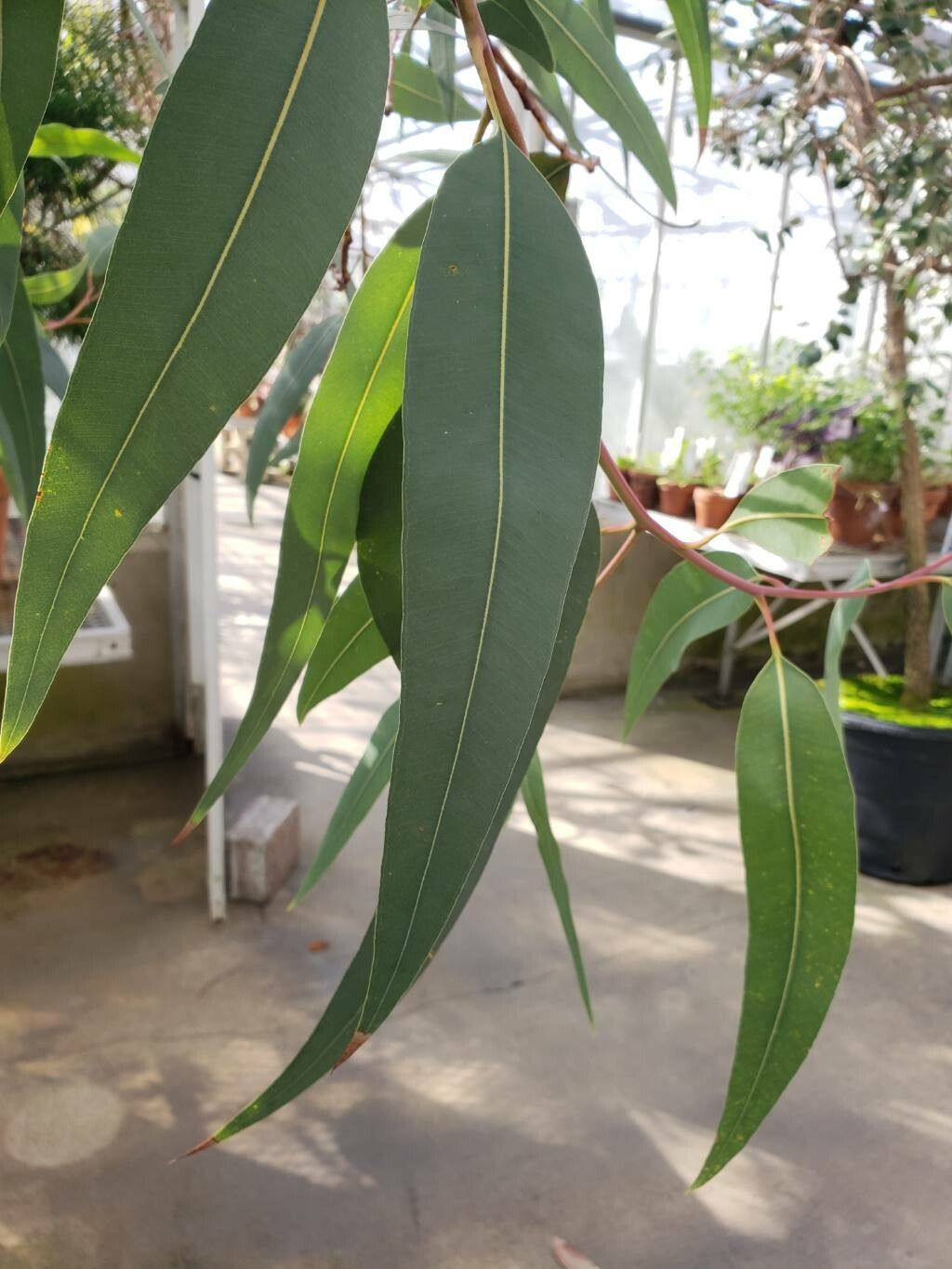
Corymbia ficifolia, commonly known as the red flowering gum, is a species of small to medium-sized tree native to Australia. Belonging to the family Myrtaceae, this tree is widely cultivated for its stunning display of bright red flowers that bloom in the summer. It can grow up to 10-15 meters tall and features a dense canopy with glossy, lance-shaped green leaves.
The bark of the Corymbia ficifolia is rough and fibrous, displaying a distinctive mottled appearance in shades of gray, brown, and pink. The flowers are produced in clusters at the ends of branches, attracting birds such as honeyeaters.
This tree prefers well-drained soils in full sun or partial shade but can tolerate some drought once established. Corymbia ficifolia is commonly used as an ornamental tree for landscaping due to its attractive foliage and showy flowers.
The Red Flowering Gum (Corymbia ficifolia) is one of three species of gum trees closely related to Australia's native eucalypts. From winter through spring, this tree produces vibrant flowers that are predominantly red, although they can also appear in shades of orange and pink. FUN FACT · FROM THE LIBRARY
Aside from its aesthetic value, Corymbia ficifolia possesses medicinal properties primarily attributed to the essential oils found in the tree. These oils have been traditionally used by indigenous Australians for their antiseptic properties.
Overall, Corymbia ficifolia is an iconic Australian plant species that enhances any landscape with its beauty while providing ecological benefits such as habitat for wildlife like birds and insects.
Red-Flower Gum: The red-flowering gum is a small tree with a descriptive common name. Initially classified as Eucalyptus ficifolia, this tree was reclassified in the 1990s as part of the Corymbia genus. Although these small trees remain eucalypts, there is still debate among botanists about whether Corymbia should be considered a separate genus from Eucalyptus.
The red flowering gum is resistant to disease and is generally not prone to illnesses. In terms of care, this plant is fairly low-maintenance. When grown outdoors it needs minimal watering, and larger plants usually do not require pruning. However, smaller plants should be pruned after they have finished blooming. The red flowering gum is suitable for anyone with an outdoor space, such as a garden or deck, and does not require much experience to care for.
How to keep Corymbia Ficifolia.
Light
The healthy growth of the red flowering gum depends greatly on substantial exposure to sunlight. It does best in bright conditions but can tolerate a reduced amount of light. This characteristic comes from its origin in a region with plentiful sunshine. Both too much and too little light can hinder its vigorous growth.
Water
Native to Australia's arid regions, the red flowering gum is a plant known for its high drought tolerance. It thrives with minimal moisture, needing water only every 2-3 weeks. This evergreen species prefers well-draining soil and is often cultivated outdoors for its ornamental beauty.
Humidity
This plant will thrive in moderate humidity, which is probably the level in your home. However, misting it a few times a week can be very beneficial. Make sure the room has good ventilation.
Temperature
Red flowering gum naturally occurs in temperatures between 68 and 100 °F (20 to 38 ℃). It is most at ease within this warm band. Modify care with the seasons by offering adequate shade on hotter days and shelter during colder nights.
Fertilizer
The best time to fertilize a Red flowering gum is in early spring, when it comes out of dormancy. This supports overall growth and the development of flowers. Fertilizing improves the foliage, stems, and branches, and encourages flowers that are large, vivid, and long-lasting. It also helps transport nutrients from the roots to the blooms and boosts the plant’s health and resistance to disease.
Pruning
The red flowering gum, known for its striking red blooms, needs careful pruning to thrive. For the best results, prune the tree between early and late winter. Begin by removing any dead branches and thinning out dense areas to improve airflow. This practice not only enhances the tree's structure but also encourages healthier growth and maximizes flowering, ensuring the tree remains attractive.
Botanical profile.
- Plant Type
- Tree
- Life Cycle
- Perennial
- Genus
- Corymbia
- Family
- Myrtaceae
- Hardiness Zone
- 9-11
- Mature Height
- 2.13 m to 10.06 m
- Mature Spread
- 7.62 m to 11.89 m
- Leaf Color
- Green
- Leaf Type
- Evergreen
- Flower Color
- Red
- Flower Size
- 0.51 cm to 0.76 cm
- Bloom Time
- Early spring, Mid fall, Late fall, Winter
- Planting Time
- Spring, Autumn
- Harvest Time
- Mid spring, Late spring, Early summer
Other names.
Reader questions.
How should I water my Red flowering gum tree?
Your Red flowering gum is not picky about how you water it. You can use any common watering tool like a watering can, hose, or even a cup. It's important to water the plant by directly applying the water to the soil. Make sure to evenly moisten all areas of the soil to provide water to all parts of the roots. Using filtered water is recommended to avoid harmful particles from tap water. It's also better to use water that is at or slightly above room temperature, as very cold or hot water can shock the Red flowering gum. However, the plant generally responds well to any type of water.
Why should I put fertilizer on my Red flowering gum tree?
Fertilization plays a crucial role in maintaining the overall health and well-being of a Red flowering gum. It supports the development of lush foliage, sturdy stems, and branches. Gardeners particularly value the flowers of this plant, and fertilization assistance helps to enhance their size, vibrancy, and longevity. This is because the right fertilizer aids in the efficient transfer of nutrients from the roots to the flowers. Additionally, proper fertilization contributes to the plant's overall health, making it more resilient against diseases.
What are the sunlight requirements for Red Flowering Gum?
Red flowering gum, or Corymbia ficifolia, thrives best when exposed to significant sunlight. For optimal growth, it requires full sun, which is above 6 hours of direct sunlight daily, but it can also tolerate partial sun, about 3-6 hours of sunlight. This adaptability is attributed to its origin in a climate with ample sunlight. However, finding the right balance of light and shade is crucial for ensuring the plant's health and happiness. In areas where natural sunlight is insufficient, particularly during winter or in less sunny spaces, artificial lighting can be employed. Indoor plants benefit greatly from properly configured artificial lights, such as LED, which can be adjusted to provide the specific wavelengths needed. Full sun plants typically need 30-50W per square foot of artificial light, partial sun plants require 20-30W per square foot, and full shade plants need 10-20W per square foot.
What is the ideal temperature range for Red flowering gum?
Red flowering gum, also known by its botanical name Corymbia ficifolia, thrives in warm climates, preferring temperatures between 68°F to 100°F (20°C to 38°C). It is essential to adjust care with the seasons, providing enough shade during the hotter days and protection during colder nights. The plant loves heat, and exposure to cold can harm it. Therefore, it's advisable to bring Red flowering gums grown outdoors indoors during autumn, placing them near a bright window while keeping them away from heaters. Maintaining temperatures above 20°C during winter supports their growth, and temperatures near 0°C can be detrimental.
What do I do if I give too much or too little water to my Red flowering gum?
When it comes to outdoor plants, especially new ones or seedlings, they can often suffer from a lack of watering. It's important to remember to consistently water them for the first few months, especially when they are small or recently planted. This is because once the roots are established, Red flowering gums can usually rely on rain for moisture. When you have a Red flowering gum planted in pots, overwatering is more likely to happen. If you accidentally overwater your plant, it's important to take immediate action to fix the situation. First, stop watering the plant right away to minimize the impact of overwatering. Then, remove the Red flowering gum from its pot to check its roots. If you find that none of the roots have developed root rot, it should be safe to return the plant to its container. However, if there are signs of root rot, trim away any affected roots and consider applying a fungicide to prevent further damage. Finally, repot the Red flowering gum in well-draining soil. On the other hand, if your Red flowering gum is underwatered, it's a relatively easy fix. The leaves of the plant will droop, dry out, and fall off. However, they will bounce back quickly once the plant is properly watered. Make sure to adjust your watering frequency accordingly as soon as you notice underwatering.
When should I fertilize my Red flowering gum tree for the best results?
To ensure the optimal growth and flowering of your Red flowering gum, it is recommended to fertilize it during early spring, as the plant emerges from its dormant phase and prepares to bloom. This initial feeding will provide the necessary energy for overall growth and flower development. However, feeding during this time is not the only opportunity to fertilize this plant. Additionally, a smaller feeding at the end of the season, in the fall months, can also benefit the plant. Some gardeners choose to fertilize the Red flowering gum during planting, but this is not always necessary.
What are the symptoms of insufficient or excessive sunlight in Red Flowering Gum?
Red flowering gum displays several symptoms when exposed to insufficient or excessive sunlight. Insufficient light can lead to small leaves, leggy or sparse growth, faster leaf drop, slower or no new growth, and paler new leaves—signs of the plant's struggle in low light conditions. Excessive sunlight can cause chlorosis, where leaves turn yellow due to the breakdown of chlorophyll, sunscald indicated by pale or necrotic patches on leaves, leaf curling as a defense against water loss, wilting due to rapid water loss, and leaf scorching, visible as brown, dry edges on leaves. These symptoms highlight the need for a balanced light environment for the plant.
How does low temperature affect Red flowering gum, and what are the solutions?
Red flowering gum prefers warm temperatures and doesn't tolerate cold well. It flourishes when temperatures are kept above 20°C and should be protected from dropping to 0°C during winters. Exposure to temperatures below -5°C may cause the leaves to lighten in color, eventually turning brown or black after frost damage, leading to wilting and drooping. The remedy involves trimming off the frost-damaged parts and moving the plant indoors to a warmer setting for cold protection. Placing the plant near a south-facing window ensures it receives sufficient sunlight, and it's crucial to avoid placing it near heaters or air conditioning vents to prevent air dryness.
How frequently should I water my Red flowering gum?
If your area receives sufficient rainfall, most outdoor plants can grow naturally without any additional watering. However, if your region lacks rainfall, it's important to provide adequate watering every 2 weeks in the spring and fall. In the summer, more frequent watering is necessary, while in winter, when growth is slower, less water is needed and you may not need to water at all. If you have a young or newly planted Red flowering gum, you should water it more frequently to help it establish and grow into a more adaptable and drought-tolerant plant. For potted plants, there are two main ways to determine how often to water your Red flowering gum. One way is to follow a predetermined watering schedule, such as once a week or every other week. However, this approach may not consider the specific conditions of your growing environment. Another approach is to monitor soil moisture. It's typically best to wait until the top two to four inches of soil, about ⅓ to ½ the depth of the pots, have completely dried out before giving more water. Keep in mind that during the summer, when water needs are highest, a predetermined watering schedule may not be sufficient.
When is the best time to not use fertilizer on my Red flowering gum?
During the winter, like many plants, the Red flowering gum enters a dormant phase and does not require fertilization to support new growth. Fertilizing the plant during this time can lead to negative outcomes, such as overfertilization. The optimal feeding times for the Red flowering gum are early spring and fall. Therefore, during most of the spring and summer, fertilizer is not necessary. Additionally, if the plant is facing excessively hot or dry conditions, it is advisable to refrain from feeding it.
How can you address light-related issues in Red Flowering Gum?
To mitigate light-related issues in Red flowering gum, it's essential to gradually adapt the plant to its ideal light conditions. For indoor plants requiring more light, gradually moving them to a sunnier location, utilizing a south-facing window, or employing artificial lighting such as desk lamps or professional grow lights for at least 8 hours a day can be beneficial. Outdoor plants should be moved to optimal sunlight spots gradually to avoid shock or sunburn. If light obstruction is an issue, detecting and minimizing obstructions, like pruning trees or even transplanting smaller plants during their dormant period to a sunnier location with good drainage, can significantly improve light exposure and plant health. It is important to understand that parts of the plant that have been negatively affected by poor light conditions may not recover, but new growth should be healthier following these adjustments.
How to care for Red flowering gum during high temperatures?
During the summer, it's important to ensure that temperatures around Red flowering gum do not exceed 38°C. When temperatures go beyond 43°C, the plant's leaves may lighten, increasing its susceptibility to sunburn. To manage this, trim away sunburned and dried parts and position the plant in a spot that offers shade from the intense midday and afternoon sun. Watering the plant in the morning and evening helps keep the soil moist, which is vital for its health during high temperature periods.