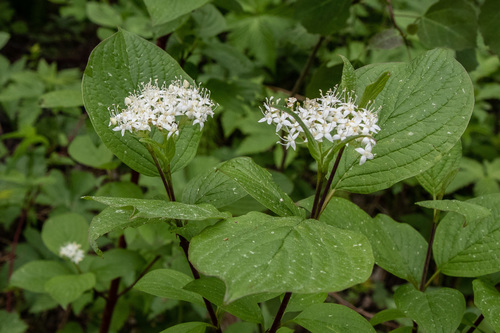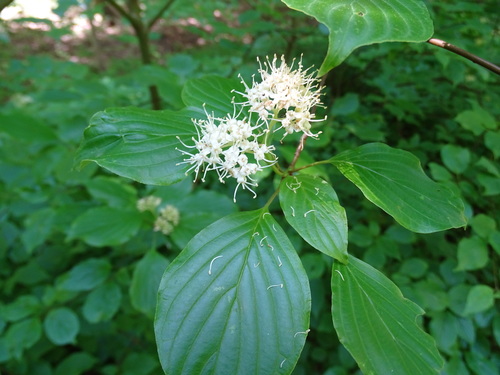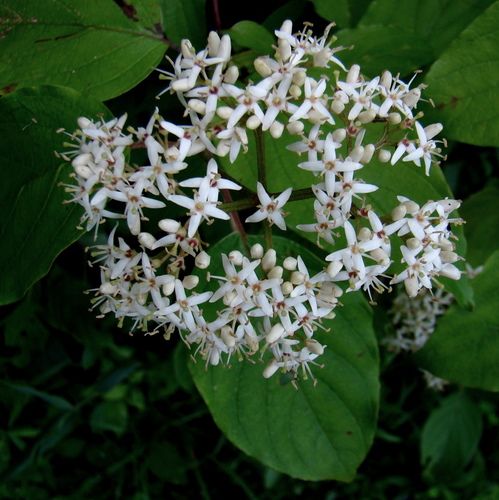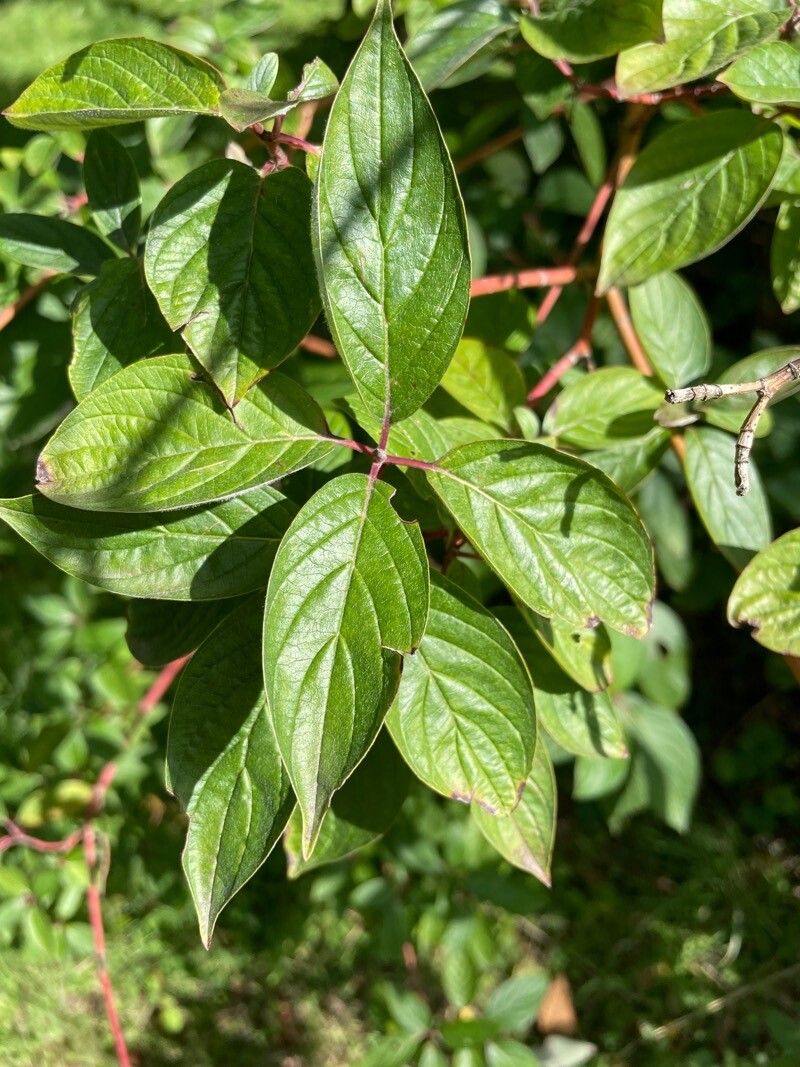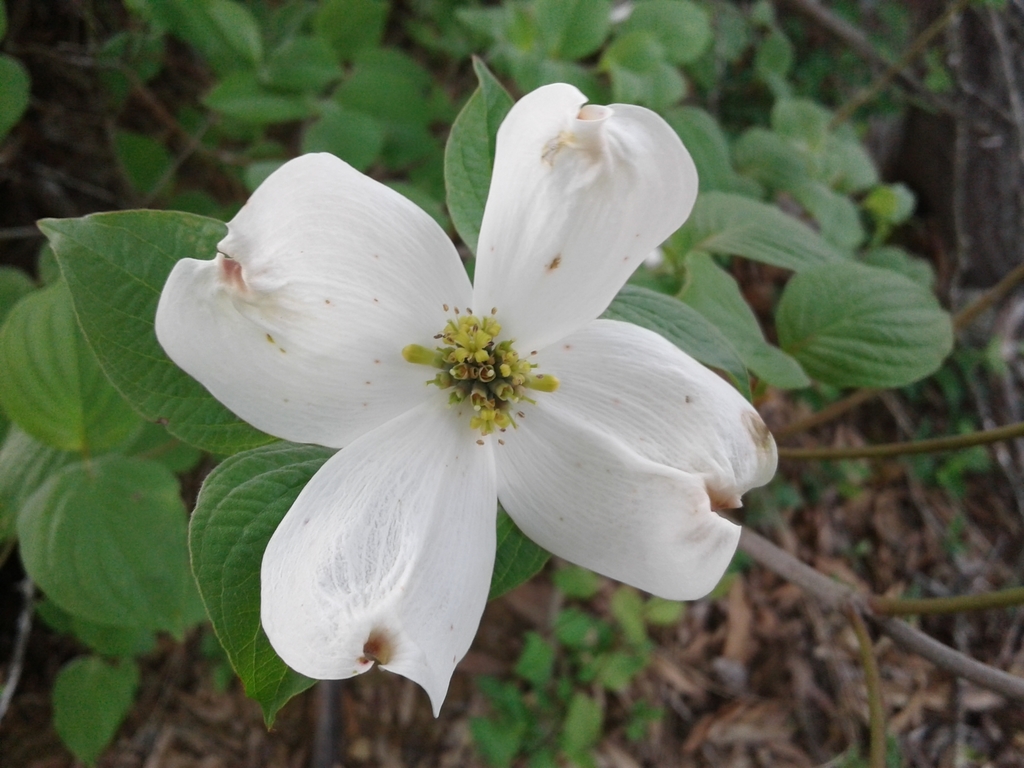
Cornus florida, commonly known as the flowering dogwood, is a deciduous tree native to eastern North America. Renowned for its showy flowers and attractive foliage, it is a popular choice for ornamental landscaping. Typically, the tree reaches a height of up to 30 feet with a spread of 20-30 feet. Its oval-shaped leaves turn a striking reddish-purple in the fall.
Flowering dogwoods bloom in early spring, producing clusters of small, four-petaled flowers that vary in color from white to pink or red. These blooms are succeeded by bright red berries that attract birds.
The bark of Cornus florida is smooth and gray when young but becomes rougher with age, developing deep ridges as it matures.
Today, the flowering dogwood is primarily used as an ornamental plant. However, it has a history of other uses. Historically, it was believed to treat malaria and was also a source for red dyes and inks. Additionally, its wood was used to make durable objects such as tool handles, mallets, and golf club heads. The tree was also used to treat mange in dogs, which offers another theory on how it earned its name. FUN FACT · FROM THE LIBRARY
This tree prefers well-drained soil and partial shade but can tolerate full sun if provided with ample water. However, it is susceptible to several diseases, including powdery mildew, anthracnose, and dogwood borer.
Overall, Cornus florida is an attractive ornamental tree that enhances any landscape with its stunning spring blooms and vibrant fall foliage.
The name "dogwood" originates from "dagwood," which refers to the use of its hard wood or roots for crafting sharp objects like daggers and skewers. Because of its remarkably beautiful flowers, the tree is also known as the flowering dogwood.
The flowering dogwood is resistant to disease and generally not susceptible to illnesses. In terms of upkeep, this plant is fairly low maintenance. When grown outdoors it needs only minimal watering, and larger specimens usually do not require pruning. However, smaller plants should be trimmed after they finish blooming. Flowering dogwoodt is appropriate for anyone who has an outdoor area, such as a garden or a deck, and does not demand extensive care experience.
How to keep Cornus Florida.
Light
The flowering dogwood does well with a moderate amount of sunlight each day, usually filtered by surrounding canopy layers, which supports strong growth. It can also tolerate intense sun exposure, though that increases the risk of leaf scorch. Native to woodland habitats, the plant naturally experiences a mix of sun and shade, matching its light preferences.
Water
Flowering dogwood is native to the forests of eastern North America, where it thrives in moist, well-drained soils and moderate humidity. To ensure optimal growth, it should be watered every 1 to 2 weeks, with less frequent watering needed during its winter dormancy. This makes it well-suited for outdoor cultivation in climates that match its natural preferences.
Humidity
This plant will thrive in moderate humidity, which is probably the level in your home. However, misting it a few times a week can be very beneficial. Make sure the room has good ventilation.
Temperature
Flowering dogwood, a temperate woody plant, grows best in temperatures of 41 to 95 ℉ (5 to 35 ℃). It favors mild conditions and can tolerate light frosts. In the colder months, it should be protected from extreme cold and drying winds to avoid damage.
Fertilizer
Timing is essential for fertilizing Flowering dogwood. Begin in early spring and continue once a month until early summer. Fertilizer promotes attractive blooms and supplies energy during both dormant and active growth phases.
Pruning
To ensure optimal growth for flowering dogwood, it's best to prune the tree in early spring, before new growth begins. Concentrate on removing any dead or diseased branches as well as crossing stems. This will help improve air circulation and allow more sunlight to reach the interior of the tree. Regular pruning promotes healthy growth and enhances the plant's appearance and structural strength.
Pot & Repot
When repotting Flowering dogwood, select a pot 1-2 inches (2.5–5.1 cm) larger that has good drainage. Use a well-draining potting mix. Repot in spring or fall, ensuring the root ball is slightly lower than the rim of the flower pot. Water thoroughly after repotting and place it in a warm spot with indirect sunlight.
Toxicity
Cornus florida berries are not toxic when eaten, but there have been reports of rashes after skin contact with the tree.
Further reading →
The toxicity and danger assessments provided are for reference only. We do not assure their accuracy, so it's crucial not to depend on them. Seek professional advice when necessary for accurate guidance.
Botanical profile.
- Plant Type
- Tree
- Life Cycle
- Perennial
- Genus
- Cornus
- Family
- Cornaceae
- Hardiness Zone
- 5-9
- Mature Height
- 6.1 m to 10.06 m
- Mature Spread
- 7.92 m
- Leaf Color
- Green, Red, Purple, Yellow, Variegated
- Leaf Type
- Deciduous
- Flower Color
- White, Pink, Green
- Flower Size
- 6.35 cm to 10.16 cm
- Bloom Time
- Mid spring, Late spring
- Planting Time
- Spring, Autumn
- Harvest Time
- Mid summer, Late summer
- Native Area
- Mexico
Other names.
Reader questions.
When Should I Water My Flowering Dogwood?
Timely and proper watering is crucial for the health and growth of flowering dogwood. You should water this plant when the top 1-2 inches of soil feel dry to the touch, which indicates the soil is drying out. Wilting or drooping leaves are a sign that the dogwood is dehydrated and needs water. A change in leaf color, such as browning edges or dullness, and sudden leaf drop can also signal a need for watering. It's important to be mindful of over or underwatering, as these can lead to problems like root rot, fungal growth, or plant death, and affect the dogwood's ability to uptake nutrients and resist pests.
Why should I put fertilizer on my Flowering dogwood?
Fertilizing a Flowering dogwood is necessary for a few important reasons. Firstly, it helps the tree produce beautiful blooms. It is particularly beneficial to fertilize in early spring for optimal flower growth. Secondly, fertilizer provides the tree with ample energy that can be stored in the ground during dormant growth phases. When you give the tree extra nutrients during fall planting or late spring, it allows the tree to store more energy to use during active growth periods.
What are the sunlight requirements for a flowering dogwood?
A flowering dogwood requires varying amounts of sunlight based on its placement and specific needs. It flourishes in conditions where it receives partial to full sun, meaning about 3-6 hours of sunlight for partial sun and more than 6 hours for full sun. However, it's important to observe how sunlight moves through your garden to provide the right balance of light and shade, enhancing the plant's growth while avoiding potential leaf scorch caused by intense solar exposure. Originally from forested areas, the flowering dogwood is accustomed to a mix of sun and shade.
What temperatures are ideal for flowering dogwood?
Flowering dogwood thrives in mild temperatures ranging from 41 to 95°F (5 to 35°C) and can withstand light frosts. It has strong cold resistance, but during extremely cold winters with temperatures dropping below -25°C, it's important to protect the plant from extreme cold and drying winds to prevent damage. Special frost protection measures, such as wrapping the trunk and branches with non-woven fabric or cloth, are advised in these conditions. Additionally, watering the plant abundantly before the first freeze of autumn to keep the soil moist is recommended to help prevent drought and water scarcity during winter and early spring.
How Should I Water My Flowering Dogwood?
Watering a flowering dogwood requires maintaining consistent moisture without overwatering. The best method is deep watering, slowly pouring water at the base of the plant to reach the deep root system. Use a moisture meter to avoid overwatering and an hourglass watering can for precision. Focus watering at the plant's base, avoiding the leaves to prevent diseases. Ensure the dogwood is planted in well-drained soil and increase watering during dry periods. Water early in the morning to allow excess moisture to evaporate and reduce disease risk.
What is the best time to fertilize my Flowering dogwood?
When fertilizing Flowering dogwood, timing is crucial. Applying fertilizer too early, while the plant is still dormant, is ineffective and will wash away with rainwater, causing waste and pollution. The first application of fertilizer should be done in early spring, followed by monthly applications until early summer.
How can artificial lighting be used for indoor flowering dogwoods?
For indoor flowering dogwoods, especially when natural sunlight is insufficient, artificial lighting becomes crucial for their growth. LED lights are recommended because they can be customized to meet the plant's specific light wavelength needs. For full sun plants, 30-50W per square foot is advised, for partial sun 20-30W per square foot, and for full shade plants 10-20W per square foot. The artificial light source should be placed 12-36 inches above the plant to mimic natural sunlight, ensuring the plant receives 8-12 hours of light per day to promote healthier growth.
How does low temperature affect flowering dogwood and what are the solutions?
Flowering dogwood is cold-tolerant and prefers temperatures above 5°C, but it should be kept above -20°C during winter. If temperatures fall below -25°C, the branches may become brittle and dry by springtime, and no new shoots will emerge. The solution to such damage is to prune away any dead branches that have failed to produce new leaves in spring.
How Much Water Does Flowering Dogwood Really Need?
Flowering dogwood, with its fibrous and shallow root system, benefits from regular watering to maintain even moisture. A general guideline is to provide about 1 inch (2.5 cm) of water per week. The signs of adequate hydration include healthy, vibrant green foliage and evenly moist soil without waterlogging. Underwatered dogwoods may display wilted, dry leaves, and overwatered ones might have yellow or brown leaves indicating root rot. Adjust watering based on conditions, deeply watering to encourage absorption, and mulch to retain moisture.
When shouldn't I put fertilizer on my Flowering dogwood?
To ensure proper blooming, refrain from giving Flowering dogwood a fertilizer with excessive nitrogen. Instead, choose a fertilizer with a lower nitrogen content compared to other nutrients. Additionally, avoid fertilizing Flowering dogwood after early autumn, as this may lead to excessive growth just before winter. Furthermore, do not fertilize during hot and dry periods, as dry soil hinders effective fertilization and can stimulate growth that requires more water. It is optimal to apply fertilizer earlier in the season when temperatures are cooler. Lastly, be mindful that Flowering dogwood can unintentionally absorb fertilizer applied to nearby plants or lawns, so exercise caution to avoid over-fertilizing the tree/shrub.
What are the symptoms of insufficient light in flowering dogwoods?
When flowering dogwoods receive insufficient light, they exhibit several symptoms. New leaves might grow smaller, and the plant can develop leggy or sparse growth due to longer spaces between leaves or stems. There might be an accelerated leaf drop to conserve resources, alongside slower or halted new growth. Leaves may display lighter coloration or chlorosis, indicating a lack of chlorophyll. Direct consequences of extreme sunlight exposure include sunscald, leaf curling, wilting, leaf scorching, with each signifying the plant's struggle with light management.
How does high temperature affect flowering dogwood and what are the solutions?
During the summer, it is best to keep flowering dogwood below 35°C. When temperatures exceed 38°C, the leaves might become lighter in color, tips may become dry and withered, and the plant becomes more susceptible to sunburn. To mitigate these issues, trim away the sunburned and dried-up parts of the plant, provide shade to the plant from the midday and afternoon sun using a shade cloth if necessary, and ensure the soil remains moist by watering the plant in the morning and evening.