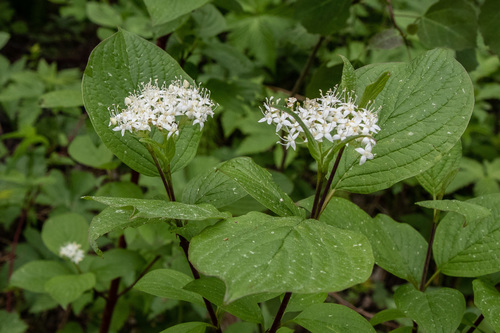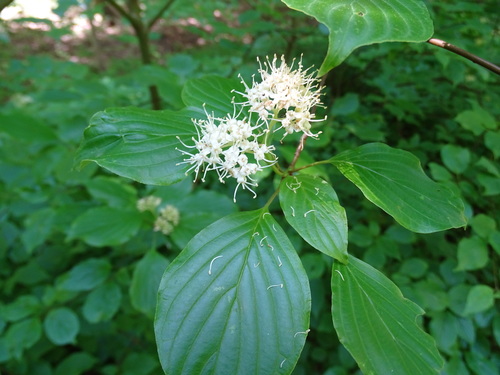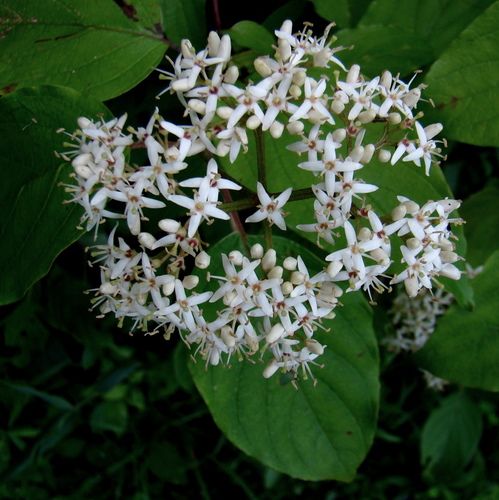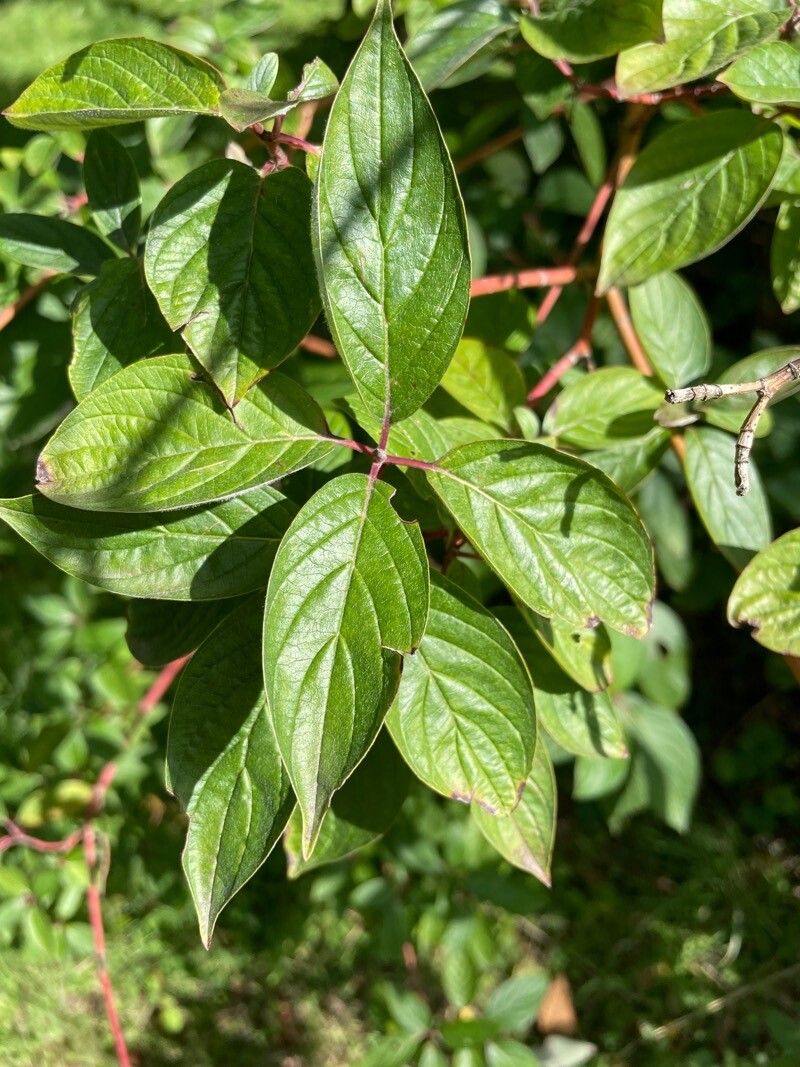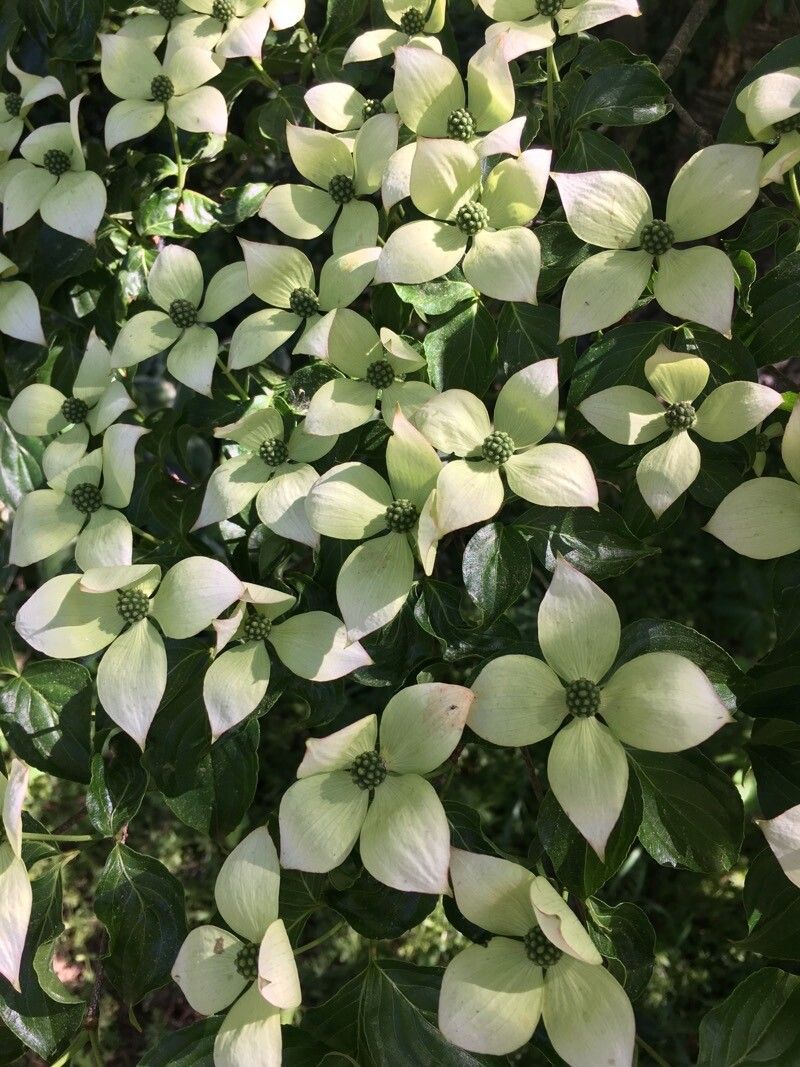
Cornus kousa chinensis, commonly known as Chinese dogwood, is a deciduous tree native to China and Korea. It belongs to the Cornaceae family and can grow up to 20-30 feet tall with a spread of 15-25 feet. The tree boasts an attractive rounded shape with dark green leaves that turn reddish-purple in the fall.
One of the most striking features of this tree is its flowers. The Chinese dogwood produces large, showy white or pink bracts that surround small greenish-yellow flowers in late spring or early summer. These bracts can reach up to 4 inches in diameter and are long-lasting.
In late summer, the tree produces edible red berries that are sweet and juicy, although they are not commonly consumed by humans due to their small size.
Chinese dogwood prefers well-drained soil and partial shade but can tolerate full sun as long as it receives adequate moisture. The tree is relatively low maintenance once established, though it may require some pruning for shape or size control.
Overall, Cornus kousa chinensis is an excellent choice for gardeners seeking a beautiful ornamental tree with year-round interest. Its stunning flowers make it particularly popular as a specimen plant or accent piece in landscapes across North America and beyond.
Cornus chinensis has strong resistance to disease and is usually not susceptible to illnesses. In terms of care, this plant is fairly low maintenance. When grown outdoors it needs little watering, and larger plants typically do not require pruning. Smaller plants, however, should be pruned after they finish blooming. Cornus chinensis is suitable for anyone with outdoor space, such as a garden or deck, and does not demand much experience in plant care.
How to keep Cornus Chinensis.
Light
Cornus chinensis naturally occurs in habitats such as forest understories and rocky areas, where it grows in natural shade. It prefers partial sun but can tolerate full sun or full shade, showing its adaptable, hardy character.
Water
Water Cornus chinensis once or twice a week. Increase the frequency during hot and sunny conditions, and decrease it during the plant's winter dormancy. Be careful to avoid splashing water on the leaves, as this can help prevent pests and diseases.
Temperature
Cornus chinensis is very adaptable to a wide range of climatic conditions, from blistering summers to frigid winters. Still, it has an ideal temperature range for growth. When temperatures rise too high, the plant is susceptible to heat and humidity stress, which can lead to its death. In areas where temperatures near the lower edge of its cold tolerance, insulating measures should be used to protect the plant.
Fertilizer
Cornus chinensis requires adequate nutrients for optimal fruit production. Fertilize in early spring to encourage new growth and bloom development. Regular fertilization helps the plant stay healthy, produce more delicious fruit, and prevents nutrient deficiency issues like yellow leaves and poor fruit production.
Pruning
To encourage healthy growth and vibrant flowering, it's beneficial to prune Cornus chinensis once a year in early spring, before new growth starts. Begin by removing any dead or crossing branches to enhance airflow and maintain the desired shape and size of the plant. This practice not only promotes plant health but also boosts flowering. Be sure to use clean, sharp tools to prevent the spread of disease.
Botanical profile.
- Plant Type
- Tree
- Life Cycle
- Perennial
- Genus
- Cornus
- Family
- Cornaceae
- Hardiness Zone
- 5-8
- Mature Height
- 4.88 m to 7.92 m
- Mature Spread
- 3.05 m to 4.88 m
- Leaf Color
- Green, Dark Green
- Leaf Type
- Deciduous
- Flower Color
- White
- Flower Size
- 1.02 cm to 2.03 cm
- Bloom Time
- Mid spring, Late spring
- Planting Time
- Autumn, Winter
- Harvest Time
- Late summer, Early fall, Mid fall
- Native Area
- Myanmar, China
Reader questions.
How much sunlight does Cornus chinensis require?
Cornus chinensis, also known as the Chinese Dogwood, has specific sunlight requirements for optimal growth. For full sun exposure, it requires more than 6 hours of direct sunlight daily. If it's in partial sun, about 3-6 hours of direct sunlight is ideal. It's important to observe the patterns of sunlight movement through your garden to find the perfect spot for your Cornus chinensis. This ensures the plant gets a harmonious balance of light and shade, contributing to its health and happiness.